

[ Cordant Planes > Pangaea ]
[ Conditions | Locations | Powers | Animal Lords | Factions | Bestiary ]
Pangaea
The Primitive Epoch; the Primal Plane; the Great Extinction. A planelette of the Splinterlands, lying ethically between the Outlands and Arborea
Themes: Primordial simplicity, prehistoric nature at its most feral, impending extinction
Hallmarks: Unique vegetation and animals extinct elsewhere in the multiverse, negation of all technology and much magic, survivalism at its most extreme
Sample Portal Keys: Fossils, coal, amber
What is Pangaea?

Listen up, cutter, because what I’m about to tell you might make you think I’ve gone completely barmy. There’s a plane out there nestled in a forgotten backwater of the Great Ring that makes the Beastlands look like a petting zoo in the Lady’s Ward. They call it Pangaea—though after somehow getting in and then back out of there with my hide intact, I call it the Great Extinction. Let me tell you something: If you think you’ve seen Wild before, you’re in for a shock.
Now Pangaea ain’t just another nature plane. So the Beastlands is all about the Harmonious Circle of Life, right? Sure it’s a lion-eat-gazelle world out there, but at least it’s wholesome. Well, unless you’re the gazelle, I suppose. Now Pangaea takes a different approach entirely. This is nature before it learned manners—before it cared about balance and harmony and all that nicey nicey ecosystem screed. The beasts here ain’t Happy like they are in the Hunting Grounds; they’re simply creatures in the truest sense, following ancient instincts that predate morality, or even sapience itself.
The plane exists as one massive, interconnected wilderness that shifts between dense fern jungle, deadly tar pit, impenetrable rainforest, smoking meteor crater, mangrove quicksand swamp, and erupting magma caldera, without warning. I imagine it’s what the multiverse looked like before the powers started to organize everything into neat little moral categories. I’ve even heard the chant that Pangaea actually came before the Beastlands—that a chunk of this plane broke off in some kind of cosmic realignment and became the more civilised Beastlands we know today. Whether that’s true or just tavern talk, I couldn’t say, but the fact that only extinct creatures live in Pangaea while the animals in the Beastlands can be found scattered all across the rest of the planes, well it certainly makes a body think.
Getting There… and Getting Out Again
First things first: You’re not going to get to Pangaea by a casual jaunt through a convenient portal, oh no. Now the Well of Urd has a gate hidden somewhere in the thickets—but you’ll need to be subtle about it or else risk a Norn turning you into a toad for bothering her. There’s also chant of a gate to Pangaea deep in the Elemental Plane of Wood (if you even believe that place exists!), and another in deepest darkest Nidavellir—assuming you don’t mind dodging dark elves in the mushroom tunnels. The path I used? Probably the least dangerous—the Grandfather Oak in Arvandor has a gate to Vaalbara, one of the most ancient parts of Pangaea. Chant goes that the treant Moss-Among-His-Roots, Wind-In-His-Leaves came through from Pangaea, found they liked Arborea, and stayed. Anyway, back to the gate. It’s activated by the smell of burnt charcoal. You’re welcome. Don’t say I didn’t warn you. You see… getting back? Well, that’s a whole other kettle of coelacanth. Good luck.
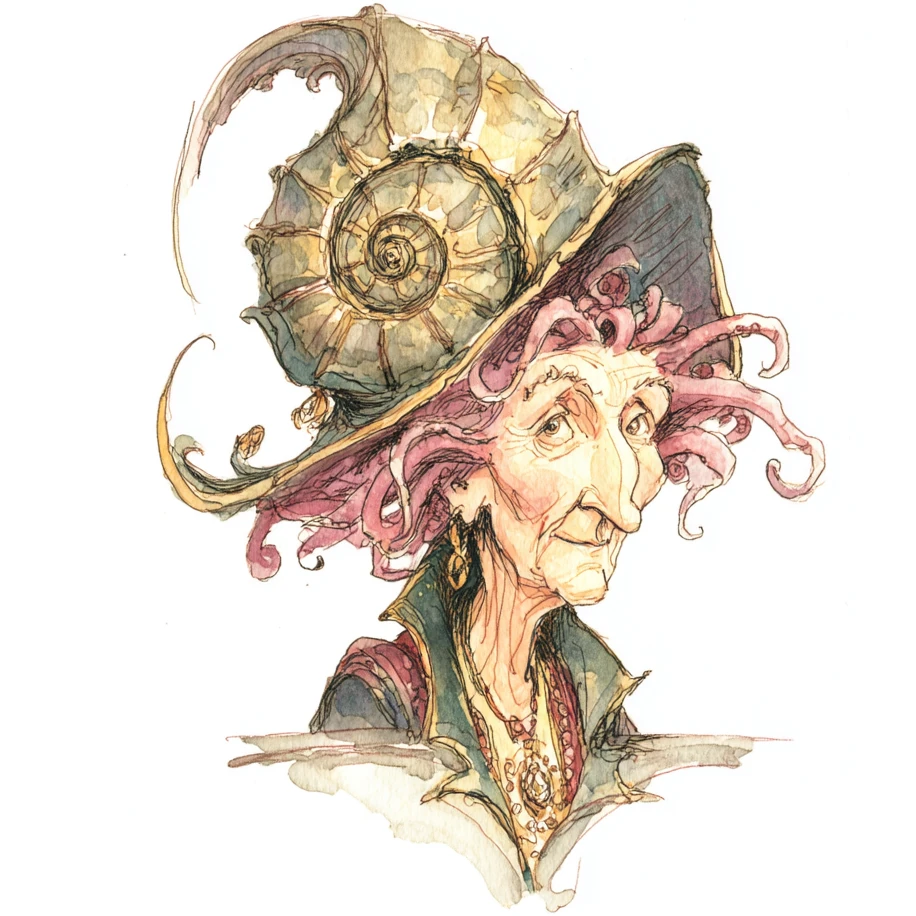
You see, things are just built different in Pangaea. And by that, I mean things are not built at all. There’s nothing so much as a log cabin here. Anything that smells remotely of technology or convenience simply fails to function here. Perhaps you think you’re clever, and bring a nice warm tent to sleep in? Pangaea ain’t having any of it, you can bet the struts will snap and the tarp will rip in the night, and for good measure it will rain torrentially on your head, just to make a point. You want to light a nice warming camp fire? You’d better be an expert at rubbing sticks together because your flint and steel sure won’t work. And that’s if you can even remember how to light a fire. The longer you stay here, see, the more your memory regresses to a primitive state. You’d better believe the chant—while humans are not natives of Pangaea, that doesn’t mean they ain’t here. But cutter, be warned. They used to be planewalkers just like you… until they devolved to something primal, something feral.
So no, you won’t find anything so gauche as a doorway here, and that means most portals are off the table too. You’ll also struggle with technology like magic to shift you from one plane to another, or even to teleport you around. More on that later. Which all means that your best way to get off Pangaea is to make use of a naturally-occurring planar vortex. Trouble is, those things are rarely stable, and they’re often hazardous. Are you barmy enough to chase a thunderstorm, or throw yourself into a whirlpool? And without the magical protection you’re probably used to as well. Like I said, good luck…
Environmental Effects
The first think you’ll notice is the air in Pangaea. It’s so rich, so thick. Take a deep breath and hold it in your lungs—it’s exhilarating! You’ll find you’re able to hold your breath longer, run faster, climb higher. It’s like everything is supercharged. It’s not just that there’s none of the smog of Sigil here—obviously, there’s no pollution from industry—there’s just something so primal about it.
- Like in Earth’s ancient past, the oxygen levels are significantly higher in Pangaea than on most other planes.
- Fire burns hotter and brighter; increase all damage from fire by one die size, ie. a 5d6 fireball becomes 5d8.
- Cutters get a +2 circumstance bonus to acrobatic or athletic activities, and can hold their breath twice as long.
- Skills depending on the natural environment are boosted here too: survival, tracking, foraging, nature lore, all get +2 circumstance bonus.
- Optional rule: Cutters who stay in Pangaea for more than a week start to change mentally, becoming less refined and more primal. They’ll need to make will/wisdom saving throws or start to lose social skills—diplomacy, languages, lock-picking, lore. Paladins, rogues and swashbucklers slowly become barbarians. Priests and psychics become druidic shamans. Wizards and bards become witch doctors. It’s only after cutters leave the plane that their old skills and preferences come bouncing back again, when Pangaea’s primal influence is no longer weighing down on them.
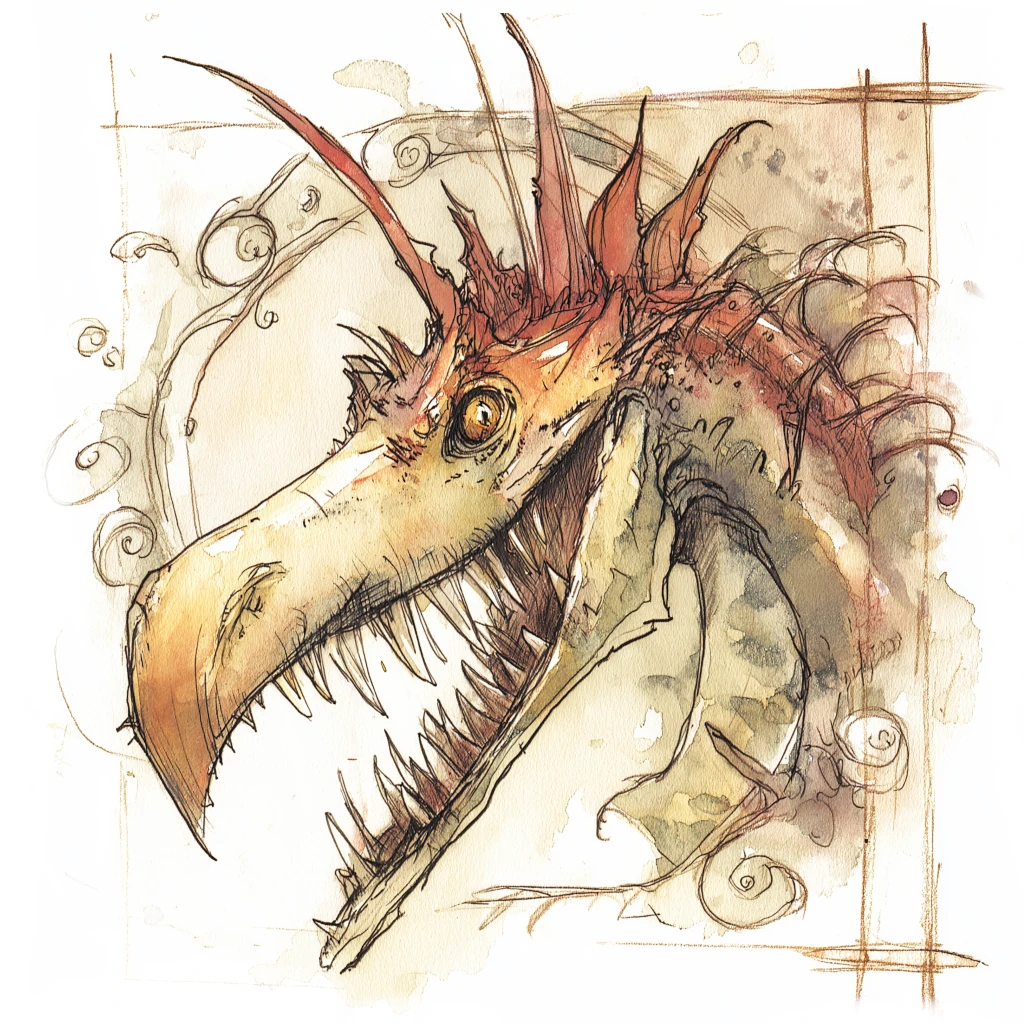
The second thing you’ll notice is that all of your technology is negated. And trust me when I say what counts as ‘technology’ in Pangaea is anything more advanced than a pointed stick. There’s no metal here at all, not iron, not copper, not even bronze. Planewalkers will find their precious mace has become a wooden club, their longsword a sharpened piece of flint lashed to a stick with animal guts, and their bow and arrows a handful of pebbles and a crude leather sling. Armour transforms to fur or leather animal hide, and shields to wood. Even worse, their permanent magics don’t function either. Wands become useless sticks, potions turn into pieces of fruit. You’ll need to find a way off the plane to get your equipment back too, cutter—as soon as you step through a gate you’ll find your precious items back to normal again.
- Pangaea doesn’t believe in making things easy. Work with your players to transform their gear into the simplest possible replacements—using wood, obsidian, flint, leather, twine or shell. All magical effects are temporarily suppressed. Characters retain whatever proficiency they previously had with their replacement weapons. Pity the gunslinger who arrives in Pangaea to discover they’re now just a slinger.
- All armour becomes leather, hide or fur, at best, and also temporarily loses its magic. Shields provide a +1 AC at best.
Magic too is dramatically changed. Necromantic spells simply fail to function here. There’s no raising the dead—but there’s also no magical healing. Pangaea forces cutters to rely on their natural healing processes, there’s no shortcut to interfere with the natural cycles here.
- Healing magic and all forms of necromancy are nullified
- Any kind of magical flight becomes impossible
- Any magic that requires metal or technology simply fails
- Time magic also fails to function, because Pangaea is stuck in an eternal prehistoric moment.
- Most elemental spells work as usual, but wood elemental spells function as if cast 1 spell level higher, to a maximum of 9th level. Wood cantrips that gain additional effects at higher levels gain the next level benefit.
- Summoning spells that conjure prehistoric animals work as normal, but cutters summoning plants – such as Entangle, Conjure Woodland Being, or Wall of Thorns—will find they cannot be controlled or influenced.
- All permanent magical items stop working temporarily—wands, amulets, boots, etc.
- Spellbooks are transformed into clay tablets, although the magic formulae still work, subject to other planar effects. Spell components become materials like bone, plants, powers or rocks.
- Consumable items—potions, scrolls, oils etc—are transformed into more primitive shapes but can still be used. When they’re gone, they’re gone though.
- Yes—it’s tough to explore this plane—it’s supposed to be a survivalist challenge! DMs—remember to adjust encounter difficulty to account for these changes, and less easy healing.
If you’re barmy enough to visit Pangaea, here’s some free advice that might keep you breathing:
- Gear Down: Accept that your magic sword is becoming a sharp stick. Embrace it. Pangaea rewards those who adapt rather than resist.
- Learn to Forage: The food you’ll find in Pangaea tastes incredible, the freshest berries and nuts, the juiciest game and roots, the most delicious mushrooms—the most bountiful haul you’ll ever find. Meanwhile, anything brought from outside tastes like ash. Foraging in fact is one of the only ways to heal quickly, because goodberry bushes can be found growing in many parts of the plane.
- Avoid the Animal Lords if Possible: These aren’t misunderstood guardians. They’re apex predators from an age when mercy was a luxury.
- Respect the Timeline: Time magic doesn’t work because Pangaea exists in eternal prehistory. Don’t fight it; learn to think like your ancestors did, when survival meant everything.
The Flora

Pangaea is a strange place even when it comes to the plant-life. While trees exist, they are uncommon, and unusual-looking. More palm than oak, they are tall and leaves are frond-like. Coniferss, cycads and mangroves dominate. On the ground, ferns are everywhere, all colours and sizes. Another thing you’ll notice, or rather not notice, are flowers. Turns out that while the question about chickens and eggs is still unresolved, the plants came before the flowers. Instead there are forests of lycopsids (giant club mosses), medullosa (tree-like ferns) and glossopteris (trees with feather-like leaves).
The rich atmosphere here means that plant life grows quickly, and huge. The swamp-forests are difficult to navigate, and bashers will find themselves needing to cut their way through—all without metal blades. You’ll want to get good at sharpening flint and obsidian tools, quickly.
The Fauna
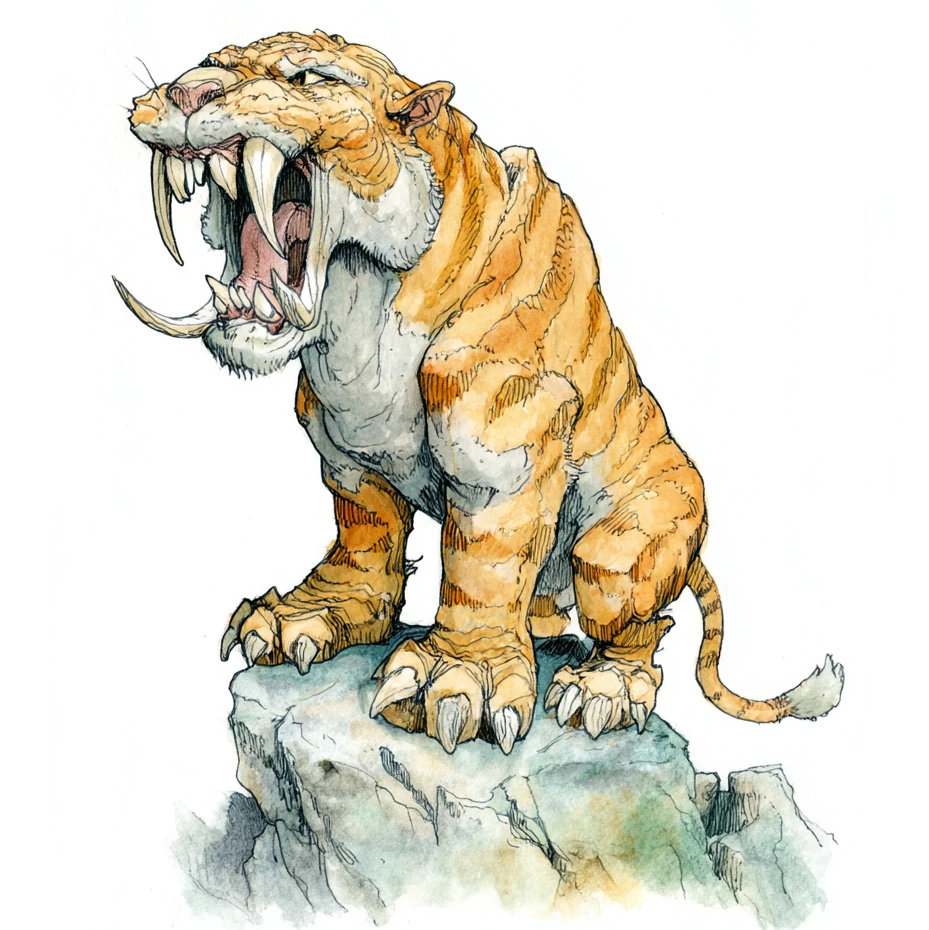
The first thing you’ll spot are insects. Even the small ones are enormous. The dragonflies are the size of eagles, the centipedes six feet long, and the scorpions the size of dogs. Something to do with the air, the graybeards say.
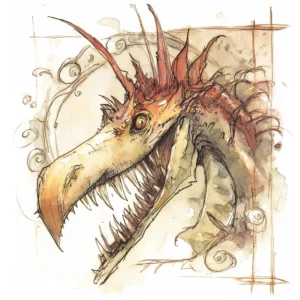
The animals are large, feral and dangerous too. Sabertooth tigers the size of lions, with nine-inch serrated teeth that crush bones. Megalania are giant monitor lizards that can swallow a cutter whole. The hexamorph is some kind of insectile ancestor of thri-kreen, with six body segments. If you’re really unlucky, you might come across a tharqven, an abomination created by the wild dwarven power Thard Harr, that was too wild even for his jungle dwarves. They were all killed off on the Prime—and then promptly reappeared here instead. And if you’re really really unlucky, you’ll be tracked down by a Pangaean dragon—thought to be a long-extinct ancestor of all modern dragonkind. They look like huge feral wyverns, but darker and meaner. On the plus side, they don’t have a breath weapon or magic. On the downside, their roar can shake the ground itself.
- Pack Hunters
- Apex Predators
- Herbivores and Sauropods
- Aquatic Beasts
- Flying Beasts
- Megafauna
- Planetouched Dinosaurs
Extinction Events

Apart from the predators, the explosive air, and the lack of magical healing, the main dangers in Pangaea are the regular extinction events that seem to occur. Hardly a cycle goes past without a meteorite slamming into the planelette, or a volcano going off, cascade of earthquakes, or a tidal wave inundating the lowlands. The locals, they’re pretty used to it by now, and have their hidey holes, high ground and deep waters to ride out the ensuing ash storm, forest fires, or floodwaters. But planewalkers, you cutters really need to be prepared for anything. The flora and fauna always seem to bounce back quickly enough, mind. It’s almost like Pangaea itself is trying to rid itself of outsiders.
Here’s the dark of it, cutter: Pangaea is a memorial. Every creature, every plant, every environment represents something that once existed on the Prime and was lost. The Great Dying, the Ice Age extinctions, beasts hunted to extinction by humans, the slow transformation from high-oxygen Carboniferous swamps to today’s ecosystems—all of it lives on in Pangaea. The plane is part-graveyard and part-sanctuary for the evolutionary paths that reached dead ends. While many of the Outer Planes ask the question “what if?”, on Pangaea, the question is “what was?”
Whether you see Pangaea as the Beastlands’ primitive ancestor or as something entirely separate doesn’t matter. What matters is understanding that you’re not just visiting a location—you’re also stepping back in time to a more violent and magnificent epoch, when survival was everything and extinction was just a catastrophe away. So if you’re planning a trip to Pangaea, pack simple, think primitive, and remember: in Pangaea, you’re the anomaly in a world that has no need for your civilised sensibilities. The extinct have found their paradise, and they’re not particularly interested in sharing it with the living.

Locations in Pangaea
- Ediacarian Realm (supersea) ‡
- Moa Lord’s Atoll (realm of the Moa Lord) ‡
- Bone Gallery (site) ‡
- Cathedral of Tall Grass (site) ‡
- Thunder Track (site) ‡
- Obsidian Tide (realm of the Ichthyosaurus Lord) ‡
- Moa Lord’s Atoll (realm of the Moa Lord) ‡
- Pannotia (supercontinent) ‡
- Filchnest (realm of Quorlinn, who wanders here from the Beastlands)
- Final Stretch (Doomguard stronghold) ‡
- Flock’s Nest (shared realm of the raptoran powers)
- Gelasian Steppe ‡
- Red Rime, the (realm of the Sabretooth Lord) ‡
- Thundering Quiet, the (realm of the Mammoth Lord) ‡
- Jungle of Ferrix (see also the Cat Lord’s Prowl on the Beastlands)
- Rolling Bastion (realm of the Glyptodon Lord) ‡
- Sixfold Steppe (realm of the Hexamorph Lord) ‡
- Striped Silence (realm of the Thylacine Lord) ‡
- Swamp of Coals (contested) ‡
- Actinistia (Coelacanth territory) ‡
- Edopodia (Temnospondylus territory) ‡
- Brine of Mirrors (Eurypterid territory) ‡
- Tuatara’s Range (mountain range) ‡
- Pineal Stone (observatory site) ‡
- Third Eye (realm of the Tuatara Lord) ‡
- Vaalbara (site) ‡
- Wyldhaven (headquarters of the Verdant Guild) ‡
The Powers of Prehistory
- Ferrix (wanders here from the Beastlands)
- Indrik (Slavic demipower of prehistoric beasts, rhinoceroses and other odd-toed ungulates) ‡
- Moccus (power of hunting, war and wereboars) ‡
- Quorlinn (wanders here from the Beastlands)
- Raptoran Pantheon
- Duthila (raptoran power of Autumn, hunting, and abundance)
- Kithin, Father of Snows (raptoran power of Winter, the dead and dying, barrenness and paucity)
- Lliendil, the Lord of Clouds (the moody raptoran power of weather, rain, storms, sun, wind, change, and trickery)
- Nilthina the Lord of Warm Winds (raptoran power of Summer, warmth and lore)
- Tuilviel Glithein, the Queen of Air and Night (raptoran power of the moon, stars, night birds, raptorans)
- Ventila the Lady of Spring (raptoran power of Spring, fertility, growth, and love)
- Unseen Pantheon
- Bird / Flame (primordial spirit of the sky and fire) ‡
- Deep Dark (primordial spirit of death and ancestors) ‡
- Mother / Beast (primordial spirit of fertility and hunting) ‡
You might spot that Ubtao is notable by his absence. Despite being a literal tyrannosaur power of dinosaurs, graybeards reckon that Ubtao is making a statement by studiously avoiding having a realm on Pangaea—that he is not going to allow his precious dinosaurs to become extinct. Indeed, the Dinosaur Lord too clings on to his realm in the Beastlands. How long he’s going to be able to maintain that position though, time will tell…
The Petitioners
The petitioners of Pangaea are a curious bunch. Chant goes that in life they were simple folks who eschewed the trappings of civilisation, and hankered for a more primitive era. They were hermits, foragers, luddites who refuse to use even simple technologies or magics. And of course, cutters from prime worlds where those things don’t yet exist.
Well-adapted to their testing and dangerously short afterlives in Pangaea, the petitioners tend to be very curious about outsiders. Visitors here are uncommon after all, especially ones who manage to survive long enough to meet a petitioner. As a result, a planewalker might find themselves trailed by a gaggle of petitioners, in awe at their strange ways and intrigues by their exotic technologies.
The petitioners look as they did in life, only more wild-looking. Dwarven petitioners look like untamed dwarves, elven petitioners look slightly feral, and humans look like cavepeople. Unlike the petitioners of the Beastlands, they don’t turn into animals or even gain animalistic features; they simply become hairier and smellier—but no less intelligent. Used to living in harsh conditions, Pangaean petitioners have a natural resistance to cold damage, unnatural damage from magic, and they’re also immune to sonic damage from thunder or explosions.
Movers and Shakers
All of these cutters are members of factions and sects that are exploring Pangaea
- Jorval Ironskin (petitioner orc-wererhino barbarian-ranger [he/him] / Verdant Guild / CG) ‡
- Amaen Lifegiver (planar shiere eladrin druid [she/her] / Sign of One / CG) ‡
- Decay Knight Utan Longsight (planar quaggoth barbarian/knowledge cleric of Zivilyn [he/him] Doomguard / NG) ‡
- Zal’Vadrin (planar githzerai diviner [she/her] / Revivalists / CG) ‡
Animal Lords of Pangaea
A tale of the best-known animal lords of prehistory
- Ammonite Lord (animal lord [she/her] / N) ‡
- Azhdarcho Lord (animal lord [he/him] / N) ‡
- Coelacanth Lord (animal lord [he/him] / N) ‡
- Dodo Lord (animal lord [he/him] / N) ‡
- Eurypterid Lord (animal lord [he/him] / NE) ‡
- Glyptodon Lord (animal lord [she/her] / N) ‡
- Hexamorph Lord (animal lord [they/them] / N) ‡
- Ichthyosaurus Lord (animal lord [he/him] / N) ‡
- Indrik (Slavic demipower of prehistoric beasts, rhinoceroses and other odd-toed ungulates [He/It] / CG) ‡
- Moa Lord (animal lord [she/her] / N) ‡
- Sabretooth Lord (animal lord [she/her] / N) ‡
- Temnospondylus Lord (animal lord [he/him] / N) ‡
- Thylacine Lord (animal lord [she/her] / N) ‡
- Tuatara Lord (animal lord [he/him] / N) ‡
Of the animal lords of the Beastlands, the Crocodile, Shark and Dinosaur Lords all visit Pangaea occasionally.
Animal Lords of of Pangaea





Source: SGreen, Jon Winter-Holt. Canonwatch: † from the Pathfinder setting; ‡ Homebrew. All of the Planes of Cordance and the concept of the Splinterlands are homebrew and non-canonical. Expanded from Greg Jensen’s original conception, more information on his Planes of Cordance can be found here.
Ah yes, Pangaea, the plane that gave me so many headaches trying to work on it, but I am happy with how all things came out, it really gets the sombre feeling of watching the extinction of animals