[ Cordant Planes > Pangaea ]
[ Conditions | Locations | Powers | Animal Lords | Factions | Bestiary ]
[ Aerial | Apex Predators | Aquatic | Herbivores | Megafauna | Pack Hunters | Planetouched ]
Aerial Archosaurs
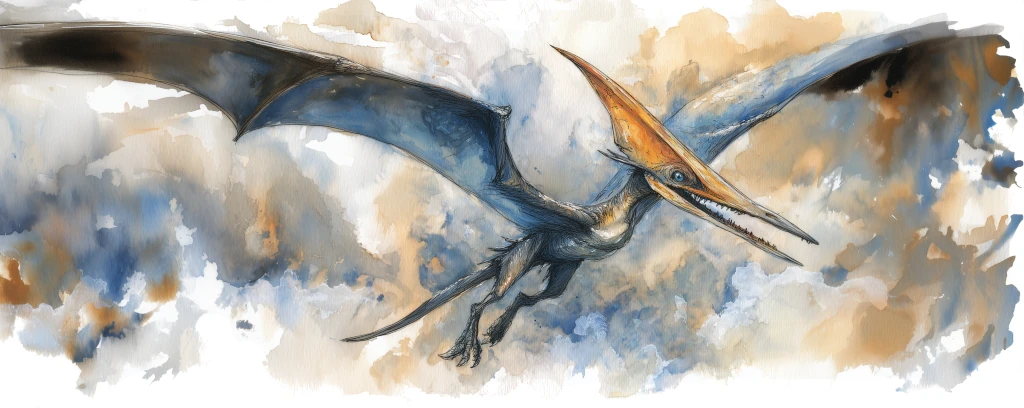
You’d be forgiven for looking at the graceful swooping of Pangaea’s pterosaurs and imagining how these beasts are the ancestors of the birds that infest all the other planes these days. Forgiven, because you’d be wrong. Guvner diviners currently reckon that of all things, it’s the therapods who are the great-great-and-so-on grandparents of our feathered friends. Yes cutter, the same therapods that count tyrannosaurus rex amongst their number! I bet you’ll never look at a chicken the same way again eh?
In fact, these same Guvners also say that pterosaurs ain’t even ‘dinosaurs’ but from a different branch of the family tree. Sounds barmy but they’re the ones with the crystal balls I guess, who am I to judge. So I’ll just stick to telling you about them in all their shapes and sizes, from the tiny microraptor to the colossal hatzegopteryx. They can all fly—some better than others—and they are all faster on the ground than you might expect. Some are aggressive, some timid, but all of them should be approached with caution.
The patron of all pterosaurs is the azhdarcho lord, an ancient animal lord, who is definitely embittered about the extinction of his children from vast swathes of the Prime. A flock of pterosaurs follows him everywhere he goes, but the cutter rarely leaves his Pangaean realm the Sky Table these days.
| Pterosaur | Size (Length, Wingspan in feet) | Notable Abilities | Challenge Rating |
| Klobiodon * | Small (L: 3, W: 6) | Ensnaring teeth | -1 |
| Nyctosaurus * | Small (L: 4, W: 6) | Antler attack | -1 |
| Pterodaustro * | Medium (L: 6, L: 10) | Perceptive | -1 |
| Rhamphorhynchus | Small (L: 2, W: 6) | Speedy thieves | -1 |
| Microraptor ‡ * | Tiny (L: 2, W: 3) | Venom / Shimmering feathers | 0, -1 |
| Dimorphodon † | Medium (L: 3, W: 10) | Grabbing beak, poison (?) | 1 |
| Istiodactylus ‡ | Large (L: 5, W: 15) | Vicious bite | 2 |
| Pteranodon | Large (L: 6, W: 20) | Swooping strike | 2 |
| Tupandactylus * | Medium (L: 5, W: 10) | Distracting display | 2 |
| Ludodactylus * | Medium (L: 5, W: 13) | Snatch | 3 |
| Thalassodromeus ‡ | Large (L: 6, W: 20) | Flashy fighters | 5 |
| Quetzalcoatlus | Huge (L: 15, W: 40) | Thunderous flap | 7-9 |
| Hatzegopteryx * | Huge (L: 20, W: 40) | Beak spear, swallow whole | 14 |
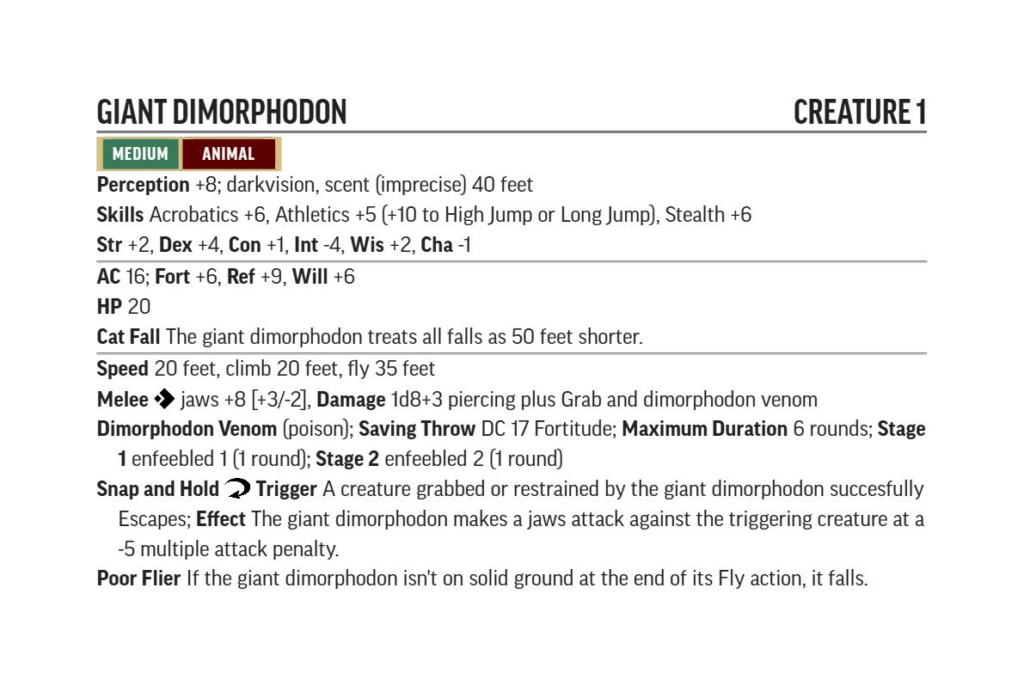
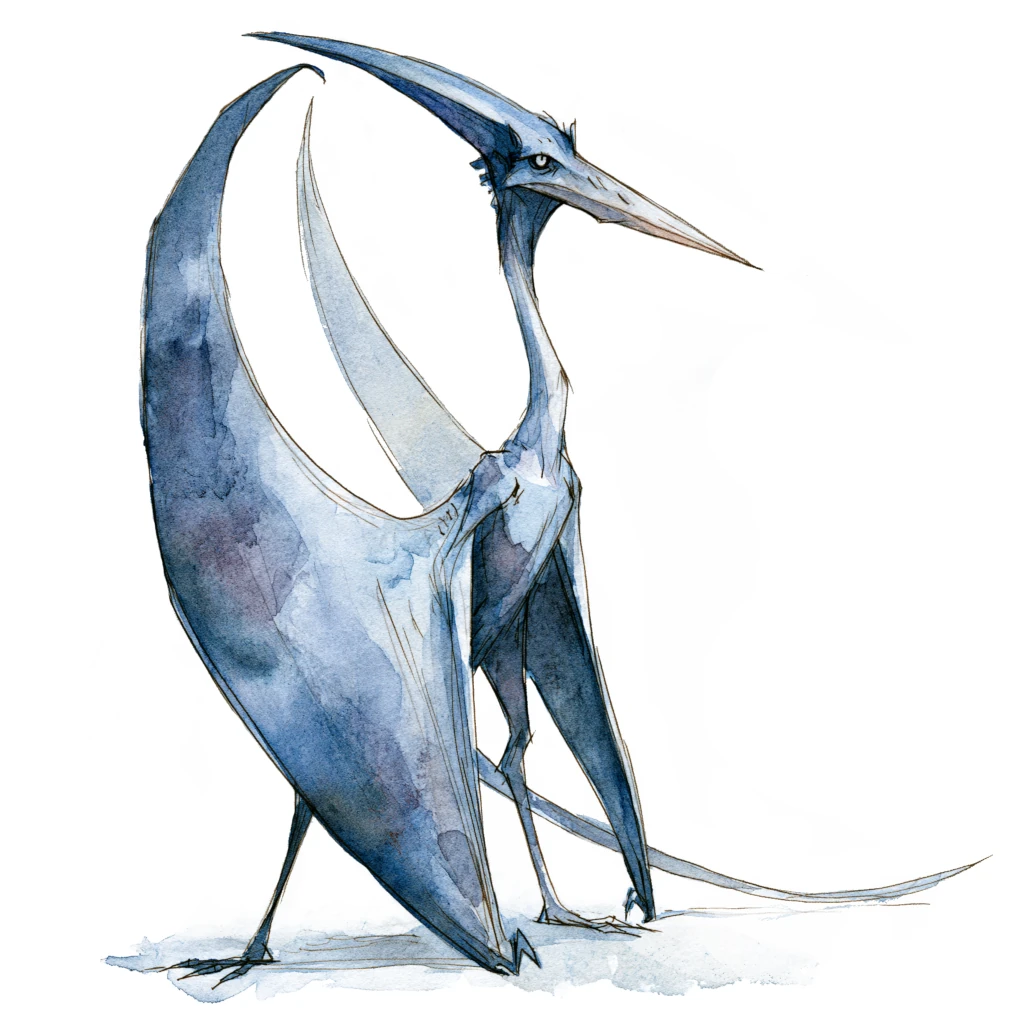
Dimorphodon
Two-Shape-Tooth; N | Medium | Animal | Pterosaur; CR 1
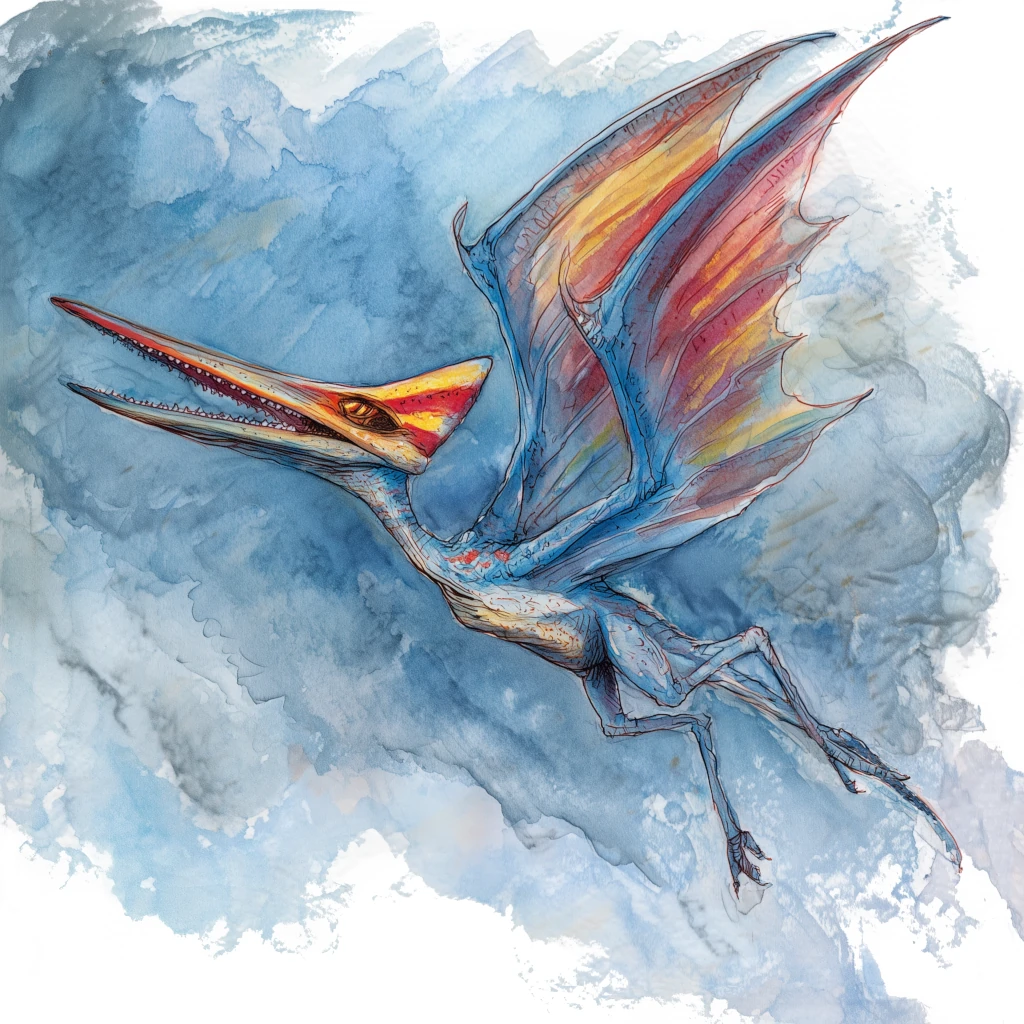
These pterosaurs have particular large heads, considering the size of their bodies, and whatever is not brain, is beak. Their crests are brightly coloured in reds, purples and yellows, and they use them in courtship displays, but also as a warning. See, dimorphodon [die-MORF-oh-don] have fangs that can inject poison near the front of their mouths, as well as a second row of smaller sharp teeth for chewing. Dimorphodons are poor fliers, and they prefer hunting small mammals and lizards in the forest’s underbrush. They are also smart (for archosaurs anyway) and known to be easier to train if handled the right way. Checks to teach them tricks are made with a +4 bonus, and a domesticated dimorphodon gains one extra trick chosen by its trainer.
Stats: [ PF 1e | 2e ] Bestiary 4 [PF1e] p58; Homebrew [PF2e] ‡; see also Wikipedia
Hatzegopteryx
N | Huge | Animal | Pterosaur; CR 14
A truly enormous pterosaur, the hatzegopteryx [hats-egg-OP-ter-ix] as tall as a giraffe when standing on the ground, with a skull as long as a human is tall. It’s a wonder these great beasts can fly at all. On the ground they might look ungainly but be warned—they can charge along on their folded wings at quite a pace. Inquisitive and fearless, hatzegopteryx tend to swallow creatures whole first, and ask questions—well—never.
Stats: [ D&D 5e | PF 2e ] Dr Dhrolin’s Dictionary of Dinosaurs p86-88 *; see also Wikipedia
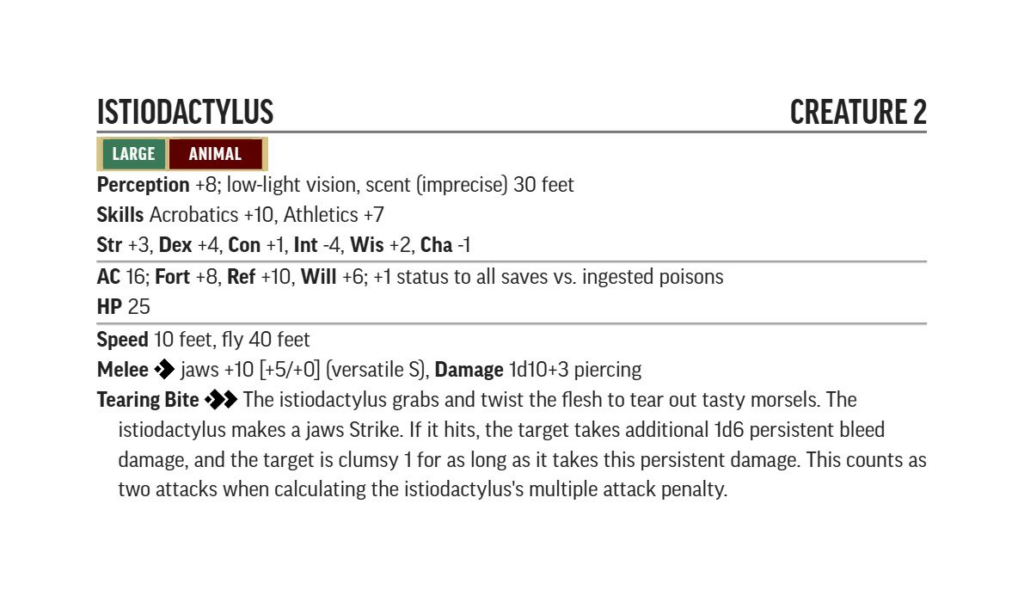
Istiodactylus
Pteranodon, Sail Finger; N | Large | Animal | Pterosaur; CR 2
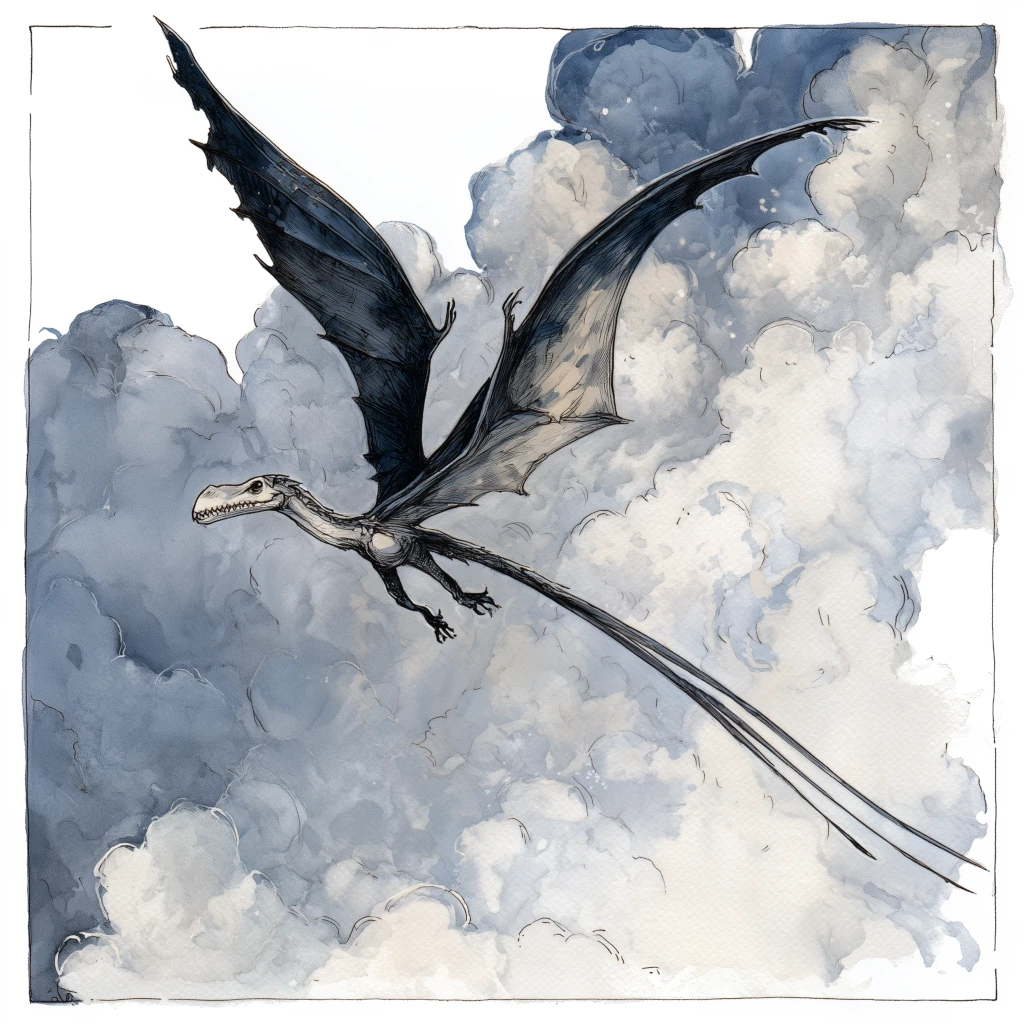
Istiodactylus [iss-tea-oh-dack-TIE-lus] (“sail-finger“) is a large creature with wings stretching for up to 16 feet. Its snout is not as pointy as those of other pterosaurs, and its beak is filled by sharp and durable leaf-like teeth. The istiodactylus is not much of a predator and would generally prefer to fly away from confrontation. Rather than hunting, it uses its sharp teeth to strip down corpses, much like vultures do in other enviroments. Soaring above the lands of Pangaea, this pterosaur uses its keen eyesight to locate and claim any carrion faster than land scavengers might, but will flee if challenged.
Stats: [ PF 2e ] Homebrew [PF2e] ‡; see also Wikipedia
Klobiodon
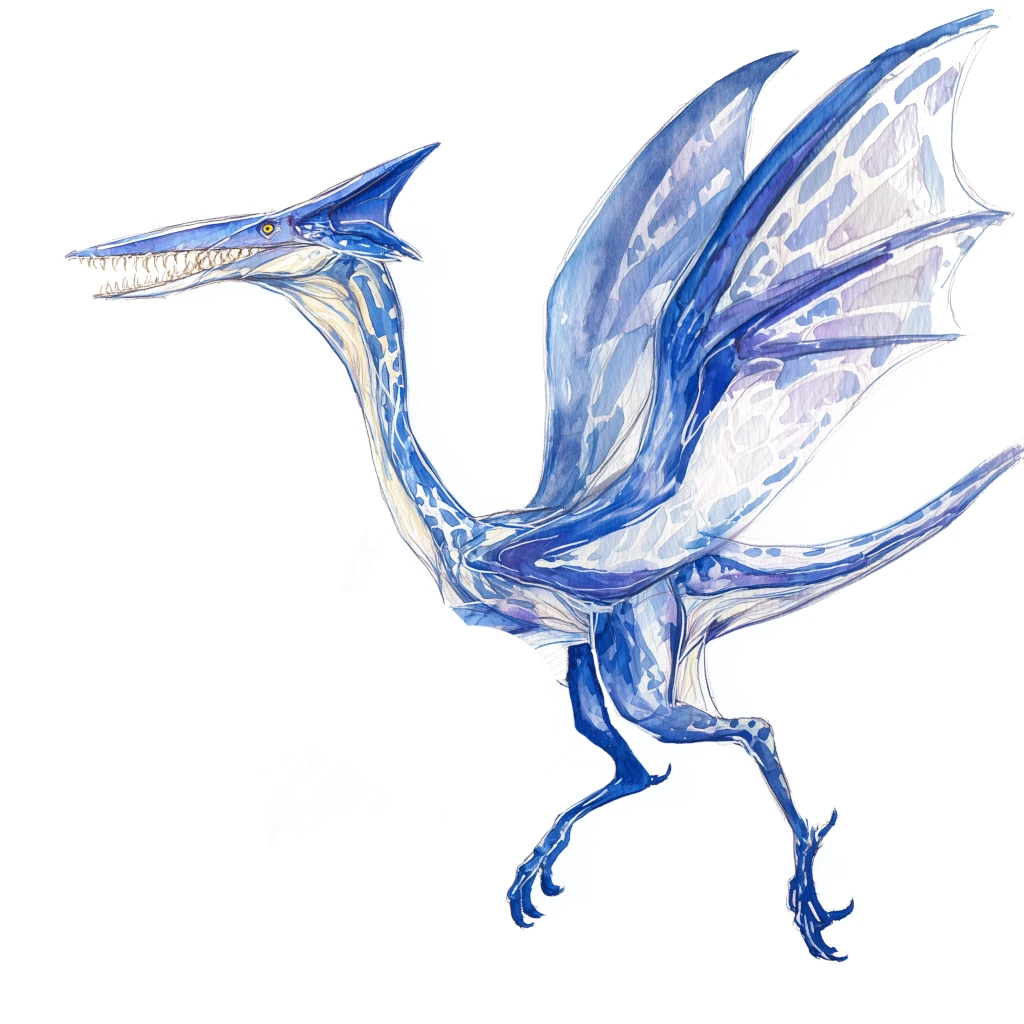
Cage-Tooth; N | Small | Animal | Pterosaur; CR -1
Small flying pterosaurs the size of seagulls, klobiodon [klo-bee-OH-don] look nothing like seagulls. They are long and slender, with wings made from membranes of skin, long pointed faces, and beak-like mouths with a frightening-looking cage of teeth. They feed on fish which they skim from the surface of rivers and lakes, and generally avoid larger creatures, unless their nesting grounds are threatened. In that case, they will mob an intruder en masse, biting with those vicious teeth and becoming attached to their target. They continue to gnaw on the intruder until it leaves their nest along, or they are defeated.
Stats: [ D&D 5e | PF 2e ] Dr Dhrolin’s Dictionary of Dinosaurs p144-145 *; see also Wikipedia
Ludodactylus
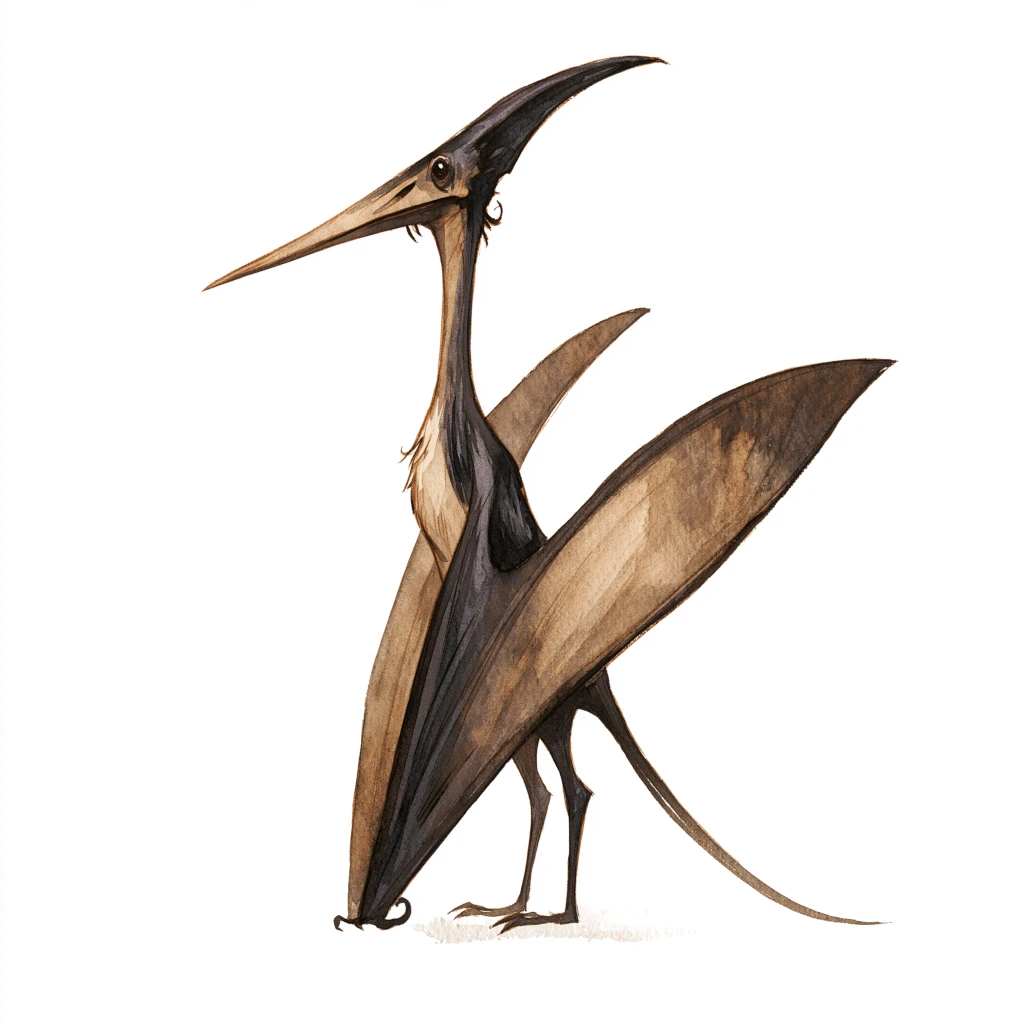
Play Finger; N | Medium | Animal | Pterosaur; CR 3
A great crested pteranodon that primarily hunts over water, these toothy creatures can snatch fish from the sea, or items from opponents. They are particularly drawn to shiny metal objects, especially weapons. Many are the tales of planewalkers startling a flock of ludodactylus [loo-doh-dack-TIL-us] who then take off into the air, knocking the planewalkers prone, before snatching their weapons and flying off with them. If that’s not bad enough, these creatures can regurgitate the acidic contents of their stomach to feed their young—or spray on attackers.
Stats: [ D&D 5e | PF 2e ] Dr Dhrolin’s Dictionary of Dinosaurs p106-107 *; see also Wikipedia
Microraptor
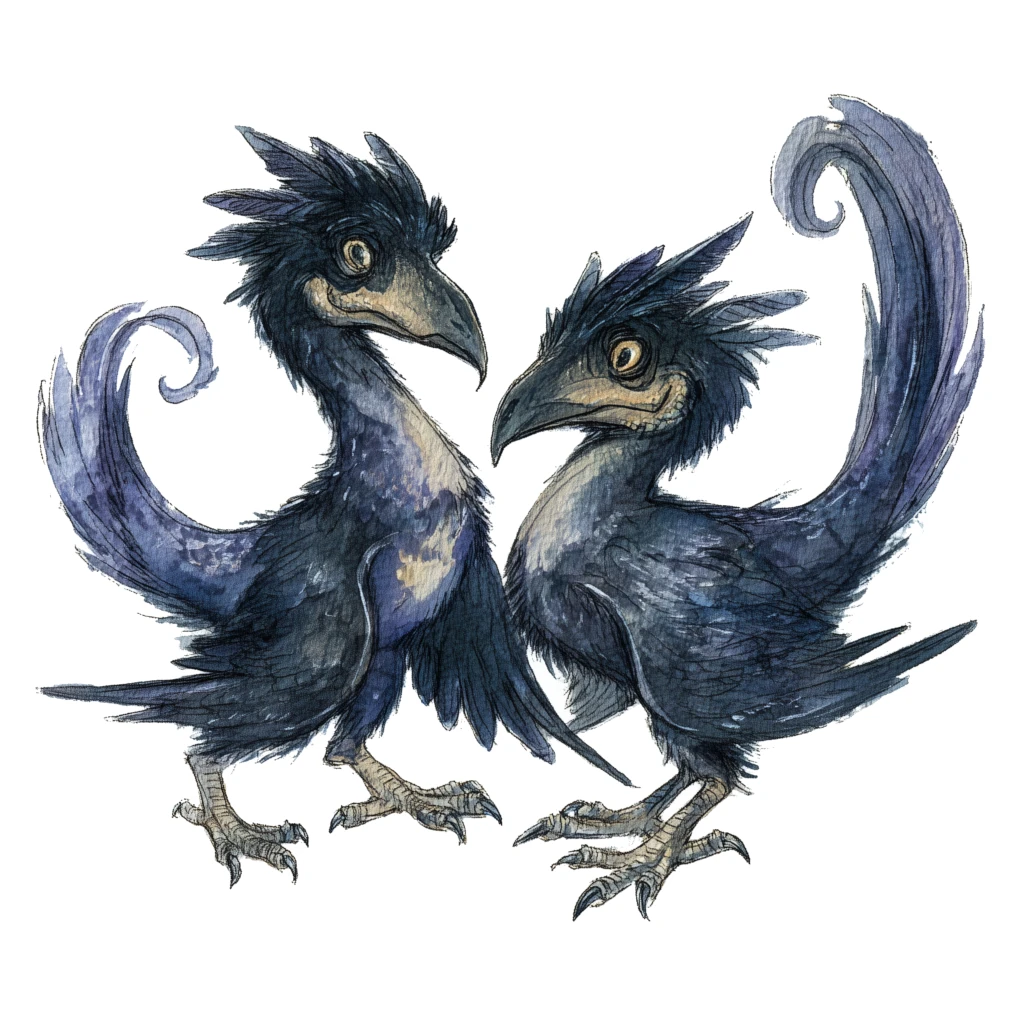
Little Seizer; N | Tiny | Animal | Dinosaur | Theropod; CR 0
A proficient climber as well as flier, the microraptor spend much of its time in the relative safety of the forest canopy layer, but they are inqisitive creatures and may follow humanoids out of curiosity. With a wingspan of just three feet it would not pose much of a threat to planewalkers, and its diet mainly consists of small mammals, reptiles and insects. However, microraptors also have a taste for small toxic insects, and are immune to their venom. What’s more is that this means the bite of the microraptors themselves bears a dangerous sickening effect, as the raptors concentrate the poison from their diet. The shimmering microraptor is a variant of the raptor with iridescent black feathers that shimmer in the sunlight. While it does not have poison to protect itself, it has learned to distract predators with a dazzling display.
Stats: [ D&D 5e | PF 2e ] Dr Dhrolin’s Dictionary of Dinosaurs p50 (CR -1 shimmering variant)*; homebrew (CR 0 venomous variant)‡; see also Wikipedia
Nyctosaurus
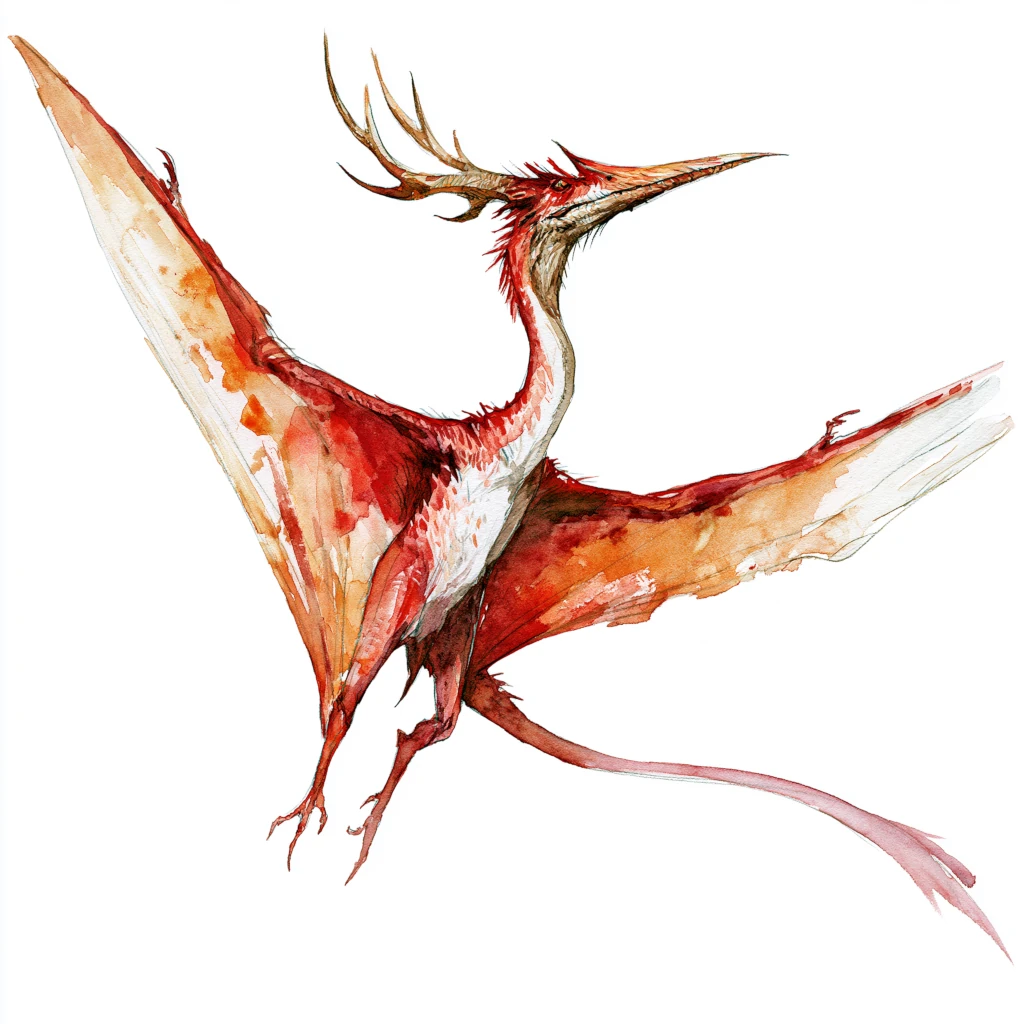
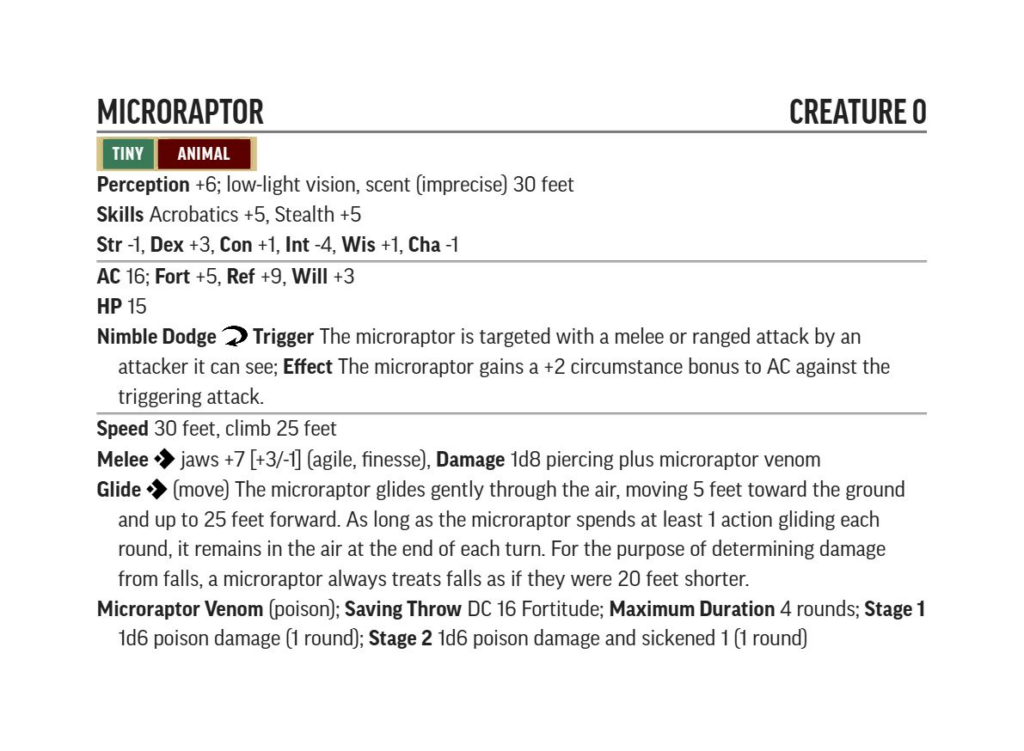
Night Lizard; N | Medium | Animal | Pterosaur; CR -1
A bizarre-looking creature, even for the planes, the nyctosaurus [nick-toe-SORE-us] is what you’d get if a mad god crossed a pterosaur with a stag. Their bodies are the streamlined shape of other reptilian fliers, but their heads sport antlers which nyctosaurs use for mating displays, and ramming opponents. Particularly dangerous is their favourite attack strategy, which involves dive-bombing targets from on high, crashing into them with anters forward. This forces them to land, and they are quite ungainly on solid ground, so they use this attack only if they are confident it will kill their target outright. Despite their ridiculous headgear, graybeards reckon these beasties can fly continuously for a week at a time, from one land to another and even, chant goes, across planar boundaries.
Stats: [ D&D 5e | PF 2e ] Dr Dhrolin’s Dictionary of Dinosaurs p162-163 *; see also Wikipedia
Pteranodon
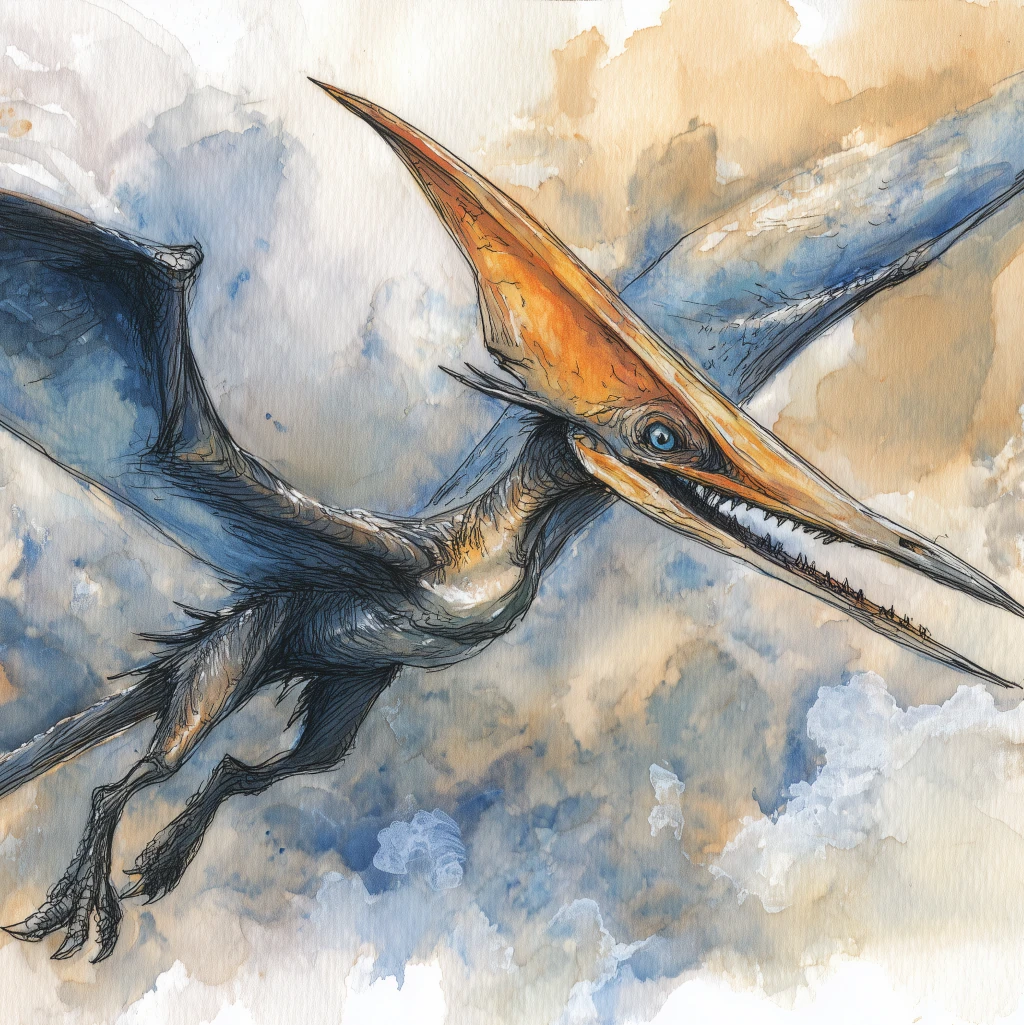
N | Large | Animal | Pterosaur; CR 2
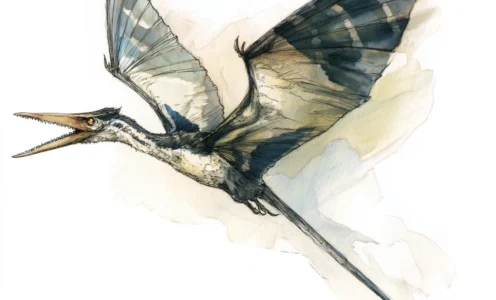
The pteranodon [teh-RAN-oh-don] is one of those menacing sky-terrors that looks like it was designed by a berk with a grudge against aquatic life. Its long, stabbing beak and a backward-sweeping crest gives its head a sharp, shark-like silhouette—and its temperament isn’t far off either. These things hang around lakes and rivers, ready to spearfish anything they spot near the surface. Mainly fish, but they’ll take small animals and even small dinosaurs if they think they can get away with it. Anything that’s weak, stranded or even just barely edible. Think of them like eagles that moonlight as vultures and you’re about right.
Stats: [ D&D 2e | 3e | 5e | PF 1e | 2e ] Monstrous Manual [2e] p54; Serpent Kingdoms [3e]; Monster Manual [5e] p79-80, 367; Bestiary [PF1e] p85; Monster Core [PF2e] p278; see also Wikipedia
Pterodaustro
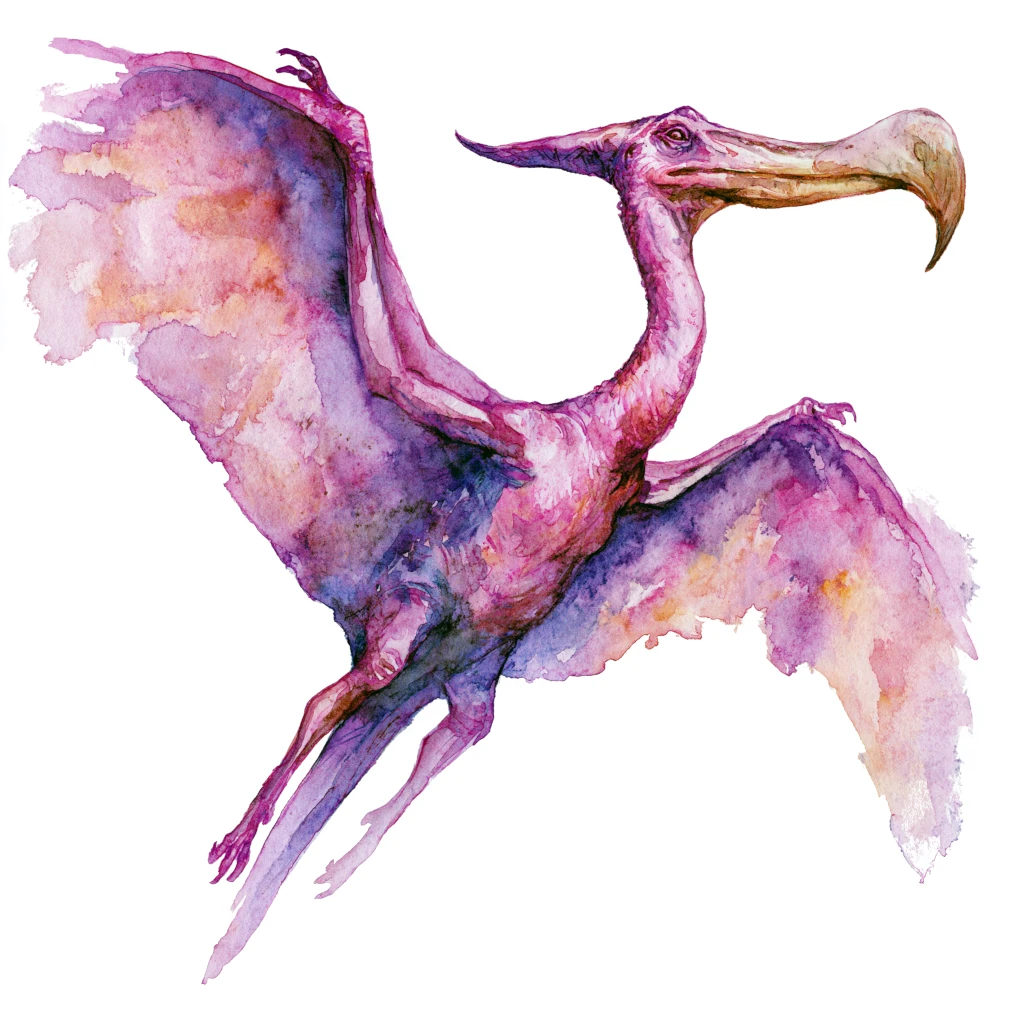
Wing from the South; N | Medium | Animal | Pterosaur; CR -1
If you crossed a flamingo with a velociraptor you might end up with something like a pterodaustro [terro-DOW-strow]. Brightly coloured, but from their skin rather than their feathers, these beasties have leather wings and enormous, impractical beaks. They are filter feeders rather than hunters primarily, but can still break your leg with a powerful wing buffet. Pterodaustro are jumpy, and always on the look-out for danger. In fact, in flocks they usually have one or two of them watching out for danger while the others have their heads down feeding. Good luck sneaking up on these pterosaurs, cutter. But if you do get lucky and catch one, chant goes they taste great—just like chicken.
Stats: [ D&D 5e | PF 2e ] Dr Dhrolin’s Dictionary of Dinosaurs p166-167 *; see also Wikipedia
Quetzalcoatlus
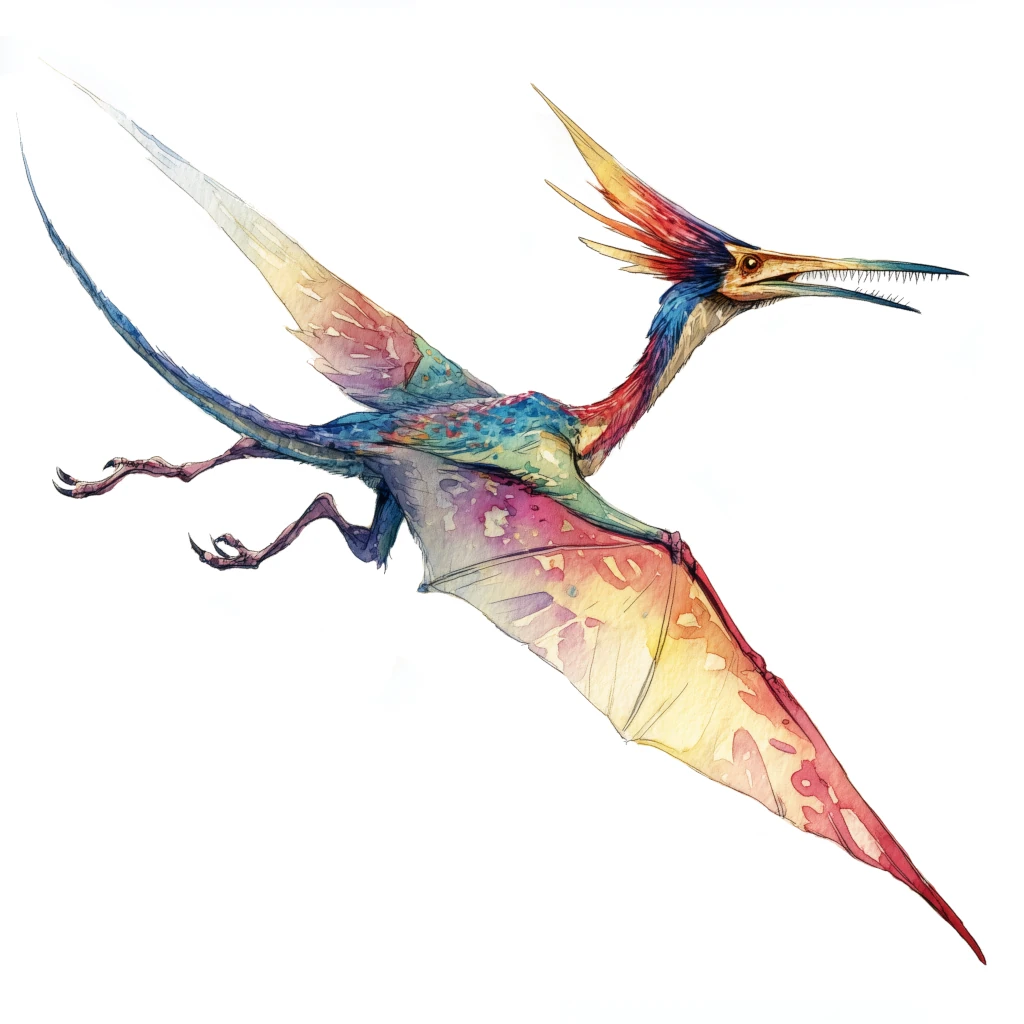
Pterosaurus; N | Huge | Animal | Pterosaur; CR 7-9
The quetzalcoatlus [ket-zal-coe-AT-lass] is the sort of beast that makes the whole marsh go quiet when it comes winging overhead. It might not be a dragon, but from the ground it sure can pass for one at a glance. It’s all long neck, blade-bright beak, and a wingspan broad enough to throw a shadow over the banks on both sides of the river. It hunts from on high, stalking from above with the patience of a fisherman and the nose of a scavenger—then dropping down low to scoop up fish, reptiles, carrion, or anything that dares to linger. Even when it’s grounded, with folded wings and that bright head bobbing over the mud, it still looks like a thing that ought to be airborne.
Give one a look at food, and it’ll usually snatch it. Give one a chance at live prey, and that’s where the trouble starts. Quetzalcoatlus are not blood-lusting brutes; they’re opportunists. Now that can be worse of course, because it means they’ll test anything they think they can carry off, and they have the reach and nerve to make a good try of it. They’re awkward on land compared to their aerial grace sure, but they are far from helpless. That’s where the smart planewalker learns caution: a quetzalcoatlus can lunge through reeds, snatch from across a stream, or launch itself skyward with a struggling victim in its jaws before the rest of the team knows what’s happened. Folks call them swamp stalkers, dragonlings, and worse besides. Best name for them, if you ask me, is Trouble.
Stats: [ D&D 2e | 3e | 5e | PF 1e | 2e ] Monstrous Compendium 3: Forgotten Realms Appendix [2e]; Monster Manual II [3e] p72; Volo’s Guide to Monsters [5e] p139-140; Bestiary 6 [PF1e] p95; Monster Core [PF2e] p278; Dr Dhrolin’s Dictionary of Dinosaurs p168-169* has a CR9 variant statblock. I’ve combined creatures from a couple of different entries into one as they were very similar; see also Wikipedia
Rhamphorhynchus
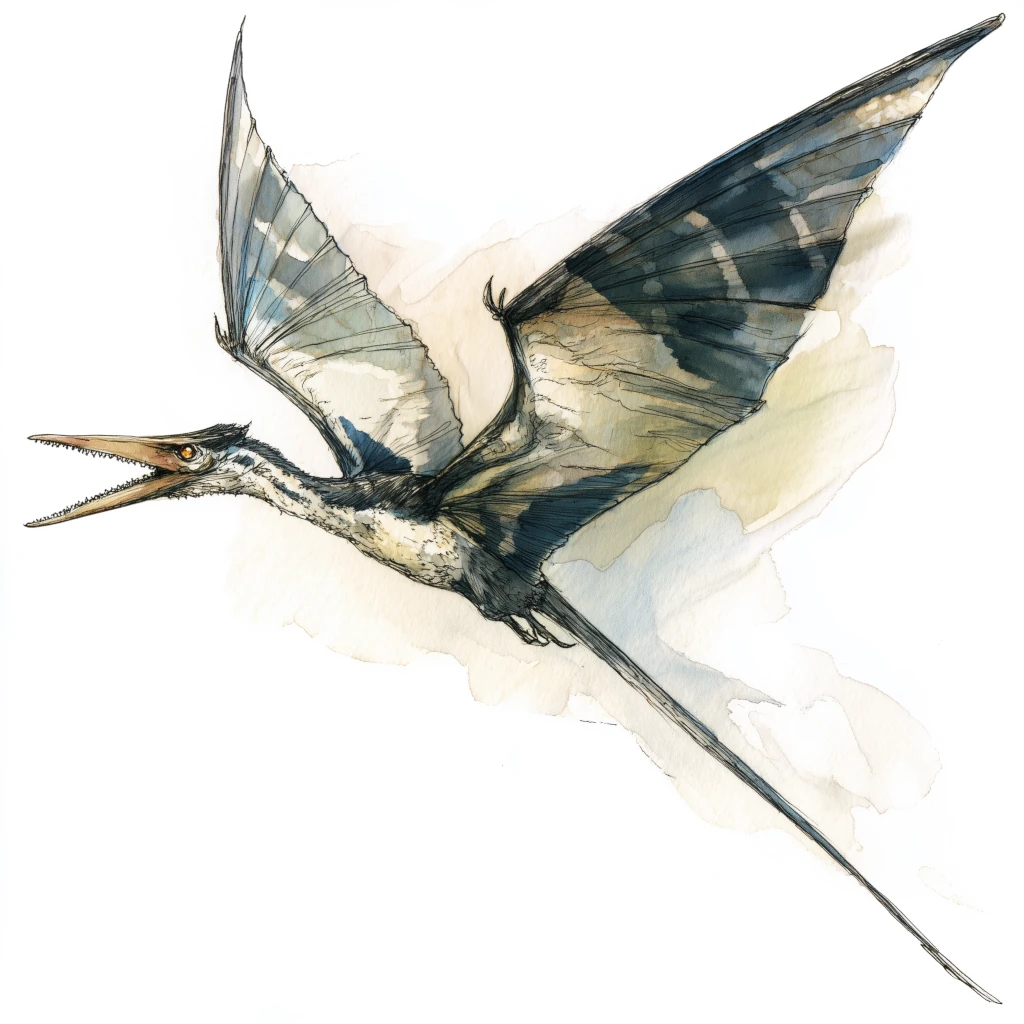
Snout-Beak; N | Small | Animal | Pterosaur; CR 1/4 [D&D], -1 [PF2e]
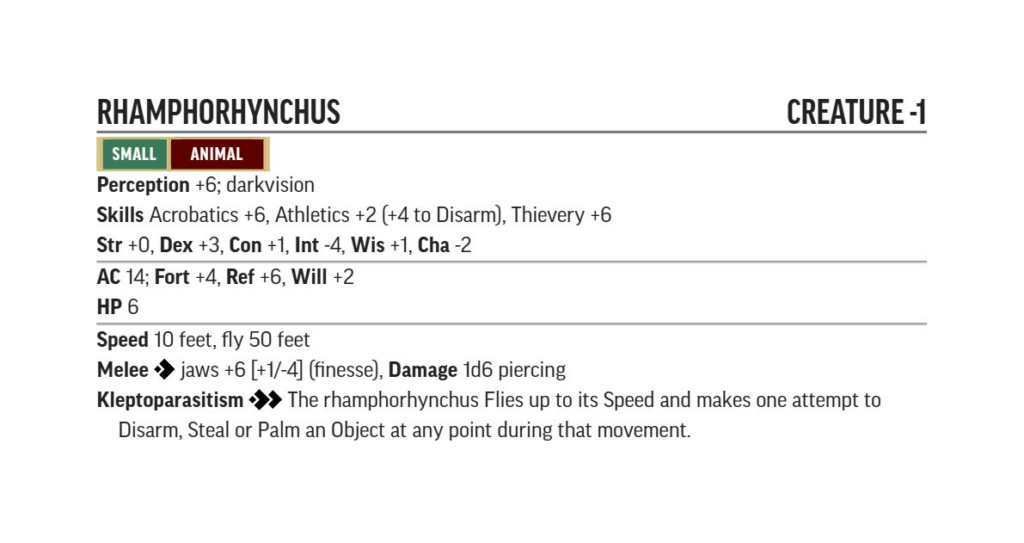
Small pteranodon that hunt for flying insects, bats or birds, the rhamphorhynchus [ram-foe-RIN-kus] are fast and agile in the air. They are timid and will avoid combat with creatures larger than themselves, but when forced to fight they nip at enemies with their sharp beak. They are, however, drawn to fast-moving objects, especially shiny ones. A rhamphorhynchus may try to snatch small objects from combatants, but are particularly known for catching arrows and thrown weapons mid-flight, before flying off with them or dropping them—sometimes on opponents.
In game terms, have the beast ready its Kleptoparasitism action with the trigger of a missile weapon being fired within a 50-foot radius. If it makes a successful Thievery skill check against the class DC of the cutter who fired or threw the weapon, consider it successfully snatched. On a critical fail, the rhamphorhynchus is hit by the missile instead.
Stats: [ D&D 3e | PF 2e ] Dragon Magazine #318 [3e]; Homebrew ‡ [PF2e]; see also Dr Dhrolin’s Dictionary of Dinosaurs p172-173 and a CR3 swarm stat block on p175 which offers a variant statblock for of this creature*; see also Wikipedia
Thalassodromeus
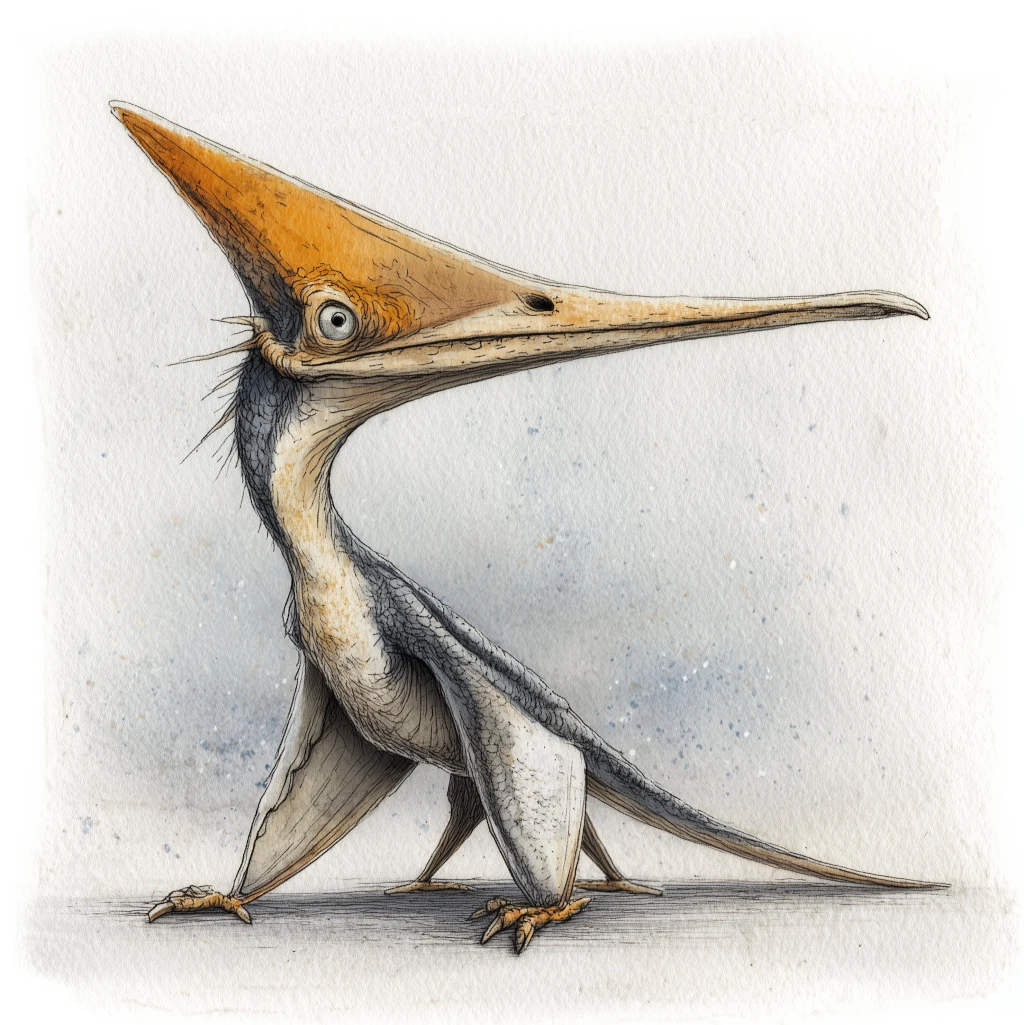
Sea Runner; N | Large | Animal | Pterosaur; CR 5
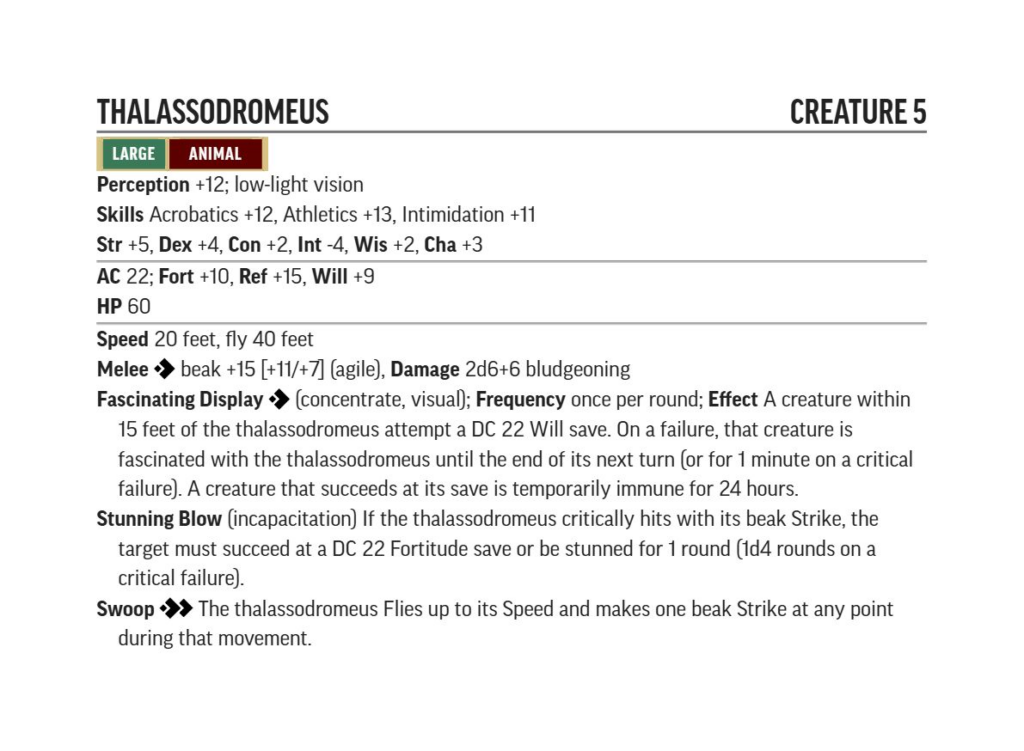
The “sea-runner” thalassodromeus [thal-ASS-oh-DRO-me-us] got its name from its supposed ability to hunt by skimming over the surface of water, dipping its lower jaw just below the surface to catch fish. This turned out to be a myth, as the living pterosaurs turned out to be much more horrifying. Thalassodromeuses are terrestrial predators, who hunt like oversized storks. They glide above the surface, watching out for prey. When they notice a suitable target, they swoop in and dispatch of it with well-placed beak strikes. Unlike some other pterosaurs, thalassodromeuses are also decent runners, and have been known to pursue their quarry on land. However, these creatures have a gentle side to them. During the mating season they gather in large groups to show off their giant beautiful head crests and perform elaborate courtship dances. This sight can be fascinating, but should something disturb the gathering, the agitated animals will retaliate with doubled ferocity.
Stats: [ PF 2e ] Homebrew [PF2e]; see also Wikipedia
Tupandactylus
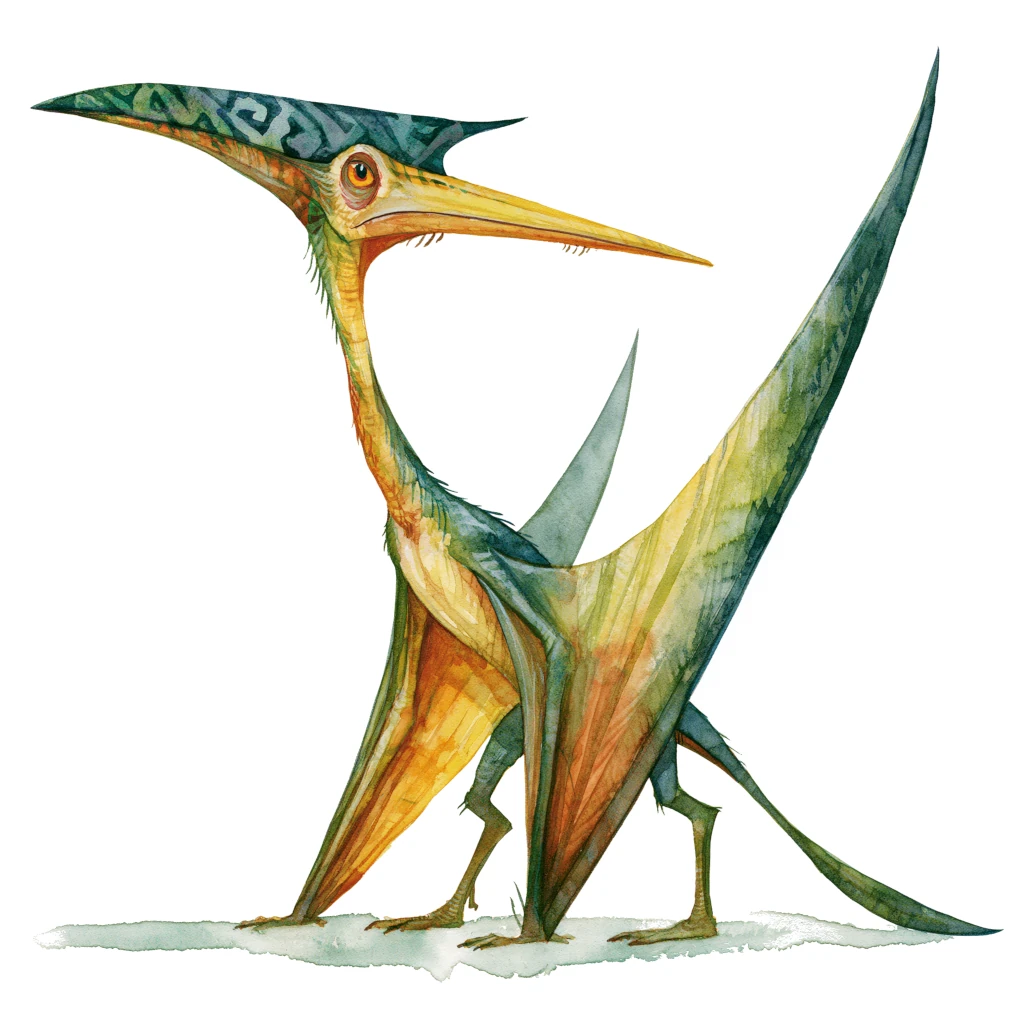
N | Medium | Animal | Pterosaur; CR 2
A skittish omnivore, the tupandactylus [too-pan-dack-TIE-lus] forages for food in the undergrowth, eating plants, fruits, grubs, small insects and reptiles. Its enormous head crest is used for mating displays, but the drama these creatures put into their displays can distract or intimidate dinosaur and planewalker alike! They are able to fly mainly as a defence mechanism, and will launch themselves with a run and leap if they feel threatened.
Stats: [ D&D 5e | PF 2e ] Dr Dhrolin’s Dictionary of Dinosaurs p110-111*; see also Wikipedia
Sources: Margarita and Jon Winter-Holt. Palaeontologywatch: Pterosaurs are not strictly dinosaurs in the scientific classification sense, but rather large flying reptiles that are often found in areas and eras that dinosaurs are also common. Most planewalkers who aren’t Guvners use the terms interchangeably. There are some therapods who developed the ability fly, however, and those beasties are actual dinosaurs. It’s those creatures who are the ancestors of modern day birds. * Copyrightwatch: The excellent Dr Dhrolin’s Dictionary of Dinosaurs is available in multiple RPG rulesets—creatures and stats are not available online unfortunately, and not reproduced here for copyright purposes. I only have the PF2e version, please let me know if the page numbers are different in the D&D version!
Hello,
I recently looked through the works on your page, and I really enjoyed them. I was wondering if you plan to continue making more projects like these.
I would love to see artwork of the Asura, Uthra, Axiomites, Baatamidar, Kolax, Mediators, and especially the Proteans. Many of the famous Protean Lords have very little artwork available, so it would be amazing to see your interpretation of them.
Thank you for your work, and I hope to see more in the future.
I’ll be working my way through all of them eventually, have no fear!