

[ Smoke > Burgs > Slaan ]
[ Ancestries | High-Ups | History | Locations | Religions | Services ]
[ Services | Businesses | Underworld ]
Services of Slaan
Location: Para-Elemental Smoke / Core Smoke / Slaan
Trade is the lifeblood of Slaan—as it is for almost any major planar metropolis. One of the reason trade concentrates in Slaan is its large concentration of portals, another is the relatively stable and personable government—and relative is the key word here, berk. A third is the absolute barrenness of the Plane of Smoke around it, there really is nothing like Slaan anywhere else in the infinite fume-riddled wastes. All these factors make Slaan a promising city for trade, but what exactly is traded there?
The short answer is just about everything. The markets of Slaan contain all manner of items, brought from all over the Inner Planes or the Prime. From etherfarer oddities to magical draconic paraphernalia, from distilled lightwine from Radiance to sentient slime pets from Ooze, almost anything can be found in Slaan. However, there are certain trades that dominate the city, the bread and butter of Slaan, if you will.
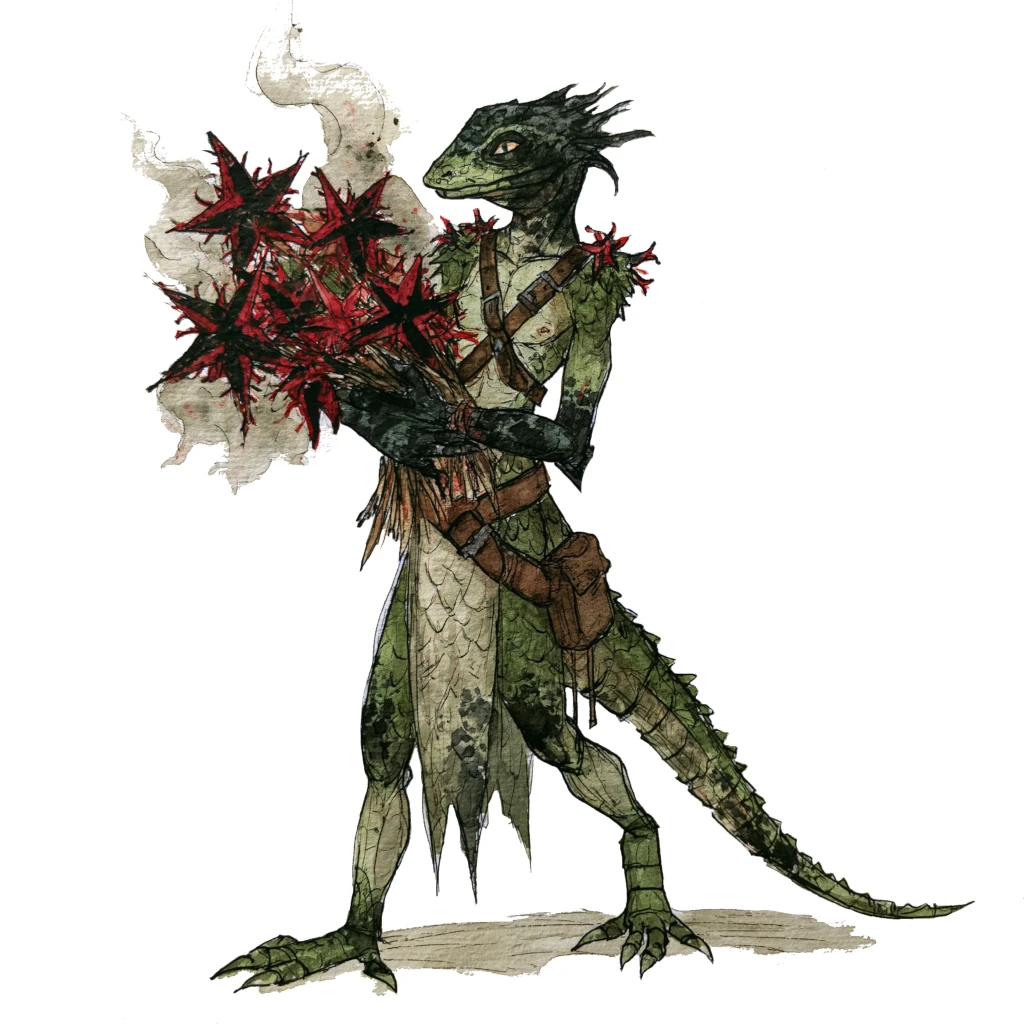
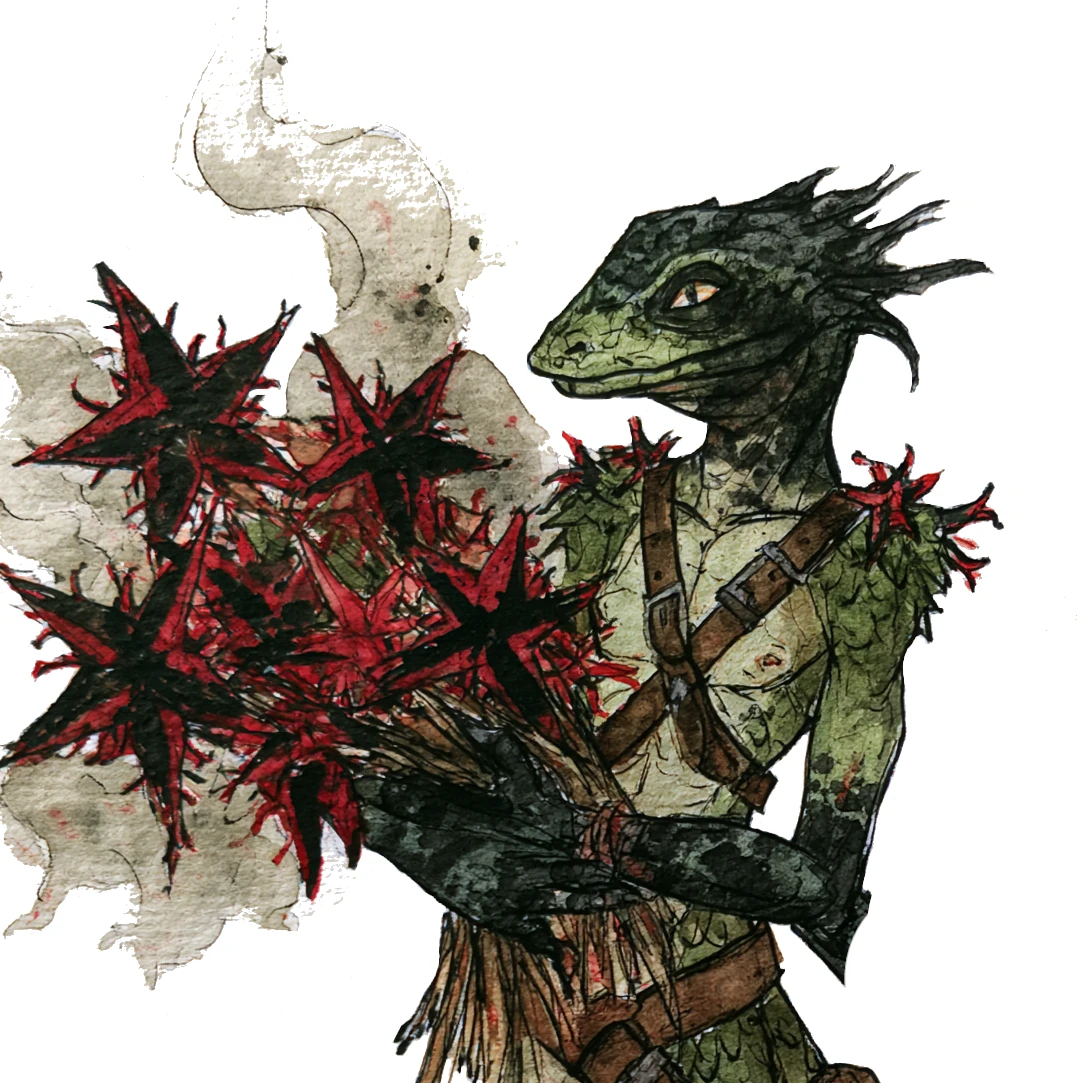
By far the most important of these is food. Smoked Slaan starfish may not be the most tasty fodder in the multiverse, but they’re food, and they grow from just smoke and water in farms on the outside of the burg’s shell, and they’re nourishing enough. Despite its huge population, Slaan has a surplus of foodstuffs, and that’s an agricultural record matched almost nowhere else on the Inner Planes. Even the fabled City of Glass only feeds itself by hunting the surrounding waters nearly to death. Folks don’t think about this much in Sigil or the Outer Planes, where they import food from the fertile fields of Outlands, Bytopia, Elysium, Arcadia or Arborea, but in the Inner Planes unles you’re lucky with portals just isn’t an option. Agriculture is Slaan’s most important product, and their biggest export. The lizardfolk charge prices for it that would seem ruinous in Sigil, but compared with other barren Inner Planes, even three times the Sigil price is a bargain.
There are other major trades here. The burning desert lizards are experts in ceramics, and mercenaries are readily available here, since the duelling circuit attracts hordes of fighters, and many of the lizardkin races are suitably militant. A side effect of this is that Slaan also traffics in gambling, and betting on duels is fast and furious. Slaan does excellent business in poisons, generally manufactured by helods, herbal remedies and potions formulated by druids, guides to the Inner Planes, maps and homunculi sold to planewalekrs, scimitars—as the favoured weapons of both genies and lizardkin Slaan has a number of superb weaponsmiths, healing by either helod medicine or the city’s priests), and art—abstract and strangely eye twisting pieces are made by almost every lizard race, but especially dact and xulgath. Finally, while this is not precisely a trade, Slaan is one of the premier places in the multiverse to get documents translated from or to draconic.
There are also less legal, but tremendously profitable trades. One is assassination, for which the xantu have a well-deserved reputation. Another is slavery, for anyone lost in the wrong place in Slaan can be seized and be dragged away to secret places and eventually to the servitude of the dao. Dragon body-parts smuggled out of Mineral are another source of money, and in high demand from sorcerers, and alchemists.
With all these things changing hands it becomes easy to see why Slaan is such a busy place, and why control of the markets is seen as such a prize in the city. As far as currency, Slaan is like most locations on the planes, and merchants accept just about jink of a reasonable size. However, due to the proximity of Mineral, the price of gems and jewels is strictly controlled, and such items can only be sold to licensed traders. The Minister of Trade has arrangements with several major trading companies to sell such items carefully and widely-dispersed on the Prime, and therefore keep Slaan from losing money as dumping large quantities of gems and flooding the market will not only draw the ire of mineral elementals but also cause their value to crash.
Visiting Slaan Without Getting Eaten
The Following is Excerpted from “Visiting Slaan without Being Eaten, or What Pompous Cagers Should Know When they Get Here” a pamphlet written by a Prime who had become a permanent resident of Slaan and who was still harassed about it by Cagers. The inspiration for this project was an incident wherein three factioneers from Sigil were swarmed and devoured in the Warrens, without so much as a bone ever being recovered.
All right all you nitwits from the Cage and elsewhere, listen up. This here city is called Slaan, and it doesn’t work the way your Outer Planar towns work. This is the Inner Planes, where we don’t bandy about belief as the be all and end all. Instead of what you can blather, what you can do tends to count a lot more here. This is a place of action and substance, not spouting and magic.
Now then, Slaan’s a big city, probably bigger than Sigil in area actually, since so much of Slaan is built vertically up the walls. We also have a lot more open space too. There’s less people than in Sigil though, and a lot fewer travellers clogging the place, so it’s more open. Hell, there are public parks, well bogs really, in Slaan. Anyway, the city’s way too big to map with any thoroughness, especially since that’d be one doozy of a map, what with everything built on top of other stuff, and buildings hanging from the ceiling and all. Still the overall layout of the city is pretty simple, it’s a big shell. That means it wraps around itself and gradually grows tighter and tighter the closer you get to the bottom. This means the floor’s always sloped, though it’s a minor thing in most places, and at least it’s uniform.
Cutters coming to Slaan should understand it’s not laid out all helter-skelter like Sigil or a lot of other places are, there’s an organization to the broad areas and it tends to divide the city up. These are the Layers of Slaan, and I’ll talk about them more later, but municipal structures and things people need aren’t scattered randomly about the layers, they tend to be concentrated so as to make the city run smoothly. Some parts of the city are open to outsiders freely, and some parts aren’t. That’s part of the don’t get eaten bit, you go into the wrong part of Slaan and not only will there be nobody to stop you from becoming food, most of the residents will think you deserve it.
A Cager tends to talk a lot about the feel of Sigil, so I’ll mention a bit about the feel of Slaan. Slaan’s teeming, booming, and surging. It’s rough and crude, filled with cutters who are trying to make something of their lives despite the hostility of the Inner Planes. Though Slaan’s just as old as Sigil it always seems like new. The people here are different, Slaan has a real native population, and the city is theirs. Likely they don’t think quite the way you do, and they think in real practical terms. They don’t see problems with the legal system as a dispute in the struggle of law versus chaos, they see it as a threat to their livelihoods, they don’t see a holy preacher on a street corner a piece of the cosmic puzzle, they see a person trying to usurp the belief of their friends. This breeds a directness into the people that you don’t find in Sigil. Here’s an example, if a Guvner cheats a merchant in Sigil the merchant will go to the Guvners and claim he violated faction rules, in Slaan the merchant will challenge him to a duel, possibly to the death.
Finally, I’ll make a note about language. The planar common tongue is pretty universal out on the Great Ring, but that isn’t the case in the Inner Planes. The different elemental languages tend to hold almost as much importance, and in some areas other languages are dominant. In the case of Slaan, while many in the city speaks and understands common, the native language of most of the citizens is draconic, and that’s considered the first language of the city. This not only helps preserve the mentality and sovereignty of Slaan, its helps trade, since draconic is commonly understood even on the Prime where they may not speak the planar trade speech. It’s important to be prepared for this, and learning draconic is probably a good idea for anyone spending a large amount of time in Slaan.
Services of Slaan
Most services catering to outsiders are found only in the Mouth, but there are some things that the residents use as well, and so are found throughout the city.
GUIDES: Slaan’s residents know how confusing the burg can be to those who have never visited, and the city changes often enough that even those who regularly pass through tend to need some help. The informal Guild of Guides overseen by the Ministry of Outsiders makes sure there are bloods willing to guide a body about the city, for a small fee. Most guides are ipsosaurs, and the prices they charge vary depending on their experience. Guides don’t gather anywhere, but tend to just wander the city freely. Ipsosaurs tend to get along with other lizard-kin well, so they can move about the burg freely. For the right price, an ipsosaur guide can take you anywhere in the city, but they’re careful about who they’ll take where, and charge accordingly. Also, if you anger a guide they won’t show it outright, but they’ll spread the word around and you’ll find many locals inexplicable unfriendly towards you.
DUELLING OFFICERS: Many of the lower ranked members of the Ministry of Duelling have the duty of traveling about and announcing out which duels are happening and when, and trying to recruit others to take part in amateur matches. These are typically elgar, and if harassed they may to try and rip your face off, and thereby get you into a punitive duel with them. Properly approached and garnished however, duelling officers can be valuable sources of information, as many have connections to Slaan’s Underworld and the burg’s seemy areas.
GIANT LIZARDS: In Slaan a horse, donkey, or ox is basically seem as a meal on legs, not a pack animal. Instead the locals use giant lizards to move things about the city when necessary. These creatures are far more versatile here because they can climb. A visitor can rent a lizard, though they are not easy to handle so the the price usually includes the services of a handler too. Giant lizards can be saddled for two relatively light people or one heavier one, while pack lizards can carry a tremendous amount of weight. Even giant lizards should not be taken into the Warrens though, since the xulgath there will attack them on sight as apparently they taste great.
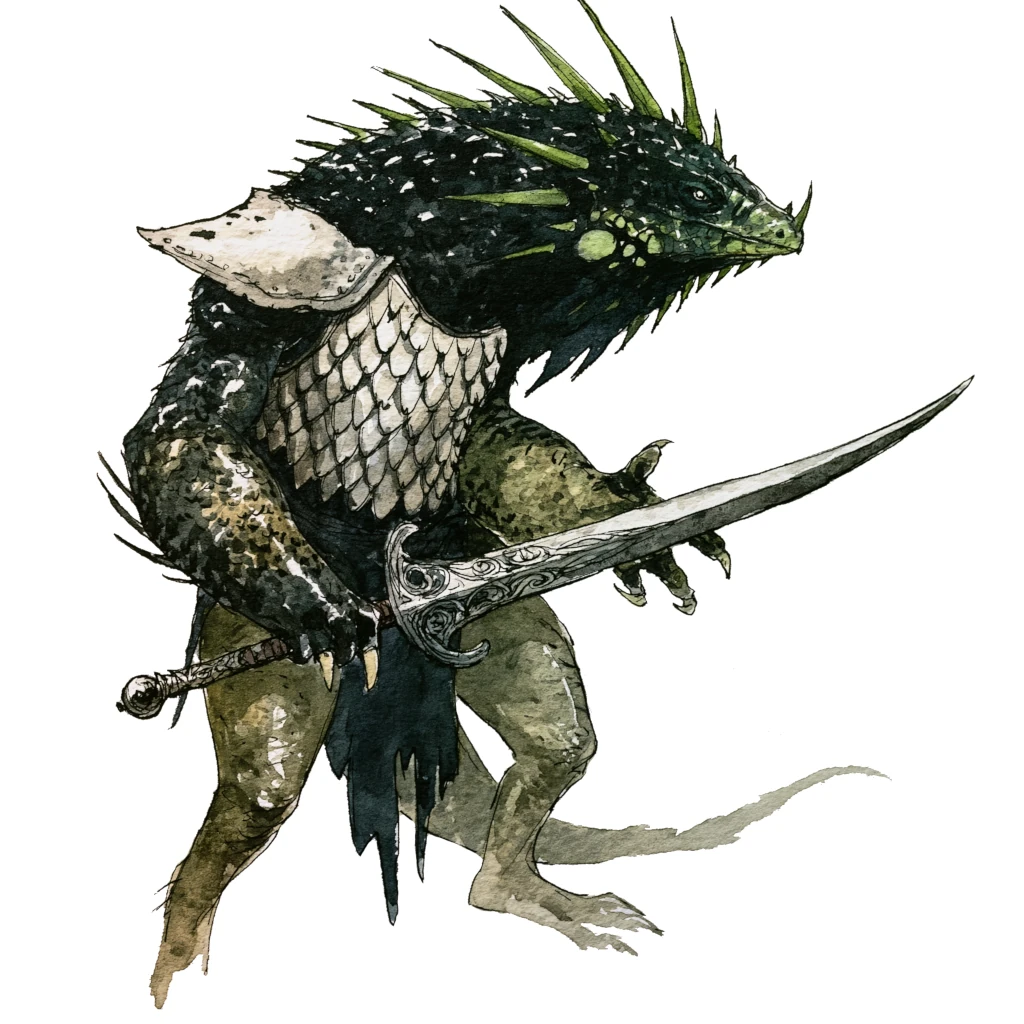
KHAASTA PATROLS: The city guard of Slaan is one of the toughest anywhere in the multiverse, consisting of large bands of skilled khaasta warriors (khaasta fighters [any gender] / LE). Most of these groups are twelve to fifteen warriors in size, and led by an experienced office. Khaasta patrols always wear bronze armour and carry halberds and composite long bows. A third of the squad will take tactical positions and attach with ranged weapons while two thirds will enter melee. Half of khaasta any squad members carry lethal a helod poison and will use it if in life-threatening danger. Officers often carry magical weapons. Occasionally a patrol is mounted on giant lizards.
These patrols enforce the peace in Slaan, and few toughs can take them on. The khaasta give out prizes among themselves for successfully hunting down criminals. Khaasta patrols tend to mete out justice themselves rather than arresting a sod—but be warned that if you irritate a patrol even without committing a crime a squad might just beat you up anyway. If you resist, things can rapidly turn deadly as khaasta put their fists away and charge in to attack with halberds swinging. Patrols typically won’t call for aid unless they are obviously outmatched, and khaasta are notoriously overconfident in their own abilities.
A sufficiently ngood garnish can cause khaasta to look the other way, but they’ll extort a cutter as much as they can get. If you don’t have the presence of mind to bribe every member of the squad equally (perhaps with a little extra secretly for the officer) they’ll just take what you have and then beat you down for attempted bribery. Thus, bribing a khaasta patrol can be a delicate operation, and extraordinarily expensive.
COURIERS: It’s often hard to messages around Slaan safely, with all the traffic going through the city, and sometimes there just isn’t time to do it yourself. The simple solution is to hire a courier. The couriers of Slaan are primarily dact, and they are quite reliable. Sure, they may not always get the message there on time or perfectly intact (lots of Slaan messages suffer from water damage) but they consider it a personal failure when that happens. The only problem is that it tends to be hard even for other lizards to tell dact apart, and many dact thieves work the courier trade under false names. The message may still arrive, but probably not without it having been read along the way.
TRASH COLLECTORS: Slaan is kept surprisingly clean by the scavenging actions of kobolds and xulgath, and they can be found picking throughout the streets collecting anything left behind or discarded by others. A body with jink or meat to bribe a kobold can often look through their findings, and they’re the cutters to go to if you need to find anything that was genuinely lost, as opposed to stolen. These beings can also serve as informal guides, might answer questions about the nearby area for jink, and they’re likely to reveal secrets the ipsosaurs won’t. They can also arrange to have things ‘trashed’ as long as whatever the thing in question is isn’t alive. Of course, these creatures are untrustworthy, and may betray someone to the authorities for better treatment, additional money, or just spite.
Businesses
BUSINESS SPECIFICS: Places in Slaan tend to be a bit different from places elsewhere. First, there tend to be three kinds of businesses for every discipline. One that caters to residents, one that caters to outsiders, and one that caters to both. The restrictions to where these places are found tend to be location. Outsider-only type places are found in the Mouth exclusively, resident only locations are found mostly in the Blacksands and Marshes, while the Boggylands have a lot of mixed places, as does the Mouth. However, even places where residents and outsiders congregate together have a different feel from a lot of places on the planes. Here’s some differences that most planewalkers find important.
TAVERNS: Planewalkers and workmers both spend a lot of time in taverns, and Slaan is no exception. The Mouth and Boggylandss are full of the places, and taverns can found in some form in all of the layers. One thing in common in almost all Slaan taverns though, is the nature of the drink. Bub in Slaan is not for the weak of stomach. Local farmers brew up some foul knock-dwarves-under-the-table-in-a-sip nastiness from smoked starfish, although it seem to be popular with lizardfolk. No matter what kind of atmosphere the tavern may cultivate, there’s a commonality to the brews. The local varieties are the only thing served in cheap places, and they still serve the stuff even in high-class wine establishments. A cutter can get imported luxuries, but expect dirty looks from lizardfolk farmers, and to pay an arm and a leg for it too. The local liquors is affectionately referred to as Stargut, and it’s not an inaccurate description of it. Smart cutters are careful with how much they drink, it’s designed for a reptilian metabolism, and some of the farmers and labourers can conk even fiends under the table.
INNS: It’s easy to find lodging in Slaan, since so many traders pass through the city. There are places to suit all tastes and budgets, from the elemental to the utilitarian. Enclosed aquaria are common, since lots of Slaan’s trade passes on to the City of Glass. Almost all the inns in the city are in the Mouth, though someone in good standing with residents elsewhere can usually find someone willing to take them on as a boarder. In Slaan, make sure you sleep in an inn or a house, becayse sleeping on the street is not only a violation of the law, but an almost guaranteed way to end up either in a cook pot or a dao chain gang by morning. Don’t think the law will stop it either, for the khaasta are easily garnished to look the other way on that matter.
STABLES: All the city’s stables are in the Mouth, and they all tend to be both built like fortresses and heavily guarded. Slaan may have a food surplus, but that don’t keep xulgath, or even more refined races, for raiding the stables to find prime meat. Therefore almost all the city’s few stables are operated jointly by major trading companies. Expect to pay a lot and get rather poor service if you need to put up a mount there.
MARKETPLACES: Ultimately the best way to describe the Mouth district is as a giant market. It might be disorganised and jumbled, but it’s a place of buying, selling, and dealing all hours of the day. Just about anything can be found there, if you look hard enough. However, the specialty products of many of Slaan’s residents rarely find their way up to the Mouth, except at highly inflated prices. There are markets in other layers of the city as well. These mostly sell everyday items for the residents, but they also showcase all sorts of Slaan’s top crafts. If a body wants to find them at a decent price they’ve got to be willing to go out among the lizardfolk and find them. The city also has a number of secret markets, both in hidden places in the Mouth and in the dark and dank depths of the Warren, where all sorts of illegal things and services are bought and sold.
Slaan doesn’t offer a lot in the way of ‘cultural entertainment’ as Cagers might call it. There’s no Civic Festhall, theatre or Sensorium in this burg. So while the occasional musician, actor, or acrobat can be found in a high traffic area of the Mouth, the lizardfolk just don’t appreciate this kind of stuff. Instead they gather around the duelling arena and watch, bet, and blather about the bloody sport. Gladiatorial combat is a deeply ingrained in Slaan, and it helps to keep the peace as well, since many of the races take out their aggression in the duelling ring, rather than elsewhere. All sorts of secret deals, and corruption circulates through the duelling arena too, though the turnover rate over criminals here is ridiculously high, since the city’s rulers and their silent xantu enforcement take such activities seriously.
The Underworld of Slaan
Like all cities of size, Slaan has people and organisations that make their living on the wrong side of the law. However, this city is not a city of humans, or even close to humans, and so those who engage in what Sigilians refer to as the cross-trade are a little different than in other places. First, there are two types of crime in Slaan—the type that affects the reptilians, and the type that doesn’t. There are also special circumstances caused by the existence of the xantu, as that race affects the politics of criminality greatly. Many criminal groups also have links with the dark cults of Slaan, and in some cases members of the city council, such as the minister of Trade. With the exception of the watery depths, where the rules of Opolin are iron-clad, there is some criminal element everywhere in Slaan.
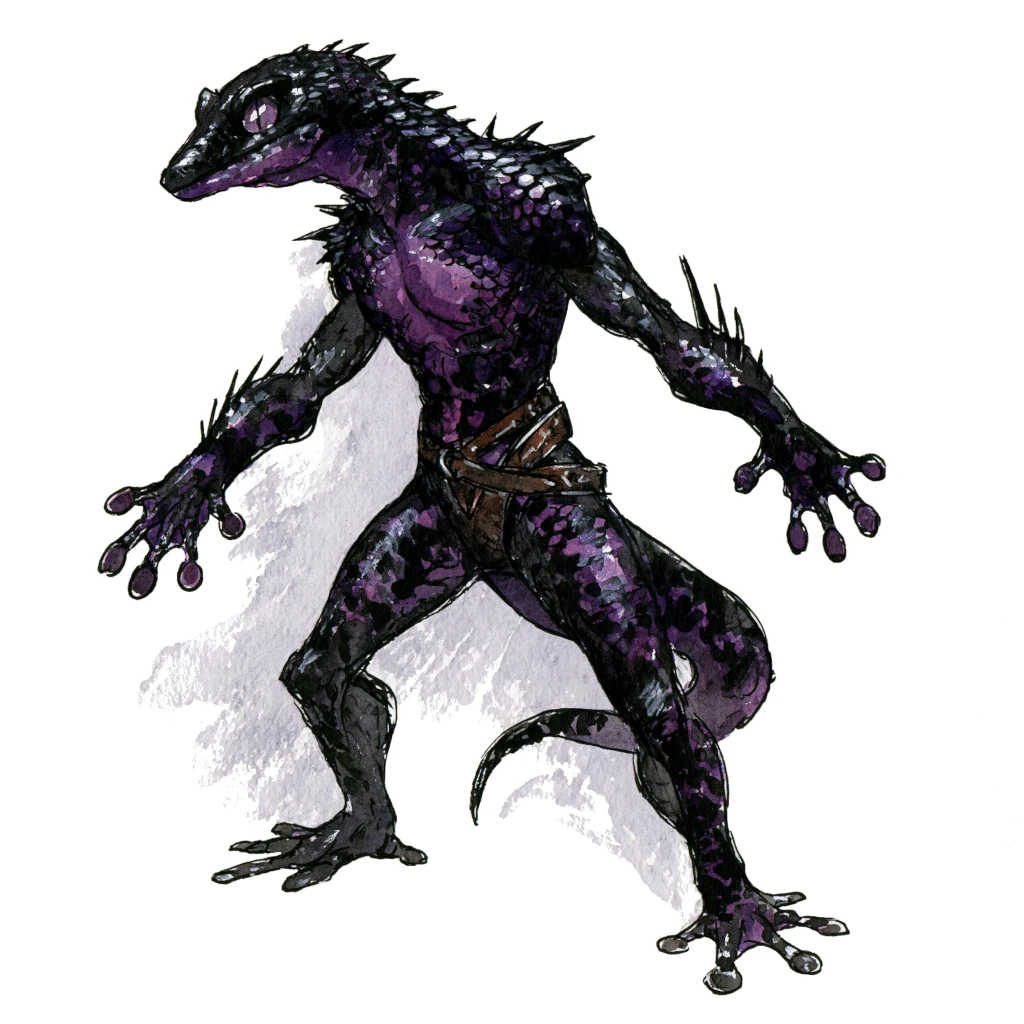
THE GREATER PROSCRIPTIONS: All aspects of crime in Slaan are affected by a few certain proscriptions. One is that there is no crime among the water militia and the other custodians of the depths. Another is that the rulers absolutely refuse to tolerate any criminal ploys that jeopardise Slaan’s food supplies, and therefore the farmers are relatively safe in their fields. The largest proscription, however, is that no one may encroach on the turf of the xantu. That race holds itself the sole master of certain criminal policies and anyone trying to usurp their role will be horribly exterminated, without exception. The most notable proscription of the xantu is assassination. They are the assassins of Slaan, and while they may be approached with a request, they only takes jobs when they wish and determine things are in their group’s own best interest. Anyone else who kills another in cold blood in Slaan is caught in a race between the Xantu and the militia to string them up first. This rule has broad ramifications, as no one is sure just what types of killing are allowed in Slaan. As such, armed robberies and muggings are carefully planned and less often seen, since this might be considered assassination. Of course, once the prey actually fights back it’s another story, and most of the residents of Slaan fight back.
CRIMINAL ORGANISATIONS: Much like in any great city the majority of crime in Slaan is the province of the individual: Thieves, cutpurses, knights-of-the-post, blackmailers, spies, snake oil salesmen, and the like. While the majority of crime is small scale, there are two criminal trades that are organizsed on a much larger scale. The first of these is body snatching—with the unfortunate victims destined to either become food, or slaves—run by yuan-ti gangs. The second is dual fraud, at which the Dark Glass Guild has cornered the market…
BODY-SNATCHERS: Yuan-ti gangs, and mercenaries who serve them, are the primary perpetrators of kidnapping in Slaan. They are acting as proxies for dao slavers, to whom they sell on the most capable-looking bodies for profit. Yuan-ti gangs are generally cellular, loosely arranged around the church of Mershaulk, their sleeping god. The yuan-ti don’t get their hands dirty with the actual kidnapping, of course—that is left to kobolds (who serve as spies, scouts and look-outs) and xulgath (who do most of the actual heavy work). They typically subordinate whoever they can, whether that means corrupting khaasta guards or ipsosaur guides, or cajoling half-dragons to work as enforcers. These organisations are deliberately loose, mostly a network of secret pickup points and drop points for the bodies, all connected to the mobile slave market in the Warrens where the captured eventually end up. From there the yuan-ti must either use a portal after garnishing its guards (something they do only rarely as this is expensive) or magically transport their slaves outside the city to dao buyers waiting in out the smoke. They will sell primarily to dao, but let the efreet and anyone else who can put in a good bid have their chance as well, since driving up the bidding only increases their profits.
The greatest obstacle to bodysnatching gangs are the workings of the Order of the Broken Chains, who lead strikes into the Warrens searching for the slave market, and ensure the portals out of the burg are patrolled and teleportation magic watched for. In Slaan however, xulgath steal people off the streets all the time, mostly to eat them. The khaasta patrols don’t consider it their responsibility to deal with this. That a fraction of the abducted are actually taken as slaves does not escape them, but the yuan-ti hide their work behind this background of violent crime which makes detecting the slave trade far more difficult. After all, it’s difficult to differentiate between the missing and the dead in a city where corpses are consumed. Any bodies the yuan-ti are unable to sell to slavers tend to be sold instead to cultists of Falazure for sacrifice. They pay far less, and yuan-ti dislike loosing profits in this way, but it’s better than wasting them on xulgath.
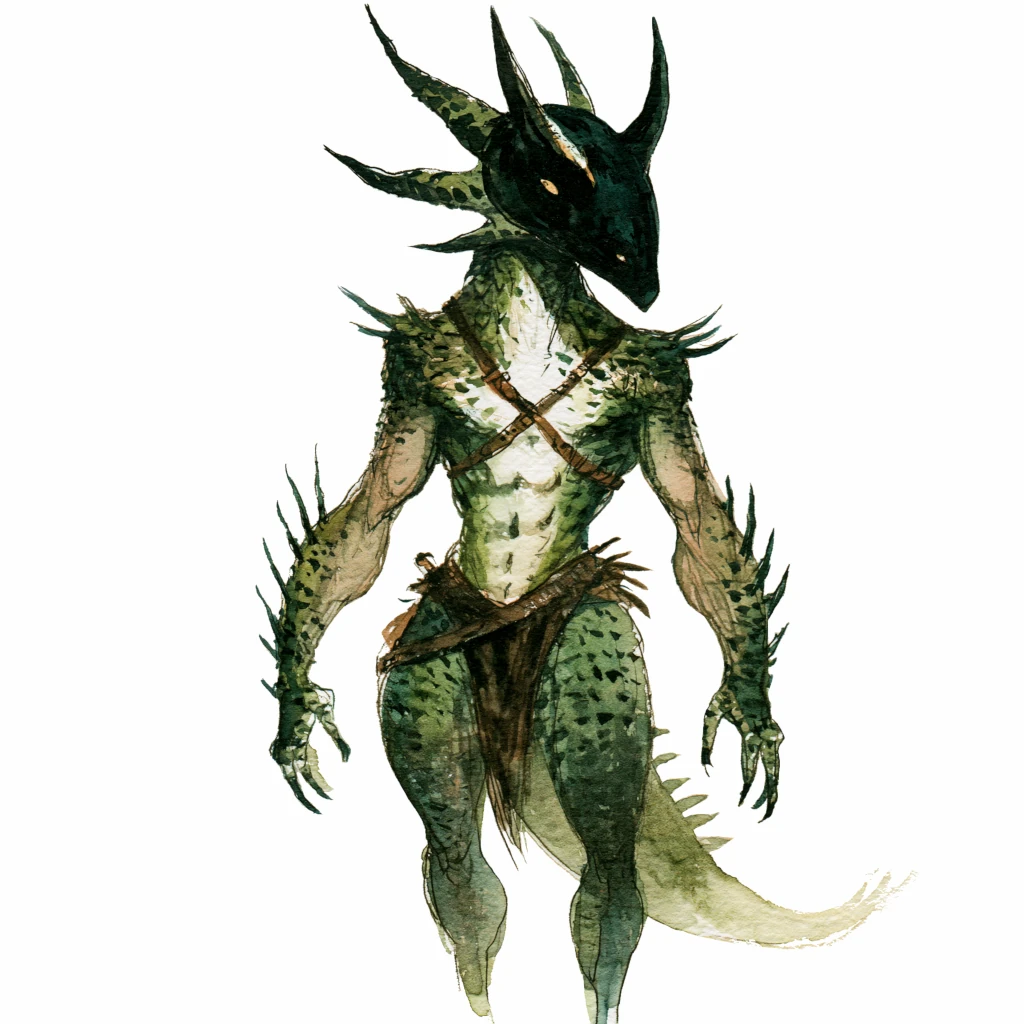
DARK GLASS GUILD: Every member of the Dark Glass thieves’ guild is gambling with their own lives. In Slaan, cheating in a duel is something akin to sacrilege, and getting caught is a sure way to end up on the sharp end of a xantu dagger. Therefore the guild survives by enforcing absolute secrecy, and it is something of a task to even find someone to approach. The prices they charge are downright extortion, and grow exponentially as the more notable the duellist are. However, the Dark Glass Guild can draw upon its secret network of corrupt officials to sneak in the most unassuming of poisons, slide a spell past the referees, and even providing enough misdirection to allow an alternative fighter to switch places with an actual duellist.
Duel fraud is only part of the nefarious activities undertaken by the guild—common thievery and extortion are their bread and butter. Their greatest profits however come from cheating on duels, however, for there are no depths to which some hopeful duelists will sink. The Dark Glass is most commonly employed when one of the rich residents of Slaan is challenged to a punitive duel, or by gamblers seeking to make big money on thrown fights.
The guild has suffered some setbacks of late. Six months ago, the elgar dueling minister was willing to overlook their activities, and had several corrupt officials in place. An insider duellist had worked their way up to almost Champion rank, and the Guild was hoping to extort big jink by betting on his crooked fights, when disaster struck. The Minister was exposed—the Guild is still trying to determine who sold them out—and the xantu assassin who hunted him down ended up as the new minister. Of course, Nil doesn’t do anything, leaving Viriom, who long ago proved utterly incorruptible in charge. In addition, many of the old Guild contacts in the Ministry have gone quiet in fear, as the xantu killed many of them in the backlash that followed the Minster’s death. The Dark Glass Guild is lying low for now, and trying to rebuild their contracts and agents. They hope that they can corrupt any impressive new foreigners who take a shot at the amateur’s circuit.
Members of the guild are complete unknowns—it seems they don’t reveal their identities even to each other—and always meet wearing masks of dark glass so their faces cannot be seen. It is assumed the membership is small, but that it includes elgar, dact, and helod. There is suspicion that the guild’s leader, known as the Black Lens, is a rogue xantu who has parted ways with their people.
Source: Inner Planes [2e] p13 (brief mention), expanded upon by Mechalich, edited by Jon Winter-Holt. Canonwatch: ‡ The expanded details for this location are homebrew and were rescued from the dead-booked Planewalker.com site.