
[ Smoke > Burgs > Slaan ]
[ Ancestries | High-Ups | History | Locations | Religions | Services ]
Ancestries of Slaan
Location: Para-Elemental Smoke / Core Smoke / Slaan
Slaan is home to many ancestries, but its reptilian inhabitants dominate the city. They’re the cutters who truly run the burg, and the only ones fully welcome beyond the Mouth district. Members of each race often fill a particular within the city, although the iruxi lizardfolk fill most of the responsibilities, for they’re the largest demographic present in the city—by recent estimates iruxi make up half the city’s total population. There’s no love lost between the other races who tend to regard each other with suspicious and stick to their own communities, though most acknowledge the dominance of the lizardfolk, and that there’s no ouvert malice from the leaders. While all races can be found represented in the Mouth, individuals often dwell in specific levels of the city amongst their own community.
Reptilian Races
The reptilian peoples are the most at home in Slaan, and the only ones welcomed without question beyond the Mouth. The city, despite its openness and trade purposes, is their home, and they consider it accordingly. The term ‘lizardfolk’ is used by these peoples to distinguish themselves from non-reptilian people.
IRUXI (lizardfolk): The most common and prevalent race in the city, it is the iruxi [ee-RUX-ee] (erroneously called lizardfolk, or lizard men by the clueless) who truly run Slaan. The citizens of Slaan might be the most intelligent lizardfolk in the multiverse—or at least that’s how they seem to think of themselves. No less wise than any other sentient race, the iruxi of Smoke have curbed many of the impulses found elsewhere among their people. They hold positions as herders, crafters, business owners, traders, and essentially all positions of civic authority within Slaan. The iruxi run the city, though they prefer to leave the drudgework to others. Their great strength and stamina, and tolerance for the hot and wet environments present throughout the city, make them the natural leaders here. It was iruxi explorers who settled Slaan before any other race, though many credit the desert lizards for helping them achieve their current intelligence. Despite their relative civility, iruxi can still be violent people, and the laws of Slaan reflects this. The burg is rough and tumble, and often crude, but that fits with its free-trading image, and is considered by more adventurous planewalkers to be a benefit. The likes of Sigil’s Golden Lords are neither needed nor wanted on the Inner Planes.
Stats: [ D&D 2e | 3e | 5e | PF 1e | 2e ] Monstrous Manual [2e] (as lizardman); Monster Manual [3e] (as lizardfolk); Basic Rules 2014 [5e] (as lizardfolk); Bestiary [PF1e] p195 (as lizardfolk); Monster Core [PF2e] p226, also a playable ancestry in Player Core 2 [PF2e] p24
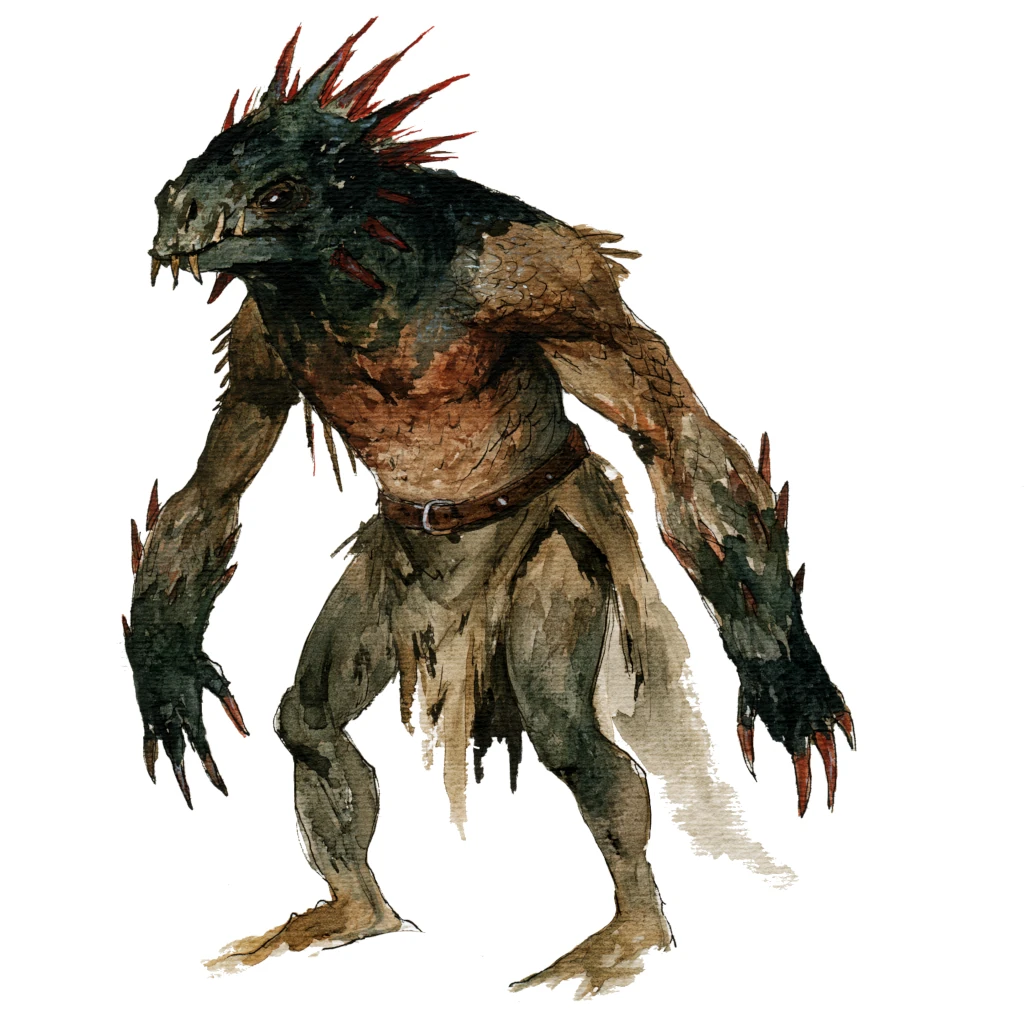
XULGATH (troglodytes): Found primarily in the Warrens, the xulgath [ZULL-gath] (who are called troglodytes by some Primes, a term that most lizardfolk see as a slur) population of Slaan is far from insignificant. In the rest of the city they abide by the rules, at least as set down by the iruxi, but they are more than likely to simply attack and eat anyone who wanders into their territory. Though xulgath live in Slaan they do not necessarily live well. As mostly simple laborers and holders of the lowest skilled jobs, xulgath make little money and form the largest portion of the burg’s poor. In Slaan, this means that xulgath often target downtrodden folk, and visitors without a safe place to sleep in Slaan should be wary of xulgath trying to eat them in the night. Still, many are productive, if lower class members of the city and the iruxi are certainly not quick to forget it. Xulgath are considered equals under the law here, along with any other race.
Stats: [ D&D 2e | 3e | 5e | PF 1e | 2e ] Monstrous Manual [2e] (as troglodyte); Monster Manual [3e] (as trogoldyte); Monster Manual [5e, paywalled]; Bestiary [PF1e] p267 (as troglodyte); Monster Core [PF2e] p352 (as xulgath)
KOBOLDS: These tiny creatures are hardly reptilian at all, by some perceptions, and they get jobs accordingly. The main reason kobolds are allowed in Slaan is their usefulness as vermin catchers and their ability to crawl about in cramped quarters. The best position for a kobold in the city is the job of pipe runner, one of the critical contingent that keeps the city’s essential water system running. The great majority of kobolds who are not employed this way are confined to a grim existence in the Warren and the back alleys of other levels, scrounging for food waste, picking through garbage, and eating anything small and squirmy they can catch. Slaan kobolds are usually hungry, which means Slaan stays reasonably clean as a result. They’ll sometimes group together and try and strike at something vulnerable, or serve as messengers for xulgath and iruxi in highly vertical areas, where they can crawl quickly over the scaffolding and catwalks.
Stats: [ D&D 2e | 3e | 5e | PF 1e | 2e ] Monstrous Manual [2e]; Monster Manual [3e]; Basic Rules 2014 [5e] p142; Bestiary [PF1e] p183; Monster Core [PF2e] p210, also a playable ancestry in Player Core 2 [PF2e] p21
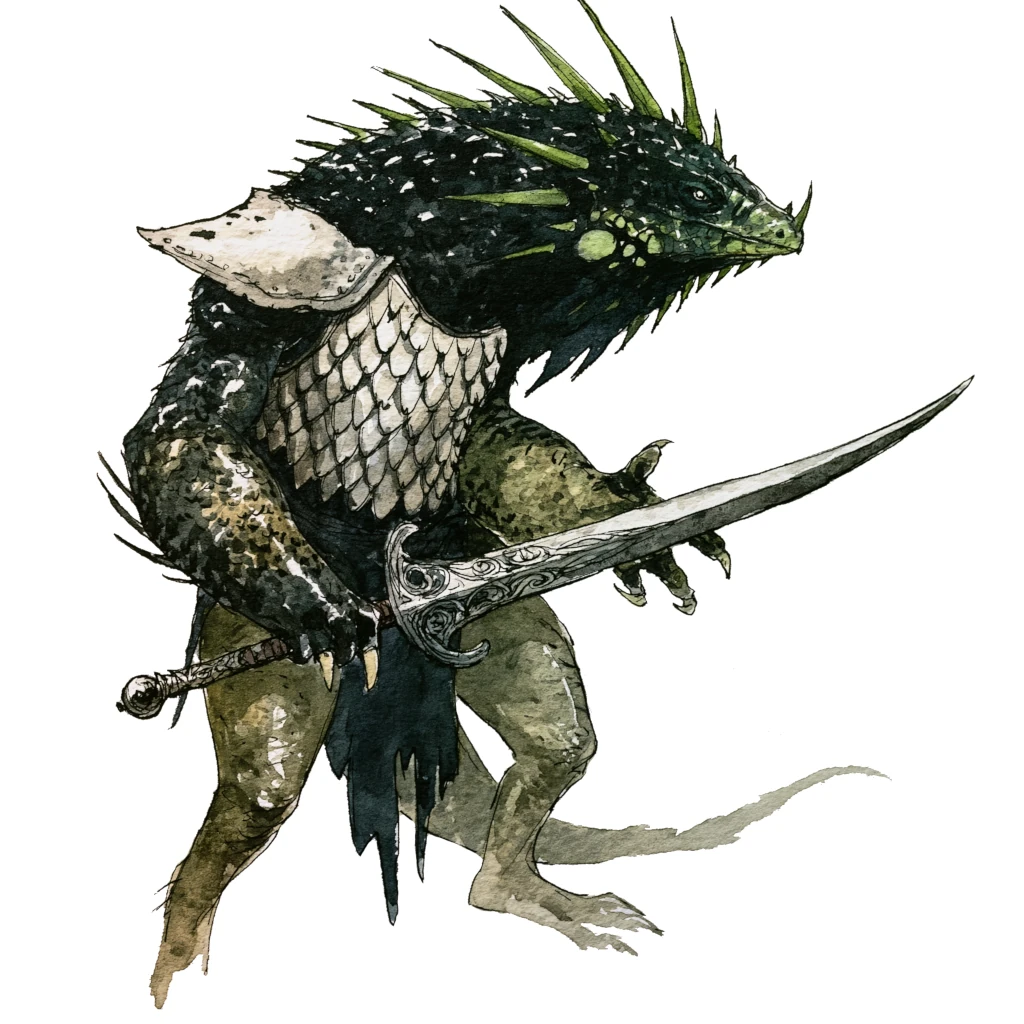
KHAASTA: Brutish, cruel, and followers of a strange code of honor amongst themselves, khaasta [KAR-sta], strangely enough, serve as the city guard in Slaan. They work to keep their version of the peace and insure the streets are safe, mostly by throwing their weight around and poking berks with sharp halberds. The khaasta are awarded bounties for finding criminals, and get to keep trophies, which makes the rank and file awfully eager to catch people. Khaasta also serve as mercenaries, private guards, and heavy labourers in Slaan. They are much feared, often hated, and rarely given respect, but they get the job done. Though eminently corruptible, they do seem to enjoy being milita, and a person trying to bribe a khaasta to look the other way had better be prepared to bribe their whole contingent too. Otherwise they’ll just take your money, and then scrag you anyway. Khaasta live mainly in the Marshes and the Boggylands, but most work in the Mouth and the better-off maintain semi-permanent residences there as well. Khaasta officers form the core of Slaan’s militia when it must be called together.
Stats: [ D&D 2e | 3e ] Monstrous Compendium Planescape Appendix Vol. II [2e]; Fiend Folio [3e]
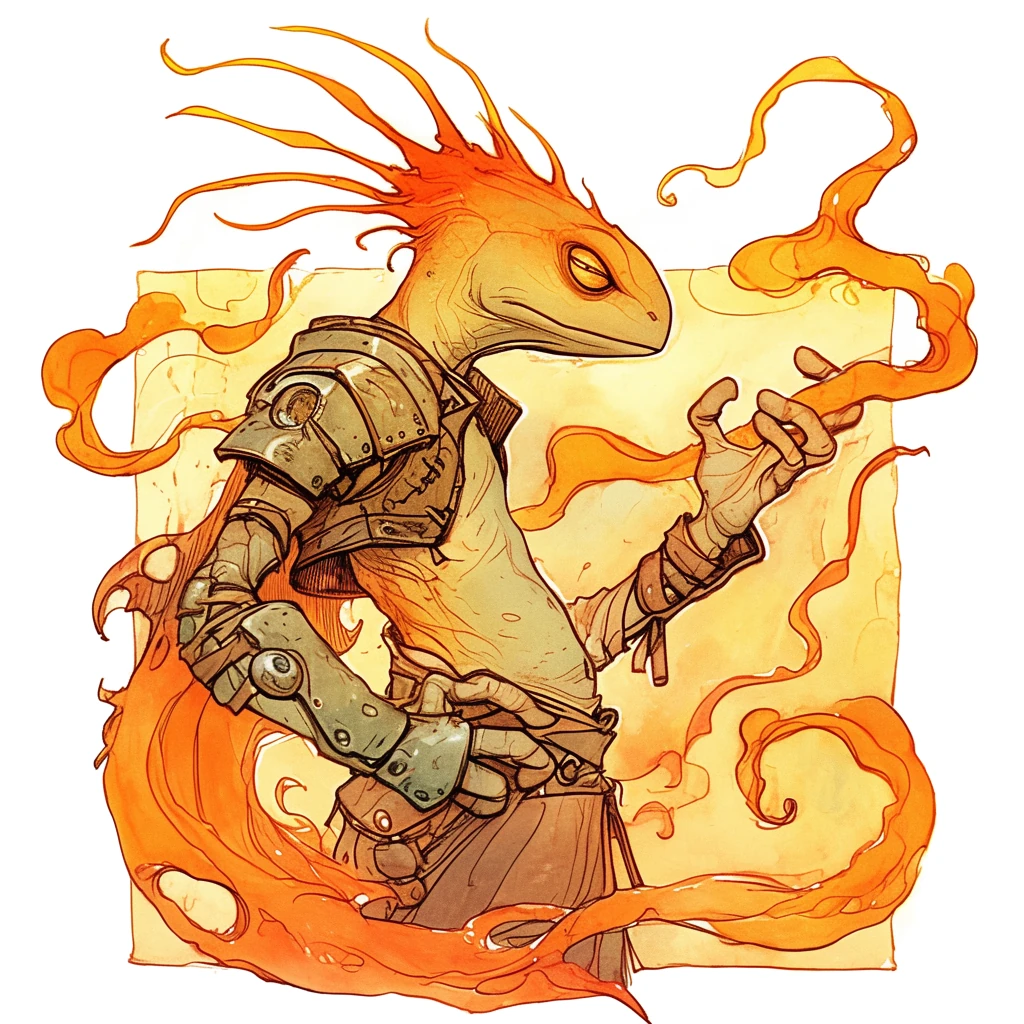
FIRENEWTS: Even more hateful than the average khaasta, there are a few firenewts in Slaan. The desert lizards with whom they share the fifth layer don’t seem to like them very much, and let them have little land. Firenewts are must useful in Slaan for their immunity to fire and noxious vapours, and the city employs them to clear cinders away from the city’s outer shell when it threatens the crop. The work does not pay well, and firenewts generally hate kowtowing to others, and most of their members in Slaan are outcastes or refugees, with nowhere else to go. They take out their anger on any belkers that hide among the cinders trying to get inside the city.
Stats: [ D&D 2e | 3e | 5e ] Monstrous Compendium Vol. III [2e]; Monster Compendium: Monsters of Faerûn [3e]; Monsters of the Multiverse [5e, paywall]
Burning Desert Lizards
This is a cadre of strange lizard races, found primarily in the fifth level Blacksands region of Slaan, but collectively originated on the same prime world. That world, an arid, desert place, apparently never evolved mammalian life. As such these lizard peoples have rather a unique view. Still, the burning desert lizards who dwell in Slaan are mostly second- or third-generation natives to the city or migrants from colonies in the Quasi-Elemental Plane of Dust or Ethereal Demiplanes. Though each race forms only a small quotient of the city’s overall population, between them they control the Blacksands, and therefore passage from the Mouth to all of the lower layers, so they have great influence.
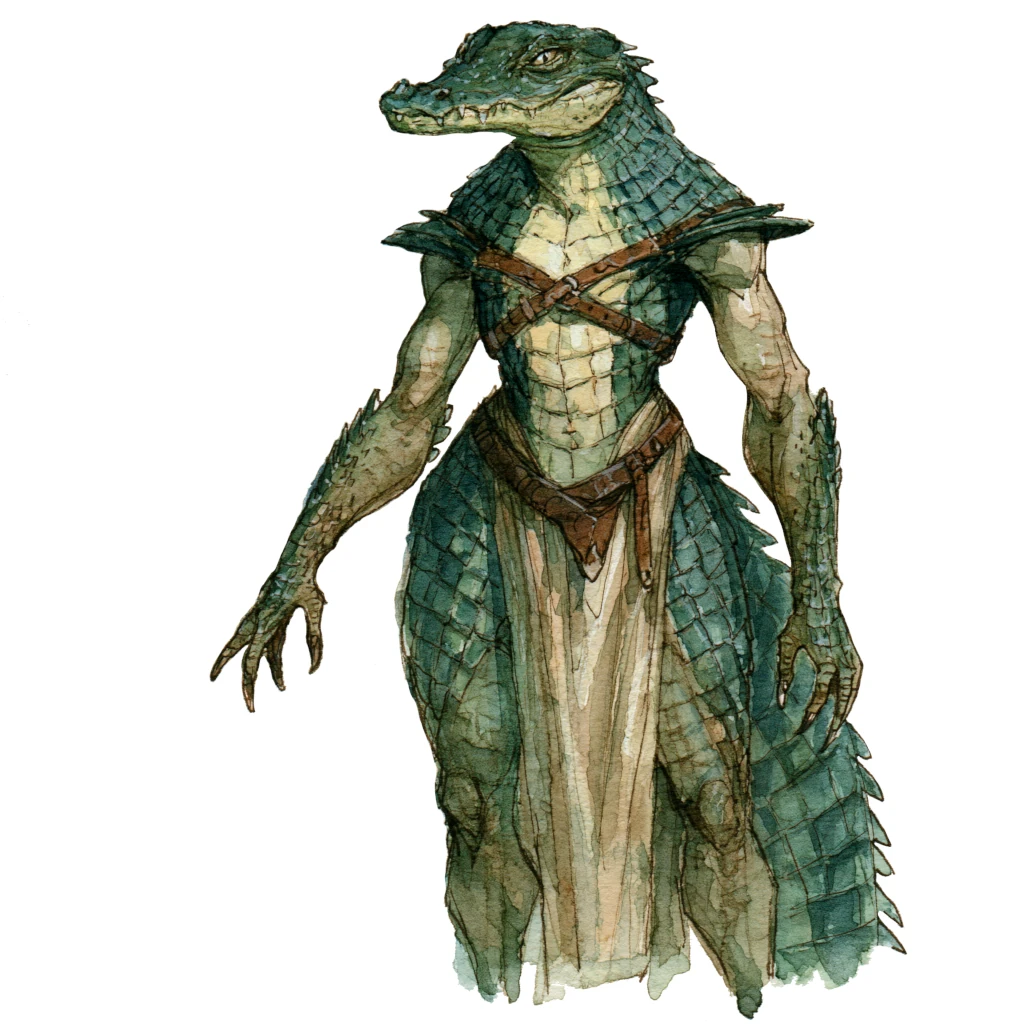
ELGAR: Fierce creatures that appear as tall, upright alligator lizards, the elgar seem to be thrilled by the glory of combat. Many of them serve in Slaan’s small standing army. Others work alongside the khaasta, who share a similar kind of mindset. Elgar fixers also work in the gladiatorial arenas, organising and participating in duels, managing gladiators, or training new fighters. Elgar craftsmen are renowned makers of excellent two-handed blades. Elgar and mon’varan typically do not get along, and the two races duel in the gladiatorial arenas quite often.
Stats: Homebrew but see [ D&D 2e ] Dragon Magazine #268 (as agrutha)
DACT: The dact resemble humanoid desert geckoes, with stony and pebbly hides, and great big eyes. Able to climb walls with ease, and move about in all sorts of places unseen, the inquisitive dact have a natural flair for thievery. In Slaan they serve as couriers, spies, artists, or surveyors, They tend to be courteous but distant towards non-reptilians, and usually observe events carefully before taking action. It’s said that the gecko grip spell was developed by a planewalker after seeing a dact scamper up a sheet glass wall of Slaan for the first time.
Stats: Homebrew but see [ D&D 2e ] Dragon Magazine #268 (as geckonid)
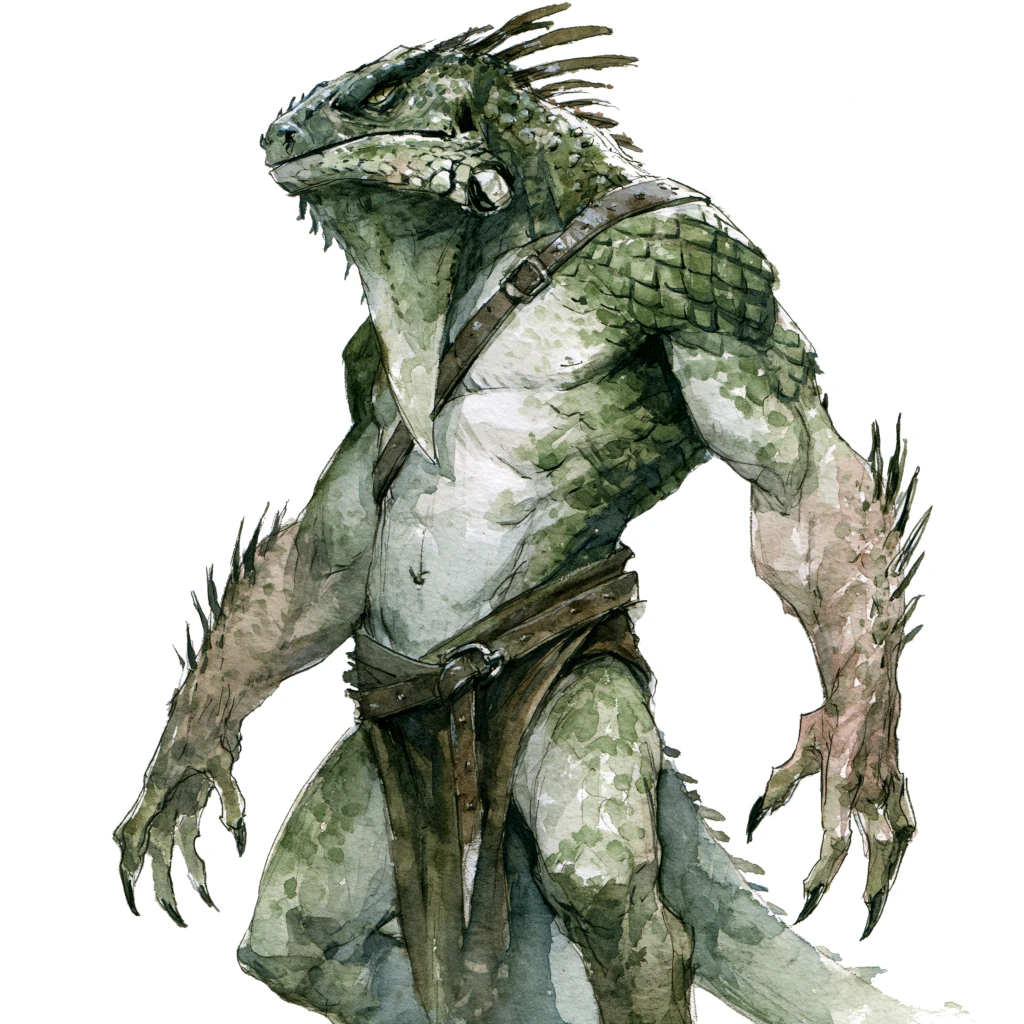
IPSOSAUR: Wandering iguana-like people, the ipsosaur are a relatively pleasant folk that enjoy watching the interactions of others, though they can be high-minded and try to prevent violence, sometimes by using force of their own. If that sounds like the Harmonium to you cutter then well done, many ipsosaurs eventually join the faction. Ipsosaurs commonly scout out the environs surrounding Slaan, act as guides into Core Smoke itself, or through the lower regions of the city. Most other reptilian races are tolerant of the ipsosaurs, who stand up for themselves even if they are considered too generous. This makes them excellent mediators, translators, and guides. [Homebrew ‡]
HELOD: The poisonous gila people, most helod are as spiteful as their bright colouration warns. Great arguers and intimidators, helod are often appointed as negotiators for discussions with efreet and djinn representatives, as nothing seems to intimidate them. Helod might not sound like good merchants or negotiators, but actually display some talent for both, especially with smoke mephits and belkers, who are not uncommon in Slaan. The helod are also exquisite makers of poison gases, antidotes, and herbal remedies. Helodan medicine, while generally painful when administrated, is famed across the Inner Panes. Helod also enjoy testing the mettle of mammalian visitors to their city, and like to have a good laugh at the expense of primes who can’t make head or tail of Slaan. [Homebrew ‡]
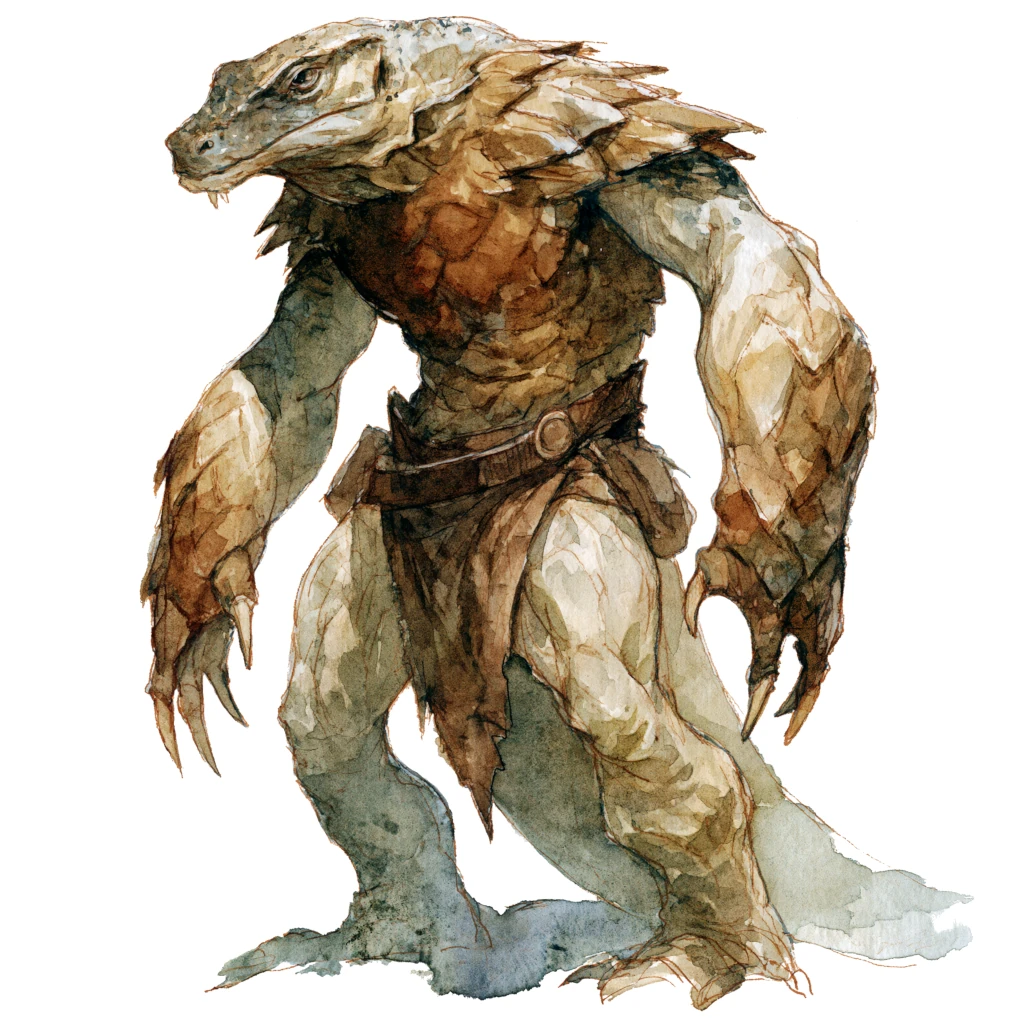
MON’VARAN: Related to monitor lizards, the mon’varan [mon-vah-RAHN] are hardy warriors, and long-distance runners. They call themselves the burning wind, and shout the battle cry of ‘Varan!’ who was supposedly a hero of their people who chased one thousand elgar for one thousand leagues, and slew them all in the race. For all their talk of violence, however, the mon’varan are not cruel or malevolent, they simply enjoy the rush of combat and the blasting power of the desert wind. The rare crafters among their people manufacture incredible traveling equipment, resistant to sun, sand, water, and wear. It is known that many abiorach purchase gear from mon’varan merchants. Many mon’varan also adventure in Smoke, as they hunger to travel and to fight. They can be easily hired to undertake expeditions.
Stats: Homebrew but see [ D&D 2e ] Dragon Magazine #268 (as varanid)
MOLOCH’PHRYN: These beings have the unfortunate trait of appearing as thorny devil lizards, which makes many confuse them for baatezu. Being called ‘moloch’ does not help their argument one bit. The moloch’phryn [moll-ock-FRINN] seem touchy about both of these subjects, but are otherwise quiet and contemplative. No other people seem to knows the currents of wind, water and smoke in Slaan as well as they. Despite a lack of interest in building or crafting, moloch’phryn are often called upon to consult on projects or initiatives. Many moloch’phryn have a taste for sculpture, and though they create strange abstract creations, their art is highly sought after, especially by baatezu. Moloch’phryn have been known to refuse sales to such beings. [Homebrew ‡]
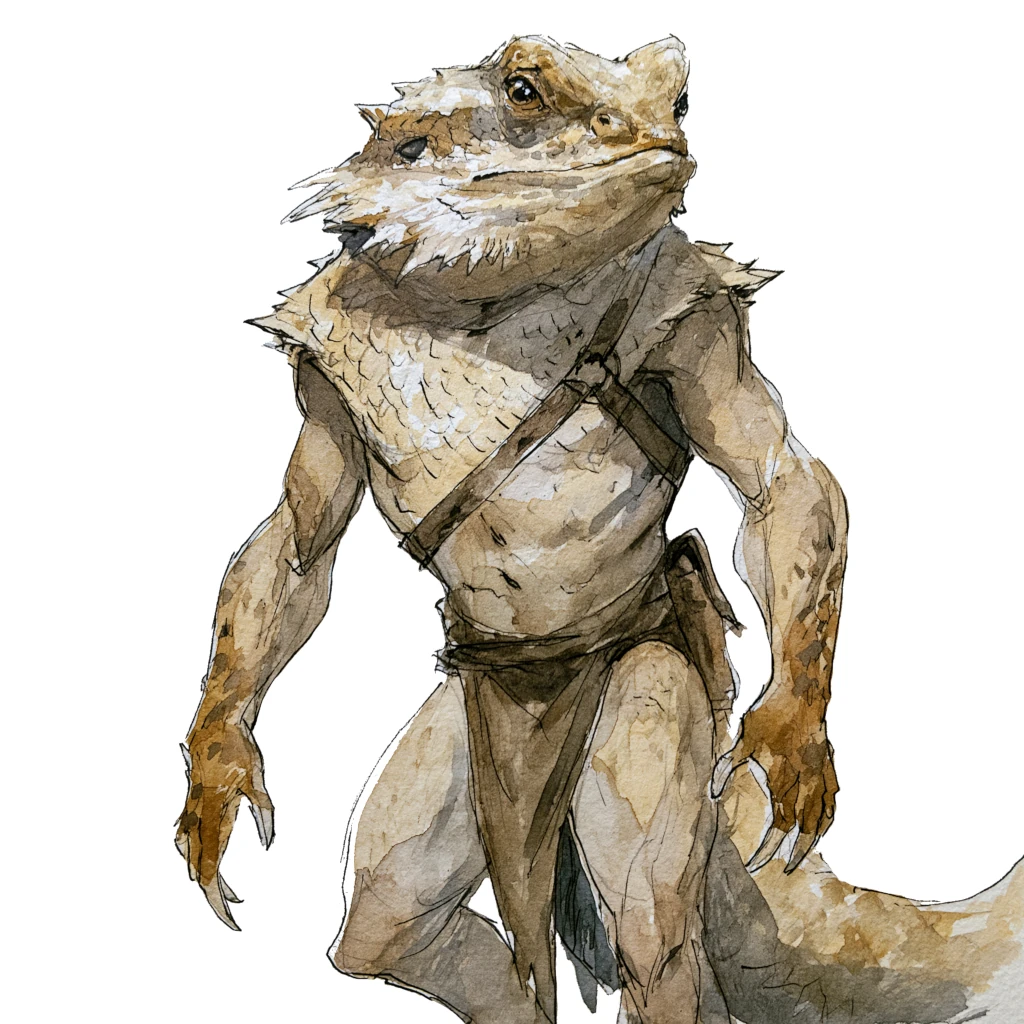
POGDRAC: The religious pogdrac, the people of the dragon lizard, are often quiet, timid, and in tune with the land. They serve as the conscience of Slaan, and many work in the courts or as arbiters of trade disputes. The pogdrac are also arbiters between the various races within the city, for though they are little respected by the more brutish lizardkin, all see their religious wisdom, and fear the wrath of nature they are capable of summoning. It is the pogdrac who first developed the system of farming used in Slaan and monitor the food sources of the city. Without them the city would quickly starve. [Homebrew ‡]
SCEL: Militant, but more professional about it than any other lizard race, the spiny scel [SKELL] serve as members of Slaan’s armies, and as guards and investigators. In any job that requires an armoured presence for security rather than intimidation they are the ones chosen. Scel are commonly slow to act, but when they move, they are inexorable. Scel possess great stamina, and often undertake dangerous tasks or heavy labour. They’re also the lizardkin most inclined to smithing, though they rarely make weapons, preferring armour and more serviceable devices. Scel are also excellent ceramics crafters, and can create incredible things from the mud of the plane of Ooze.
Stats: Homebrew but see [ D&D 2e ] Monstrous Compendium Mystara Appendix (as sis’thik)
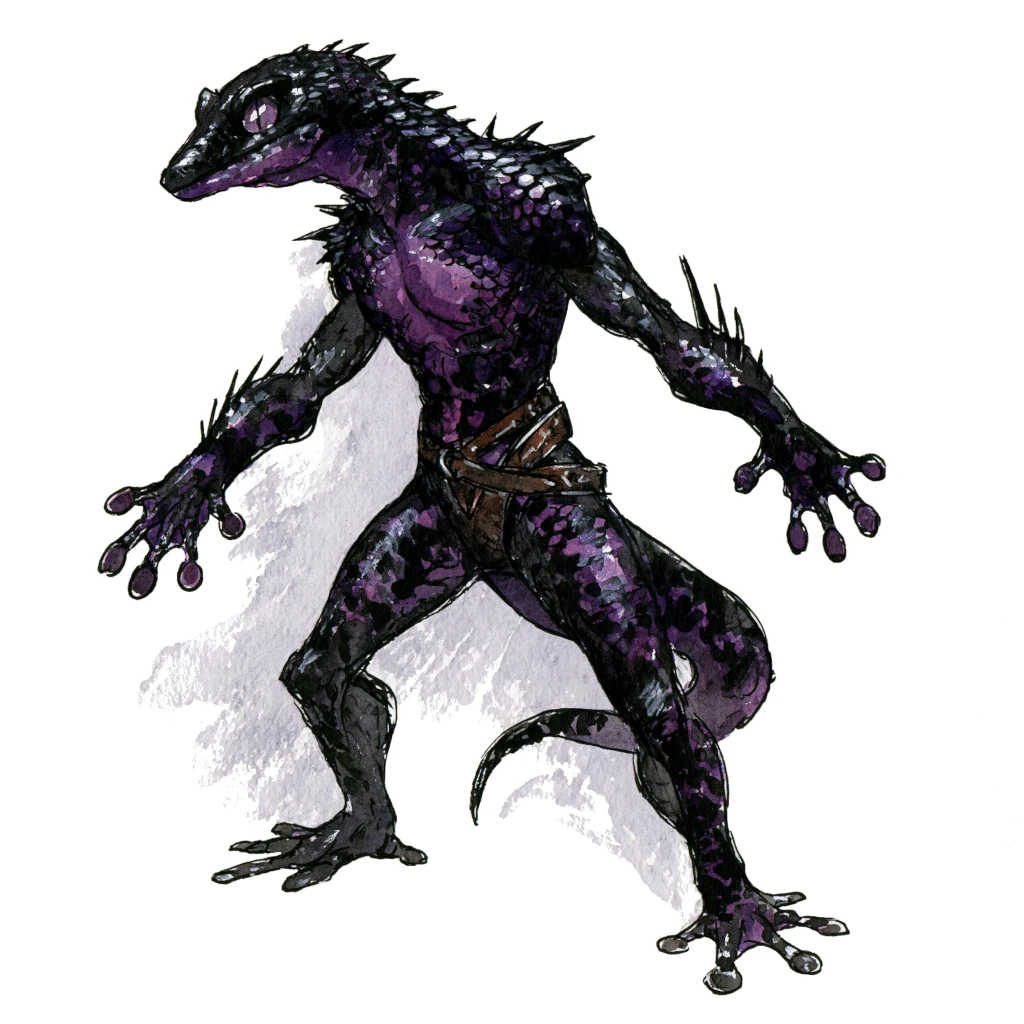
XANTU: Bizarre, alien, mysterious, and almost always silent, the night lizard xantu [ZAN-too] are alien even to the other lizardfolk. They have few visible homes and hold few visible jobs, but their presence is never far from the mind. The xantu serve in the underworld of Slaan, and indeed many would say that they secretly control it, though no one ever seems to know whom one works for. Ultimately this race keeps its own council, though rumours are that they are linked closely to the rulers of Slaan. When a xantu knife strikes in the shadows their presence is made known, but otherwise they are generally invisible.
Other lizardfolk ancestries that might be of interest: Cayma, Gurrash, Krolli, Shazak [ D&D 2e ] Monstrous Compendium Savage Coast [2e]; Crocodilian [ D&D 2e ] Dragon Magazine #268; Varkha [ D&D 2e ] Monstrous Compendium Vol. IV [2e];
Other Races
The dominance of the reptilian population in Slaan has landed everyone else together with surprising equality. The burg’s other races generally consider each other from the same perspective. Some are of course more common than others, but all are found generally only in the Mouth. Beings of many other ancestries can regularly be found staying in or passing through Slaan, though not living there in any great numbers. These include: githyanki, githzerai, dwarves, elves, gnomes, salmanders, azer, mephits, pech, arcane, yuan-ti, ophidians, dragon-kin, and nagas. The following races are common enough in Slaan to have a stable permanent population:
HUMANS: It seems impossible to travel somewhere in the multiverse and not find humans, and Slaan is no exception—and like their presence in all other places, they are impossible to quantify. Humans may hold any role in the city’s structure, though most are active in the trading spheres. Much of the economic wealth of Slaan passes through human hands, and they could perhaps exercise considerable clout if they unite. However, the humans of Slaan come from so many backgrounds, factions, and sects that they never seem to agree on anything in large numbers, and the city continues to be property of the lizardfolk.
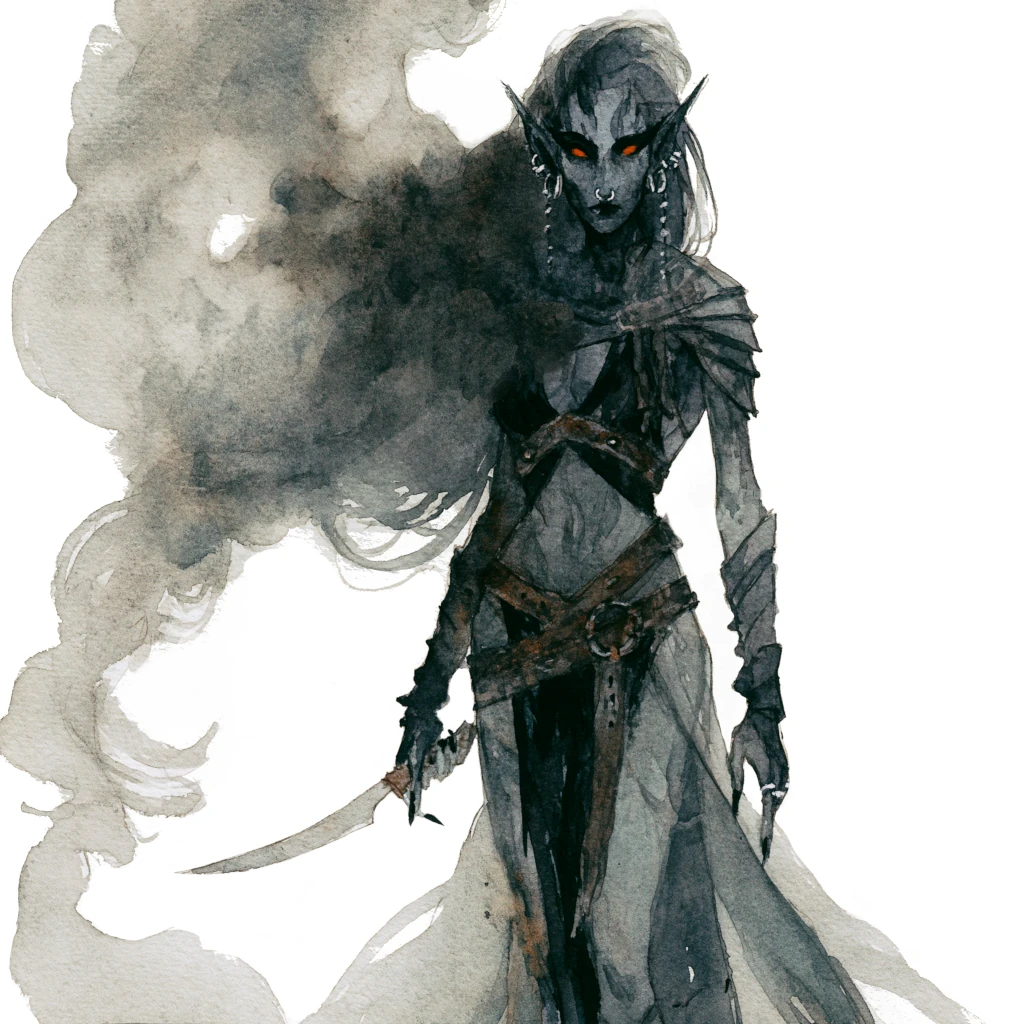
PLANETOUCHED: The most common planetouched cutters in Slaan are genasi, mostly of Air, Fire, Smoke, and Steam. Tieflings, aasimar, and other nephilim are not unknown, but they are scattered individuals, and do not have any sort of stable presence. The genasi on the other hand, tend to fall into two camps: Those who are agents for geniekind, and those who are free souls. The agents are a subversive presence in the city, always trying to leverage influence over the city for their masters, but they are also a tremendous source of funds. Slaan is one of the few sources for weapons forged in Smoke, and like other critical military supplies, solid objects are short in supply in the plane. Agents of the genie races are also constantly offering staggering sums for mercenaries. Genasi who do not serve other masters are prized for their abilities to voyage about the planes, and for their willingness to talk back to intimidating lizard masters. Several genasi are active in the city’s duelling industry, while others run specialised businesses. Smoke genasi seem to have regular problems with helods for some reason, however, and the two races just generally do not get along.
HALF-DRAGONS: Slaan contains at least one and probably more stable portals to Mineral, and from the Great Geode come half-dragon refugees and exiles. These beings are not the high-minded and potent bloods who are commonly expected of those touched by the blood of dragons, but unfortunates who offended the wrong person or failed in some critical task. Indeed, many are ronin, outcast dragon samurai who failed the dragon clans of Mineral and fled into exile rather than sacrifice their lives in pointless causes. The dragons-kin of Slaan are neither cohesive nor numerous, and work many odd jobs throughout the city. Of course, since most of them are fighting types or spellcasters, they often sign up as mercenaries, especially for battles against the dao. Others often serve as taskmasters for xulgath or kobold work teams, where they are feared (by the xulgath) or nigh-on worshipped (by the kobolds) for their draconic blood. Khaasta even sometimes let them join in the city patrols.
NATHRI: These diminutive natives of the Ethereal are surprising creatures. The population dwelling in Slaan is quite small, essentially a group of Etherfarer traders, but important. These nathri [nath-REE] have links to the rest of their people, and to foodstuffs stolen from demiplanes of the Ethereal. These strange luxuries are in high demand among the rich, and so the nathri do a brisk business. They also keep watch for the Etherfarers and serve as a refuge for members of that Sect.
Stats: [ D&D 2e ] Monstrous Compendium Planescape Vol. III [2e]
XILL: Are they Reptillian? Most people can’t tell, but the lizardfolk answer is apparently no. Other lizardfolk tend to dislike the xill [ZILL], and barely tolerate the presence of such creatures in their city at all. Others wonder what xill are doing here in Slaan at all, for the race has a poor reputation. The xill seem to do little in the city except live there, their small population minding its own business and occasionally hiring messengers to carry documents and small items to exotic locations. There is suspicion from the nathri that the xill are lying low here and spying, targeting Ethereal travellers for ambush. No evidence exists for this, but heated words and the occasional duel are not uncommon.
Stats: [ D&D 2e | 3e | 5e | PF 1e ] Monstrous Compendium Planescape Vol. III [2e]; Monster Manual [3e]; Mordenkainen’s Fiendish Folio (paywalled); Bestiary p283

ABIORACH RILMANI: Mysterious and inscrutable, these servants of the balance count Slaan among perhaps half-dozen places outside of the Spire where they have permanent residences. Well, perhaps residences is a bit strong, mostly the rilmani just gather together to exchange news in their impenetrable language, debate how best to marshal their energies. But the rilmani here are different to those encountered on the Outer Planes. The abiorachs [ah-BEE-oh-rack] know that the Inner Planes are the lowest priority for the Rilmani Council, and that they’re the least influential of their race, but they consider the danger to the balance just as great and their work important. Cut off from reinforcements or aid from their kin, many abiorachs are rather embittered, and often attempt to trick or force others into serving the Balance. In Slaan they apparently have some arrangement with the city’s leadership to stay and not pay taxes. A number wander the city openly, and more certainly hide among the populace masquerading as humans. While the rilmani prefer not to interfere in the city’s affairs (or at least not be seen to meddle) the pogdrac judges consider them wise and may call upon them to aid in judgment or serve as witnesses.
Stats: [ D&D 2e | 5e ] Monstrous Compendium Planescape Vol. II [2e]; Manual of the Planes [5e] p397
Source: Inner Planes [2e] p13 (brief mention), expanded upon by Mechalich, edited by Jon Winter-Holt. Canonwatch: ‡ The expanded details for this location are homebrew and were rescued from the dead-booked Planewalker.com site.