

[ Smoke > Burgs > Slaan ]
[ Ancestries | High-Ups | History | Locations | Religions | Services ]
[ Depths | Warrens | Marshes | Boggylands | Blacksands | Mouth ]
Locations of Slaan
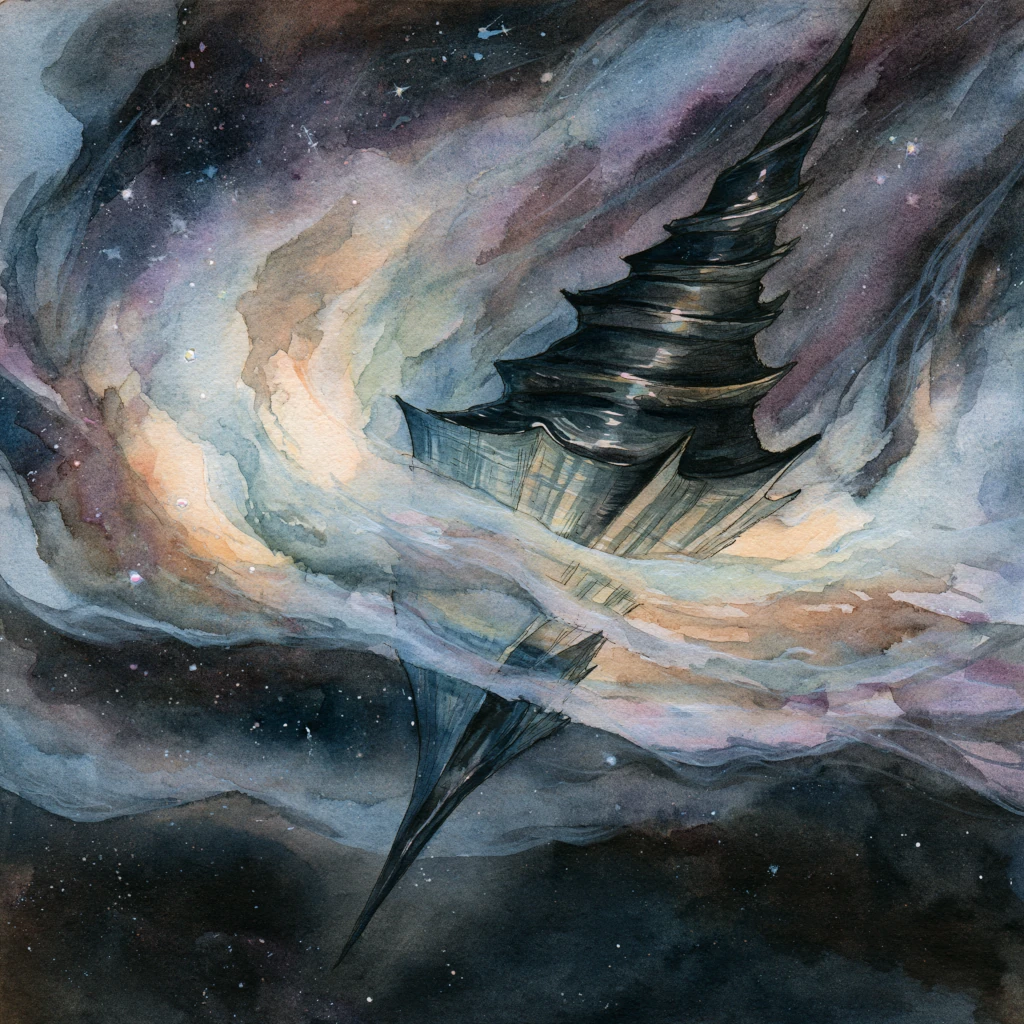
Location: Para-Elemental Smoke / Core Smoke / Slaan
Levels may be too quaint a word to describe the wards that comprise the city of Slaan—perhaps environments might be more accurate. Each of the six areas really has unique inhabitants, structure, and in some cases even climate. The boundaries of the levels are not absolute. It’s pretty clear to any cutter with a working set of eyes where one level begins and the other ends on a given day, but boundaries can change. For starers, the water level of the Depths rises and falls, but other boundaries can change too in a gradual process. Perhaps xulgath bring more dirt down to expand their warrens, and then the lizardfolk respond by pushing back the cinders that mark the desert’s edge—and back and forth it goes.
The six levels are the most common reference to location in Slaan, since individual streets are made more complex by catwalks, ladders, and roads that are strung all over the place. Locals refer to locations first by which level they are usually in, and then which landmarks they’re nearest to, such as ‘In Boggylands across from the Ministry of Trade.’
From bottom to top the six levels of Slaan are: the Depths, the Warrens, the Marshes, the Boggylands, the Blacksands, and the Mouth. The climate of each level is influenced by the flow of water that bubbles up from the Depths to each level along capillary pipes. Careful control of the flow has resulted in levels being particularly moist or dry. They were set up like this deliberately, to serve the purpose required and the preferred climate for its dominant inhabitants. The Depths have no inhabitants, while xulgath and kobolds dominate the Warrens, lizardfolk and khaasta are the main inhabitants of the Marshes and Boggylands, the burning desert lizards collectively call the Blacksands home, and the Mouth is given over to outsiders. Each level also has specific essential functions associated with it. The Depths satisfied the burg’s vast demand for water, the Warrens for the dark-loving lizard-kin, the Marshes and primarily for residences and farming, the Boggylands given over to administration and industry, the Blacksands for crafts and faith, and the Mouth for trade and visitors.
Since every level has its own portals to other parts of the multiverse, they can sometimes seem like cities in their own right, with limited traffic between them. In truth though, the layers are heavily inter-dependent. Each has its own central hub for the business of that layer. These are like highly evolved town squares, and indeed the centre of the Mouth is a giant market. Those not familiar with a level would do well to start in these areas, which usually have anything a casual visitor might require.
The Depths
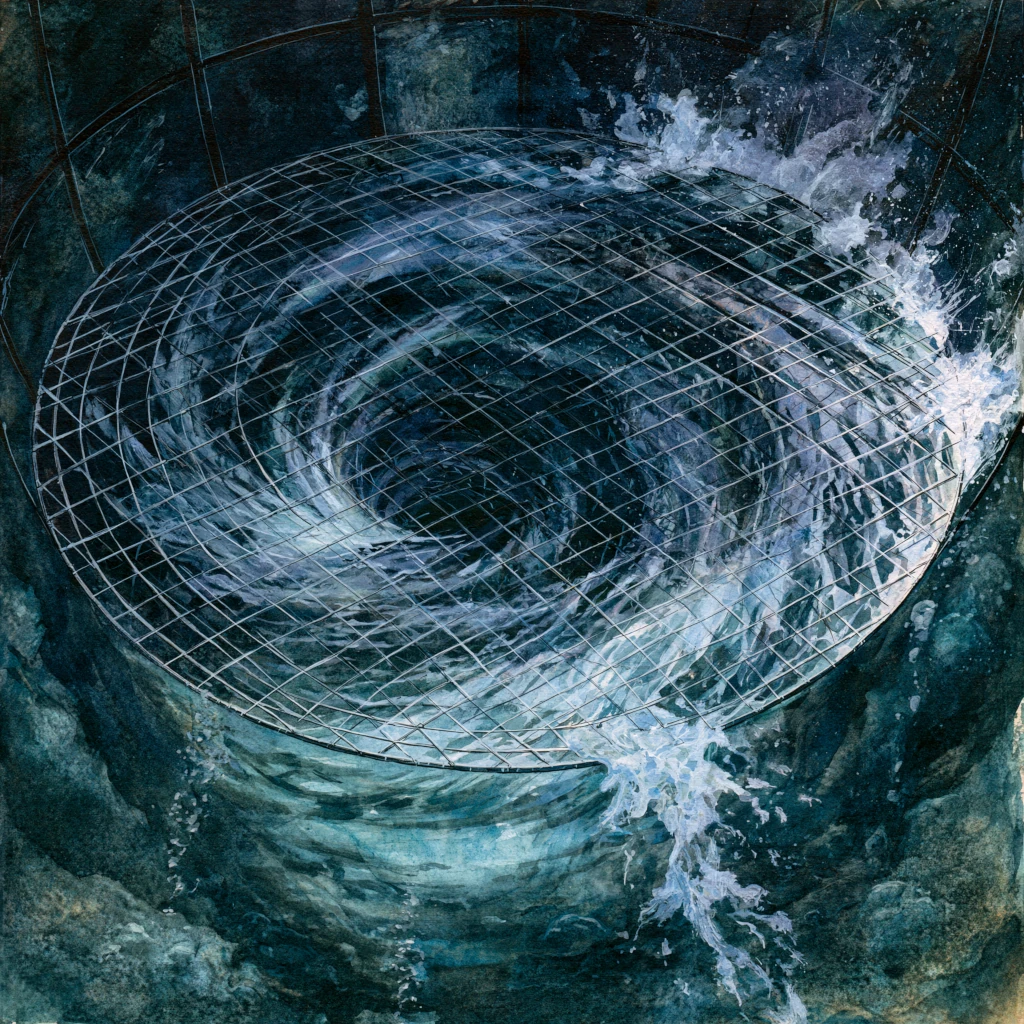
The lowest point of the burg is a cold dark place, where the shell tapers to a point less than ten feet in diameter. It contains a elemental vortex to the Plane of Water, fixed in place by some ancient kind of magic. From this swirling channel issues a continuous stream of pure cold water, which rises until it reaches the wall of compacted earth that forms the bottom of the Warrens level. Despite being the smallest level of Slaan in terms of volume, it is both the most important for the survival of the burg, and the one that poses the greatest threat to its continued existence.
The fresh water that continuously pours into the Depths is the lifeblood of Slaan. The pressure it creates pushes water into capillary pipes that supply each of the higher levels with the precious fluid. By regulating the flow in each pipe, iruxi engineers are able to control the moisture levels of each level, which has result in the diverse microclimates across each part of the burg.
However, it’s not just liquid that emerges from the watery vortex. Creatures also slip through occasionally. Some are sucked through the vortex accidentally, but others deliberately choose to swim though, looking to cause trouble. Sahaugin, locathath, ixitachitl, and even kraken have tried to enter the Depths. A metal grate welded over the portal manages to prevent the larger creatures from getting through, but not the humanoids. Once they realise where they’ve ended up, these invaders waste no time in trying to subjugate the burg by taking control of its the water supply, attacking locals, or trying to drag victims back through to the Plane of Water.
Water Militia
There are no citizens that live in the Depths, but this place is the seat of power for the burg’s Aquatic Ministry, and the location of one of the city’s most respected groups: the Water Militia. Constructed on floating platform of wood and metal that is anchored to the walls, this the site from which the Water Militia patrols the Depths. It is accessible by a transit system based on a modified version of Tenser’s floating disc. The Aquatic Ministry may only be visited by militia members, or those with explicit permission of the Minister of Water. Other intruders are typically arrested and subjected to secret military trials—before being kicked through a one-way portal to Carceri.
The Aquatic Ministry is a combination of fortress and foundry. It is responsible for construction and repair of components critical to the water channeling system, as well as fabricating the weapons and homunculi used by the Militia. About half of the group consists of non-combatant personnel who are tasked to clear away plant-life and ordinary animals that are accidentally pulled through the vortex and represent no serious threat to the city. The other half of the group, however, has a far more serious mission.
The problems faced by the defenders of Slaan’s water supply are two-fold. Firstly, the militia must be combat trained for pitch black underwater conditions to repel intruders. And to make this even more challenging, they must not contaminate the water supply while doing it. Releasing large amounts of blood into the water would be a disaster, and bodies clogging up the capillary pipes would cause climate havoc. Therefore the Water Militia makes us of specialised weapons that kill via electric shocks or force blasts, and they wear complex homunculi that seal up any woulds they might suffer, as well as letting them breathe and see in the extreme conditions. The origin of these devices is unclear, since while the militia crafters can reproduce them, they apparently did not come up with the design. It’s long been suspected that their devices might have been designed by ethergaunts.
The Water Militia is unusual among the military groups of Slaan, in that it counts many outsiders and non-reptilians among its membership. Many of these are highly skilled adventurers, attracted by the excellent pay. The Water Militia is presently at the height of its strength, thanks to Opolin’s exemplary leadership, and the current Commodore of the Militia Hyspira (half-human/shen lung dragon fighter [she/her] / LN). The Water Militia have fought many successful battles throughout the Depths, the city’s pipes, and even once out into the Elemental Plane of Water itself—all under the noses of the largely oblivious city. The military tradition of the militia is proud, and locals typically consider it a badge of honour to serve for a stint.
The Warrens
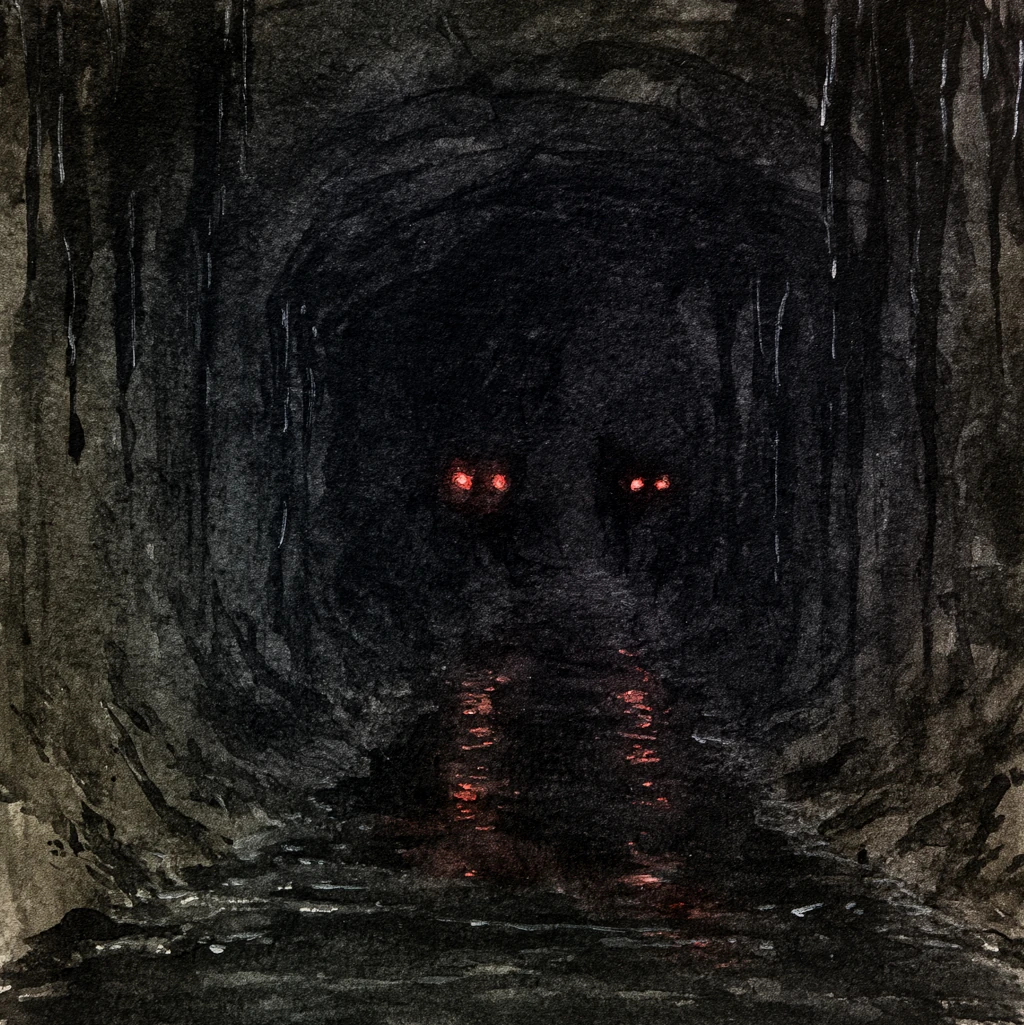
The dark earth piles up beneath the lowest inhabited level of the burg—soil, refuse, and waste mixed together into a gritty sludge permeated by xulgath stench. The stinking passages down here are called the Warrens, and they’re the darkest, dankest, and most filthy part of Slaan. It’s a place where xulgath burrow in the dark, feral kobolds lurk, and where the darkest deeds of the city are performed hidden from watchful eyes The Warrens are very different from the rest of the city in their organization, and nature of their residents. This area is foul, and it is here that the shadiest dealings of the city occur. Planewalkers who’ve found themselves down there report that the Warrens are a hellish place where the refuse of the city gathers and the residents exist on the brink of hunger and despair. It is also a hive of corruption, where the law holds next to no sway and shady organisations use this obscurity to conduct their dealings.
One might wonder why the rulers of the city allow this horrid place to exist. The truth is that they know every city must have its pit of foulness, and they have chosen to allow it to contain it in the warrens to keep it out of the rest of the city—which is why everywhere else seems such a relatively wholesome for a place for lizard-kin. Unfortunately that means life in the Warrens is short and brutal. Life is cheap down there, especially considering that once a body stops breathing, it becomes legal to eat it. Sometimes xulgath don’t wait until breathing stops mind, if they’re really hungry. Of course, this sort of savagery pales in comparison to the dark ceremonies of some of the cultists who come down here, or the slave traders who skulk around looking for new ‘clients’.
Now, not everything in the Warrens is irredeemably awful. Heck, a number of the lizard-kin who live here have jobs in the upper levels, and they tend to be careful, since they don’t want to disrupt their source of food. The problem is that many of the bodies down there actually aren’t citizens. These are the lizard-kin driven by base reptilian hunger. There are some other semi-respectable cutters down in the Warrens, like the glory hunters who go in trying to break up cultists and try to enforce the law as best they can. They tend to have short lifespans, but equally success can be lucrative—for example, the generous bounty on Falazure Cultists. Charitable druids also come down here, as do do-gooder priests of Chronepsis, who as a minimum will try to ensure that the dead stay in the bellies of those who eat them and don’t come crawling back seeking vengeance.
There’s not a whole lot of legitimate business going on down in the warrens. The occasional xulgath crafter or artist exist, and the Ministry of Water occasionally sends in cutters to make sure any water corrupted by its passage through this region doesn’t spread any further. Miners might get jobs repairing collapsed tunnels or widening caverns, but such work is unsteady. Illegal work is a whole lot more common. Down there, dark ceremonies are conducted by cultists; secret markets operate on behalf of dao slavers; illithids barter for fresh bodies to serve as brain food; rogue anatomists change sods from one type of creature into another; and both Pyros and Primals sell illicit spells. Even in the darkest of places, Slaan is always busy.
The Market of Broken Souls
The unofficial centre of slavery in Slaan, Broken Souls is the name given to the mobile market that travels about the Warrens. Since the gates in higher levels are watched, it is tricky for the slavers to export their wares to their dao masters unless they use magic, which increases the price. Therefore the tactic is to gather buyers in the Warrens and then ship a large number of their unlucky prisoners at once.
Broken Souls is a mess of tents, manacle lines, platforms, and chairs. All them can be folded up into the saddlebags of giant lizards, and therefore moved with a few moments notice. Vicious xulgath and khaasta, supported by helods and elgar, are the guards of the market, but almost all the slavers themselves are non-reptilians, and from out-of-town. Some are yuan-ti, others earth genasi or tieflings—but anyone can be a slaver, just as anyone can be a slave. The most powerful brokers are always mages, though their identities often change rapidly, as the smart ones make their fortune and get out. Currently, a triumvirate of slave masters rules the group, a yuan-ti couple named Nessaraulk (yuan-ti halfblood psionicist [he/him] / LE) and Ysrilen (yuan-ti pureblood sorcerer [she/her] / LE), aided and betrayed occasionally by Blank (human wizard [he/him] / NE) who has survived longer than either of the yuan-ti. However, any slaver who pushes their luck too far is likely to find themselves on the sharp end of a xantu blade. The rulers of Slaan suffer this place only so far.
The rule for entering the Broken Souls market is simple; intimidate the guards enough, and they’ll let you through. This almost always requires violence, but it’s not mindless. Even as they’re being beaten up, the guards are watching for signs of their opponent’s true nature. The dark is they are watching out for members of the Order of the Broken Chains, who have a nasty habit of trying to take down the market, and have almost been successful several times.
The slaves live in horrid conditions, with hardly any food, and forced to trudge around the dark tunnels endlessly as the market moves. Depending on how long they’ve been here their condition will vary greatly, but few slaves manage more a couple of two weeks in captivity. By then they’ve either been put in the dead-book, or sold.
The Mausoleum of Black Vapour
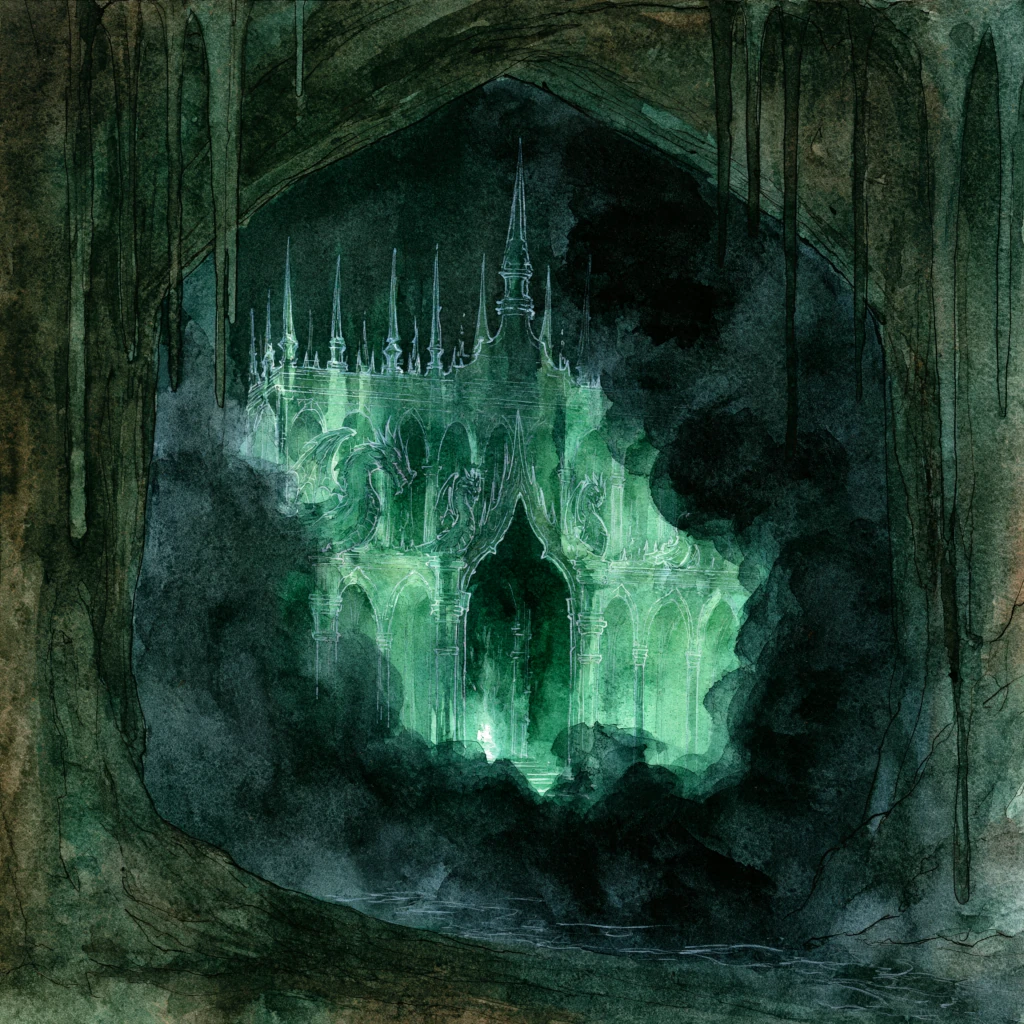
This high temple to Falazure the Night Dragon is not a physical structure, but an area of magic created by illusions and wards. The priests of the Night Dragon are able to conjure their temple in any cavern, calling into being solid dark smokes that both cloaks and chokes those within, weakens the righteous and sparks cruel thougts in the wicked. Falazure is the most hated of all powers by the rulers of Slaan, and his cult are considered a great threat to the burg—it nevertheless has attracted many followers with its promises of eternal (un)life.
This horrid temple is called into being once each week during the quiet hours, and always in a large cavern with no light sources. The cultists make an effort to choose a different cavern each time and avoid an obvious pattern. They are then free to conduct their vile ceremonies, plot the coming week’s wickedness, and send out messages. And of course a ceremony is not complete without sacrifices before the altar of the Reaver god.
The Mausoleum is warded by powerful magics to repel the inquisitive, and shield it from scrying. It is defended by wraiths and wights; reanimated victims of previous sacrifices. Anyone who enters who is not a servant of Falazure—even if they’ve been vouched for—will be rigorously interrogated. The Cultists pride themselves on being personable, and willing to share their knowledge of necromancy or evil artifacts, but they are backstabbing bastards all the same. Few escape their clutches.
Beneath the gaze of Falazure the cultists are separated only by their rank, for ancestry holds no place here. In the dark, all creatures stand equal, so xulgath work alongside half-dragons under the command of the priests and the Reaver’s Fangs who serve as cult enforcers. The current High Priest of Falazure is Raslay (human half-shadow dragon cleric [she/her] / NE) a villainous woman who’s clawed her way to the top of the faith there. All humanoid members of the Cult know the determination of her will. The only challenge to her power is Illystich (young adult shadow dragon [he/him] / NE), and his group of dragonkith dragon-kin. Illystich prefers to assume his dragon-kin form, and has a lair deep in the warrens.
Almost everyone in the city would like to see the Cultists gone. However, while the group lost the ability to maintain a permanent stronghold, the rulers of Slaan have not found a way to eliminate the Cultists down in their current mobile form. What’s more, the cult has powerful connections with corrupt officials, and always seem to know when the next raid is coming.
The Marshes
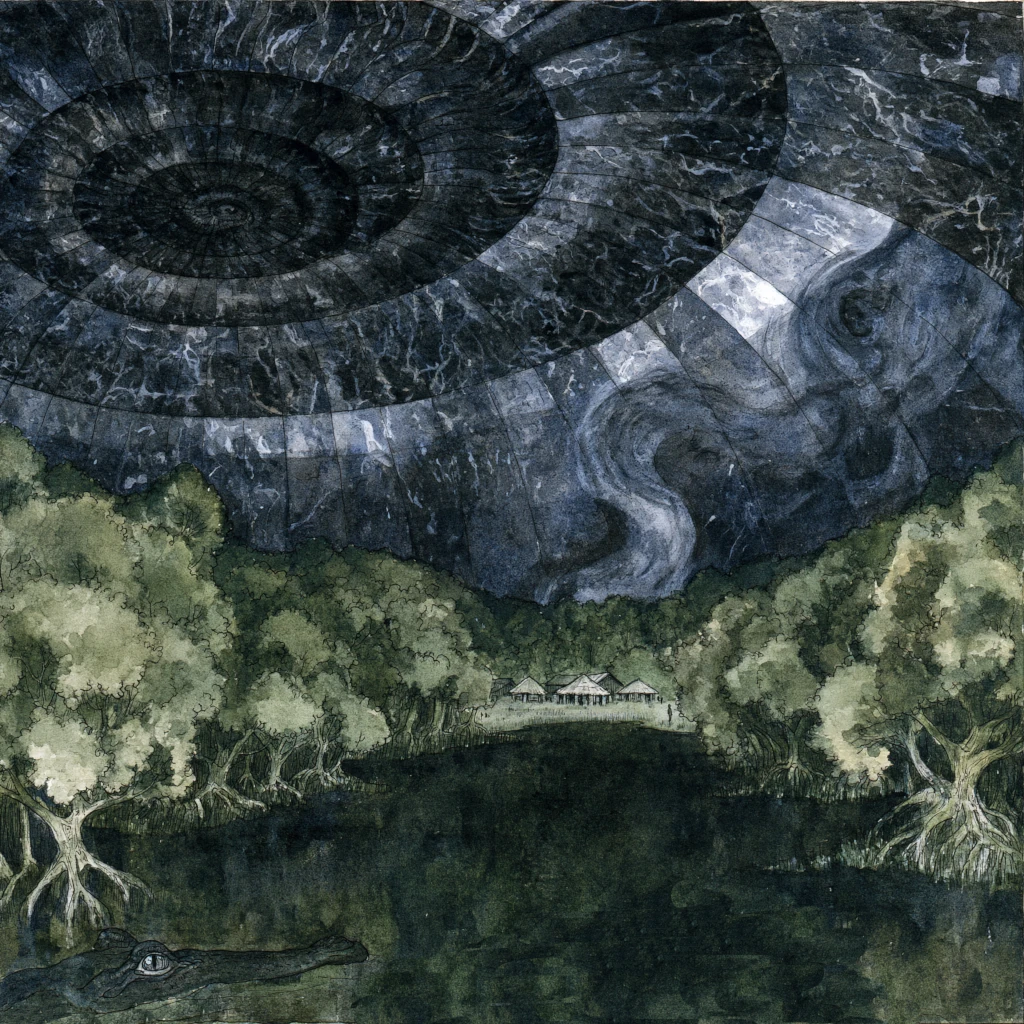
Water seeps endlessly through this wide expanse of dirt and composting organic matter. The structure of Slaan has widened enough at this layer for torpid rivers and deep lakes to exist here. Dim light penetrates the thick smoked glass exterior of the shell, creating an environment similar to a sodden prime world. The lizardfolk residents here are hard working, hard playing, and hard fighting—they simply want to live their lives, and little more. Cutters with ambition tend to leave this place for more exiting places, which has resulted in a layer of surprising quiet almost rural tranquillity, despite being in the midst of a great city. This level is the most humid of Slaan’s inhabited levels; a comfortable climate for lizardfolk but distinctly unpleasant for most other kinds of humanoid races, who tend to live elsewhere.
This level is Slaan’s most populous residential centre. It’s a simple place that produces the common goods needed for daily life. Most of Slaan’s farmers dwell here. They head out through the membrane gates each day, taking freshly grown produce with them, and they restock and tend to the smoking houses on the surface of the burg’s shell. Preserved smoked food is brought back inside and packaged up. Many of the other raw materials needed for daily business like hemp for rope, wicker for baskets, or reed for mats are also grown here, and sent to the crafting centres elsewhere in the burg.
Despite the unusual location for them, the homes of the lizardfolk here follow the traditional construction patterns of small circular buildings around the edged of water sources. The grander buildings of the rich are situated in the Grand Row, the most exclusive part of the central Marshes, nearest to the transportation tubes and water pipes, while the squalid homes of the city’s poor tend to be in the drier regions nearest to the shell. The Marshes are designed to be something of a refuge from what goes on in the rest of Slaan. Of course, nothing is ever completely quiet. The rich folks often disturb the peace with loud parties and opulent gatherings. The religious holidays of the superstitious lizardfolk result in even more widespread festivities, when the whole Marshes level lurches into a frenzy of motion for draconic holidays based around the birth or death dates of historical heroes of the city.
The Grand Row
Along a particularly clean and clear river in the Marshes stands a set of great mansions, constructed in the style of the riads of the efreet. These are the mansions of Slaan’s rich movers and shakers, among them the Minister of Trade, the current duelling champion, and no less than three dragons who live openly in the cities bounds (one sapphire dragon named Regiralite, an amethyst, and a crystal). These buildings bustle with activity at all hours with grand parties, gatherings, and soirees, although they tend to be a little different from the sedate balls and celebrations of some other burgs. The Grand Row is infamous for stylised duelling demonstrations—with the approval of the Ministry of Duels, for course—animal fights, the display of dangerous captive creatures, and all sorts of entertainments the folks of Sigil’s Lady’s Ward might consider ‘barbaric’. This sort of thing might shock foreign visitors, but the reaction of Slaan’s residents is usually to roll their eyes and consider them weak stomached. The more formal ball or recital more common to Sigil or the City of Glass does occur of course, but in Slaan far more business gets done with a little noise or violence going on in the background. There is one exception however—there has not been a masked ball in Slaan in three centuries, ever since the previous Minister of Duels went rogue, ripped off the masks of several of the most distinguished guests, and punched them in the face. Chant goes he was demonstrating the futility of hiding one’s face in a burg where the rulers see everything, although behind closed doors nobles wondered aloud whether the cutter had been possessed. He was quietly replaced but the taboo on masking one’s identity remained.
Regiralite’s Lair
The sapphire dragon Regiralite (old sapphire dragon [he/him] / CN) is one of Slaan’s more unusual citizens. Living openly as a dragon, he is friendly with ordinary humanoids, if more than a little strange. The reason he moved to Slaan instead of remaining in the Mineral burg of Hoard is unclear. Regiralite’s dwelling is a grand building, constructed in the draconic style, and partitioned into two sections. One is for the his private use, and only the Ambassador of Hoard—a personal friend—has the right to enter. The other half, however, is open to visitors. Regiralite is a talented sorcerer, and has a collection of spellbooks of some notoriety. He seems willing to grant access to them too, for a price. The dragon is addicted madly to a game from Kara-Tur called Go, and is phenomenally skilled at it. He claims to have never lost a game in over two centuries, not since a shen lung dragon managed to beat him. However, he is constantly seeking a challenge and has made it known that he will give anyone who can offer him a sufficiently challenging game a chance to study his spellbooks for a day, or a treasure from his hoard [worth five hundred gold pieces]. The dragon is a formidable opponent mind, not holding back whatsoever, and also tends to heap verbal abuse on his opponents, but he is one to keep to his word, as far as Go goes, at least. Regiralite will also accept challenges in other games of strategy, but only if it is something he has not seen before.
The Boggylands
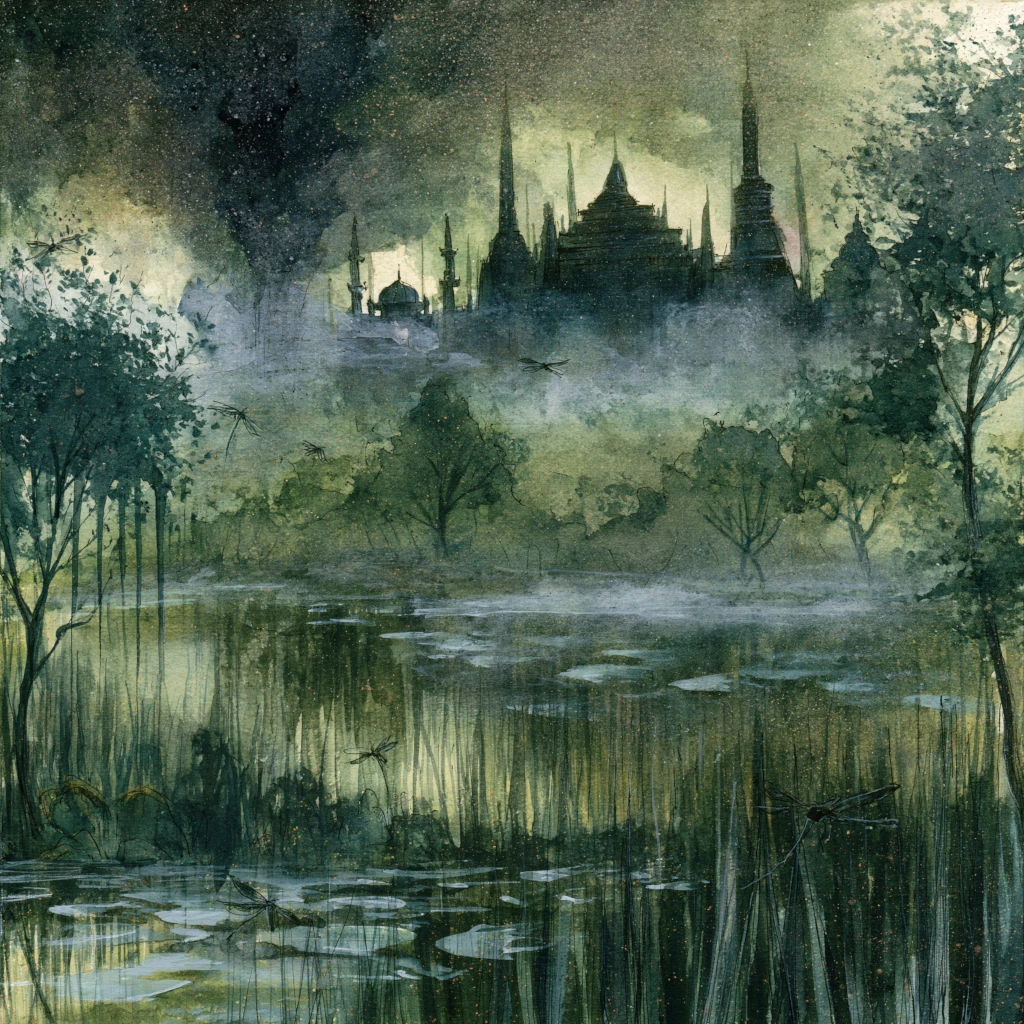
Grimy humidity fills the air, mixed with a dank and foul smoke. Noise suffuses the shell from wall to wall, and a vibrant bustle dominates the level. Lizardfolk, khaasta, and pretty much every race with scales can be seen here, running from place to place, slaves to the fires of industry and whims of government. These are the Boggylands, the administrative centre of Slaan, and where the most important business of the city takes place.
While the climate here is somewhat less torpid than that of the Marshes, it’s still an environment only lizardkind find comfortable. Hot and humid, with smoky fog hanging in the air, planewalkers have drawn parallels between the Boggylands and Sigil’s Lower Ward. Turns out, Sigil’s not managed to corner the market on bad metropolitan air.
The Boggylands share with the Mouth the dragon’s share of Slaan’s business dealings. Here are conducted the businesses of government, religion, and industry. All the great ministries and embassies are located here, and many of the temples of the burg. The duelling arena of the Boggylands is almost as large as the grand arena in the Mouth, even though few major championship matches are conducted here. The wealth of Slaan may be concentrated several hundreds of feet overhead, but the power of the city is focused here.
Few people actually live in the Boggylands, mostly migrating up to their jobs from the Marsh every day. An exception to this are the members of the city’s watch, who sleep in barracks buildings here. This creates quite a concentration of martial power on the streets whenever the guard changes—and sensible cutters tries to keep off the streets at those times, since getting in the way of a khaasta in a hurry is always a bad idea.
The Blocks of Stone
This rather bland title is the region of the Boggylands devoted to the government. Located centrally, across from the temple of Semuanya, a series of buildings exists for each Ministry of the city, surrounding the great arena and the council chambers. The smaller embassies are sandwiched between them. Buildings here are constructed from stone, which was imported at great expense from off-plane. All the major government buildings are made from it, for reasons of functionality and longevity in the damp climate. It does tend to make the area look rather drab though.
The Blocks are filled with such a concentration of bureaucracy and double-dealing that the air practically shimmers with the politics. It is here that non-lizardfolk are often to be found, trying to work their way through the complexities of the ministries to accomplish something of importance to their own affairs. The resident civil servants mostly view such outsiders as a necessary menace. The area is also home to the city’s several private libraries (there is no public one), specialised eateries and cafes, merchant headquarters, banks, art galleries, and museums—mostly celebrating the achievements of the city’s great duellists.
A more noteworthy aspect however is that this area has more than its fair share of two unexpected races, for both abiorach and the frightening xantu can be found here in great numbers. Indeed, a body can go hours without seeing one elsewhere in the city, and then run into a dozen sitting on a street corner in the Blocks. The abiorachs make no secret that they are here to monitor, but the xantu are more mysterious. Most of them don’t seem to be working, more often than not they look like they are sizing cutters up. Anyone berk unlucky enough to find a couple of xantu glaring at them at once is recommended to turn around and head somewhere safer.
Redstone Facilitators
This small brick building houses Redstone Facilitators, specialists in helping the uninitiated navigate Slaan’s reptilian bureaucracy. Run by an the aging, kind-hearted Fevor (ipsosaur expert [he/him] / Cinderformed / LG) who will ask a cutter a few questions and then tell them exactly which room in which building they need to go to. Fevor’s been so successful that many of the residents, when directing people to the government just say “Go to the Boggylands and see Fevor.” The ipsosaur doesn’t charge much, just a silver to go through a five-question quiz, and another silver if he has to spend more than a minute deciding a tricky question. He makes a point of treating everyone equally, and employs a couple of scel as guards to make sure everyone waits in line. On a busy day that line can get long indeed, sometimes stretching out the door and well down the street, but it moves quickly. Pushing and shoving will get you thrown out and warned not to return, and is also likely to poison a good portion of the bureaucracy against you, as they appreciate having someone guide the right people to them.
The Armoury
Slaan’s Armoury is a great circular structure with ten doors, each of which can be sealed with a massive iron portcullis. It’s not truly designed for defence, so much as the rapid distribution of weapons and armour to the populace in case the burg comes under attack. The Armoury is located at the centre of a large number of barracks buildings, each almost a fortress in its own right. It serves as the central command of Slaan’s garrisoned army and city watch, each group having their own halves of the building. The Armory is constructed of hard-baked mud, and is solid as rock. What few know is that the walls have a middle layer that’s filled with all sorts oozes and of disease-causing organisms that could be released upon besiegers by melting the outer wall with specially rigged acid traps.
Clustered around the edge of the wall of barracks are a variety of businesses which cater to the soldiers, such as boisterous pubs, many of the burg’s blacksmiths, mercenary recruitment offices for djinn, efreet, and third parties, and a Gallows Square for the punishment of criminals. Khaasta, mon’varan, and scel dominate this part of the city, and anyone unwilling to stand up for themselves should expect to bear the brunt of their bawdy humour.
The Armoury contains a large number of ready weapons, both mundane blades and bows for the arming of the militia, and enchanted weapons for cases of dangerous criminals with and outsiders. These stockpiles are well guarded, and the army never trades its weapons, regardless of the price. Any criminal arrested while carrying a suitably useful weapon will probably find it gets added to the collection here forever.
Bare Blades Tavern
An open secret in the burg, the Bare Blades tavern is hidden in the heart of order, but is a site for a particular kind of law-breaking. This is where a cutter goes to hire a bare blade, which is Slaan slang for an assassin. The paradoxical tavern is a particular haunt of xantu, but many khaasta officers also come here while off duty. Anyone seeking to purchase the services of a bare blade can make their case to a xantu, and see if Slaan’s only assassins are willing to accept. However, every step must be conducted under the watchful eyes of khaasta guards, from the initial approach to a discussion of payment. This is widely considered to be the xantu way of avoiding having to deal with amateurs. Of course, for the rich, there is another optio:. Hire a middleman skilled in approaching the xantu. This of course carries its own risks, but it at least means a cutter has time to flee if the khaasta haul the poor fool in for questioning. The dangers of this task make it almost as expensive as hiring the xantu in the first place.
Blacksands
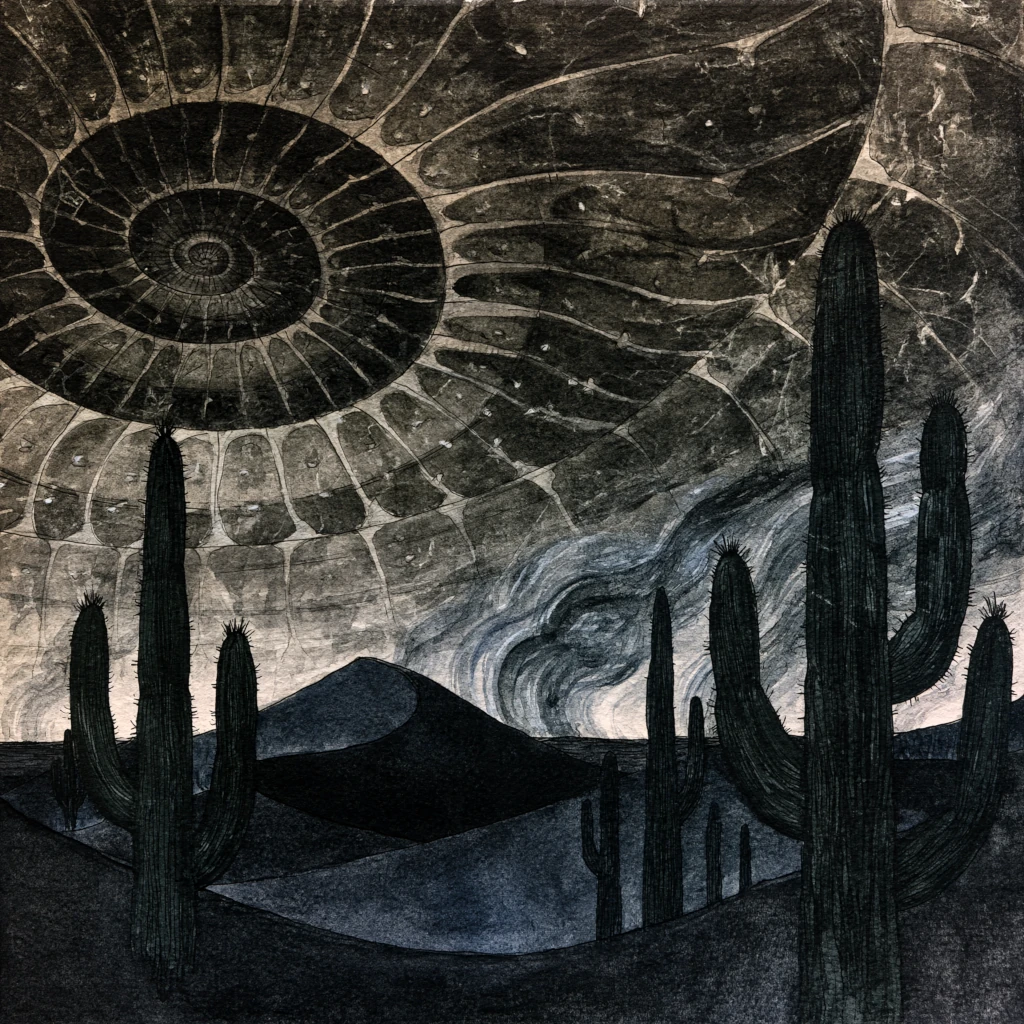
The baking heat of this layer suffuses everything, even your mind, making it almost impossible to think. Black cinders ground fine as any sand crunch under your every step, and cover everything you see. Baked reds and blacks are the only colours of construction. To unprepared humanoids, the whole world probably seems like its on fire. Yet among this maddening, burning wasteland figures move around calmly, untroubled by this baking environment. They are the burning desert lizards, and you are probably beneath their notice.
Like a wall of fire, the Blacksands divide the reptilian sections of Slaan from the Mouth that gathers planewalkers like a corpse draws flies. This scorching place, made dry and hot by the deliberate lining of everything with finely ground black cinders, resembles a particularly hateful prime desert. Indeed, chant goes that hidden somewhere within this layer is a portal to the desert world the burning desert lizards hail from. This level is their realm, shared with a few firenewts. Other reptiles and outsiders may pass through, but the unforgiving heat drives them out quickly enough.
More than any other level the Blacksands something of a city on its own, a buffer between the two halves of Slaan. The desert lizards specialize in craftsmanship and martial arts. While those serving in a defensive capacity can be found throughout the city, their artists and craftsmen concentrate here. To get a decent price on anything made by these races, one must brave the boiling heat and journey out into the Blacksands oneself. Few actually bother, sticking instead to the relative safety and shelter of the Spiral Road that takes travellers from the Mouth down to to Boggylands, the reason most are passing through here.
The Blacksands contains more open space than any other level in Slaan, since the burning desert lizards prefer to stack their homes and workshops against the glass walls and on top of each other, with each race forming its own small enclave. Construction is similar for each though, making it difficult for planewalkers to tell who lives where sometimes. The vast open area is used by the lizards to simply roam around in the environment, for these cutters do not wish to abandoning their nomadic roots fully. Druidic shrines dot this desert area as well, along with the practice rings of the mon’varan, and the contemplative challenges of the moloch’phryn. Travellers might assume that Blacksands was designed simply to inconvenience them, since it means more time must be spent walking through the desert. This however is foolish, since the locals here are actually some the most sociable to outsiders—well, some of them at least.
The Garden of Slaan
The Garden is ironically named, since its plants are scraggly, covered in spines, and frankly ugly. This site is where the helods grow plants to make medicines and poisons, using magic to create artificial lights. Helods tend the garden constantly, gathering alchemical ingredients. This is where all the best potions can be found in Slaan, and crafters from other levels also come by here to sell their goods. The helods are hardly accommodating to visitors, and anyone with business here had better be willing to stomach at least two ritualised attempts to scare them off. Once that is completed however, the helods become all business. They’re good at it too, slow to compromise and always quick to seize upon weakness.
The Garden has another purpose as well, serving as Slaan’s unofficial medical centre. While several of the temples in the Mouth and the Boggylands offer healing to the faithful, the price can be unaffordable to many. Healing here is cheaper, though the herbal medicine of the helods, while effective, can be extremely painful. In extreme need the druids of the level can be called in, and they are said to be Slaan’s most skilled healers.
The Field of Banners
Tall poles ripple in a wind that does not blow on the field of black cinders. A circle of banners commemorates the battles of Slaan’s past, and those who fell in them. While those who die in Slaan are ordinarily fed to the xulgath, the dead of the battlefield, and city watch who die in their duty are given a different treatment. Burnt to soul ash by the Cinderformed, their remains are scattered under the banners here, to become part of the eternal monument.
The dust devil storms that occasionally blow through the Blacksands are prevented from entering the circle by magical wards, and a feeling of quiet reverence suffuses the area. The field is a site of peace and enchantment, and many of the champion duellists come here to meditate before key duels.
On this field all violence is forbidden, and no duel challenges may be made, and no mind-affecting magic will function. The ground is sacrosanct, though it is consecrated to no gods. The field has therefore also become a destination for those who are fugitives of the xantu or the city watch to flee to. Only the ignorant try this trick, since berks who have disrupted the order of Slaan will not find safety within the field of banners, and will instead find themselves confronted by a phalanx of incorporeal warriors, formed of shadowy visions of ash. These warriors behave like wraiths, and though they may fall, their numbers only constantly grow, until they eventually slay the interloper or drive them out. It is said that a dutiful person who meditates here long enough can commune with these spirits of Slaan’s fallen warriors.
Moloch’phryn monks and mon’varan warriors are constantly present here, praying or meditating for a few hours at a time. They will not bar foreigners from the field, but will explain the nature of the site and insist on the strictest courtesies. Certain important official ceremonies, such as the crowning of a new duelling champion, or the appointment of new members of the city council, are held here.
The Mouth
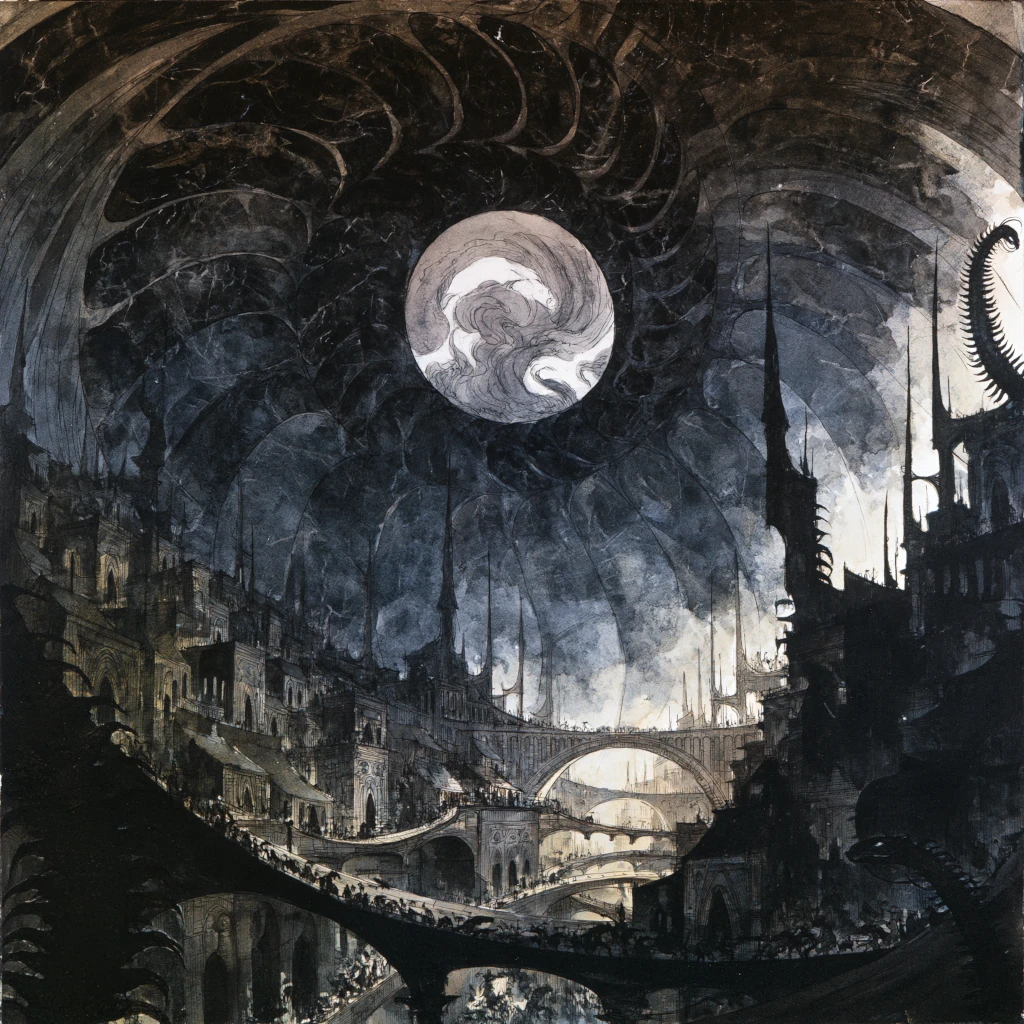
Crowds of lizardfolk, humanoids and outsiders alike throng here in the Mouth, the Foreign Quarter of the burg. Roads, bridges and platforms wind up, down, sideways, and through the air. The cries of traders and hawkers ring out through the humid air in a hundred different tongues, and goods are traded at all hours of the day. Vices and virtues alike can be bought and sold here, and the finest luxuries of the Inner Planes are for sale to any with the jink to afford. High above the heads of all is the great gate of the city, a giant magical membrane that stretches across the opening that leads outside of the shell, preventing the egress of the Plane of Smoke beyond. This is the Mouth, the busiest section of Slaan, and one of the great hubs of the Multiverse.
There is really one purpose to the Mouth—trade. The entire district is one giant bazaar, filled with dozens of markets, all offering different services. Traffic never stops or ceases here. Beyond simple buying and selling are endless other options for the traveller. Inns are found here, as well as temples, libraries, and guilds. The Fuming Arena of Slaan is here, a site of tremendous bloodsport and violence. The compounds and offices of many of Sigil’s factions and sects can be found here as well, including the headquarters of the Cinderformed, a sect of Smoke.
The Mouth is filled with the residences of outsiders. Basically if it doesn’t have scales and lives in Slaan, it probably lives here. For many visitors to Slaan the Mouth is the only part of the city they’ll ever see, and they know the rest only from disturbing rumours. Indeed, travel down into the Blackdsands and beyond is not for the faint of heart, but those who limit themselves to the admitted wonders of the Mouth are rather missing the point (which is why it is described last).
This area contains many more important locales for outsiders than others, from the arena to the markets to the temples, and describing them all would be impossible. The Fuming Arena, the Unburned Halls, and Spiral Road are therefore given attention here.
The Fuming Arena
This is a tremendous open-air hall, filled with countless stands and duelling circles, and built from great slabs of hardened ooze, the Fuming Arena is the largest building in Slaan. It was designed to hold the duellists, their adoring crowds, and all the machinery of the Ministry of Duels that is required to administer it, this building is carved with images of figures locked in combat. Within the hallowed circles of the arena are fought the great duels of the championships, where the best duellists come to Slaan to pit themselves against all comers, and bet their blood for gold. There are many duels held each day, both amongst professional duelling gladiators and amateurs, and matches are typically held hourly. The great duels of the Champion’s Circuit may not be held more than once per week, but they are guaranteed to pack the giant edifice with thousands of spectators and flood the coffers of the ministry with gold in bets. The arena does not hold any concessions itself as there simply isn’t space, but hordes of such establishments surround the arena, and they pay hefty tax burdens for the privilege of their locations.
Anyone can enter the arena and sign themselves up as a duellist under the watchful eye of elgar enforcers and administrators. The elgar run a large amount of the duelling administration, and act as judges and referees, not hesitating to intervene if duels turn ugly. The Vice Minister of Duelling, Viriom, oversees all of the bureaucracy with two goals: Ensure that the rulers’ commands are followed, and to please the public. This often requires walking a fine line, and tends to make the unfortunate vice minister unpopular with both his subordinates and the public itself. Signing up ignorant outsiders to watch them get monstrously beaten by reigning champions is one of his more popular tactics.
Currently the Fuming Arena is abuzz for two reasons. The duelling season is heating up again and the Champion’s Circuit looks poised to bring the reigning hirei into combat with the etherguant Wax Face, who he has never fought before. Wax Face is in a position that should he win, he would hold the title of Champion for the first time since his appearance centuries ago. Many among the public hope this occurs, so that they can entice the tsnng Knnggttt back for a challenge against Wax Face. Any battle in which the legendary tsnng participates will be an event trumpeted across the Inner Planes.
The Unburned Halls
The Cinderformed are the only faction or sect to be headquartered out of Slaan. This strange sect of smoke, with their unusual be-transformed-but-not-burned philosophy, may have no great hold on the residents here—as few of the reptilians seem to care for faction membership—but a good number of the burg’s humans follow the strange teachings of the sect. The Cinderformed seem relatively harmless, unlike the Pyros or Doomguard, and have taken it upon themselves to keep other dangerous sects out of the city.
The Unburned Halls are a cluster of great building made of solidified ooze that was not fired, but hardened by magic long ago. The actual age of the sect remains dark, but the building has existed for as long as anyone can remember. It is a blocky but sturdy edifice, and its interior is unadorned and dark. Ventilation is poor as well, and everything is perpetually smoky. The Cinderformed don’t seem to mind, but others can find this rather uncomfortable.
The headquarters is run by the leader of the sect, Trerct (smoke genasi sorcerer [he/him] / Cinderformed / CN), an unusual cutter who seems to shift his direction of action constantly. Trerct is consulted by the rulers of Slaan on matters of great important to the state of Smoke as a whole, since the sectol has something of a knack of understanding how the plane at large works.
The faction headquarters is a resource for planewalkers, supplying members of the sect with maps, homunculi specialised for all the Inner Planes, traveling gear, portal locations, and all sorts of other useful knowledge. It is possible for non-Cinderformed to avail themselves of these services, but the prices are much higher, and often such things can be found for les out in the markets.
The Cinderformed make it their business to keep track of members of factions and sects they consider ‘dangerous.’ At the current juncture this is the Cremators, the Opposition, the Doomguard, and the Xaositects. Any members of those sects may be brought in for voluntary questioning. The sect members have no legal authority, but they can put out an alert that generally tends to ostracise anyone in Slaan, if they can provide good reason.
Spiral Road
The great road that winds through the centre of Slaan all the way from the Mouth to the Depths is Spiral Road. While in most levels it is merely a conduit for transit, in the Mouth, Spiral Road is a the centre of trade. All the great Planar Trading Companies have buildings along its front, and stalls are festooned everywhere along the road. Almost anything can be found in close proximity to Spiral Road, though the prices are high for the convenience and display. Those looking for fine crafts or reasonable prices should probably try elsewhere.
The greatest aspect of Spiral Road is that it caters to planewalkers, and sells a large amount of magic. From breathing apparatus, armour, weapons, and wands, all things can be found here in the hands of the traders. Strange creatures and even stranger materials, contracts for building, and full-fledged ships can be purchased here. There’s even a wizard who sells the deeds and portal keys to specially crafted demiplanes, for the powerful and rich spellcaster who is too busy to craft their own.
The Road itself is set upon the bare mineral of Slaan’s floor, and is so hard that even thousands of years under the pounding of thousands of feet has not made an impact upon it. Along it everything is set up pell-mell with fights and duels frequently breaking out among sellers, regarding who can claim which space. Every cutter here is looking to buy or sell something. Opportunism, more than specialisation, tends to be the rule here. Get the goods moving, and keep them moving, Slaan is only a stoppage on the way.
Spiral Road tends to inspire awe in first-time visitors, especially narrow-minded berks who cannot believe lizardfolk could make, much less own, many of the mansions the trading companies control. However, stopping here to gawp is asking to be run over and trampled beneath the constant crush of people. The smart learn what they need on the road and then disperse out elsewhere to find it, for the Spiral Road is a trap for the unwary, pure and simple.
The Quiet Tent
A tiny island in a sea of people, the Quiet Tent moves about Spiral Road and changes ownership regularly. It is a simple tent, made of blue silk and always watched by a quartet of sturdy elgar enforcers. It looks unassuming and does not advertise its existence, but for those who know, there is no place better in all of Smoke for magical items. The Quiet Tent is a trading establishment run by the arcane. While many arcane are active in Slaan, most work at the upper echelons of trade, in the great deals between companies and cities that move large cargoes about. Only here do they sell directly to the public.
The Quiet Tent offers almost any magical wonder imaginable, but the prices are great—at least double the market value. Quality is guaranteed however, and the arcane will fully explain the capabilities and command words of everything they sell. However, they tolerate no questions about the origin of items. Once it passes from arcane hands it’s the purchaser’s problem. Caveat Emptor is the rule with them. Still, it doesn’t keep people away.
In addition to the elgar, the Quiet Tent is constantly watched by a single lizardfolk in the employ of the Ministry of Trade, who works to make sure that the excise taxes placed on this establishment are followed. Ralshar dislikes the arcane stealing the business of native traders. Since the tariffs handed down by the rulers of Slaan change almost weekly, Ralshar has to be careful that he’s not claiming to be unfair, so he tries to target the arcane on days that they will have many visitors. Whether this is working or not is unclear so far.
Source: Inner Planes [2e] p13 (brief mention), expanded upon by Mechalich, edited by Jon Winter-Holt. Canonwatch: ‡ The expanded details for this location are homebrew and were rescued from the dead-booked Planewalker.com site.. I renamed ‘the Desert’ to ‘the Blacksands’ to avoid using the word desert too much as the inhabitants are called desert lizards, and ‘the Bogs’ to ‘Boggylands’ as bogs means toilets in UK slang and I don’t need that kind of distraction for players!