

Nergal

The Destroyer; Ninazu; Erra; Reshep; Simut; Nirig; Mekal. NE lesser power of the dead and the Underworld [He/Him]
Pantheons: Anunnaki (Mesopotamian Underworld)
Symbols: A dark man holding a black shield
Realms: Gray Waste / Oinos / Nergaltos and Nether / Kur / Arali
Known Proxies: Tadmustum (demi-power proxy of Nergal [she/her] / NE); Allal the Dead (tiefling wizard proxy of Nergal (he/him) / NE)
Listen up, cutter, because this is one blood who’s followers you don’t want to cross paths with in a dark alley—or anywhere else, for that matter. Nergal’s the Mesopotamian power of death, plague, and the Underworld. He’s no passive power of death, neither—he’s an impatient sod and unlike Pharasma he hasn’t got the time to hang around waiting for cutters to get dead-booked naturally. Nergal represents what the graybeards call “inflicted death”—the kind that comes by sword, pestilence, or even the scorching heat of the summer sun that turns fertile fields into barren wasteland. Sent by an angry god, of course.
Philosophy and Portfolio
Nergal’s philosophy is simple and brutal: Destruction is natural, and sometimes it’s just time to tear things down. Unlike some powers who destroy for grand cosmic purposes or a sense of divine justice, Nergal often rampages simply because he’s got a terrible temper. His portfolio covers war, plague, pestilence, and since his marriage to Ereshkigal, the Mesopotamian Underworld too. He’s also tied to the cruel aspect of the sun—not the life-giving, plant-growing gentle light, but the merciless heat that scorches crops and brings famine.
The god commands legions of fiends, and most notably heads up the dreaded Sebitti—seven minor gods of war who serve as his agents of death and destruction. When Nergal gets restless, he unleashes these weapons personified to spread plague, start wars and generally spread chaos across the planes, leaving devastation in their wake. Primes often invoke his name not to worship him, but to appease his wrath. In that respect at least, he’s as much protector as destroyer, stepping in to ward off the very diseases and demons he commanded in the first place. If that despicable behaviour reminds you of a Hive Ward protection racket, then there’s a faction of Athar ready for you to join them.
Appearance and Iconography
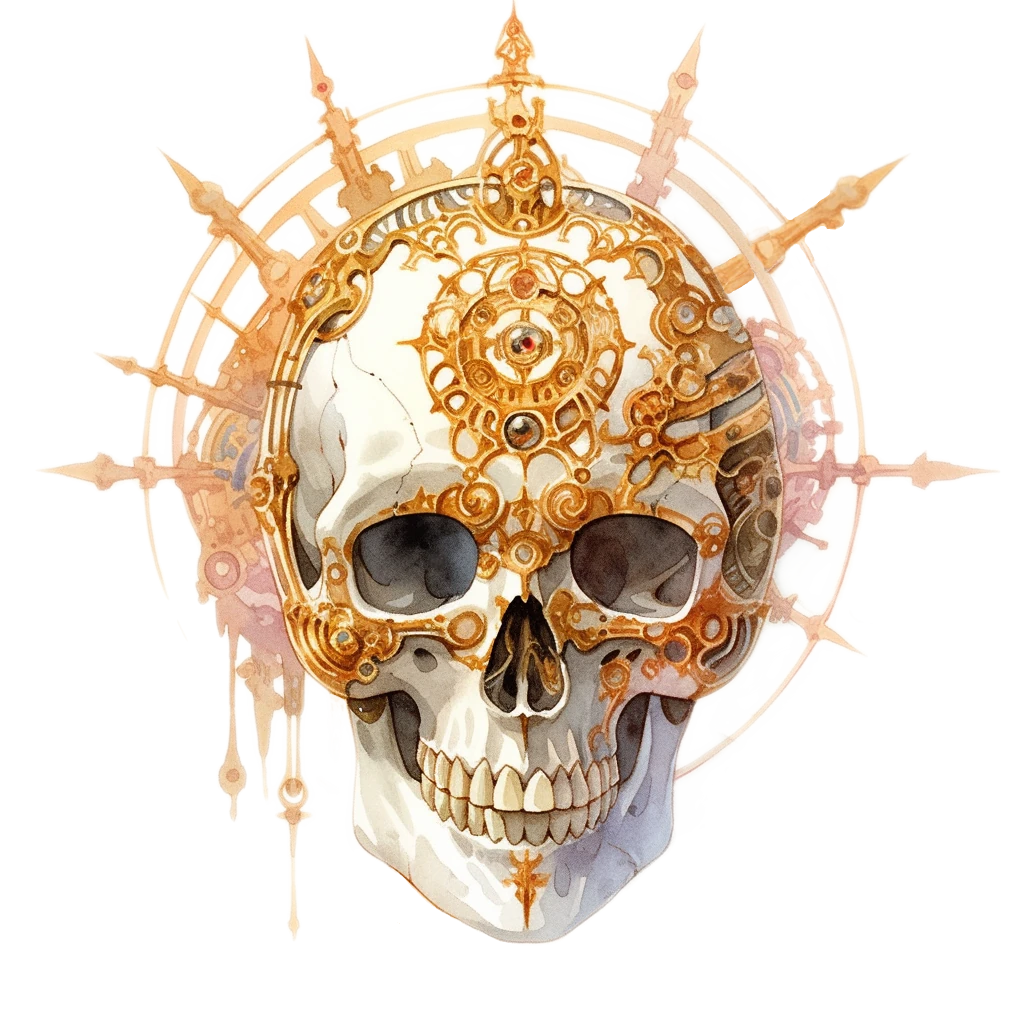
When Nergal is depicted in religious artwork, he’s typically shown as a fierce warrior bearing his signature weapons—a scimitar and a distinctive double lion-headed mace. The lion is his sacred animal, representing his ferocious nature and royal authority over Kur, the realm of the dead. But cutters who’re in the know reckon his true form is that of a skeletan humanoid, with the head of a lion, and sometimes feathered wings like an angel. His symbol as a warrior is a black shield, thought in his pestilence aspect he’s also associated with the swarms of flies that follow in his wake
The Marriage of Flame and Shadow
The best known chant summing up the essence of Nergal is his mythical courtship and marriage to Ereshkigal, the Queen of the Underworld. It all started at a divine banquet where every power was invited. Ereshkigal, bound as she is to rule the underworld, couldn’t attend in person, so she sent her vizier son Namtar to represent her instead. All the gods rose in respect when Namtar arrived—all except Nergal that is, whose pride wouldn’t let him show deference to a mere servant.
Insulted by this slight, Ereshkigal demanded Nergal—then a mere power of war and disease—be sent down to the Underworld to face her judgment. Under Enki’s guidance, Nergal descended with a cadre of fourteen lilu demons for protection, posting two at each of the seven gates that led to Ereshkigal’s throne room in Irkalla. When he reached the Queen, instead of showing submission, he seized her by the hair and threatened her with his axe. But Ereshkigal, in a move that surprised even herself, pleaded for her life and offered herself as his bride, promising to share her power over the dead.
Nergal accepted, but their union came with cosmic conditions. For six months each year, he would rule beside Ereshkigal in the depths of Kur. The other six months, he’s free to roam the planes, spreading his influence and slaking his need for war and destruction. It’s a marriage born of violence that somehow became a partnership of mutual respect—the god of inflicted death and the queen of all who die, ruling the underworld as equals. This myth reveals an important facet of Nergal’s core nature: He’s not just a mindless destroyer, but also power who demands respect and recognition. He can form deep bonds of respect, but only with those who strong enough to stand up to him.
The Realms of the Dead
Nergal’s got not one but two realms he calls home. His original realm, and primary seat of power is Nergaltos in the Gray Waste. It’s a circular city of black basalt shrouded in perpetual mist, built around seven great domes. The streets teem with the silent shades of the dead, all moving on errands understood only by them and their master. These petitioners never speak, so any blood looking for information has to deal with the living servants instead, who are mostly wicked warriors that Nergal’s recruited to serve him directly.
But that’s just his showy stronghold. Tucked away in the Cordant Plane of Nether, deep down below the ground in Kur, the dark realm beneath the swamps, he shares a larger realm with Ereshkigal. His portion is the deepest cavern, called Arali, while hers is a burg called Irkalla. Unlike most powers who are stuck in one realm, Nergal’s got the freedom to move between his domains, and across the planes as well, making him one of the more mobile deities in the multiverse, much to the detriment of the multiverse.
The god himself broods on a black throne in Nergaltos, plotting ways to expand his influence and spread his precious diseases throughout the planes. Chant goes he’s got no special grudges against other powers unless their interests clash with his—though his definition of “conflicting interests” is pretty loose, considering he helped murder the Sumerian god Enki in cold blood.
This is one power who embodies the harsh truth that sometimes destruction comes not from malice, but simply from nature itself. When plague strikes or war erupts, when the sun scorches too hot or demons run wild, well that’s Nergal’s influence at work. He’s a reminder that death doesn’t always come gently in one’s sleep—sometimes it comes with fire and sword, fever and fang, and a full-throated scream.
Tadmustum (proxy of Nergal [she/her] / NE) is one of Nergal’s many known proxies, and also his daughter, according to the church of Nergal. She’s may be a humble demipower, but she’s the ruler of Arali when her father is away. She doesn’t fear the Perishing either—she has accepted her fate and simply tries to make life easier in Arali. However, she’s inherited her father’s appetite for destruction; when angered she unleashes a rage of destruction that might one day even parallel that of her father.
Canonical Sources: Dragon Magazine #016 p4; #329 p36,42,44; #358 p72; On Hallowed Ground [2e] p47,62,65,172,182
Sources: SGreen, Jon Winter-Holt. Canonwatch: There is also an outcast Duke of Baator called Nergal, and a tanar’ri lord called Nergel. Be careful you summon the right one, cutters.
