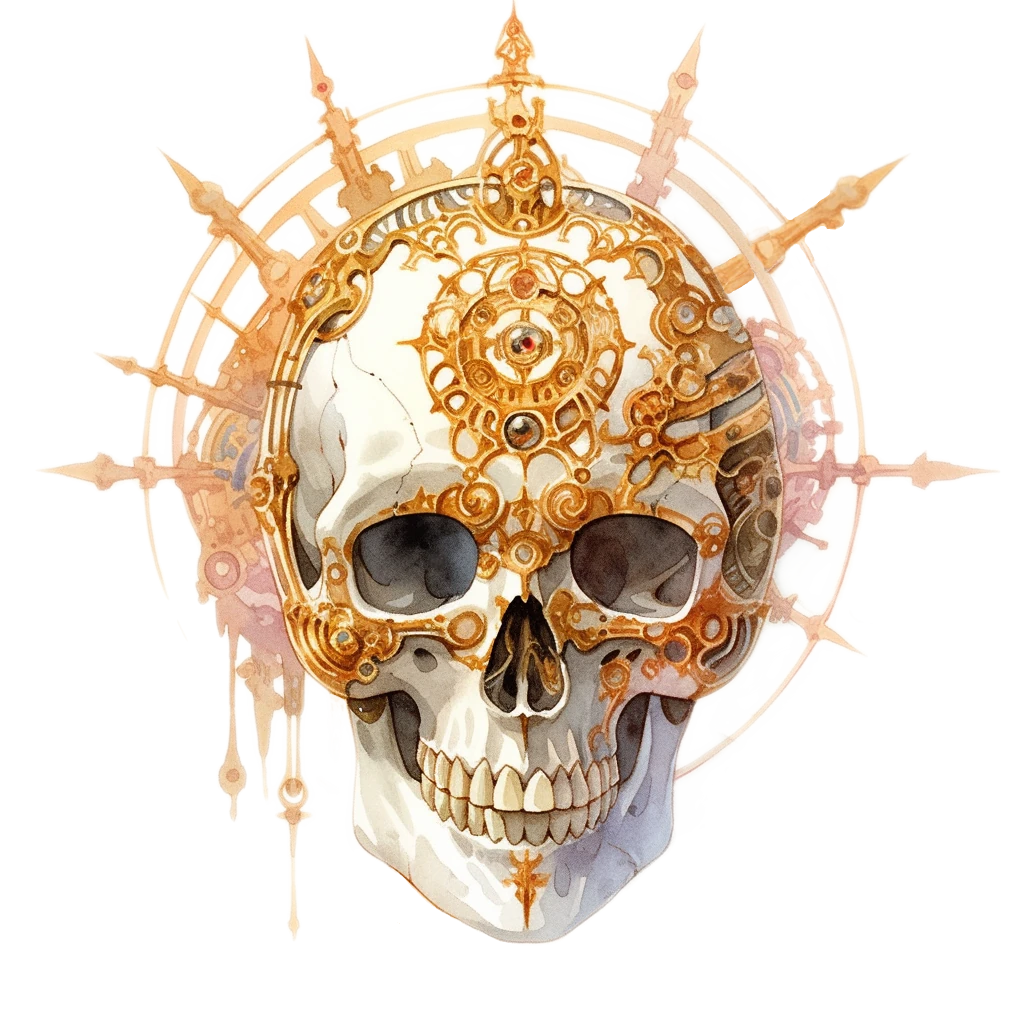


Ereshkigal

The Queen of the Dead. LE intermediate power of the dead and the Underworld [She/Her]
Pantheons: Anunnaki (Mesopotamian Underworld)
Symbols: A single dark eye
Sukkal: Namtar, LE lesser power of doom and disease [He/Him]
Ereshkigal, the dreaded Queen of the Dead, is the unforgiving sovereign of Kur, the Mesopotamian Underworld. It’s a realm of silence, dust, and iron law where Ereshkigal’s will is absolute. Her purpose is to keep the boundary between life and death inviolate: she guards the souls of petitioners in their eternal afterlife, enforces the separation of mortals and shades, and ensures the rites and libations offered by the living to the dead are delivered. Ereshkigal cuts a regal and terrifying figure: Some etchings depict her crowned with black horns, robed in funerary linen, and eyes like burning coals set deep in a sorrow-worn face. Others evoke a shadowy, statuesque queen enthroned and entombed beneath earth and rock, surrounded by the Anunnaki judges and her loyal vizier servant Namtar. Depictions of the Queen of the Dead are rare, because cutters are rightfully superstitious about attracting the attention of death incarnate.
Her philosophy is one of inexorability—the idea that death is the final law, so fundamental to the multiverse that even the gods must bow before it. Ereshkigal embodies the cold and inevitable justice of the afterlife, brooking no bargain that would upset the cosmic order. Neither love, glory, nor even blood ties can excuse a soul from her judgment. Yet, beneath her brutal façade, she ensures fairness: the Queen of the Dead only punishes those who break her rules.
Marriages of Flame and Shadow
Like her realm of Kur, Ereshkigal’s relationships are labyrinthine and perilous. Her first husband Ninazu, who some also describe as her son, was called the Serpent Lord. Whispered chant claims that he might have even been the original ruler of the Underworld, before Ereshkigal pushed him off the throne. Whatever the truth, it’s said the cutter still exists in the deep parts of Kur, no doubt taking his venom out on unlucky petitioners somewhere.
Her second husband, Gugalanna, is a marraenoloth lord, and rarely present in Kur. He’s responsible for inspecting and keeping the waterways of the Lower Planes open and flowing—if not clean and safe. This means a lot of travelling on the River Styx, the Huber, the Lethe, the Ar-en-Gereh, the Hister, the Pyriphlegethon and Ishiar the Ocean of Despair. Quite why the yugoloths care so much about river maintenance is anyone’s guess…
However Ereshkigal’s most storied consort, and third husband, is Nergal of the Babylonian Igigi. He’s a warlike power of disease and death, and rules Irkalla beside his wife for six months each year. His hot temper compliments the coldness of her reign. Their marriage is a partnership forged in blood, violence, love, and the necessity of reconciling rival traditions of the underworld across multiple pantheons.
Ereshkigal herself is something of a paradox, for she is both prisoner and jailor, for despite being the ruler of the realm of the dead, she is seemingly trapped there herself too, unable to leave Kur. Graybeards have noted that the Lady of Pain is in a similar situation, and then they look over their shoulders, go very quiet, and refuse to say anything more on the subject.
Tales of the Underworld
Perhaps the most iconic myth of Ereshkigal is the tale of Inanna’s Descent. A very long time ago, Inanna (Ereshkigal’s sister, and greatest rival) dared to enter Kur, even though it was forbidden. Ereshkigal, unmoved by familial ties, ordered her gatekeeper Neti to strip away some of Inanna’s divine powers at each of the seven gates guarding the realm, but this did not deter the goddess. Finally, she stood naked and helpless at the last gate, still determined to enter the Underworld to see what it was like.
Under Ereshkigal’s orders, her loyal sukkal Namtar inflicted the curse of Sixty Miseries upon Inanna, killing her. Her body was then hung up her body on a meat hook, as a reminder to all that even gods must follow the laws or face the consequences. Only the intervention of Enki himself allowed Inanna to rise again—and then only if she provided another soul to replace her in the Underworld. The unlucky berk was Inanna’s husband Dumuzid, a lesser power of agriculture. When Inanna returned from the Underworld, she was incensed that Dumuzid had not sufficiently mourned her death, and allowed the gallu demons to drag him to the Underworld to replace her.
Ereshkigal and Areshkagal
So, planewalkers often confuse Ereshkigal with Areshkagal, the Abyssal Lord of greed. And they’d be right to, because their tales are dark and very much twisted together. Despite the similar names, they’re not a scribe’s spelling error, but two distinct entities. It’s a Sumerian thing, just look at Enlil and Ninlil, or . For starters, both are the spawn of Lamashtu, but whether they are twin sisters, or two aspects of the same being, now that’s is unclear. Some graybeards reckon that Areshkagal emerged when Ereshkigal dallied too long with an Outer God, and was corrupted even further. To protect her own divinity and sanity, she sloughed off her form and discarded it, assuming it would wither and die. In fact, it crawled away to the Blood Clefts in the Abyss and established herself as a demon lord. What Ereshkigal thinks of her Abyssal twin—enemy, cast-off aspect, or estranged sister—remains a cosmic secret, but their relationship further muddies the mysteries which surround the Queen of Death.
Canonical Sources: Dragon Magazine #016 p4; #329 p36,40; Planes of Conflict [2e] Liber Benevolentiae p54 (mentioned as the sister of Ishtar)
Sources: SGreen, Jon Winter-Holt. Canonwatch: Reconciling the differences between D&D and Pathfinder lore for this real-world goddess was interesting. I took the route of two similarly-named gods, which has a ton of precedent in Mesopotamian myth. Making one lawful and the other chaotic gives some dramatic tension too. The myth of Dumuzid will doubtless ring bells if you’re a student of Greek myths, because it’s clearly an inspiration for the Persephone story, originating thousands of years before the Greek pantheon even existed.
Dumuzid is specifically equated with Adonis, OOI. There is some evidence of an earlier version of the Ereshkigal myth where she is a more Persephone like figure though.
It’s a pretty bleak view the sources have of Ereshkigal, though, which is based on a pretty harsh reading of the myth. I much prefer the interpretation in Fate Grand Order, where she is not evil at all. The assignment of Underworld gods as inherently evil is an unfortunate trope.
It’d be worth re-reading the original Descent of Inanna for a bit more context as to what kind of character she’s meant to be.
I based this entry on this verse from of the Descent of Inanna: “She [Ereshkigal] cast a glance at Inanna: a deadly glance! She spoke against her a word; a furious word! She shouted against her a cry: a cry of damnation! The Woman, thus mistreated, was turned into a corpse, And the corpse was hung on a peg!”
…which seems a fairly uncharitable thing to do to your sister 😉
All things aside though, it is narratively useful to have evil gods, and there often aren’t that many of them to choose from in some mythologies.
I don’t know what Fate Grand Order is… google suggests a mobile phone game about gods? But even that apparently lists her as chaotic evil.