
[ Water ] [ Mapping Infinity | Pockets | Bestiary | Flora ]
[ Water Elementals | Elementaloids | Gadabouts | the Life Aquatic A—K | L—Z | Visiting Swimmers ]
Elementaloids of Water
Genies, hybrids, water-infused creatures and true natives of the Plane of Water, elementaloid creatures combine two natures, one elemental and the other mortal. Such beings typically need both copious amounts of water and more mundane food to sustain themselves. Elementaloids tend to have particularly liquid blood and jelly-like hydropic flesh. They can usually breathe both water and air, but require constant hydration to stay alive and healthy.
Aballin

Living Water | N | Large | Ooze | CR 4
The insidious aballin [AB-al-in] are dangerous hunters of the deep. Also called living water, these colourless acidic ooze are able to change their shape and composition to blend in perfectly with water. Their bodies are gelid and transparent, and when they remain motionless they’re virtually invisible in water. When prey draws near, the aballin lashes out with liquid pseudopods, attempting to draw in and envelop victims in its acidic, semi-fluid mass. Aballins seem to have no true society or alliances, although they form small groups, and mated pairs are able to merge together into a single larger aballin when threatened. Legends claim the first aballin came about when a druid was cursed to this fate, but as they’re such successful predators they’ve now spread to anywhere there’s water for them to lurk in.
Stats: [ D&D 2e | 3e | 5e ] MC14 Fiend Folio Appendix [2e]; Monster Compendium [2e]: Monsters of Faerûn [3e]; Angry Golem [5e]
Acidwraith

CE | Large | Undead | CR 16
A rare and horrible type of gelatinous undead, an acidwraith is created when the soul of a marid or other powerful water elemental is forcibly merged with a vile mixture of alchemical fluids and magical acids. In effect, the ghost of the being animates both the blasphemous fluid, and the disturbing tangle of skulls that manifests within it. Some are human skulls, other draconic, but all are locked in a silent scream. Acidwraiths are incorporeal, and able to phase through solid objects at alarming speed. Their touch corrupts water around them, turning it into diluted acid. It also harms water-based creatures merely by its presence. The only known weakness of an acidwraith is its dependency on moisture in the environment around it. Of course, this isn’t helpful on the Plane of Water itself, where these creatures are at the height of their powers, and feared by most natives of the plane. Only the most powerful and depraved necromancers can even dream of creating anything like this, and in most marid caliphates, getting caught attempting the ritual earns a rapid capital punishment.
Stats: [ D&D 3e | PF 1e ] Dungeon Magazine #131: Age of Worms [3e] p78-79; Creature Codex [PF1e]
Aquatic Remnant

CN | Medium | Undead | CR 3
Aquatic remnants are the sorrowful spirits of humanoids whose exhausted bodies were dumped by their fellows into unconsecrated waters. They appear as melancholy, eyeless faces with pale floating hands whose torsos fade away into the depths. They linger in the drowned places tied to their watery graves, half in the Border Ethereal and half in the Plane of Water. They are barely visible as flickering shapes, until someone draws near the place of their demise. In ‘life’ after death they drain warmth rather than blood, their cold, wet touch sapping agility and ultimately killing by hypothermia rather than violence. Despite the dangers they pose to planewalkers, they remain more tragic than malevolent, and sometimes can be persuaded aid those who oppose their former tormentors. They can even grant a kind of water breathing by pulling allies partly into the Ethereal while they hold the remnant’s icy, semi-material hand. In the Endless Ocean, aquatic remnants occupy the role of drowned memories and unburied guilt: they haunt grim eddies, and forgotten ethereal currents as quiet guides, resentful sentries, or reluctant patrons of the desperate. These sods remain trapped between the Ethereal and Water until proper burial rituals are performed over their remains.
Stats: [ D&D 2e ] Monstrous Compendium Ravenloft Appendix III
Bzastra

N | Medium | Aquatic | Magical Beast | CR 3
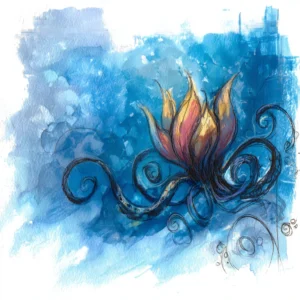
The bzastra [buz-ASTRA] is a strange creature, even for the planes. It’s an intelligent native of the Plane of Water, formed from a symbiotic fusion of three to six small, coral‑like “ring beasts” threaded through by a blue waterwhip vine. The stacked rings and sinuous plant move together as a single, contemplative whole. Unemotional and rigorously logical, a bzastra has no innate passion beyond survival and understanding, yet rare individuals can be swayed into service of good, evil, law, or chaos when some powerful cutter or idea bends their otherwise neutral outlook. Born seemingly from sheer chance—an odd energy aura from the common blue waterwhip bound once‑mindless circular coral-grazers into a single, conscious entity—bzastras have developed a surprisingly sophisticated society of private philosophers and scholars who drift the endless currents in globelike lairs of woven plants. They record their observations on shells and quietly amass lore about the Endless Ocean. Their worldview centres on contemplation and the quiet beauty of possibility: bzastra are thought to spend long periods in meditation. They are far from defenceless though; they can manipule energy currents with telekinesis to defend themselves, shape their homes. However, bzastra greatly prefer the peaceful life of gentle study, and tend to interfere with others only when threatened, or the desire to acquire an intriguing object spurs them to action.
Stats: [ D&D 2e ] Inner Planes [2e] p16; Planescape Monstrous Compendium Vol. III [2e] p24-25
Child of the Sea

N or CN | Medium | Amphibious | Fey | CR 1 or 2
The tales of the fisherfolk say that children of the sea are the eerily beautiful results of chance encounters between humans and something far older from the deep. They’re a curious race that walks the border between the mortal world and the boundless ocean. Though they pass easily in human communities during their childhood, some subtle detail always gives them away in the end—their brilliant too-green eyes, aquatically tinted hair, or fingers laced with telltale webbing, perhaps. Add to that their uncanny ability to read the weather, call fish from the deeps, and even breathe underwater, and these things mark them as something more than merely human. Patient and largely peaceful, these children are drawn increasingly toward the ocean as they mature until, at last, they answer its irresistible siren call and descend into the depths for good. Others migrate to the greatest ocean of all, finding a vortex to the Plane of Water and never looking back. However, not all children of the sea leave their human lives peacefully. Cutters who were treated with cruelty in their youth might become accanta—feral, wrathful beings who shed their humanity entirely, dissolving into living water which can drip through keyholes and pool under sealed doors. Those who wronged them are unlikely to live to regret their actions. Accanta are able to summon and control lesser water weirds to exact vengeance.
Stats: [ D&D 2e ] Monstrous Compendium, 1997 Annual, Volume 4 p15
Dragon, Tsunami
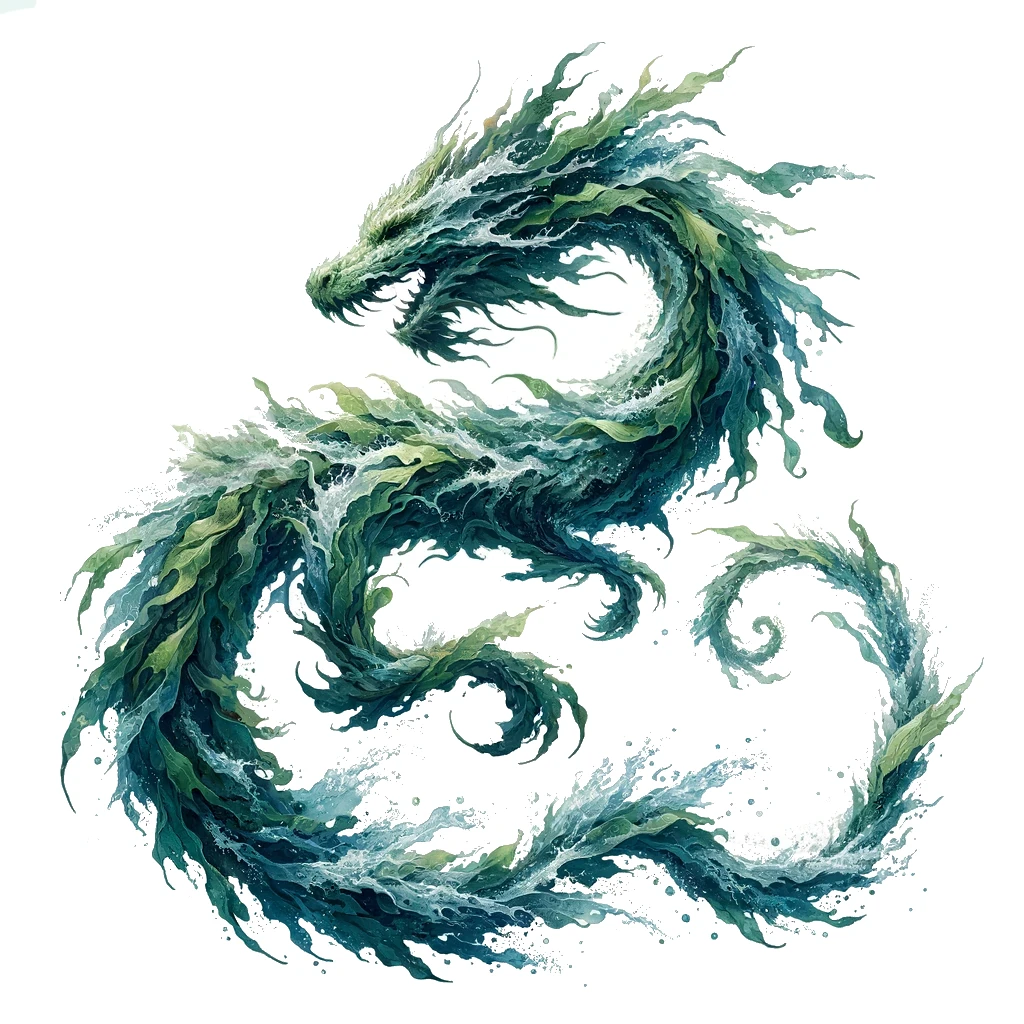
Typhoon Dragon, Flashflood Dragon | Any alignment | Size varies | Amphibious | Elemental | Water | Dragon | CR varies
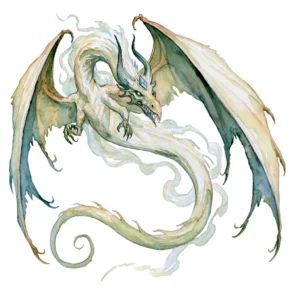
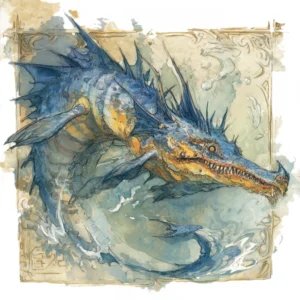
If all the other dragons are merely visitors to Water, then the tsunami dragons are the natives. A very long time ago they abandoned the Draconic pantheon in favour of even more ancient primordial elemental deities. While this is ancient history, the bitter hatred it spawned between the catastrophic dragons and their Prime cousins remains. In fact, the chant goes that it’s the territorial and chaotically aggressive nature of the tsunami dragons that prevents more aquatic dragons from the Prime making their homes on the Plane of Water.
Tsunami dragons are notorious on the Prime as well as Water. As with all of the catastrophic dragons, their life cycle involves periods of wrecking havoc on the Prime in order to reproduce. The tsunami dragon unleashes enormous waves and flashfloods on unfortunate primes, leaving behind a single egg in the middle of the chaos and destruction left behind. Once the egg hatches, the tsunami dragon youngling lives amongst the sea monsters of the Prime until it is strong enough to make the long journey to Deep Water.
Stats: [ D&D 2e ] Homebrew ‡
Elf, Aquatic

Any alignment | Medium | Amphibious | Humanoid | CR varies
The long-lived elves tend to form string and distinctive cultures wherever they dwell, and aquatic elves are no different. The ancient Alu’Tel’Quessir hail from the Sea of Fallen Stars and the Great Sea of Toril. The former bear blue skin with white patches, while the latter have deep green skin mottled with brown; both have long, webbed fingers, gills at their necks or ribs, and sharp underwater vision. Once rulers of a vast underwater empire, these communal and isolationist elves are perpetually at war with the sahuagin and remain the least magically gifted of all elven sub-races, compensating with physical attunement to their environment. Chant goes there’s a third group called the marel, who’ve been cursed to forever patrol the ruins of a sunken city. They’ve turned their backs on the Seldarine and given themselves to the cruel sea goddess Umberlee.
The dargonesti are shy and reclusive blue-violet sea elves with green hair, from the deep oceans of the Prime world of Krynn. They tend to prefer the company of their own species, and are arrogant even for elves, so dargonesti encountered on Water are generally outcasts, exiles, or adventurers—and often more than one applies. They’re able to transform into porpoises, they say. The dimernesti, also called shoal elves, are also from Krynn. They are more of a light blue colour and have silver hair and prefer the shallower waters. Not that it matters much, because they are every bit as insular as the dargonesti. And add to that, neither of them like each other either. Elves, eh? Not to be outdone by Toril, there’s an outcast set of sea elves here too, called the mahkwahb, or the elves of the abyss. No, not that Abyss cutter. These bloods can turn into sharks and are dangerous with a capital Drow.
The aquatic elves of Golarion are a far friendlier bunch, and it’s these cutters who are more commonly encountered in the Inner Planes. Golarion’s aquatic elves are a graceful, quick-witted people whose skin ranges from pale beach-sand white to coral russet or deep green-black. They too have gills, webbing, and a deep bond with the sea. They still tend to be suspicious of land-dwellers mind, at least those who remain on the Prime.
Stats: [ D&D 2e | 3e | 5e | PF 1e | 2e ] Monstrous Compendium Dragonlance Appendix [2e] (dargonesti and dimernesti); Monstrous Manual [2e] (aquatic); Stormwrack [3e]; Blood of the Sea [PF1e] p4 (playable ancestry); Homebrew [5e & PF2e]
Gargouille

N | Gargantuan | Amphibious | Dragon | Elemental | Water
The gargouille [gar-goo-WEEL] is a monstrous prehistoric serpentine dragon that likes to lurk in marshes flooding fields, capsizing ships, and devouring entire herds of cattle. They are able to spew seemingly endless quantities of water causing damage to land and catastrophe at sea. Chant goes they have some kind of extraplanar vortex inside them, and siphon the water directly from the Elemental Plane. They are less commonly encountered on Water itself, since it’s hard to flood an ocean, although the occasional burg in an air bubble is terrorised by a hungry gargouille. Like the dragons they most resemble, gargouilles are a fiercely solitary trophy-hoarders, accumulating sunken wrecks and flooded riches as grim monuments to their own dominance — a dominance so absolute that even the mighty kraken wisely avoids challenging it in open water.
Stats: [ D&D 2e ] Dragon Magazine #248 [2e] p84
Genasi, Water / Undine

Any alignment | Medium | Amphibious | Elemental | Humanoid | CR varies
Water genasi are mortals touched by the purity of elemental Water. Their personalities tend to carry a dual nature—they are capable of profound stillness and self-reflection, but when riled up their calm demeanour breaks like a wave on rocks with a sudden, devastating force. Like all genasi, the nature of their connection to Water varies from cutter to cutter. Some are planetouched beings born of unions between mortals and elemental creatures, and these cutters tend to call themselves undines. Most commonly their parents are marids, the great genies of the deep, and the children that result might have lightly scaled skin of blue or green, hair that constantly moves as if submerged, deep blue-black eyes. However, undines have also been known to have merfolk ancestry, triton, or even water mephit. Undines are often community-minded, although since they are relatively rare, they are usually part of other aquatic groups rather than dwelling in exclusively undine burgs.
Another kind of water genasi are beings infused by the essence of Water itself. They might even have two human parents. Perhaps they were conceived, carried or born on the Plane of Water and elemental energies shaped their gestation. Perhaps their blood has run with Water many generations. Perhaps it was a blessing, or a curse. The plane-touched water genasi can be even more varied in appearance than undines, with colouring ranging from blue-white to deep purple. These cutters tend to be more independent, and will drift from place to place over the years, forming many bonds with cutters but ultimately feeling the urge to move on after a while.
Stats: [ D&D 2e | 3e | 5e | PF 1e | 2e ] Planewalker’s Handbook [2e] p74-75 (rules for the playable race); Monster Compendium: Monsters of Faerun [3e] (playable characters); Elemental Evil Player’s Companion [5e] (playable species); Inner Sea Races [PF1e] p253 (as undine); Advanced Race Guide [PF1e] p174 (as undine); Bestiary 2 [PF1e] p275 (as undine); Ancestry Guide [PF2e] (rules for the undine versatile heritage)
Guivre, Water

CE | Large | Amphibious | Dragon | Elemental | CR 6
Guivres [GEEV-ruh] were created as spies and thieves in service of the Elemental powers, and they’re endowed with abilities that fit this role. The true origin of guivres is uncertain, but it seems likely that they used to be drakes (or some other draconic entities) that were twisted by the archomentals, perhaps in some scheme related to the Dawn War. This involved concentrating magical powers into gemstones, which were then embedded in the forehead of the would-be guivres, and in the case of water guivres this is a sapphire. This gem seems to act as a conduit which allows the archomental lord observe the activities of the guivre. It can apparently be freely removed or reinstalled by a willing guivre, but they rarely choose to do so. Not only would this upset their rulers, but it would also deprive them of their most powerful asset—the magic of shapechanging. Water guivres are the cruellest and sneakiest of all the guivres. They have a long and slender snout and webbed wings that mostly act like flippers. Their venom is less impressive than those of other kinds, yet it is still as potent. Not only that, water guivres can exude a foul, poisonous slime that befouls waters they take residence in. Water guivres serve Olhydra and Kelizandri, and they work to pollute waters and indoctrinate water-dwelling humanoids at their behest.
Stats: [ PF 2e ] Homebrew
Hag, Sea

CE | Medium | Amphibious | Fey | Hag | Humanoid | Water | CR 2–4
The sea hags are fey creatures of ancient, spiteful malevolence. Of all the weird sisters, sea hags are probably the most grotesque—skeletal, emaciated figures of slimy blue-green skin and dripping, weed-like hair. Their appearance alone can paralyse a berk with existential dread, and some of them are so utterly hideous that their glare can snuff out the life of a poor sod already weakened by terror. Some sea hags are only part humanoid, as their lower halves are a mass of thrashing octopus tentacles. These horrid creatures might have hearts as cold as icebergs, but they’re good with words. Especially bargains. Sea hags are masters of cruel deals that offer desperate mortals the chance of a miraculous transformation—a more beautiful face perhaps, or the ability to fly, or the restoration of missing limbs. But this always comes with an inescapable price. Maybe it’s the berk’s name, or their youth, or their good fortune.
On the Plane of Water, sea hags are neither welcomed nor easily avoided. They lurk in the dark and gloomy kelp-choked borderlands. A hag might forge an uneasy pact with a sahuagin warband who values her curse-work. Perhaps she’ll enslave a cult of merfolk. Or maybe she’ll swallow her arrogance and form a coven with a couple of other hags—that’s when sea hags become really dangerous. The marids regard sea hag covens with contemptuous disdain—too fey to be trusted, too dangerous and unpredictable to be easily destroyed. Even water elementals give their lairs a wide berth, having no interest in the hag’s festering hunger for suffering.
Stats: [ D&D 2e | 3e | 5e | PF 1e | 2e ] Monstrous Manual [2e]; Monster Manual [3e] p144; Monster Manual [5e] p271; Bestiary [PF1e] p243; Monster Core [PF2e] p188
Knight of Dark Tides

NE | Medium | Amphibious | Elemental | Humanoid | Unholy | Water | CR 3
Mad cultists of Olhydra, Knights of Dark Tides are barmy berks who let themselves be drowned and then revived, in the process becoming powerful elemental soldiers in service of Evil Elemental Water. The Order of Dark Tides is the only organised cult of Olhydra on the Prime, and recently their tentacles have been seeking richer pickings in Sigil and beyond. Chant goes they have a singular goal, of unleashing the Elder Elemental Eye from its imprisonment.
Stats: [ D&D 4e | 5e ] Dungeon Magazine #199 p47
Lion’s Mouth

N | Infinite? | Unique | Aquatic | Animal or Power?
A truly colossal being, the Lion’s Mouth is an oversized man-of-war jellyfish. When I say oversized I don’t think you quite understand the scale of this thing. Its bubble-shaped body floats in the Bay of Light and its tentacles reach out thousands of miles behind it, right across the Plane of Water, almost to the supernaturally thick kelp forests of the Silt Flats. I’m almost hesitant to place it in this section, for as far as we know, Lion’s Mouth is unique and supernaturally intelligent. One could classify it as Power, if it showed any sign of magical abilities, or even awareness. Or indeed a planar pathway, if it enabled any kind of travel. As it is, Lion’s Mouth is just a really, really large sea creature. The thing is, the graybeards reckon that jellyfish are just one state of the strange lifecycle of cnidaria. Perhaps Lion’s Mouth is not the onyl one, and it is seeking a mate to spawn. Or perhaps it is preparing to transform into a new phase of being entirely.
Source: [ PF 1e ] Planes of Power [PF1e] p45 (no stats provided)
Marid / Faydhaan
CN | Large | Amphibious | Elemental | Genie | Water | CR 9

The marid are a proud and powerful race of water genies that hold their magnificent castles and rule the most splendorous regions of Water uncontested. These amphibious cutters call themselves faydhaan in their own tongue and typically appear as very large humanoids with blue-green skin. Some have gills, some fins, and some even look more like fish than humans in appearance. Chant goes they can change their shape too, as well as use powerful elemental magic and even grant wishes to non-genies. Marid society is hierarchical and obsessed with titles—the status of every marid household depends on their ancestors and how close they are to the pahisha. Each clan is rules by one or more shuyookhs, the high-ups of the race, with greater magical abilities. All marid love telling tales, especially about the prowess of themselves, their own household and their ancestors. It’s quite a skill to keep a conversation with a marid on track as they tend to wander into lengthy diversions—and it’s even more of a skill to do so without offending the marid, which is a capital offense.
Stats: [ D&D 2e | 3e | 5e | PF 1e | 2e ] Monstrous Manual [2e]; Manual of the Planes [3e]; Monster Manual [5e] p146; Bestiary [PF1e] p142; Bestiary [PF2e] p165; Monster Core [PF2e] p158 (as faydhaan)
Maridan / Water Gen / Gennayn

N | Tiny | Amphibious | Elemental | Genie | Water | CR 2
Water gen [JENN], more properly called maridan, are tiny humanoid water spirits who serve genies as assistants and messengers, and sha’irs as elemental familiars. They are related to gennayn in the same way that marid are related to jann. They are typically androgynous, have greenish skin, bluish eyes, and unkempt hair which is often wet and matted with seaweed or tangled with bits of flotsam. They are graceful whether they’re in or out of the water, although they prefer humid environments. They enjoy decorating themselves with pearls, shells, and other treasures of the sea. While they are unquestioningly loyal to their marid masters, they are also capricious and playful. They are also people-pleasers, seeking to ingratiate themselves to their genie masters, and can be fawning to their sha’ir to the point of obsequiousness. They’re larger than other gen, but still small, at less than two feet tall. They prefer to use stealth and clever tactics to get the edge in combat, hopefully giving them enough time to escape. They have a breath weapon which is able to slow their enemies, and like other gen, they have a nasty habit of exploding when they die.
Stats: [ D&D 2e | 3e; CR ½ ] [ Pathfinder 2e; CR 2 ] Al Qadim Monstrous Compendium Appendix [2e] (water gen); Dragon Magazine #315 [3e] p83 (water gen); Rage of Elements [PF2e] p226 (gennayn, a gen who can attune to different elements each day)
Mephit, Water
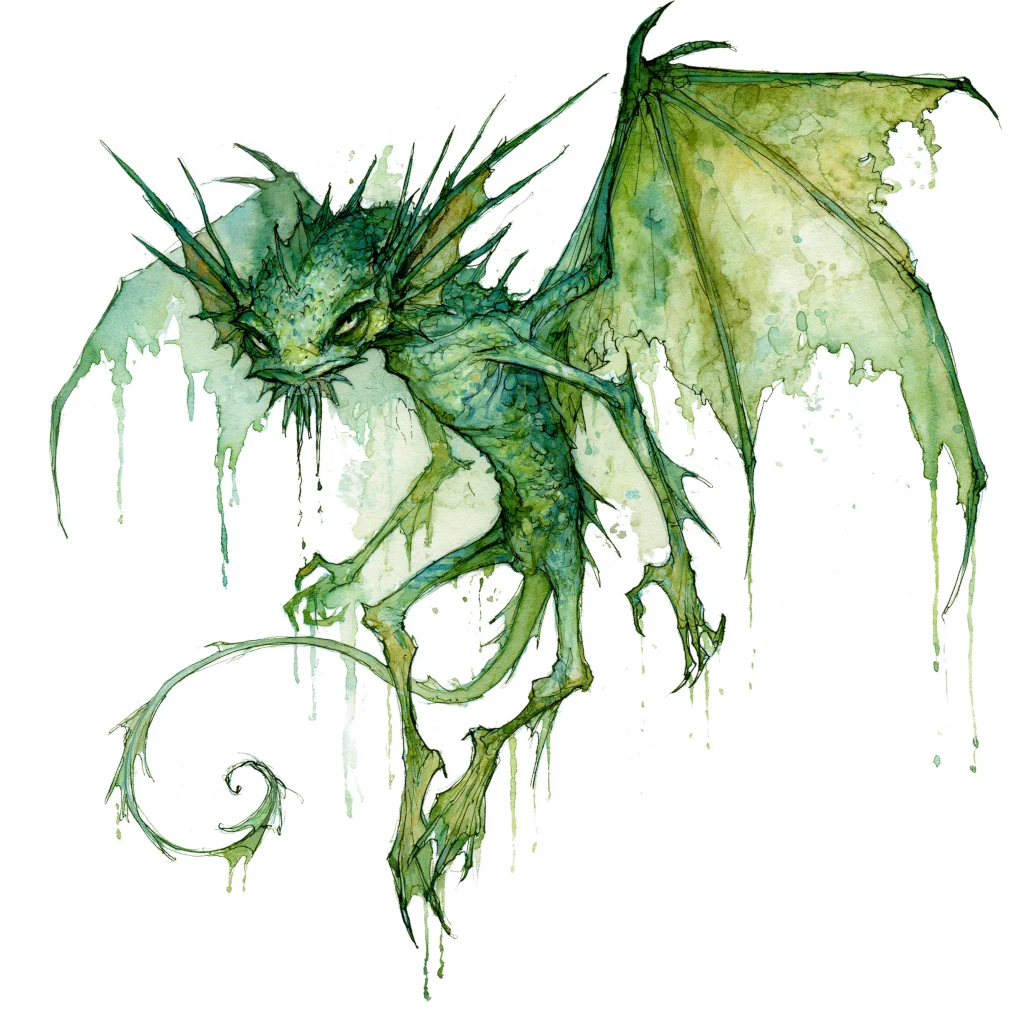
N | Small | Amphibious | Elemental | Mephit | Water | CR 1
Water mephits are amphibious blue-green creatures covered in a layer of sleek fur or scales that traps a layer of water next to their skin. Their claws, ears, toes and wings are webbed, to help them swim faster. They have large wet eyes which never blink, and fish lips. They smell of bring and seaweed and they leave a trail of drips and wet footprints wherever they go. Water mephits are jovial to the point of being irritating. They make tactless quips about their companions, which upsets all but the thick-skinned. This is probably a defence mechanism, because water mephits can also be clingy, needy and secretly insecure. They will follow you everywhere like puppy dogs, only wetter and more annoying. In the Mephit Code of the Lower Planes, a water mephit sent to you should be interpreted as a sarcastic message to imply the sender has evaded a trap or plot they think you laid for them. A water mephit is the formally the answer to having been sent an air mephit—if the giver survives the ambush, anyway.
Stats: [ D&D 2e | 3e | PF 1e | 2e ] Monstrous Compendium Planescape Appendix [2e]; Monster Manual [3e]; Bestiary [PF1e] p202; Bestiary [PF1e] p151 (as water mephit); Monster Core [PF2e] p147 (as water scamp)
Naiad

NG-CG | Medium | Amphibious | Fey | Nymph | Water | CR 1-7
Naiads are gracious freshwater nymphs—luminous, long-lived fey spirits tied on the Prime to secluded springs, rivers, lakes, and hidden streams. They appear as lithe, elf-like beings with water-slick skin, and flowing hair, and they share an unshakeable bond with the living waters they protect. Many naiads are reclusive guardians, although some also travel widely, tending to nature, forging quiet friendships with respectful mortals and beasts, and inspiring artists with their beauty. On the Plane of Water, naiads favour the calmer margins of the Endless Sea. They seek out the most secluded kelp forests, coral reefs with stunning colours, and refreshing currents where freshwater and elemental currents mingle, as if they’re seeking waters that still remember the sound of a river. They play the part of custodians, watching over the peaceful waters, and bring a touch of bright, fresh vitality to a plane better known for its vast, alien depths.
Stats: [ PF 1e | 2e ] Bestiary 6 [PF1e] p200; Bestiary [PF2e] p246; Monster Core [PF2e] p244 (naiad), 246 (naiad queen)
Nereid

CN | Medium | Amphibious | Fey | Water | CR 2–10
These capricious creatures lie somewhere between fey and elementals. Nereids are formless, but can assume a humanoid form if needed. They love to walk on dry land, but cannot do this in their natural form, they must manifest their essences as a magical shawl. However, a nereid must be extremely careful, for whoever has possession of the shawl controls the creature entirely—and there are many folk tales of cunning humans taking advantage of powerless nereids in this way. Some believe that nereids arise from common water elementals, who became so fascinated with the humanoids and their concerns, they petitioned Water powers—or perhaps sea hags—to grant them humanlike forms.
Stats: [ D&D 2e | 3e | 5e | PF 1e | 2e ] Monstrous Manual [2e]; Stormwrack [3e]; Tales from the Yawning Portal [5e] p240; Bestiary 2 [PF1e] p198; Bestiary 2 [PF2e] p182
Nixie

N | Small | Aquatic | Fey | Water | CR 1
Small, bright-eyed, and deceptively fierce, the nixie is a freshwater fey of river, lake, and spring. Appearing as a child-sized sprite with webbed hands and feet, pointed ears, pale green scaled skin, and thick seaweed-dark hair, they often decorate themselves with strings of shells and pearls. Some Primes call them the nix, and claim their magical charms can lure a berk to their doom—but planewalkers know that nixies are less malicious and more reclusive. They dwell in the quiet waters, make friends with respectful cutters, tending to be friendlier if they think their visitor was not looking for them to demand favours. Nixies answer rudeness with magic that charms, confuses, which only sometimes leads to drowning. On the Plane of Water, nixies keep to the calmer freshwater currents where they can still feel at home—lake-like lagoons of fresh water amid the endless sea. In these calm places they’ll gather in small communities. And about those charms; some nixies keep charmed cutters around permanently, to help defend their community to perform tasks that are too large for the diminutive creatures. They’re able to confer the ability to breathe water, so don’t be surprised if yu find all manner of unusual ‘ally’ in their midst.
Stats: [ D&D 2e | 3e | 5e | PF 1e | 2e ] Monstrous Manual [2e]; Monster Manual [3e] p172-172; Tome of Horrors [5e]†; Bestiary 3 [PF1e] p201; Bonus Bestiary [PF1e] p15; Monster Core 2 [PF2e] p235
Olobigonde

N | Large | Animal | Aquatic | Elemental | Water | CR 2
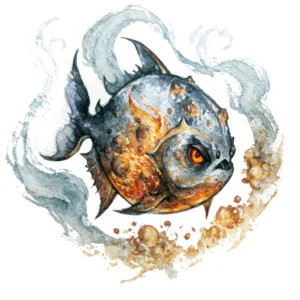
Olobigondes are ugly, flat round fish of the Plane of Water, adapted to living among flotsam and jetsam, kelp forests, coral, and drifting detritus. Their moss-like skin makes them hard to spot when they cling to debris or stone. Olobigondes never seem to stop growing, with ancient specimens growing large enough that their bodies look like a whole patch of floating refuse rather than a single creature. They are mainly scavengers, feeding on waste and carrion, but they can also make effective ambush predators. Their usual tactic is to burst from cover to bite smaller prey and then hold it fast while their venom breaks down flesh. Chant goes the contents of an olobigone’s stomach may be useful to alchemists, as it can yield both explosive and poisonous substances when harvested.
Stats: [ PF 2e ] Rage of Elements [PF2e] p184
Oceanid

CN | Medium | Aquatic | Fey | Nymph | Water | CR 7
Oceanids are the wild, sea-born sisters of the fresh-water nymphs—beautiful women of wave and foam who embody the restless motion of currents. The Greeks reckon they are the distant grand-daughters of the titans Oceanus and Tethys, although much graybeards roll their eyes at this and say that’s exactly the sort of grandiose story the fey always come up with. Oceanids are bound to the salt waters of the Plane of Water preferring the salty seas of Brack, Undertow and the Darkened Depths, although they can survive for a time in fresh waters, lakes or rivers—but they are restless in such places. When immersed, the lower body of an oceanid becomes a living pillar of water, which lets them skim with wave or current across the sea at astonishing speed. When ashore that liquid form reverts into graceful human legs. Oceanids are strikingly vain, dress in little more than sea foam and long white hair, and their notorious moods shift as quickly as a storm. They are quick to love, quicker to anger, and very easily offended by anything less than perfect admiration. They might help mortals who flatter them, lure favoured companions for a life beneath the waves, or simply vanish into the deep when they become bored with landbound life. Unlike the reclusive naiads, oceanids are creatures of the open sea and value freedom to go wherever their tidal tempers take them.
Stats: [ D&D 5e | PF 1e ] Mediterranean Monsters [5e]†; Bestiary 4 [PF1e] p208
Plasm, Water

CE | Uncommon | Medium or Large | Elemental | Ethereal | Water | HD 6-12
Water plasms are hideous skeletal beings wrapped in raw elemental force, their strange bones formed from solid water that bends and wavers as they move. Despite their appearance, they’re not undead at all, but eerie elemental constructs of ether and planar matter. Although given their wicked tempers and foul appetites, they might as well be undead. Plasms come in many elemental varieties and are most often encountered on the Ethereal or Elemental Planes. Only rarely are dragged into the Prime through unstable gates. On the Plane of Water they are outcasts even among outcasts, shunned by the other denizens perhaps for their unsettling resemblance to skeletons, but more likely because they refuse to be subordinates to any of the Elemental Lords, good or evil. Chant goes they are ‘born’ when an ether cyclone damages a neighbouring Inner Plane, ripping off matter and forming these angry creatures. Why they adopt their skeletal form is, however, dark.
Stats: [ D&D 2e ] Monstrous Compendium Mystara Appendix [2e]
Quatoid

LN | Small | Aquatic | Elemental | Water | CR 7
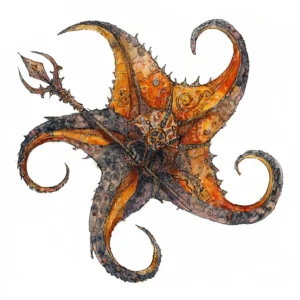
Quatoids are strange little elemental natives of the Plane of Water, resembling four-tentacled octopuses with curious frog-like faces. They show an uncanny intelligence and personalities that are best described as disarming. Quatoids are calm, thoughtful, and instinctively diplomatic, preferring to soothe tempers, and to try and seek out peaceful alternatives even when bloodshed seems imminent. They glow with a soft bioluminescence that seems to calm the minds of observers, reducing fear and anger. Their demeanour means they’re valued as sages or mediators between the plane’s many feuding factions. Quatoids can be readily summoned to the Prime, and lately their place on the Plane of Water is becoming more visible again as Lysianassa’s influence returns, drawing them out from their deep hiding places. Even when they fight, quatoids seem to do so reluctantly, as violence for them is a last resort.
Stats: [ PF 2e ] Bestiary [PF2e] p153; Monster Core [PF2e] p148
Ruvoka, He-moana

N | Medium | Amphibious | Elemental | Humanoid | Water | CR varies
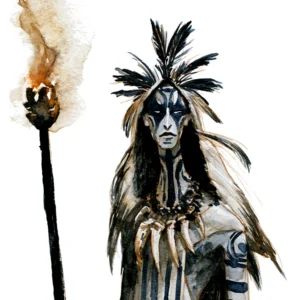
A mysterious tribal race of elemental humanoids, the ruvoka protect the coral reefs of the Bottomless Deep and conceal its secrets. The he’moana tribe of ruvoka lives as nomads in the Bay of Light, watching over the multifaceted creatures of this realm. With trusty harpoons and powerful druidic magic they protect vulnerable species from brain corals to mighty aquatic dragons, while hunting invasives such as stinging mashers. He’moana are among the more social of ruvoka tribes, as they are steadfast allies of the Elemental Good. That doesn’t mean they welcome outsiders unquestioningly, but if your group contains a water genasi, a druid or a caster of primal magics then you stand a better chance than most of being accepted.
Stats: [ D&D 2e ] Planescape Monstrous Compendium Vol. III
Soo

N | Rare | Medium | Amphibious | Elemental | Temporal | Water | CR 5
Soo are mysterious orb-like creatures that somehow combine the essence of Elemental Water and the esoteric power of the Plane of Time. They have no solid forms, and appear as small dark spheres, several feet across. Each soo is composed mostly of water and time. The main reason for why are they so obscure are the soo themselves—they are compulsive liars, whose unreliability is emphasised in the Inner Planar cant phrase ‘not worth a soo’. Many Immortals who have dealt with them believe that soo do in fact speak truth—but this truth belongs to an alternate timeline, where things have happened (or will happen) in a different way. Soo find it difficult to distinguish between the different strands of time and may even perceive them all simultaneously. If this theory is true, than it perhaps hints as to why, of all the elements, soo are tied to water—its nature mirrors the fluidity of their nature. This fluidity manifests in another way as well—soo can turn their bodies into any kind of potion, from healing to poison. These concoctions are even potent enough to affect demipowers. Unfortunately, this means the enigmatic creatures are sometimes hunted by enterprising would-be god-killers.
Stats: [ D&D 1e | 3e ] Immortals Boxed Set [BECMI], Vaults of Pandius [3e] (homebrew)
Spitter, Elemental Vermin

N | Tiny | Amphibious | Elemental | Water | CR 1
Spitters are considered elemental vermin by inhabitants of the Water, although they are kept in check by larger predators there and don’t pose too much of a problem. It’s when they find their way to the Prime through gates or elemental vortices that the trouble starts. They are drawn to humans, and while they are not smart enough to understand how to use them they covet valuables like silks, wine, perfumes and oils. Spitters like to hang around rivers and particular bridges, where they gather in packs to try and overwhelm travellers, especially if they are traders with items they are attracted to. While individually not dangerous, a pack of spitters can be quite a threat. They are able to spit a pellet of water at high speed, and when a pack of spitters launches a barrage of spit attacks, you’d do well to taker cover. They appear like little fat newts, with the arms, legs and face of a frog. While they can look adorable, berks are warned that their mouthes are full of needle-sharp teeth. They are not suitable to be kept as pets, nor do they seem to be useful for any alchemical concoctions.
Stats: [ D&D 2e ] Monstrous Compendium Annual Vol. 1 [2e]
Sprite, Sea

CN | Tiny | Amphibious | Elemental | Fey | Water | CR 0
Sea sprites are tiny colourful fey pixies, who live in sea caves, coral reefs or shipwrecks, which they decorate with cheerful collections of shells and pearls. They keep beautiful shoals of fish as pets. While they can breathe air, they prefer to live underwater, and there are many small communities of them scattered across the Plane of Water. If threatened, sea sprites defend themselves and their families with underwater crossbows, which they coat with a magical sleep ointment that can known out the toughest creature. While they are friendly to most cutters and would simply leave their sleeping bodies somewhere far from the sprites’ cave, sea sprites have a deep-flowing fear of sahuagin, and are merciless towards them.
Stats: [ D&D 2e | 5e ] Monstrous Manual [2e]; Pirates and Plunder [5e]† (as seaweed sprite)
Suisseen

N(E) | Large | Aquatic | Elemental | Ooze | HD 8
Creatures so obscure that even the Guvners struggle to fit them into any formal classification system, suiseen are giant living transparent gelatinous membranes, with spikes for good measure. Indeed, it seems suiseen are both the membrane and the water inside and immediately around it. So far no one has tumbled to any conclusion for how such symbiosis can even be possible—and perhaps for this strange reason they are sometimes worshipped by a cults called the Mayestri. Being worshipped as gods, or at least divine elementals, has gone to the non-existent heads of the suisseen who are recipients of such adulation, and when the cult started sacrificing berks to them, things started to get out of hand.
Stats: [ D&D 2e ] Planescape Monstrous Compendium Vol. III [2e] p102-103
Tantriog

Tojanida | N | Medium | Amphibious | Elemental | Water | CR 7
Tantriogs are bizarre natives of the Plane of Water, best described as a weird blend of snapping turtle and crab. They’ve got blue-green shells patterned with swirls or spines, flippers for movement, a beak-like vertically split mouth, and prominent pincer claws. They are able to completely withdraw their limbs inside their shells for protection, and squirt out a sphere in pitch black ink to conceal themselves from attackers. They are a race of long-lived wanderers with a strong racial memory, and prone to seek novelty, comfort, and sensory pleasure rather than building a fixed civilisation. Chant goes the race used to be carefree elemental spirits, or perhaps notorious assassins, but were tied to their physical shell-bound forms millennia ago by magics unknown.
Stats: [ D&D 3e | PF 1e | 2e ] Manual of the Planes [3e] p77; Monster Manual [3e]; Bestiary 3 [PF1e] p270 (as tojanida); Rage of Elements [PF2e] p187 (as tantriog)
Tidehawk

Rare | N | Huge | Amphibious | Beast | Water | CR 12
Tidehawks are large magical birds tied to sea and rain, with blue-black plumage, long tails, and a life cycle that depends on open seas and rainstorms. They are solitary predators that feed mainly on large sea life. They shimmer with the electric crackle of lightning and the sparkle of sunlight on waves. Sages reckon they’re aquatic analogues to phoenixes: graceful in the air and water, and able to move seamlessly between both. The two elemental birds rarely meet, because of their diamterically opposed elements, but chant goes the two species will cooperate when a serious evil threatens a natural environment.
Stats: [ PF 2e ] Bestiary 3 [PF2e] p266
Triton
NG | Medium | Amphibious | Humanoid | CR 2

Tritons are athletic, many-finned humanoids with two legs ending in broad flipper-feet, and their fingers too are webbed for superb manoeuvrability when swimming. Their bodies are covered in blue-green or silvery scales, and their hair billows underwater like seagrass. Their legends state that tritons originated from the Plane of Water, although they now live in underwater communities across the Prime, as well as the oceans of Thalasia and Ossa. Their homes are usually built on the seabed in stone caverns, underwater canyons or from living coral reefs, and are decorated with bioluminescent plants and colourful shells. They live amongst shoals of beautiful tropical fish. In the seas of the Prime and the Upper Planes they favour shallow water over the deeps, while on the Plane of Water they gather near air pockets, even through they don’t require fresh air to breathe. While I can’t speak for all tritons, they are generally honourable guardians of the deep—benevolent, proud and protective of all kinds of ocean life. Like many aquatics, they harbour a distrust of surface-dwellers, and a particular hatred of the sahuagin sea devils and alghollthu/aboleth. Triton communities prefer to be self-sufficient, and with the rich bounty of a well-maintained ocean this is hardly difficult. Triton druids are able to speak with all manner of aquatic creatures, and their communities will ally with dolphins, sea turtles, water elementals, and even sharks and sea serpents if they think they will be useful to help defend their waters.
Stats: [ D&D 2e | 3e | 5e | PF 1e | 2e ] Monstrous Manual [2e]; Monster Manual [3e] p178-179; Sea Monsters [5e]†; Bestiary 2 [PF1e] p270; Blood of the Sea [PF1e] p14 (as a playable ancestry); Bestiary 2 [PF2e] p263
Ungulosin

N | Huge | Elemental | Water | HD 5
Ungulosin are strange and powerful protective spirits native to Water. They don’t have physical bodies of their own, so when they want to manifest they attract hundreds of small fish, eels, crustaceans and octopi and force them to come together into a giant serpent-like shape. The small creatures are unable to resist, but they don’t seem to mind; perhaps it’s seen as some sort of honour in fishy circles. They don’t need to rest or eat either, when they’re under the control of the ungulosin. When fully manifested, an ungulosin has a venomous bite that can cause paralysis and death. They are challenging to combat with melee attacks, for striking the creature can at best kill only a single one of the hundreds of smaller creatures.
Stats: [ D&D 2e ] Planescape Monstrous Compendium Vol. III [2e]
Veela, Water

N | Medium | Amphibious | Elemental | Fey | Water | CR 7
One of the more enigmatic—and certainly one of the most alluring—of the Inner Planes’ denizens are the veela, elemental spirits who embody the raw, unbridled joy of existence itself. These captivating creatures dance in the crucible of creation, where the fundamental forces of reality converge and swirl in eternal motion. Neither fully fey nor purely elemental, veela occupy a curious position in the Grand Scheme of Things—for they are the laughter of the planes made manifest, and the embodiment of elemental exuberance. Graceful and fluid, water veela embody both the gentle flow of streams and the tremendous power of tsunamis. Their hair cascades in locks that flow like liquid silk, and their eyes are deep dark pools. Their movements are hypnotically smooth, and their dances usually involve the manipulation of water—creating fountains, whirlpools, and cascades that enhance their performances. They are particularly drawn to sacred springs and healing waters, often serving as reverential guardians of such sites. Water veela are known particularly for their healing abilities, and their capacity to purify both water and spirits through their dance.
Stats: [ PF 1e ] Bestiary 5 [PF1e] p265
Water Weaver

CE | Medium | Amphibious | Elemental | Humanoid | Unholy | Water | CR 5
Mad cultists of Olhydra, Water Wevaers are barmy mages who let themselves be drowned and then revived, in the process becoming powerful monstrous elementalists in service of Evil Elemental Water. Hidden away in submerged laboratories, they research primal mysteries and summon dark watery creatures. Water weavers might be elemental priests of Olhydra, water-blooded sorcerers, or twisted kineticists. In appearance they are still just about humanoid, but their magic is what defines them: they learn to channel water in brutal and unnatural ways, draining it from foes, blasting enemies with jets and bubbles, and, when pushed to their limit, becoming living conduits of the element itself. Their philosophy is apocalyptic, centered on the belief that Olhydra’s wrath is the true nature of water, that hidden elemental lore must be uncovered at any cost, and that unleashing scoring floods are the old wat to cleanse the Prime of its impurities. They often lead submerged cults, drown sacrifices to Olhydra, and pursue the release of the Elder Elemental Eye.
Stats: [ D&D 4e | 5e ] Dungeon Magazine #199 p47
Will O’Sea

NE | Huge | Elemental | Water | HD 10
Will o’sea are the largest members of the will o’wisp family. Unlike their ball-shaped better known relatives, will o’sea are enormous cascades of energy, looking like a colourful flickering ribbon of lightning or St. Elmo’s fire. While they can’t turn invisible or extinguish their light completely, they can dim their glow to better disguise themselves. On the Plane of Water, will o’sea tend to hunt near air bubbles, elemental vortices and the faster currents that serve as shipping lanes. They are aggressive attackers, but their preferred method of hunting is to lure unsuspecting ships to their doom on rocks, whirlpools or ambush by impersonating the shape of a lighthouse or rival ship, or even shimmering sunken treasure. If their quarry looks like escaping, will o’sea condense their energy into a lightning bolt. Since they feed on the electrical energy of their victim’s brains, will o’sea try to keep their victims alive as long as possible to savour their fear.
Stats: [ D&D 2e ] Ravenloft Appendix III [2e]
Wolf, Sea

CE | Large | Magical Beast | Water | CR 4
Ancient rapacious servants of the Wolf Lord, the original ancestors of sea wolves were lured away from the lands which they terrorised to the shore, by a mystical sound that came from the water. They were then deluged by huge magical waves and transformed into their current aquatic form as punishment by the elemental spirits sent by the Deer Lord. At least, that’s how the chant goes. Sea wolves look like bedraggled land wolves, only their fur is choked with rotting seaweed, the stench of dying vegetation and rotten fish. Their eyes burn with the silver of moonlight. While the deer lord might have saved his people from these wolves, the transformation simply shifted the problem elsewhere. Now they hunt sea creatures, including sea elves and dwarves, sailors and coastal communities. They’ve even spread as far as the Plane of Water, where they prowl the edges of communities, picking off the weak and serving no one but their own appetite.
Stats: [ D&D 3e ] Dragon Magazine #293 [3e] p8
Worm, Leviathan
N | Rare | Gargantuan | Aquatic | Beast | Kaiju | HD 70

Leviathans are colossal primordial predators, perhaps kaiju who’ve escaped Ysgard and naturalised in the Inner Planes. Up to 650′ long, they appear in both desert and marine forms that are so vast they can swallow huge volumes of sand or water at once. Desert leviathans are pale brown, blind, and adapted to open sand, while marine leviathans are sleeker, longer, and built for the depths; both are enormous enough to create enormous swirling vortices when they move. They are more forces-of-nature than social beings—hunters with an endless hunger. They hunt by sensing vibrations, and will attack almost any sizeable creature that comes within range, ultimately dominating their environments through their constant devouring. They are infamous in planewalker circles for being almost impossible to kill because of their broad immunities to damage and extreme resistance to harm.
Stats: [ D&D 2e ] Mystara Appendix [2e]

A Bestiary of Water
The following creatures of Water are described in more detail…



Source: Margarita and Jon Winter-Holt