Elemental Guivres

Elemental drakes, vouivres, givre
Dragon | Elemental | CR 6
Alignment: Varies
Home Plane: Elemental Planes of Air, Earth, Fire and Water
There are a multitude of different creatures known as elemental drakes, but they’re not all cut from the same cloth. One such family are the true drakes—sapient (if not particularly intelligent) dragon-like beasts that inhabit an astonishing variety of habitats from prairies and jungles to the River Styx and, of course, the Elemental Planes. Another kind of elemental drake is far rarer, but also far more powerful. They are not sapient and most of them cannot fly, but this is offset by their psionic ability and physical might. Their precise placement in the draconic family tree is fiercely debated by graybeards, and many have suggested to give them a better name—the draigs.
However, as you might have guessed from the Rule of Three, there’s yet another kind too. These two-legged draconic creatures are much smarter than true drakes—though they aren’t keen on revealing it to other berks. In fact, these creatures are rarely seen in their true shapes at all. Guivres [GEEV-ruh]—this is their species’ true name—were created as spies and thieves in service of the Elemental powers, and they’re endowed with abilities that fit this role. The true origin of guivres is uncertain, but it seems likely that they used to be drakes (or some other draconic entities) that were twisted by the archomentals, perhaps in some scheme related to the Dawn War. This involved concentrating magical powers into gemstones, which were then embedded in the forehead of the would-be guivres. Yes cutter, a bit like slaadi. Air guivres possess a diamond, earth ones—an emerald, fire—a ruby, and water guivres are created with a sapphire. This gem seems to act as a conduit which allows the archomental lord observe the activities of the guivre. It can apparently be freely removed or reinstalled by a willing guivre, but they rarely choose to do so. Not only would this upset their rulers, but it would also deprive them of their most powerful asset—the magic of shapechanging.
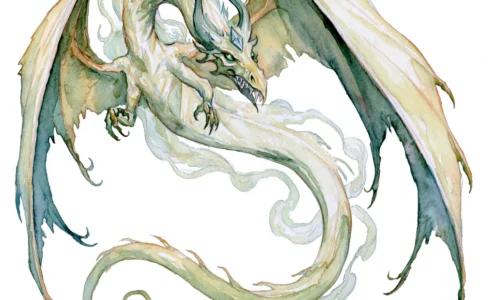
In their true form, guivres look like long serpents with two arms and two wings. This might make them sound similar to wyverns, but in reality they’re quite different: wyverns use their limbs as legs to stand on, while guivres slither on their bellies, leaving their clawed ‘hands’ free to pick up objects. Their wings are also different—earth and water guivres have thin and lithe membranous wings that fold in close to their bodies to ease their movement. Air and fire guivres have large, bat-like wings that are proportionally bigger than those of drakes. Guivres’ heads are narrow and not very robust, but filled with thin venom-laden teeth. However, guivres rarely adopt their true forms, unless pressured to fight or they need to fly. Instead, they much prefer to walk around in the shape of a humanoid, a giant or an elemental—and perhaps this is why few cutters even realise they exist.
COMBAT: Guivres typically avoid combat, and while they’re physically weaker than many similar monsters, but it doesn’t mean they are defenceless. In their true forms, guivres rely on either their venomous bites or on constricting opponents in their coils. Additionally, each type of guivre possesses unique magical abilities, which are conferred by their gemstones.
HABITAT/SOCIETY: Like most draconic creatures, guivres are loners. They have their lairs on their home planes, but rarely spend much time there. Instead, guivres are dispatched to the Prime Material Plane or to another part of their Inner Plane. They mimic humanoids, giants or elementals of their preferred type, and settle under deep cover to observe their societies. Guivres aren’t as good at spying as doppelgangers or succubi however, and they often gain the reputation of being a bit weird and antisocial in societies they infiltrate. At the same time, they compensate for this with their affinity to improvise, and with a wide array of skills. It’s said, only half in jest, that you might find a guivre lying in your bed one day, and with its silver tongue it’ll be able to convince you they’ve always been there. Perhaps unsurprisingly, guivres tend to be slightly chaotic in nature. They retain the primal draconic urge to accumulate treasure, but they rarely have sufficient time and suitable place to indulge these impulses. Instead of gold and gems, guivres instead prefer to collect magic items that they might find useful in their missions. Little is known about their reproductive habits, but chant goes their young is raised by one of the parents, who teaches them everything they need to know—including indoctrinating them into the service of their elemental lord.
ECOLOGY: Guivres mostly feed on meat, and sometimes they even consume creatures they’ve assassinated, all the better to cover their tracks. However, they only need to eat once every month or so. Instead, they derive most of their sustenance from contact with their native element—though this is rarely much of a hinderance, considering their typical habitats.
Air Guivre
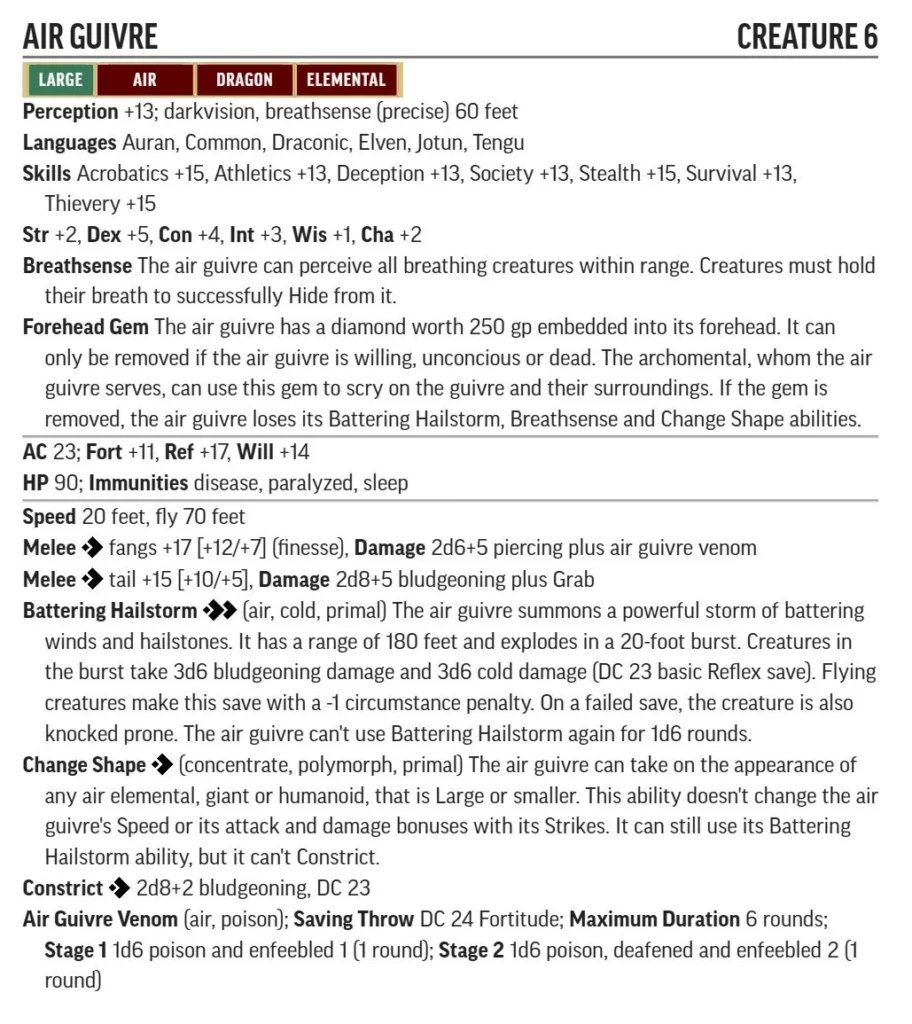
Air guivres have large wings and slender, aerodynamic bodies. They tend to take the form of elves, aaracokras, cloud giants, or air elementals. In combat, they can summon a storm of battering winds and hailstones, and their venomous bite causes air bubbles to enter the bloodstream, causing searing pain and clotting. Air guivres are masters of sabotage, and they are mostly evil, serving Yan-C-Bin or Hshurha, who dispatch them to wreak havoc in small communities on the plane of Air who haven’t shown sufficient respect to the storm tyrants.
Earth Guivre
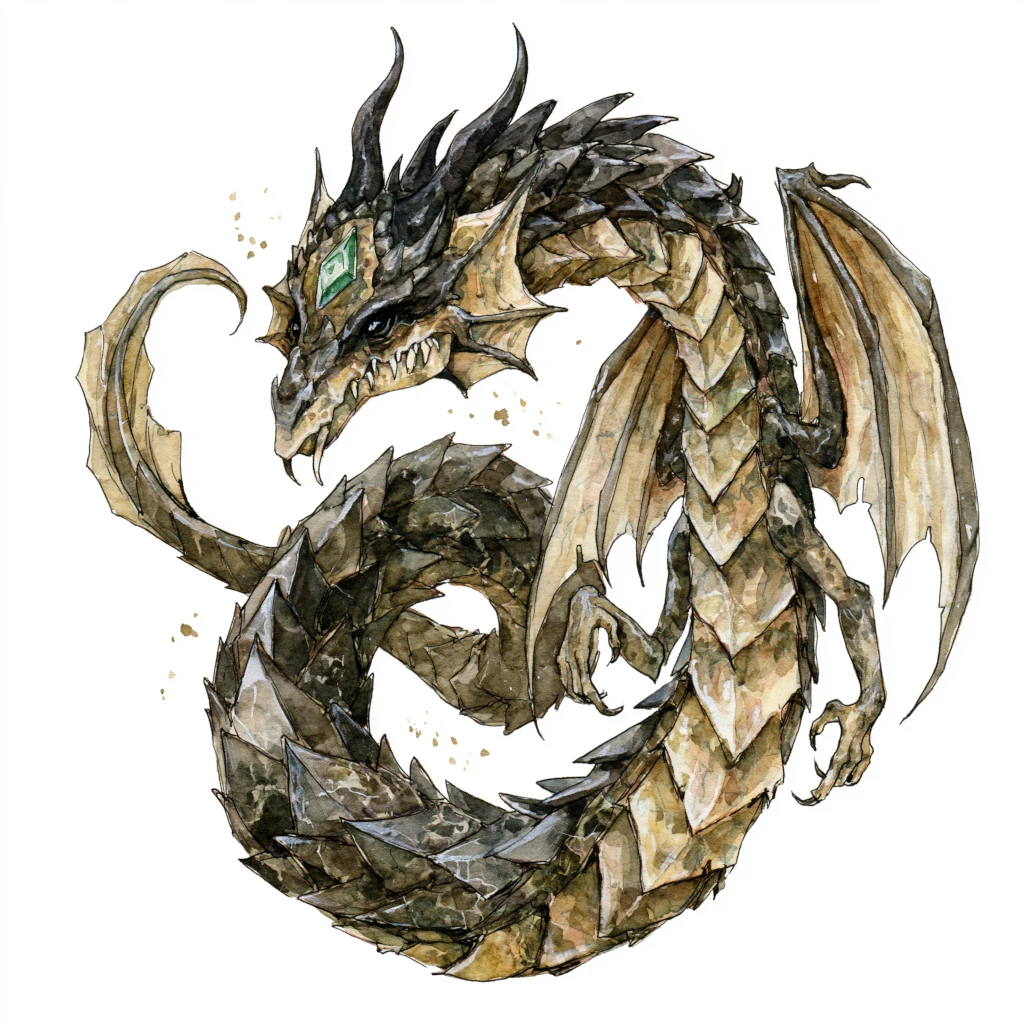
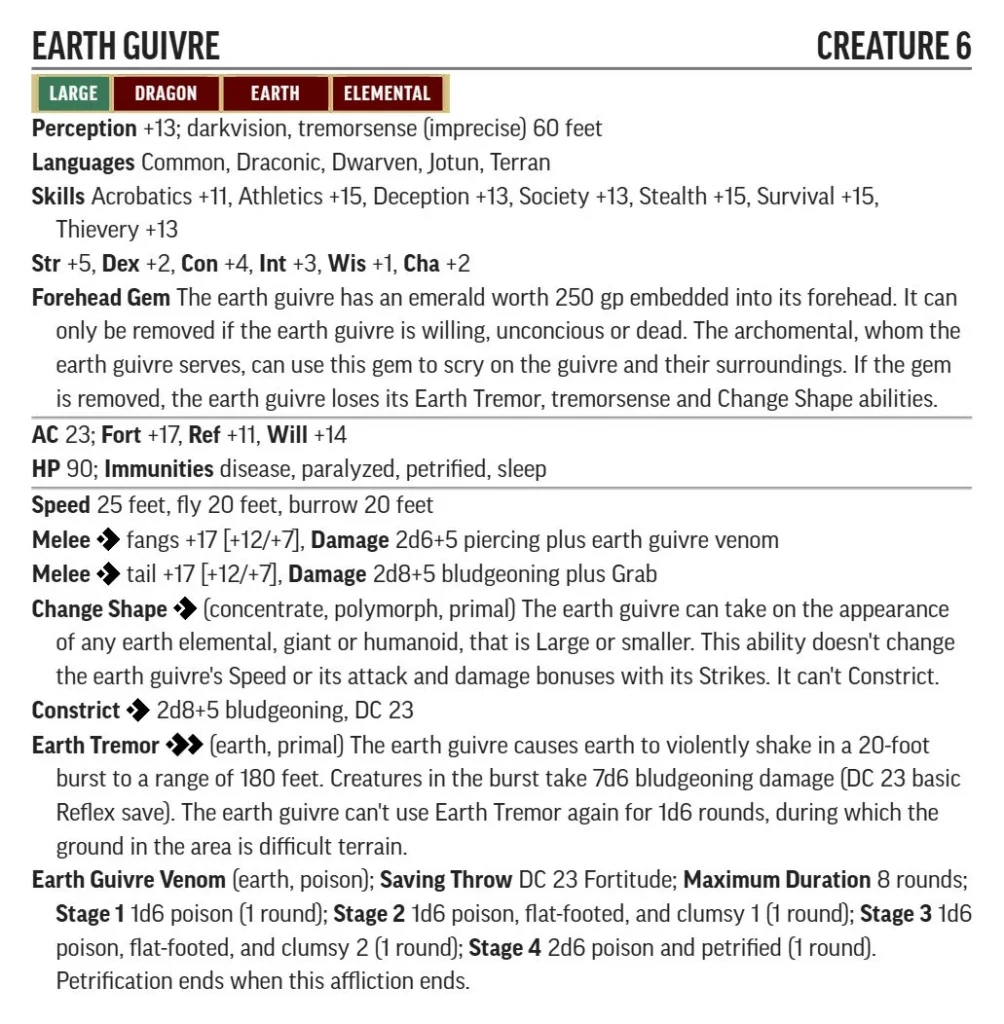
Earth guivres tend to be the most robust of their kind. They have thick bodies and shovel-like snouts, but comically tiny hands. Their wings are leathery and cartilaginous and cannot support flight for very long, however, this arrangement lets them squeeze into small holes. Earth guivres are masters of unseen traps, and their favourite trick is collapsing tunnels with their innate power to cause earth tremors. They rarely use their venom, relying more on their constricting coils, but if it comes to this, they can slowly petrify creatures they envenom. Despite being vicious and more than a bit avaricious, earth guivres aren’t keen on allying with evil archomentals, and most of them follow Grumbar’s orders. You can found earth guivres hiding among dwarves and stone giants, even though they’re often found out—draconic creatures have a lot of trouble figuring out arts and crafts of these people due to their tiny arms.
Fire Guivre
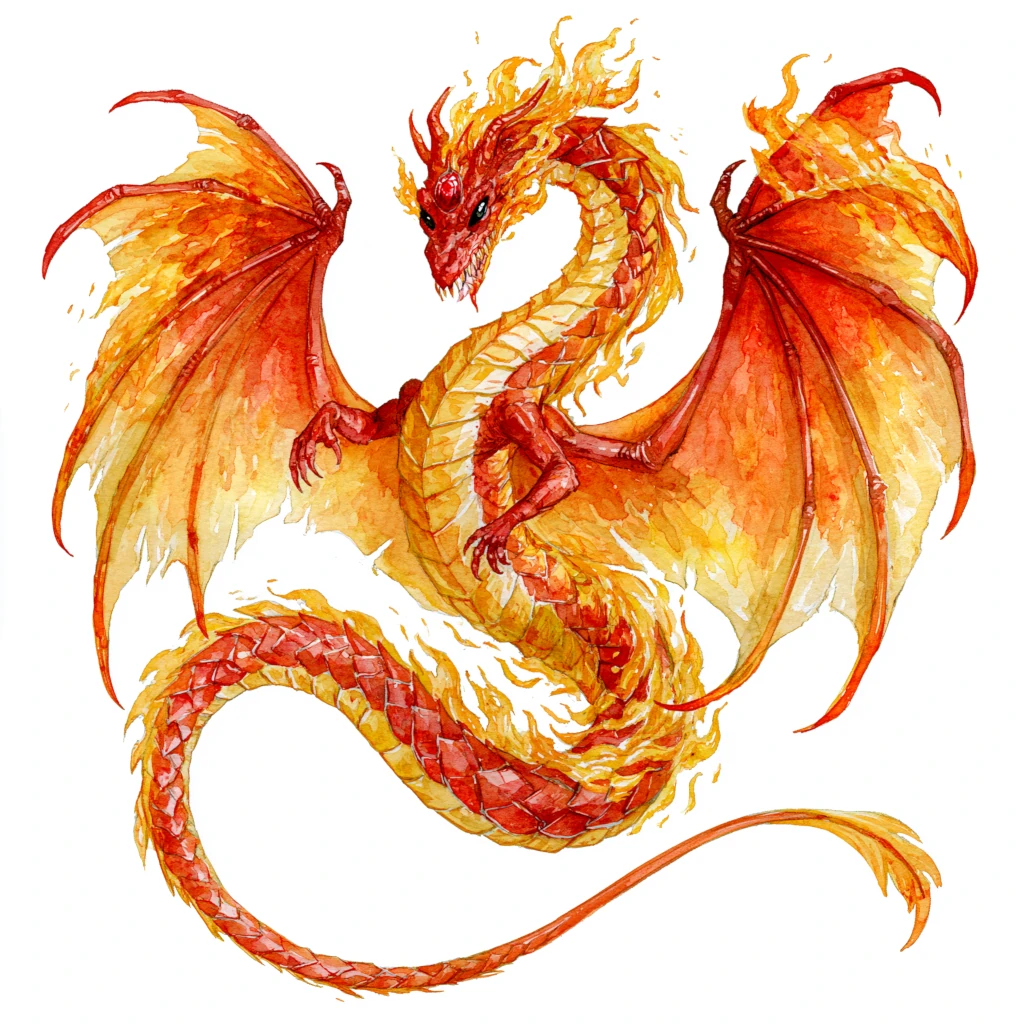
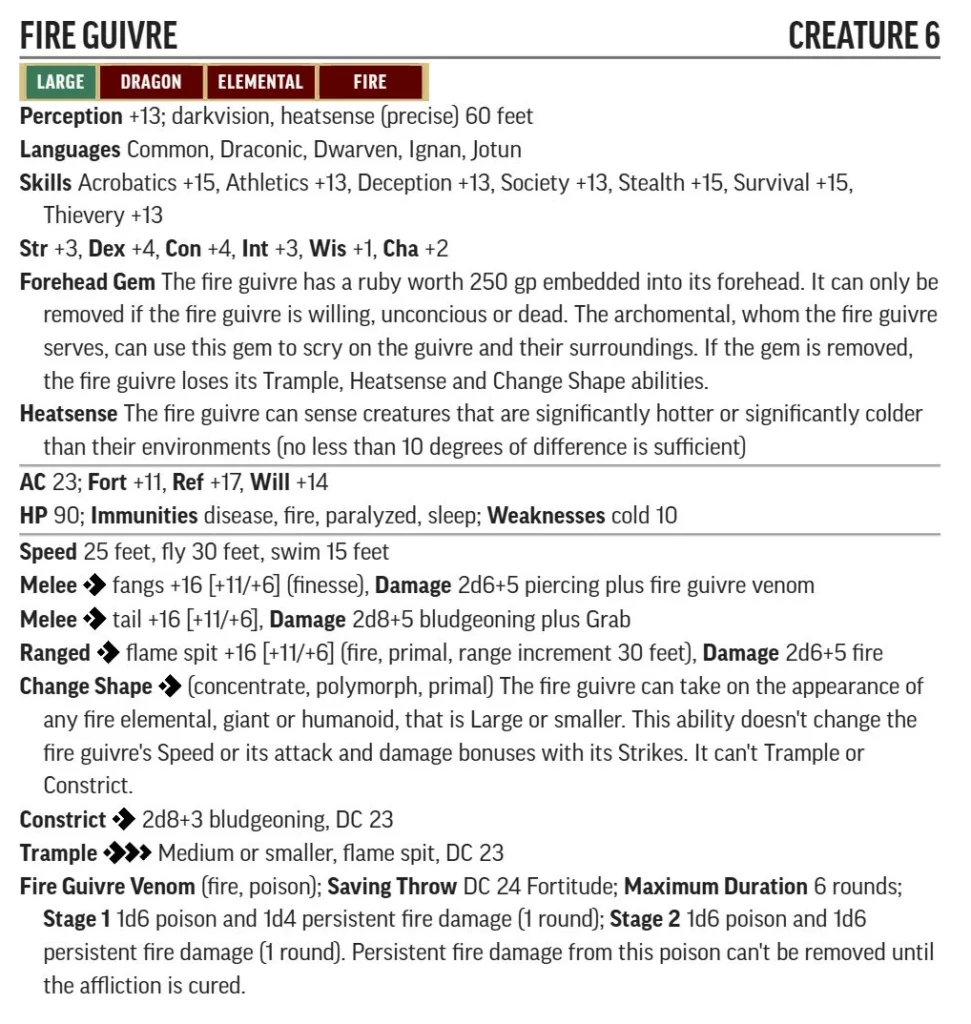
Fire guivres are crimson in colour and have wings perpetually wreathed in flames. They manage to fly in the thin and unstable atmosphere of the Plane of Fire by directing those flames to create a thrusting jet of force. The bite of the fire guivre causes its victim to burst into flames that cannot be extinguished as long as the venom courses through their veins. Fire guivres live amongst the fire giants, firenewts or other fire-loving bloods. Unusually perhaps they are slightly good-aligned, looking to subvert the schemes of evil fiery civilizations or to recruit them to fight against Imix and his armies.
Water Guivre

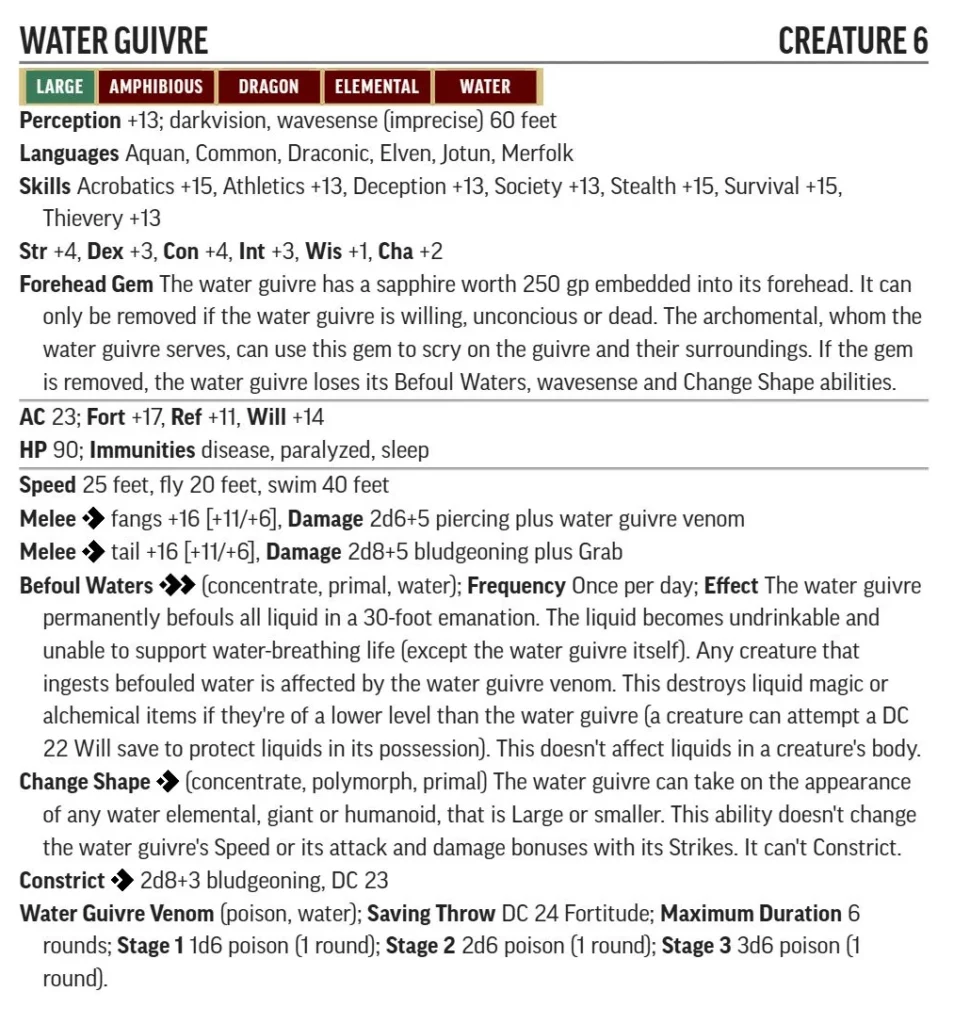
Water guivres are the cruellest and sneakiest of all the guivres. They have a long and slender snout and webbed wings that mostly act like flippers. Their venom is less impressive than those of other kinds, yet it is still as potent. Not only that, water guivres can exude a foul, poisonous slime that befouls waters they take residence in. Water guivres serve Olhydra and Kelizandri, and they work to pollute waters and indoctrinate water-dwelling humanoids at their behest.
Other Guivres and Recent Chant
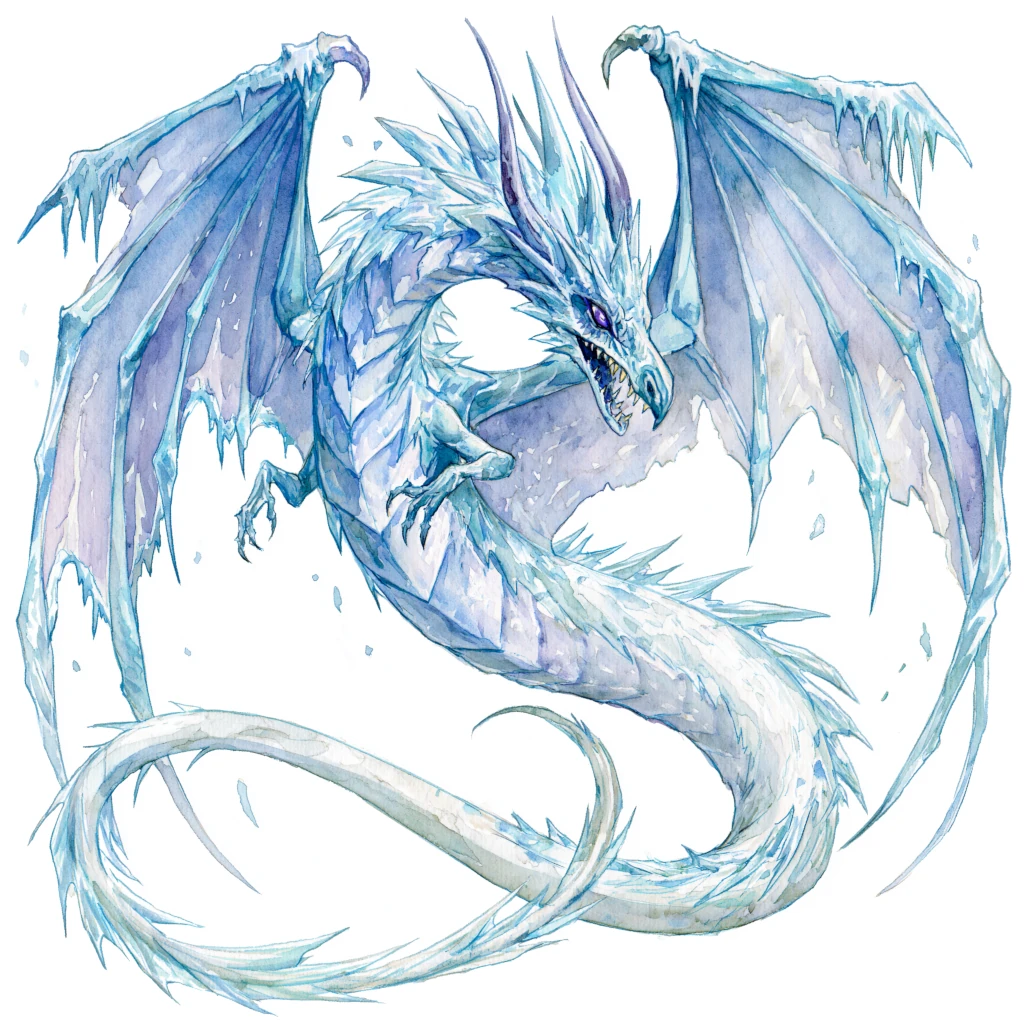
Aside from the elemental “drakes”, the clueless of Mystara recognise other kinds of creatures that have similar abilities—mandrakes, wooddrakes and colddrakes. These are also two-legged shape-shifting draconic monsters, although they lack gems in their foreheads and aren’t associated with archomentals. It’s rare to encounter these guivres (if they are indeed related) on the Inner Planes. However, according to the recent chant, Cryonax is currently attempting to persuade colddrakes to become his own version of elemental guivres, in his continuous quest to imitate the inhabitants of the major elemental planes. Of course, these neutral creatures aren’t too keen on associating with the mad primordial now, but who knows what kinds of rewards he may promise them later.
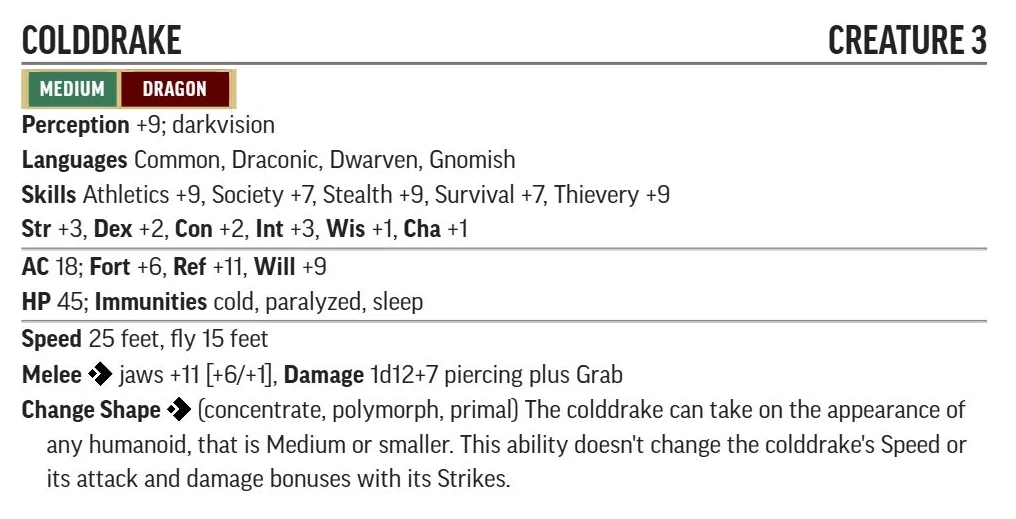
Source: Margarita. Canonwatch: There are three distinct types of ‘elemental drake’ in D&D canon: Mystaran ones, Athasian ones and setting-agnostic 3e ones (this is, of course, not counting many other drake species with similar theming). I’m splitting them into different species named after different synonyms for ‘dragon’. Mystaran drakes that appear in the Mystara Appendix of the AD&D 2e Monstrous Compendium get to be ‘guivres’. The word ‘guivre’ (or vouivre) has the same etymology as ‘wyvern’ or ‘viper’ and describes a vaguely serpentine monster, not unlike other dragons of Western Europe. I took inspiration from some other folkloric monsters like the French Melusine or Slavic fiery serpents for their abilities as well. Guivre also got a mention in Dragon Magazine #182 p25, where they are called ‘swamp wyrms’, although those ones didn’t have any limbs at all.