[ Smoke ] [ Mapping Infinity | Pockets | Locations | Powers | Factions | Bestiary | Flora ]
A Bestiary of Smoke
The Great Conflagration is famously ill-suited for normal life. It is full of fire, poison and has barely any food or water. Nonetheless, some elemental and hybrid creatures can be found here—as the saying goes, life finds a way. For all its unpleasantness, the Plane of Smoke is a giant alchemical laboratory, full of different volatile chemicals. The strange plants, fungi and worms of the plane feed on these toxic fumes, providing a starting point for a weird and mysterious ecosystem of the elemental Smoke.
Animental, Smoke
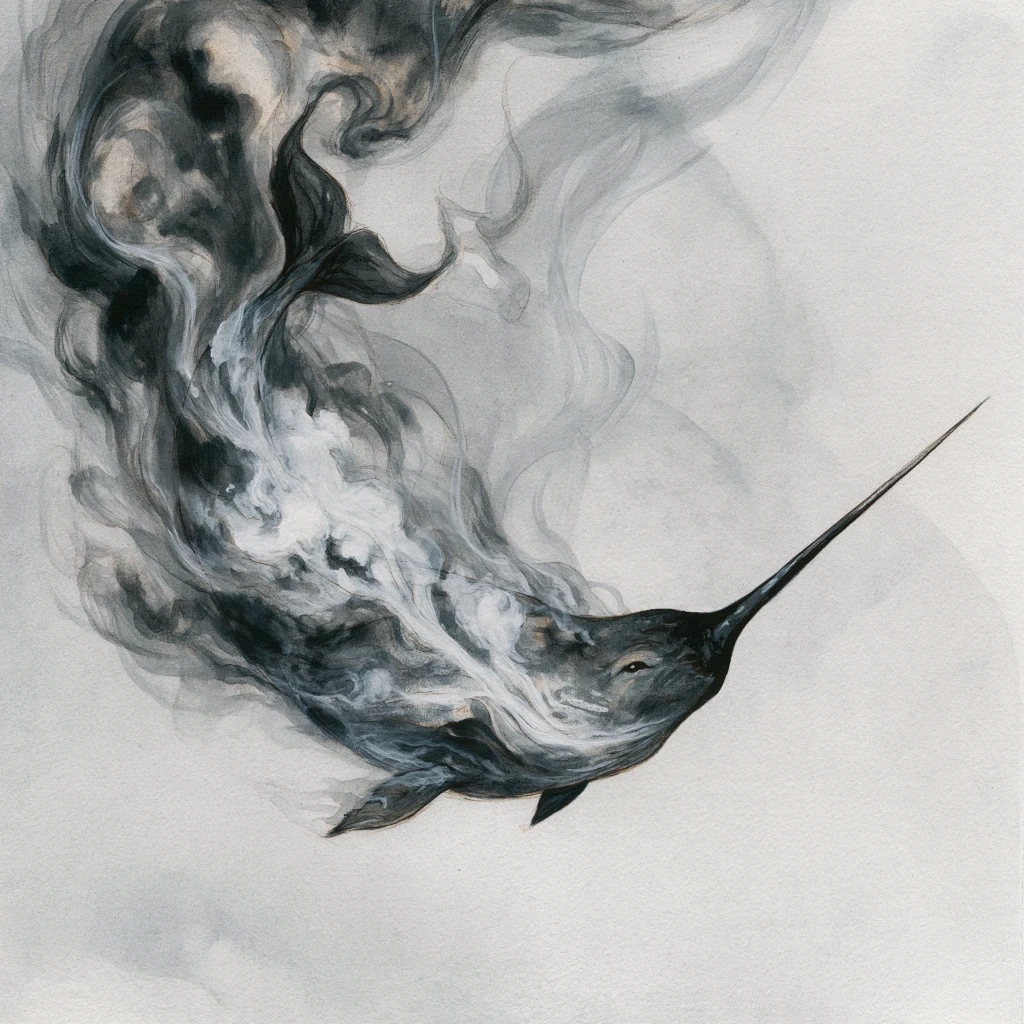
N | Size Varies | Elemental | Incorporeal | Smoke | CR Varies
Animentals are elementals, animated by spirits of dead animals that have been anchored to an elemental plane. Any animal (and even many monsters) can become an animental, but most of the time smoke animentals are the remnants of unlucky forest critters or city-dwelling vermin. When out-of-control wildfires or urban conflagrations become sufficiently intense, they can spontaneously open an elemental vortex to the Plane of Smoke. Animals unfortunate enough to perish from smoke inhalation can then be drawn through the vortex into Smoke, where their spirits take on the shape the a creature had in life, except with a tenuous body made from smoke. What is perhaps harder to explain is the large number of animentals taking the shape of sea creatures. It turns out that underwater volcanic eruptions can put out a lot of noxious smoke too, and this can be particularly deadly for sealife.
Stats: [ D&D 2e ] Planescape Monstrous Compendium Vol. 3 [2e] p14-15
Ash Rat
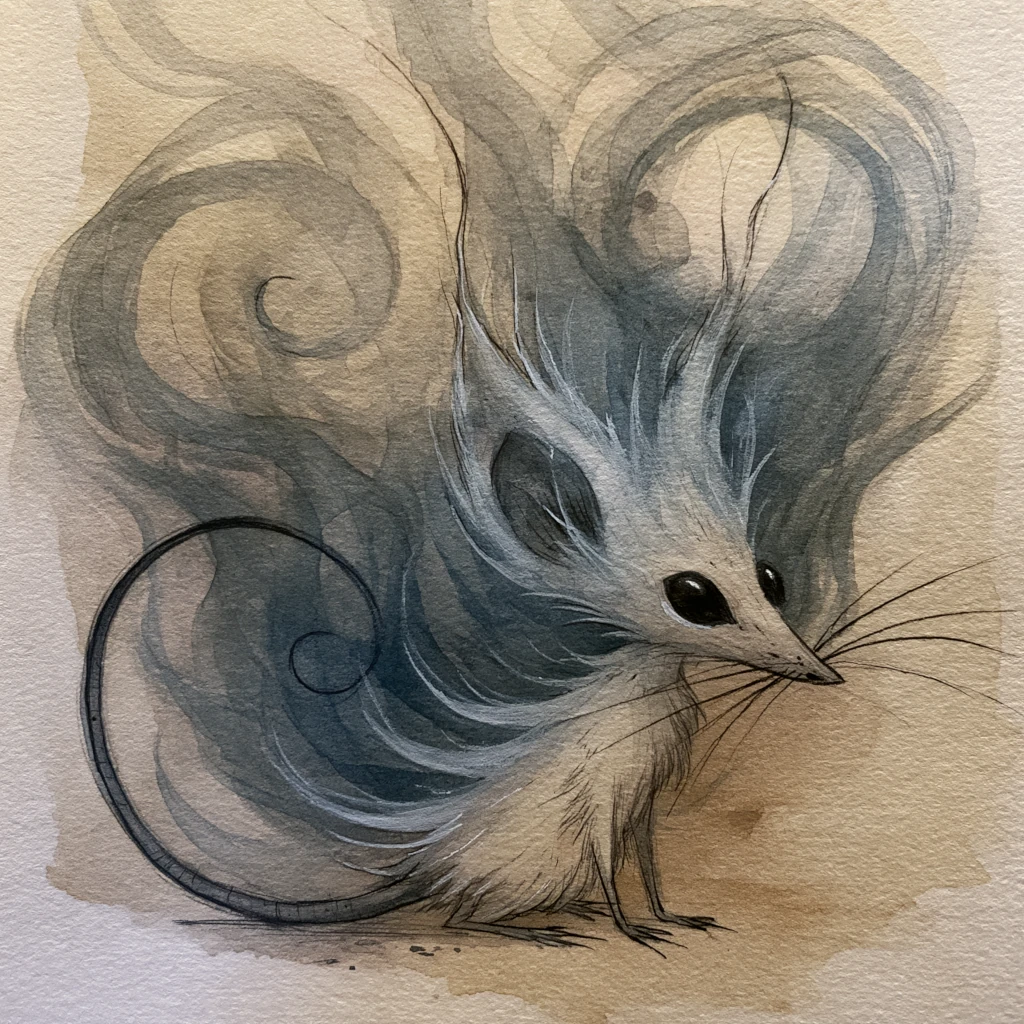
CN | Small | Beast | Elemental | CR 1
Ash rats are a kind of tiny vermin that are widespread on the Plane of Smoke, as well as being found on the planes of Fire and Ash. They are tiny, light grey-coloured rodents that constantly exude fine smoke from their long fur. While they cannot fly, they’ve still managed to spread far and wide through the settlements in the Great Conflagration—anywhere solid ground can be found. These little pikes are too hot to pick up, so take care touching them lest you burn yourself. They are able to ignite flammable items merely by touch, and also spit a gout of flames up to ten feet. They are actually healed by contact with fire, and they are able to snuggle up together and use each others’ body heat to repair any injuries. This would be adorable—if these creatures weren’t such pyromaniacal pests.
Stats: [ D&D 3e ]
Belker
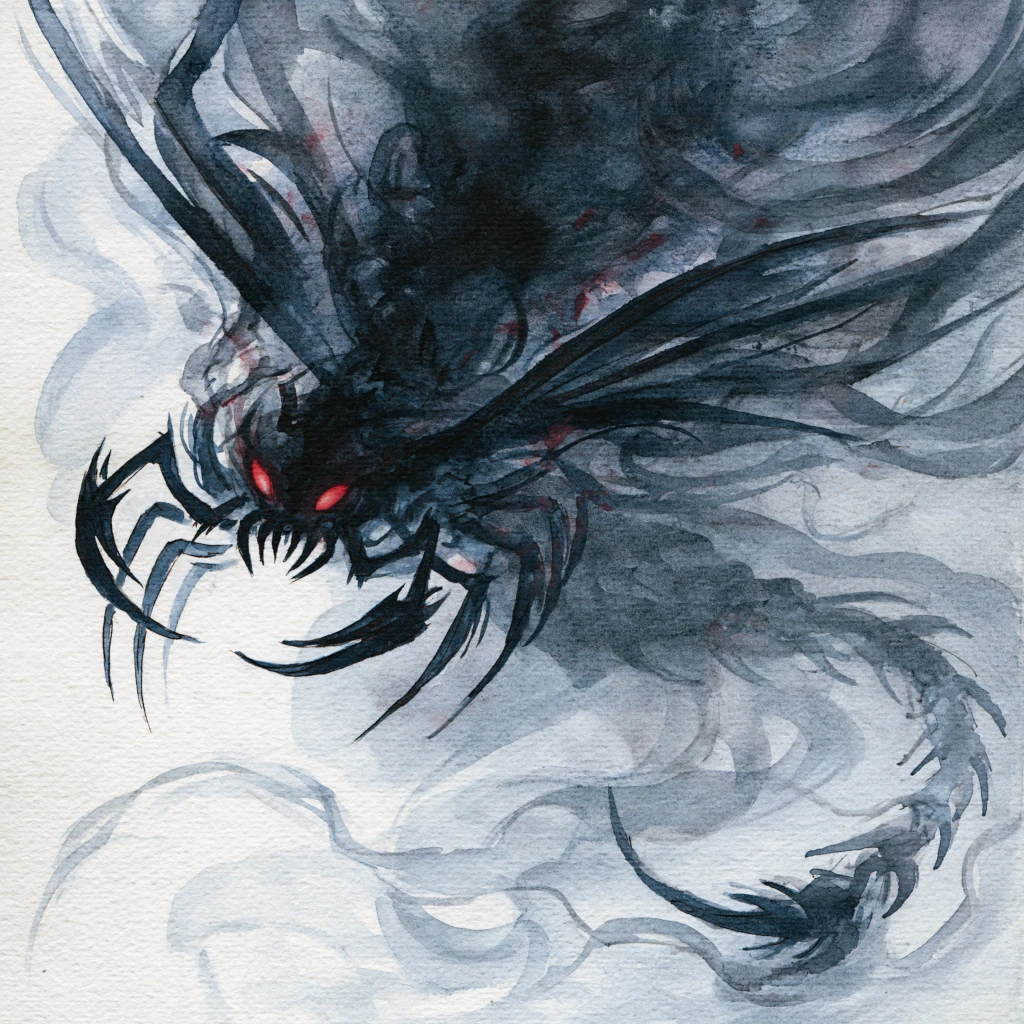
Smoke Creeper | NE | Large | Air | Elemental | CR 6
The belker is probably the most infamous elemental creature of Smoke, and that’s because these horrid predators have a uniquely horrific method of attack. They are particularly good at disguising themselves in smoke, and will use this concealment to sneak up and ambush potential prey. Next, they try to overwhelm their victim by first, invading their personal space, and then attempting to smother their face. Their aim is not to suffocate their prey, but to be physically inhaled by them. Should an unlucky berk breathe in even a small part of a belker, the vile creature is able to manifest one of their claws inside the sod’s lungs and slash at them from within. During this ordeal the victim is immobilised, but the rest of the belker remains outside their body, and they are still able to use their other claws and wing buffet attacks to attack from the outside as well.
Stats: [ D&D 2e | 3e | PF 1e | 2e ] Planescape Monstrous Compendium Vol. 3 [2e]; Inner Planes [2e] p89-90; Monster Manual [3e]; Bestiary 2 [PF1e] p45; Bestiary 2 [PF2e] p106; Monster Core 2 [PF2e] p144 (as smoke creeper)
Bird, Giant
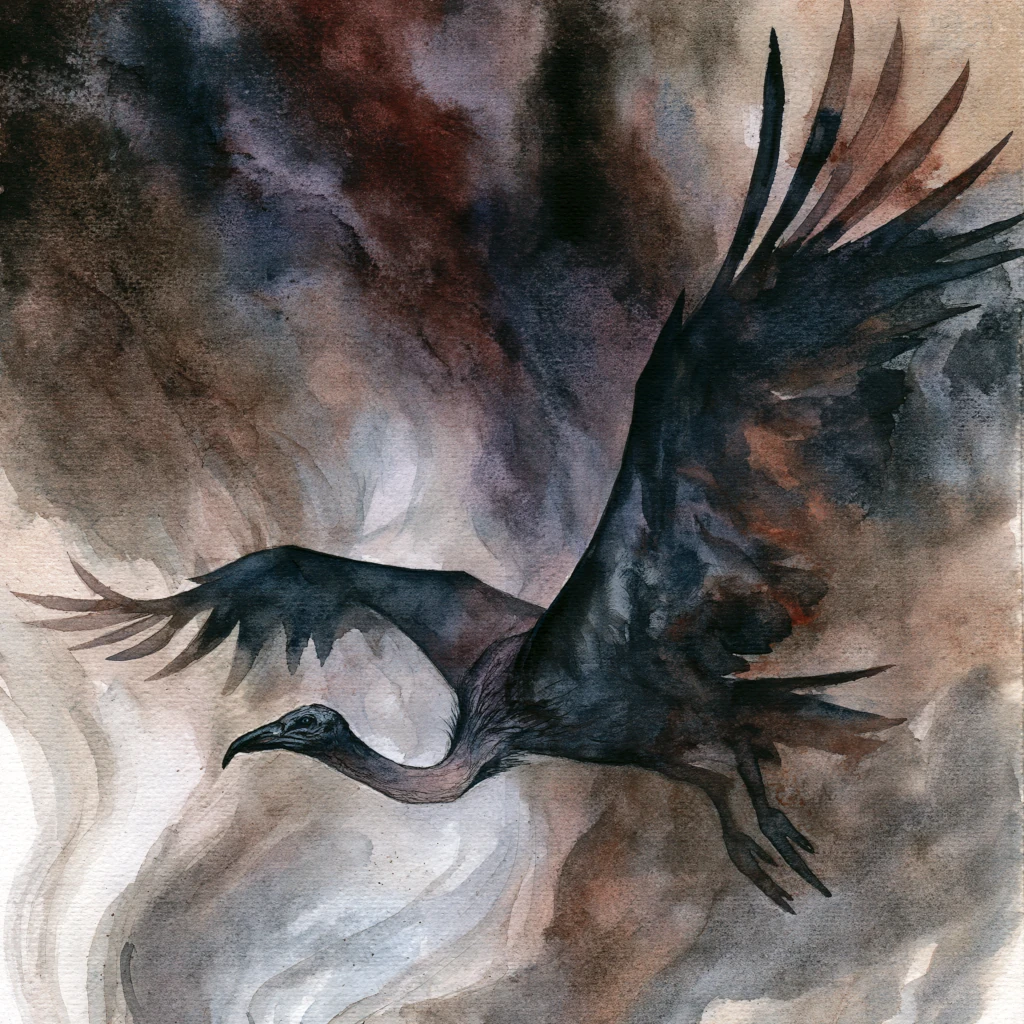
N | Huge | Animal | CR varies
All manner of birds and other natural flying creatures live in Smoke, either feeding directly from the elemental energies, or more likely, hunting flying creatures smaller than themselves—such as smoke mephits, vapour rats, sootbeasts—or careless planewalkers. Somehow, either through magic or evolution, these beasts have managed to adapt to the toxic fumes of the para-plane. In this environment birds tend to grow into very large, even giant, examples of their species, with wingspans that blot out the roiling clouds and talons capable of snatching elephants from midair. Perhaps that’s why there are no elephants in the plane of Smoke? No matter. The feathers of smoke-birds are ash-gray or soot-black no matter what their species might be. They blend in seamlessly with the plane’s perpetual haze, and their eyes burn like unblinking embers in the toxic gloom. They navigate the subjective gravity of Smoke with ease, diving and climbing through cinder-currents as naturally as fish through water. Watch out in particular for the legendary smoke roc, which is voracious, vicious, and very secretive. It is thought to dwell in the Deep Smoke, but since its flying speed is so high and its knowledge of the smoke eddies of the plane so extensive, it has been spotted all over the plane. Or perhaps there are several of them, I’m not sure which thought is worse to be honest…
Source: Inner Planes [2e] p89 (no stats)
Black Cloud of Vengeance
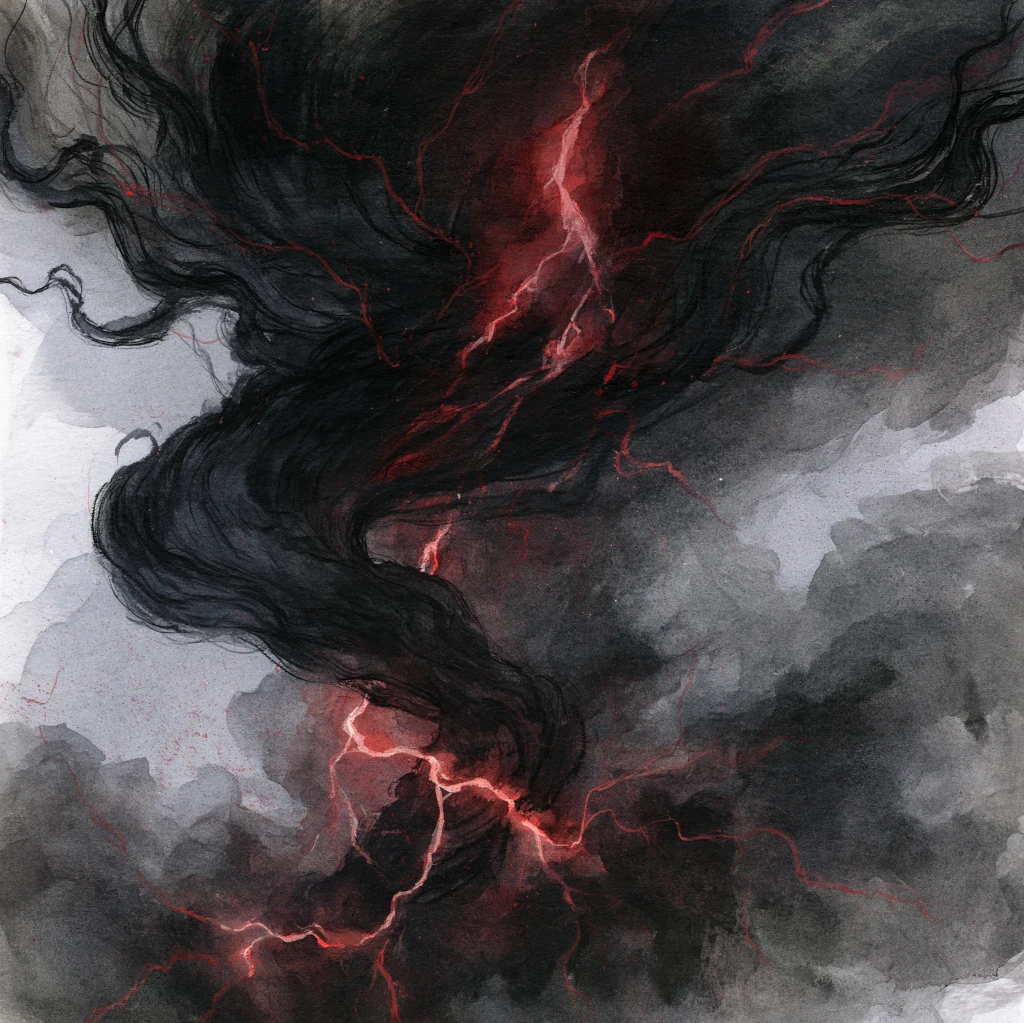
CE/CN | Rare | Gargantuan | Air | Elemental | Fire | Incorporeal | Smoke | HD 15+
Black Clouds of Vengeance are colossal living storms of smoke and fire, with winds that howl like the damned. Legends from the lands of Zakhara (a continent on the Prime world of Toril) call them the Hand of Fate, and say that these beings are dispatched to scourge berks who break the Laws of the Loregiver. Some sages even call them a relic of the multiverse’s earliest magics, unleashed before enlightenment was invented. Whether there is but one singular cloud or there are many of them, the name seems to be known in every desert culture, just as the stories of the ruins they leaves in their wake. Black Clouds rampage through Deep Smoke, flickering with red lightning that pulses like a malevolent heartbeat. They occasionally venture into the border regions of the plane, where they post the greatest risk to careless planewalkers. However when they are encountered on the Prime, they become even worse-tempered, turning into veritable maelstroms of fiery destruction that lash out with scouring grit and the scorched remains of past victims. They are not out of control, however, for even in their rage they avoid burgs protected by shrines of the gods, or powerful genies. Whether that’s because they are bound by the magic that summoned them, they are fearful of the wrath of those powerful beings, or perhaps they even have some sense of compassion or morality—is dark. Their presence encourages piety in mortals though, for no city devoid of divine protection is safe from their wrath. And maybe that’s exactly what the powers that created the black clouds of vengeance intended.
Stats: [ D&D 2e ] Monstrous Compendium Al-Qadim Appendix [2e]
Blazozoid
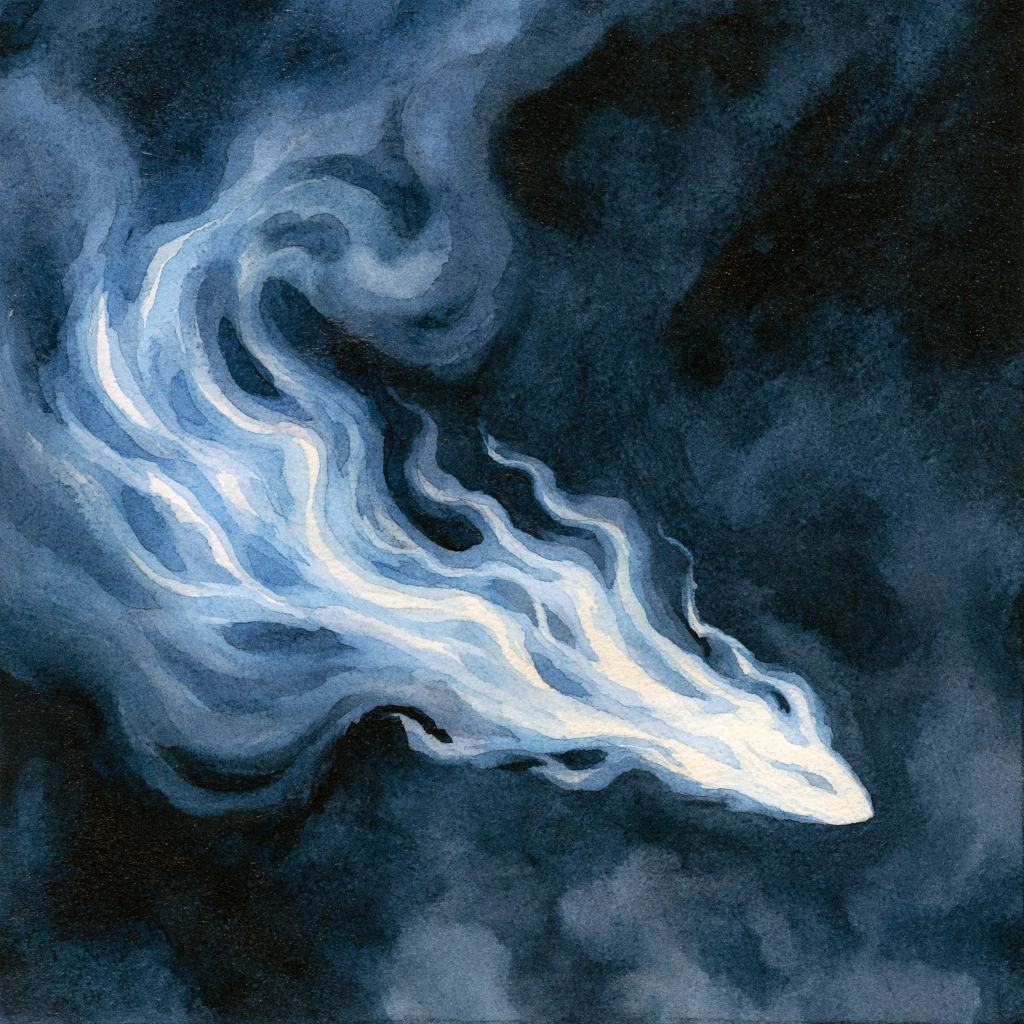
CN | Rare | Gargantuan | Elemental | Fire | Incorporeal | HD 15
Blazozoids [BLAY-zo-zoyd], sometimes also known as ‘fire vampires’, are sentient balls of aberrant blue flames. Chant goes that they are living extensions of the star-like entity known to the worshippers and researchers of the Dark Tapestry as the Elder Evil Fthaggua—although it refers to itself only as ‘I’, for it does not recognise any other living being as being truly alive. Blazozoids are its emissaries, apparently dispatched in a effort to locate another living star such as Fthaggua itself. Apparently Fthaggua does not consider Hadar, or any of the other known living stars as satisfactory. On their long journeys blazozoids of course need to refuel themselves, which they do by incinerating living matter and consuming its energy. If they devour a living creature, they also absorb its memories. These are added to the gestalt consciousness of Fthaggua—to which all blazozoids, in turn, seem to be connected. Despite all of this, however, blazozoids are not inherently malicious, and they can even be reasoned with. Of course, there are not a lot of things your average planewalker can offer to tempt such a fire vampire, but blazozoids are sometimes willing to spare a berk in return for a free ride to another crystal sphere, because they can’t travel through the phlogiston themselves without creating an almighty explosion—something no doubt learned by Fthaggua the hard way. This is also likely the reason why blazozoids are found on the para-elemental plane of Smoke. Chant goes the cunning creatures use vortices to Smoke that form in giant gaseous planets to jump into the Inner Planes where they can safely travel, and then seek out a second vortex back to the Prime again. If they are lucky, they will jump between crystal spheres, bypassing the phlogiston altogether. Of course, this is easier said than done and a knowledgeable (or simply cunning) planewalker might be able to take advantage of the blazozoid’s eagerness to locate a suitable vortex.
Stats: [ D&D 2e ] Monstrous Compendium Spelljammer Appendix [2e]; additional info inspired by the fire vampires from the Cthulhu mythos.
Caller in Darkness
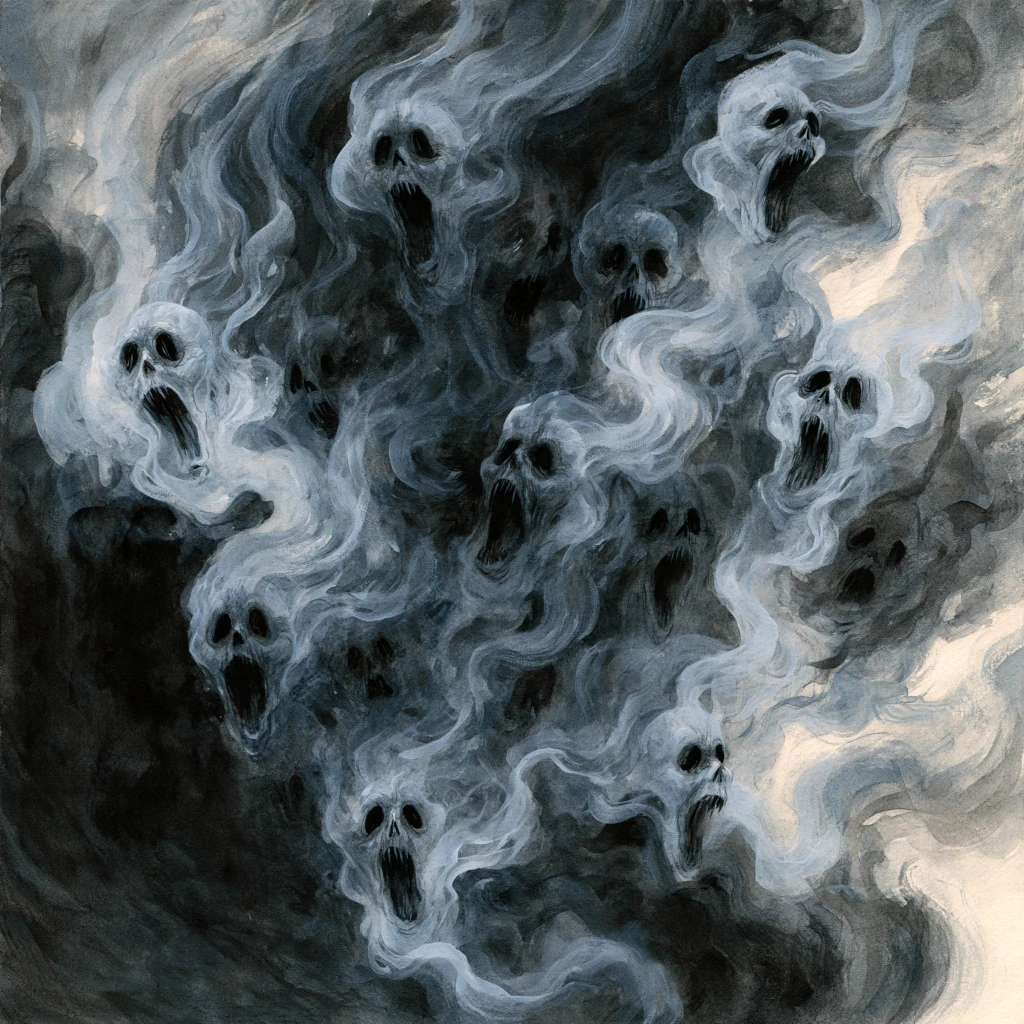
CE | Large | Incorporeal | Undead | CR 9
When a multitude of creatures die simultaneously in terror, their tortured spirits may join into an unholy undead amalgamation known as a caller in darkness. These awful entities have no true body, manifesting only as a shifting cloud of ash-grey mist, thick with heat-haze and the stink of brimstone. Up close, the mist resolves into dozens of silently screaming humanoid faces, each one belonging to a terrified soul torn from life before its time, and fused into a single, writhing gestalt consciousness of the damned. If you can see the faces though, cutter, you’re already too close. Callers do not speak, instead communicating psychically, creating harrowing visions of a berk’s loved ones. The caller’s physical shape is mutable, rolling along as a bank of psychic fog that become thicker when it feeds. It radiates an unnatural psychic aura that animals can sense, and they will bolt in panic if forced near. Its only known weakness is sunlight. In natural daylight on the Prime, or when exposed to the light of Radiance, callers in darkness are rendered powerless.
Chat goes the original caller in darkness was formed between the Prime world of Athas and its mysterious pseudo-plane called the Gray—a dangerous creature from the Border Ethereal of a deadly world. Whether the callers that are encountered on the plane of Smoke are related to this awful entity, are fragments of it, or are simply unquiet spirits who’ve been killed in a similar way, is dark. The caller is an intruder in the plane of Smoke, yet it has found a niche. In the deeper, denser regions, callers probe the haze with their psionic signals, reaching out across miles, seeking minds attuned to the Way. When they finds one, they draws the victim toward themselves, wrapping the victom’s mind in despair, driving them to madness, feeding on their terror and then ultimately, consuming their essence to add to their own.
Stats: [ D&D 2e | 3e | PF 1e ] City by the Silt Sea [2e]; Psionics Handbook [3e]; Bestiary 5 [PF1e] p48
Cloudscout
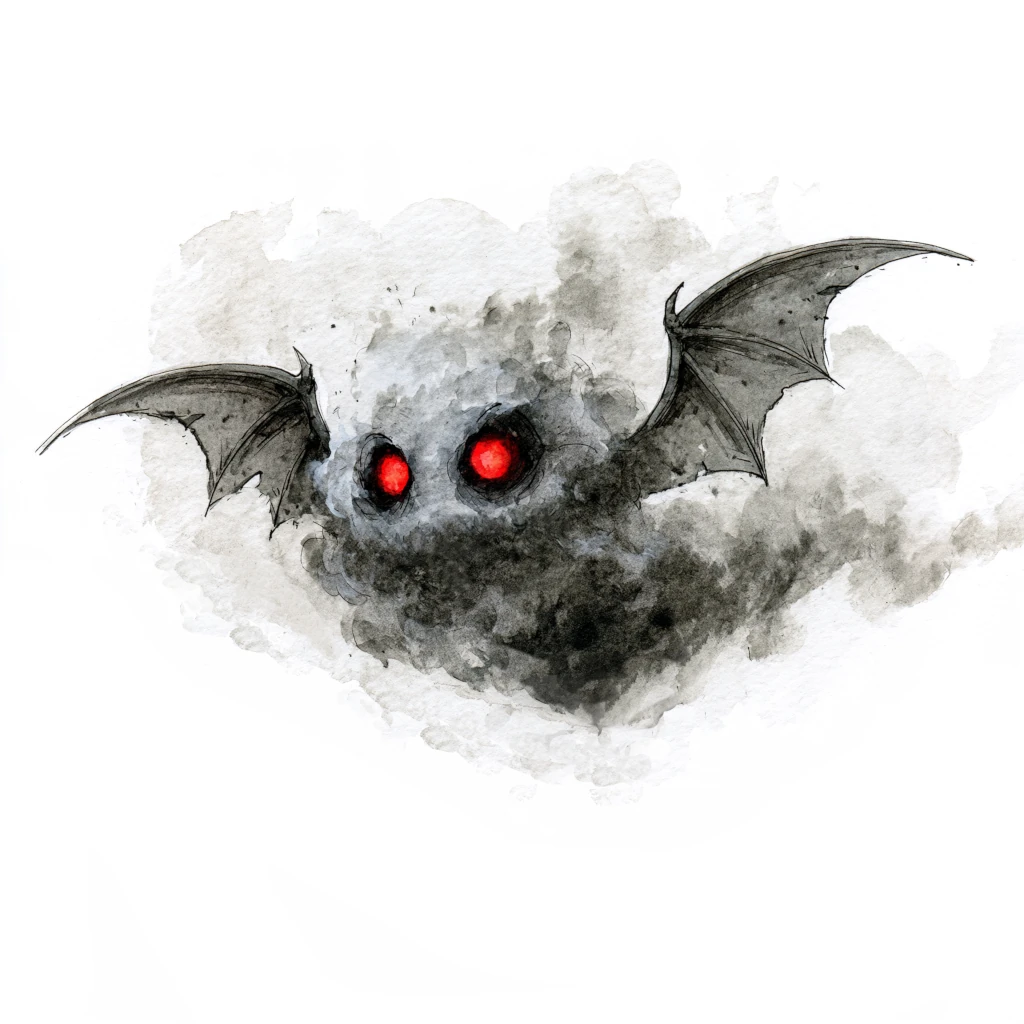
N | Small | Air | Elemental | Incorporeal | CR 1
A cloudscout is a tiny smoke elemental, no larger than a raven, shaped like a drifting wisp of soot with bat-wings on either side. Their forms are mutable, and can compress or expand at will. Two clots of darker smoke serve as its eyes, glowing like embers in a dying fire. It’s thought they ‘see’ by detecting temperature differences rather than by sight. Curiously, they can condense smoke from inside their body into iron daggers, and fling them at foes with lethal accuracy. These projectiles are temporary, melting away back into smoke after a minute. Though sometimes summoned to the Prime by elementalists or priests as messengers, cloudscouts are native to Smoke. On their home plane they drift peacefully through the currents, observing the movements of larger elementals, mephits, and interlopers. Chant goes they are minions of Smoldering Duke Ehkahk, and act as his eyes across the plane. He also sends them to the Plane of Air, to spy on the djinn and air mephits. Their small size and ability to disguise themselves as clouds make them hard to detect; many air-dwellers never realise they’ve been observed. Their great strength is their mobility—a cloudscout can slip through the smallest cracks, hover silently, and vanish into any haze or smoke. No one knows what kind of information they report back—but their increasing presence throughout the plane of Air seems to be no accident.
Stats: [ 3e ] Dungeon Magazine #110 [3e] p86-87
Combusted
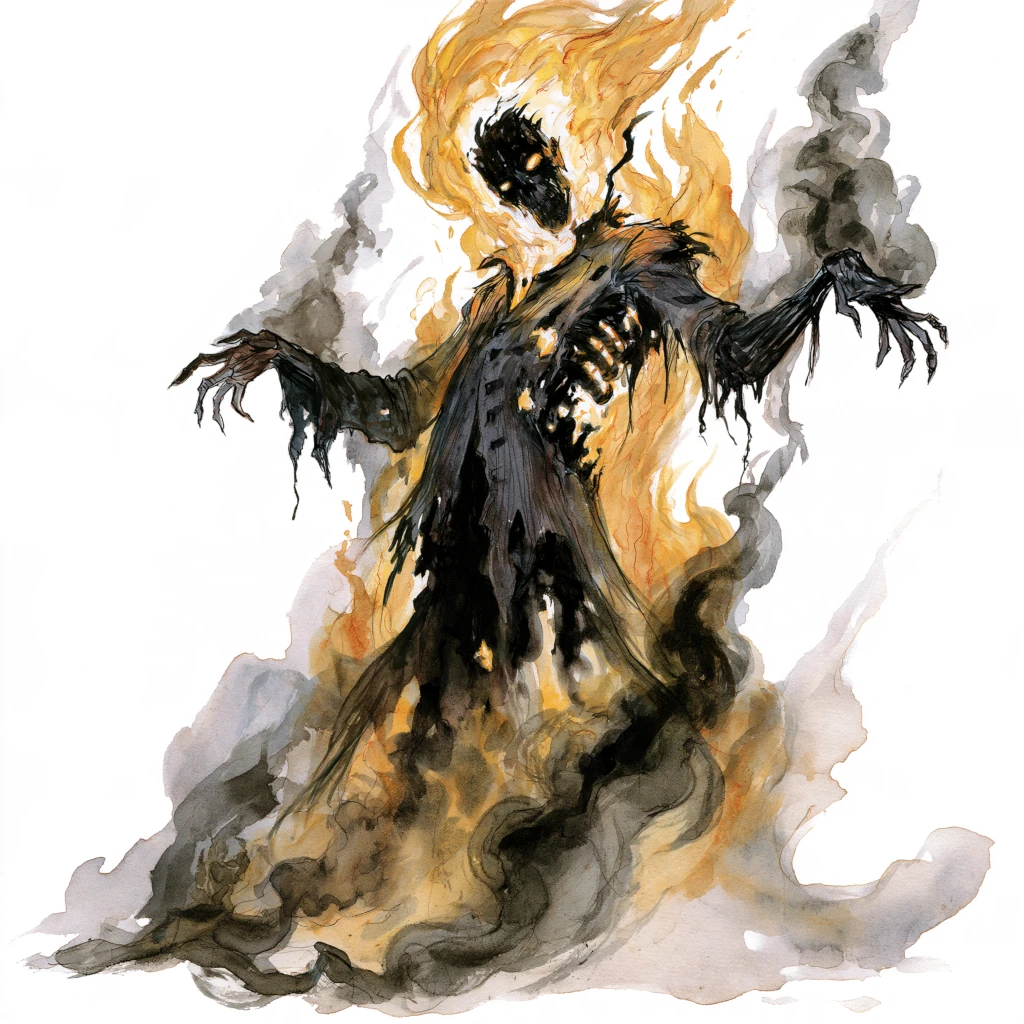
Fire Spectre | NE | Medium | Fire | Incorporeal | Undead | CR 3–6
A combusted is charred corpse wreathed in eternal flame—an undead horror doomed to relive the agony of its death for all time. Born from victims of spontaneous combustion, or sods consumed by magical fires, they rise as shambling infernos clad in charred black ruined clothing. Their eyes are white-hot coals, filled with anguish and hatred. While they burn continuously, their desiccated flesh is never consumed, and their screams never cease. Roiling clouds of greasy black smoke trail in their wake, thick with the stench of burning hair and skin. Despite their mindless rage, the combusted retain their senses and memories—but pain drowns out all else. They cannot speak, only wail. Their sole purpose seems to be to share their suffering with the living. Graybeards reckon that the moment their flames catch another living being alight, combusted feel a fleeting moment of relief—but only a moment. Almost immediately, the pain and grief surge back, and it’s this that drives them into their endless conflict with the living.
In the plane of Smoke the combusted are wandering cursed souls that drift through the darkest, hottest smog, seeking living beings to assuage their torment. Planewalkers should know that their weakness is water—holy or elemental. Of course, on the plane of Smoke you’ll need to provide your own. Perhaps emptying your waterskin over a combusted will save you from these living pyres in the moment, but you’d better mind you don’t then go and die from dehydration instead.
Stats: [ D&D 3e | PF 1e | 2e ] Ghostwalk Campaign Option [3e] p162 (as fire spectre CR 6); Bestiary 6 [PF1e] p63; Book of the Dead [PF2e] p80 (as combusted CR 3)
Deadly Smog
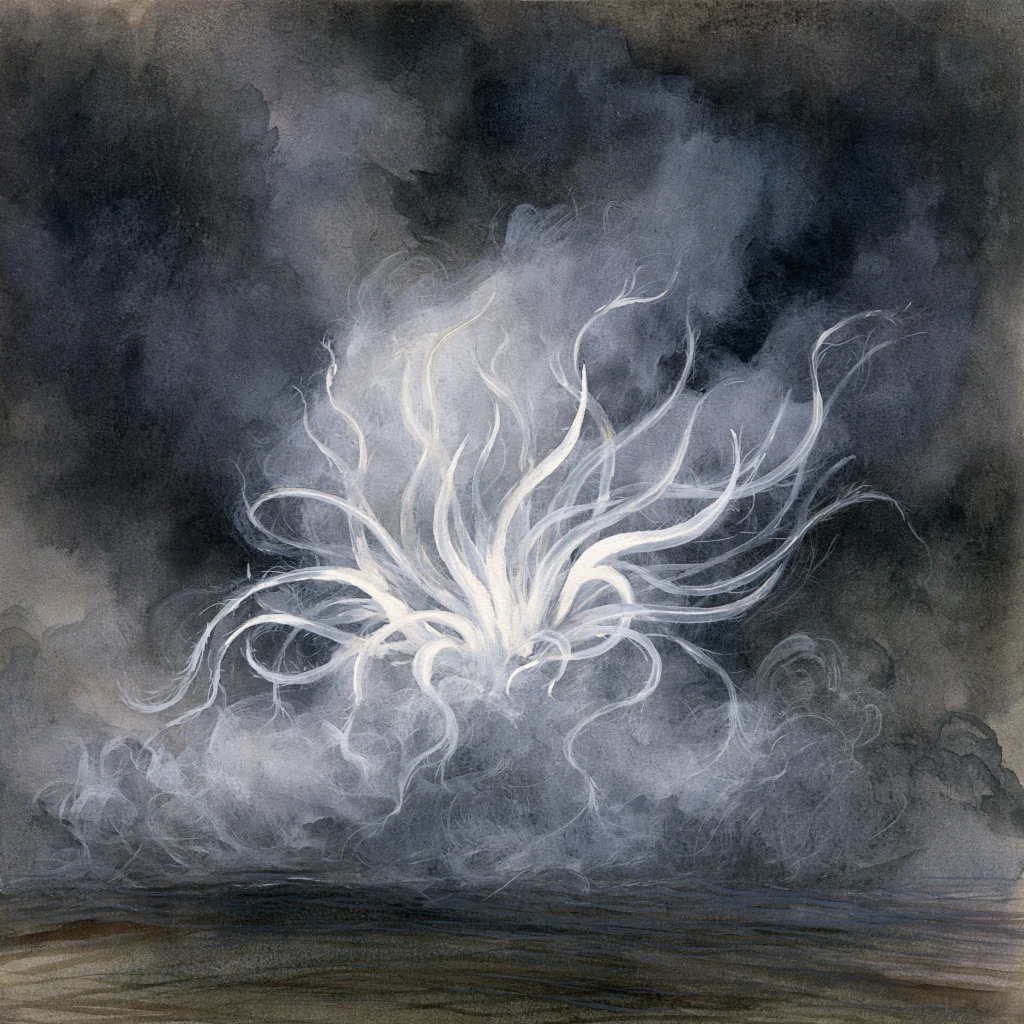
N | Uncommon | Large | Elemental | Incorporeal | Smoke | HD 10
The deadly smog is a incorporeal cloud of musky-scented, off-white fog. When it is at rest, it is practically indistinguishable from any other kind of low-lying mist. But be warned, for beneath its innocuous appearance lurks a predatory elemental monster. When it becomes aggressive, up to fifty misty white tentacles will materialise from the centre of the cloud, and lash outwards in all directions, seeking warm-blooded prey. Some graybeards believe these creatures were originally natives of the Negative Material Plane that corrupted a smoke para-elemental to form some kind of necromental. Others reckon they are monsters from the demi-elemental plane of Fumes. Whatever the truth, deadly smogs seem to possess a primal hatred for the living, and the ability to drain vitality by touch, feeding from their life-force to increasing their own strength. While they are extremely hard to damage with physical weapons, their key weakness seems to be water and cold—deadly smogs can be washed away or frozen, and they are affected by such weather on the Prime too.
Stats: [ D&D 2e ] Wonders of Lankhmar [2e]
Dizantar
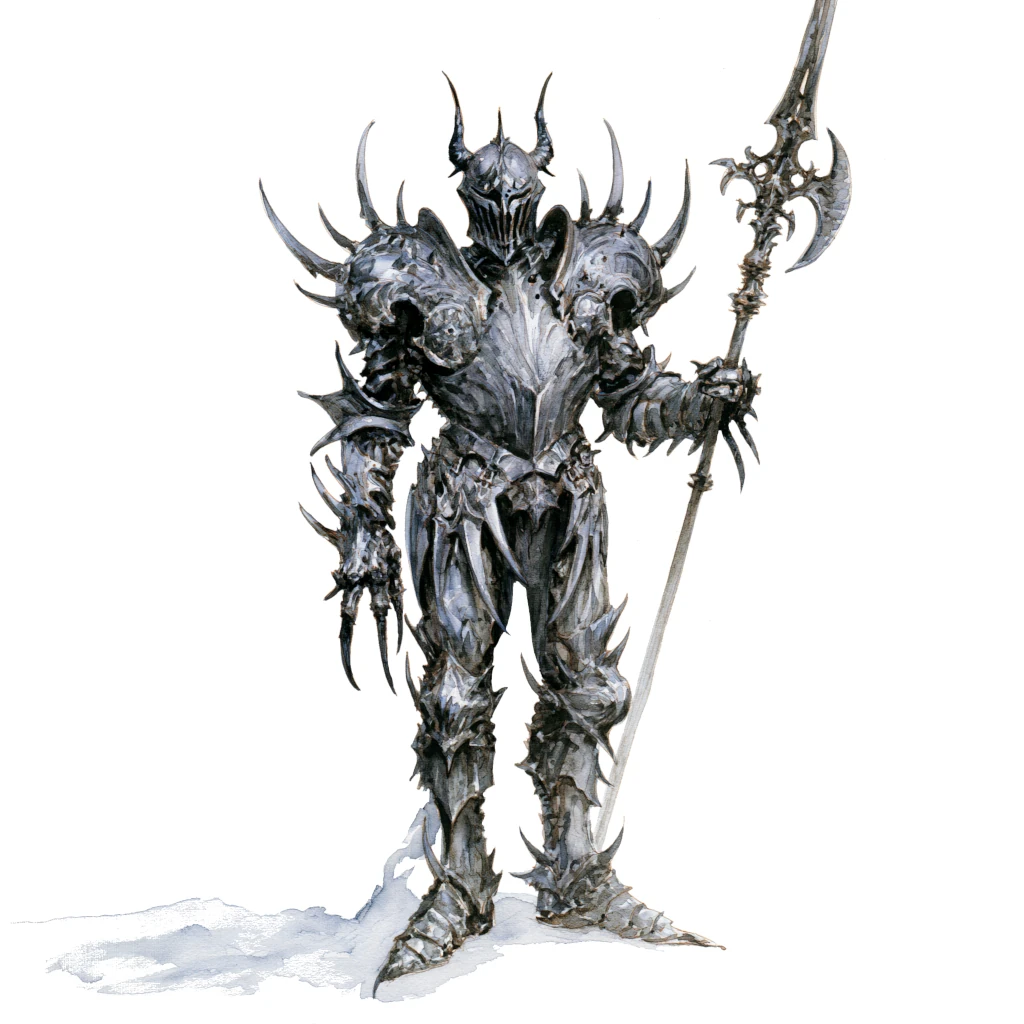
LE | Large | Humanoid | HD 8
Dizantar [dizz-ANN-tar] are seldom seen on the plane of Smoke, and yet the plane’s tendrils cling to them like an old secret. Tall, silent figures in seamless silver plate mail, the armour of dizantars is so tight at the joints, and appears so closely fitted, that it seems more like it was grown than manufactured. Every exposed piece of its surface bristles with spikes, and edges keen enough to pare flesh from bone. Do not grapple a dizantar, cutter! Inside the armour however, there seems to be nothing but darkness. You won’t see the glint of eye, nor the suggestion of a face through the eye slits of its helmet, only blackness as deep as Wildspace. Delicate wisps of smoke billow seemingly from within, and coil around the armour, no matter the weather. Add to this their eight foot height, and their three-fingered hands, and there’s no chance a berk will mistake them for a human. Whether a dizantar is some kind of creature inside the armour though, or is the armour itself, animated by unseen magics remains unknown. Attempts to open up a dead specimen reveal only smoking black ashes, which quickly disperse. Some cutters claim that this is the residue of a body that immolates instantly on death; others insist the ashes are the dizantar itself, somehow held together by purpose, habit, or hatred. Dizantar do speak—their whispering voices seem to come from inside the metal and from the smoke around it at once. Little else is known about the dizantar, apart from their single-minded obsession—hunting down and killing arcane. What motivates this urge is not known, and neither they, nor the arcane, will ever even speak of each other. Theories speak of an ancient betrayal, a destroyed world, or a blood debt that has outlived every witness. Whatever the truth, dizantar pursue their quarry across planets, crystal spheres, and entire planes with a patience that makes ordinary vengeance seem frankly amateurish.
Stats: [ D&D 2e | 5e ] Monstrous Compendium Spelljammer Appendix I [2e]; Large Luigi’s Guide to Space Monsters [5e homebrew]
Dragon, Smog
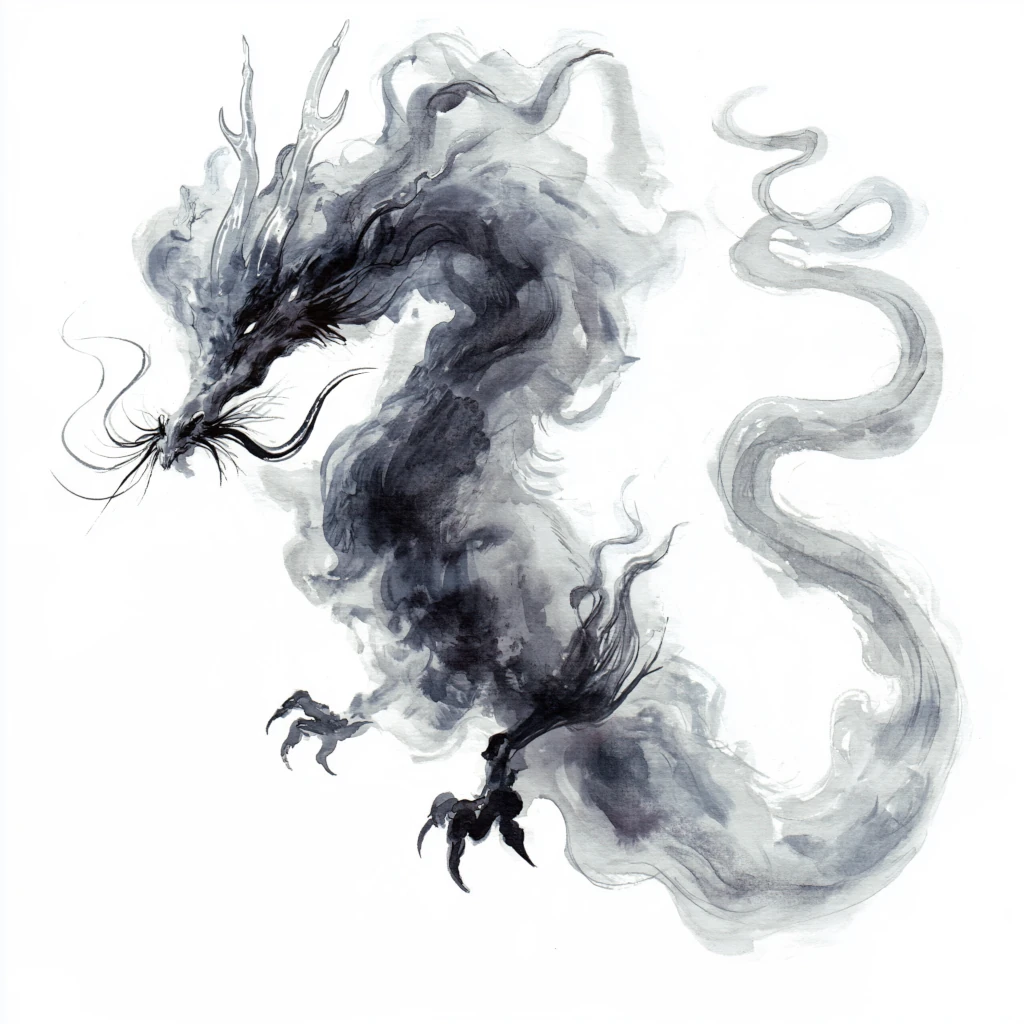
CN | Size Varies | Dragon | Elemental | Incorporeal | Smoke | CR varies
Smog dragons are serpentine creatures whose true shape is difficult to pin down. Long black hair streams from their bodies in weightless coils, mingling with the vapours around them until their hide, mane, and smoke body merge into a single restless silhouette. Their proportions shift with every movement as their neck lengthens, their tail vanishes or splits into two, and their wings appear for an instant before dissolving back into fumes. Whether they possess wings at all in fact is a question that has occupied draconic scholars for generations. Smog dragons can fly regardless, gliding through the fumes as though swimming through water.
Among the catastrophic dragons, smog dragons are the least interested in conflict. Their kin regard this as a sign of cowardice, but smog dragons themselves consider their apparent pacifism more as competence. They understand that survival favours a creature that is willing to leave before a battle even begins, and they rarely choose to kill when sowing fear, confusion, or inducing dependency will serve them better. Smog dragons try to blend in with the surrounding smoke and simply watch event unfold before they choose a side. And they are surprisingly patient—creatures may wander for days in the ‘abandoned’ lair of a smog dragon, unaware that the passages and vents were carefully arranged to let the dragon slip around the place unseen, observing from a distance. When they do strike, they exhale hot, poisonous smog that obscures, with the aim of dividing enemies from one another. The smog dragon uses the choking cloud as cover, allowing it to slip away, change shape into a disguise, or simply disappear altogether. They are vulnerable to strong winds, especially those which are magical in origin.
Like other catastrophic dragons, smog dragons reproduce outside the plane of Smoke. They seek out polluted industrial cities, active volcanoes, or sweeping wildfires, using their powers to worsening the contamination until eventually a new egg condenses from the soot. Their hatchling grows, shrouded by fumes, feeding on refuse, fear, and poison. Their goal is to keep increasing the intensity of the pollution until a natural vortex to the plane of Smoke opens up, giving them a route back home, a process that can take many years of scheming and manipulating mortals.
Stats: [ D&D 5e ] Homebrew
Dragonet, Fume
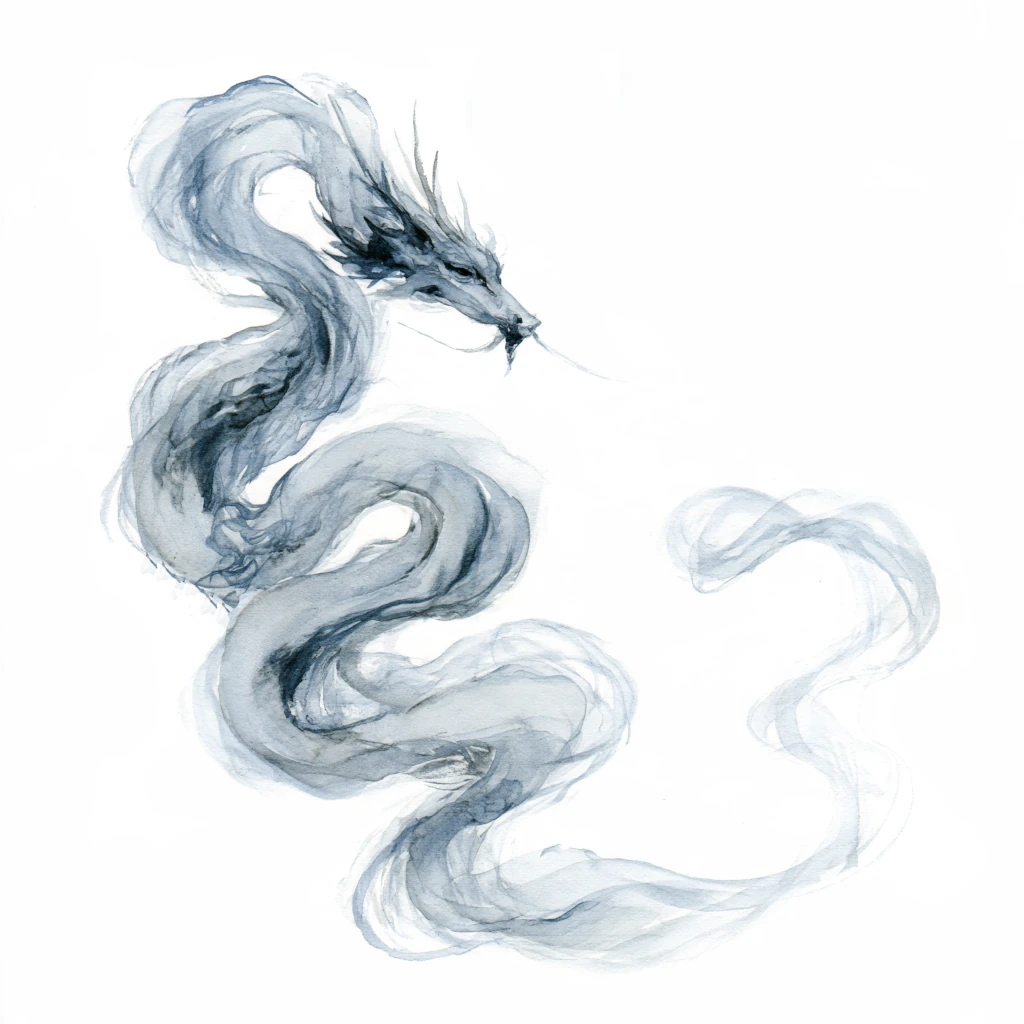
N | Small | Dragon | Elemental | Incorporeal | Smoke | CR 0
Fume dragonets are tiny, legless things that look less like living beasts than a snake caught in a coil of steam. They drift about as wafting pale smoke until they choose a shape, and then they coalesce into little dragons made of heat, vapour, and bad intent. Dragon-worshippers claim they are the broken souls of dead dragons, but that story flatters the—in truth, they seem to be elemental echoes stirred into life by the lingering magic of a dragon’s death. Fume dragonets are territorial, spiteful, and delightfully unpleasant. They do not need to eat, drink, or sleep, which makes them tireless guardians of their chosen haunts. They are fairly placid creatures, so long as nothing intrudes on their territory—once annoyed they becomes a gleeful nuisance, snapping at foes, scorching them with their superheated breath, and vanishing into smoke or water when threatened. If they are destroyed, a fume dragonet bursts into a noxious cloud.
Stats: [ D&D 5e ] Dragons of Stormwreck Isle [5e] p41; Renamed from ‘fume drake’
Drake, Smoke — Fumarandi
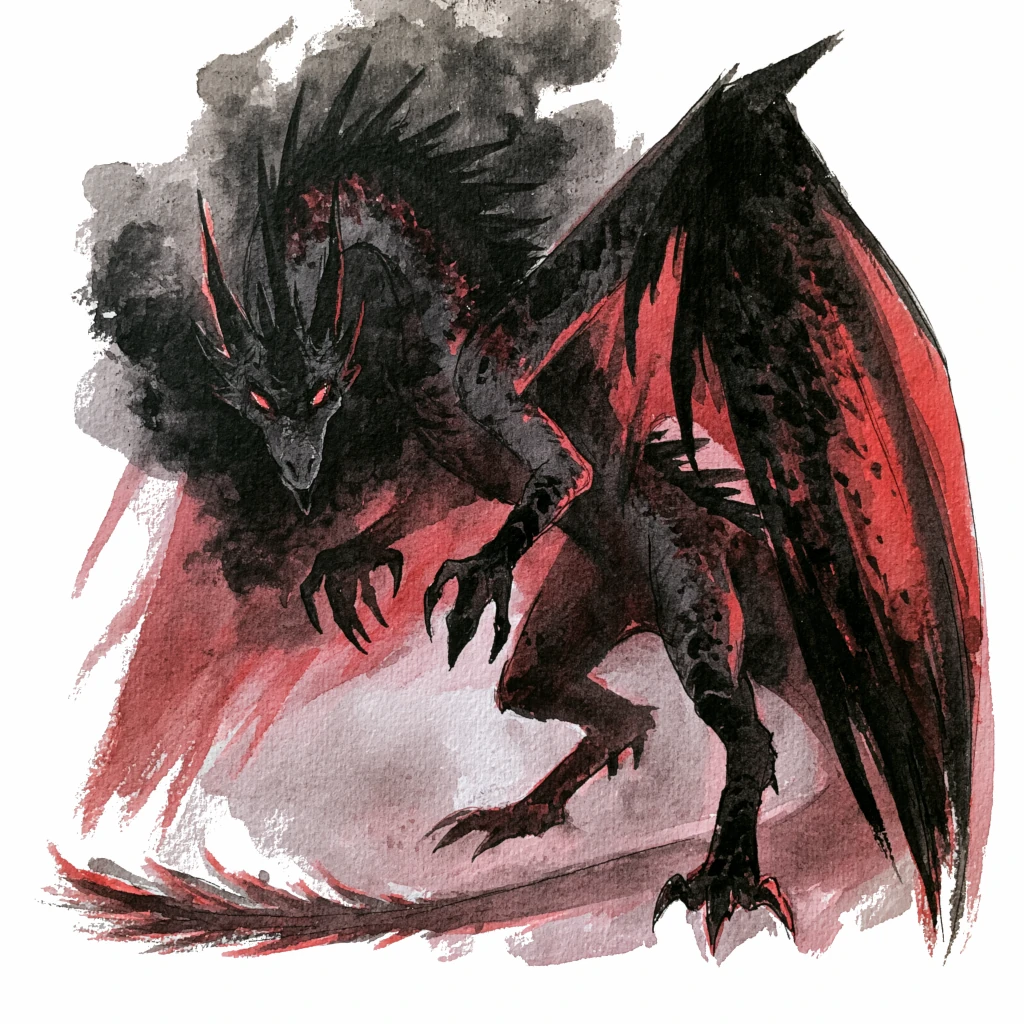
CE | Large | Air | Dragon | Elemental | Fire | CR 9
Fumarandi [FOO-mar-RAN-dee] are sly, predatory drakes, who are experts at tracking and stealth. They look like they’re made from charcoal, with polished black scales, dark red highlights, and curved black horns. With their eyes closed, they can be hard to spot amongst the smoke and shadows, but their brilliant red pupils and heat haze shimmer that surrounds them give them away. They are highly territorial, patient, and persistent. It’s said that a fumarandi never forgets a slight. They will trail their quarry from a position of concealment for miles, fixating on lone targets and striking when they leasts suspect it. If their victim escapes, a fumarandi will make chase, and worry them until the prey collapses with exhaustion—or the drake chooses to vanish and return later. A smoke drake can belch a choking cloud that conceals it and blinds its prey. If threatened, it can intensify the heat and create an incendiary haze full of white-hot embers, although this is taxing for the beast. Their bodies are hot to the touch but not dangerously so if handled correctly. Unsurprisingly, they are naturally fire resistant. If caught early enough, young smoke drakes can be trained as mounts, and they are particular favourites of bold goblins. Adult smoke drakes value their freedom too highly to be truly domesticated, though. Smoke drakes are drawn to glittering treasure, especially gemstones, and while their hoards tend to be small every item is a trophy taken from a victim rather than simply being amassed for wealth.
Stats: [ D&D 2e | 3e ] Dragon Magazine #260 [2e] p31-36; Draconomicon [3e] p157
Eagle, Comet Tail
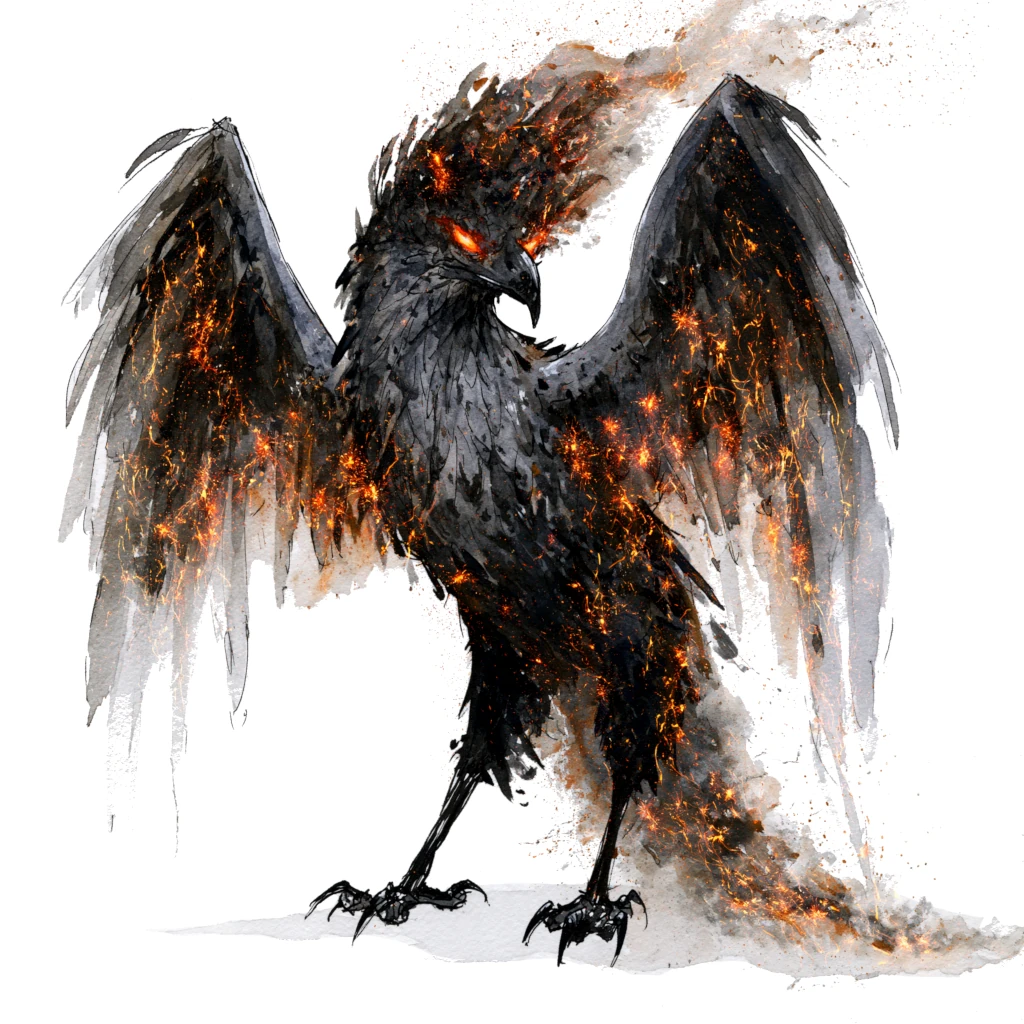
N | Medium | Beast | Elemental | Fire
These powerful elementaloid birds are known for their beautiful plumage of sparks, which hinders their hunting, but attracts mates with great success. They are inquisitive and have excellent eyesight, and this means they’re used as watchful patrollers, rapid strikers, and vigilant guardbirds. Comet tail eagles prefer to nest in the Aurora and Eternal Haze regions of Smoke. They build their aeries on jagged cinder-spikes of vitrified black stone, where the wind never ceases. The nests themselves are carefully constructed from bones, lashed together with strips of sinew, and packed solid with soot, ash, and anything shiny that they pick off their victims. Silver pieces and glass bottles are particular favourites. An entire convocation of comet tails shares a single giant aerie, so there are always watchful eyes staring out in all directions in case of predators. Efreet pay top jink for the notoriously spicy comet tail eggs, after all.
Stats: [ D&D 4e ] Dungeon Magazine #169 [4e] p34
Elf, Smoke Drow
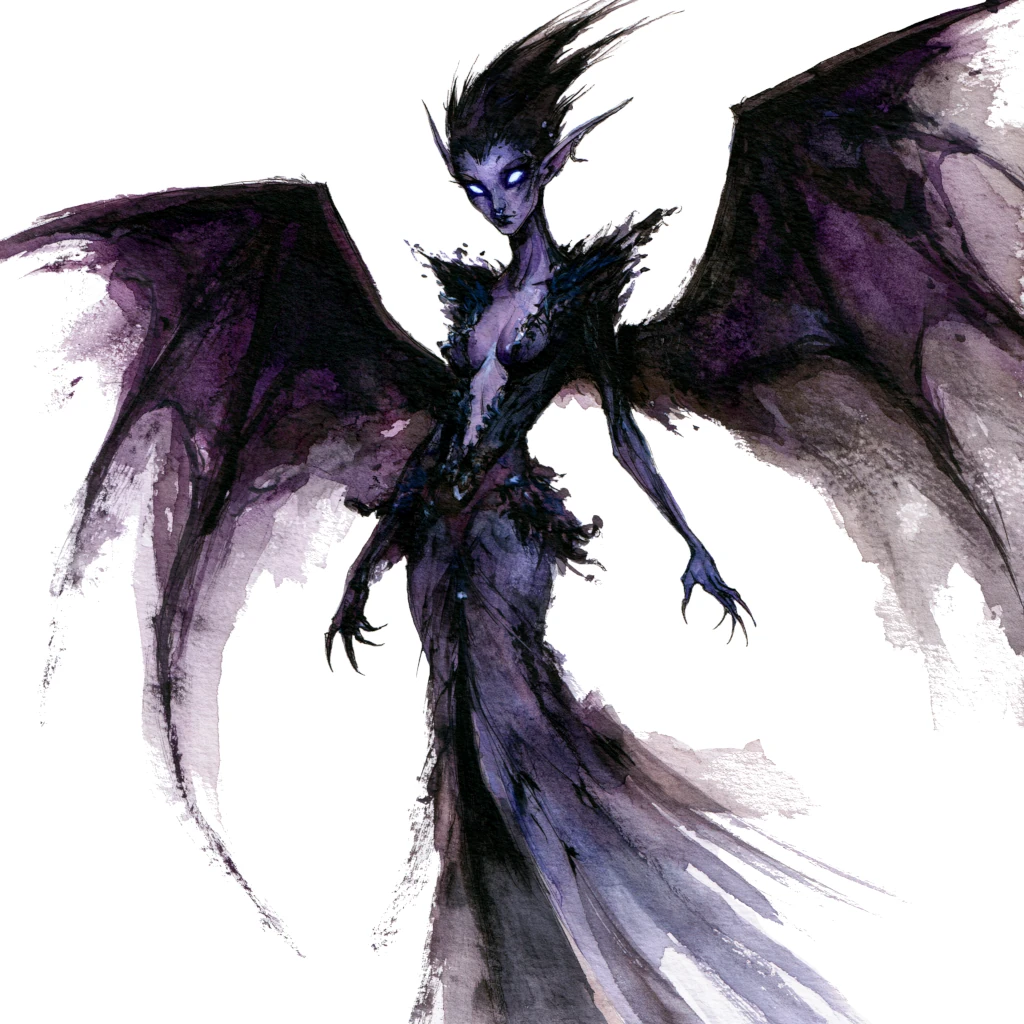
Kharadrow, Dym-tel-quessir | CN (?) | Rare | Medium | Elf | Humanoid | CR 1+
This obscure and mysterious offshoot of elves appears like winged elves with dark grey skin. Kharadrow, as they are called by planewalkers, share the typical elven appreciation of fine art and music, but also the tendency to be even more aloof and secretive than most of elvenkind. It turns out that their society is strangled with suspicion towards outsiders, but they also direct extreme scrutiny at other members of their community too. They call themselves dym-tel-quessir, and they are thought to have originally been a clan of winged avariel elves who followed Lolth—but then, for reasons that aren’t clear, turned stag on the Spider Queen and ran off into the obscuring embrace of the plane of Smoke. Given that history, perhaps it’s understandable why they are so paranoid, after all, drow powers aren’t known for their forgiveness.
Source: Inner Planes [2e] p89 (mentioned but no stats given)
Elemental, Soot
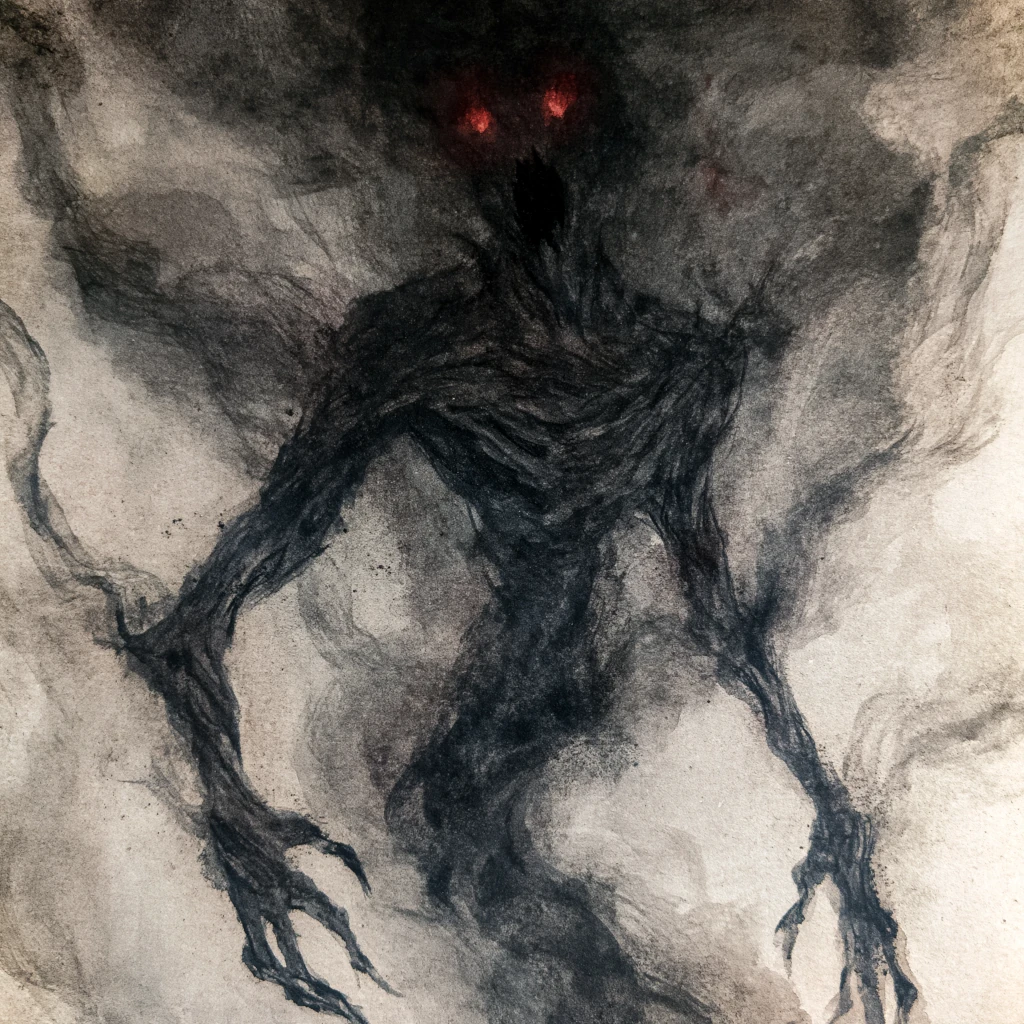
N | Rare | Small | Earth | Elemental | Fire | Smoke | HD 4
Soot elementals are a strange accident of summoning magic, born of an unnatural marriage between cinders nd ashes. They are not actually true ‘elementals’ at all—and made from neither fire nor earth, but a compromise between the two. They can condense into an almost-solid form, or rarefy into fine particles of black powder, able to slip through the smallest of cracks or keyholes. They look like clouds of dark soot and ember-filled smoke, shaped into a humanoid form, the shape of a snake, or a sinister face in the smog—whatever their conjurer decides. You see, these creatures are not naturally occurring elementals, but rather something that has been forced together by mortal magic. Chant goes that the creation of one of these creatures involves summoning a fire elemental, and earth elemental, and a third spell to combine the magic. The dark ritual is performed to create a dangerous killer inspired by the belker, but more easily controlled—in theory. In combat, soot elementals are dangerous. They attempt to suffocate their prey, smothering their face and filling their lungs with burning vapours. Worse still, they are able to separate themselves into multiple smaller clouds of burning soot, each independently attacking and attempting to be inhaled. While soot elementals may have their origins in mortal meddling, that is not to say they do not exist in the wild. If the creation ritual is not performed perfectly, the creature may attack and slay their creators. If the summoner does not destroy the soot elemental when they are finished with them, the creature may escape its bindings and slip away. It turns out many of them end up in the plane of Smoke.
Stats: [ D&D 2e ] The Awakening [2e] (as smoke elemental)
Elmarin
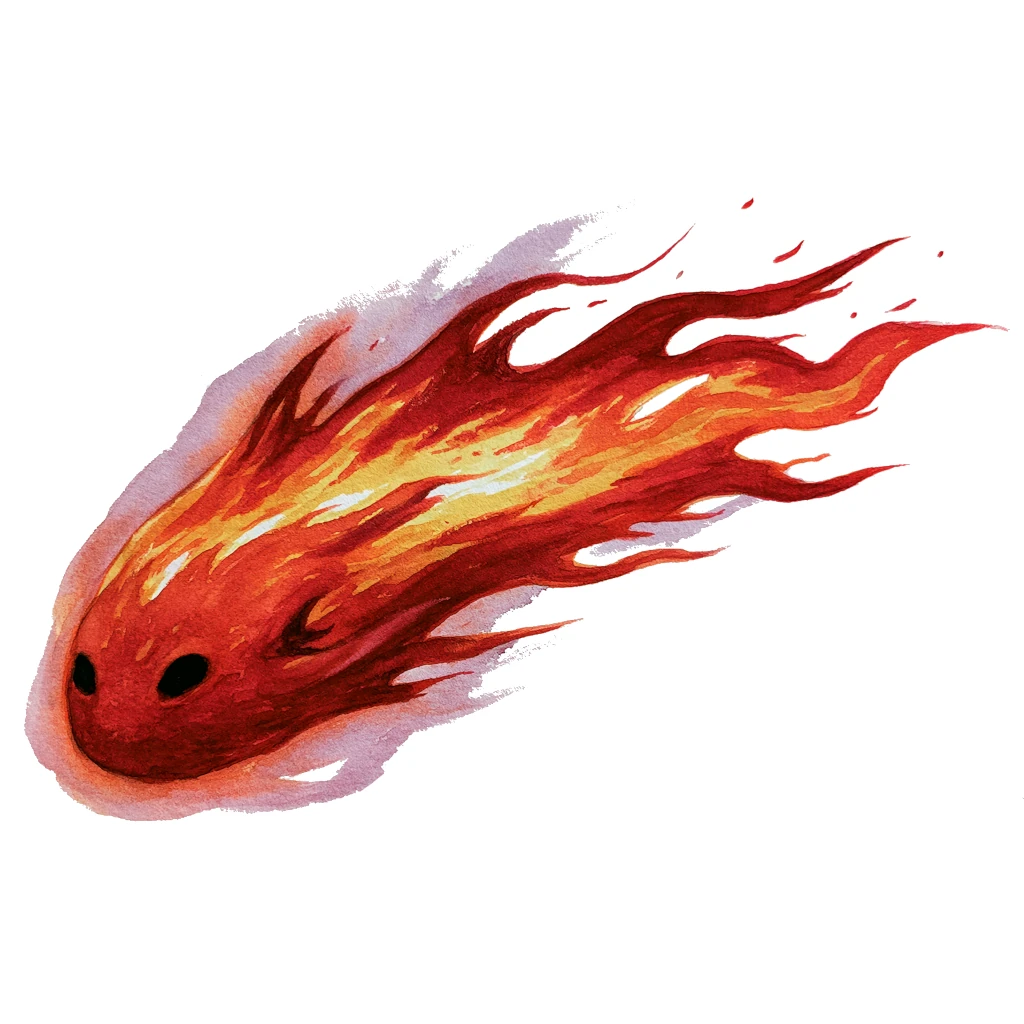
N | Rare | Small | Elemental | Fire | HD 5–9
Elmarin [el-MAR-rin] are sentient balls of fire and plasma, thought to be born on the border between Smoke and Lightning, in the region called Aurora. They are best known, however, in Wildspace, where they can be found drifting between the stars. They float as bright globes of flame in reds, golds, blues, or violet-white, like Saint Elmo’s fire given purpose, with two darker patches near the front that give them the look of watchful eyes. They have a tiny solid core of fulgurie that is charged with positive energy and acts like an ioun stone. Elmarin aren’t thought to be sapient, and seem to be driven mostly by instinctive curiosity. They are drawn to warmth, motion, and power—which is why a spelljamming ship might seem to them like fascinating lantern travelling through the darkness. Most of the time, their curiosity is the worst thing about them. An elmarin will zip through rigging and flit through open hatches, leaving scorch marks, and the occasional spooked crewman in its wake. But curiosity turns destructive the moment fire finds fuel, and then these little elemental stars become ship-killers by accident: sails catch, ropes flare, and cabins can ignite around them while the elmarin itself remains indifferent.
Stats: [ D&D 2e ] Spelljammer: AD&D Adventures in Space [2e]
Fluxcharger
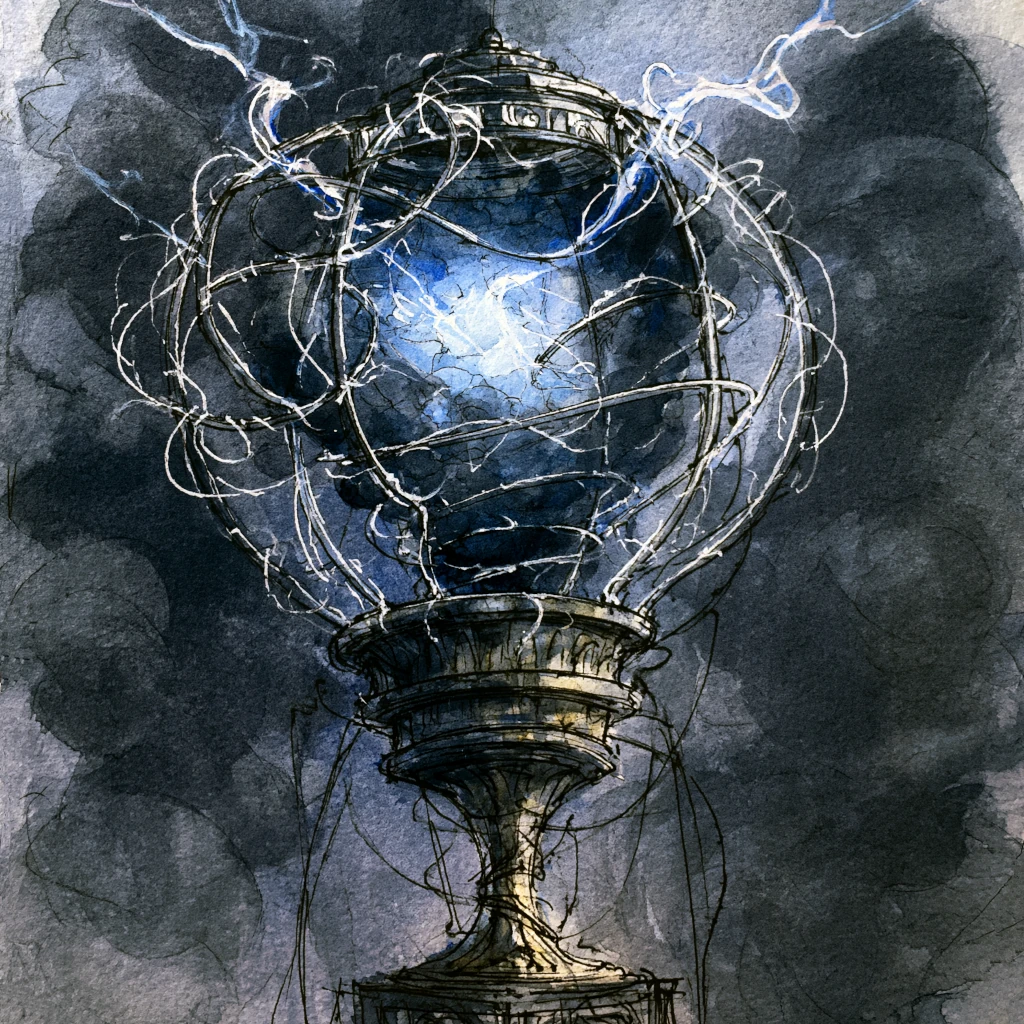
CN | Large | Elemental | Lightning | Smoke | CR 7
Fluxchargers are rare artificial elementals made from merging elements of Smoke and Lightning inside a framework of metall. Arcs of lightning run through the gas that comprises their wispy bodies. Fluxchargers are hard to create, requiring a summoner and an artificier to work together to create the mechanical cage and bind the elemental. They are valuable resources for inventors who need to create a steady source of electricity however, since they can create continuous electrical discharges around themselves which are harnessed by the encasement. These living batteries sell for a decent amount of jink and can be embedded into clockworks or even sentient machines. You just need to be able to stomach the idea that there’s an enslaved elemental inside of there…
Stats: [ D&D 5e ] Guildmasters’ Guide to Ravnica [5e] p208. Canonwatch: MTG and its planes and worlds aren’t canonical to Planescape, but this particular monster is somewhat interesting to add
Forgewraith
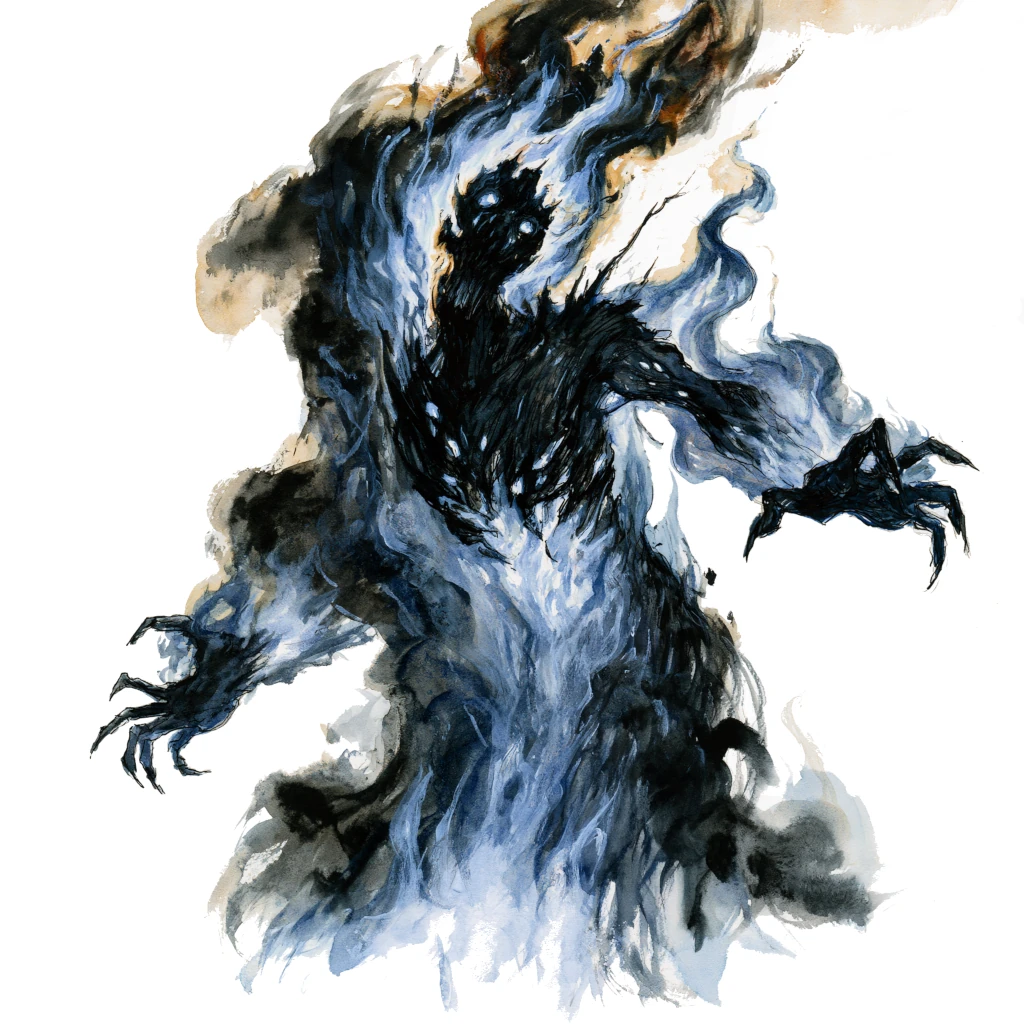
CE | Medium | Incorporeal | Shadow | Smoke | Undead |
Forgewraiths are an especially malevolent kind of fire spectre that only arises when a despicable villain meets their end in especially intense heat. Their intense wickedness rekindles dark flames from their ashes, forming an undead spectre of smoke, hatred and ghostly fire. They appear as a silhouette of a humanoid made from pure shadow, wreathed in blue fire.Forgewraiths bear a fierce and deliberate malice towards all things living, and they delight in setting flesh alight and ruining workmanship. They prefer to ambush their victims, emerging from the darkness to overwhelm with their burning touch, then shrugging off blows that would stop a flesh-and-blood warrior. Their incorporeal forms allow them to phase through barriers as if walls were not there, and they use this to their advantage when attacking, and then retreating back into the walls. While some forgewraiths are virtually mindless, but a rare few retain a disturbing remnant of the lives they once lived. Theys may remember names, languages, or unfinished plans, and that sliver of personhood can make them all the crueler: they are not only dead, but conscious enough to enjoy what they have become.
Stats: [ D&D 4e ] Dungeon Magazine #167 [4e] p34
Fundamental, Smoke
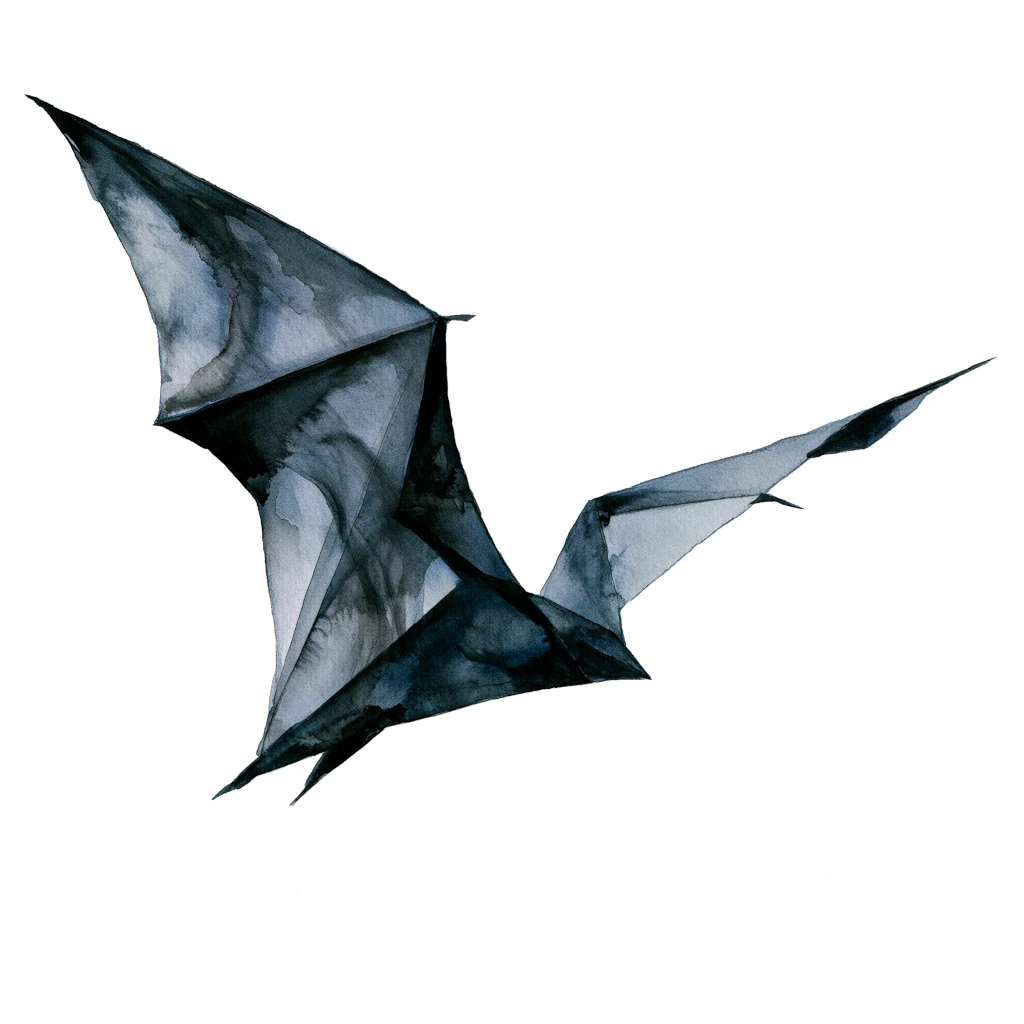
N | Tiny | Elemental | Smoke | HD 1
Smoke fundamentals are among the smallest and least imposing inhabitants of Smoke, yet they’re probably closer to the plane’s true nature than any smog dragon or fancy elemental prince. They are narrow strips of soot-dark matter, scarcely more than a handspan long, whose edges flutter and fold like the translucent membrane wings of a grey bat, greasy with tar. At a distance, a flock of fundamentals resembles scraps of burnt paper caught in an updraught. They fly with the rapid, irregular flutter of small insect-eating bats, turning sharply, vanishing into, and materialising out of the fumes. They will swarm around lamps, chimneys and bonfires, attracted to heat and light. Their movements otherwise have no clear purpose, though their collective patterns sometimes resemble elaborate spirals. Planewalkers have mistaken these formations for omens, but more likely, the flock is responding to heat, pressure, or some subtle alteration in the plane that mortal senses cannot perceive.
Stats: [ D&D 2e ] Planescape Monstrous Compendium Vol. 3 [2e] p46-47
Gastyr
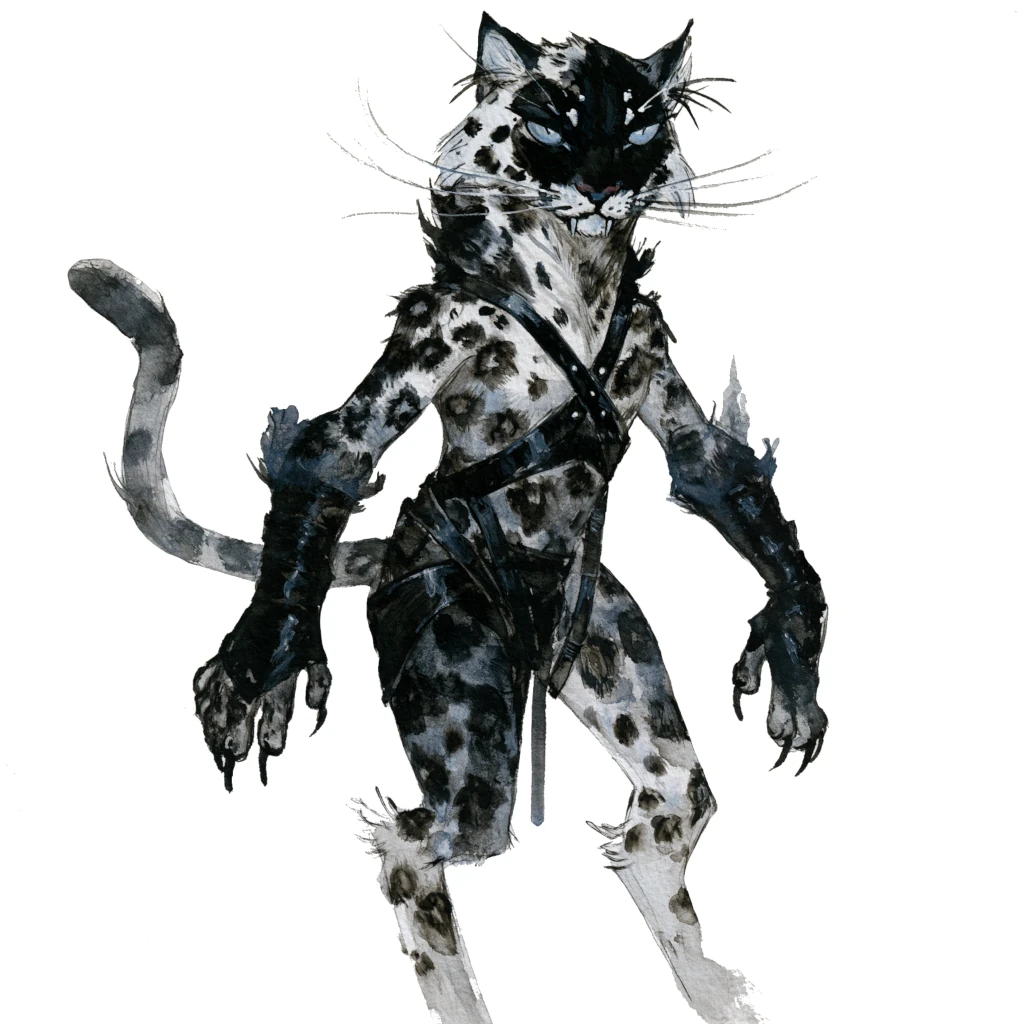
Any alignment | Small | Humanoid | CR varies
Gastyr [gass-TEER] are a race of soot-gray nomads shaped like humanoid cloud leopards. They are small, long-tailed, pointed-eared ancestry of catfolk with colourful eyes, smoky breath, and a peculiar ability to ‘swim’ through the plane of Smoke as though the vapours themselves were liquid. To outsiders they look half-wild and wholly self-possessed. Gastyr have adapted to breathe smoke without ill effect, and they live a nomadic existence among the shifting clouds. There are limits however, poisonous fumes still trouble them, and only a few gastyr can breathe clean air well enough to leave their home plane. Their tribes are structured by bloodline, and unusually, by eye-colour. Most gastyr are blue-eyed commoners Gastyr with grey eyes are seen as natural-born rulers, and lead their people without question, until another grey-eyed challenger proves stronger in ritual combat. That hierarchy, along with their reverence for the Cat Lord as ancestral patron, gives their society a strong sense of lineage—even if the more skeptical suspect a humbler origin with some long-ago mingling of human and feline blood, the deserntak. Gastyr villages tend to be wary of outsiders, though their caution can range from suspicious hospitality to immediate violence depending on the temper of the chief.
Stats: [ D&D 2e ] Elemental Netbook [2e] p67-68 (including gastyr as a playable AD&D 2e race) ‡
Genasi, Smoke
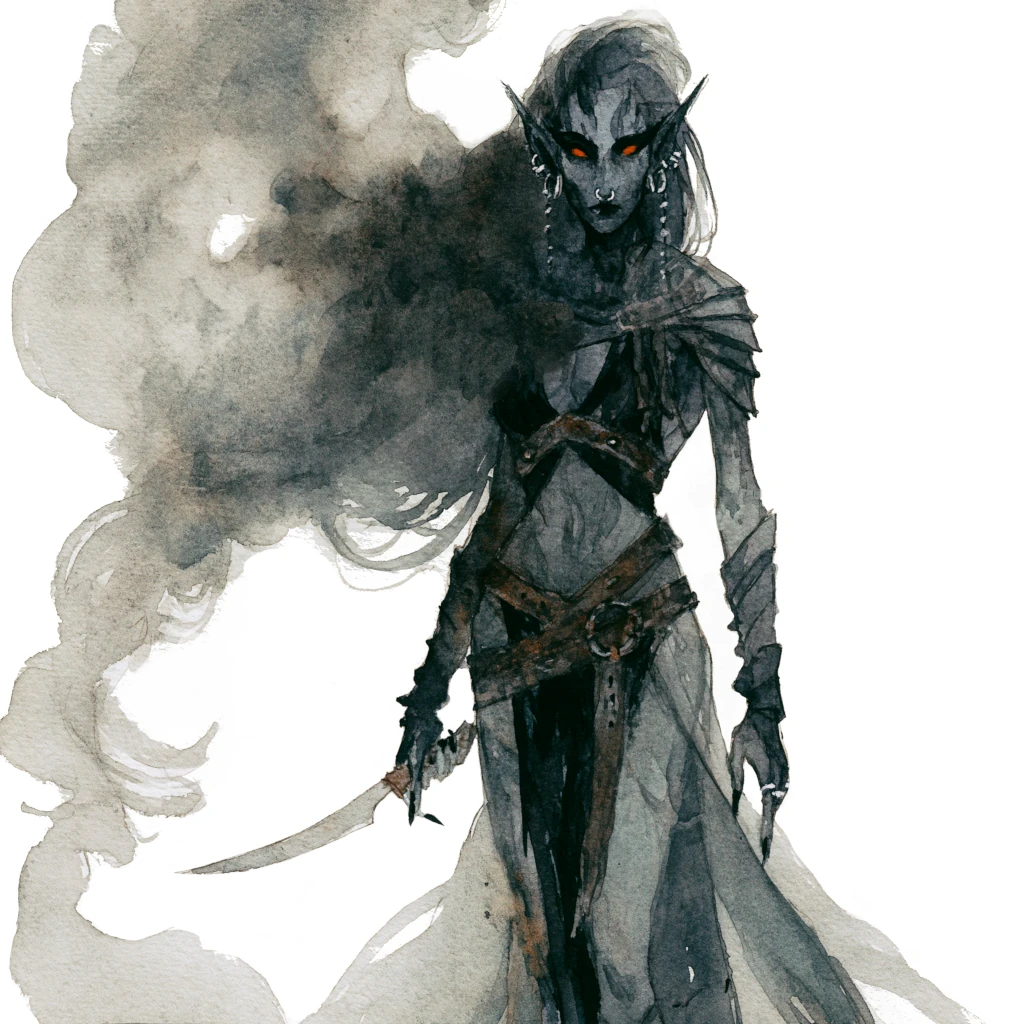
Pythia | Any alignment | Medium | Elemental | Humanoid | Smoke | CR varies
Smoke genasi, called pythias in Eshn, the language of Smoke, are rare people touched by the fumes. Their ancestry sometimes begins with the hinn, those secretive genies who survived the efreet’s ancient persecution by retreating into obscurity. Pythia inherit their a natural flair for concealment from them, no doubt. Genasi who cannot trace their lineage back to geniekind may instead have been touched by the elemental energies of the plane while in the womb, or during childhood. Pythias are humanoid, some with distinctive charcoal-grey, yet oddly translucent skin, while others look entirely mortal until their emotions betray them. Their hair may drift as though underwater, unravel into wisps, or even trail smoke behind them, when they move quickly. There’s always a tell-tale aroma clinging to them too—one part burnt wood, one part lamp oil—and those familiar with pythias claim that the scent intensifies with their mood.
Like smoke itself, pythias are difficult to read. They prefer urban environments, at home in crowds and enclosed spaces, not because their native plane possesses cities, but because wide open spaces make them feel uneasy. They can also tolerate atmospheres that would have other humanoids coughing up their lungs, and have a natural tolerance for poisons. The largest concentration of smoke genasi outside of their home plane is in the Lower Ward of Sigil, where the tight streets and terrible smog are something of an urban heaven for them. Pythias are particularly adept at vanishing into smoke or mist, and make excellent thieves or assassins.
Stats: [ D&D 2e ] Playable homebrew race ‡
Genie, Djinn / Jathoom
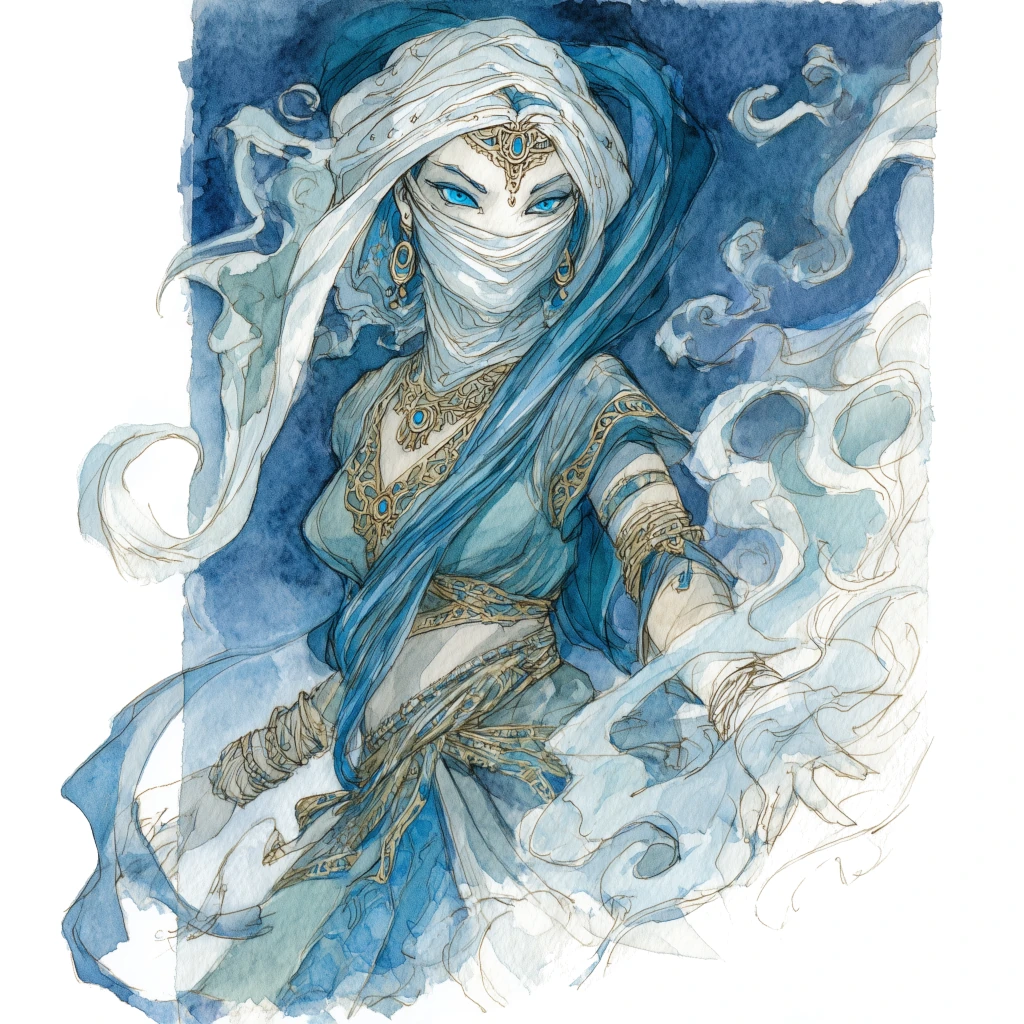
Jathoom | CG | Uncommon | Large | Air | Elemental | Genie | CR 5
The djinn [JINN] a cutter might encounter in Smoke are not natives, but participants in the ancient conflict with the efreet. They patrol the borders between Smoke and Air, guarding their heavily disguised cloud fortresses that are scattered throughout Eternal Haze, and even in Core Smoke. Beyond their struggle to repel the rapacious efreet army, the djinn of Smoke do their best to escort refugees out of danger and into the relative safety of the Sirocco Straits.
Djinn are tall and elegant, but the blue or pale white skin hues you might expect to see in Air tend to be muted to grey from constant exposure to and infusion with the smoke here. They usually wear body coverings, especially gauze masks to cover their faces to protect themselves from soot and grit. Their hair takes on a translucent quality, and their eyes gleam like lamps through the thick smog.
Djinn exiles are far rarer. Most were cast out of the plane of Air treasonous dealings with efreet, or organising opposition to the war. Others descend from families that refused to choose a side. Some are nomads, but others live a meagre existence in small communities, sometimes even alongside exiled efreet. Such groups take great care to shroud themselves in deep smoke of course, because they fear reprisal from both sides of the conflict. The most embittered exiled djinn hire themselves out as spies or assassins.
Stats: [ D&D 2e | 3e | PF 1e | 2e ] Monstrous Manual [2e]; Monster Manual [3e]; Bestiary [PF1e] p139; Monster Core [PF2e] p157 (as jaathoom). Canonwatch: Djinn have been renamed jaathoom in Pathfinder 2e canon. Jaathoom nobles are called shuyookhs.
Genie, Efreet / Ifrit

Ifrit | LE | Uncommon | Large | Elemental | Fire | Genie | CR 9
The efreet (efreeti is singular) are giant muscular genies with smoking crimson basalt skin, smouldering eyes and black horns. They’re often mistaken for baatezu by Primes, and this either amuses or offends them, depending on the individual. Best not to risk getting it wrong, cutter.
Efreet on the plane of Smoke fall into one of three types. The most common are the warriors. The efreet and djinn have warred over the plane of Smoke for longer than anyone can remember, and while efreet are rarely frontline troops, they frequently act as lieutenants or generals to armies of azer, salamanders, mercenaries, or enslaved fighters. The second kind are merchants, often travelling across the plane of Smoke as quickly as possible, or purchasing or delivering weapons and supplies to efreet armies. The third, and most wretched, kind are the exiles. Efreet banished from the plane of Fire typically come to Smoke, for although it is choking and obnoxious, it is the least uncomfortable Inner Plane for their kind. They need to be careful though, for their enemies are legion—warrior efreet, djinn, and hinn are all likely to be hostile to an efreet, even if they are an exile.
Stats: [ D&D 2e | 3e | 5e | PF 1e | 2e ] Monstrous Manual [2e]; Monster Manual [3e]; Bestiary [PF1e] p140; Planar Adventures [PF1] p137; Monster Core [PF2e] p158 (as ifrit). Canonwatch: Efreet have been renamed ifrit in Pathfinder 2e canon. Ifrit nobles are called shuyookhs.
Giant, Smog
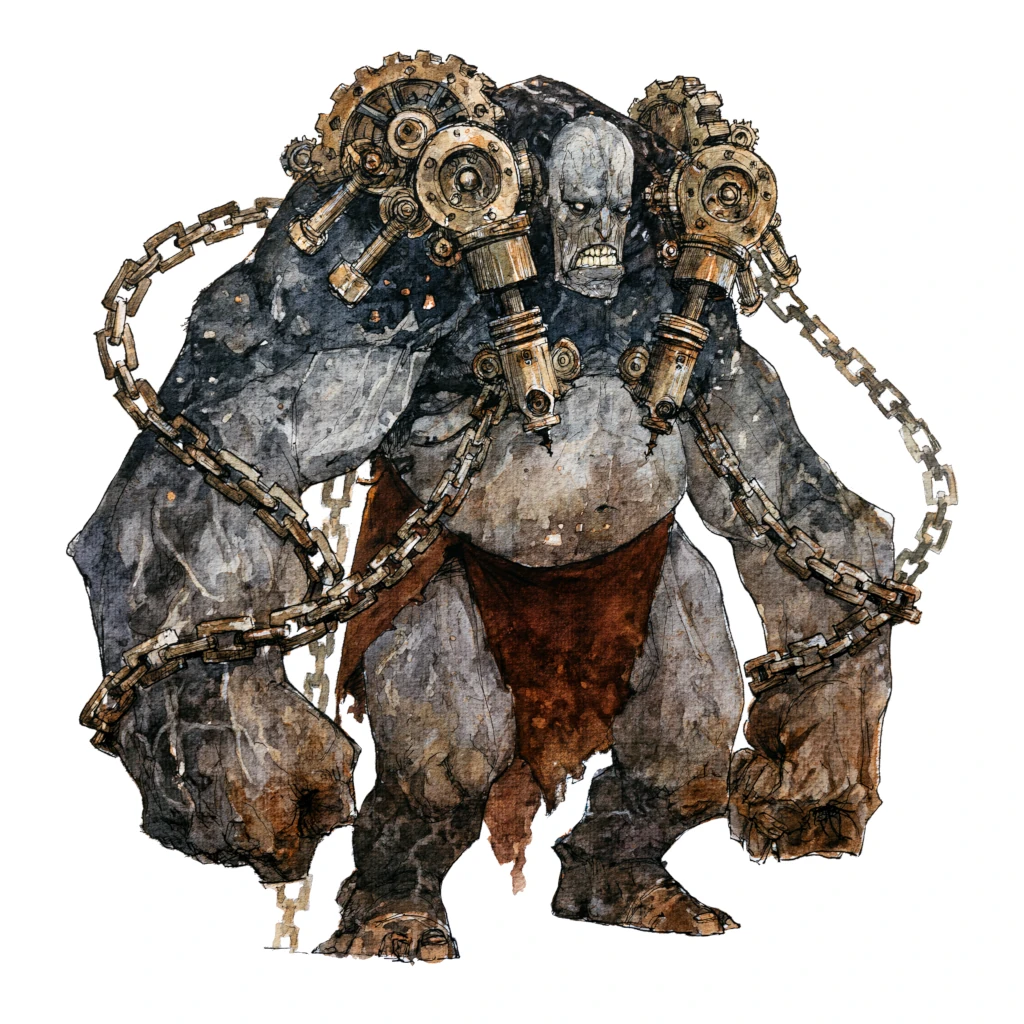
CE | Rare | Large | Giant | Humanoid | CR 7
When a tribe of hill giants was somehow stranded in the Great Conflagration, they turned to feeding on charcoal, sulfur and other volatile substances to survive. Over many years, they became infused with such concoction of chemicals, that their very skin began to exude patches of explosive material. Smog giants, as these creatures are called, are similar in culture to their boorish hill giant ancestors, with a few notable differences. Firstly they have a penchant for body adornments, made from clockwork, machinery or even embedded smoke powder weapons. They love explosives and can shoot shrapnel from the strange bio-mehcanical weaponry. They also have a fondness of smashing their heads together to establish dominance, settle conflicts or simply for enjoyment. The stronger a smog giant is, it would seem, the more likely it is to be right in any particular disagreement.
Stats: [ PF 2e ] Pathfinder #179: Cradle of Quartz p83
Hazer
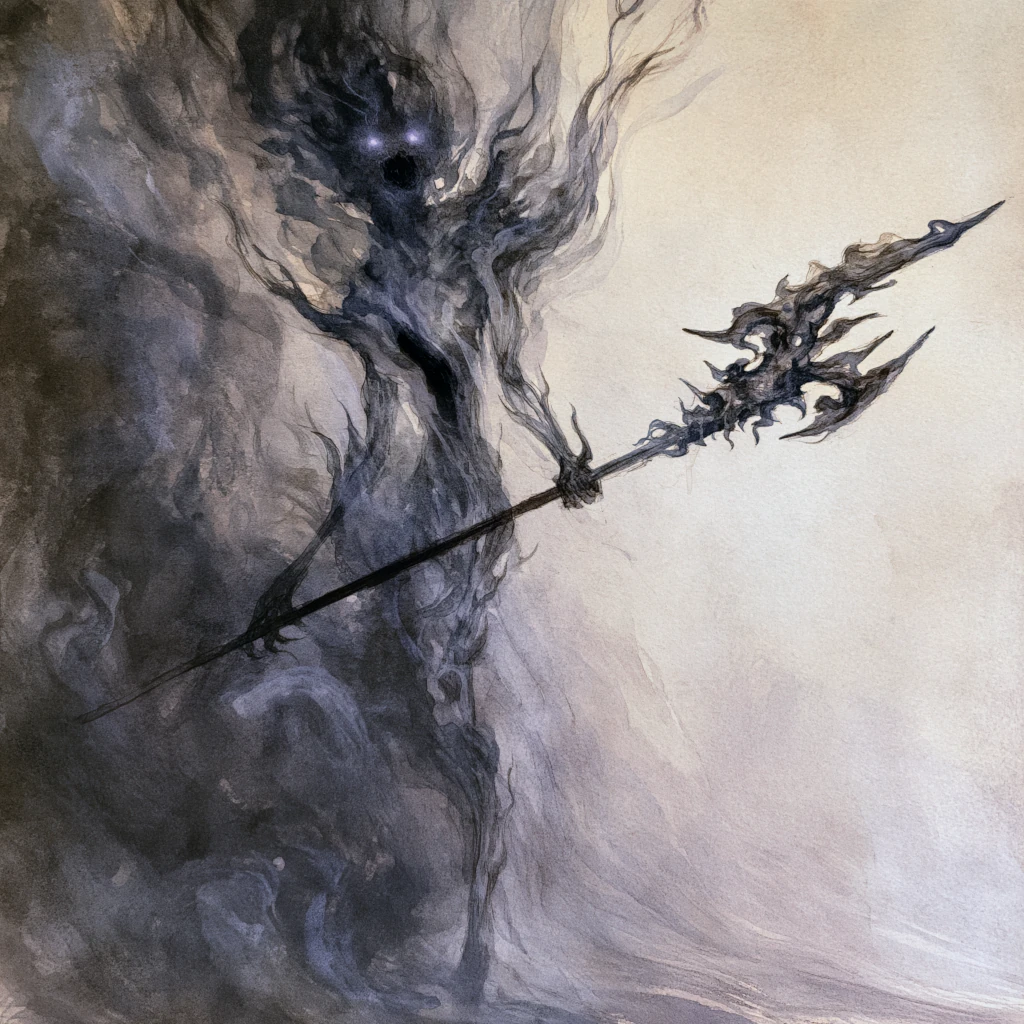
LE | Rare | Large | Elemental | Incorporeal | Smoke | HD 16
Hazers are said to be the plane of Smoke’s own shock troops—smoke elementals turned militant, consumed by an insatiable appetite for battle and almost no interest in anything else. They resemble humanoid clouds of soot and vapour, and when they fight they solidify the substance of their bodies into the shape of glaives, spears, and other reach weapons. Legends disagree over their origin—some blame the efreet, some the djinn, others that psychic echoes from the millennia-long conflict between the genie races has somehow spawned these creatures. It is also possible that the secretive hinn created hazers, or perhaps freed them from the efreet and they are still paying back their debt. Whatever the truth, hazers seem to think of themselves as guardians rather than servants, and they now serve the hinn in the same way elementals like earthen destriers or fire minions do for other genies.
They travel in small groups and attack first, speak never, and yield to no one. Whether they even truly have a language is impossible to say, because any stranger who gets close enough to ask usually gets cut down instead. Their fury shows the grim discipline of creatures who see military intrusions into their plane as a crime and combat as some kind of duty. In that sense they are less like marauders than like a smoke-born guerrillas, roaming the fumelands to meet threats with disciplined aggression.
Stats: [ D&D 2e ] Elemental Netbook [2e] p129; Homebrew ‡
Kapre
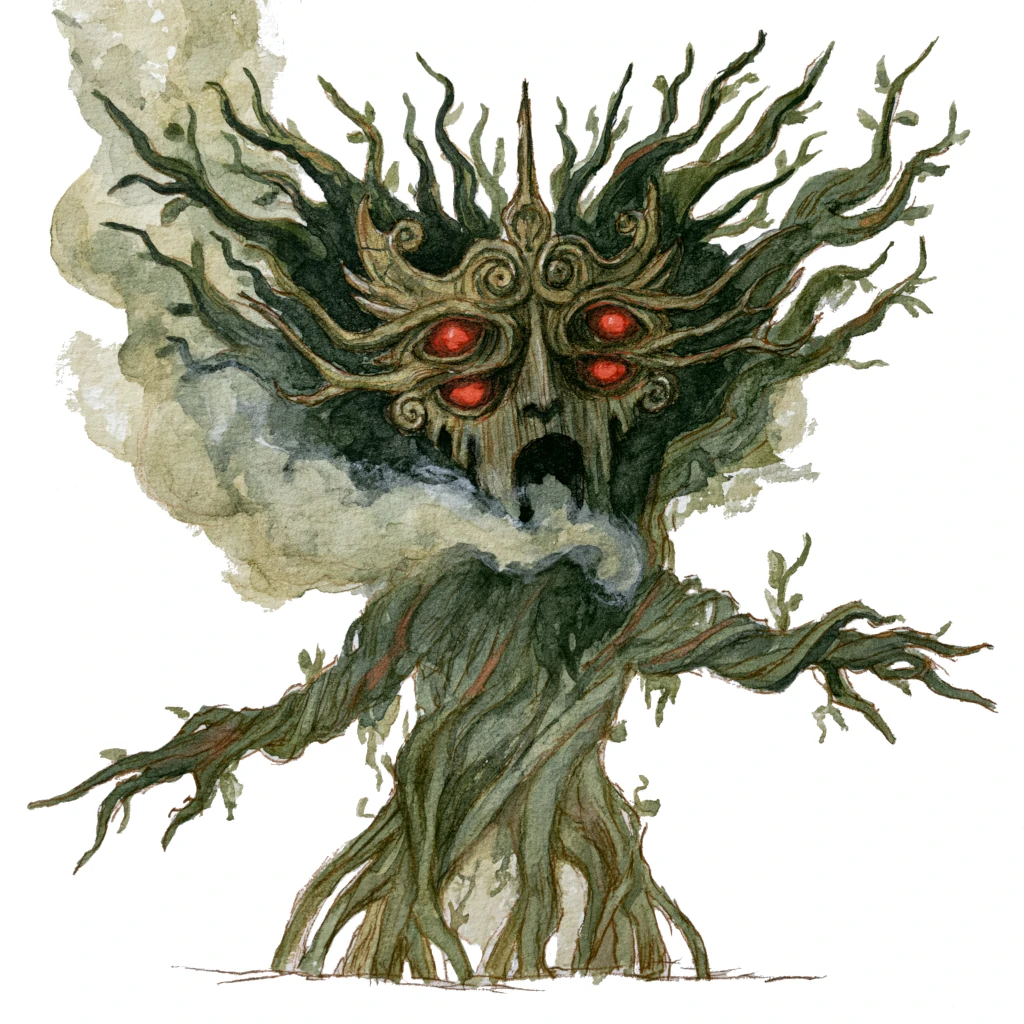
CN | Huge | Plant | Smoke | CR 10
Kapres [KAH-pree] are mysterious creatures, but they are commonly believed to be ashira, dryads and hamadryads of the forests that succumbed to the forest fire. Typically this fate spells death for such beings, but sometimes powerful magical influence from the Paraelemental Plane of Smoke can revitalize them as large plantlike humanoid beings. Kapres don’t retain any memories from their previous lives, but they can demonstrate some personality traits of the fey they used to be. They are very secretive and prefer to scare away any humanoid creature they encounter. However, those, who gained their trust, note that kapres are actually quite joyful and enjoy breathing in various fumes of the plane that don’t cause them any harm. Unfortunately (or fortunately), these beings are constantly surrounded by the magical aura that makes most creatures disoriented and unable to understand their position in space. Kapres live among cinder fields that dot the plane, sticking them together into branch-like amalgamations. It seems that something in their nature calls them back to their forests, and if a kapre is presented with an actual tree, they would almost certainly be drawn to it.
Stats: [ PF 1e ] Bestiary 4 [PF1e] p172
Kurage-no-Hinotama
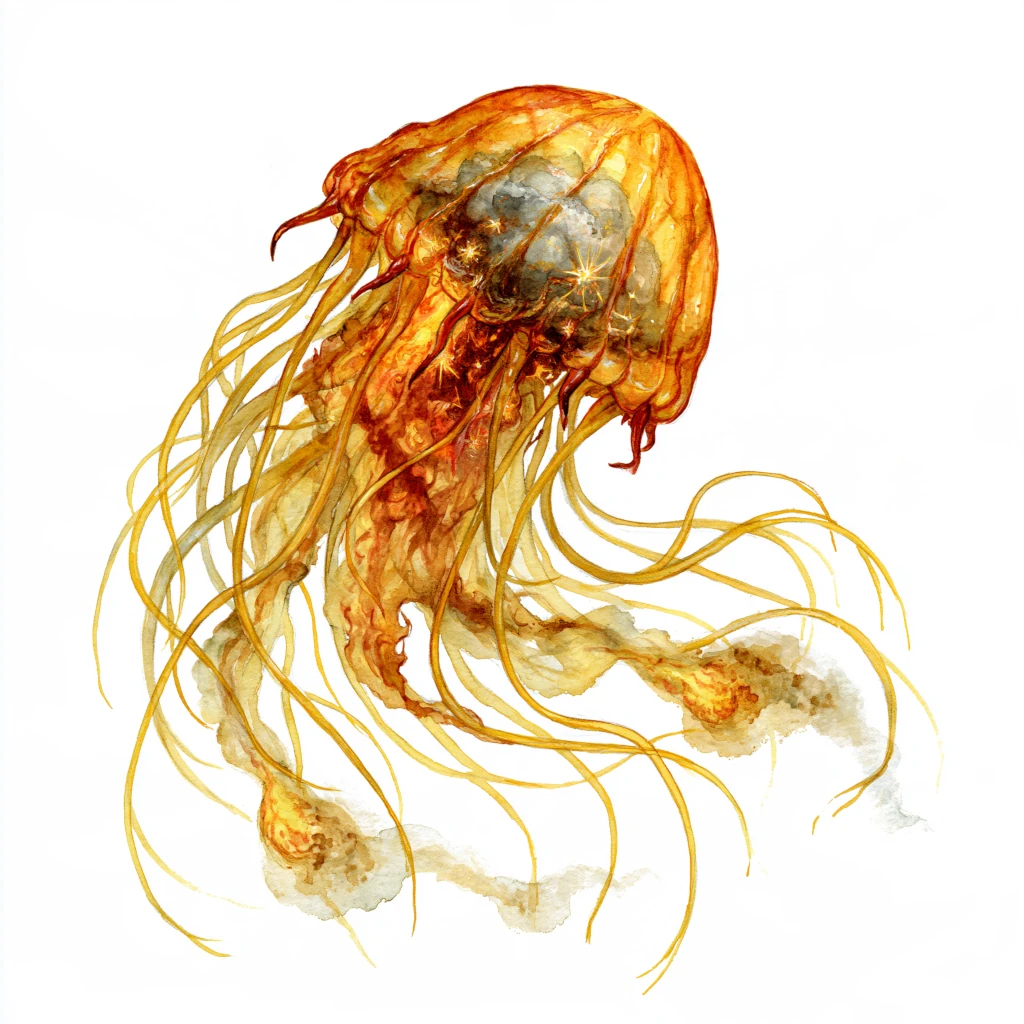
Great Conflagration | N | Huge | Air | Beast | Elemental | Fire
The kurage-no-hinotama [koo-RAH-geh-no-HEE-no-TAH-mah] is a giant elementaloid jellyfish that is one of the most common species in the plane of Smoke. The fully grown form is a huge orange jellyfish with a large cloud of grey and yellow stinging tentacles trailing behind the bell. This monster has pyromantic powers—it can propel itself through the smoke by expelling plumes of fire or defend itself by hurling bolts of flame. Like jellyfish, it feeds on tiny floating animals and plankton, which it paralyses and consumes through its tentacles, as well as on smoke itself. Very few creatures are able to take down a fully grown kurage-no-hinotama, but it is extremely rare for them to reach such a state. Just like normal jellyfish, these beasts go through a complex life cycle. At first they are a tiny planula larvae, that search for a place to anchor themselves. There they turn into polyps, which grow, feed and eventually produce young jellyfish that are merely the size of a plate at the start of their life. Only a very small amount of those jellies survives predation to reach their giant mature form, however, a kurage-no-hinotama produces so much offspring, it isn’t threatened at all. Their jelly-like meat is not at all nutritious to humanoids, but gastyr are known to use young jellies in their traditional medicinal concoctions.
Stats: [ D&D 4e ] Dungeon Delve [4e] p170 (as great conflagration). This creature is not described in the book aside from being a ‘magical beast’, so the appearance and lifecycle of this creature are homebrew.
Living Firestorm
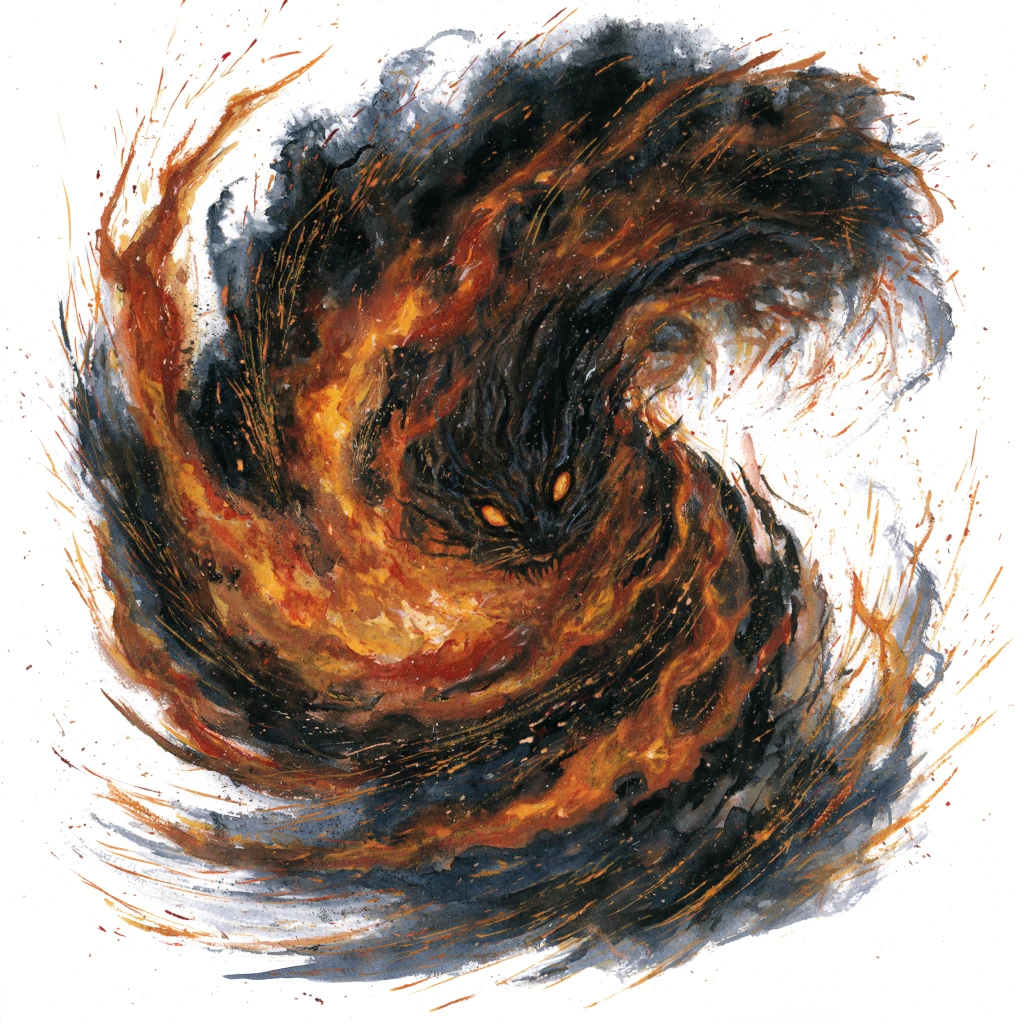
Firelasher | CE | Small | Air | Elemental | Fire | CR 13
Living Firestorms or firelashers are paraelementals of fire and air, but they are very different from the para-elementals of smoke. Firelashers are raging infernos of incandescent fire stoked up and spun about by the vortex of wind. Unstable and aggressive, living firestorms spend their time gliding across the pyromaniacal weather that flashes through the paraplane, which seems to be the only environment they are comfortable in. Outside of storms, firelashers seek to ignite as many things around them as they can. Despite their low intellegence, living firestorms seem to have an innate understanding of the fire—at least enough to know that a large enough conflagration will cause its own powerful storm to form.
Stats: [ D&D 3e | 4e ] Fiend Folio [3e] (renamed from living holocaust); Monster Manual [4e] p104
Mephit, Smoke
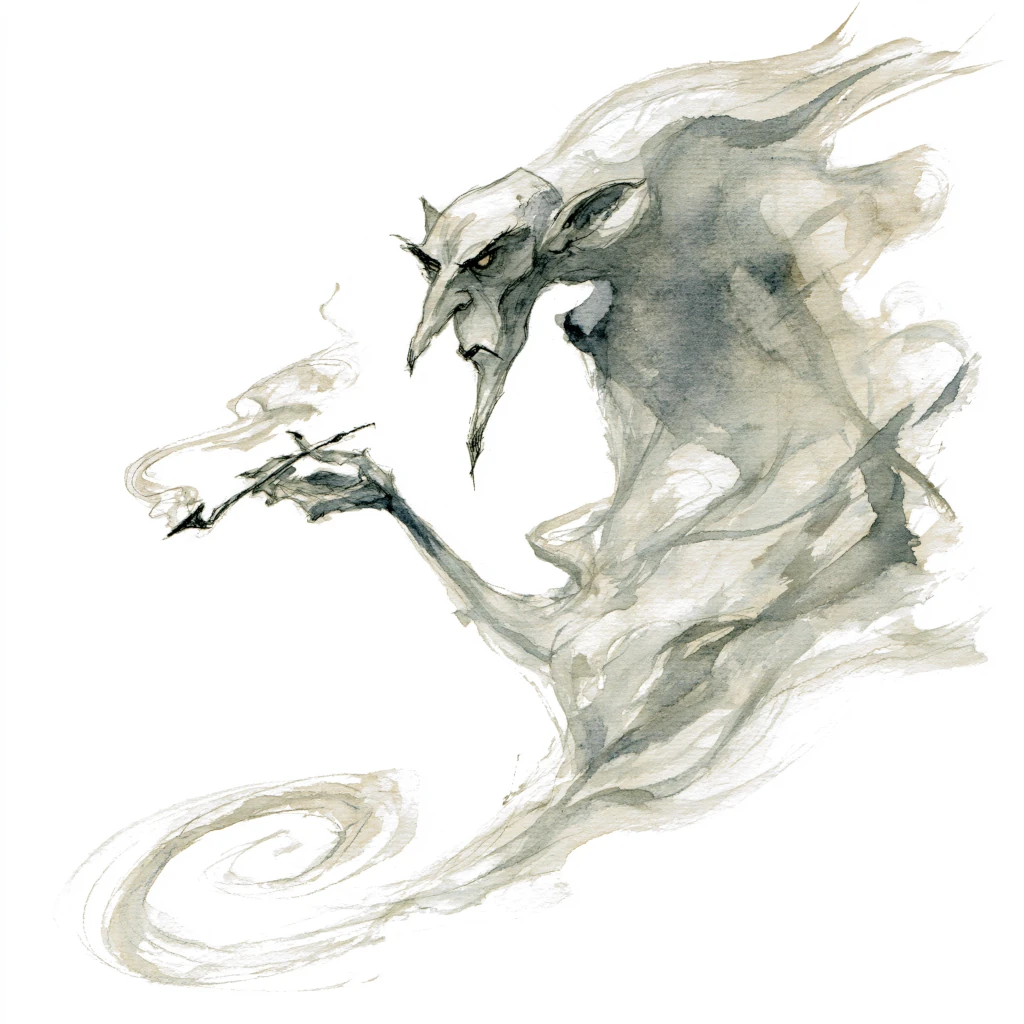
N | Small | Air | Elemental | Fire | Mephit | CR 1
Smoke mephits are barely corporeal humanoid-shaped clouds of smoke with long wispy noses and slender arms. They’re never seen without their smoking pipes, which their their most prizes, and sometimes only, solid possessions. While they spend much of their time invisible, any cutter with even half-a sense of smell can detect the characteristic sweet and smoky aroma—at least when they are on a plane with a normal atmosphere. They are lazy, evasive and prone to empty talk. Smoke mephits will waffle on endlessly about things that interest only themselves. A favourite pastime is to turn invisible, hide from their responsibilities, and sit around and tell crude jokes. These usually concern their creators, but anything is fair game. The only thing that gives them away is the smell of pipeweed.
Stats: [ D&D 2e | 5e | PF 1e ] Planescape Monstrous Compendium Appendix I [2e] p71; Tome of Horrors [5e, PF1e]
Mephit, Soot
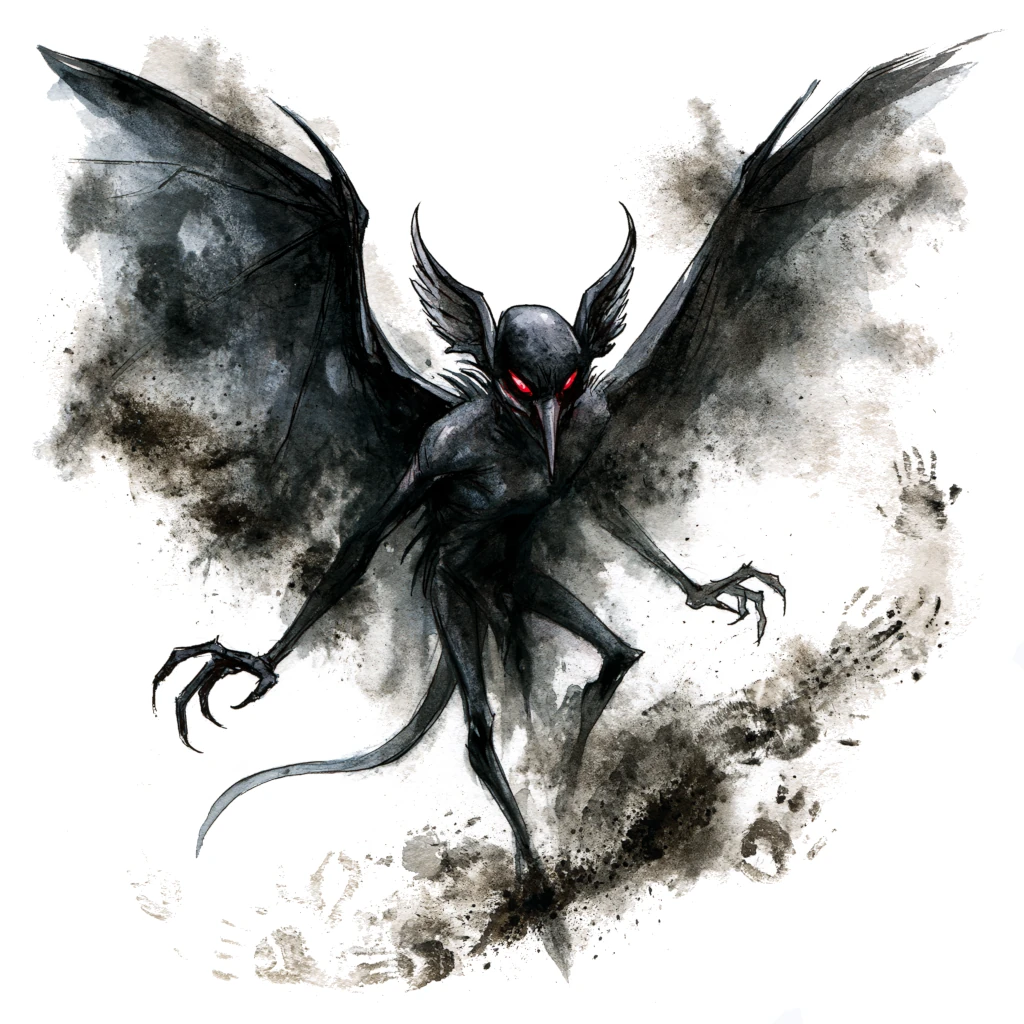
Uncommon | N | Small | Fire | Elemental | Mephit | Negative | CR 1 †
Soot mephits look like humanoid birds who’ve fallen down a chimney and been unable to escape. Completely smothered in choking black dust, they are more of a black blur of motion than a defined creature. They have sooty black wings and a coating on their skin that leaves marks wherever they go. The phrase “easy as tracking a soot mephit” is used by planewalkers for a reason. The only thing that isn’t pitch black is the pair of red eyes you can see glowering from the shadows at you.
Outcasts even on the plane of Smoke, soot mephits are looked down upon by smoke mephits because they are cursed with being corporeal. The smoke mephits believe their sooty cousins are the unwanted residue of the place; the detritus to be swept away and discarded. Love to trick other creatures, especially if it harms them or they can profit from it. They will set up elaborate traps and then settle down to watch their handiwork come to fruition. They’re hard to spot when they blend into the shadows, but once they’ve left it’s incredibly easy to see they were there, and incredibly hard to clean the evidence away.
Stats: [ D&D 5e ] At the Shrine of Othrys [5e]
Mephit, Tar
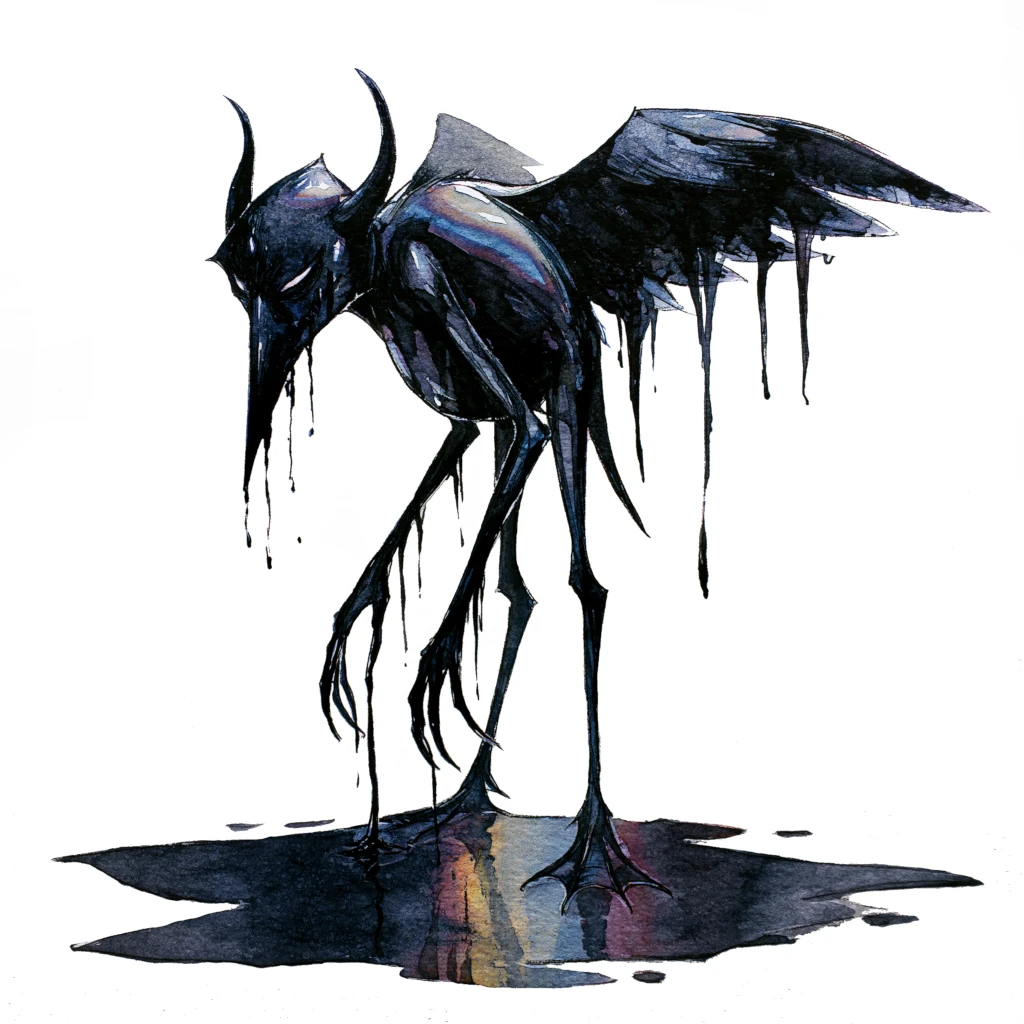
N | Uncommon | Small | Air | Earth | Elemental | Fire | Mephit | Water | CR 1 ‡
Tar mephits are formed from thick black tar and resin that never quite burns, but is always smouldering, emitting sooty smoke and a sickening stench. They look like seabirds that have been dunked in oil and then left there, their feathers matted and congealed by the thick bitumen. They are most at home in the Elemental Chaos, and apparently resulting from an unlikely union of Smoke and Ooze. Somehow even more self-important than other mephits, tar mephits are utterly convinced of their usefulness in every possible task. The thing they are best at however, is making everything sticky.
Stats: [ D&D 5e ] Rappan Athuk [5e]
Para-Elemental, Smoke
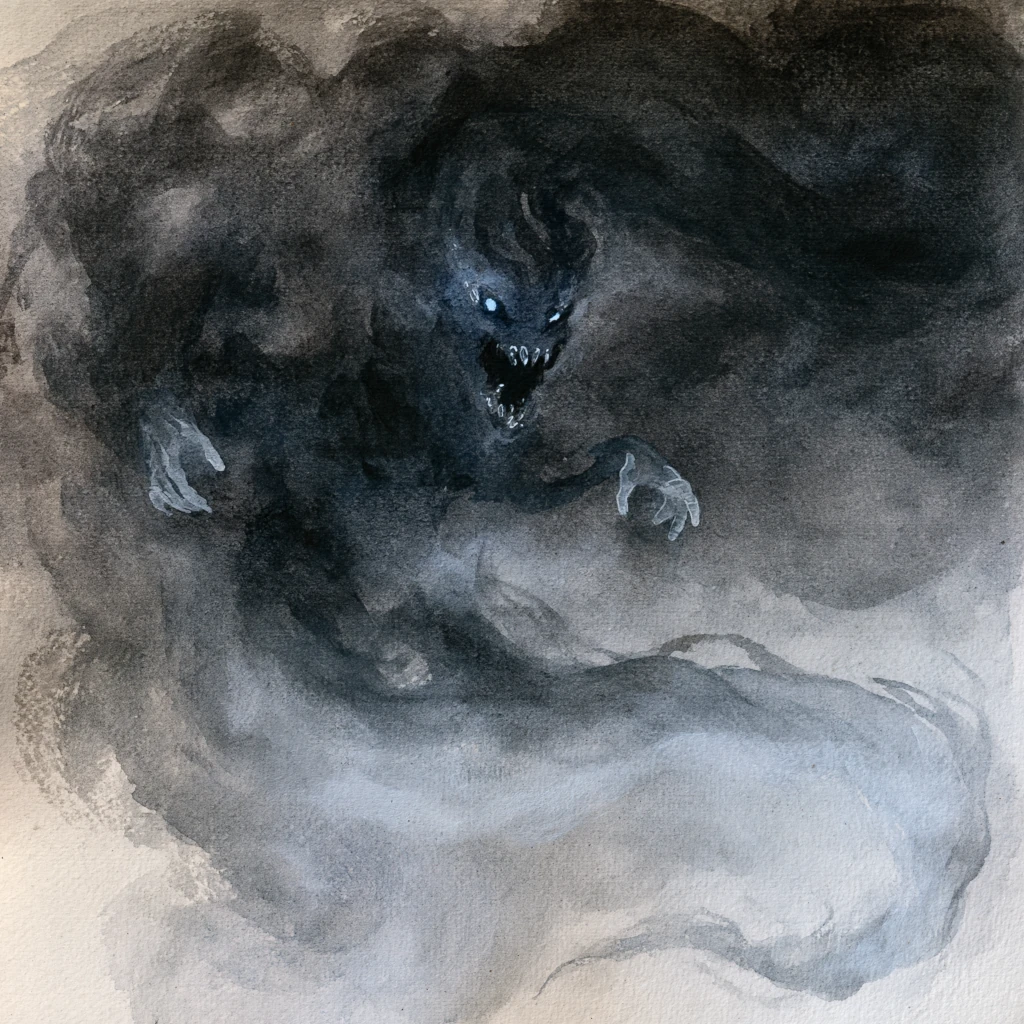
N’raaigib | N | Variable size | Air | Elemental | Fire | Smoke | CR varies
Smoke para-elementals, who call themselves the n’raaigib in Eshn—are vast, drifting bodies of black fumes, darker and more opaque than the nearly transparent steam quasi-elementals with which inexperienced travellers sometimes confuse them. They have no fixed anatomy—their edges billow and reform as wind currents carry them along, while occasional glowing embers suggest a hidden heart or glowing eye. They are among the plane’s most common large native creatures. They gather around bubbles of clean air leaking from the Plane of Air, treating these rare oases as beasts might gather around a watering hole. They consume the air and exhale more smoke, slowly poisoning the very refuge that sustains them. Smaller creatures follow their wakes, feeding on condensed soot they leave behind.
Most smoke para-elementals ignore Ehkahk, the arrogant smoke mephit who claims dominion over the whole plane, regarding his title as amusing audacity. Instead they belong, at least nominally, to one of the plane’s countless petty smoking kingdoms. Each of these has its own Fuming King, court, and constantly shifting borders. The political allegiance of a particular smoke para-elemental, however, tends to be as temporary as their forms. However, the djinn–efreet war has made these wandering kingdoms unwilling participants in a conflict they scarcely understand. Some paraelementals are bemused by the spectacle. They watch djinn and efreet perpetually charge at each other, clash, retreat, and return, as though observing sparks fighting inside a chimney. To such creatures, the war is irrelevant to the slow spread of Smoke, or even aids it, as the battlefield clashes inevitably produce explosions and fumes. Others feel genuinely threatened. Battles consume their air pockets, and fill their territories with weapons, corpses, and foreign magic. Djinn winds can tear a smoke para-elemental apart, while efreeti fire can create also violent updraughts that disperse their precarious substance. These para-elementals may obstruct both sides, engulfing patrols or smothering camps without distinguishing between rival banners. The most enterprising see opportunity. They hire themselves to genies as mercenaries, or assassins, using their speed to slipping past unseen, before forcing poisonous smoke into a victim’s lungs. Their loyalty lasts only as long as the contract, and payment is always made in clean air. Exhalation, the prominent efreet outpost near the Fire border, has repeatedly employed such creatures despite their unreliability.
Stats: [ D&D 2e | 3e ] Dungeon Magazine #95 p30; Inner Planes [2e] p88-90; Planescape Monstrous Compendium Vol. III [2e] p10,22,68,71; Manual of the Planes [3e] p68,184-185; Dragon Magazine #347 [3e] p56 (as smoke monolith)
Para-Elemental Beast, Sun
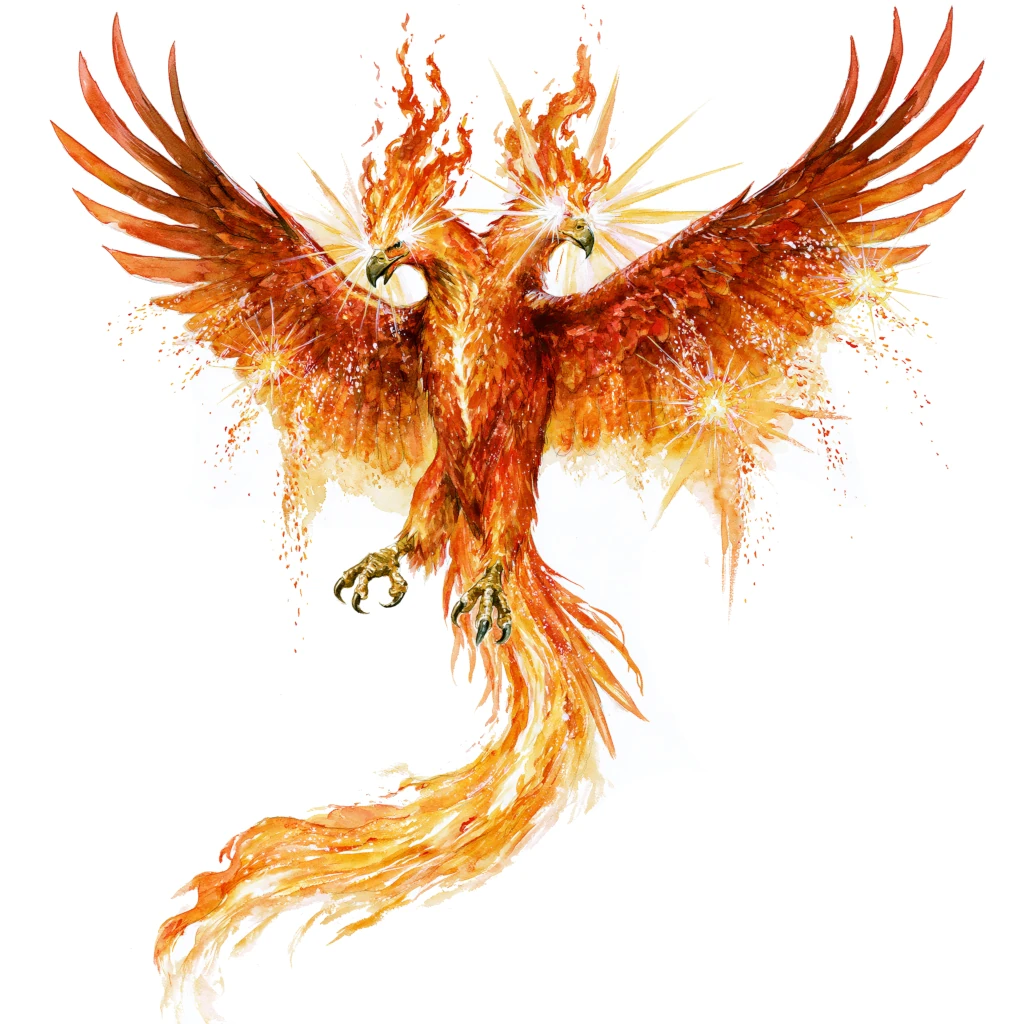
N | Rare | Large | Elemental | Fire | HD 9
Allegedly from some obscure demi-elemental plane, para-elemental beasts of sun (or simply sunbeasts) are birdlike elementals of air and fire. They are surrounded by an aura of blinding light that make it difficult to determine their true form, which is a two-headed bird of incandescent plasma. Despite how they look, sunbeasts have only one mind, and it isn’t particularly sophisticated—which makes them a prime target for summoners. In the Plane of Smoke, beasts of sun prefer to stay close to the border with the Radiance, or to bask in pockets of fire, for these creatures need bright light to survive.
Stats: [ D&D 2e ] Dark Sun Appendix II – Terrors Beyond Tyr
Phiuhl
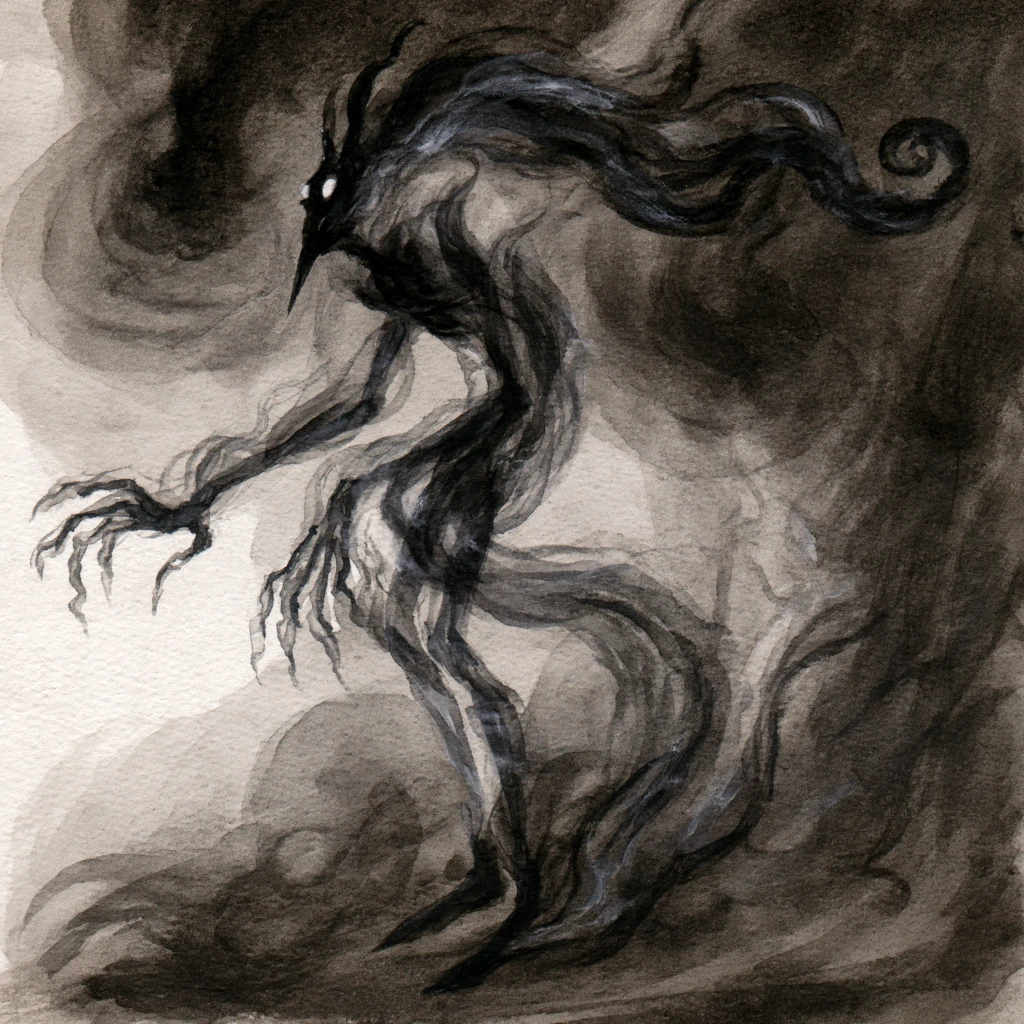
Vaporous Horror; Lingering Death | NE | Large | Aberration | Incorporeal | CR 11
Phiuhls [FEE-ool] are vaporous creatures from the Outer Plane of Gehenna, who sometimes enter the plane of Smoke through portals, then either find themselves trapped, or that they prefer the relative peace and quiet of Smoke to the constant threatening rumble of demonic volcanoes. Despite looking like elementals, they are definitely something else—something smarter and far more malicious. Not even the yugoloths seem to know the true nature of phiuhls. They seem to hang around in pairs, although lone phiuils are more common in Smoke than they are in Gehenna, lending credence to the theory that they are only accidental travellers to the Inner Planes. If you should encounter three phiuls, however, you are in trouble—for the third is a rare harvester of flame, a smaller but hotter cousin of the phuils who work alongside the pair. Some sages speculate that these harvesters might be immature phiuls accompanying their parents, which might explain why they defend it so vigorously, but this is pure speculation.
Stats: [ D&D 2e | 3e ] Planes of Conflict [2e]; Fiend Folio [3e]
Pigeon, Acid
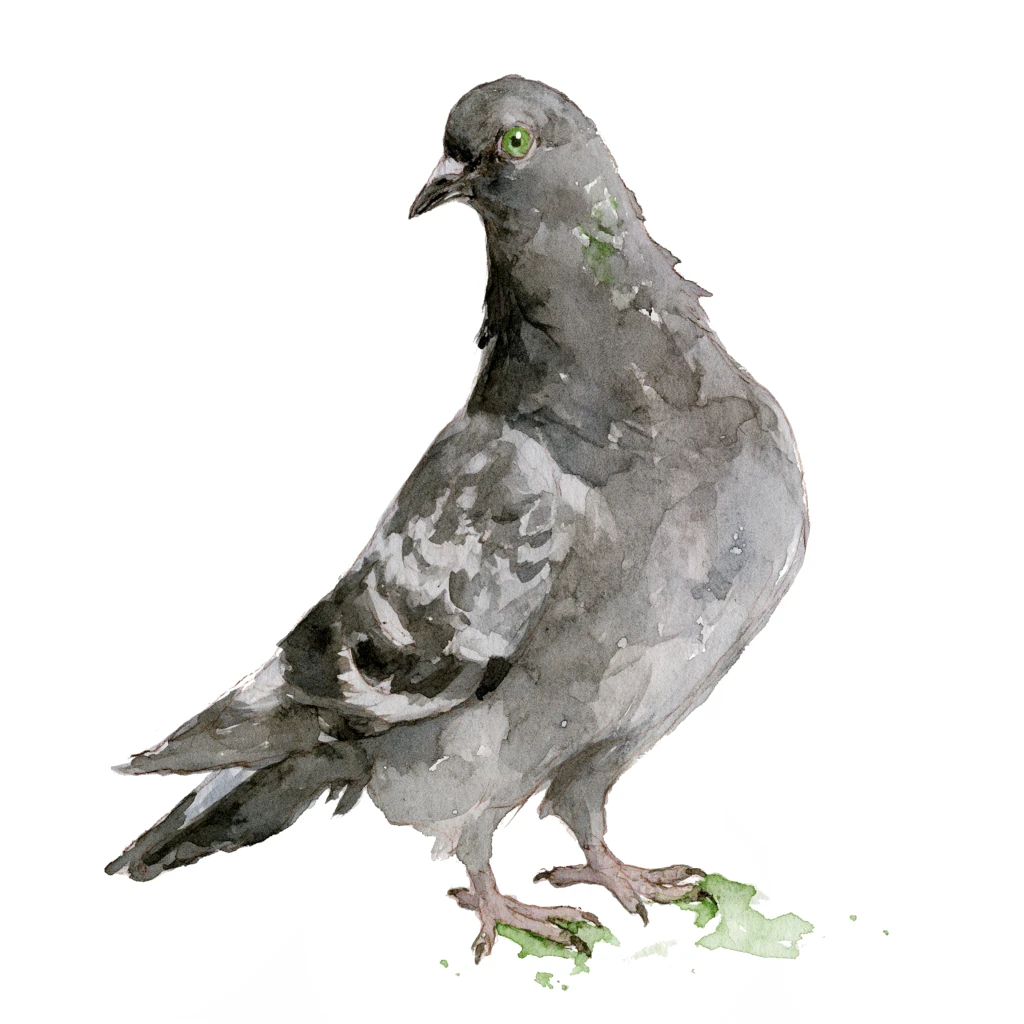
N | Small | Animal | CR -1
Acid pigeons are curious birds that have been imbued with acid, perhaps through some strange alchemical mishap or horrid laboratory experiment. The side effect of this transformation is the ability of this bird to safely breathe in the smoke, so naturally a subspecies of acid pigeons has colonised the para-plane. Something if a nuisance in Slaan, the acid pigeons taste so noxious that even xulgath baulk at eating them. With no natural predators, their numbers regularly reach plague-like proportions, until the City Council steps in to deal with the infestation.
Stats: [ D&D 2e ] Dragon Magazine Annual 3 [2e] p107
Ruvoka, Mazuku
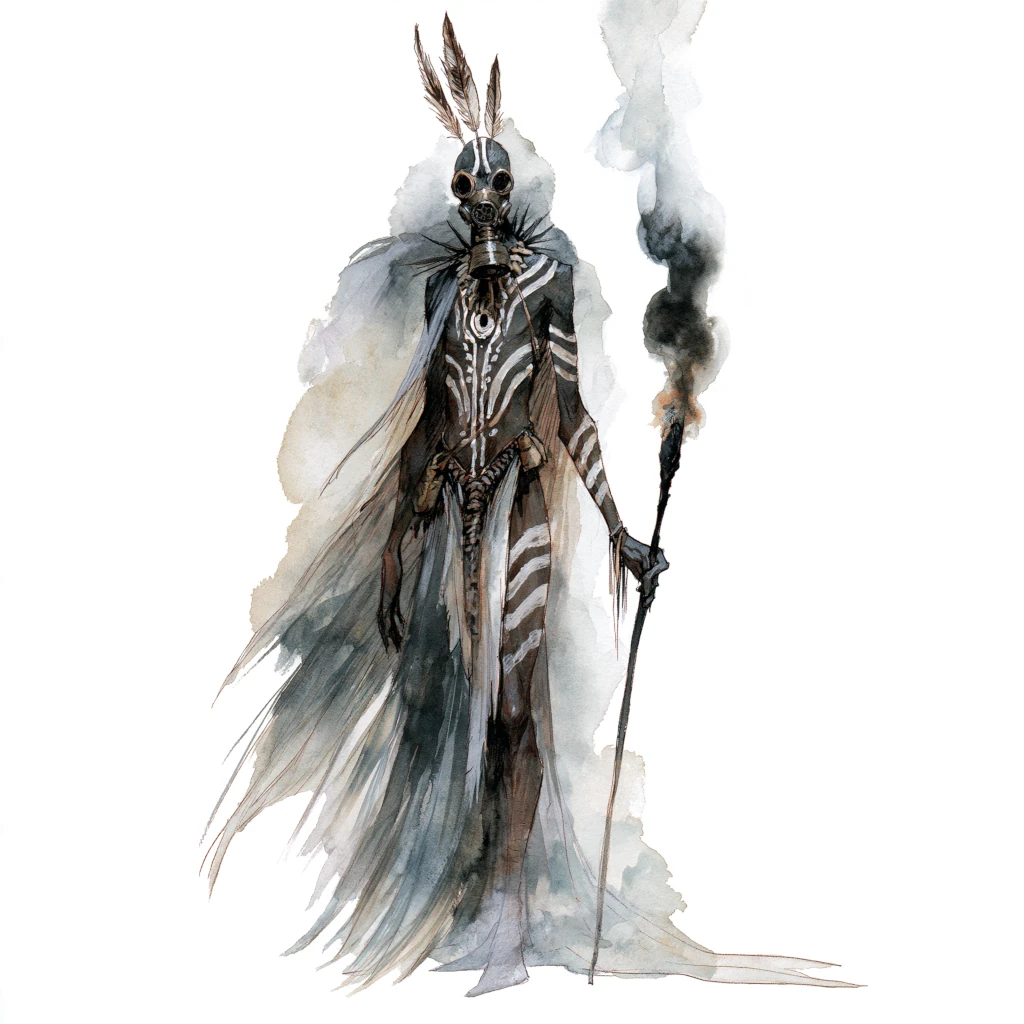
N | Medium | Air | Elemental | Fire | Humanoid | Ruvoka | CR varies
The best known ruvoka tribe of Smoke are the mazuku [ma-ZOO-koo]. They wear heat-resistant fabrics of dark grey and charcoal colours, often adorned with bone, patterns painted in white ash, and gemstones of polished obsidian. Over their faces they wear well-sealed gasmasks carved from blackened wood and fitted with glass lenses. These are treated as ritual objects but also practical protections, for the mazuku believe that to breathe the unfiltered smoke is to invite ancestral spirits into one’s lungs. To the mazuku, the smoke of the plane itself is a tool—they farm the perpetually smouldering fields of the plane by setting the crops alight to ripen the embercherries and charcorn—but also a sacred medium. Mazuku use smoke for sending messages, in smoking ceremonies where rare herbs and exotic spices are burned and inhaled, and as incense in religious rituals to purify their homes and temples, and guide the dead. Every smoke plume carries a message to the Dreamlands, and the mazuku capnomancers can read the shapes and eddies in the fumes to answer questions and predict the future. The mazuku share their smouldering world with great smog leviathans—these creatures are both hunted and revered by the mazuku: their rendered weightless fat fuels lamps that smoke without fire, their bones are carved into incredibly agile spears and arrowheads, and their migrations patterns are interpreted as omens.
Stats: [ D&D 2e ] Planescape Monstrous Compendium Vol. III
Smog Wraith
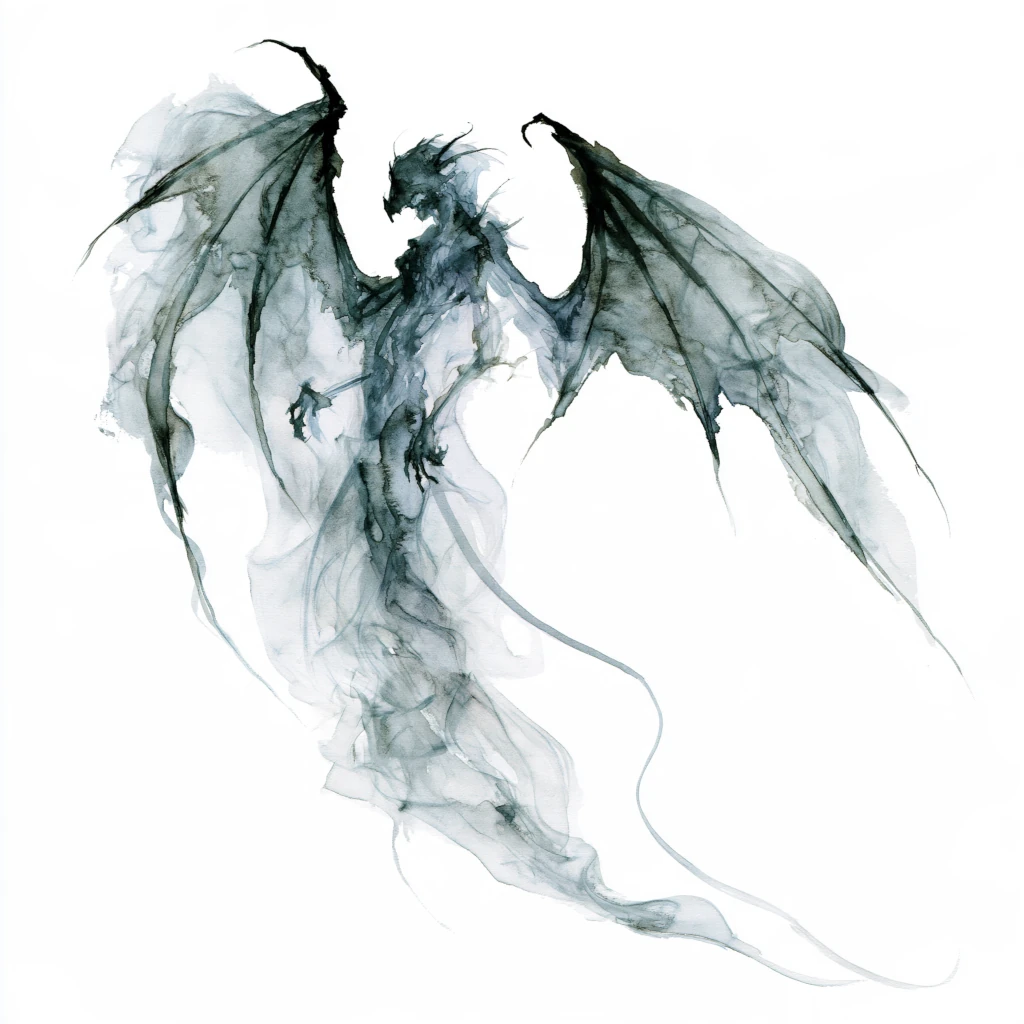
NE | Uncommon | Medium | Incorporeal | Undead | Wraith | CR 9
Smog wraiths are spirits of dead polluters of the environment, ironically finished off by their own noxious waste, or chemical fumes, rendered inseparable from the poison that killed them. The necessary spark of evil needed to animate one of these creatures comes from the dark heart of industrialists and polluters who treated the living world as raw material, and regarded its sickness as an acceptable cost. In death, their souls continue that work, though now it is their own bodies that spread pollution. These undead are actively amused by suffocation, and will pursue their victims creatures into enclosed spaces, seal the exits, and wait while panic does the work for it. It delights in the moment when a victim realises they are down to their last breath.
A smog wraith appears as a vaguely humanoid figure hidden inside a dense, greasy cloud. Its limbs stretch and collapse like columns of smoke, while its face may briefly form as a skull, a death mask, or the features it wore in life. Nothing remains stable for long. A hand dissolves into a tendril; a torso unravels into vapour; a mouth opens in the cloud and exhales fumes as another mouth forms within it. The surrounding smog is so thick that the corpses of its victims float within it, drifting like grotesque balloons.
Stats: [ PF 2e ] Pathfinder #180: The Smoking Gun [PF2e] p84
Smoke Haunt
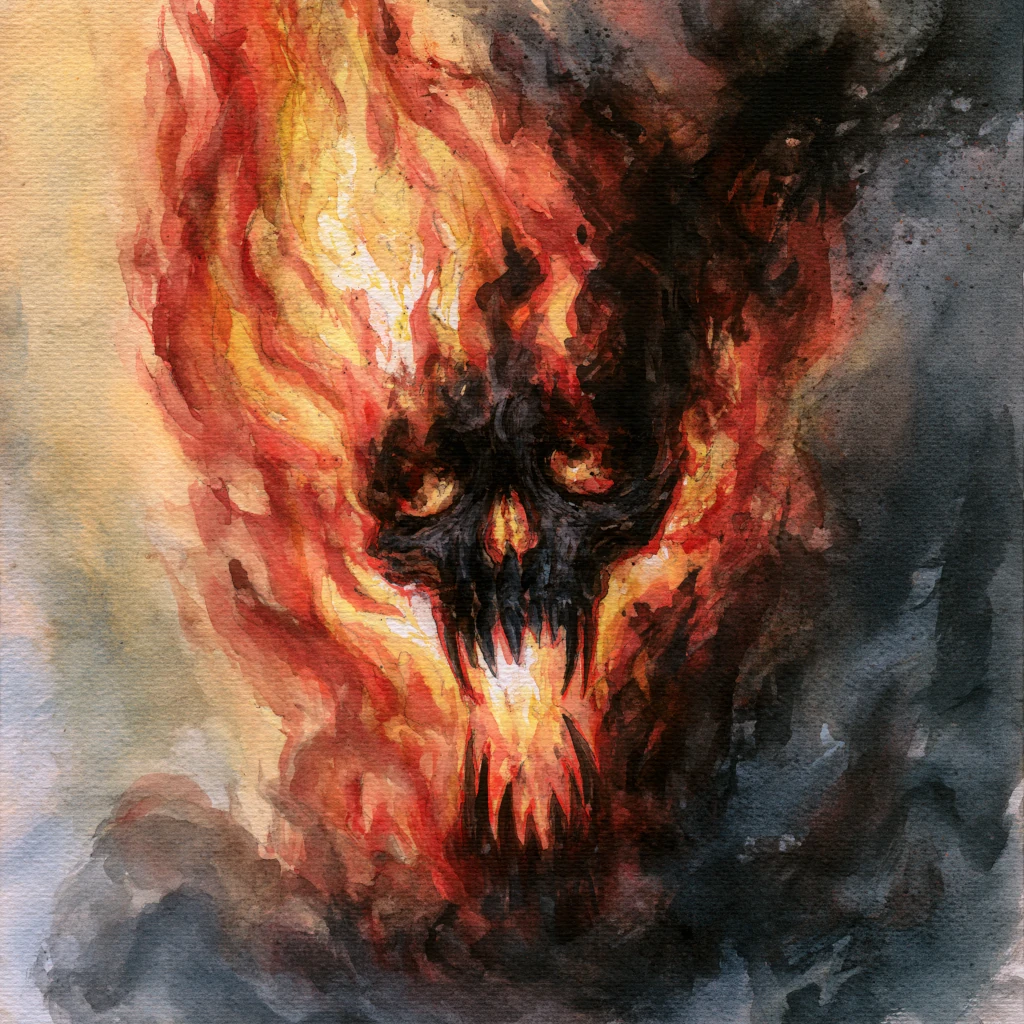
CE | Small | Fire | Undead | CR 4
Born from the spirits of unlucky travellers who died lost, cold and alone, their final hope fixated upon the promise of a fire. In death, that longing is twisted into a cruel parody—a smoke haunt appears as a small campfire that gives no warmth of its own, but saps the warmth from nearby creatures. At first, a smoke haunt looks like a normal camp fire, with flickering flames, the crackling sound of wood burning, and smoke rising in slow, hypnotic coils. Yet the scent is wrong. Instead of the smell of burning timber, they reek of charred flesh. Within the flames a blackened skull gradually becomes visible, its eye sockets wells of cold darkness.
A smoke haunt can sense natural fires across a considerable distance and may look through their flames, thus observing travellers long before they realise they are being watched. It can also pass from one fire to another in an instant. Its most dangerous power however is lifedrinking. Within its presence, living creatures feel a soothing warmth that is actually their vitality being drawn away. Victims may grow pleasantly drowsy and complacent. This makes the haunt a particularly insidious undead: why frighten its prey when it is more effective to persuade them to sit closer. Those who resist still feel their strength ebb, while those who do not may die without understanding what has happened. In the plane of Smoke they are drawn to the region known as the Embers. Planewalkers, you have been warned.
Stats: [ PF 1e ] Pathfinder #3: The Hook Mountain Massacre [PF1e] p81
Smoke Hound
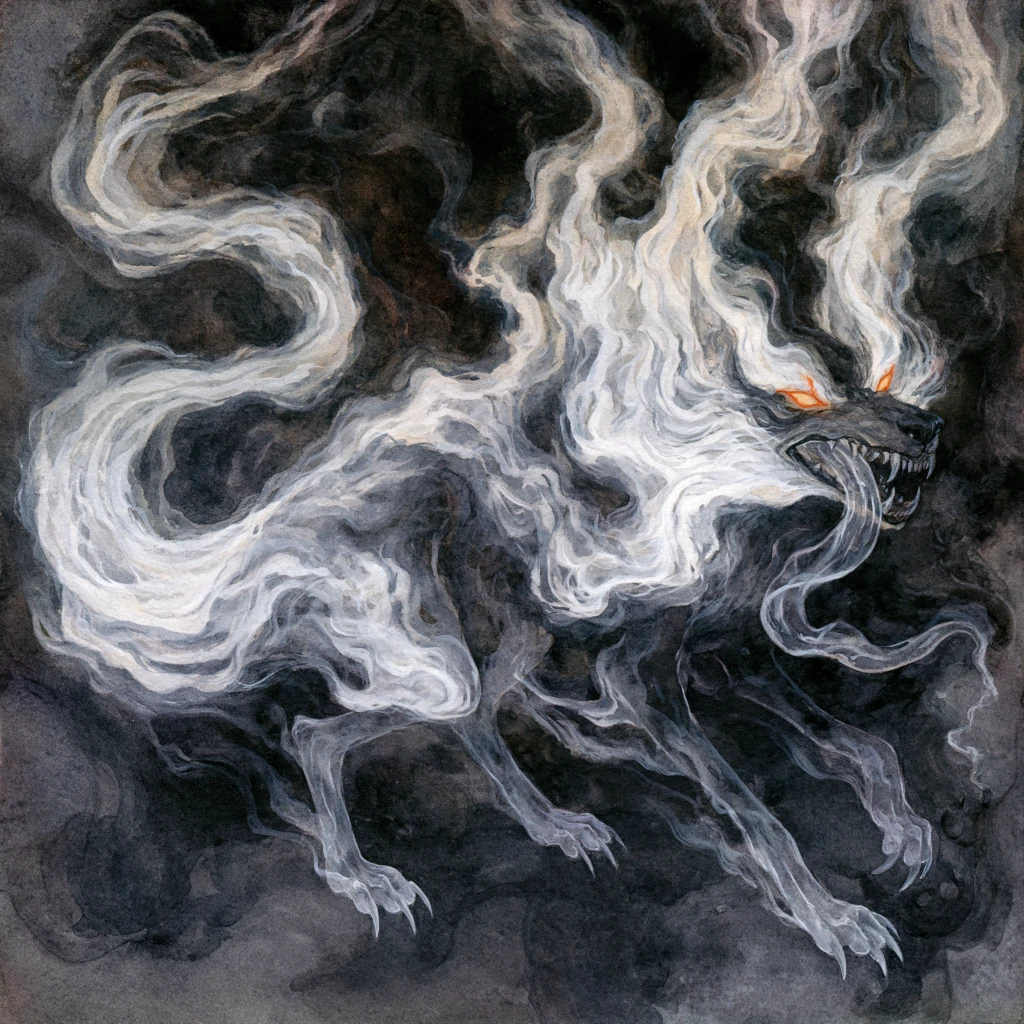
N | Medium | Air | Beast | Elemental | Fire | Incorporeal
Smoke hounds are not naturally-occurring elementals, and nor are they dogs—but their low-slung bodies, pointed muzzles, loping gait, and pack behaviour are close enough to canine forms that the name has endured. Each is made from living smoke,charcoal-black at the centre and thinner around the legs, ears, and tail, where the vapour frays into streaming white wisps almost like hair. When one moves it seems to pour over the ground rather than run. Smoke hounds display the familiar habits of predators. They circle, test, feint, and drive prey toward the rest of their pack. Unlike dogs however, they are eerily silent, communicating with each other through changes in their scent, and brief flashes of ember-red within the smoke. They are particularly effective hunters in terrain where their incorporeal bodies can flow around obstacles to ambush unexpectedly. Their preferred tactic is to seize a target in a bite and drag it away from its companions. The victim’s struggles create an opening for the remaining hounds, which then attack from multiple sides.
When trained, they understand spoken language but cannot speak, responding to simple vocal commands from their master. Ehkahk, the Smoldering Duke, keeps a large kennel of smoke hounds in his Choking Palace. Whether he bred them, shaped them himself from the fumes, or merely gathered naturally occurring packs is unknown. His hounds serve as his guards, trackers, and weapons of intimidation. When masterless, smoke hounds run wild through the plane, following no law beyond that of the pack.
Stats: [ D&D 4e ] The Plane Below [4e] p147
Smoke Sentinel
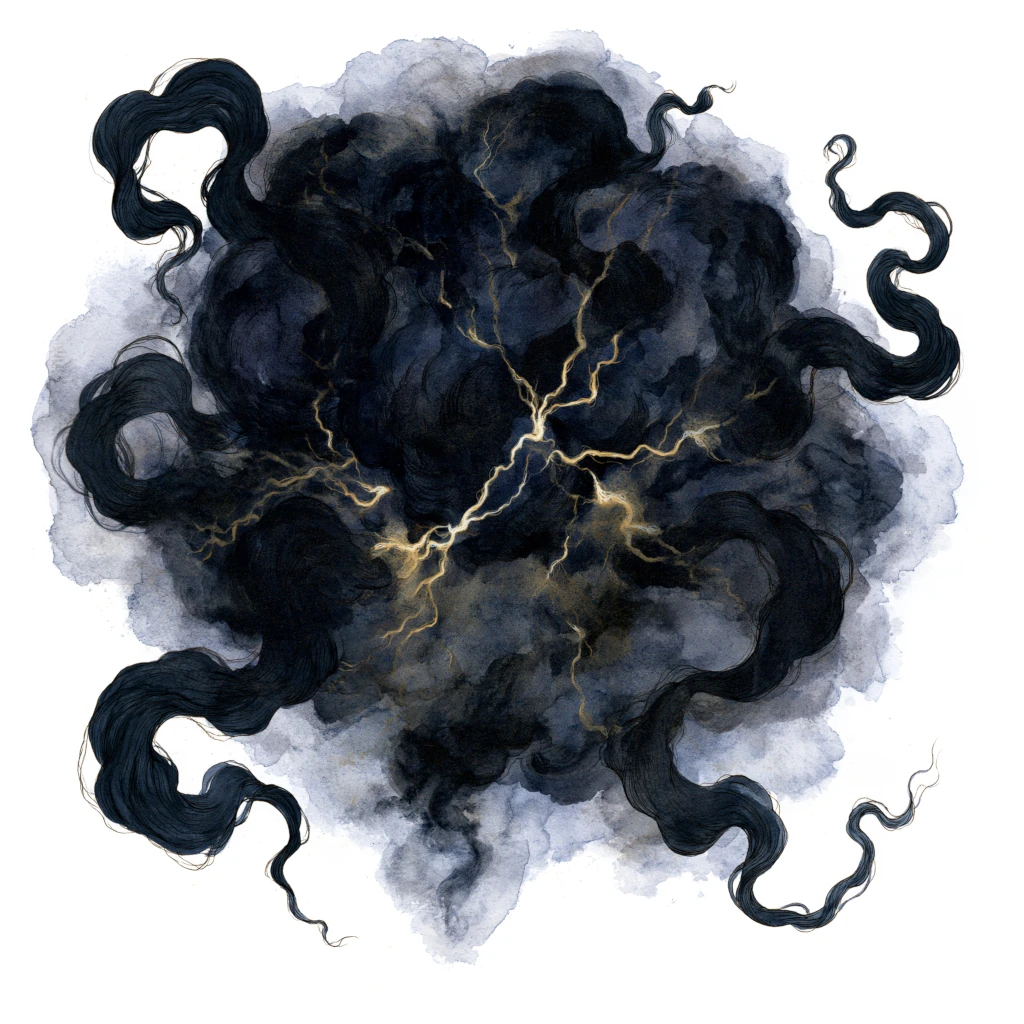
N | Huge | Construct | Incorporeal | CR 9
Smoke sentinels strange relics of an ancient empire. Sages from the prime world of Golarion claim their ancestors created them, but planar scholars suggest they are far more ancient, and perhaps first created by the hinn. Whatever their origin, smoke sentinels are constructs made not from stone, metal, or indeed anything solid, but from intelligent black smoke. Their bodies form a vast, opaque cloud that pulsates with internal lightning. The flashes reveal nothing within, although a steady mechanical whir can be heard deep within the fumes. They extend long tendrils, though these seem to be temporary concentrations of vapour rather than actual limbs.
Built to guard shrines, and valuables, smoke sentinels were once regarded as useful protectors, but it seems with the fall and withdrawal of the hinn, centuries of isolation have driven many smoke sentinels rather barmy. They do not usually attack immediately, instead reading the minds of those they meet and manifesting in the shape of a trusted friend or a dead relative. More often, they use illusions, false voices, and creeping fear to make the intruder retreat. Only when they identify a genuine threat—or receive a direct command—do they resort to violence.
Stats: [ PF 1e ] Pathfinder #122: Into the Shattered Continent [PF1e] p88
Smouldering Leopard
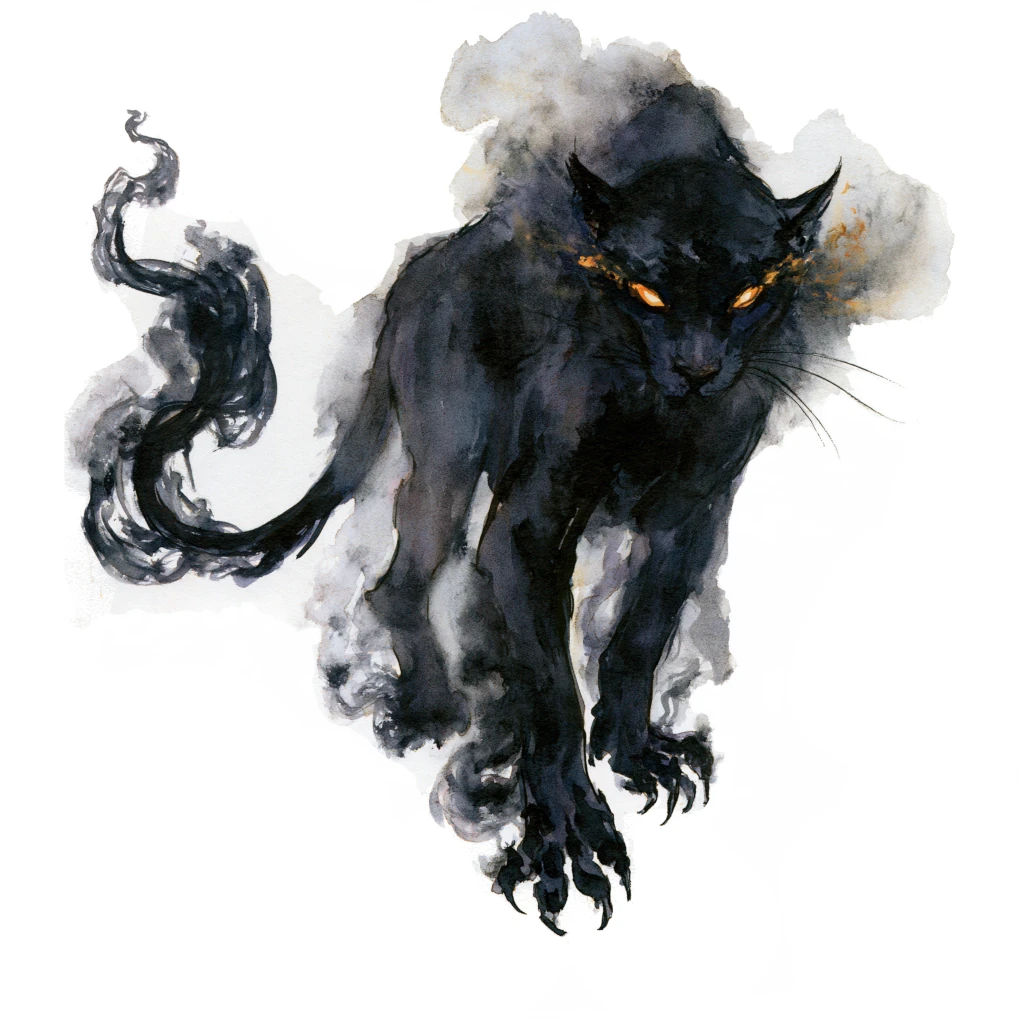
NE | Uncommon | Medium | Animal | Fiend | CR 3
Smouldering leopards are fiendish predators born in the Sulfanorum, the 303rd layer of the Abyss, where their ancestors hunted among sin-ash and pungent fumes. They’ve since spread through the planes, and on the plane of Smoke, they are most at home in the Scalding Skies region, basking in hot sulfurous vents, and scavenging the dead from the battlefields. They have the compact shape of a Prime leopard—broad shoulders, long limbs, a flexible spine, and an ever-waving tail. Their coats are soot-black, with each hair appearing singed at the tip and glowing faintly red near the skin. Smoke leaks from their nostrils and ears, while the eyes shine like burning coals. Their paws leave no prints, only a faint trail of soot. A smouldering leopard is not actually made of smoke, but smoke clings to it as naturally as a shadow. The haze surrounding its body forms a concealing veil through which the leopard can see clearly while other creatures struggle to follow its movements. Smouldering leopards prefer to hunt alone, relying on patience, stealth, and sudden violence. Smoke mephits sometimes trail them to feed on whatever remains after a kill.
Stats: [ PF 2e ] Pathfinder #151: The Show Must Go On [PF2e] p44
Sootbeast
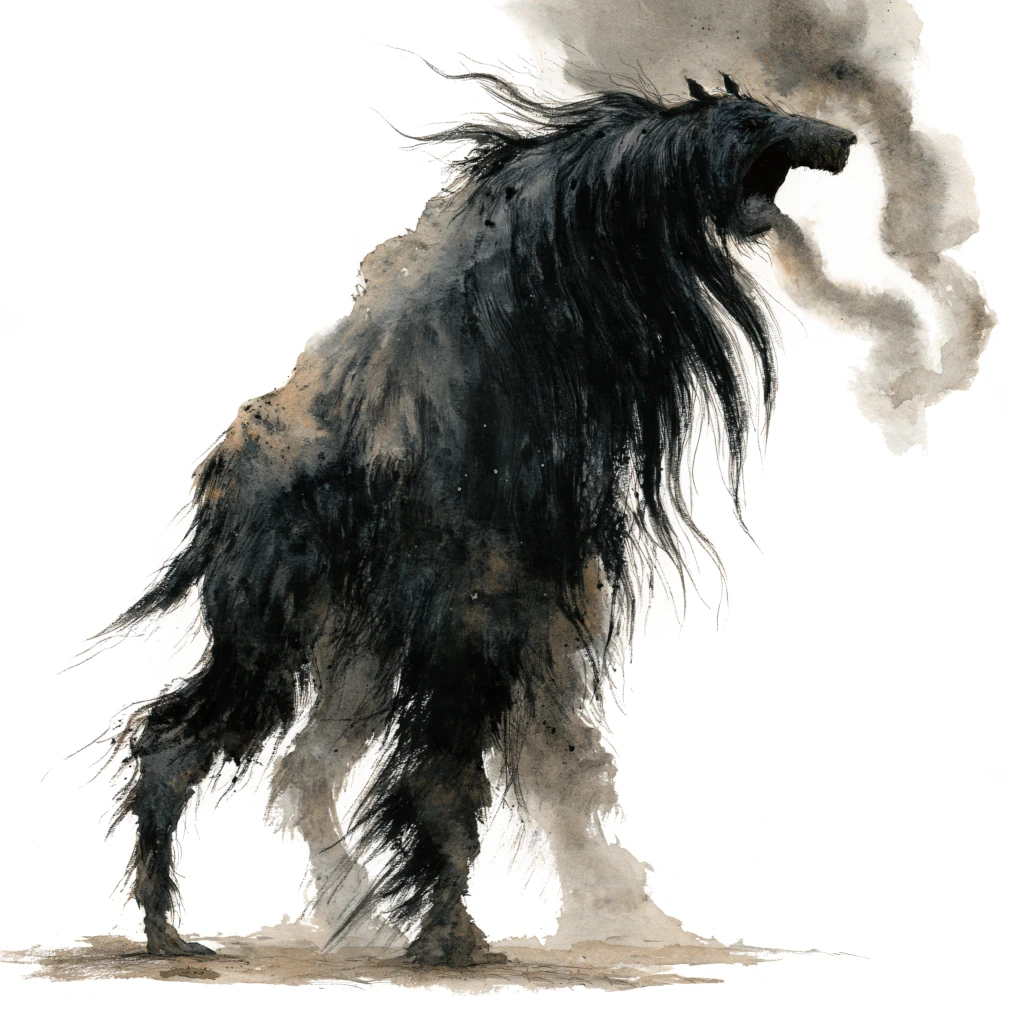
N | Large | Animal | Elemental | Smoke
Sootbeasts are the great lumbering herbivores of Smoke, ten-foot-long creatures shaped like shaggy moose-manatees with a hint of shambling hippo-bear in their heavy shoulders, small blunt heads, long upright bodies, and broad, ponderous feet. Their black hair is thick with soot, ash, and tar, which gives them the appearance of a walking heap of chimney sweepings. A grimy, toothless mouth hangs beneath their snout, continually belching slow curls of smoke. Despite their alarming size and filthy appearance, sootbeasts are among the slowest-moving and least aggressive large creatures native to the plane.
They are blind, relying on smell, hearing, and sensing changes in vapour pressure to find their way. In truth, a sootbeast is usually following the densest concentrations of nourishment. Some accounts describe them as herbivores, but plants are vanishingly rare in Smoke and the bulk of their nourishment comes from sucking in large amounts of smoke to strain out minute drifting organisms and tiny elemental larvae. Their place in the plane’s ecology is therefore closer to that of a whale than a land mammal, and they process enormous quantities of smoke to extract tiny sources of nourishment. Their movement stirs stagnant vapours and redistributes ash, while their exhalations release clouds carrying the sooty remains of whatever they have consumed. Smoke fundamentals often follow a sootbeast for this reason, feeding on the detritus it emits, and making their homes within its tar-slicked fur where they also consume soot mites in a symbiotic relationship.
Stats: [ D&D ] Inner Planes [2e] p89; Planescape Monstrous Compendium Vol. III [2e] p123 (no stats)
Troll, Chimney
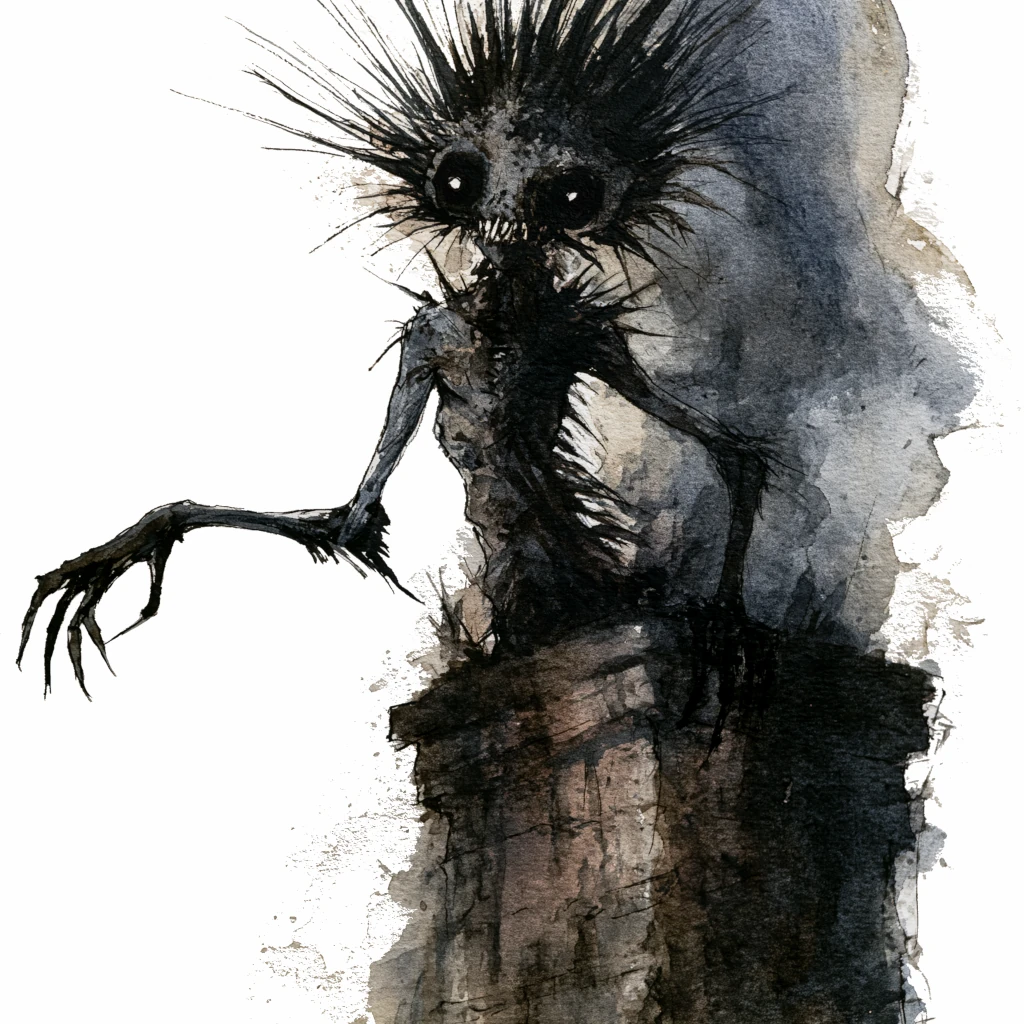
CE | Large | Humanoid | Giant | CR 2
Chimney trolls are gaunt, nine-foot giants whose pallid skin is filmed with soot and grease. Their limbs are unnaturally long and flexible, allowing them to fold themselves into impossible shapes and squeeze down chimneys that much smaller creatures would struggle to fit into. A pair of beady black eyes peer from beneath a brow crusted with ash, while their mouths and nostrils constantly leak thin threads of smoke. They weigh far less than their height would suggest too, as though hollowed out by a curse of perpetual hunger.
Thought to be originally from the Embers region of plane of Smoke, they have adapted to become an urban species, haunting the rooftops of cold burgs across the multiverse where hearths burn. A chimney troll follows the smell of fire with the desperation of a starving animal, for warmth means creatures, and creatures mean food. Unlike their Prime troll cousins, chimney trolls do not fear fire, in fact, their very lives depend on it—and this ancient curse has separated chimney trolls from their kin. While ordinary trolls can regenerate any wound unless it was caused by fire, chimney trolls are the opposite: their bodies cannot heal naturally at all, and exposing their flesh to flames allows them to regenerate.
Stats: [ PF 1e ] Daughters of Fury [PF1e] p52
Vapour Rat
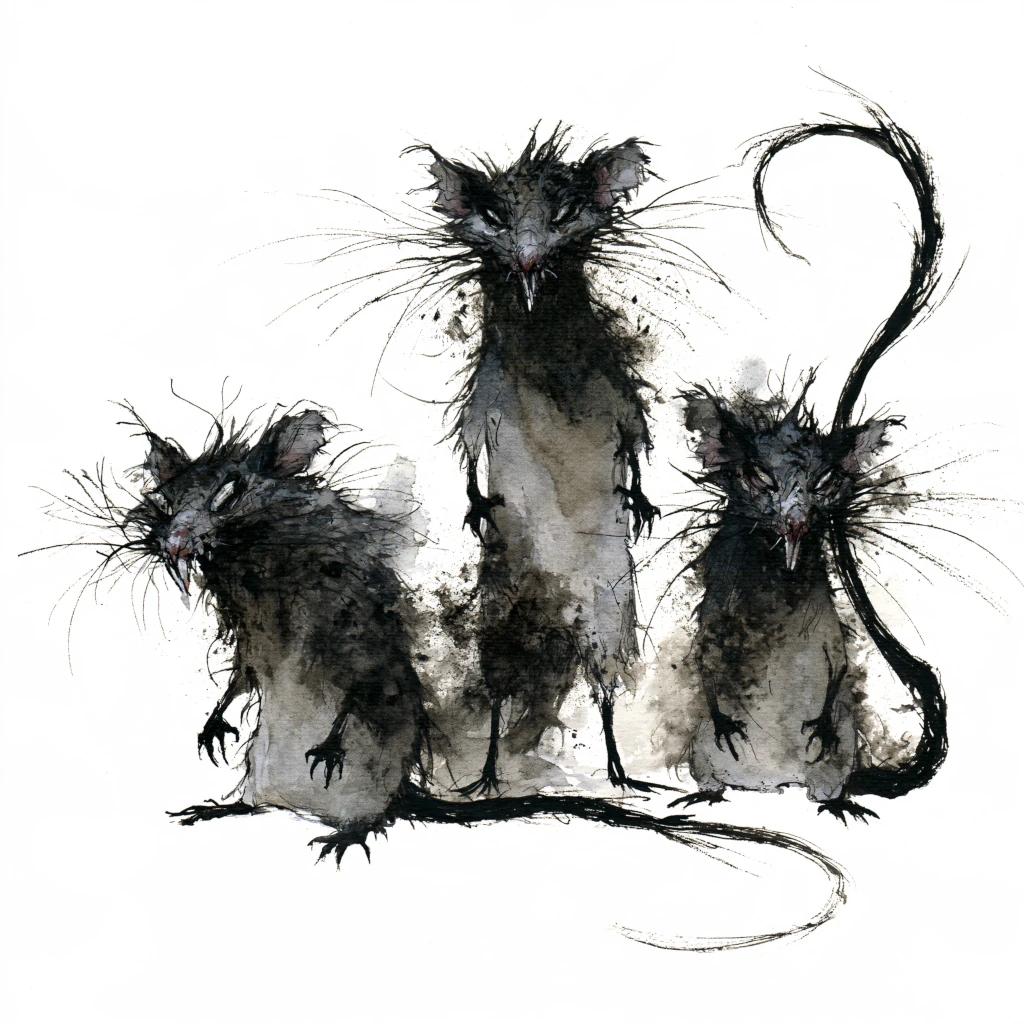
CN | Tiny | Beast | Incorporeal | Swarm | HD 2
Vapour rats on the plane of Smoke are dirty grey rodents whose ordinary appearance conceals an extraordinary adaptation. They possess the pointed snout, naked tail, bright eyes, and restless movements of giant rats, but their bodies are not entirely solid. Their fur is damp-looking and translucent at the edges, as though made from condensed mist. A faint haze clings to them, especially around their whiskers and paws, and their outlines blur when they move quickly. They are found inhabiting cloud islands across the planes—as well as the elemental planes of Air, Smoke, and Steam, vapour rats also inhabit the cloudlands of the Outlands, Ysgard, and Prime worlds. It seems they love to nest in the soft, downy cloud-stuff that these semi-solid islands are composed of. Vapour rats are not only able to fly, but they can also assume a gaseous form. They do this when they need to hide, when wounded, or drift on the wind from one cloud to the next. Vapour rats are nervous, will defend themselves with a vicious nipping bite, if threatened. Killing one causes the little pike to burst into a puff of noxious fumes, so ratcatchers be warned. Experienced cloud-dwellers use long poles, nets, or ranged attacks to ward off infestations, while careless predators often kill one rat only to stagger helplessly as the rest of the colony escapes.
Stats: [ D&D 2e ] Monstrous Compendium Greyhawk Appendix [2e]
Zeitgeist
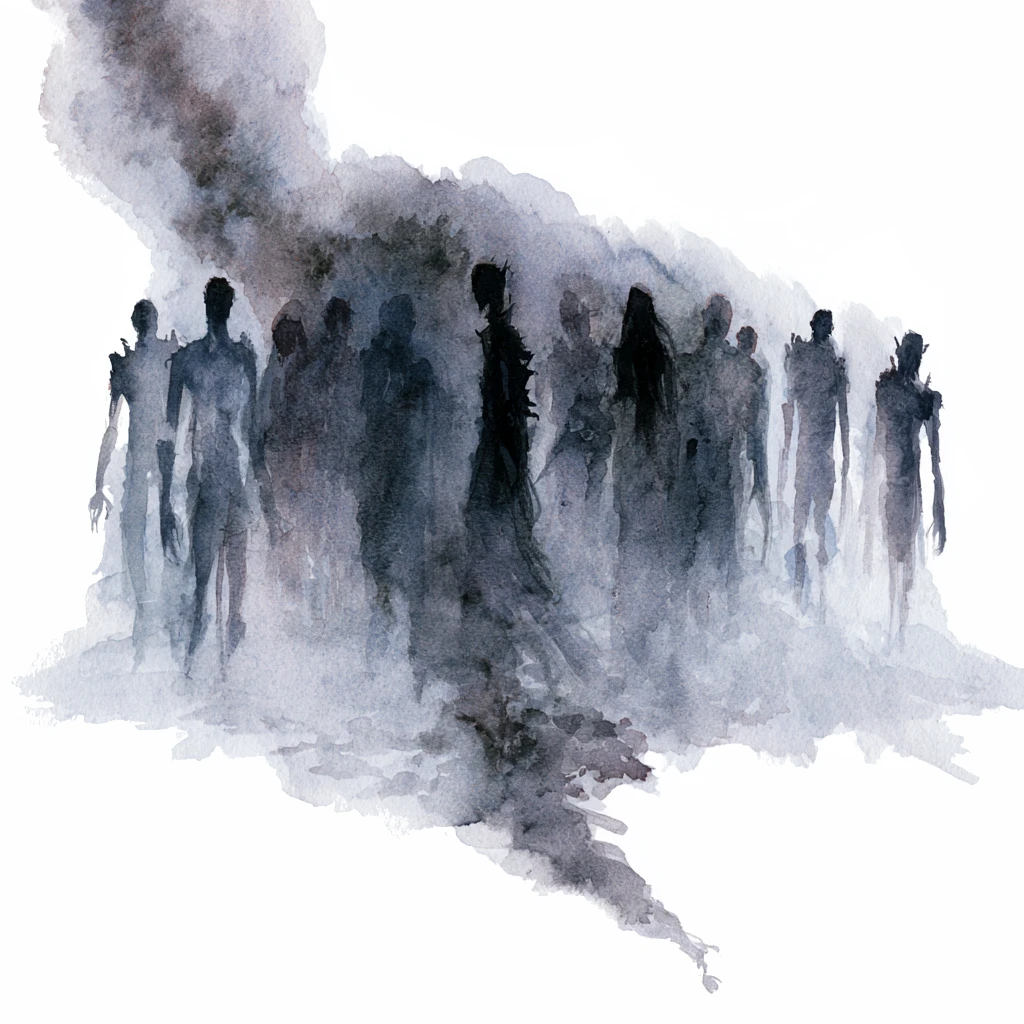
Alignment varies | Huge | Fey | Incorporeal | CR 23
A zeitgeist is the living spirit of an entire burg—a strange, phantasmal fey creature that is generated by the accumulated lives, habits, fears, ambitions, and grudges of an urban population. A zeitgeist protects its city, but it this does not necessarily extend to individual citizens. It sees itself as a protector of the burg, but its attempts to do this may result in harm to the citizens. Its mood is influenced by the prevailing feeling of the population—if citizens are scared, so is the zeitgeist, and if they are angry, it also grows angry—and it might lash out at random targets. During a siege, it may attack both armies because both threaten the city; during a riot, it may embody the anger of the mob and destroy the very district that angered it. Its alignment usually reflects the city’s dominant character, but crisis tends to pull it toward chaotic neutrality—and these are the times when the zeitgeist is most likely to manifest.
The zeitgeist is usually invisible, although cutters able to perceive invisible things describe a vague humanoid bank of mist with indistinct figures blurring into one another. On the rare occasions a zeitgeist manifests, it can adopt one of three forms: a large mob of humanoids, an enormous cloud of rolling semi-solid smoke, or a giant humanoid figure composed of rocks, detritus and even whole buildings. Whatever the form it chooses, its only priority is to defend the city.
Not every burg in Smoke has a zeitgeist, but many do. The burg of Carandúnë in the Sea of Stars has a particularly active zeitgeist, driven by the paranoia of the burg’s kharadrow residents. There is also one in Slaan, although it has not manifested in living memory—although some graybeards wonder whether the mysterious rulers of the burg might actually be the zeitgeist. Outside of the plane, some wags have wondered whether the Lady of Pain herself is the zeitgeist of Sigil. If she is not, then perhaps that burg does not have one.
Stats: [ D&D 3e ] Cityscape [3e]
See Also
Canonical Sources: Start with the excellent Planescape Inner Planes [2e] book. Other references from D&D and Pathfinder lore are mentioned on the relevant entries.
Other Sources: Margarita and Jon Winter-Holt.