[ Water ] [ Mapping Infinity | Pockets | Bestiary | Flora ]
[ Water Elementals | Elementaloids | Gadabouts | the Life Aquatic A—K | L—Z | Visiting Swimmers ]
The Life Aquatic (A—K)
The imagine a sea so deep that even the largest of sea monsters can completely disappear into it. It teems with life: elemental organisms, marine animals, water-breathing outsiders, and aquatic peoples who have migrated from other worlds and settled. This is a gathering of the creatures encountered in these waters, from curious tritons to merfolk, sahuagin, aboleths, krakens, and nameless leviathans. Some came to the Deep Water seeking refuge, trade, conquest, or a home beyond the reach of mortals; yet others were reshaped by the currents and pressures of the plane itself. Here you will find a menagerie of sea creatures, sea monsters, and aquatic abominations. There is always something moving in the deep.
See also: Gadabouts of the Inner Planes — creatures who may be found on any Inner Plane.
Abaia
N | Huge | Aquatic | Magical Beast | CR 10
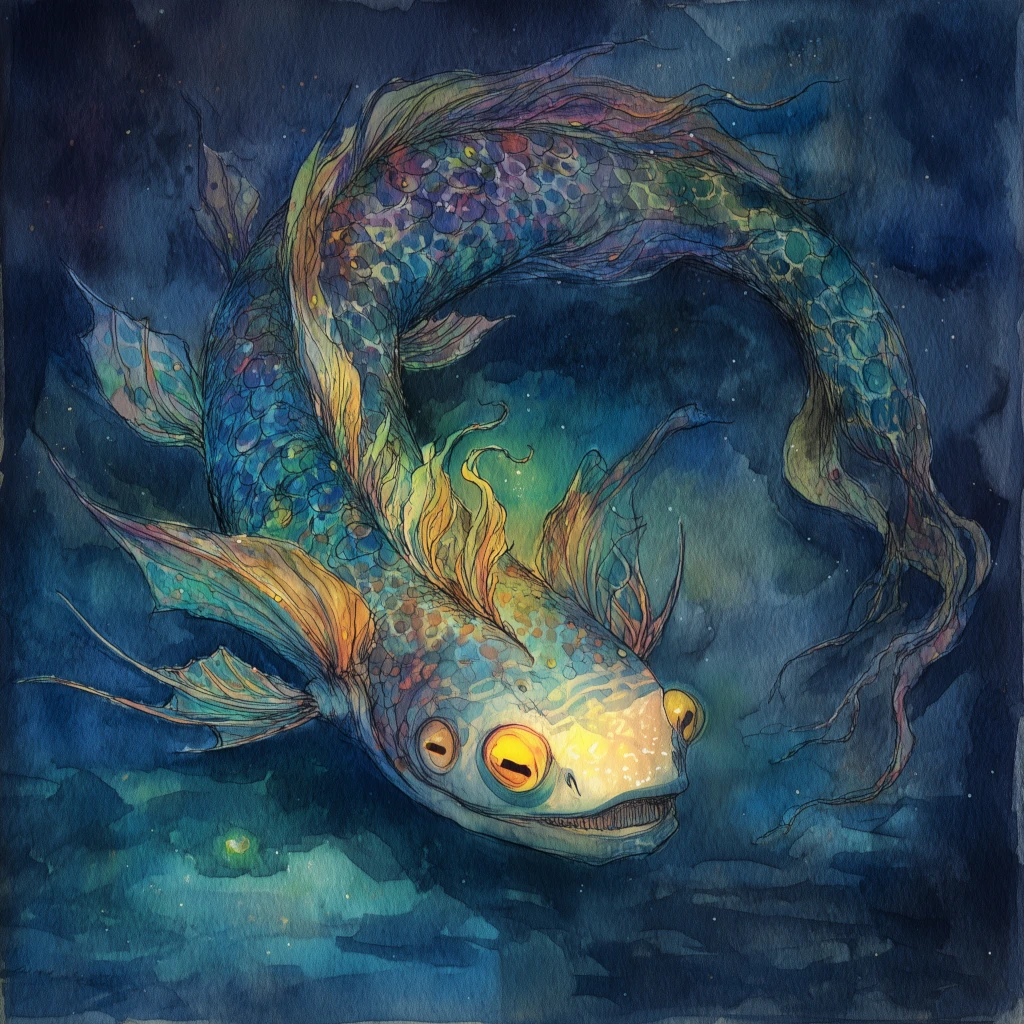
The awe-inspiring abaia [ab-EYE-uh] are enormous magical eels that command the watery depths with uncanny wisdom. Originally from the Feywild, they’ve since spread to oceans across the planes. Their iridescent scales shimmer in the half-light and their four eyes fluoresce an eerie yellow-green. On the Prime, abaias dwell at the bottom of lakes, and consider all aquatic life under their protection. Mortal interlopers who threaten this harmony are likely to stir these guardian to ferocious wrath—some tales claim a disdainful flick of an abaia’s tail can birth a tidal wave. On the Plane of Water they protect innocent sea creatures from poachers and over-fishing—and they are ancient enemies of the aboleth. Abaia are able to swallow magical items and activate them from within their gizzards, so woe betide a planewalker who tangles with an abaia who’s swallowed a wand of lightning.
Stats: [ PF 1e ] Bestiary 4 [PF1e] p7
Aboleth
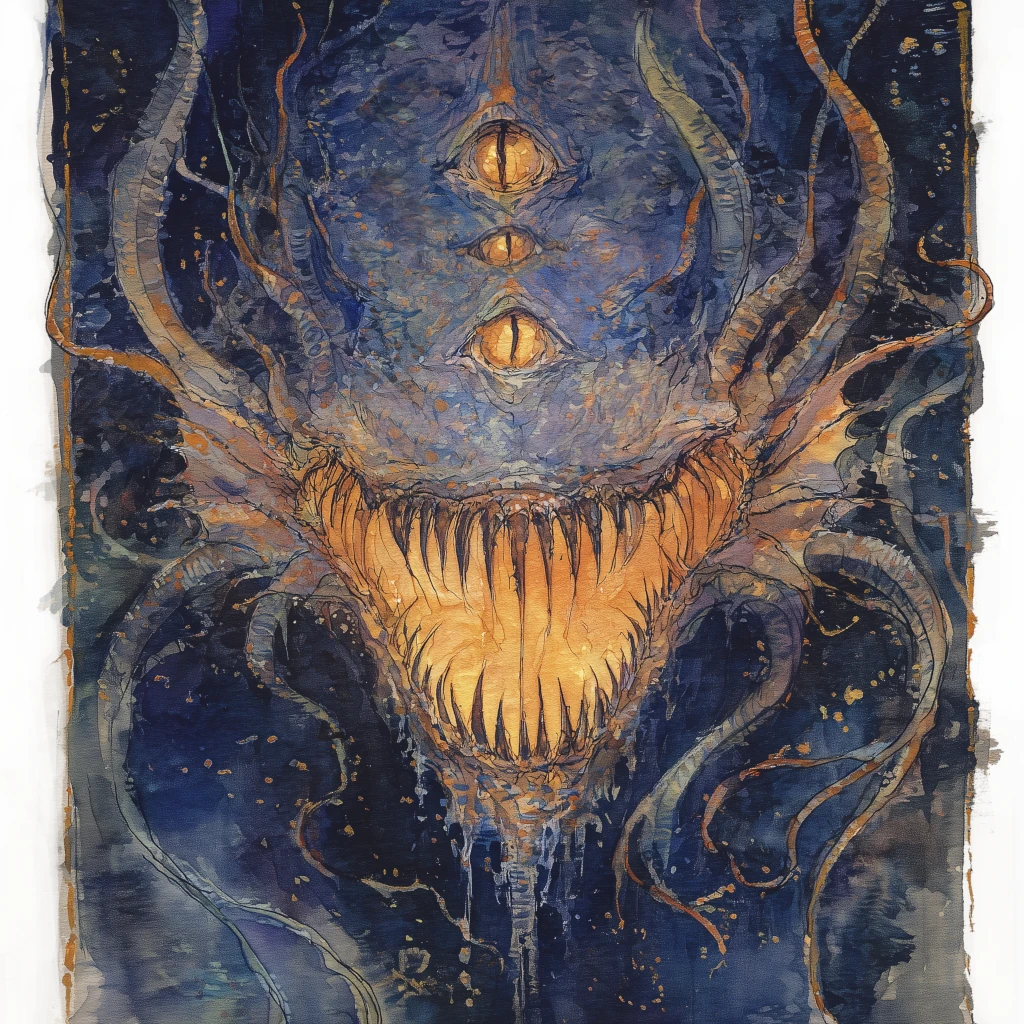
Alghollthu | LE | Uncommon | Huge | Aberration | Aquatic | CR 7+
Sinister, unimaginably ancient, and utterly alien, the aboleth (who call themselves alghollthu in their own vile tongue) is one of the most infamous masterminds inhabiting the Big Tank. Fortunately for everyone (except primes), aboleth tend to prefer the claustrophobic confines of deep flooded caves to the open waters, but a number of them certainly exist here. Their massive, eel-like bodies are lined with writhing tentacles and dominated by lidless, luminous eyes. They exude a dark aura of intellect and malevolence, their minds a roiling abyss of cunning, hatred, and occult knowledge. Aboleth society depends on the enslavement of lesser beings. In this way a small number of aboleth create vast networks of thralls, while secretly competing in inscrutable plots with others of their own kind. Legends hold that they ruled subterranean oceans long before the gods themselves appeared. Each aboleth possesses a flawless racial memory of these aeons, fuelling both their arrogance and their insatiable desire to reclaim lost empires.
Some aboleth are able to veil themselves in the form of humanoids and pass undetected. Also masters of magic, these terrible beings call themselves vidileth, savants or veiled masters. They are the true rulers of the race.
Stats: [ D&D 2e | 3e | 5e | PF 1e | 2e ] Monstrous Manual [2e]; Monster Manual [3e]; Monster Manual 2025 [5e] p12; Bestiary [PF1e] p8; Bestiary [PF2e] p14 (as alghollthu)
Adaro
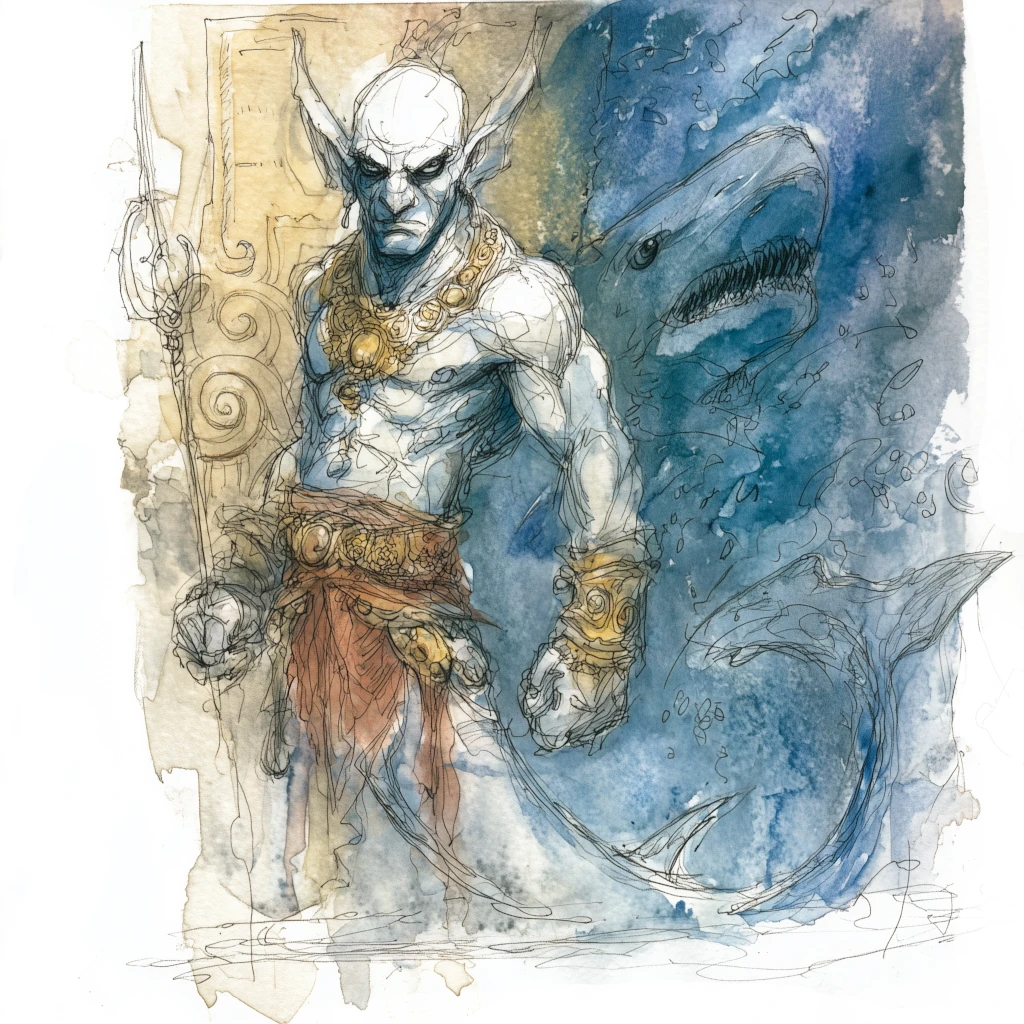
NE | Medium | Amphibious | Monstrous Humanoid | CR 3
Fearsome shark-like merfolk, adaro [add-ARE-oh] are known for their strange relationship with rain and storms. Their sleek, muscular bodies blend the predatory grace, cruelty and cunning intelligence. They have razor-sharp teeth which gleam like broken coral, cold black eyes, and prominent dorsal fins that allow them to cut through water with terrifying speed. Adaro tribes roam the Prime seas in nomadic bands, revering storms and rainfall as sacred—during such weather, they enter a battle-frenzy that transforms them into nearly unstoppable killers. They communicate telepathically with sharks, treating these lesser predators as scouts and allies, and hunt with poisoned spears tipped with toxins harvested from the deadly nettlefin pufferfish. The Plane of Water surprisingly acts as a place of respite for these stereotypically brutal creatures, because when cut off from rains and storms, adaro are somewhat calmer—although still just as malicious.
Stats: [ PF 1e | Playable ] Bestiary 3 [PF1e] p7, Pathfinder #38: Racing to Ruin p80; Blood of the Sea [PF1e] p16 (playable ancestry). Mythwatch: The adaro originates from the mythology of the Solomon Islands, particularly from Makira island, where they are thought to be ghostly merfolk who committed evil deeds during their lives.
Anemone, Sea
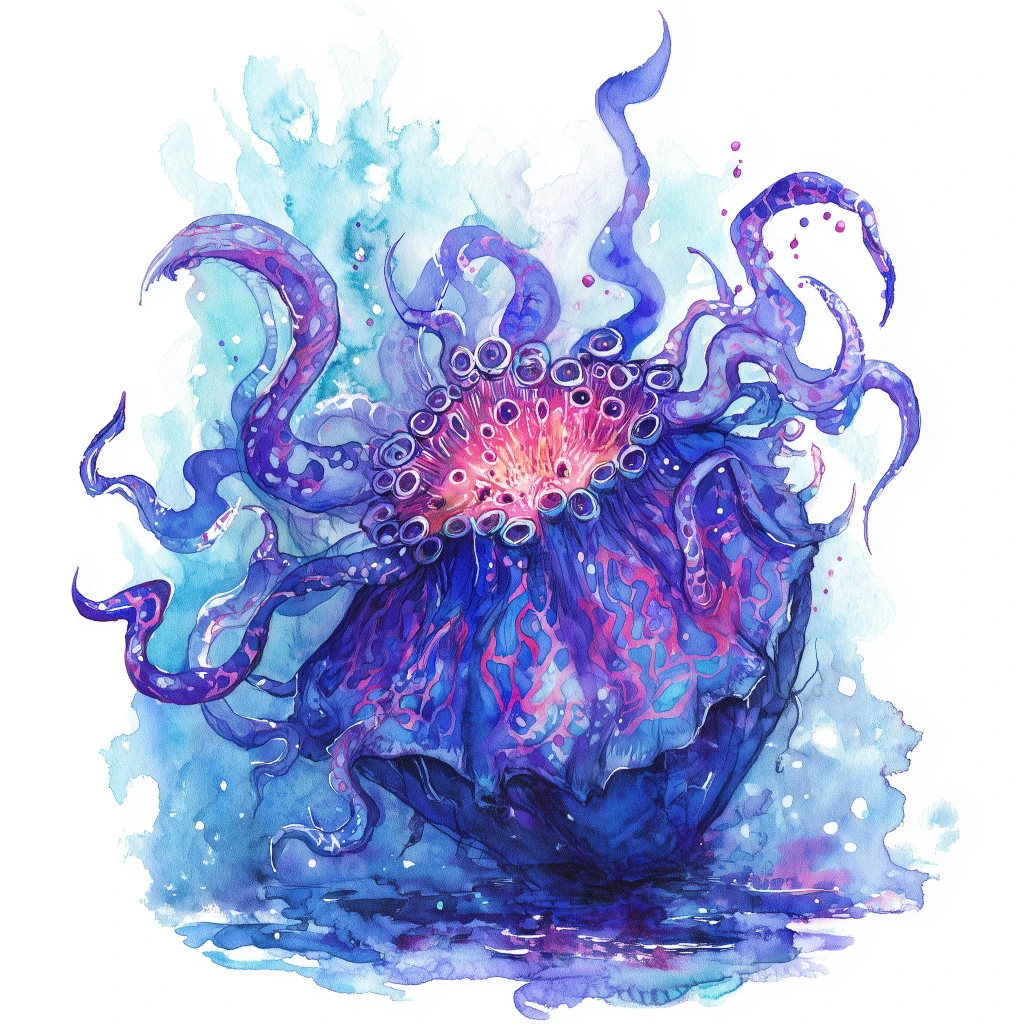
N | Aquatic | Plant | CR varies
Giant predatory anemones serve as a guardian beast for many races on the Plane of Water. There are many known varieties, from disturbingly large to truly enormous. Most of them are venomous and will try to grab prey with their tentacles before dragging them into the central maw to be consumed.
- Sea Anemone, Coffin | Medium | CR 1 — A coffin-shape creature with a dark brown trunk, yellow tentacles and a blue interior. It has a strength-sapping venom. Bestiary 6 [PF1e]
- Sea Anemone, Dragon | Large | HD 7 — A colourful anemone with a debilitating venom which can ensnare and swallow its prey. Monstrous Compendium Dragonlance Appendix [D&D 2e]
- Sea Anemone, Giant | Large | CR 2 — A giant tubular creature with thick colourful tendrils that can sting with a disorientating poison. Bestiary 3 [PF1e]
- Sea Anemone, Great | Huge | CR 8 — A flower-like green-gray trunk with fleshy tendrils and a colourful interior visible through a gaping mouth. It is able to attack by swallowing prey whole and defend itself by vomiting up the contents of its stomach. Tome of Horrors Complete [PF1e]
- Sea Anemone, Lance | Large | HD 16 — A purple-red trunk topped by a mouth wsurrounded by translucent tentacles. It has a venom that can paralyse and will try to consume prone prey whole. Monstrous Compendium Dragonlance Appendix [D&D 2e]
- Sea Anemone, Octopus Tree | NE | Huge | CR 12 — Despite their name, octopus trees are actually giant sea anemones. They feed primarily through photosynthesis, but need to consume meat (like that of adventurers) once in a while. They are more intelligent than most anemones, perhaps corrupted by dark energies from the Lower Planes. Fiend Folio [D&D 3e]
- Sea Anemone, Siren’s Bed | Gargantuan | CR 9 — An enormous polyp with blue and red tentacles and a sting that inflicts a disorienting poison. It is able to defend itself with a deafening screech that stuns listeners and can be heard from miles away. Bestiary 6 [PF1e]
Anguiliian
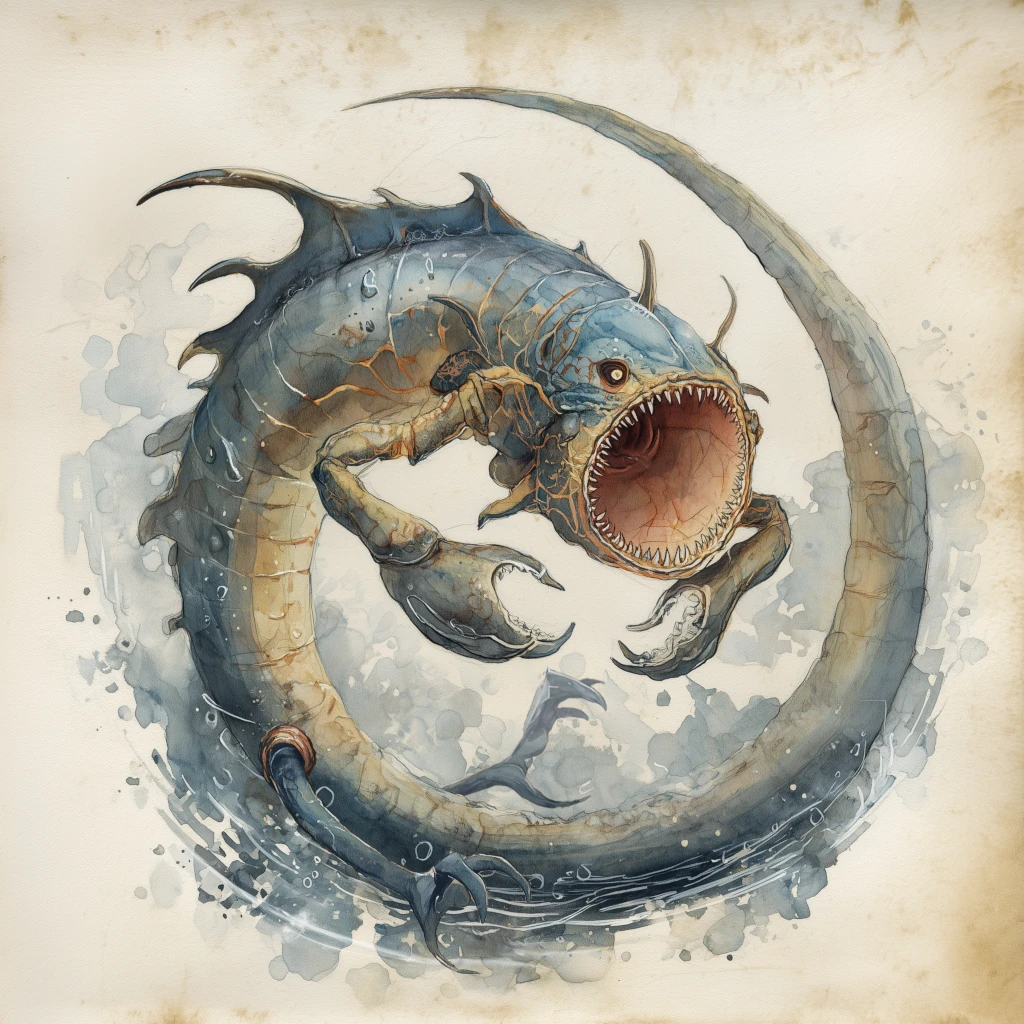
Heumixumlis | LE | Medium | Aberration | Aquatic | CR 2
Anguiliians [an-GWILL-ee-anz] are savage and horrible eel-humanoids whose deep-sea civilisation was destroyed together with their power. Serpentine aquatic creatures with sinuous, eel-like bodies, their humanoid features are combined with two unsettling fleshy pincer-tipped arms, stubby hind legs, six-toed feet, and a circular, tooth-lined mouth lacking a jaw. Their scales are muddy brown with black and tan speckling. Anguiliians dwell in the dark, sunless depths, venturing into shallower waters on moonless nights to raid ships or coastal settlements. In the Plane of Water, they favour the shadowy region called the Darkened Depths. They are fierce carnivores, hunting whales and giant squid cooperatively but scavenging carrion when needed. Their society is patriarchal, led by a high chief, with leadership determined by frequent challenges of strength. They speak a dialect of the sahuagin tongue and are known for their ferocious, coordinated attacks, utilizing their pincers, biting with a distinctive drilling attack, and tail strikes. They’re immune to electricity but vulnerable to fire and bright light, retreating if exposed to the latter.
Stats: [ D&D 2e | 3e ] The Sea Devils [2e]; Stormwrack [3e] p136
Ashullian
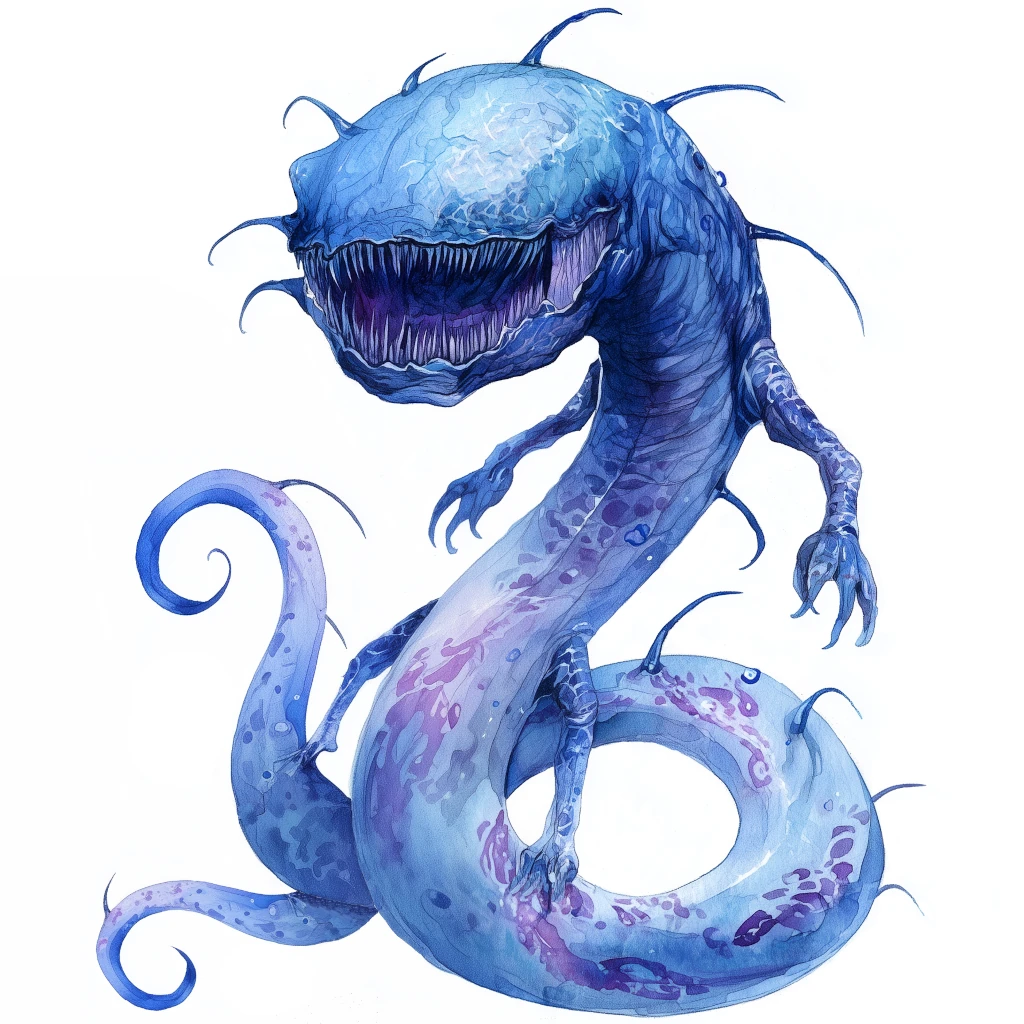
N/CE | Large | Aberration | Water | CR 11
Ashullians [ah-SHOOL-ee-anz] are large, eyeless eel-like creatures whose translucent, leathery skin is patterned by swirling iridescent fluids which trace the pattern of their veins. Their bulbous heads are supported by long necks, a thick torso with four tentacles which end in hand-like claws, and splits into two supple tails. They use their ciliated clefts and flexible spines to sense their surroundings in place of eyes. They prefer to dwell out of the light, down in the Darkened Depths of the Plane of Water.
While their degenerate cousins on the Prime have devolved into predators, the ashullians of the Plane of Water are rather more thoughtful. Their passion is multisensory art, and they take this very seriously. Each ashullian maintains a personal lair, which they call a bower, which is a gallery shaped by its strange thoughts and dreams. The exhibits is carefully curates are synesthetic artworks, which are so intense as to pose a danger to intruders, overloading their senses with sound, taste, texture and scents that can sicken or stun. In Sensate circles, experiencing an ashullian bower is on many a bucket list.
Ashullian society is solitary and obsessively critical—each ashullian considers its own bower and artistic vision superior to all others. They are not hostile by default, but will demand that visitors contribute interesting curios to their galleries, before they will consent to answer questions or offer assistance. What an ashullian considers worthy art, however, might be surprising to planewalkers. It may mean a simple trinket capable of producing flames, a dry scrap of food, or a stuffed bird with colourful feathers—basically, anything surprising and alien to their watery home. Refusal is likely to trigger a cold, aesthetic fury.
Stats: [ PF 1e ] Pathfinder #135: Runeplague [PF1e] p86
Atuikakura
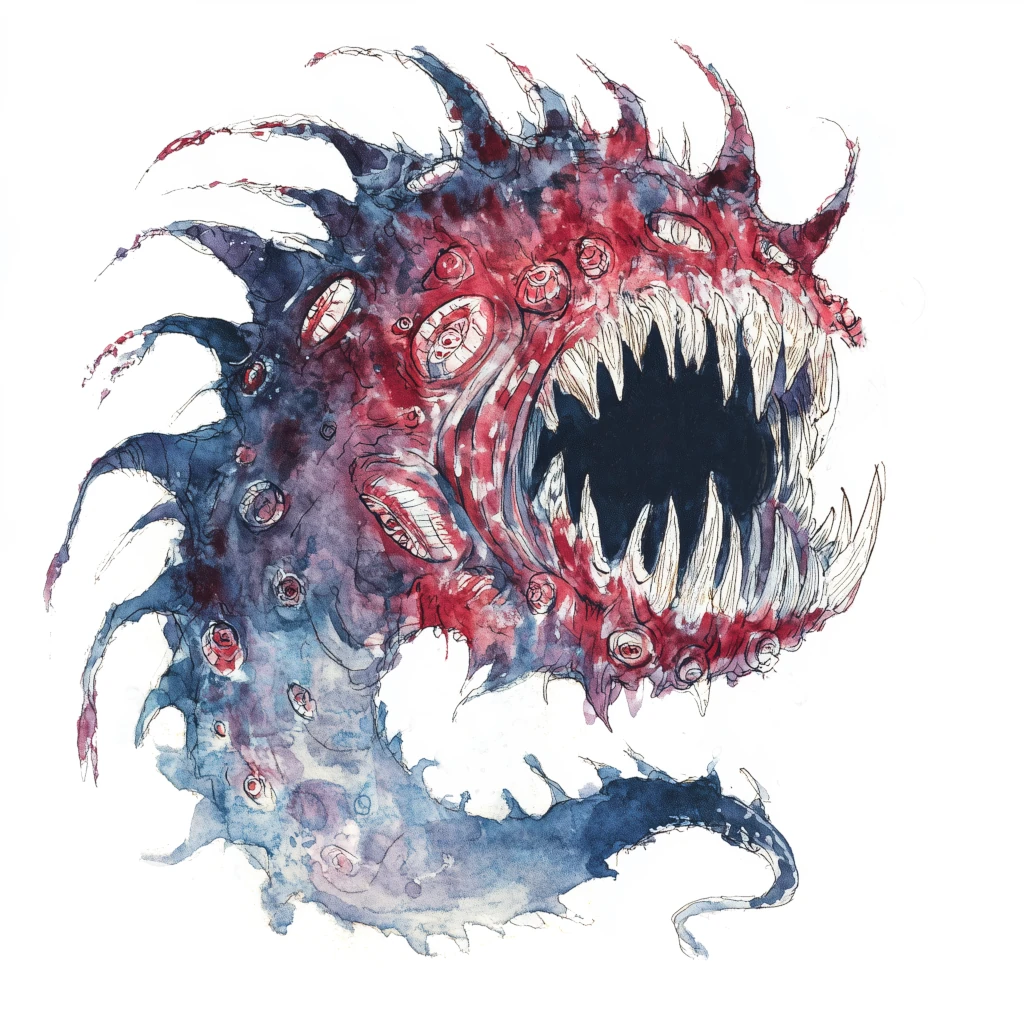
N | Gargantuan | Aquatic | Magical Beast | CR 14
The atuikakura [ah-TOOIE-car-koo-rah] is an enormous red, wormlike sea monster studded with multiple rows of white spines. It ends in a circular maw packed with horrific hooked teeth, but the creature can also lash out with grasping tentacles. When wounded, it can reflexively eviscerate itself, expelling excess respiratory organs in a grotesque defensive display that entangles nearby foes and doses them with a potent poison and clouds their vision with disorienting visions of the past. If such a brute can be said to have a philosophy, the atuikakura embodies abyssal patience: it typically rests placidly on deep bay or ocean floors, coiling itself around driftwood or wreckage and attacking only when startled or when hapless ships disturb its domain. In moments of danger or digestion it can liquefy its own body, collapsing into an amorphous, stealthy mass able to evade attacks and escape, to later reconstituting itself in safety, somewhere down there in the crushing silence of the deep.
Stats: [ PF 1e ] Bestiary 6 [PF1e] p32
Azarketi
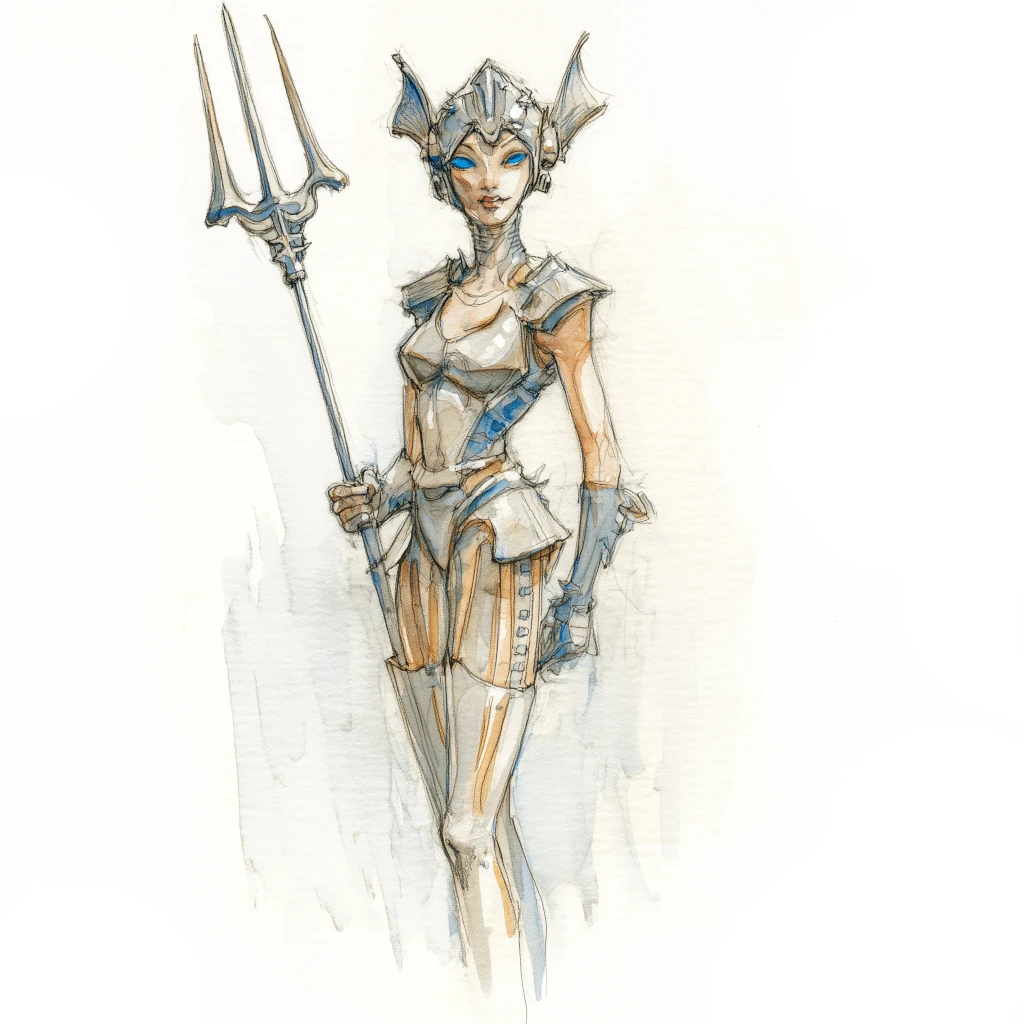
Aventi, Gillfolk, Sea-Kin | Any alignment | Uncommon | Medium | Amphibious | Azarketi | Humanoid | Any CR
There are many different names for humans who have adapted to living underwater so completely, that they’ve learned to breathe there. All four of these races actually come from different Prime worlds, and there are sure many more of them, all with different names. My friends among the sea-kin (seems to be the most accepted name) assure me that all these different gangs have extremely important differences. To me they all seem like delicate tritons… anyhow.
Stats: [ PF 2e ] The azarketi is a playable ancestry. More details in Blood of the Sea [PF1e] p8 (as gillmen); Absalom, City of Lost Omens [PF2e] p393 (as azarketi); Stormwrack [3e] p33-36 (as aventi).
Barnacle Goose
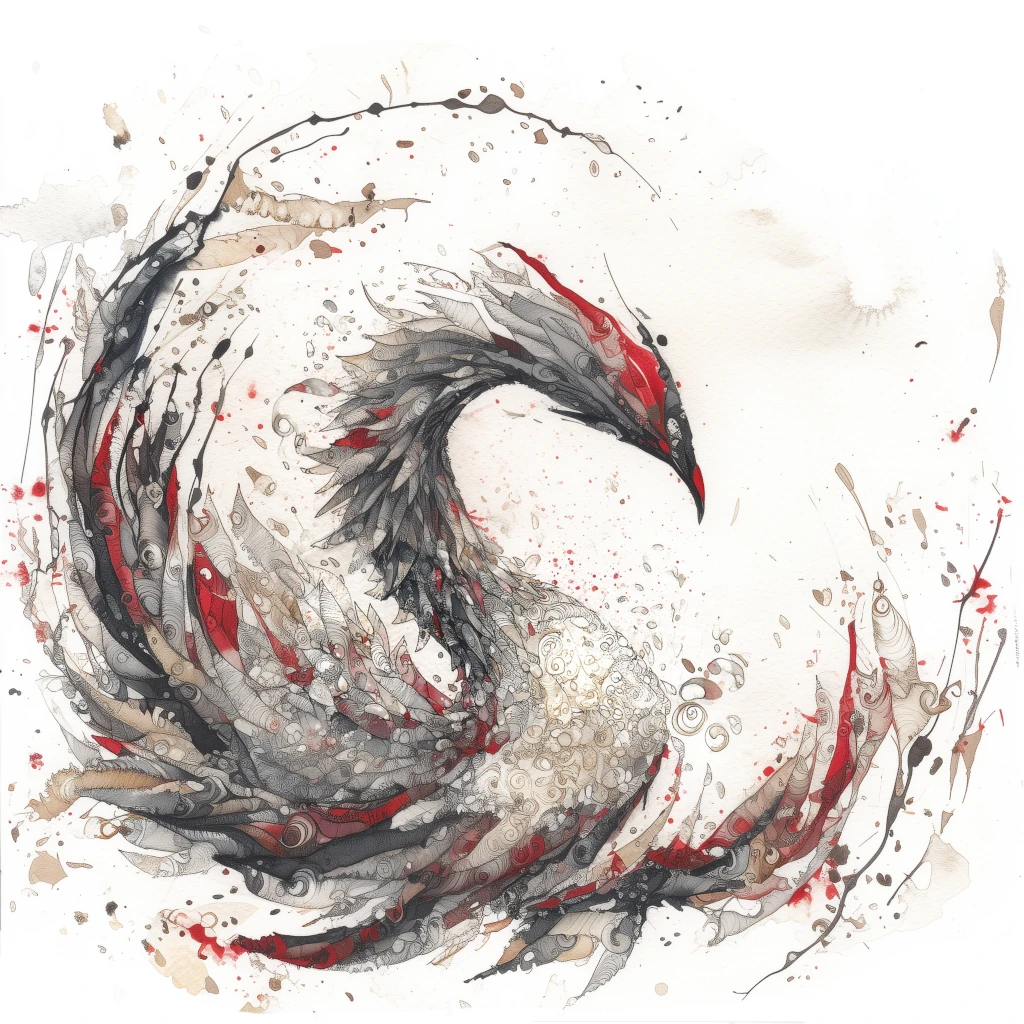
N | Small | Animal | Aquatic | CR 0
A strange species of barnacles that evolved to mimic geese. If that sounds strange, cutter, that’s because it is. A bunch of clueless Primes got it in their heads that barnacles were the larval form of geese. Wild as that sounds, if enough berks start to believe something, there’s a distinct danger of it become real somewhere on the planes. Long story short—barnacle geese are very tasty. But as for the question of whether they count as seafood or poultry, you’ll have to ask someone else…
Stats: [ PF 2e ] Homebrew, but based on a real myth.
Cat, Sea
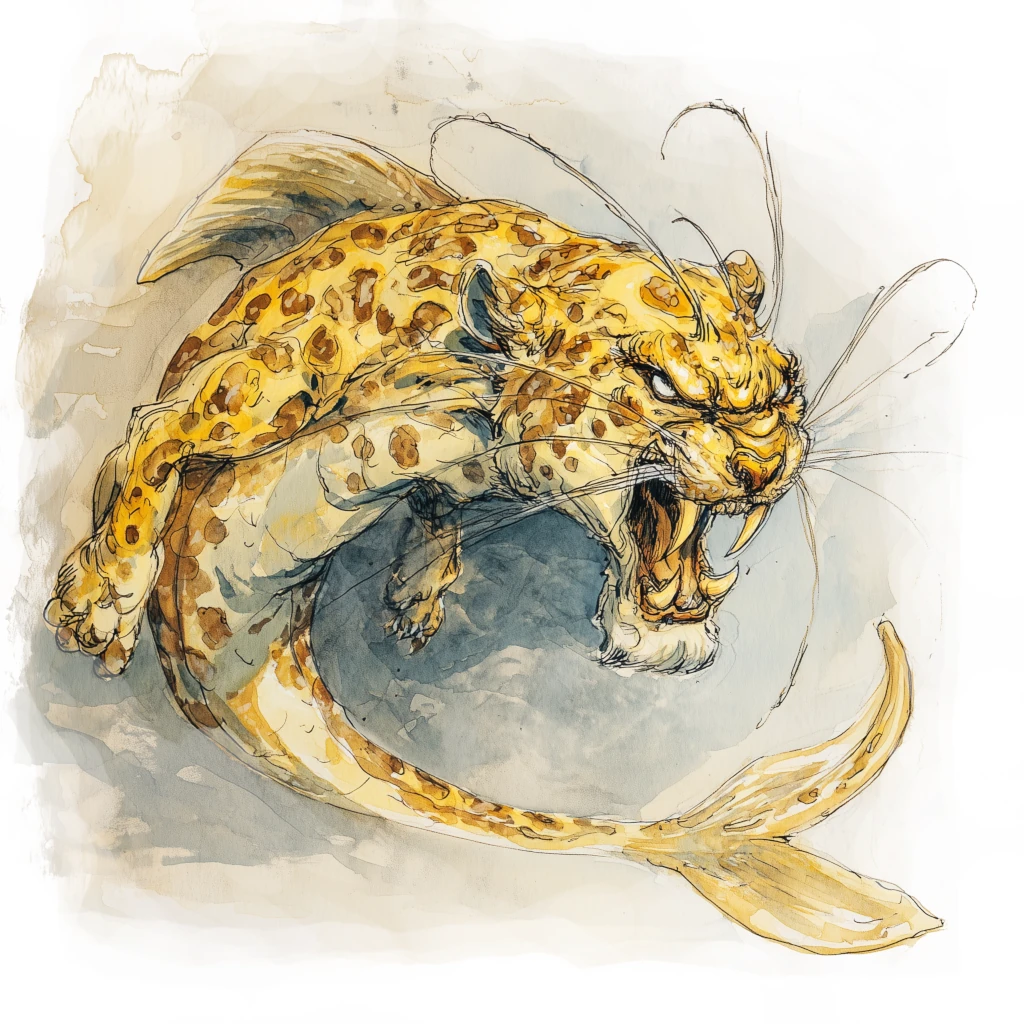
Sea lion, sea tiger, sea leopard | N | Large | Amphibious | Magical Beast | CR 4
The sea cat is one of the most feared hunters of warmer waters. Presumably created by the same process as hippocampi, they’re a brutal fusion of great cat and predatory fish. A typical specimen reaches about twelve feet in length and weighs more than 800 pounds. Sleek and predatory, they are lithe and long-bodied creatures with a catlike head, powerful webbed paws, and a flexible tail that lets them surge through the water with startling speed. Their waterproof fur is spotted or striped for camouflage in reefs and weed beds, and their sharp, retractable claws are adapted for gripping slippery prey. Though they can survive in both fresh and salt water, they thrive in the tropics, where they prowl reefs and beaches in search of fish, crustaceans, seabirds, seals, humanoids, or anything else with a pulse that’s unlucky enough to cross their territory. Sea cats are ferocious enough to attack even sharks and crocodiles. They’ve learned that fishing nets and baited lines can offer easy meals, and for dessert they turn on the fisherfolks themselves. When not hunting, sea cats love to bask on rocks and beaches, often in pairs or prides. On the Plane of Water they hunt around elemental bubbles, not least because that’s where their prey also tends to gather. Sea cat females (called cows) guard cubs with sleepless vigilance, while prides organise themselves around a dominant bull, and fiercely defended their territory with scent markings that carry on the currents. They are clever, curious, and capable of brief truces or alliances when offered tempting food.
Stats: [ D&D 2e | 3e | 5e | PF 1e ] Monstrous Manual [2e] (sea lion); Monster Manual [3e] 160-161 (sea lion); Tales from the Yawning Portal [5e] p242 (sea lion); Bestiary 4 [PF1e] p233 (sea cat)
Cecaelia
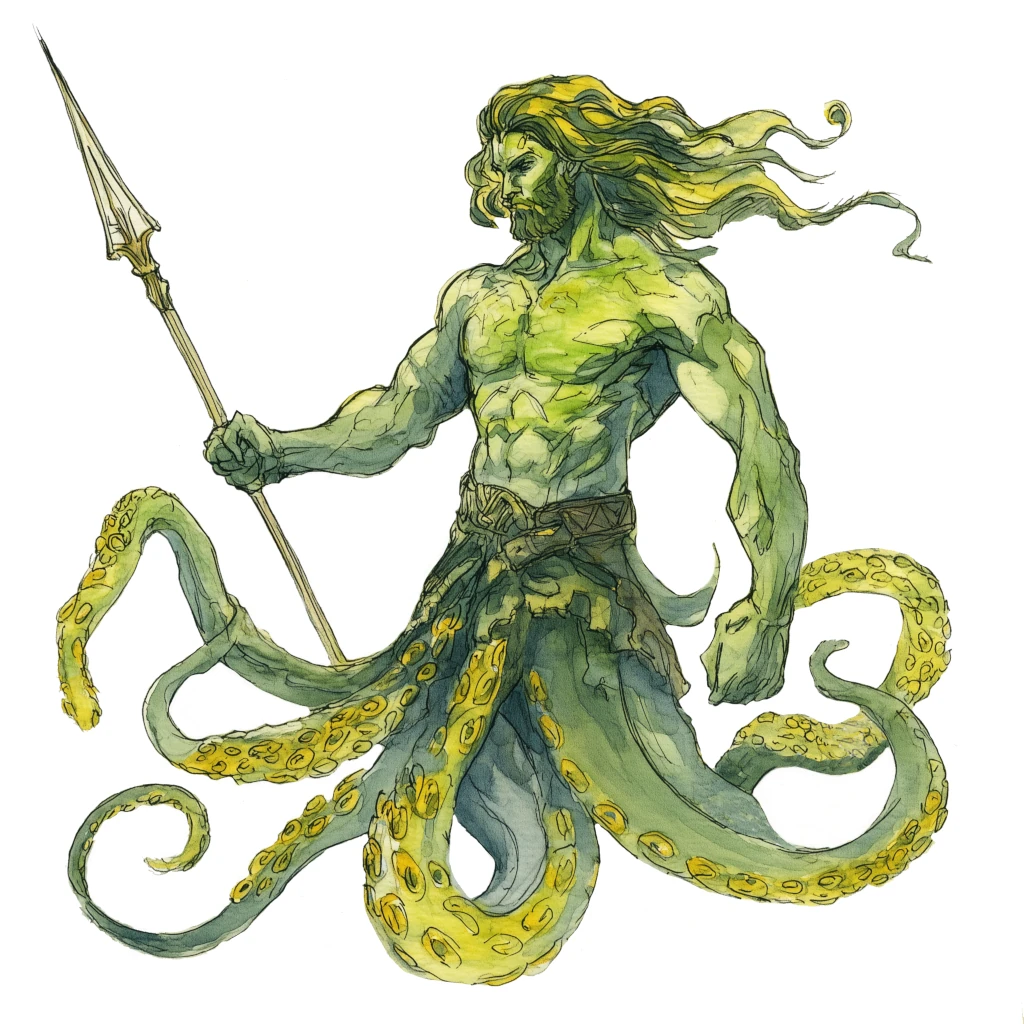
CN | Medium | Amphibious | Humanoid | CR 5
Cecaelia [seh-KAY-lee-ah] are agile, intelligent oceanic hunters with the upper bodies of humanoids and octopus tentacles in place of legs. The appearance of their face and torso changes to mirror that of nearby coastal humanoid populations, like an octopus’s camouflage shifting to match its surroundings. Proud and inquisitive, but notoriously quick‑tempered, they roam warm waters as nomads, hunting and scavenging. Cecaelia barter with seafood and sunken treasures for goods from the dry lands. Their quarrelsome nature means stints as pirates or mercenaries rarely last long before they inevitably drift off on their own again. Cecaelias cherish their independence, bristle at perceived slights, and maintain few long-term alliances—most notably with the easygoing locathah. Chant goes that the grindylow are a species connected to the cecaelia, with a similar relationship to them as goblins to to humans. Of course, the proud cecaelians would never admit their relationship with these troublemakers.
Stats: [ PF 1e | 2e ] Bestiary 3 [PF1e] p49; Blood of the Sea [PF1e] p6 (playable ancestry); Bestiary 3 [PF2e] p45
Ceratioidi
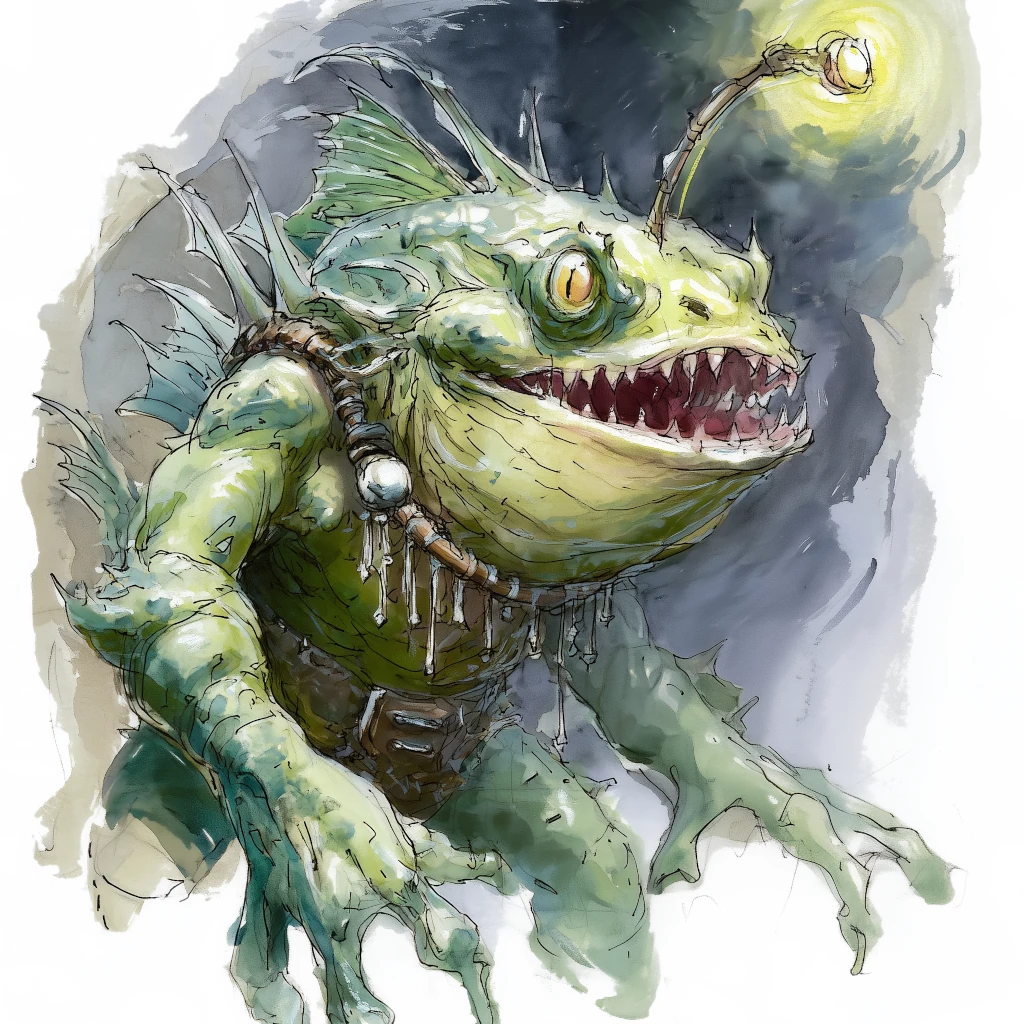
N | Medium | Aquatic | Monstrous Humanoid | CR 3
An offshoot of locathah, the ceratioidi [ser-ATI-oy-dee] are known for their strange reproductive habits. Large females who look like humanoid frog-angler fish are accompanied by tiny parasitic males the size of rats—but you are unlikely to see them. During mating, the males affix themselves to the neck of the females, exuding a strange substance that causes their bodies to merge together. After a few hours, the male ends up as a tumour-like cyst on the neck of the female. As my sage friend once said, together they “exhibit a joined consciousness”—basically once joined in this way a ceratioidi becomes smarter, learning to swing swords and sling spells much more effectively than before. Some graybeards wonder if their strange symbiosis is somehow related to the bzastras.
Stats: [ PF 1e ] Bestiary 3 [PF1e] p50
Cistern Fiend
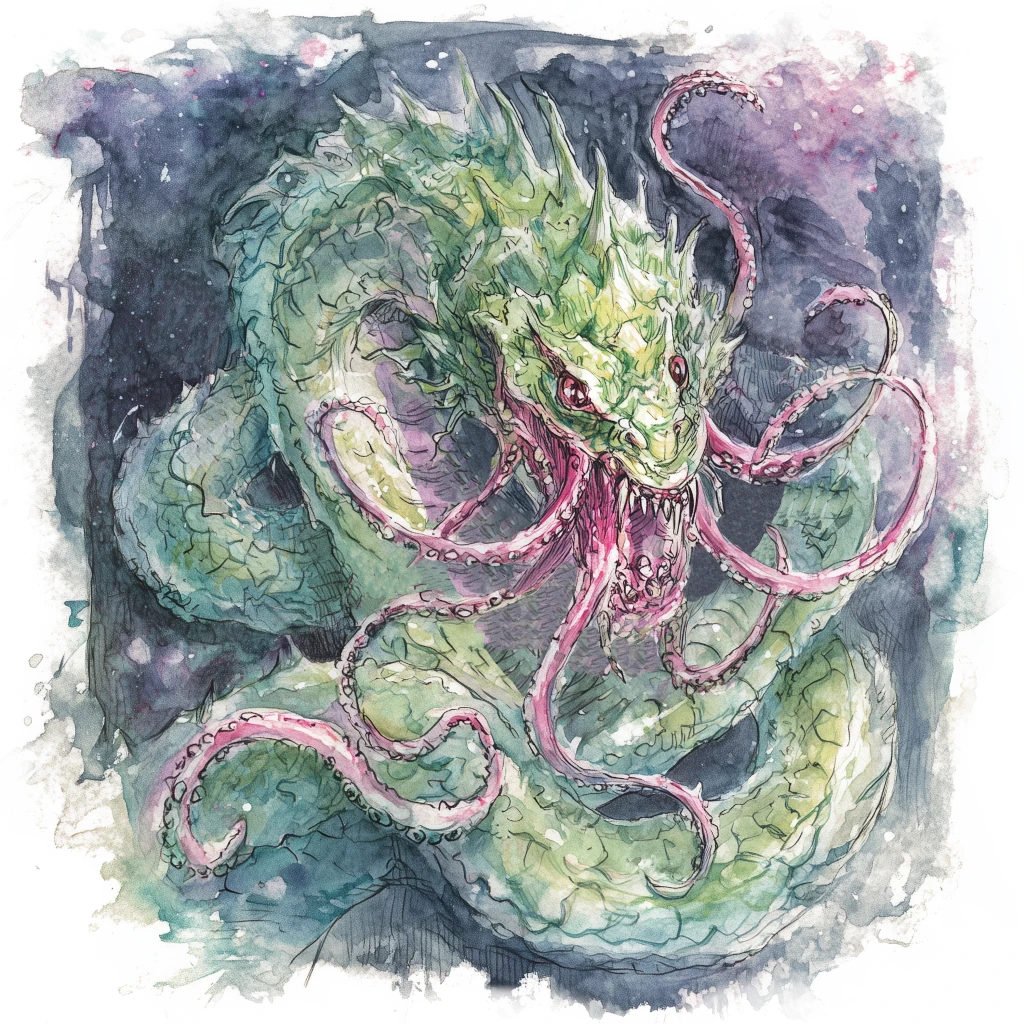
N | Gargantuan | Amphibious | Psionic Beast | CR 10
Not actually fiends at all, so-called cistern fiends are actually enormous, omnivorous tentacled worms with paralysing stings and rudimentary psionic abilities. On the Prime they are known to be dangerous killers—the unlikely world they were originally created on is a notoriously violent desert world called Athas—but cistern fiends who have escaped their harsh homeworld and settled on the Plane of Water are surprisingly docile (when left alone)—if rather terrifying to look upon. They can be magically bound and are used by marids as guard-dogs.
Stats: [ 2e ] Dark Sun Appendix I – Terrors of the Desert
Coelenite
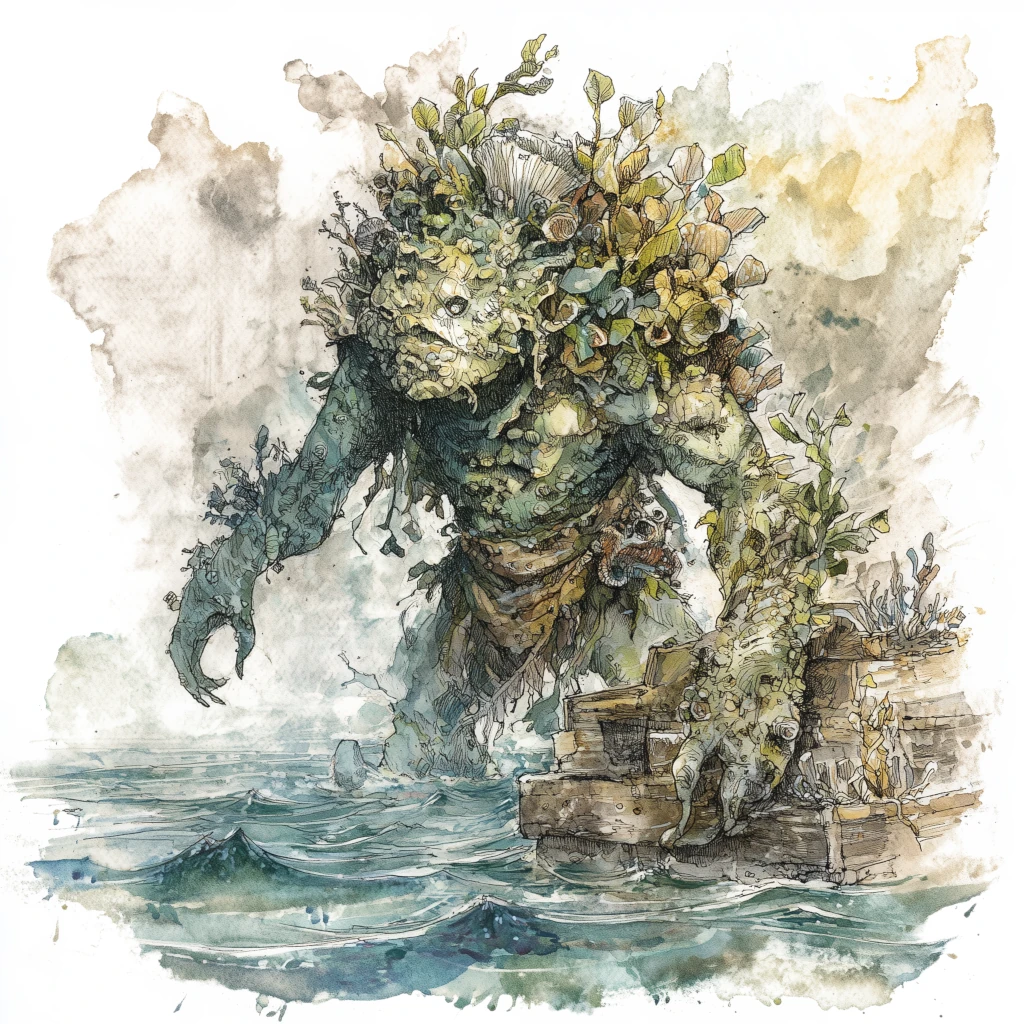
N | Medium | Amphibious | Swarm | Vermin | CR 3
Coelenites [co-ELLA-nites] are a kind of colonial coral that is capable of thought and movement as a single unit of composite mind. Graybeards are split on whether these beings are a single creature or a colony of thousands of barnacle-like corals. They are able to think and act as a single being, but magic works on them in strange ways, with mind-affecting magic failing completely. Slow-moving, but dangerous, coelenites have been known to attack sailors and planewalkers. They are also extremely hard to kill on the Plane of Water—while their bodies can be destroyed through physical damage, this causes them to split apart into thousands of tiny fragments—each of which is capable of reforming as a new coelenite. More worryingly, multiple humanoid coelenites in close proximity to each other are able to form social structures with hive minds, which are linked together telepathically and far more intelligent than individual coelenites alone.
Stats: [ D&D 2e ] Al-Qadim Golden Voyages
Coral, Brain
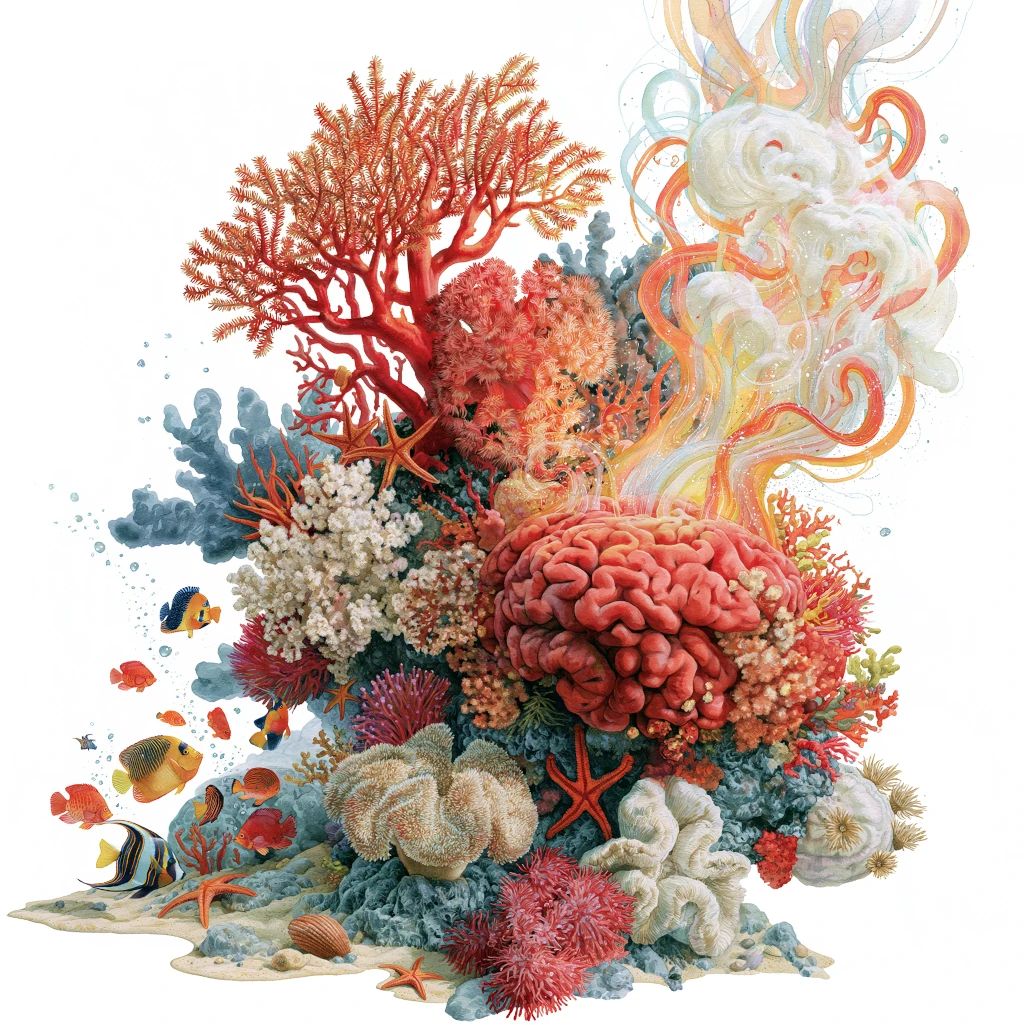
N | Small | Rare | Aquatic | Plant | HD 3
Ridged and folded so they look like human brains, these small corals are highly intelligent and possess psionic powers. While only a few of them have telekinetic powers, all brain corals are capable of psychically attacking and dominating lesser minds. They can form a symbiotic bond with coelenites, who regard these tiny and immobile creatures as something akin to kings or even gods, forming communities around them to protect and worship them. In return, brain corals use coelenites as their muscle.
Stats: [ D&D 2e ] Monstrous Compendium 1997 Annual Vol. 4
Coral Capuchin
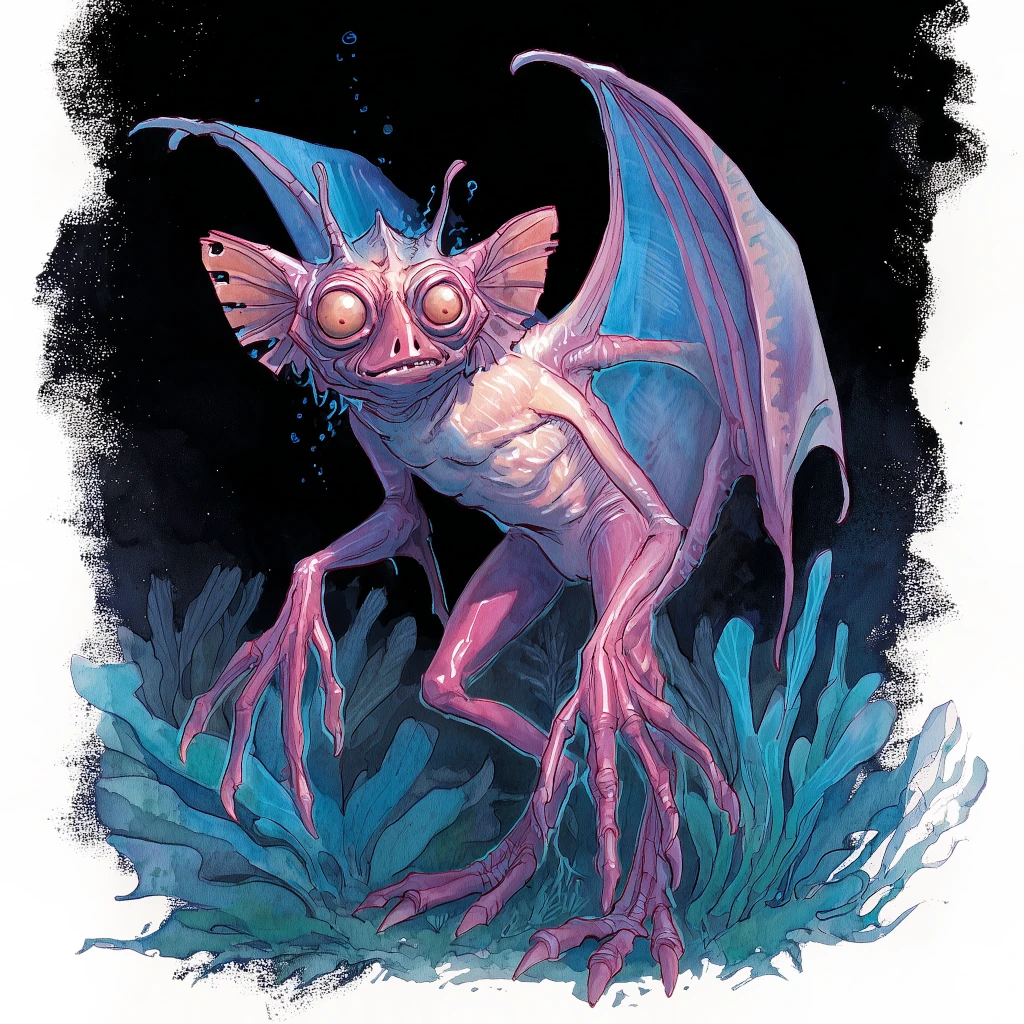
N | Tiny | Amphibious | Beast | CR 1
These strange little creatures can only be described as a light pink, hairless monkeys with the head of a fish and large, fin-like wings. Coral capuchins [cap-POO-chin] are excellent fliers, swimmers and climbers, coral capuchins need a moist environment to live comfortably, because drying out harms them greatly. While not natives, they thrive on the Plane of Water, where they live in large matriarchal clans. They are fascinated by planewalkers, and will try to steal from or bargain with them for food and trinkets. They can also be summoned as familiars, although their mischievous nature means they can end up being more trouble than they’re worth.
Stats: [ PF 1e | 2e ] Bestiary 6 [PF1e]; Bestiary 3 [PF2e] p54; High Seas [PF2e] p114
Coral Juggernaut
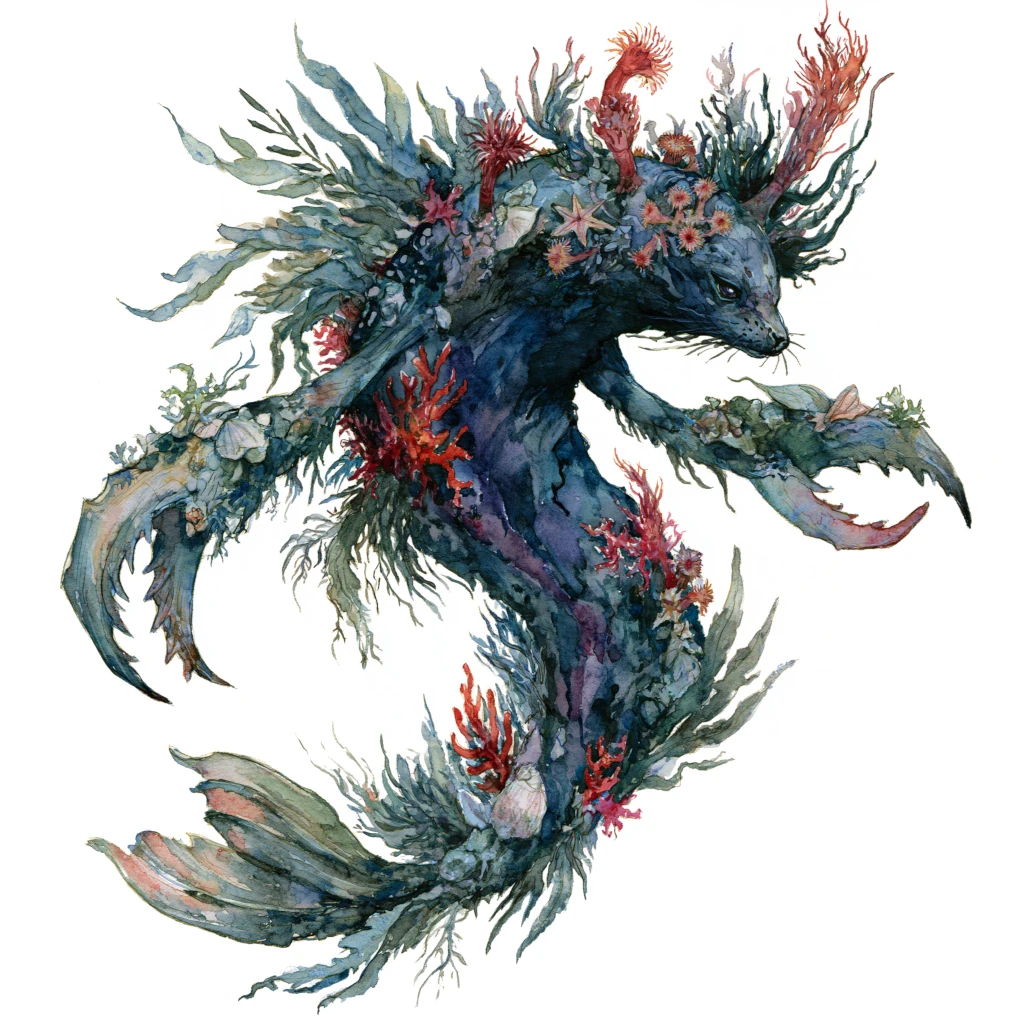
N | Uncommon | Large | Construct | Mindless
Coral juggernauts are constructs built from coral spines, seaweed and cast-off shells. Their large bodies make the perfect habitat for other sea-creatures—like electric eels, vampire squids and staghorn corals. The magic binding the juggernaut together encourages these creatures to work together to when the juggernaut attacks, giving it an aura of sickening mucus, an electric shock attack that affects creatures restrained by the juggernaut, or the ability to spray a powerful jet of silty water at enemies.
Stats: [ PF 2e ] High Seas [PF2e] p115
Coral Worm
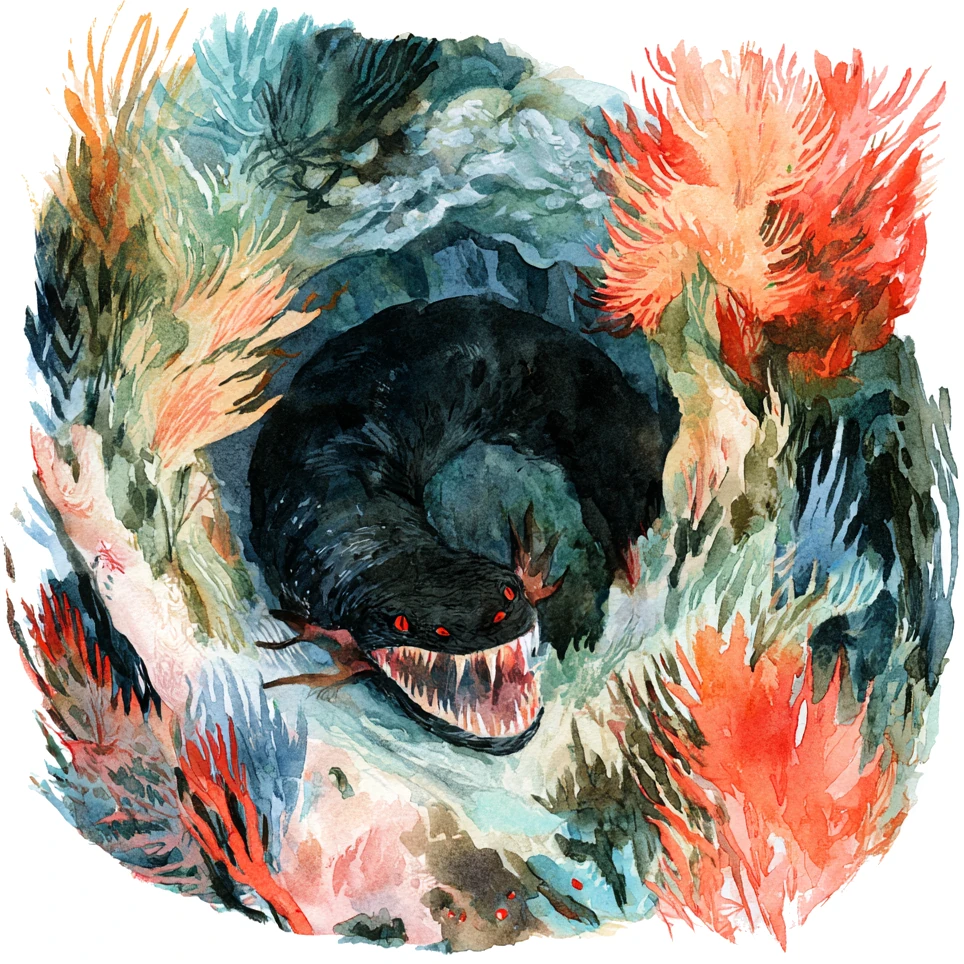
N | Large–Huge | Animal | Aquatic | HD 3–8
Black slug-like creatures who form colourful shell-like tubes of coral around their bodies, coral worms make their homes in reefs. Their coral tubes serve as both their home and a disguise, and the coral worm patiently waits ready to lunge out and strike at prey whenever it passes by. Their teeth are capable of grinding down coral, piercing metal and even biting through the hull of a ship. The inside of the tube is pearly smooth, while the outside is protected by razor-sharp ridges and spines.
Stats: [ D&D 2e ] Monstrous Compendium 1997 Annual Vol. 4
Craud
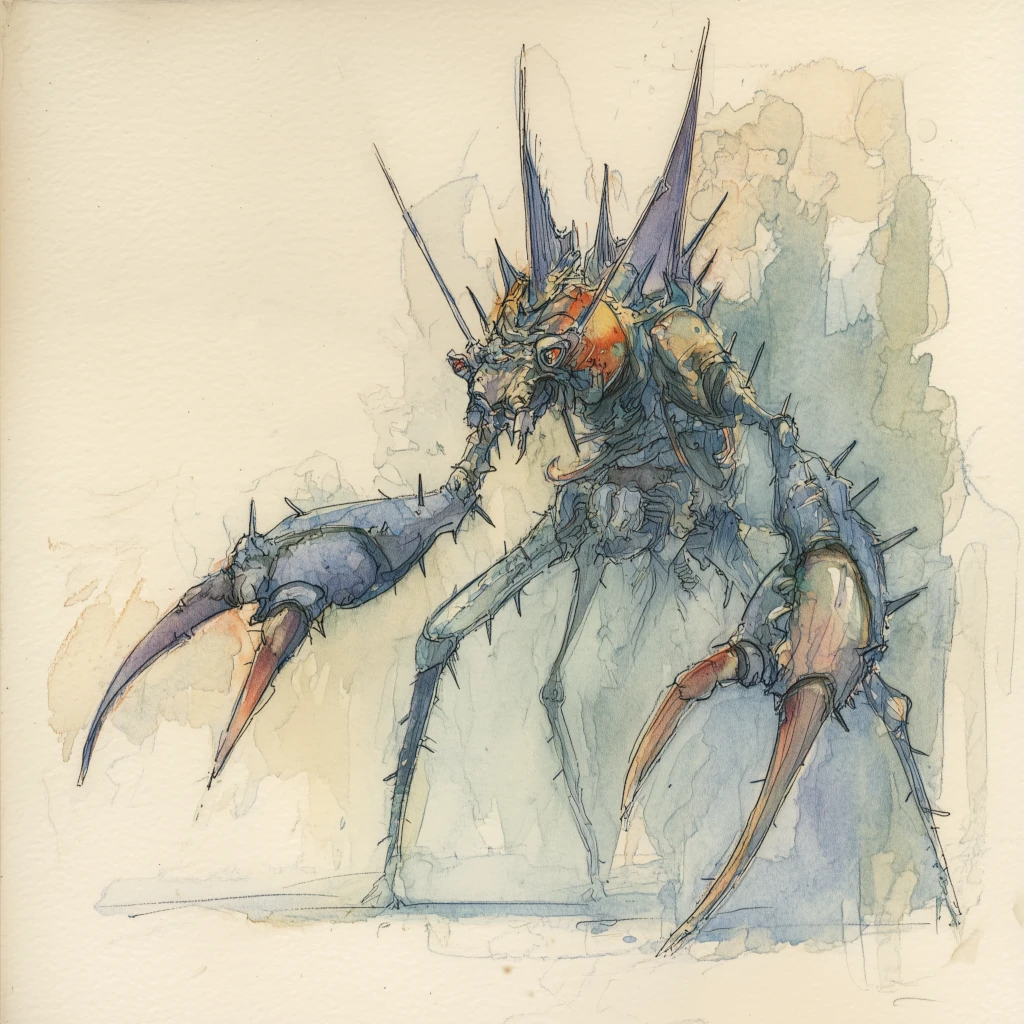
Locust of the sea | N | Medium | Aquatic | Beast | CR 3-6
Crauds [crawdz] are human-sized aquatic predators: stocky, scaly shellfish with four stilt-like legs, and large jagged claws. On the Prime, they are usually found in warm and temperate coastal waters. In the Plane of Water, these predators can be found anywhere, although when hunting pickings are meagre they can also survive on kelp or carrion. They are fast, social hunters that can be solitary ambushers or work in cooperative bands. Their reputation as “locusts of the sea” reputation comes from their ability to strip an area clean of fish or vegetation. In small numbers, they are best understood as animals rather than civilised cutters: they have low intelligence, no real culture, and little ideology—beyond feeding and following their leader. A craud king can telepathically direct lesser crauds and push them into organised raids, which makes them a danger to locathah communities, livestock, and humanoid settlements.
Stats: [ D&D 4e | PF 1e ] Monster Manual 3 [4e] p37; Creature Codex [PF1e]
Deep Walker
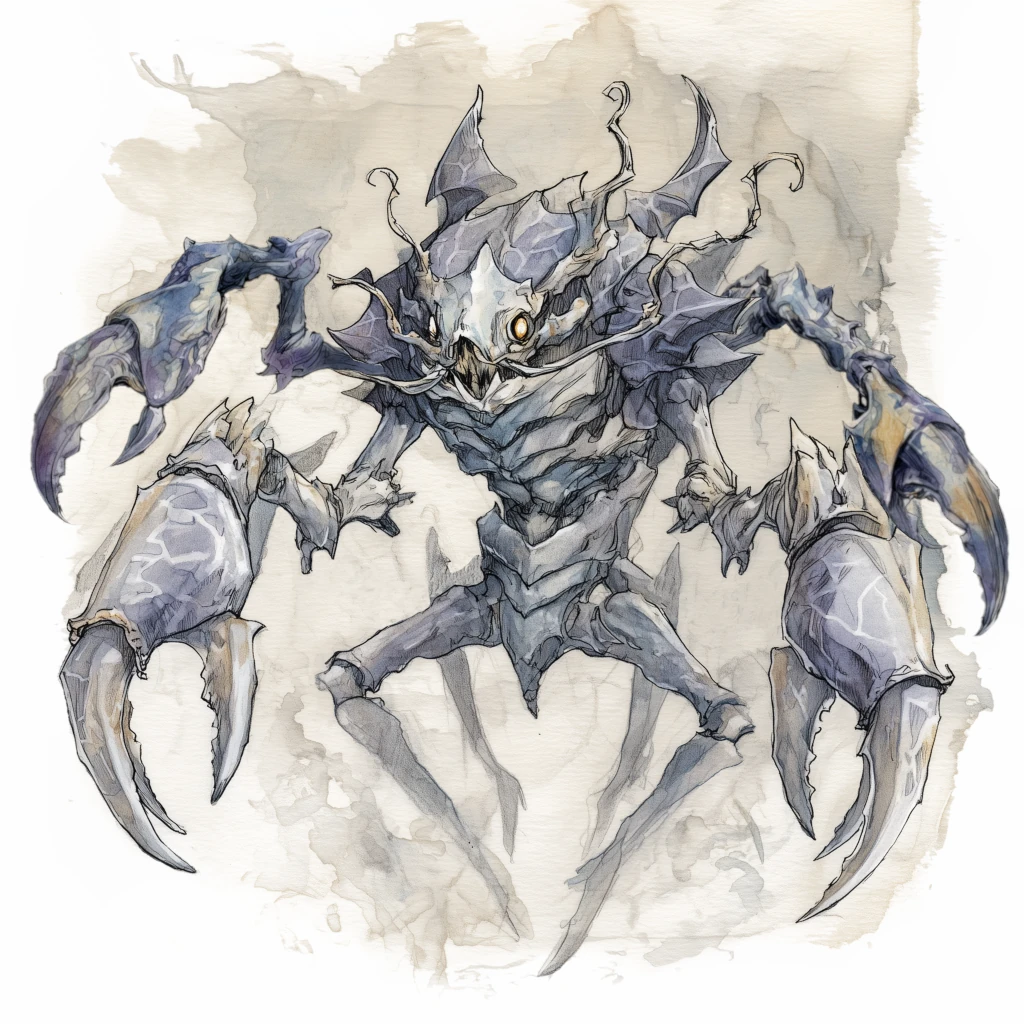
LE | Gargantuan | Aberration | Aquatic | CR 14
Deep walkers are immense, armour-plated horrors bred by aboleths. They are crab-legged, four-armed aquatic predators built for crushing close combat, with a brutal grappling style and a blood-draining bite. They are usually found in oceans which are under aboleth influence, either guarding their vile enclaves or serving as amphibious shock troops against coastal targets. Free deep walkers can also appear in small groups or alone in the wild, although they have no independent civilisation or philosophy of their own. Their defining trait is obedience to their aboleth masters, and escaped specimens remain cruel, sadistic, and domineering. Their motivations are the schemes of the aboleths that bred them: when bound, defending strongholds and terrorising humanoid settlements, and when unshackled, ruling over lesser creatures as tyrants who torment and consume their subjects—just like they learned from the aboleth/
Stats: [ PF 1e ] Bestiary 6 [PF1e] p82
Dragon, Brine
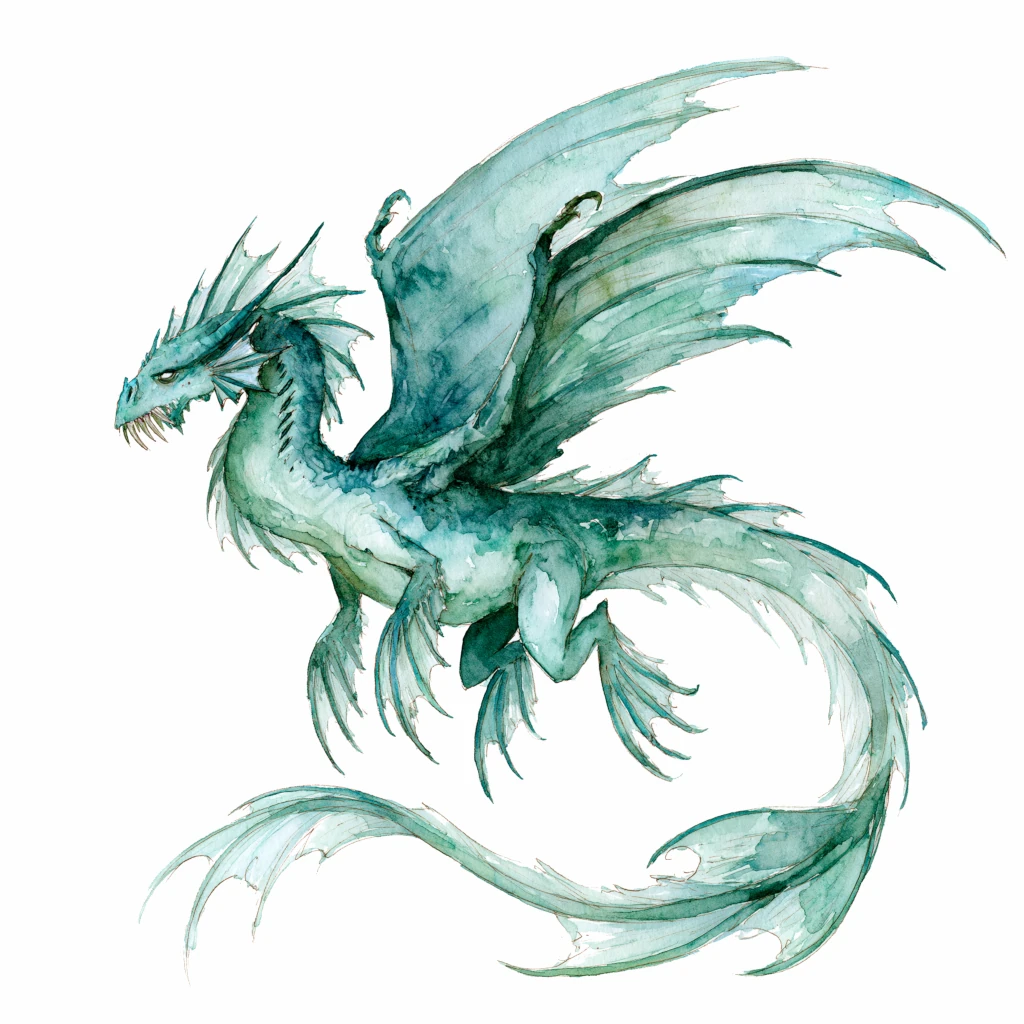
CN | Large–Huge | Aquatic | Dragon | Elemental | Primal | Water | CR 8–20
Brine dragons are native to the Brackish Sea, the darkest, saltiest border region of the Plane of Water. They have blue-green scales, webbed claws, and broad wings they can use like fins to give them incredible swimming speed as well as the power of flight. They typically rule aquatic fiefdoms in Kelizandrika, where their subjects include athamarus, faydhaans, merfolk, murajaus, sulis, and undines. Outside that domain, they may establish floating cities, mobile kingdoms, or isolated hermitages. Brine dragons believe superior knowledge should be obeyed, and most of course see themselves as capable, just rulers who know what is best for their people—though some become outright tyrants. Unusually for dragons, they value knowledge, strategy, and secrets far more than material wealth. Their main conflict is with the krakens, which they constantly battle to protect their realms.
Stats: [ PF 2e ] Draconic Codex [PF2e] p112-115
Dragon Fish
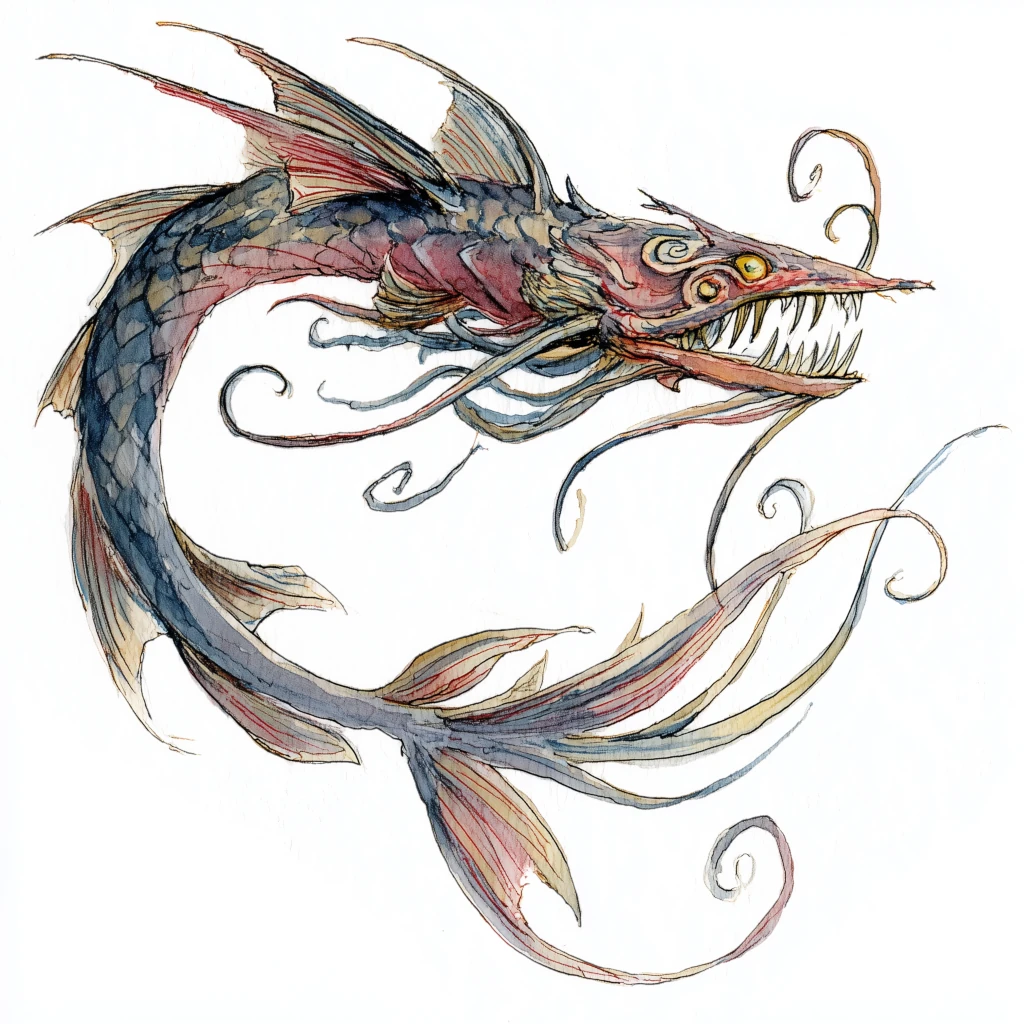
Devilfish | N(E) | Large | Aquatic | Beast | CR 5–7
With probably one of the most confusing etymologies of all the creatures of the plane, these large and weirdly intelligent piscines come in three varieties—common, sabretooth and electric. Despite their name, dragon fish they have nothing to do with dragons, outside of a passing resemblance. They are also called devilfish by tritons, despite having nothing to do with devils either, or the cephalopods aberrations called devilfish. Dragon fish are also not to be confused with dragonfish, which are tiny scavenging flat fish with scales and spines, and also have nothing at all to do with dragons. They are, however, extremely venomous, so handle them with care as well.
Stats: [ D&D 2e ] Monstrous Compendium Vol 1 [2e]; Dragon Magazine #190 [2e]
Dragon, Sea
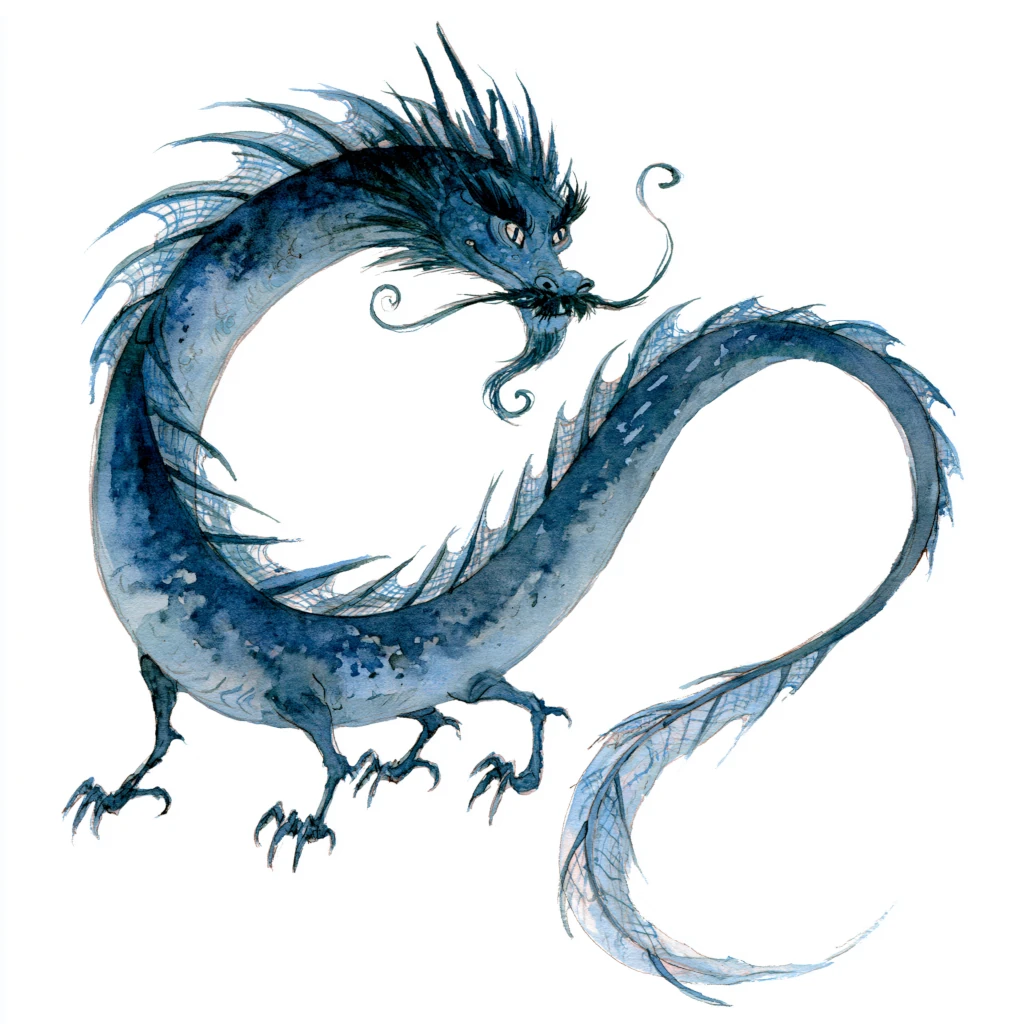
Jiaolung | Any alignment | Large–Huge | Amphibious | Dragon | Elemental | Primal | Water | CR 8–20
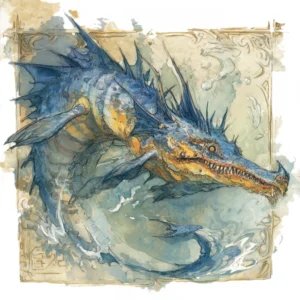
Sea dragons, or jiaolungs, are imperial dragons of elemental water, shaped like great serpentine fish with disk-shaped scales, webbed claws, and webbed spines which trace the full length of their sinuous bodies. Hatchlings have soft fur covering their bodies, but as they age this tends to be shed. Older individuals start to look like living reefs, with seaweed, shellfish, coral, and other marine organisms growing all across their bodies. The most ancient dragons may even bear crowns of coral around their antlers. Their breath is a pulverising torrent of black water, and as their mastery of aqueous magic grows with age they learn to create waves and whirlpools, then commanding floods, storms, and towering tidal surges. Sea dragons are powerful but capricious guardians of oceans, rivers, coasts, and the creatures that depend upon them. They will sometimes aid sailors who approach them respectfully, granting favourable weather, safe passage, or sage counsel in exchange for tribute, or favours. At the same time though they are territorial and dislike sharing their waters. Younger dragons may be driven from even tiny pools and forced to hide in wells or cisterns. On the Plane of Water, there is plenty of water go go around. Instead its is caverns in earth bubbles or free-floating reefs that are sought-after territory. A sea dragon might claim a reef, a particular current, or an underwater island as its protectorate, seeking to preserve its domain while proving itself worthy of its imperial draconic tradition. This usually means harsh punishments to those who pollute, despoil, or trespass upon it.
Stats: [ PF 2e ] Draconic Codex [PF2e] p158-161
Dragon Turtle
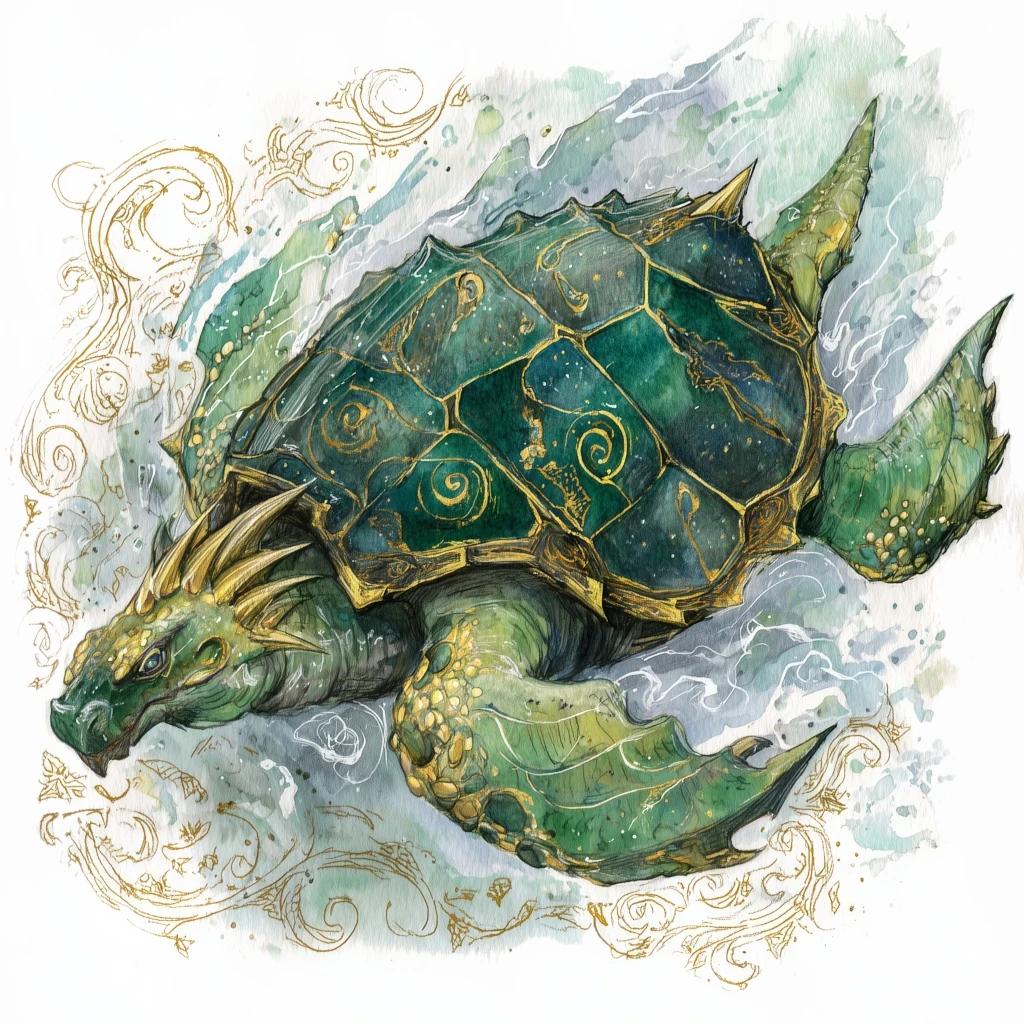
N | Gargantuan | Amphibious | Dragon | CR 17
Dragon turtles are immense, solitary aquatic beasts with rough green shells, gold-highlighted limbs and crested spines. Graybeards reckon they are indeed distantly related to dragons, although rather than wings, they carry enormous protective shells on their backs. Their bodies are large enough to dwarf sailing ships, and they’re among the biggest threats to mariners. Ancient dragon turtles sometimes grow so vast they resemble islands. A surfacing dragon turtle can look like light glinting on water—right up until the moment it capsizes your vessel or unleashes its breath weapon of boiling steam. Dragon turtles are territorial, greedy, and defensive of their claimed waters, which can stretch across huge areas. Aquatic peoples like locathah and merfolk occasionally clash with them over territory, although it rarely ends well for the humanoids. Dragon turtles demand tributes from travellers seeking safe passage through ‘their’ waters. It’s suggested that superstitious sailors should drop treasures into the water in dragon turtle territories to add to the dragon turtle’s hoard and ensure safe passage. Dragon turtles are intelligent, and can speak multiple languages, but tend to prefer their own company. When they do interact with lesser creatures, their social order is basically a network of fear and tributes.
Stats: [ D&D 2e | 5e ] Monstrous Manual [2e] p88; Monster Manual 2025 [5e] p103
Draig, Water
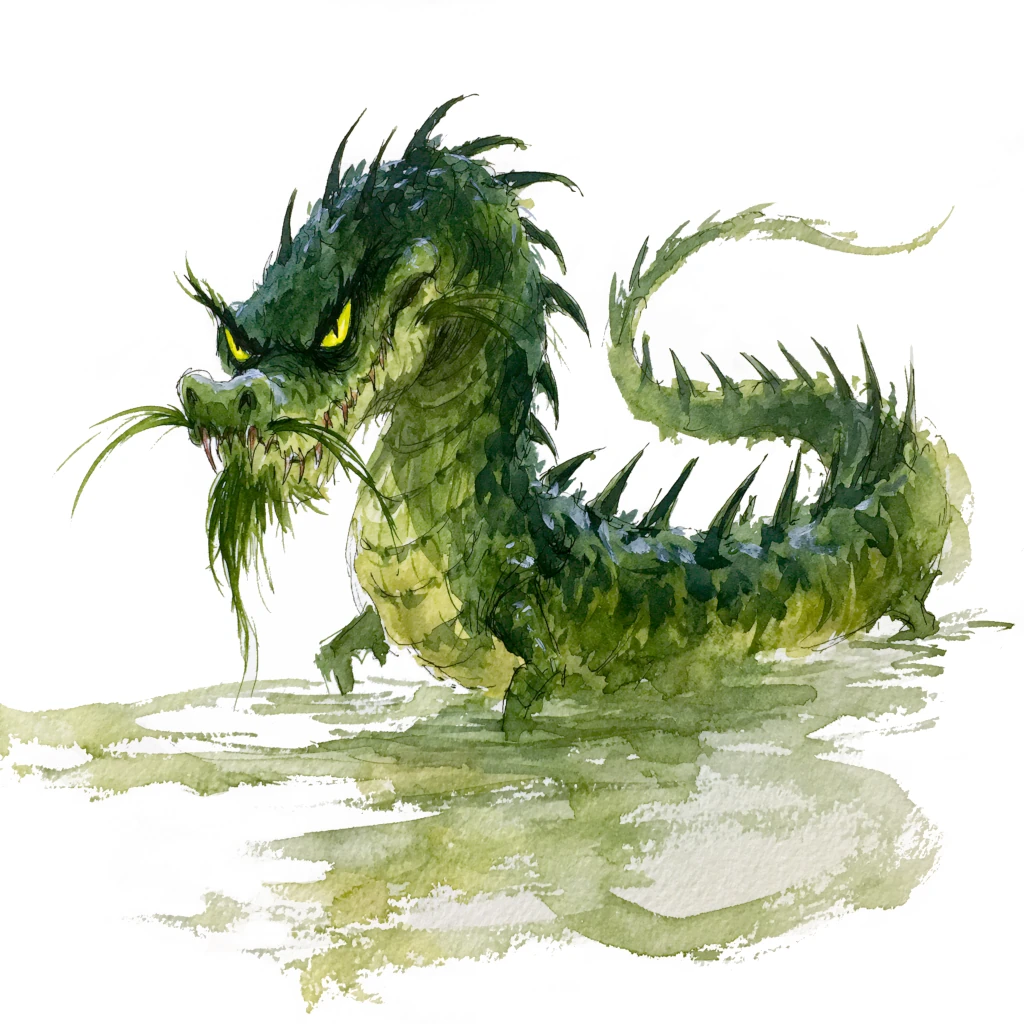
N | Huge | Amphibious | Dragon | Water | CR 20
Water draigs [drayg] are slender, pale grey-blue-green reptiles with a blowhole set in the back of their head, four webbed feet ending in sharp triangular claws, and a long, thin whip-tail built for powerful swimming. Like their kin, water draigs long ago migrated from the Inner Planes to the world of Athas for reasons long forgotten. However, this world became a scorched desert due to abuse of magic. Thus the surviving water draigs became universally hostile to humanity, because of what the berks did to their world, and for the pollution they seem to create wherever they go. While a small number of water draigs remain on the desert-addled prime world defending the rare deep water aquifers, others managed to escape the silty seas and return to the Plane of Water—something of an aquatic paradise for them—but draigs have memories and grudges longer than their tails. On the Inner Planes, water draigs are reclusive, wary predators that would rather remain hidden and strike from the shadows. Like most creatures who hail from Athas, they have powerful psionic abilities, which they can use to devastating effect in combat, for example creating psychic clones to scout for and then demoralise intruders before the draig proper closes for a final brutal melee. For strange reasons, likely related to whatever led to the draigs’ departure in the first place, these draconic monsters are shunned by water elementals, even though neither of two families seems to remember the reason why.
Stats: [ D&D 2e | 4e ] Monstrous Compendium Dark Sun Appendix [2e] p34-35 (renamed to draig from drake to avoid confusion)
Drake, Water
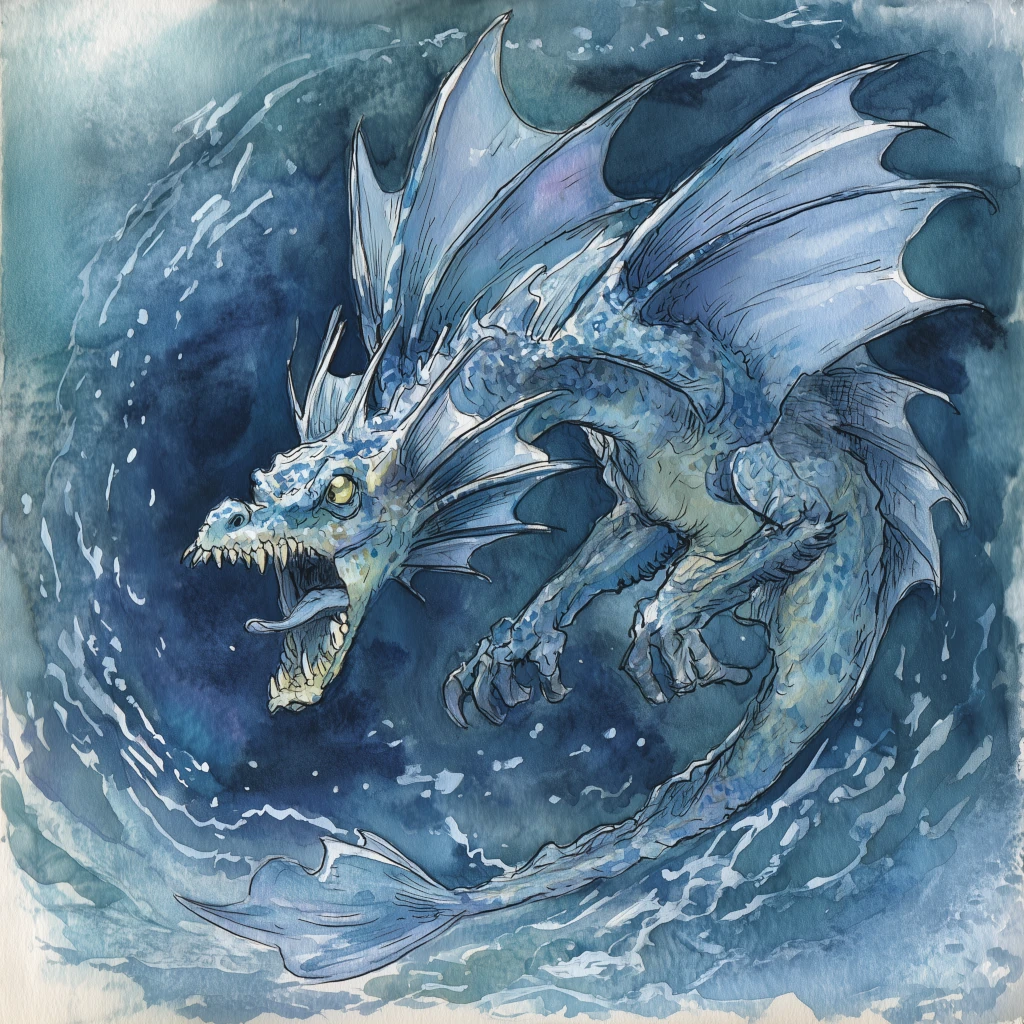
NE | Medium-Large | Amphibious | Dragon | Water | CR 3 (river drake), 6 (sea drake), 8 (water drake)
There are several subspecies of water drake, each adapted to different aqueous environments:
River drakes are the smaller, more predatory aquatic drake species, covered in fish-like scales with sleek fin-wings and a body adapted to hunting in rivers and lakes. They are equally at home on land, swimming, or in the air, and they often launch ambushes from an underwater hiding place. They can spit caustic mucus, and tend to fly into a draconic rage when attacking. When they are not hungry, river drakes can be playful, if rather boisterous. If started young enough, river drakes can be trained to serve as mounts—the locathah call them rivilithis [rivi-LITH-iss]. Dragon Magazine #260 [2e] p34 (rivilithis); Bestiary 3 [PF1e] p107 (river drake); Monster Core [PF2e] 129 (river drake).
Their saltwater counterparts are called sea drakes: amphibious, solitary marine drakes with powerful tails, fins, and webbed feet, resembling winged sea serpents. They prefer to live underwater, but they are capable fliers too. Fortunately, sea drakes are more inclined to hunt alone, for a rampaging band of drakes quickly becomes a serious threat to shipping lanes or coastal settlements. Two close but distinct species of the sea drakes exist. One is able to fire arcs of electricity, while the other uses pressurised water to move and protect themselves. Members of the latter species can also be trained as mounts—they are known by the name of silislithis [sil-iss-LITH-iss]. Dragon Magazine #260 [2e] p34 (silislithis); Bestiary 2 [PF2e] p101 (sea drake)
Drakes who have overcome limitations of particular water types, perhaps because they hail from the Plane of Water itself, are simply called water drakes and are more dangerous still. They can extinguish flames by touch, and are more powerful when either they or their opponent is touching water. Draconomicon [3e] p157 (water drake)
Dwarf, Aquatic
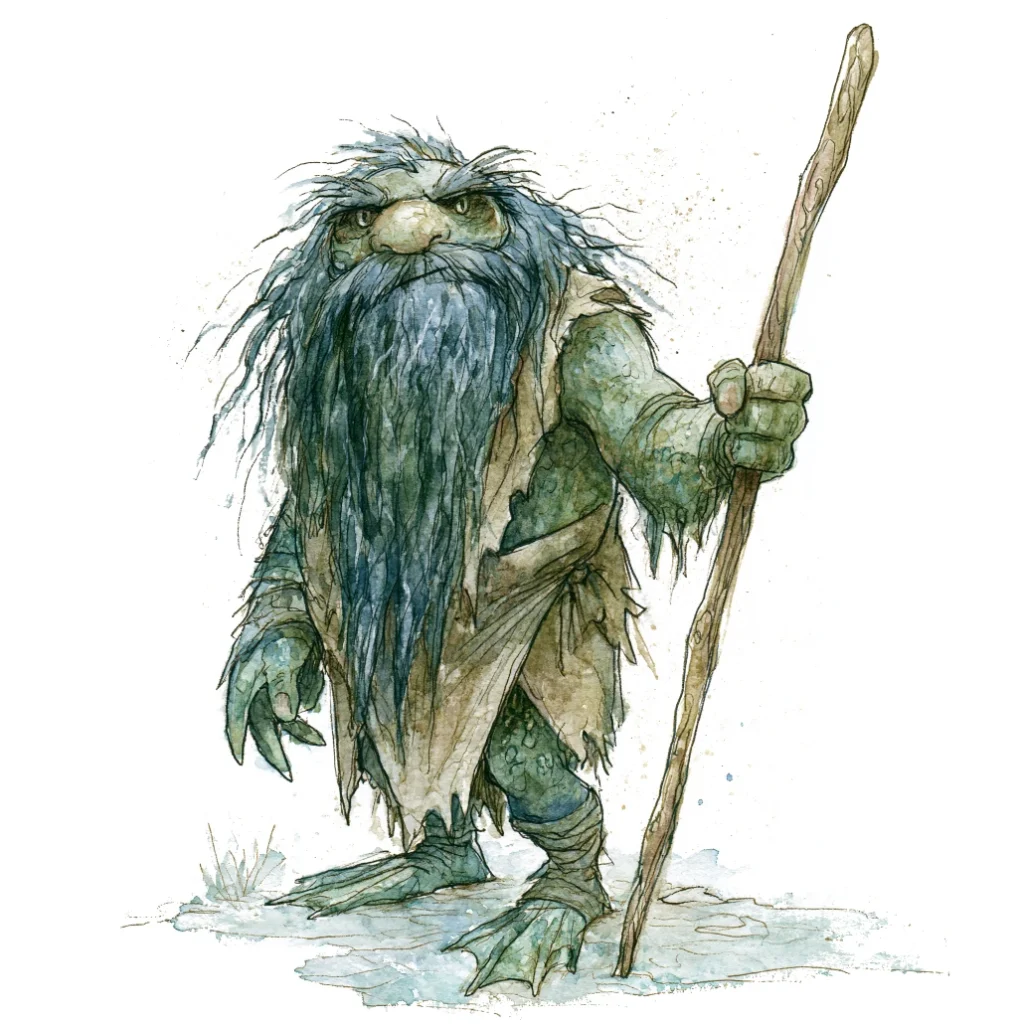
Artesians | Rare | LG | Small | Humanoid | CR varies
Aquatic dwarves are a rare and obscure subspecies of dwarves that have colonised the Elemental Plane of Water. The chant goes the race originated after a clan of dwarves were magically altered—or perhaps cursed—to be able to breathe water rather than air. Aquatic dwarves can only last a few minutes out of water before needing to be submerged again to breathe. While they are humanoid in shape they have adapted to life underwater by developing webbed fingers and toes, and neck gills, which are usually covered by their unkempt beards. Aquatic dwarves are typically good-natured, and find natural allies in tritons, and natural enemies in merrow and sahuagin. They are generally shy creatures and while they often build their own burgs under water near to land-based port cities, they will rarely interact with air-breathers unless there’s a pressing reason. In other ways, aquatic dwarves share habits of their land-based brethren—they are master crafters, although with shell and coral rather than metal; they love pearls and gems; they dig underwater tunnels mining for precious metals; and their underwater engineering prowess is second to none. Some of the more fabulous fortresses in Water have aquatic dwarves to thank for their construction.
Stats: [ 2e ] Port of Raven’s Bluff
Each-uisge

NE | Large | Amphibious | Fey | Plant | CR 7
The older, darker, and more dangerous cousins of kelpies, the each-uisge [eck-OOSH-kya] prefers seas to lakes and rivers. They are foul fey creatures whose true forms are monstrous shape-shifting heaps of rotting plant matter and soaked peat. Like kelpies, each-uisge are intelligent ambush-hunters, who take the shape of humans or horses. However, they are more versatile in their shape-shifting powers, and more dangerously intelligent. Each-uisge mainly feed on humanoid meat, although they can go for a long time without any food, being partially sustained by sunlight. They build simple lairs in underwater caves or in seaweed forests, where they hibernate during winter. On the Plane of Water they are active all the time, and prefer to lurk in the Darkened Depths.
Stats: [ PF 2e ] Homebrew, based on Scottish folklore
Echyan
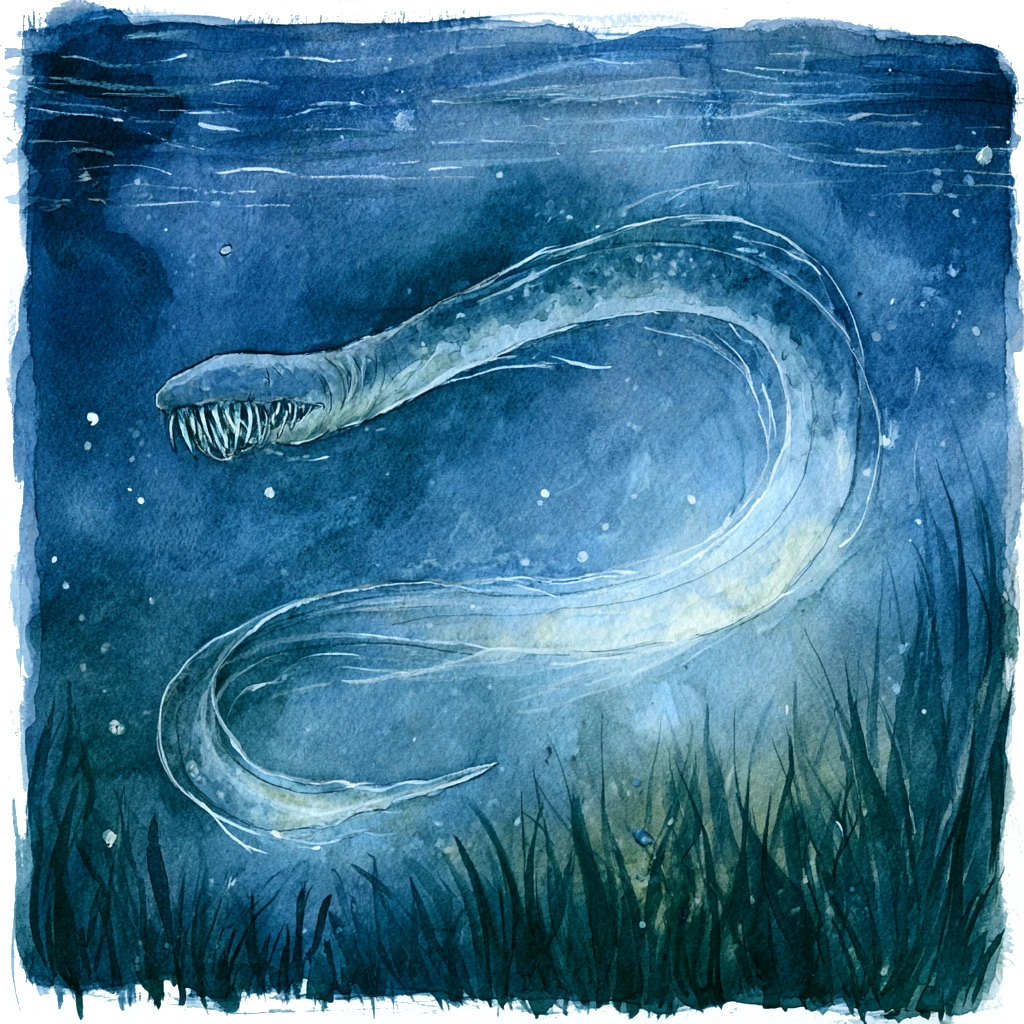
N | Large | Aquatic | Animal | HD 5
Echyans [EK-yan] are large, translucent sea worms from the Western Sea of Toril. They are usually about twelve feet long, have tiny head bulges but no visible eyes, and a suction-cup mouth ringed by three rows of crystalline fangs. In water these worms are almost invisible until they strike. Echyans are able to sense movement through the water, have a blood-sucking attack, and will try to swallow human-sized prey whole. They are migratory predators: they spawn in the mud of riverbeds, feed through the summer on fish and larger prey such as walruses, sea turtles, and whales, then return upriver in winter to breed again. On the Plane of Water, echyan migrate between Deep Water and the border of the Plane of Ooze, where they spawn each cycle.
Stats: [ D&D 2e ] Monstrous Compendium 1997 Annual, Vol. 4 [2e]
Fish
Countless species of fish thrive throughout the Plane of Water. A selection of particularly unusual ones is collected here:
- Archerfish | N | Medium | Animal | Aquatic | CR 1 —Surface swimmers who can shoot a powerful stream of water. Tome of Horrors Complete [PF1e]
- Barracuda | N | Medium | Animal | Aquatic | CR 2 — Carnivorous fish with long bodies and pointed heads. Stormwrack [3e] p147 (dire barracuda); Magnimar, City of Monuments [PF1e]
- Blowfish | N | Large | Animal | Aquatic | CR 5 —An enormous fish with long sharp venomous quills. Pathfinder #56 [PF1e] Raiders of the Fever Sea
- Caribe | N | Huge | Animal | Aquatic | CR 1 — A saltwater piranha. Tome of Horrors Complete [PF1e]
- Carp, Giant | N Gargantuan | Animal | Aquatic | CR 8 — Fifty feet long, legends have it that these ancient carp are intelligent and wise. Homebrew [3e]
- Dunkleosteus | N | Huge | Animal | Aquatic | CR 6 —A gigantic prehistoric fish with a head like a snapping turtle. Bestiary 6 [PF1e]
- Electric Catfish | N | Large | Animal | Aquatic | CR 6 —Slow-moving large goggle-eyed fish with slippery skin that can generate pulses of electricity. Tome of Horrors Complete [PF1e]
- Fangtooth School | N | Large | Animal | Aquatic | Swarm | CR 3 — These fish have such enormous teeth it’s hard for them to even close their mouthes. Giant versions have also been encountered. Howl of the Wild [PF2e] p149
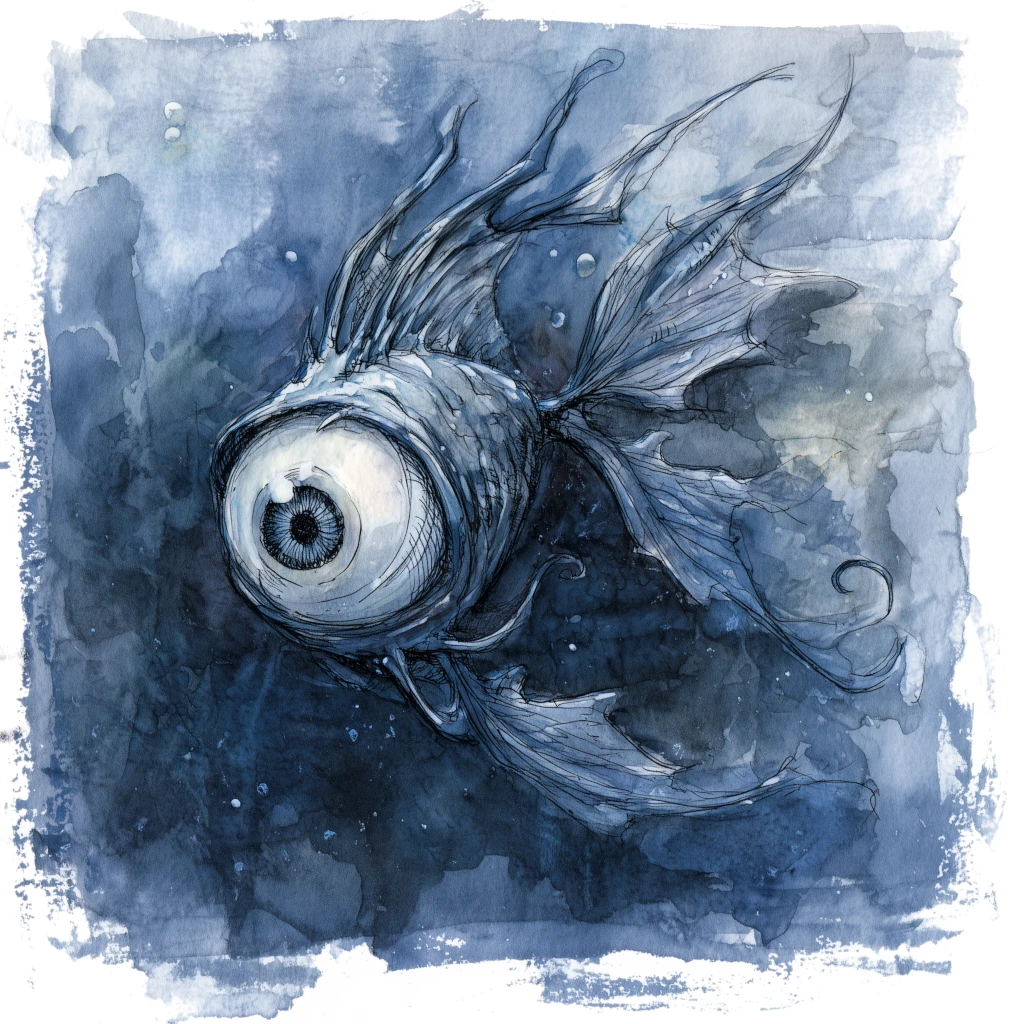
- Floating Eye | N | Small | Aberration | Aquatic | HD 1 — Strange, but peaceful fish that defends itself by hypnotising their foes. Monstrous Compendium 1995 Annual, Vol. 2 [2e]
- Gar | N | Medium | Animal | Aquatic | CR 1 — Long, lean muscular fish with sharp teeth. Bestiary 2 [PF1e]
- Hagfish | N | Huge | Animal | Aquatic | CR 1 — An eel-like fish covered in viscous slime with the mouth of a lamprey. Pathfinder #56 [PF1e] Raiders of the Fever Sea
- Hetfish | N | Tiny | Aquatic | Beast | HD 1-3 — Strange fish that live around pockets of Fire and surrounds themselves with an aura of boiling water. Monstrous Compendium 1995 Annual, Vol. 2 [2e]; Dungeon Magazine #112 [3e] p100
- Masher | N | Huge | Animal | Aquatic | 8 HD — These colourful fish feed on corals that they “mash” with their beak, but they are nonetheless very dangerous. They have spikes that inject deadly paralysing venom and have a nasty tendency to sting first and swim away second. Monstrous Compendium 1995 Annual Vol. 2 [2e]
- Pike | N | Huge | Animal | Aquatic | CR 4 — A long and slender spotted fish with a toothy maw what prefers ambush attacks. Tome of Horrors Complete [PF1e]
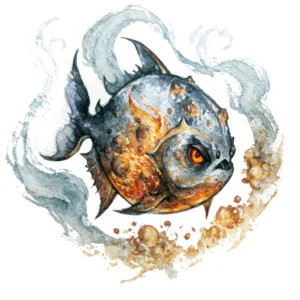
- Piranha Swarm | N | Large | Animal | Aquatic | Swarm | CR 3 — One of the most feared fish of the Plane of Water, a swarm of piranhas is capable of devouring even a large creature rapidly. Even more ferocious are the larger megapiranhas. Monstrous Compendium Vol 2 [2e]; Stormwrack [3e] p162; Monster Manual [5e]; Bestiary 6 [PF1e] p129; Pathfinder #39 [PF1e] The City of Seven Spears p83 (megapiranha swarm); Bestiary 3 [PF2e] p99
- Pufferfish | N Tiny | Animal | Aquatic | CR -1 — These tiny fish can puff themselves up to attack all creatures near them with toxic venom spines which can cause paralysis. Ultimate Wilderness [PF1e]; Bestiary 3 [PF2e] p99
- Quipper | N | Huge | Animal | Aquatic | CR –1 — Small vicious fish with razor-sharp teeth, a kind of cold water piranha. Tome of Horrors Complete [PF1e]
- Ramfish | N | Large | Aquatic | Beast | CR 7 — A large armoured fish with two huge horns which it uses to ram its prey. Stormwrack [3e]
- Stonefish | N | Tiny | Animal | Aquatic | CR 0 — Well-camouflaged fish who disguise themselves as reef rocks, hiding their venomous spines. They are even more dangerous when swarming. Howl of the Wild [PF2e] p148 (as swarm)
- Swordfish | N | Large | Animal | Aquatic | CR 3 — Fast, dolphin-sized fish with long slashing bills. Pathfinder #56 [PF1e] Raiders of the Fever Sea; Howl of the Wild [PF2e] p149
- Tiger | N | Huge | Animal | Aquatic | CR 1 — A brawny fish with wolf-like teeth. Pathfinder #56 [PF1e] Raiders of the Fever Sea
- Verme | N | Gargantuan | Amphibious | Animal | HD 18 — Giant carnivorous catfish domesticated by mavkas and vodyanoys and valued for the innate magic of their scales. Monstrous Compendium 1995 Annual Vol. 2 [2e]
Flotsam Terror
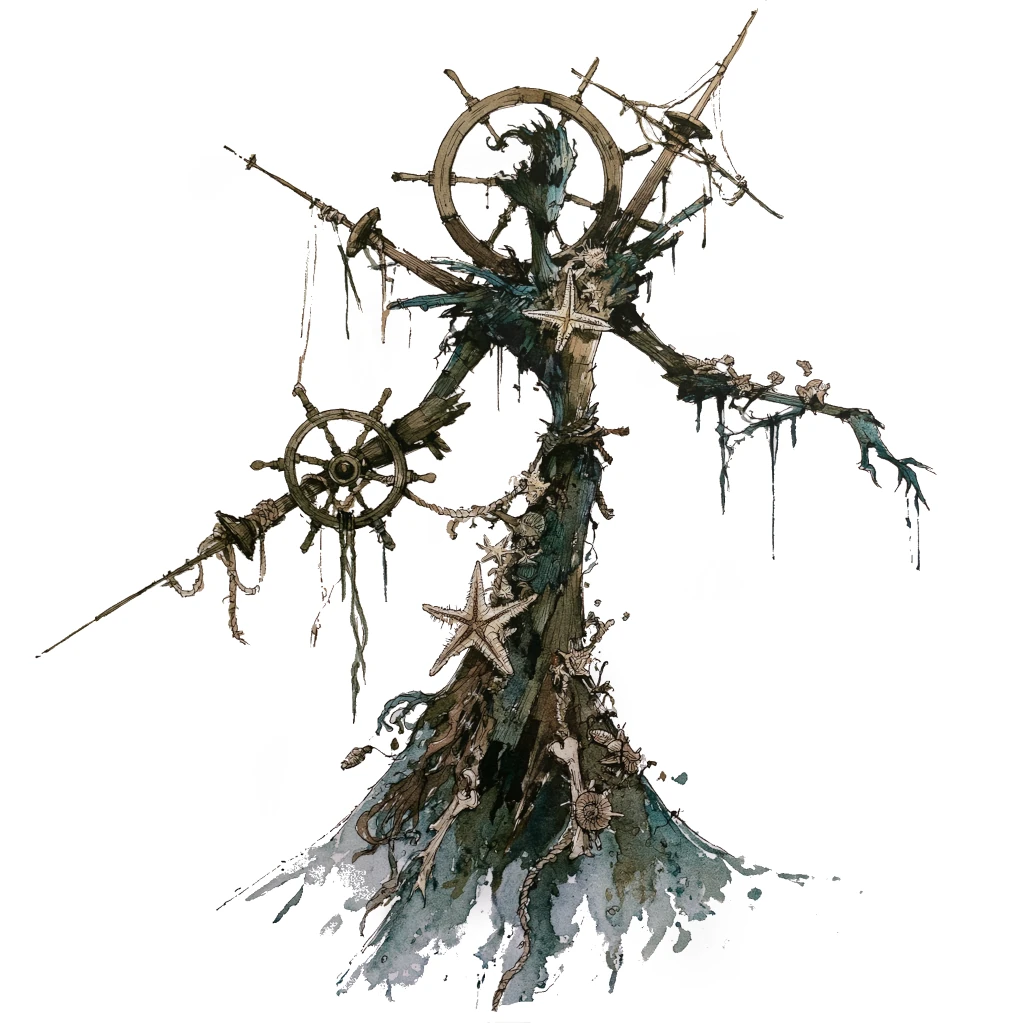
Jetsam Swarm; Sailor’s Bane | NE | Small | Undead | Unholy | CR 4
Formed from the washed-up souls of hundreds of sailors drowned by accident, mutiny or murder, flotsam terrors are weird conglomerations of driftwood, broken ships, ropes and body parts, animated by ghostly spirits. These undead constructs stalk the seas of the Prime and the dangerous depths of the Plane of Water seeking revenge on the living for their plight. They can disguise themselves as seaweed and debris, and also heal themselves by incorporating fresh pieces of refuse or drowned victims into their cursed bodies.
Stats: [ PF 1e | 2e ] Pathfinder #121 [PF1e] The Lost Outpost p86; High Seas [PF2e] p118
Gawwar Samakat
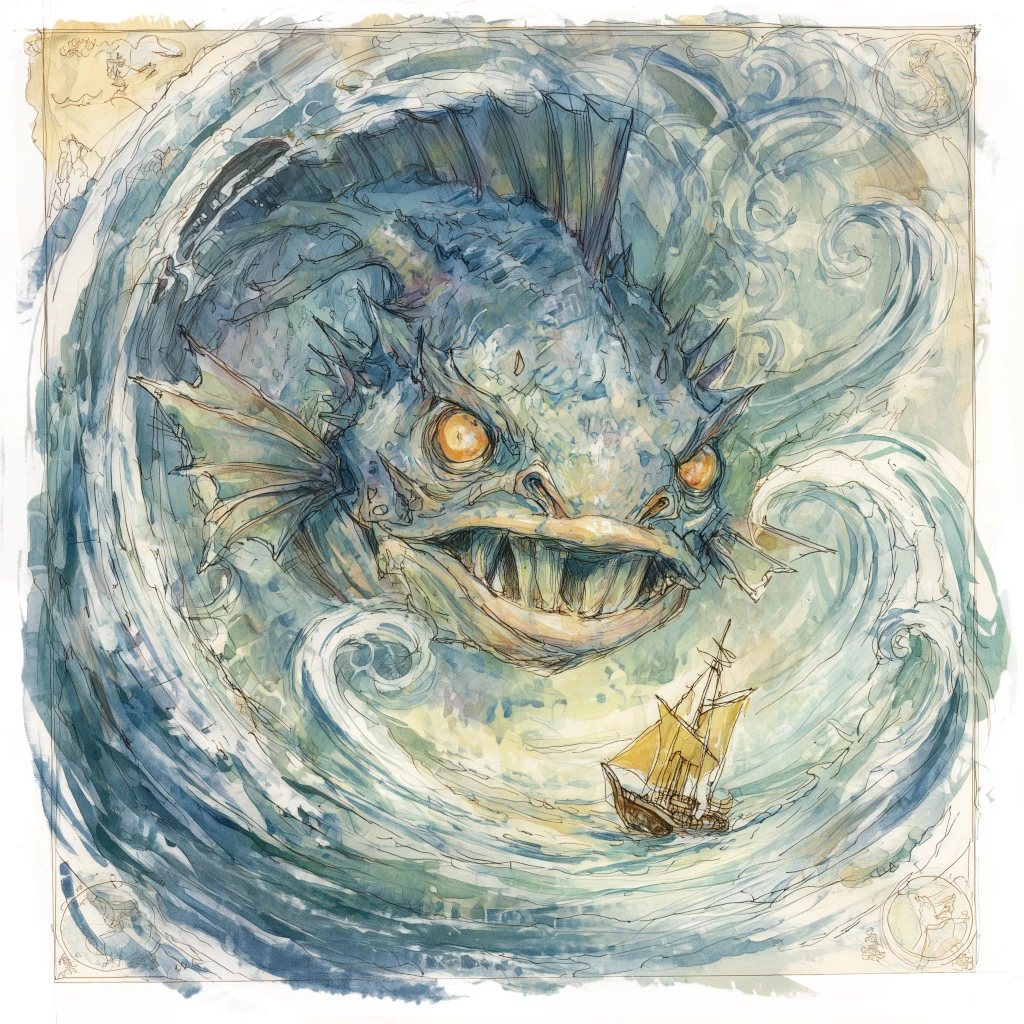
Afanc | N(E) | Gargantuan | Amphibious | Beast | CR 23
The gawwar samakat [GAH-wah sam-ARE-kat], or afanc, is a huge gray-blue-gray sea predator native to the waters of Zakhara, with smooth scales and a massive fish-like body that is large enough to be mistaken for a whale. It is somewhat intelligent, with some cutters claiming gawwar samakat can speak or even sing in loud, gravelly voices to lure sailors into danger. Watch out for their whirlpool attack: the gawwar samakat cruises near the surface in shallow water, then rapidly circles the target vessel to drag it under with a sudden vortex. Smaller boats are especially vulnerable to this strategy. These creatures are selective but relentless predators that generally prefer to hunt ships, though they will also attack unlucky berks who fall overboard directly, and can swallow victims whole.
Stats: [ D&D 2e | 5e ] Mythologywatch: This creature is also called afanc—not to be confused with the beaver-like fey beast that can turn invisible and hunts with poison darts.
Galvo
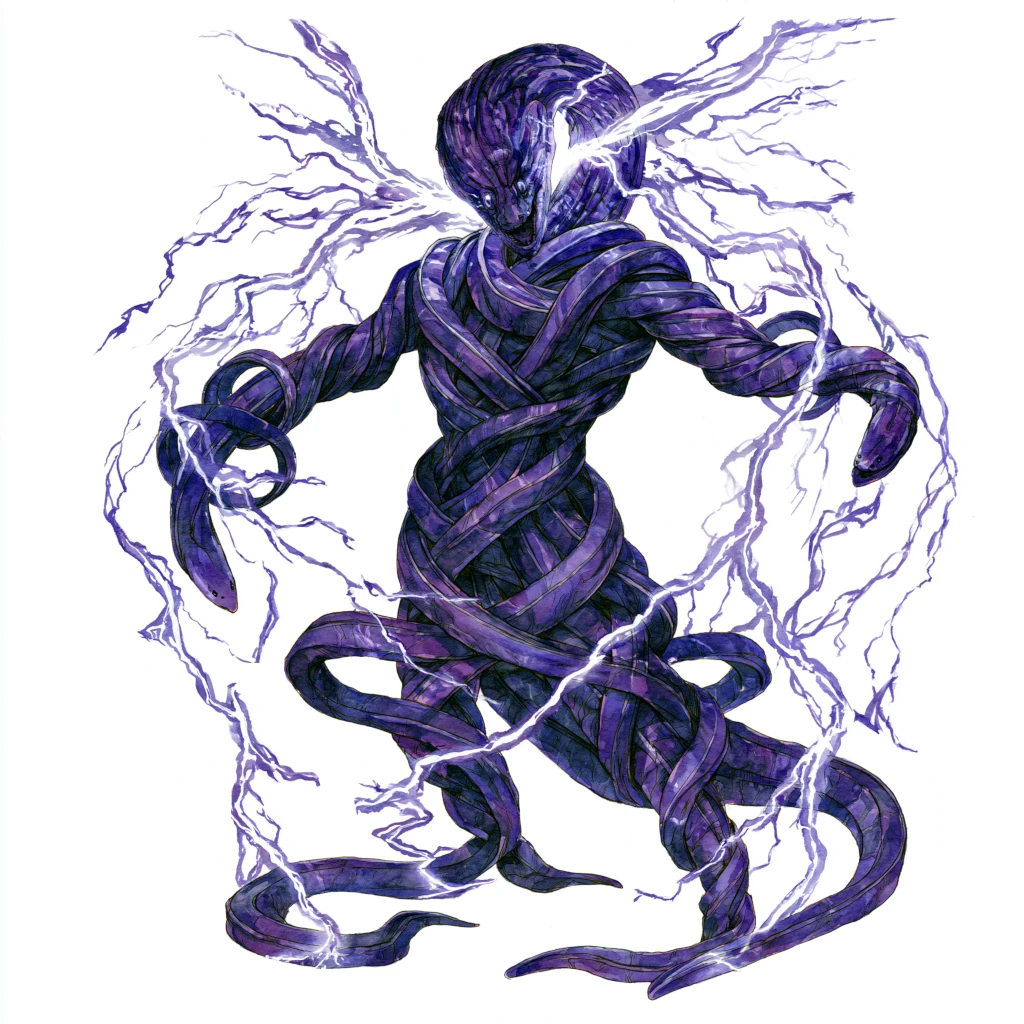
NE | Medium | Aberration | Amphibious | CR 9
Galvos [GAL-voe] are humanoid-shaped masses of electric eels, formed from dozens of writhing bodies knotted together into a constantly shifting, crackling form. Their “skin” is an undulating tangle of eels, and electricity arcs through them in blue flashes—killing small fish around them and causing nearby metallic items to drift slowly toward their bodies. Chant goes that galvos were originally shock-troops (pun intended, cutter), created by the enemies of aboleth, sahuagin and skum to wage war on these creatures. However, it seems whoever created them also lost control of them, and galvos have since spread into both the warmer, shallower waters of the Prime and also into the Plane of Water. They prey on aquatic creatures, coastal settlements, and unlucky bashers who make their homes in air pockets near galvo territory. Galvo prefer to lurk in water caves out of direct light, enveloping victims inside their writhing bodies to feed, and dragging prey back to their lairs. Planewalkers should note that as swarms, galvos are immune to many types of magic and damage, and that when threatened or seriously damaged they are able to separate into individual eels to escape in all directions, regroup and reform, and return later.
Stats: [ PF 1e | 2e ] Bestiary 4 [PF1e] p120; Bestiary 3 [PF2e] p103
Giant, Tide
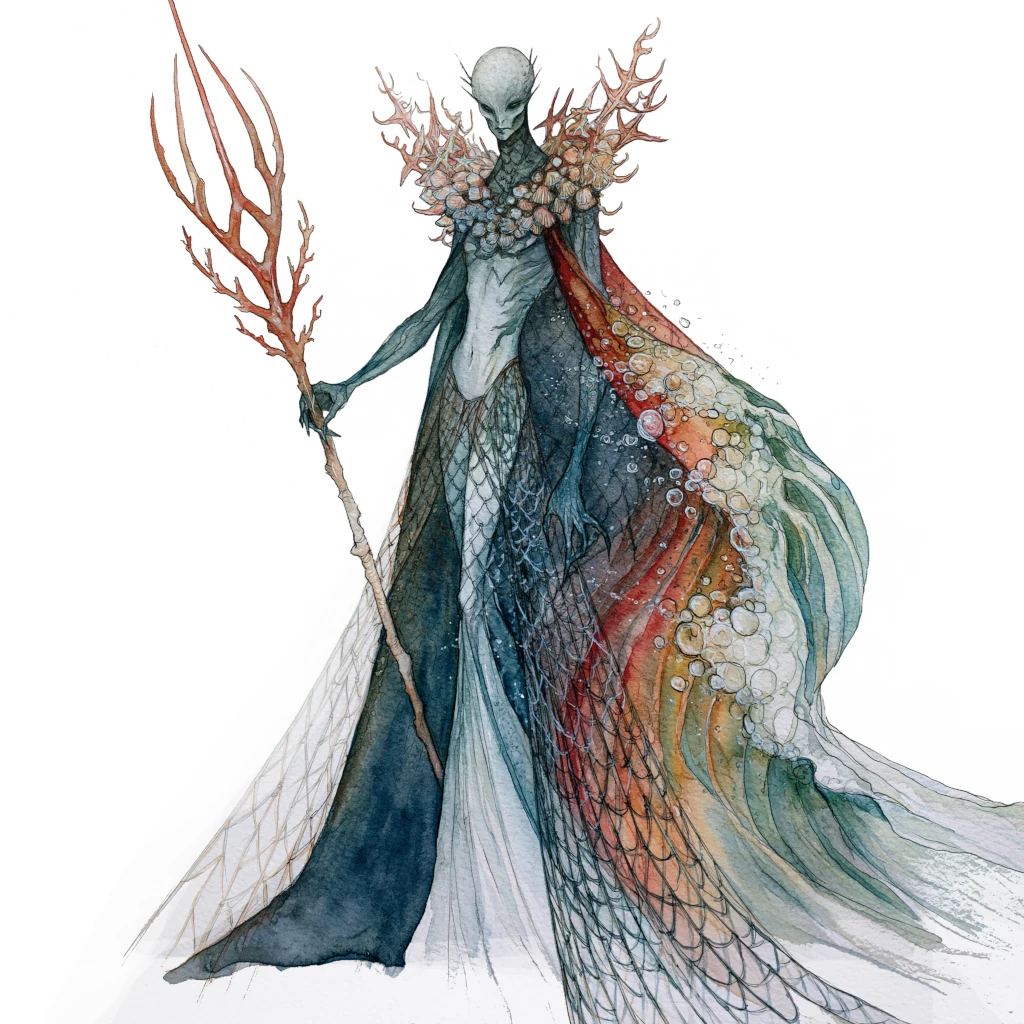
Ocean giant; Reef giant | NG | Large | Amphibious | Giant | Humanoid | Water | CR 13
Tide giants, also called reef or ocean giants, depending on who you ask, are sea giants who favour the solitude of the open ocean rather than the bustle of civilisation. They are huge, powerfully built giants with sea-toned skin, flowing robes, and a deep connection to the water. They lounge in the surf, revel in the sensory beauty of the shore, and become territorial only when disturbed. They are scavengers, fishers, traders, and sometimes protectors of maritime routes. These giants generally forage for food on reefs, and trade pearls and coral for goods they cannot craft for themselves. They sometimes charge tolls to ships that pass through their territory, in which case they will in return defend travellers against threats from the deep. Ocean giants channel sea magic through their tidal cloaks, and they are known for their spectacular competitions and marriage customs.
Stats: [ D&D 2e | PF 1e | 2e ] Monstrous Manual [2e]; Bestiary 4 [PF1e] (as ocean giant CR 14); Monster Core 2 [PF2e] p165 (tide giant CR 13); see also Tome of Horrors [PF1e] (sea giant CR 10 and a playable ancestry);
Golden Ammonite
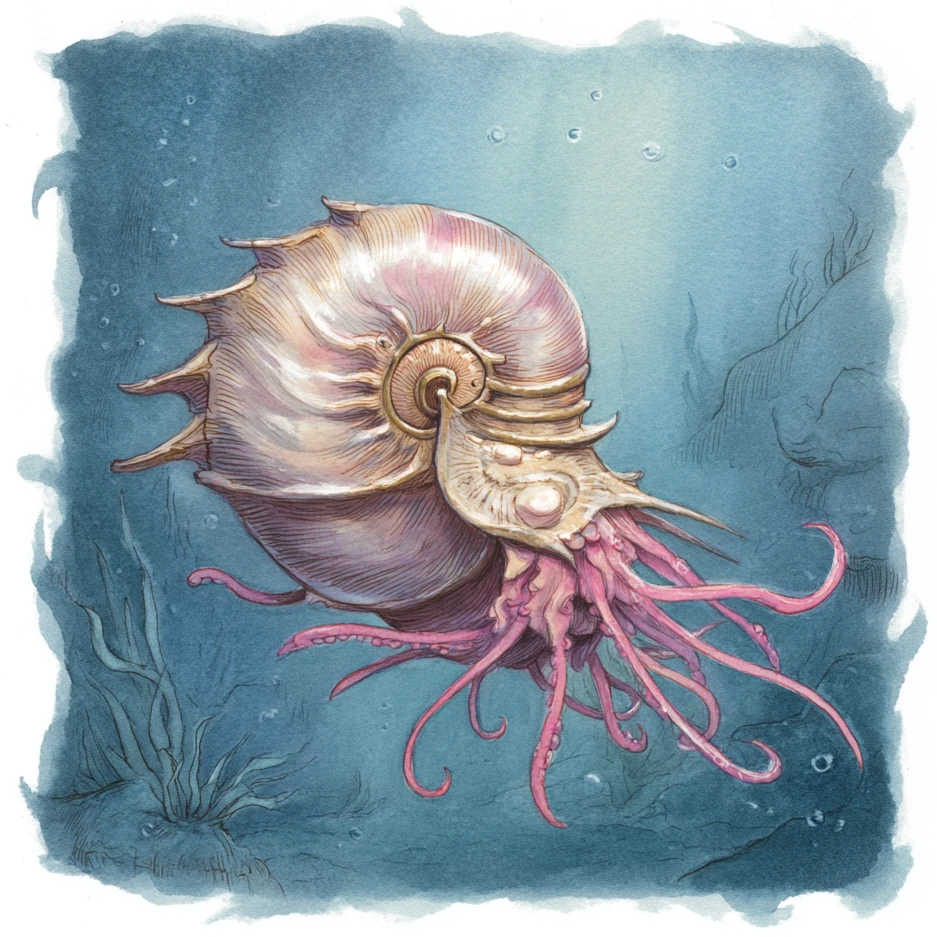
N | Uncommon | Large | Animal | Aquatic | HD 8
Huge spiral-shelled cephalopods, golden ammonites are just as intelligent as giant nautiluses, but even more beautiful and reclusive. Golden ammonites appears in two related versions—both are immense deep-sea molluscs with colourful soft bodies and brilliant gold shells. The Torillian ammonite lives in ocean trenches, feeding on sea-floor debris and minerals, and accumulates the gold on its shell from the sediment it eats. Its rudimentary intelligence is alien, and its powers are strange. It has pressure-sensitive skin and long-range vibration detection, and can launch magical balls of light from its eye-stalks aimed at blinding intruders. When cornered, it fights back with its constricting tentacles. The dragon ammonite is far rarer, found only in the deepest of marine canyons. Their shells are great coils like those of a hermit crab, and are made from solid gold. This makes them incredibly valuable, especially if they can be acquired undamaged.
Stats: [ D&D 2e ] Monstrous Compendium Forgotten Realms Appendix II [2e]; Monstrous Compendium 1997 Annual Vol. 4 [2e]
Grindylow
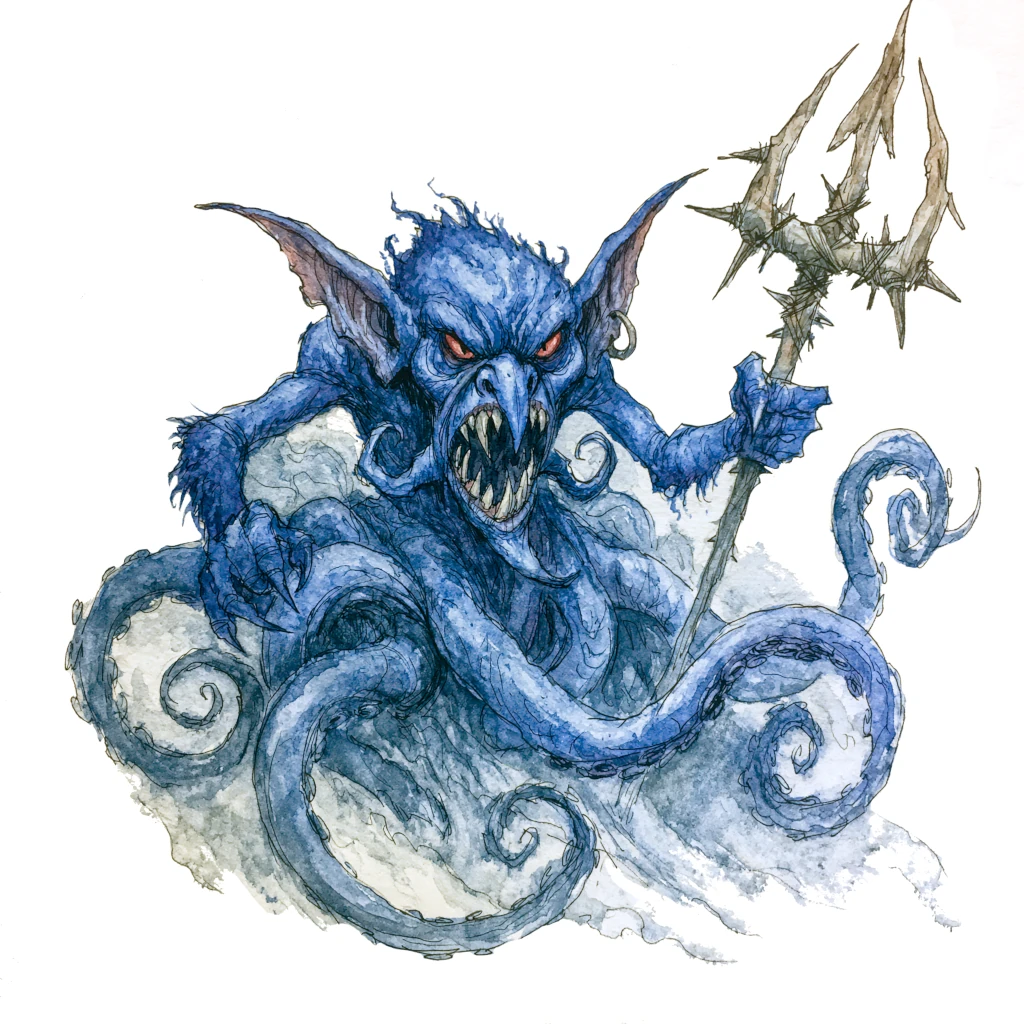
CE | Small | Aberration | Amphibious | CR 0
Grindylows [grin-DEE-low] are goblin-like aquatic aberrations with a split body plan: a wide-mouthed, blue- or green-skinned upper half and a lower half made of writhing suckered tentacles. They inhabit either fresh and briny waters, and make their lairs in kelp forests, shipwrecks or submerged caves. Grindylows are typically found in schools rather than as solitary hunters, and are both pack predators and opportunistic scavengers that will eat anything they can overpower. In a large enough group they can be brave too, with individuals often grabbing and hanging on to larger prey while the group tears in. While they are chaotic and squabbling, a pack can become dangerous if led by a more dominant stronger creature. Exceptional grindylow may even break away from their pack to pursue adventuring or other ambitions.
Stats: [ PF 1e | 2e ] Bestiary 2 [PF1e] p148; Blood of the Sea [PF1e] p17 (playable ancestry); Monster Core [PF2e] p186
Gutaki
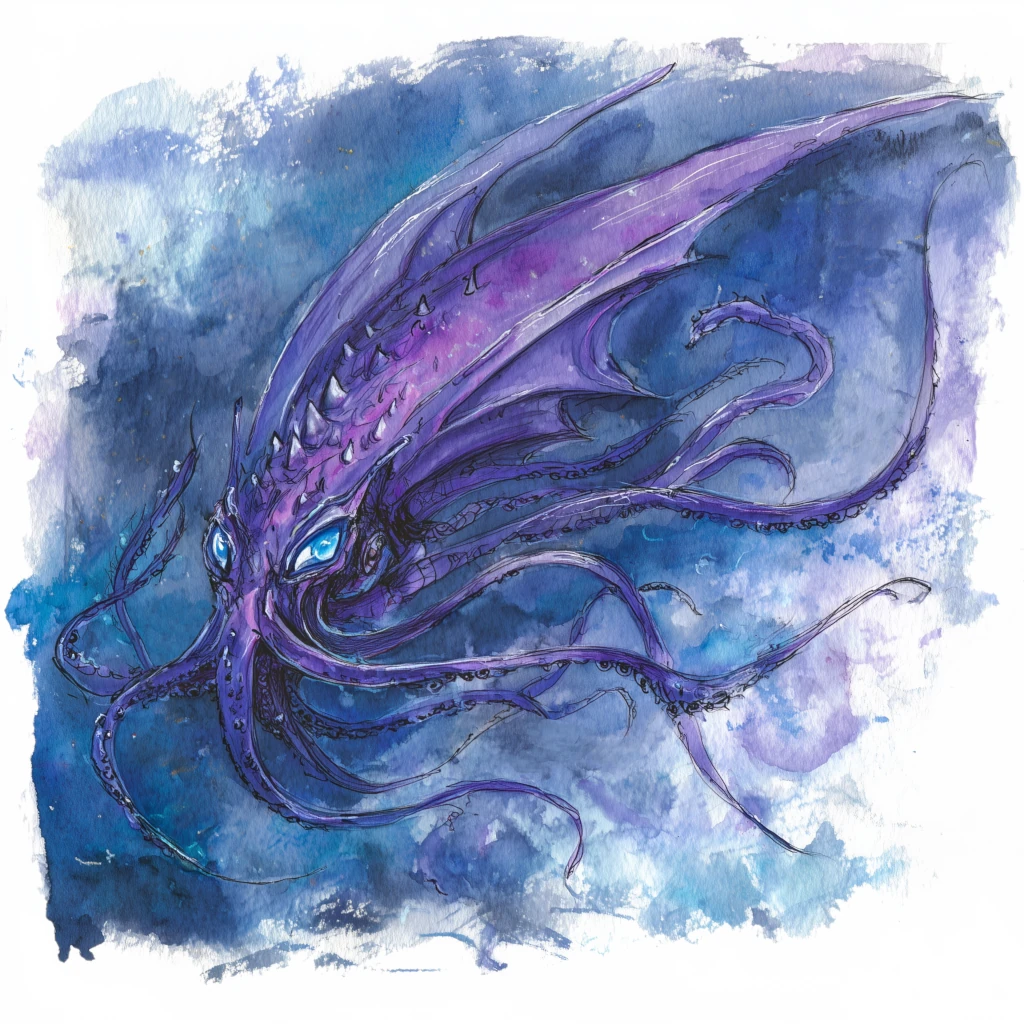
Devilfish | NE | Large | Aquatic | Beast | CR 4
Gutaki [goo-TAR-key] are large, seven-tentacled cephalopods, deep reddish-purple in colour with ice-blue eyes, barbed hook-lined arms, and a bulky body about ten feet long. They prefer the darker depths where their colouration helps them blend in, but they’ll haunt brighter waters too—and even invade docks and ship decks—when overfishing or disturbance pushes them out of their hunting grounds. Gutaki have a rudimentary intellect, able to understand multiple languages, although they “speak” in a garbled mix of tongues, uttering threats and declarations of their hunger in a way that sounds like nonsensical babbling to most listeners. They have a savage, poisonous bite, will try to grapple berks and swallow them whole, and they can squirt out a slick cloud of inky blood to conceal themselves. Some graybeards wonder whether the malevolent nature of these horrid creatures hints that they were once fiendish invaders from the Outer Planes who have become naturalised to the Plane of Water. This would also explain the propensity for many of them to worship the Abyssal Lord Dagon, and why so many creatures of the Water call them ‘devilfish’.
Stats: [ PF 1e | 2e ] Bestiary 2 [PF1e] p88; High Seas [PF2e] p119
Hafgufa

N | Gargantuan | Aquatic | Kaiju
In the deeper parts of the Bottomless Deep there dwells something unimaginable. A creature so large, it can prey on whales like they’re sardines. A creature so ancient, the powers themselves don’t know where it came from. Hafgufa [haff-GOOF-er] is colossal, reaching almost a mile in length. Its almost impossible to see its whole body clearly at once time—most who encounter the beast assume Hafgufa to be an inanimate floating rock. Its hide is gray and covered with barnacles and coral. Parasitic crustaceans feed on its skin, while being hunted by larger fish that travel alongside it. Only from a great distance can hafgufa be revealed to resemble a cross between a whale, a fish and a marine reptile, with a huge triangular head. Its pectoral fins are quite small, but its vertical tail is long and quite powerful. Hafgufa’s small eyes are almost always covered by an eyelid and virtually invisible on its body.
Stats: [ No stats, not fightable ] Homebrew, but based on mythology
Hai Nu
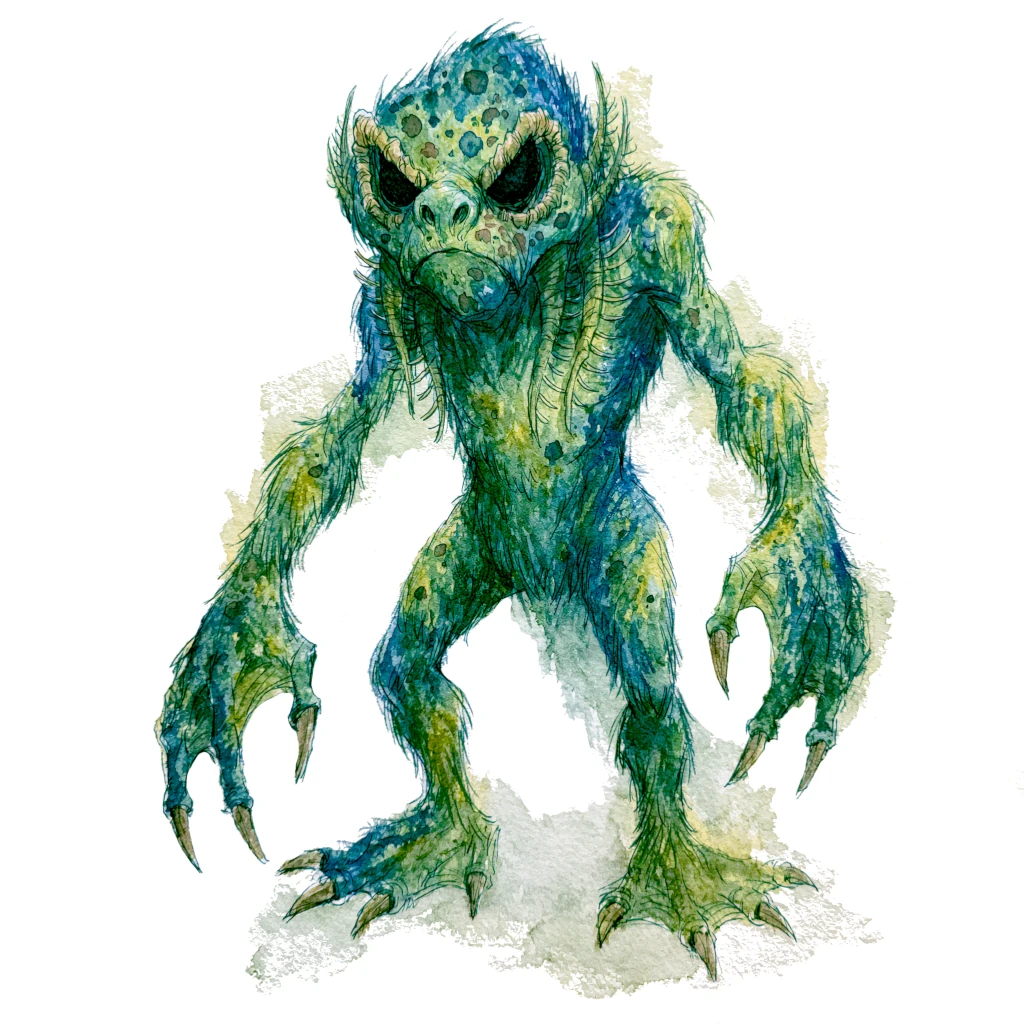
LN | Medium | Amphibious | Humanoid | HD 1–4
Hai nu [hi-NOO] are intelligent aquatic humanoids originally from Kara-Tur, a continent of Toril. They’re built like lean, furry sea folk with green, blue, or yellow coats, webbed hands and feet, blunt claws, gill slits, and dark ridged eyes. Graybeards reckon they are distant relatives of locathah and shalarin. They can breathe both water and air, but they do not tolerate long stays on land. Hai nu society is peaceful, matriarchal, and close-knit, and they prefer to dwell in warm waters where they live in the hulls of wrecks or shelters woven from living seaweed, where they farm fish and gather oysters and mussels. While not religious, the hai nu bow to the authority of the Sea Lord, their patron power of the Celestial Bureaucracy. They love to gather the lost treasures of shipwrecked sailors, but will always bury half of their findings as a tribute to the Sea Lord. In return they can petition him to send storms or typhoon dragons to defend them from their enemies. Hai nu are not normally aggressive, but they are formidable when defending their territory or their honour—they fight in coordinated schools, also calling upon sharks and other sea beasts as allies.
Stats: [ D&D 2e ] Monstrous Compendium [2e] Kara-Tur Appendix
Hammerclaw
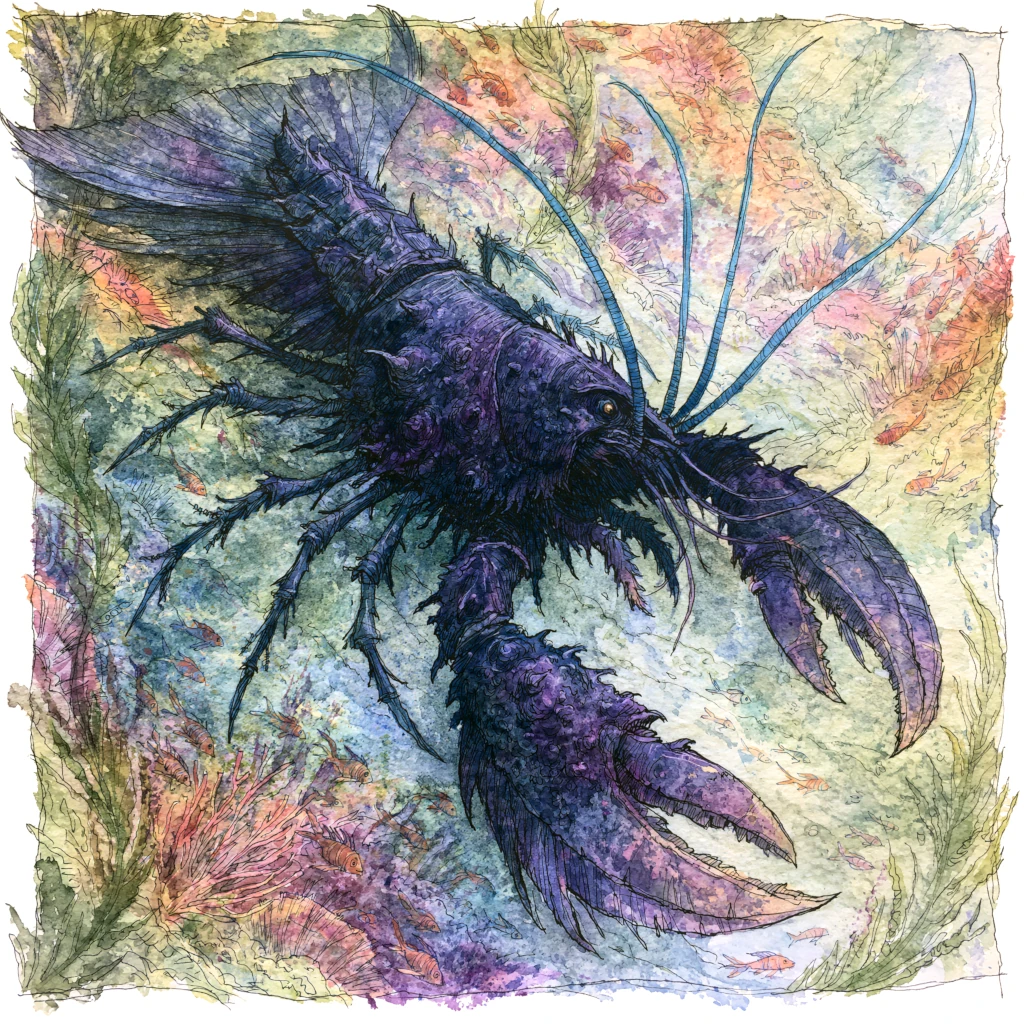
NE | Large | Aquatic | Beast | CR 4
Hammerclaws are horse-sized lobster-like aquatic predators with purple mottled shells, blue eye stalks, and enormous claws. They are dim-witted beasts, but just intelligent enough to speak a little Aquan, and just malicious enough to attack cutters even when they are not hungry. Their preferred method of attacking is to ambush—they lurk under cover, then dart out and stun prey with a sonic pulse crested by clacking their huge claws with enough force to stun unlucky victims. They will then closing in to grapple, crush, and eat their prey. Coast-dwellers should beware too, for hammerclaws are are amphibious and can also survive on land, but they are strongest in water, where their camouflage and swimming speed make them difficult to detect and outrun.
Stats: [ D&D 3e ] Stormwrack [3e]
Hippocampus
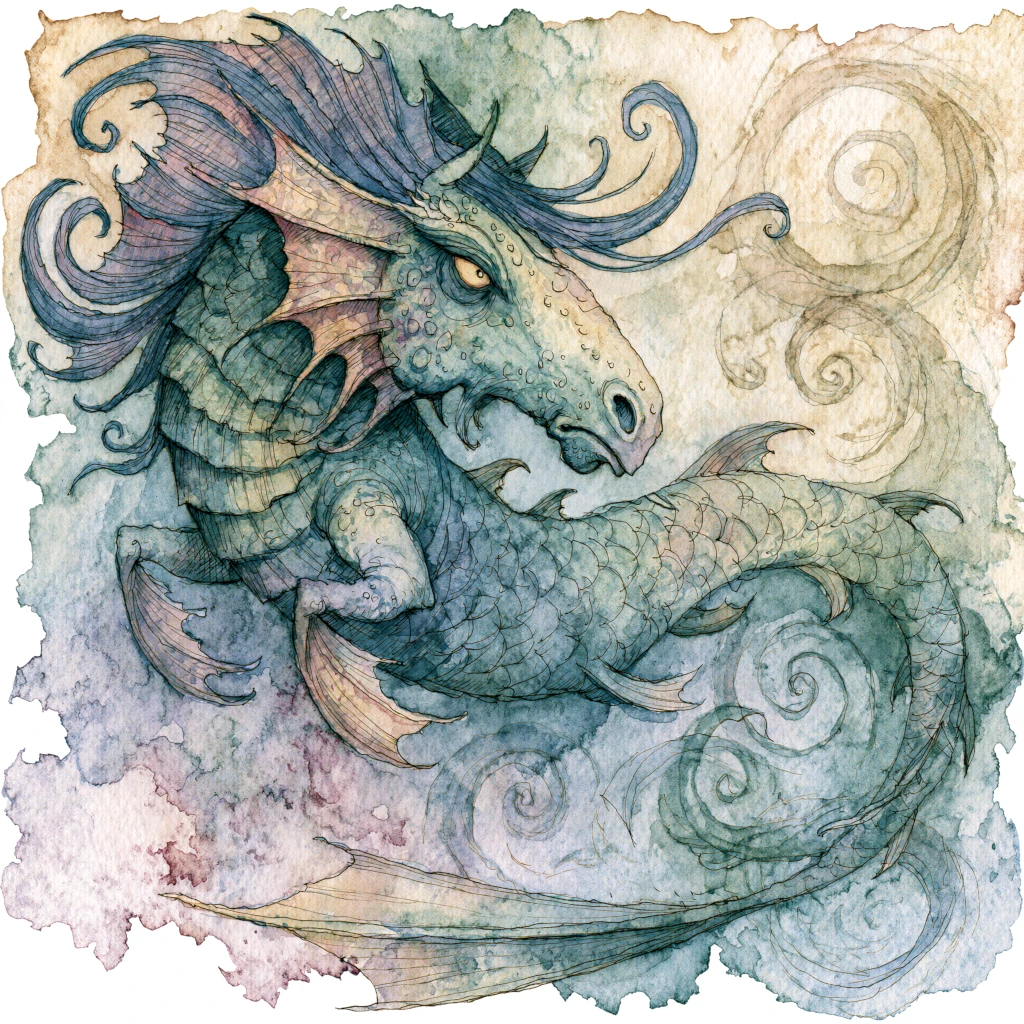
N | Large | Aquatic | Animal | CR 1
Hippocampi [hip-oh-CAM-pie] are hybrids of horse and fish, with equine heads, torsos, and forelegs that end in fins rather than hooves, flowing into long, powerful aquatic tails. Their colours range from ivory and silver to sea-green, deep blue to brilliant cerulean, and often shift subtly with the waters around them. Hippocampi breathe salt or fresh water, and air for limited periods, making them useful not only in underwater sea but also in rivers or lakes, and crossings between the Plane of Water and the Prime. On Water, hippocampi occupy the niche of swift, intelligent herd animals: grazers of sea-grass and that travel in shoals seeking the best grazing grounds. Tritons breed prize specimens and train them as mounts, using them to carry messengers, patrol undersea borders, and transport travellers across distances where even magical swimming would be exhausting. Untamed herds of hippocampi follow migratory currents rich in food, and avoiding predatory sea drakes and worse. Their intelligence and social instinct allows hippocampi to remember routes, recognise individuals, and form lasting bonds with riders who treat them well. They are especially valuable in the Inner Planes because they can navigate the boundary between worlds: carrying tritons safely through elemental vortices into the Prime, or across planar pathways like the Seventh Sea, where waters of different planes mingle. A well-treated hippocampus is a loyal companion and fearless guide, while a mistreated one may play along, only to abandon its rider in deep waters.
Stats: [ D&D 2e | 3e | 5e | PF 1e | 2e ] Monstrous Manual [2e]; Stormwrack [3e]; Mythological Creatures [5e]; Bestiary 2 [PF1e] p155; Monster Core [PF2e] p196
Ichtyodrake
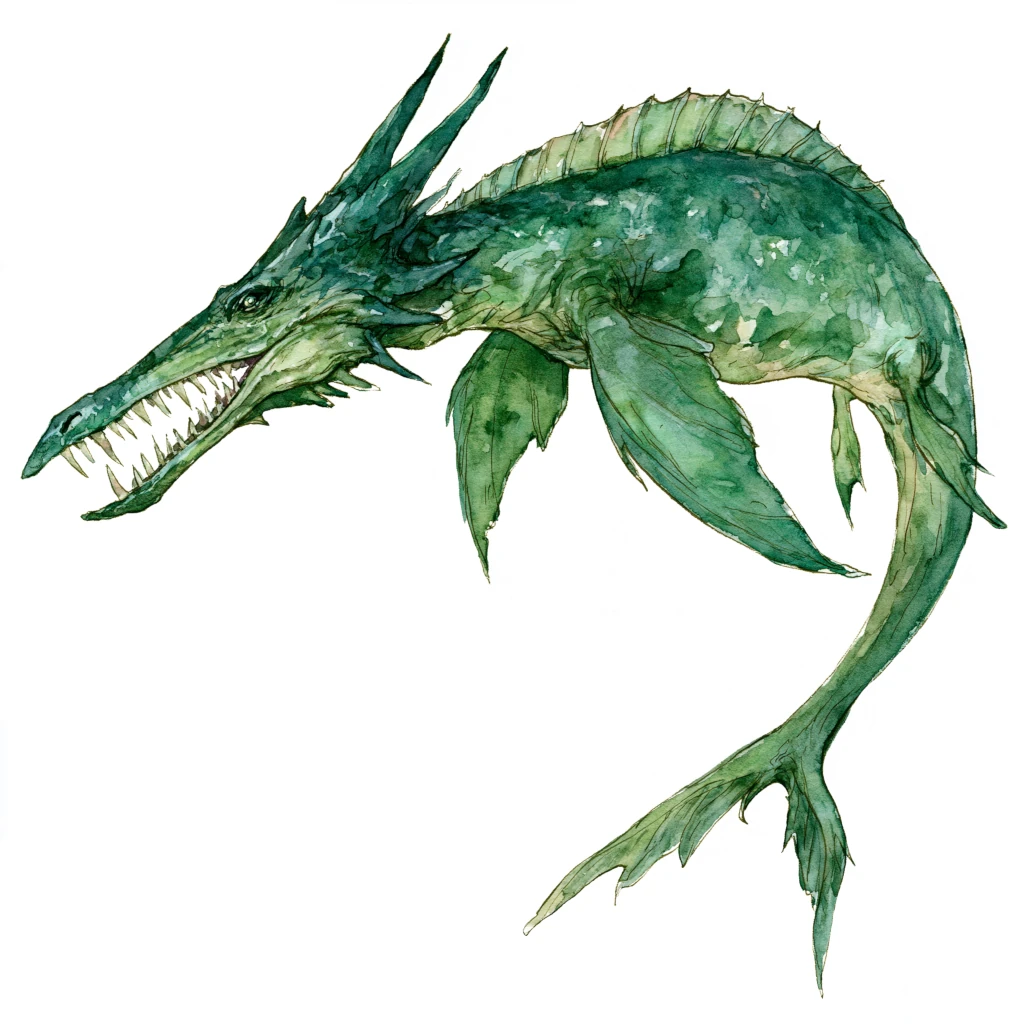
N | Rare | Gargantuan | Aquatic | Dragon
Ichtyodrakes [ick-THEE-oh-drayke] are quick, lobe-finned apex predators that use powerful sounds to hunt or communicate. They are one of the most feared predators of Prime oceans, and can grow up to 100 feet in length. They use sonic vibrations in the water to fool predators that there is prey thrashing around in the water—sharks, killer whales ands the like—and they they power in and each the predators like they are shrimp. They’re so huge that they can even swallow a great white shark whole. Finally, they have a sonic breath weapon capable of crushing ship’s hulls and a berk’s bones alike. Graybeards reckon that they may be some kind of ancestor or throw-back of the draconic race, like the dinosaurs are to birds.
Stats: [ D&D 1e ] Dragon Magazine #134 [1e] p9
Icthyocentaur
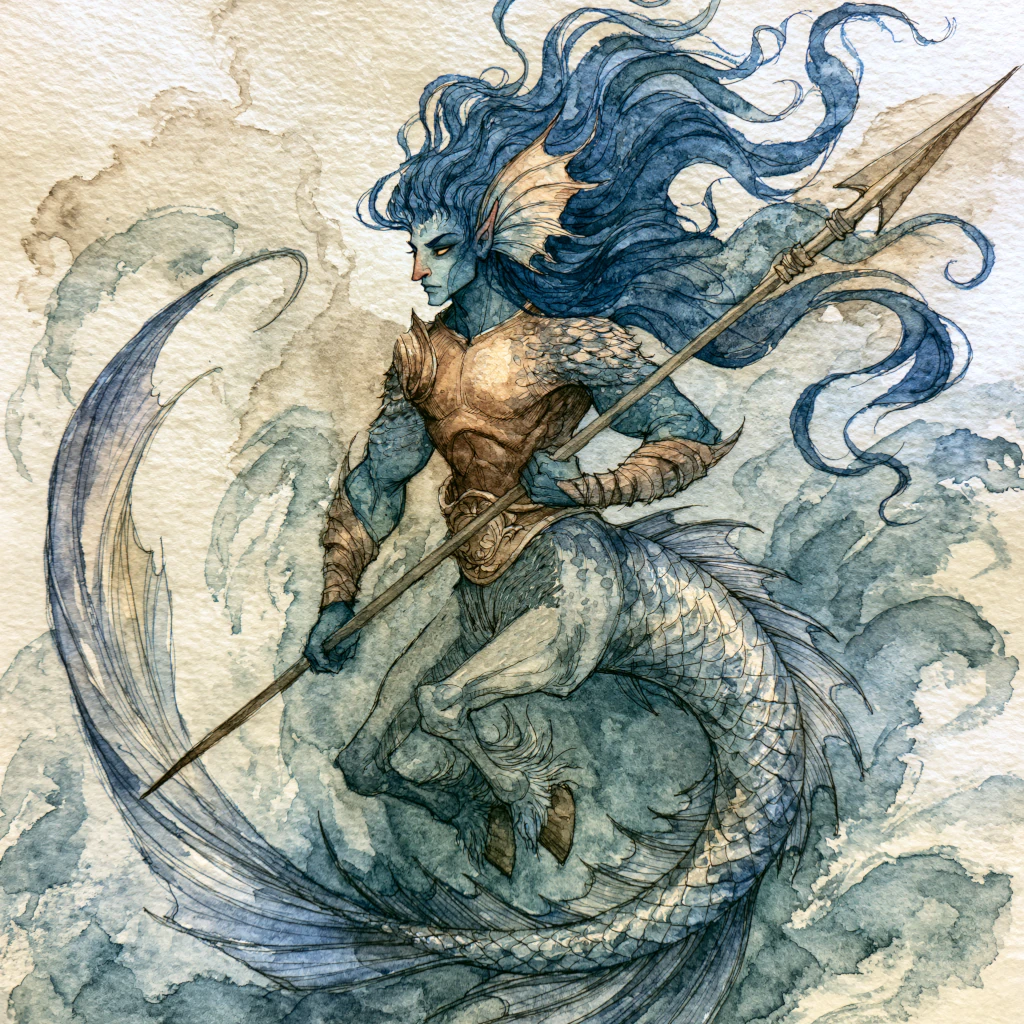
N | Large | Aquatic | Humanoid | CR 5
Icthyocentaurs [ick-THEE-oh-SEN-tors] have the head and torso of a humanoid with long blue mane and a pair of muscular arms. Below their chest they have the lower abdomen of a hors, including a pair of hoofed front legs. The rear part of their body is that of a serpentine fish, which in combination with their two powerful legs they are able to propel themselves through the water at great speed. Ichthyocentaurs decorate their bodies with intricate tattoos reminiscent of the folk of nearby human societies, and their skin is well-tanned by the sun. They use shell or coral armour when hunting or fighting, but wear little else aside from a few pieces of meaningful jewellery, which they fashion from sea creatures like crabs (whose claws are favoured for circlets), inlaid with mother-of-pearl for decoration.
Stats: [ PF 1e ] Bestiary 5 [PF1e] p146
Incutilis
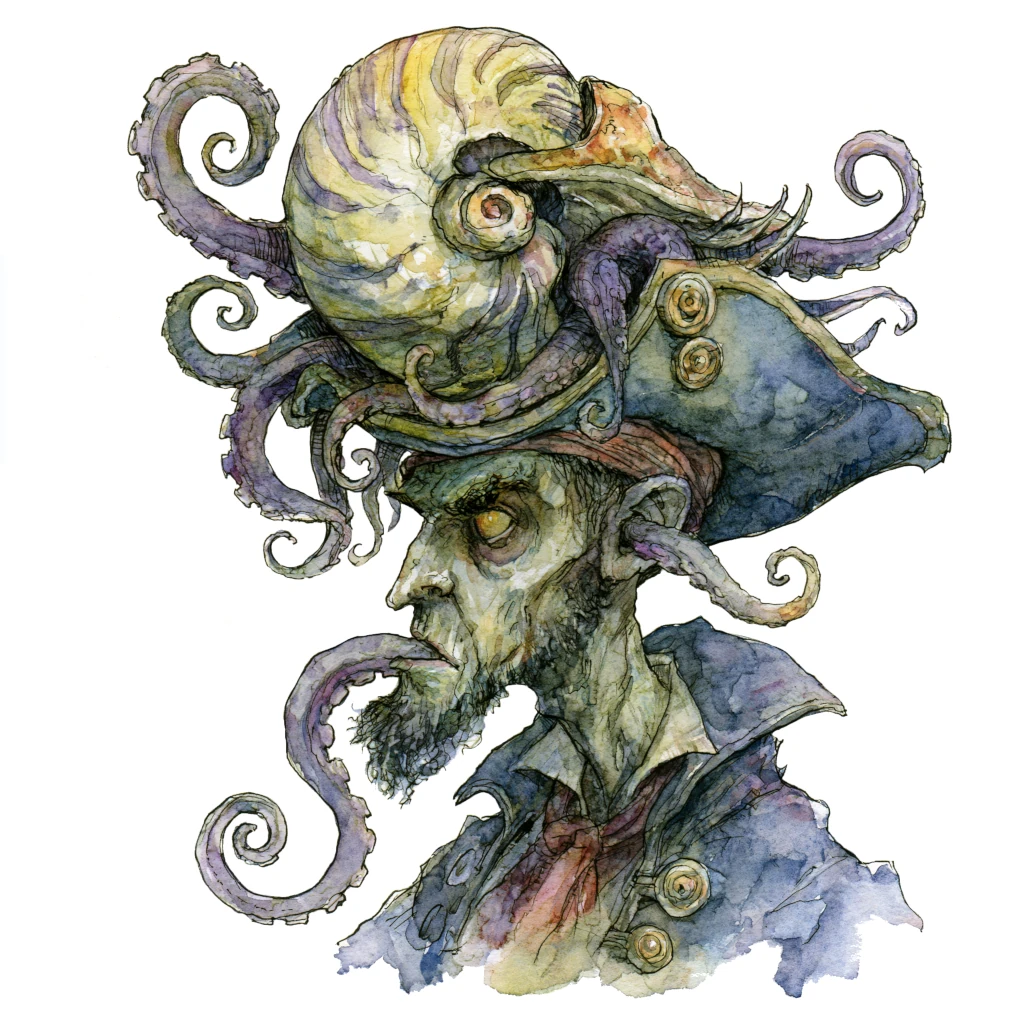
LE | Uncommon | Tiny | Aberration | Aquatic | CR 2
An incutilis [in-CUT-ill-iss] is a small, intelligent aberration resembling an oversized nautilus, measuring about four feet from shell to tentacle tips. Its shell is marked with crimson streaks that resemble the ridges of a brain, while its soft body and numerous tentacles remain mostly hidden—until it attacks. Incutilis begin life as opportunistic bottom-feeders in the deep ocean, consuming crustaceans and then larger prey such as sharks or whales. Mature individuals eventually develop a preference for the neural tissue of intelligent animals. They are most at home in dark and warm waters, where they can observe potential prey and easily retreat from danger.
The truly horrific life stage of the incutilis is when they become puppetmasters. They drive their tendrils into an unconscious or restrained creature’s nervous system, and exude noxious chemicals to seize control of the body. The resulting mindless zombie can serve as transport, labour, bait, or a weapon, allowing the aquatic aberration to overcome its poor mobility out of water and move on land or infiltrate ships. A living host usually dies from the process, but if one is not available then at a push a recently dead body can be animated by the incutilis as a jerking, corpse-like conveyance, at least until the incutilis withdraws its tendrils. Incutilises are not obviously driven by hatred or cruelty. Their behaviour is coldly practical, governed by hunger, curiosity, and self-preservation. It is in their interests to preserve useful populations of humanoids as recurring sources of food and hosts. In the Plane of Water, large colonies may maintain hidden herds of captives in caves, periodically harvesting brains or commandeering bodies for excursions. Their ultimate purpose remains uncertain: they may simply be seeking nourishment and mobility, or they may be carefully testing the limits of land-dwelling life, building an alien intelligence network one stolen nervous system at a time.
Stats: [ PF 1e | 2e ] Bestiary 4 [PF1e]; Monster Core 2 [PF2e] p198
Isonade
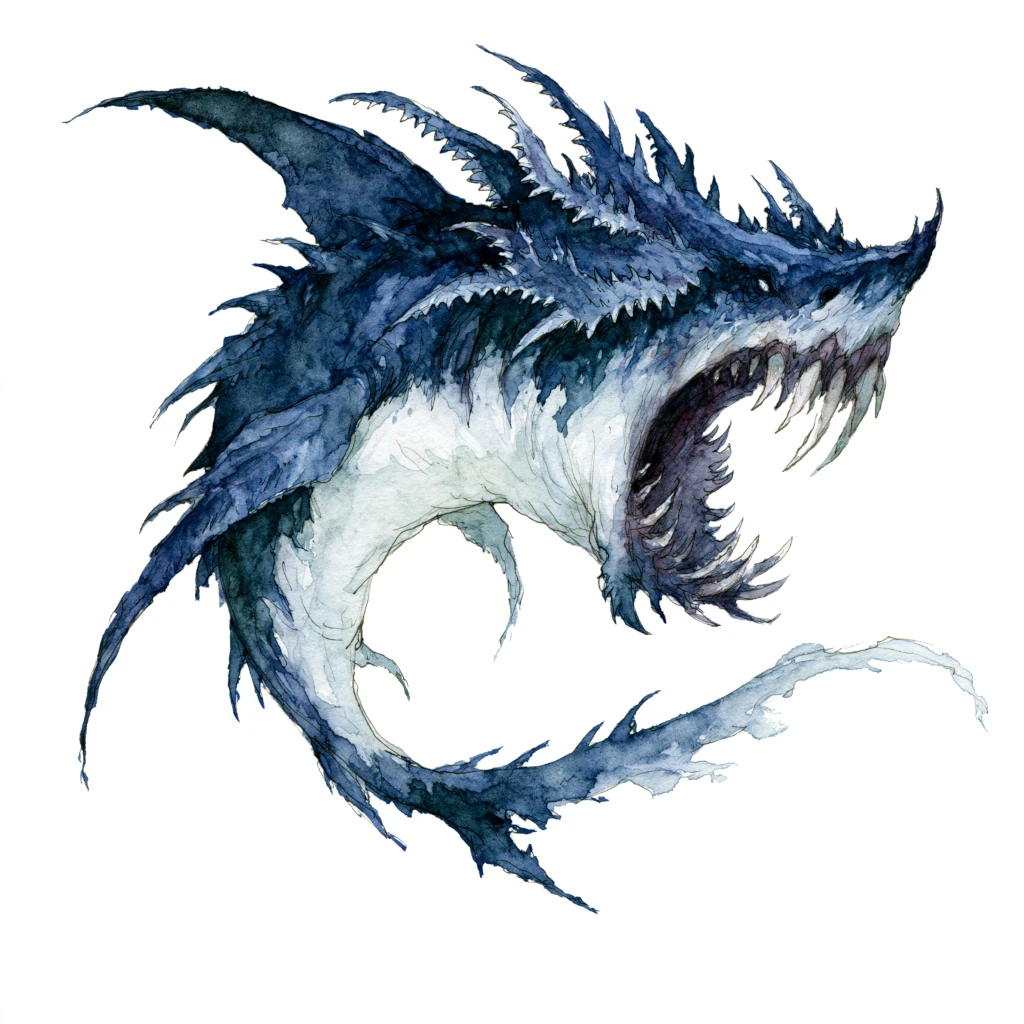
Okuchi wani | CE | Gargantuan | Aquatic | Beast | CR 15
Notoriously stealthy and elusive, few cutters have seen an isonade [eye-so-NADE] and even fewer have survived. Looking like giant sharks the size of a ship, isonades are unmistakable because their entire bodies are covered with razor-sharp barbs and hooks. Despite their shape they’re able to move with incredible grace, silent and deadly, swimming without a splash. They can stealthily sneak up on ships to attack by surprise, aiming to scuttle the vessel, knock tasty mortals into the water, snare them on their hooks and drag them into the depths to drown and eat them. Unless killed by violence, isonades seem to be effectively immortal, with some individuals thought to be more than ten thousand years old. Their secret to longevity is unknown, but might be related to their habit of hibernating for years at a time. When they are sleeping the ocean collectively breaths a sigh of relief, but all creatures dread an isonade being woken by an earthquake, volcano or planar conjuction, for they always emerge from their torpor ravenous and murderous.
Stats: [ PF 1e ] Bestiary 5 [PF1e] p147. Mythologywatch: The isonade, or okuchi wani, is an enormous barbed shark from Japanese mythology
Ixitxachitl
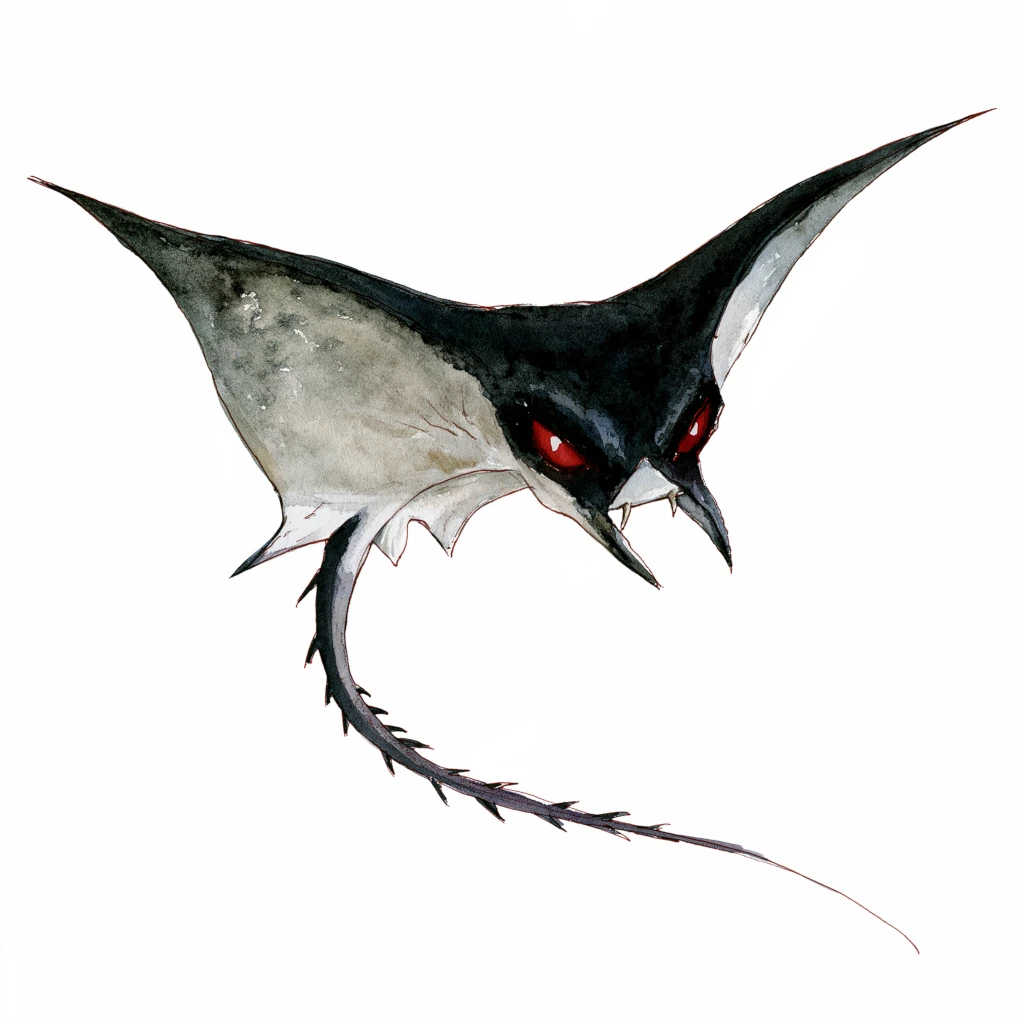
Demon ray | CE | Small | Aberration | Aquatic | CR 1+
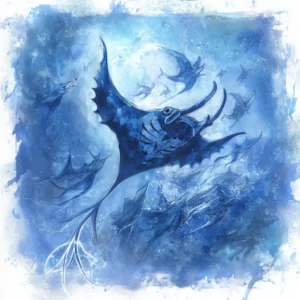
Ixitxachitl [ish-it-SHACH-itl] are a race of intelligent and wicked manta rays whose vile society revolves around slavery of other aquatic creatures, and the murder of any who resist. They have black scales on their backs, and fine white scales on their soft underbellies. Most ixitxachitl are loyal servants of the Abyssal Lord Demogorgon, with the most fanatical being priests of his cult. A select few ixitxachitl are ‘blessed’ with the ability to drain the life force from their victims, and these so-called vampiric ixitxacitl (although planewalkers should note they are not in fact undead) inevitably rise to become the leaders of the race. There’s another offshoot of the race called the ixzan who are just as nasty but prefer fresh water to salt, and the evil power Ilxendren to Demogorgon.
Stats: [ D&D 2e | 3e | 5e | PF 1e ] Monstrous Manual [2e] (ixitxachitl); Monstrous Compendium 1994 Annual Vol. 3 [2e] (ixzan); Monster Manual II [3e]; Out of the Abyss [5e] p225; Creature Chronicle homebrew [PF1e]. Canonwatch: The ‘official’ Pathfinder version of the ixitxachitl is the more easily pronounced devilfish (see above)
Jellyfish
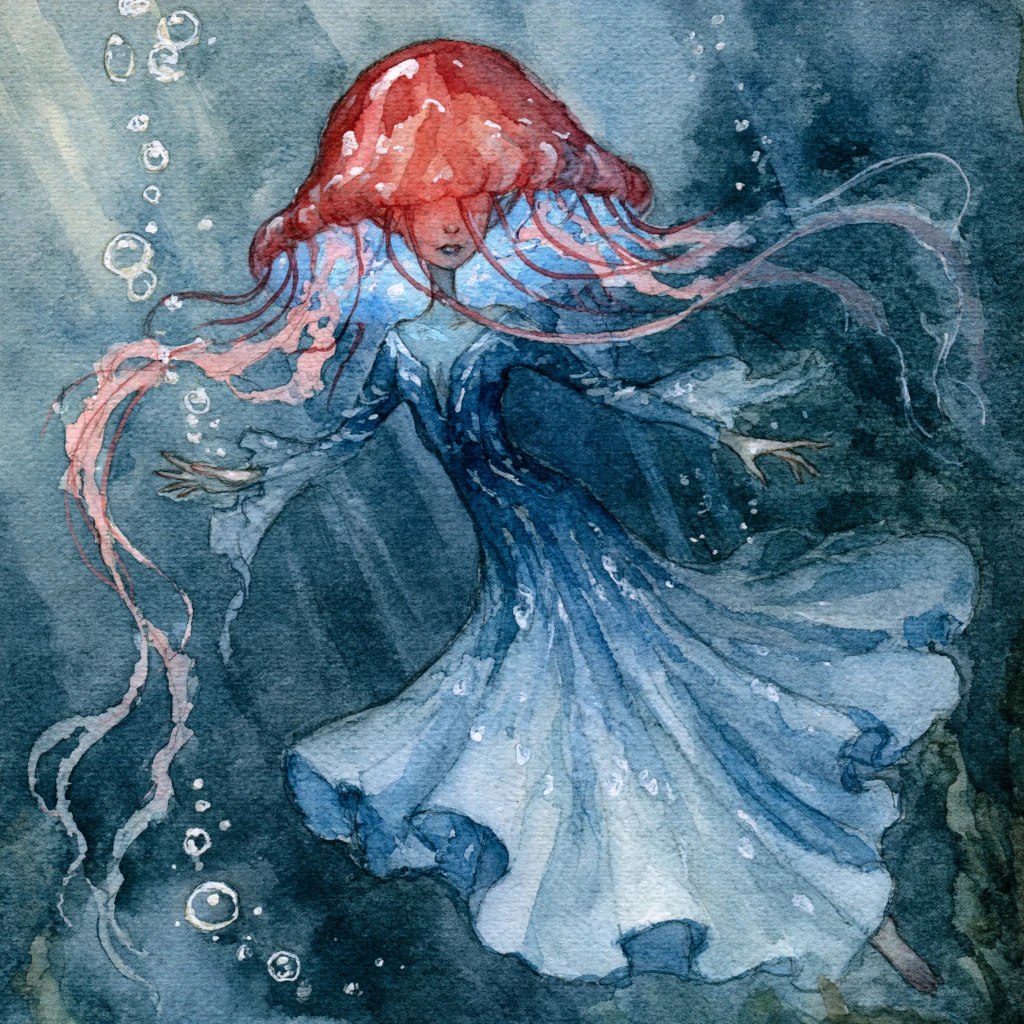
- Jellyfish, Bathysphere | N | Tiny | CR 0 — Minuscule jellyfish that can produce clean air like a miniature bathysphere—except it can sometimes try to take over a battler’s body. Planes of Power [PF1e]
- Jellyfish, Death’s Head | N | Small–Huge | Aquatic | Vermin | CR 1+ — A jellyfish with long trailing tentacles, and the vague pattern of a human skull on its body. Monstrous Compendium Mystara Appendix [2e] (giant death’s head); Bestiary 3 [PF1e] (smaller version)
- Jellyfish, Giant | N | Large | Aquatic | Vermin | CR 7 — An enormous jellyfish as large as a carriage, with a bloom of tentacles. These creatures are predatory and aggressive, chasing prey and able to squeeze through surprisingly small spaces. Monstrous Compendium 1995 Annual Vol. 2 [2e]; Bestiary 2 [PF1e]; Monster Core 2 [PF2e] p200
- Jellyfish, Giant Galley | N | Large | Aquatic | Vermin | CR 5 — Fast swimmers, these deadly jellyfish can shoot paralysing venom up to twenty feet away. Monstrous Compendium Mystara Appendix [2e]
- Jellyfish, Marauder | N | Large | Aquatic | Vermin | HD 4 — These jellyfish are almost transparent and extremely hard to detect. They have a paralysing venom in their stinging tentacles. Monstrous Compendium Mystara Appendix [2e]
- Jellyfish, Sapphire | N | Huge | Aquatic | Vermin | CR 11 — An enormough jellyfish that glows with blue light and crackles with electricity. Bestiary 3 [PF1e]
- Jellyfish, Fire Swarm | N | Tiny | Aquatic | Swarm | Vermin | CR 6 — These swarming jellyfish are almost invisible, and this makes them dangerous for swimmers who can blunder into their midst, unaware until the stinging starts. Stormwrack [3e] p161; Bestiary 2 [PF1e]; Monster Core 2 [PF2e] p200
- Jellyfish, Whaler | N | Colossal | Aquatic | Vermin | CR 17 — These incredibly large creatures have a veritable forest of tentacles trailing behind them. They are large enough to paralyse and consume whales. Stats: [ PF 1e ] Bestiary 6 [PF1e]
Kapoacinth
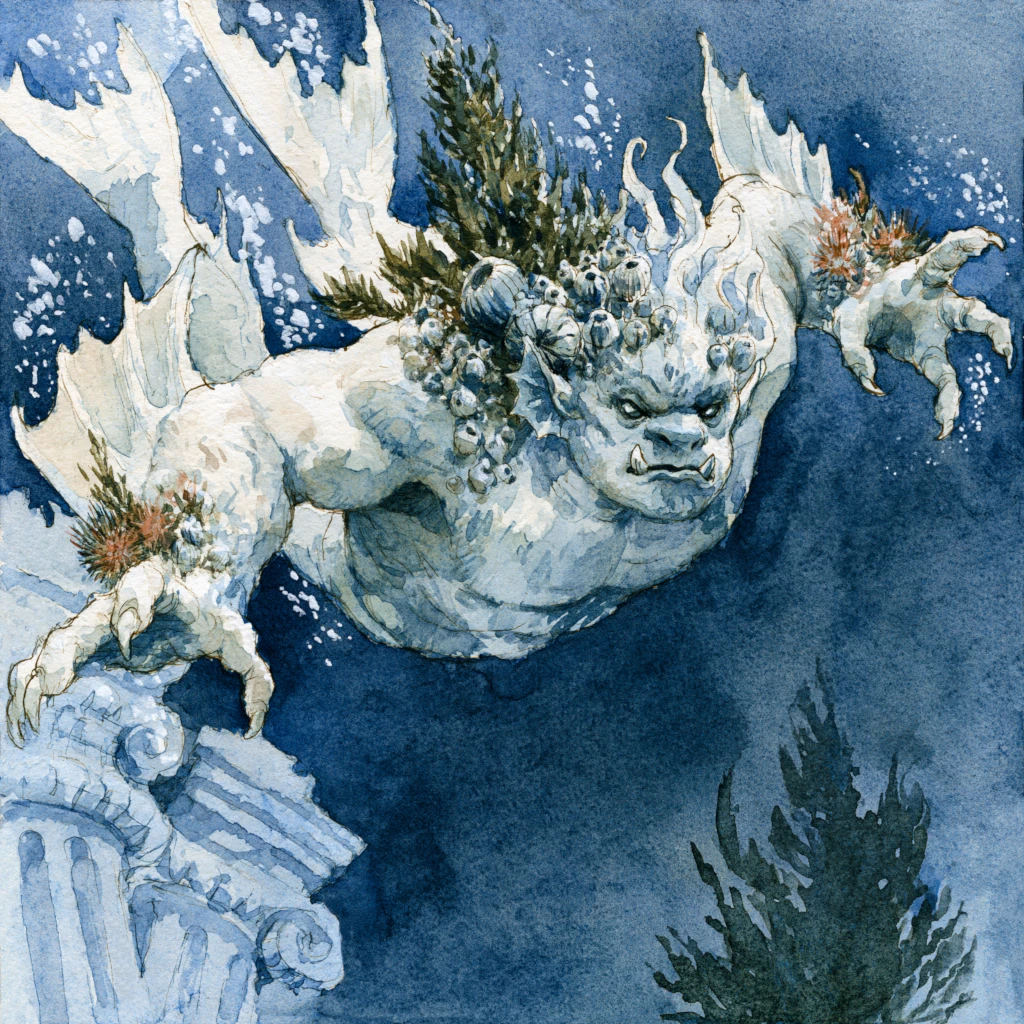
CE | Medium | Aquatic | Beast | Earth | CR 4
The kapoacinth [cap-OH-ah-sinth] is a marine relative of the more common land-based gargoyle. Its stone-like hide and coral-encrusted wings allow it to pass perfectly for an underwater statue or even a natural reef formation, until it strikes. When motionless, a kapoacinth can remain still for hours; then, with a sudden burst of wing-powered swimming, it dives upon its prey with slashing claws and crushing jaws. Kapoacinths delight in ambushing merfolk, sea elves, and unwary planewalkers alike, feeding on those it slays not from need but from cruel pleasure. Though they can speak, they rarely bother with words, preferring the silence of the deep. Chant goes that the original kapoacinths were bred by Ogremoch purely to pester Olhydra, but they have now spread across the planes.
Stats: [ D&D 2e | 3e | 5e | PF 1e | 2e ] Monstrous Manual [2e]; Monster Manual [3e]; Bestiary [PF1e] p137; Pathfinder #182: Graveclaw [PF2e] p28
Karkinoi
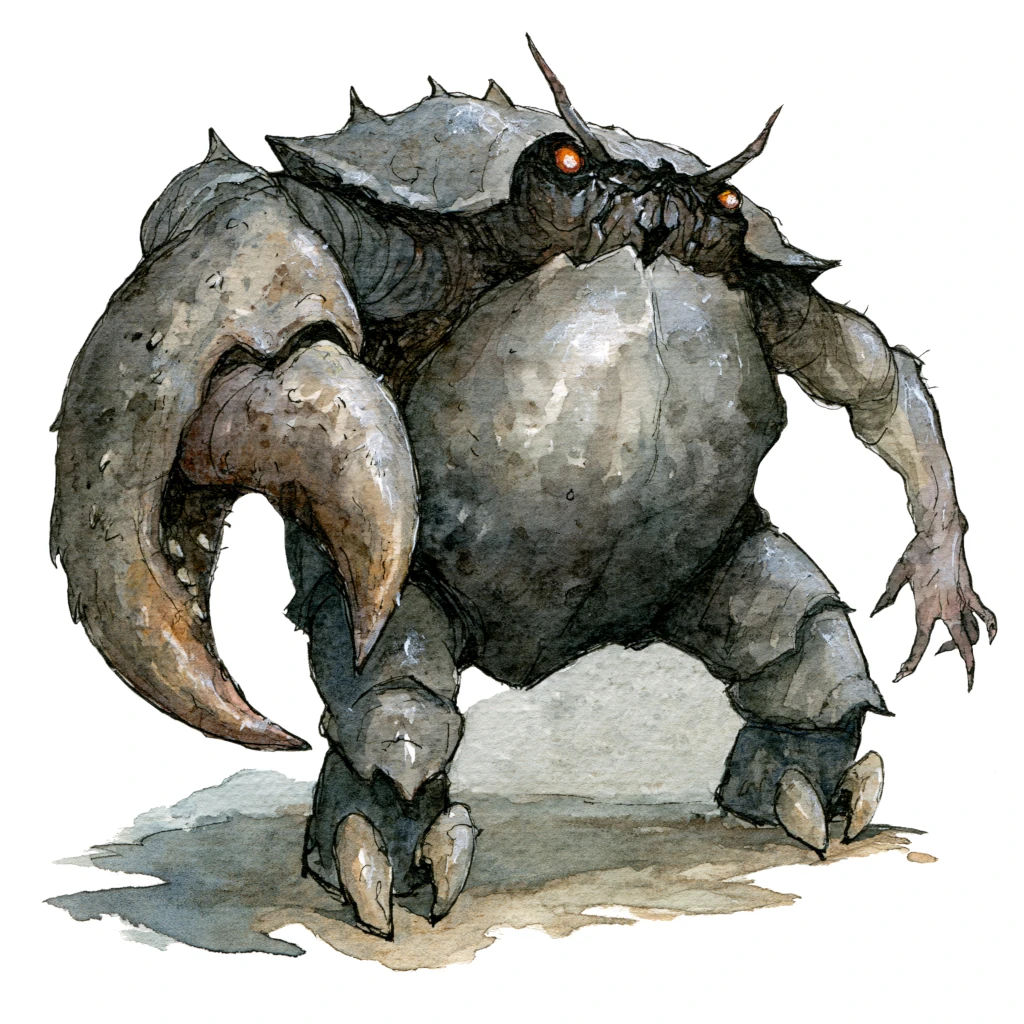
CE | Large | Aquatic | Humanoid | CR 6
The karkinoi [CAR-kin-oy] are hulking hybrid ogre-crabs, their massive bodies dominated by one enormous snapping pincer and a second twisted, humanlike hand which they use to wield scavenged tools or weapons. Nomadic and cruel, they live in roving gangs which cooperate to hunt prey too formidable for individuals to take down. They are notorious for raiding aquatic burgs, especially under the cover of darkness, slaughtering indiscriminately and dragging surviving victims into the deeps. Though they are capable of walking on land, karkinoi dislike prolonged time out of water, because their carapaces slowly dry out and eventually crack until they suffocate—so, they remain creatures of the deep, viewing crafting, learning, and diplomacy as weaknesses of the “food-creatures” they seek to dominate.
Stats: [ PF 1e ] Bestiary 4 [PF1e] p173
Kelp Angler
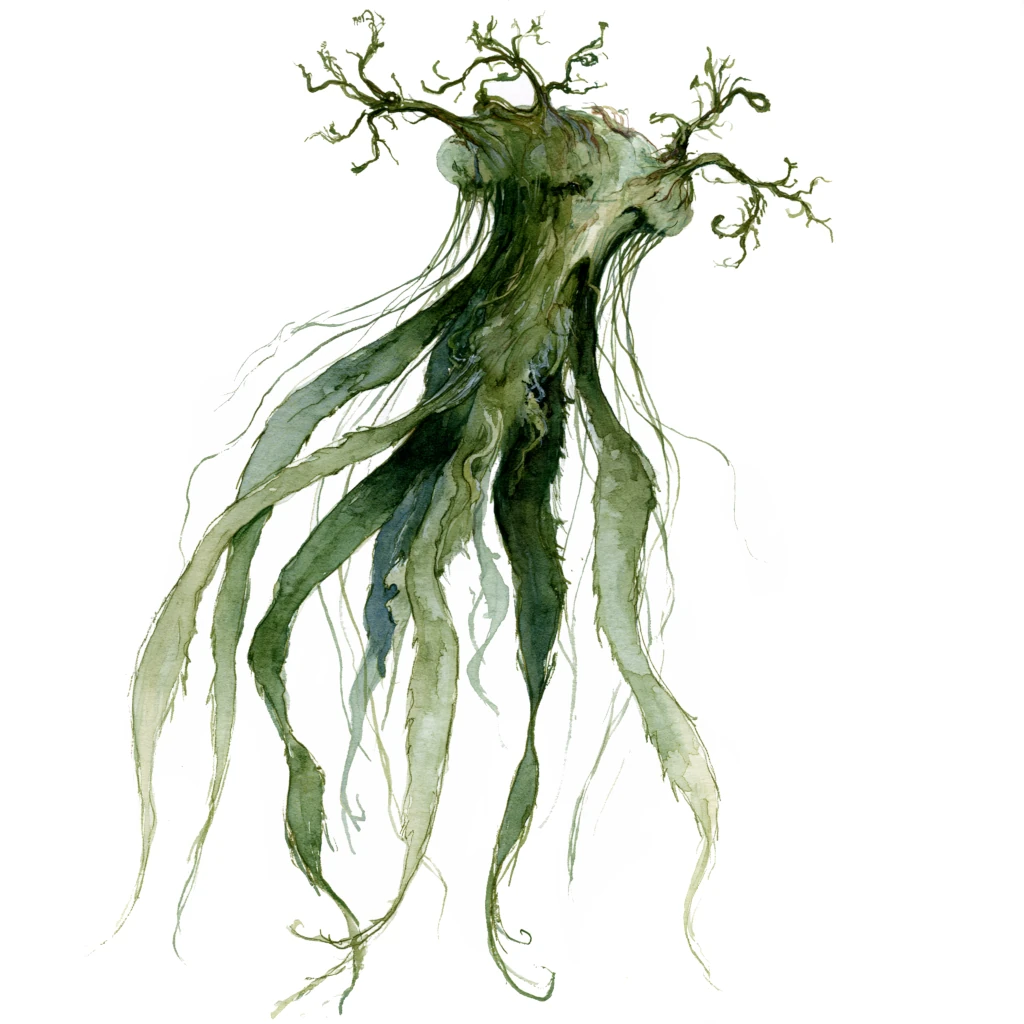
N | Large | Aquatic | Plant | CR 9
The kelp angler is a reef-dwelling assassin, a nine-foot-long tangle of kelp shaped like a ghostly floral jellyfish. They drift unnoticed through seaweed forests, and blend into coral reefs as if they are mere vegetation. Like octopodes, their colouration can shift to match their surroundings. Kelp anglers have no eyes, sensing their surrounds instead through pressure changes in water, which means they can hunt with precision even in total darkness. They are also endlessly patient, and can remain in disguise for days without moving, striking only when suitably large prey wanders into their chosen territory. Kelp anglers are surprisingly cunning too, and have developed magical abilities to better hunt planewalkers. In particular, they can use their tendrils to attack and grab victims, and are then able to attempt to dispel magic, aiming to negate water breathing magic; all the better to drown them.
Stats: [ D&D 3e ] Fiend Folio [3e] p112-113
Koalinth
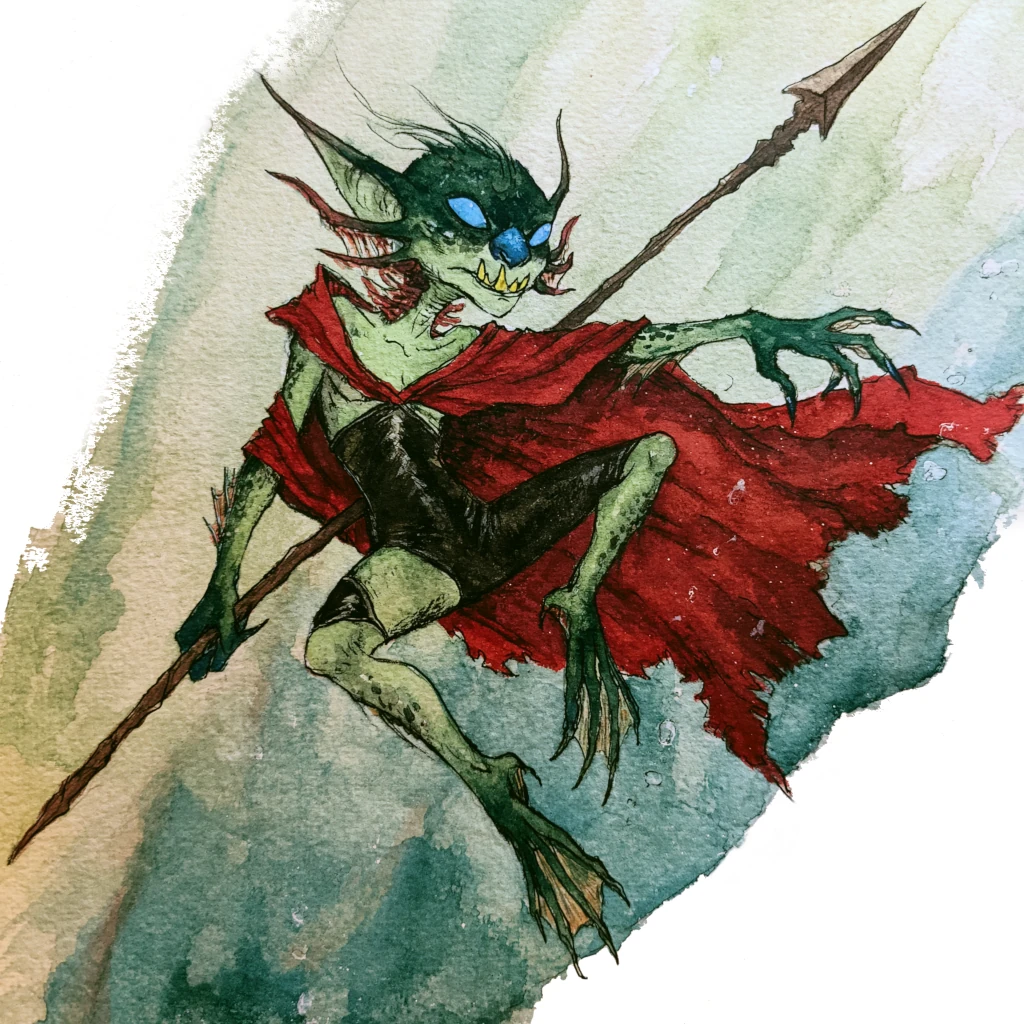
LE | Medium | Amphibious | Hobgoblin | Humanoid | CR 1
The koalinth [COE-uh-linth] are underwater relatives of hobgoblins. They have sleek light-green skin, with gills and webbed limbs that make them perfectly adapted to life underwater or on the surface. Every bit as cruel and warlike as their land-dwelling kin, they hunt with spears and polearms, and prey on all manner of aquatic humanoids—especially elves, whom they despise with a fervour that borders on obsession. Though they occasionally ally with Olhydra, the Princess of Evil Water, the xenophobic koalinth tend to distrust other evil aquatic races, preferring to rule their own territories and keep their own company. They organise their clans in disciplined strike teams, and tend to dominate the waters they inhabit through martial prowess and their natural aggression.
Stats: [ D&D 2e | 5e ] Monstrous Manual [2e]; Ghosts of Saltmarsh [5e] p239
Kraken
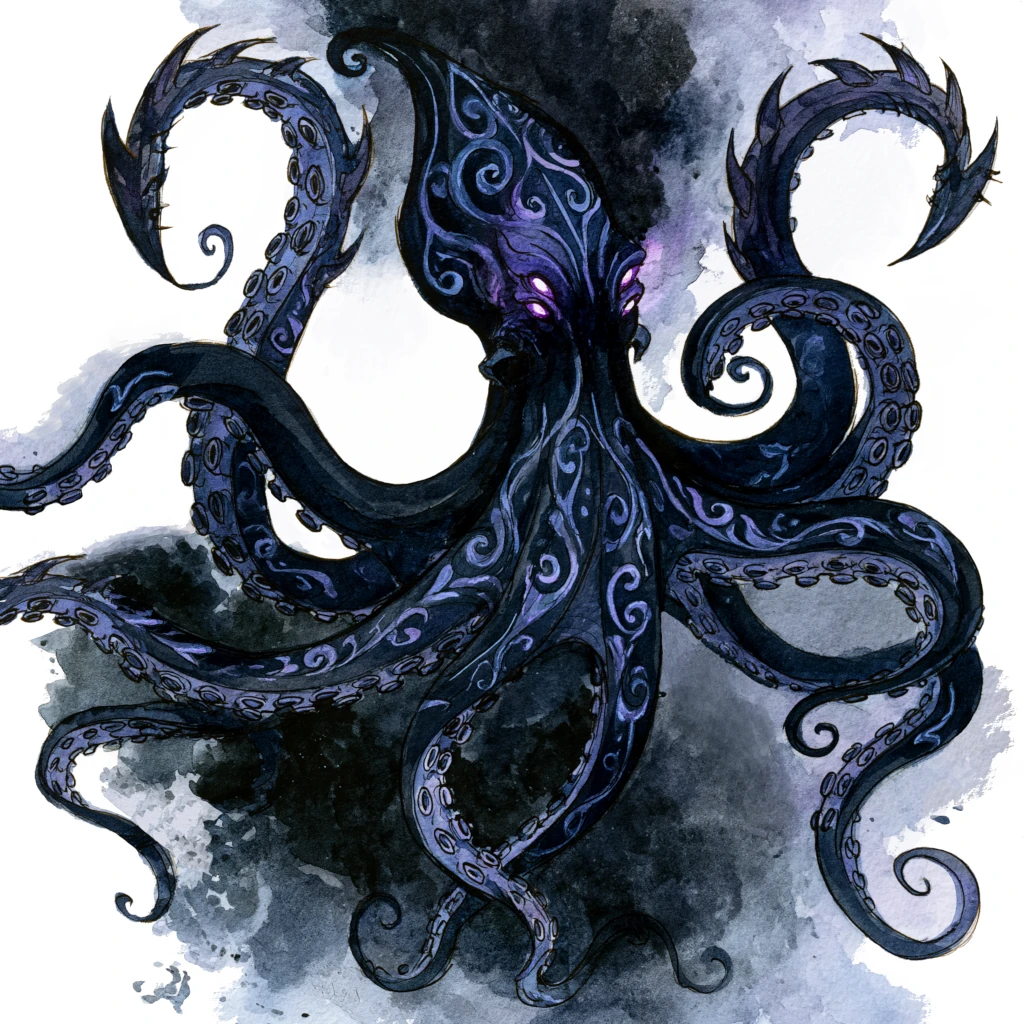
NE | Uncommon | Gargantuan | Aquatic | Beast | CR 18
Krakens [CRAK-un] are gigantic squid-like leviathans nearly one hundred feet long, with bodies the size of a whale, eight powerful tentacles, two heavier barbed arms, and vast, crushing maws. Their markings vary by age and habitat, often forming unsettling patterns. Elder krakens might even adorn themselves with magical crowns, torcs, or other treasures taken from sunken ships and drowned cities. They attack by using their mighty tentacles to grapple and drag prey into their jaws, or by crushing victims by constriction. Despite their great bulk they can jet through the water at astonishing speed. Their most infamous defence is a huge cloud of poisonous black ink that blinds and sickens everything within it.
The eldest krakens are on par with mightiest of dragons and giants, and were created by Powers themselves to wage war on their behalf. Eventually though, they were abandoned—or perhaps broke free and now exist as overlords of their own domains. They are genius-level tyrants with memories and ambitions that can span centuries. They can command winds, storms, and the movements of the sea, allowing them to destroy ships without ever exposing themselves to direct attack. They regard themselves as the rightful rulers of the deeps, and see cooperation among lesser creatures as an insult to the natural order, believing that the strongest individual—largely, themselves—should dominate all others. Their aims in the Plane of Water can be interpreted as imperial: krakens seek to control elemental vortices, swift currents, and strategic elemental bubbles, using enslaved aquatic peoples and surface-dwellers to do the day-to-day work of waging war and building their legacies.
Krakens prefer to lair in the deepest trenches, volcanic vents, or the ruins of ancient drowned cities. Not unlike dragons, they hoard magical items, shipwrecked wealth, and texts containing lost knowledge. Some braybeards claim that krakens once attempted to rule all of the Water before being driven into the murky depths, and many still pursue that ancient ambition through patient schemes, cults, and networks of coerced servants. Their hatred of rival deep-sea powers—especially of the aboleths—can make them unpredictable and dangerous allies. Cutters should be aware that any bargain with a kraken will onyl bring a short-term benefit, for krakens play the long game at all times.
Stats: [ D&D 2e | 3e | 5e | PF 1e | 2e ] Monstrous Manual [2e]; Monster Manual [3e]; Monster Manual 2025 [5e] p187; Bestiary 1 [PF1e]; Monster Core [PF2e] p212
Krakentua
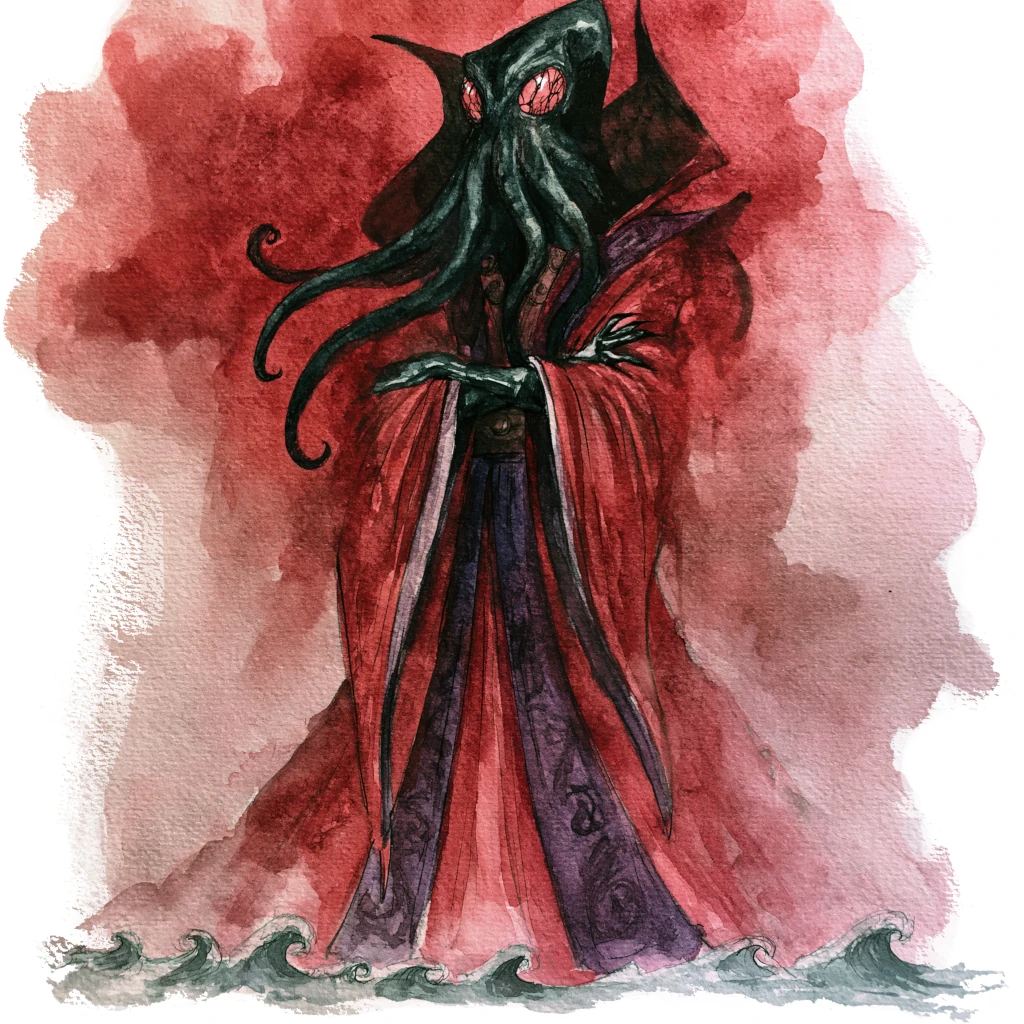
CE | Rare | Gargantuan | Amphibious | Fiend | CR 20
Krakentua [crak-en-TOO-uh] are immense demonic spirits with the body of a giant humanoid, and the head of a kraken. They tower at a mighty one hundred feet tall. Their cool, leathery skin is dark green, while seven twenty-foot tentacles writhe around their huge red eyes and a vicious hidden chitinous beak. They typically dress in luxurious red and violet silks, and are surrounded by a constant crimson mist that seems to seep from their pores, giving the disturbing impression that they hover upon a cloud of blood. While they have two arms, their tentacles are just as strong and even more dextrous, and they use them to wield enormous weapons, grapple and crush. They have a strange ability to spit blinding, noxious, cherry-milk. Female krakentua are even more deadly than the males, also able to read minds, use divination magic, and induce vivid dreams that imprint upon a victim’s aura so they can be tracked later. The females can fly too, although chant goes they leave a trail of dead octopodes behind them when they do. Graybeards have yet to work out why there are male and female krakentua, however, for they reproduce asexually, when a single tentacle breaks off it can hatch into new krakentua.
Krakentua are intelligent, destructive, and obsessed with dominating the ocean. They regard all other beings as inferior and maintain congregations of slaves they demand worship and honour them, perhaps in an attempt to garner enough belief energy from obedience and fear to become powers themselves. Krakentua seem to prefer human servants, despite their aquatic nature—for once humans are taken out of their natural habitat, perhaps they become easier to control in this way. They might make their lair on a remote atoll reef or floating island, then raid coastal settlements to capture and compel the inhabitants to build it a cultic palace, and provide a steady supply of worshippers. Females may use their dream-magic to mark important figures across the plane, while males serve as brutal enforcers and raiders. Their aim is to force all beings in the surrounding waters to acknowledge their supremacy. Krakentua are fortunately rare on the Plane of Water, preferring to dominate the seas of the Prime—becoming the biggest fish in a smaller pond, perhaps? It’s unknown whether they originate from the Abyss, another Lower Planar ocean, or are aberrations from the Far Realm itself turned fiendish.
Stats: [ D&D 2e | 3e ] Monstrous Compendium Kara-Tur Appendix [2e]; Homebrew [3e]
Kuo-toa
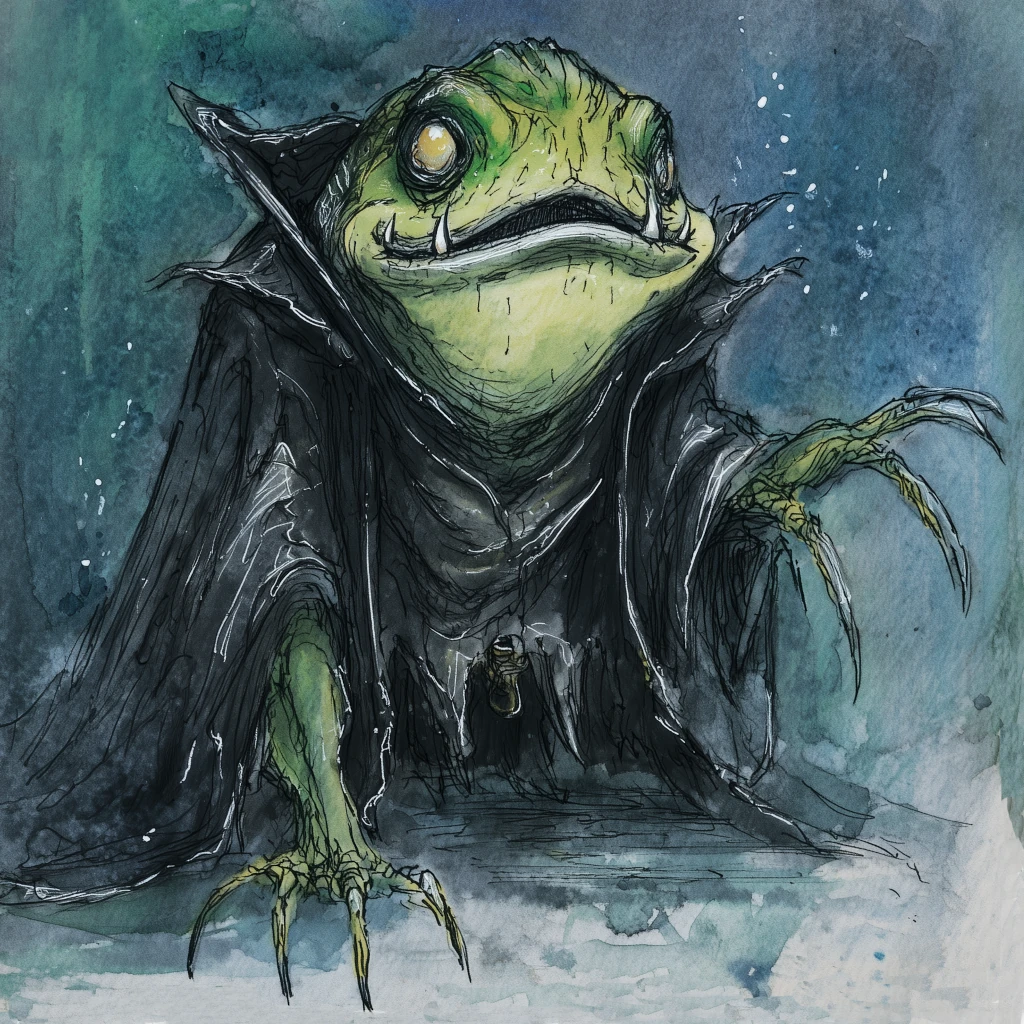
NE | Medum | Aberration | Amphibious | Humanoid | CR 2
Kuo-toa [KOO-oh TOE-uh] are ancient fish-folk with paunchy humanoid bodies, slick grey-green scales, short limbs, long webbed hands and feet. They stink of dead fish, and their bulbous eyes can independently swivel to give them excellent vision which can detect movement even through invisibility or etherel concealment. Bright light, however, blinds and terrifies them. Kuo-toa warriors wear little clothing beyond leather harnesses for their spears, daggers and harpoons. They also carry nets, and shields for defence—everything is coated in adhesive slime. Their oily skin makes kuo-toa difficult to grapple.
Kuo-toa philosophy is disturbing. Driven by deep ancestral resentment and religious mania, kuo-toa believe the surface races stole the world that once belonged to them. They worship the Sea Mother, Blibdoolpoolp, along with countless other beings that may or may not have been dreamed up—or transformed—by their collective belief. Kuo-toa shamans, especially the fanatical Whips, hold their communities together through violent sacrifices, and shared delusions. The rols of the Monitors is to restrain those poor sods who succumb to madness.
In the Plane of Water, kuo-toa settlements cling to submerged earth motes, and drifting islands, where they raise kelp and fungi, enslave whichever aquatic peoples they can find, and trade with, or more likely raid nearby communities. The long term aims of the kuo-toa are the restoration of a mythical ancient dominion over the seas. Fortunately, the cult-like clans of kuo-toa are so obsessed with their attempts to turn local spirits, elementals, or captured monsters into new powers that they have not unified into a more dangrous underwater empire. However, should any of their barmy rituals ever succeed in the apotheosis of a new power, then all bets are off should these embittered people finally give shape to the gods they need. It’s enough to make Factol Ambar proud.
Stats: [ D&D 2e | 3e ] Monstrous Manual [2e]; Monster Manual [3e]
Life Aquatic continues here (L—Z) coming soon…

A Bestiary of Water
The following creatures of Water are described in more detail…



Source: Margarita and Jon Winter-Holt