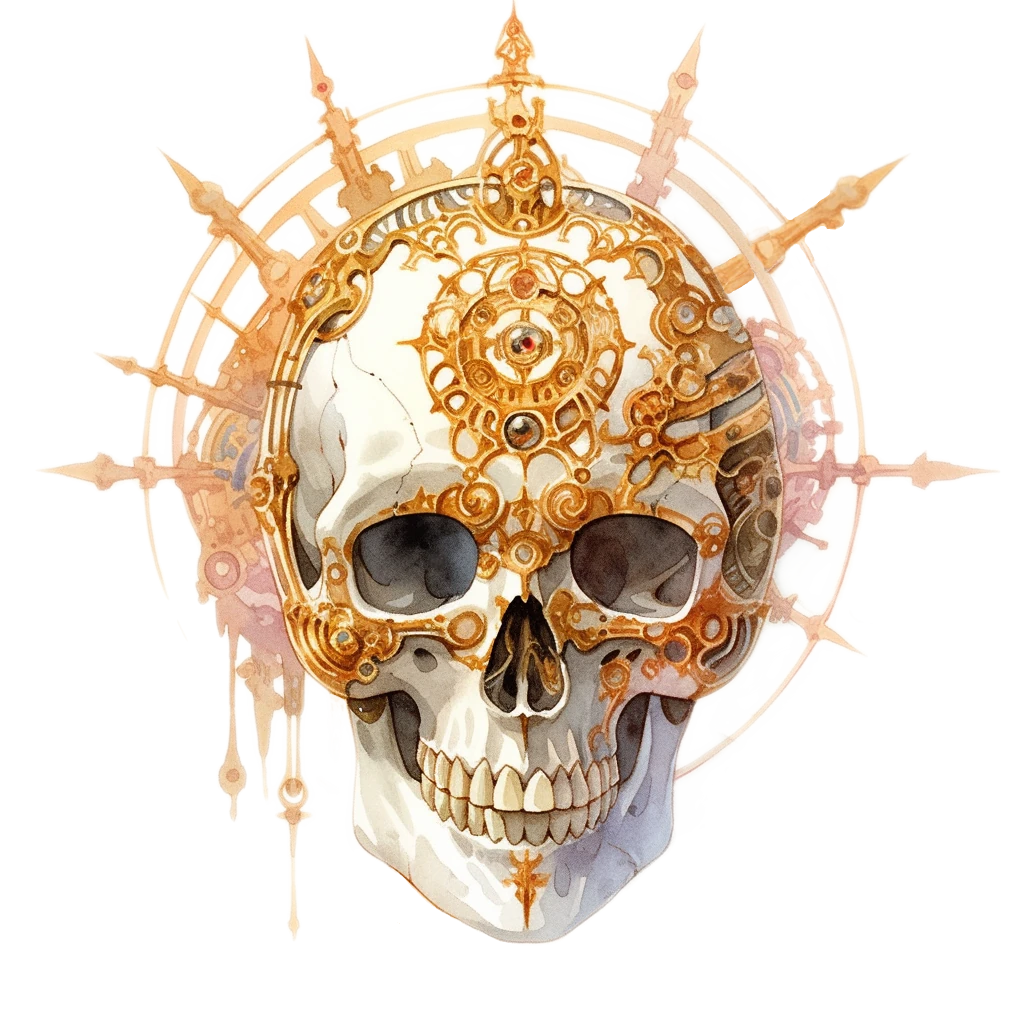

The Dark Mother

The Cradle of All, Waters of the Womb, the Primordial Eros, the Giver of Suffering; possibly identified with such beings as Ruha from Tibilian cosmogony and Mud from the Orphic scriptures
Primordial being of love at its essence and of suffering that love entails, being of beginnings / alignment unknown (or irrelevant)
Realm: Unknown—said by some to be in the Ordial Plane
As with every being so ancient and so vast, the Dark Mother is hard to explain to mortals. The Dark Mother isn’t a goddess of men or elves—or anyone, really. She (or he, they, or it) is not the goddess of romantic love, or sex, or fertility, or childbirth—but of all of it, in a way. She is not benevolent or malevolent—she may not even be sapient or sentient, at least as we understand it.
You see, powers arise from the philosophy of their future followers—let’s forget for a moment all their screed about creating the planes themselves. They govern the concepts these philosophers will care about one day—love, war, death, trade and so on and so forth, with deities becoming increasingly more specific as the society progresses. But the Dark Mother is the “goddess” of something that every Prime creature from the greatest of dragons to the most insignificant of microbes cares about. Under her gaze came the first planets that arose in the Crystal Spheres—the planets where the salt waters of the sea mingled with the sweet waters of the earth to beget life. And every creature can trace its lineage back to those unbelievably ancient times, which means every creature feels the connection to Dark Mother inside. Perhaps that’s why she’s imagined by those who know about her as the sea—the cradle of life.
What is the goal of every single-cell creature? It is to divide. To perpetuate itself, to perpetuate life. But once the bacteria splits—it is no more. And when two gametes merge together—two cells cease to exist to become one new one. This is the core of the Dark Mother’s being—life means death, but death makes life possible. But it’s not all about reproduction. She’s also the being of all love—be it romantic, erotic, motherly, spiritual, or intellectual—and all suffering that this entails. Pike that, even this is not enough to describe her. It’s not just suffering, it’s not just love, it’s not just life or death. It’s devouring and expelling, it’s wounding and healing, it’s joining and separating. No one is exempt from her call, as long as a creature can feel something, as long as it has some desires, it is within her purview. This is why she’s said to exist in the Ocean Ordial—she joins the pure physical nature of life with the spiritual nature if love. In her view, the bacteria’s desire to split and the petitioners’ to merge with their power is the same paradoxical desire to lose themselves by becoming what they want the most.
There is really no worship of the Dark Mother, at least not specifically. Some say that she can be seen in the moment of orgasm (and after all, it is called ‘la petite morte’ by some) or a spiritual equivalent thereof. Perhaps she is the moment of emotional joy in music, when you hold your children, or in finding the perfect equation. She isn’t really a god in the familiar way, for she doesn’t answer prayers, and neither does she communicate with anyone. It is said that some powers venerate her as an overpower. But the Dark Mother is more of a philosophical concept than a being, and she doesn’t appear to need or desire worship. It’s not likely she will die as long as there’s a single thing alive in the multiverse. Perhaps it is the Dark Mother that the daemonic cults of Armageddon seek to end?
Nerineth, the Lady-in-Yearning (planar amori eladrin [she/they] / CG), an amori eladrin who sports an uncharacteristically plain gown, is the most well-known of Dark Mother’s rare followers. Chant goes she went through a particularly bad breakup that led her to question the nature of love and pain. She leads a small cult of reformed good-aligned monstrous creatures such as vampires and mindflayers. Nerineth’s philosophy helps them to accept their desires and, perhaps, satiate them in a more healthy way. While many eladrin support her ways, the Lady-in-Yearning has very few monstrous acolytes. Rumours claim she’s even recently recruited a renegade neogi—an unexpected guest certainly, but who if not neogi would acknowledge that life requires death? If this mysterious creature exists, they must be hidden in Nerineth’s sanctuary, Holding Space, deep in the Para-Elemental Plane of Ooze. The Lady-in-Yearning loves this unlovable Para-Element, and considers Mud to have deeply sacred philosophical significance. Disgust before the Ooze, she says, is the natural consequence of our innate fear of life and the Dark Mother herself, and just as naturally we have to conquer this aversion to truly live and love.
Source: Margarita. Mythwatch: The Dark Mother is homebrew and based on certain philosophical concepts such as Freudian ideas of complimentary life and death drives.
