[ Gray Waste ] [ Oinos | Niflheim | Pluton ]
The Pox Exchange
Location: Gray Waste / Oinos / the Pox Exchange
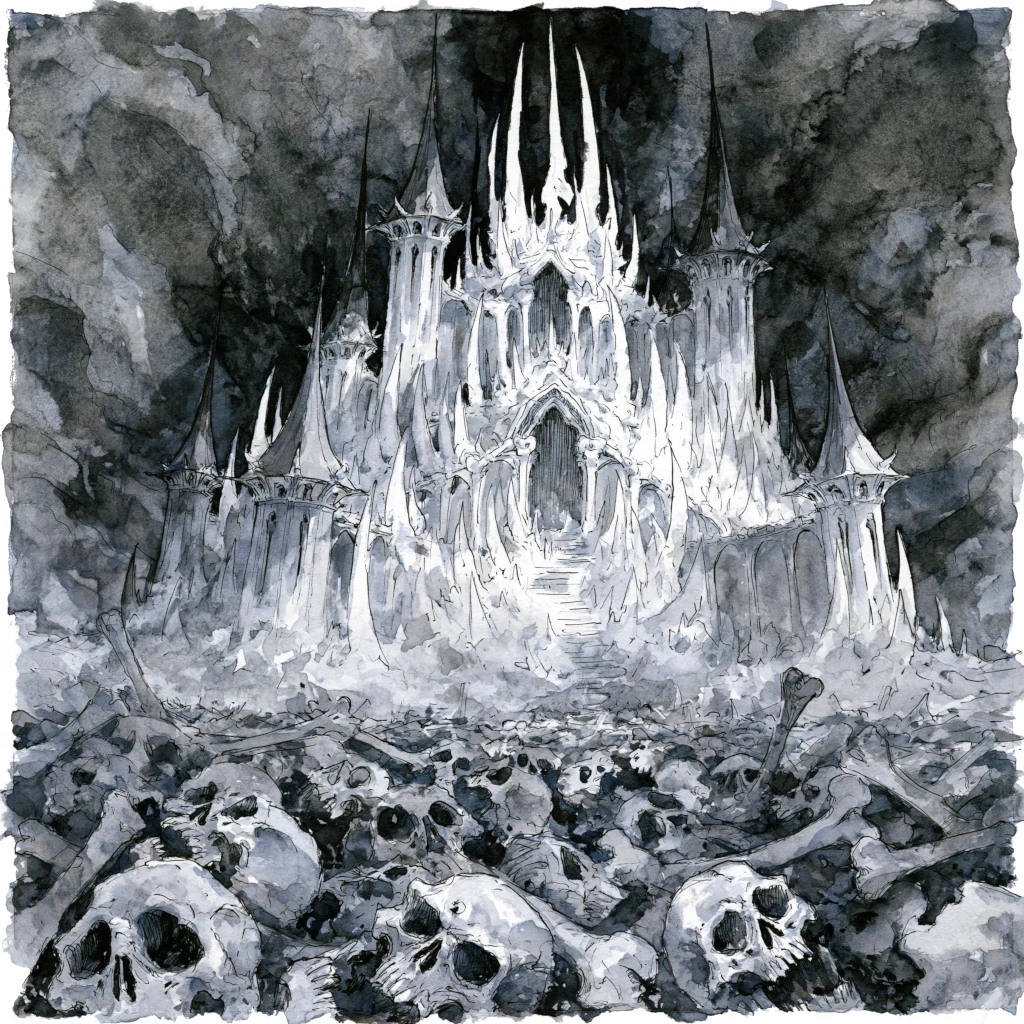
At the dead centre of a vast battlefield of bleached broken bones, a temple of pure white marble is lit with cold white light. This place is possibly the cleanest building in all of Oinos. There is none of the grey corpse-ash of the plane here, because an army of enslaved domovoi are tasked with keeping it spotless. At the heart of the cavernous space you can find a throng of hooded arcanoloth and their minion-servants passing scrolls among themselves, whispering furiously, hissing numbers and locations, and signalling with furtive hand gestures. It’s a sinister mixture of dealing, gambling, and double-dealing. It’s here that the fate of many a prime civilisation is sealed, as the ‘loths bid for contracts to unleash plagues and poxes. Every so often, a minion will scuttle off to deliver orders to whoever enacts the dastardly deeds. You might be able to spot a proxy of the Finnish mistress of disease Loviatar here, Shitala of the Vedic Pantheon or of Sekhmet of the Egyptians. Old Nergal of the Anunnaki often sends a representative too. The Wen Shen—the Five Commissioners of Pestilence of the Chinese Pantheon—are often seen here trading as well, and generally treating the Pox Exchange as if it is their personal realm. Perhaps it is, or perhaps the ‘loths are just humouring them.
The Chant: Any leatherhead can tell you plague can kill a body. The dark that they don’t talk about though, is that disease can also fatten up a jink-purse. On Oinos, sickness ain’t just something suffered by the petitioner hordes. It is commissioned, conveyed, and settled up neatly on yugoloth balance sheets. But we are getting ahead of ourselves, talking about their masterminds of this moneymaking wheeze. First we need to talk about their delivery mechanism.
The likhoradkas are horrid fiendish embodiments of diseases, born from the pestilent line of Stribog. They’re most commonly found haunting his Tsardom of Copper, but he sends them all over the planes on his Ill Winds of pox and pestilence. Each likhoradka is shaped by the disease they carry, suffering the symptoms sure, but all in the greater cause of being able to spread them to mortals. Likhoradka are rarely seen in Sigil of course—the Harmonium do a good job of taking advantage of their weaknesses to keep them at bay. No, these fiends do their most effective work in far-flung burgs where their forms are not recognised and their habits not yet known. Anyway, the likhoradka are the blunt end of this story, for this wicked trade that stretches from them all the way to Apollyon and finally to the dark pockets of the yugoloth.
The Commission
The first lie is that a plague is ever unleashed by accident. I mean, it’s possible, I suppose. But when you think about it, isn’t it suspicious? Civilisations struck down by disease, it’s always the big cities, always cutters with enemies, always so very conveniently timed. It’s the rats, they say, or the mosquitos or the ticks. But does a berk ever stop to think about this? There were rats and ticks and mosquitos before and there was no plague then. Why would the vermin suddenly become plague-ridden when they were not before?
The answer, of course, is the yugoloths. Cutter, the answer is always the yugoloths.
See, real dark behind why most plagues happen is because they were bought. But who, you ask, would purchase such a thing? Well, sometimes it’s a cruel tyrant who wants a rebellious district brought to heel without getting his guillotine dirty. Sometimes, it’s a priesthood that wants a convenient bit of divine judgement to teach sinners a lesson. Or perhaps it’s a merchant cartel that wants to lay a city low to take out a troublesome competitor. And behind each of these paying customers, there’s always an arcanoloth ready to come to an equitable arrangement. The yugoloths, being mercenary fiends through and through, are uniquely suited to make such arrangements. They sell secrecy, deniability, and results all on one neat package.
Now cutter, of course a buyer does not purchase contagion like they would a sack of grain on the dockside. The negotiation is complex, and the details important. They must choose which season favours optimal spread, which neighborhood should sicken first, which symptoms should point blame towards an enemy cult or foreign power, which priests are to be bribed to misdiagnose, and which roads should remain open long enough for panic to outrun reason. After all, this is not just any plague, this is a yugoloth full service plague.
The Disease Vector
The second lie is that Stribog is complicit in such affairs. He is no servant of the ‘loths , true enough, but neither is a power beyond manipulation. The yugoloths are not powerful enough to chain the wind; but the thing about the wind is that it will blow anyway, and they merely need to incline it the right direction. A forged omen in the Tsardom of Copper, a sacrifice performed in the right ruin on Oinos, the right whispered rumour in the right ospa’s ear—any of these can provide the nudge to ensure the blind old power’s feculent breath goes where certain interested parties hoped it might. And where the Ill Wind of Stribog blows, his disease-riddled children are sure to follow…
So a plague is purchased by one faction, and unleashed by another hand entirely. The victims curse the sky, the season, the foreigners, the gods, or even their own bad luck. Nobody realises there was a contract.
The Cure Market
Now a cutter might ask where the true profit lies, and the answer is simple: it is not in the first sale, but in the second. Once the plague has done its work, the same ‘loth that brokered the outbreak begin to circulate whispers of alchemical cure-alls, miraculous saint-bones, occult cleansing rituals, and shipments of health-protecting foods. It is the oldest ‘loth trick of all, to market terror wholesale and sell relief retail.
Who pays for the cure? First the desperate rich: high-ups, temples, guildhouses, and well-heeled households who’d thought themselves invulnerable—right up until they began coughing up black bile. Then later the common folk who can’t afford the snake oil end up paying in obedience, prayer, and loss of their freedoms. Mind, the cure need not even be false to be wicked. An enterprising arcanoloth may very well provide the proper antidote, having ensured of course from the outset that only one rare reagent can halt the spread. And it’s one that they, of course, have cornered the market on.
The Final Sale
This just leaves the final settlement—which is where Apollyon, the ram-headed Rider of Pestilence, enters the reckoning. Any successful plague will of course create a large number of new petitioners, as the sods unlucky enough to get caught in the initial outbreak, or careless enough not to be able to afford a true remedy, shuffle off their mortal coils and end up adding to the River of Souls. The yugoloth make their final profit here, taking a cut from Apollyon, the Prince of Plagues, who rewards them handsomely for their good work. There are methods, it seems, for the ‘loth to corrupt the dead in such a way that regardless of their creed or faith, their souls are consigned to Abaddon.
So after the first buyer pays for the outbreak and the second buyers pay for their cure, the third transaction closes the circle as the dead themselves are sold upward. The yugoloths take their cut each time, sometimes in jink, other times by payment in kind, future favours, influence, or even in harvested misery. And this is what makes the whole arrangement so filthy. The victims are monetised at every stage. Their fear is sold to the first client, their hope to the second, and their souls to the last creditor of all.
The Dark of it All
A sharp cutter might ask why Stribog permits this trade, and the answer may be pride. The likhoradkas do the bidding of their father, and perhaps he is arrogant enough not to smell the subtle scent of manipulation. Or maybe he does not care, for sometimes flattery is more effective than chains. Stribog’s aims are, after all, to spread disease and take the credit for it. He just needs the fear and placation of mortals, and perhaps it does not matter to him which ones they are. The yugoloths likely present themselves as admirers of the artistry of pestilence, as custodians of efficiency, and as respectful brokers ensuring that his sacred devastations reach worthy targets. Maybe that leaves Stribog neither master nor dupe, but something worse: an indispensable accomplice who can still tell himself he remains above the banality of the market. Such self-deceptive vanity is common enough on the Lower Planes. It can also be very profitable if nurtured correctly.
So here is the dark of the supply chain for any blood still listening. A hidden client purchases the ruin, the yugoloths arrange the terms, Stribog supplies his foul breath—knowingly or not, likhoradkas incarnate its symptoms, the victims purchase the remedy, and Apollyon cleaned up on the soul-debt after all mortal accounts are settled. If that sounds too cruel to be true, then you, dear reader, have not spent enough time in Oinos.
Source: Homebrew by Jon Winter-Holt, inspired by a comment by Felix, the delightful traders of the City of London, and the recent barmy screed about the great tick invasion