
Spiritovore
Rare | Elemental | Spiritovore | Vitality
| Spiritovore | Purpose | Challenge Rating |
| Jivastra (Soulsipper) | Graze upon and pollinate souls | 12 |
| Citkāra (Crystal Screamer) | Feed upon preincarnate souls | 14 |
| Lāvaka (Soulmarauder) | Predate other spiritovores | 16 |
| Kṣetrajña (Soulscaper) | Tend gardens of life force | 20 |
Spiritovores are a weird category of powerful outsiders native to the Positive Energy Plane, who tend to, and feed upon, preincarnate souls. They appear as radiant creatures of malleable shape, although each type seems to have a preferred form. Their minds are alien, and their goals are difficult for mortals to comprehend. The things that links them however, is that their role in the strange ecosystem of Creation’s Forge is linked in some way to the cycle of souls. Some graybeards will tell you that jivastra are like bees, gentle grazing upon preincarnate souls and helping to pollinate them. The citkāra are more of a pest, giant luminescent vermin that destroy the crystalline trees of the plane with shattering screams in order to feed upon nascent souls. The deadly lāvaka in turn hunt both of these strange creatures, keeping their numbers in check, but also defending their territory from outside influences. The most powerful of these creatures are the rare, highly intelligent kṣetrajña, who tend the soul gardens. Chant goes they may even be the architects of these strange places.
While sages have categorised these creatures together as ‘spiritovores’, this refers more to their function in the ecosystem than implying any kind of relationship between the species. Jivasta, citkāra, and lāvaka behave more like animals than sapient beings, although their relative power vastly exceeds that of animal from most other planes. They otherwise seem no more related than would be the fish, snakes, and lions of the Prime. Whether exposure to concentrated life energy of Creation’s Forge has magnified their power over millennia, or whether you simply need to be made of tough stuff to survive in this radiant plane, that’s dark. The kṣetrajña though—called soulscapers by many planewalkers—are a cut above the rest, able to communicate telepathically and make themselves understood by any creature that understands the concept of a language.
Heading into more speculative territory—why are you here at all if not for that?—some sages classify spiritovores as a type of energon. Other graybeards scoff at this, calling it lazy etymology, implying that ‘energon’ is not a generic term like ‘elemental’, and that just because a creature is made from incorporeal energy, this does not an energon make. Whether or not you hold that energons are solely the spherical clusters of tentacles that embody diverse forms of energy or not, this debate is still fierce (at least fierce for librarians) in the corridors and stacks of the Fraternity of Order. Even more controversial is the Parallelist screed that spiritovores are somehow the inverse of the nightshades from the Negative Energy Plane.
Spiritovores do have a number of features in common, however. They are mostly incorporeal, fundamentally being made of pure energy, and are able to pass through solid objects at will—which makes them hard to hit with a blade that hasn’t been enchanted. As if a planewalker would come to Creation’s Forge without one of those! They don’t have sight in the conventional sense, but they detect the souls of mortal beings as shimmering forms whether of not they are invisible, hidden or even behind solid objects. Like xag-ya and other energons, spiritovores whose bodies are destroyed will explode in a burst of positive energy.
Citkara
Crystal Screamer | N | Rare | Gargantuan | Beast | Elemental | Spiritovore | Vitality | CR 16
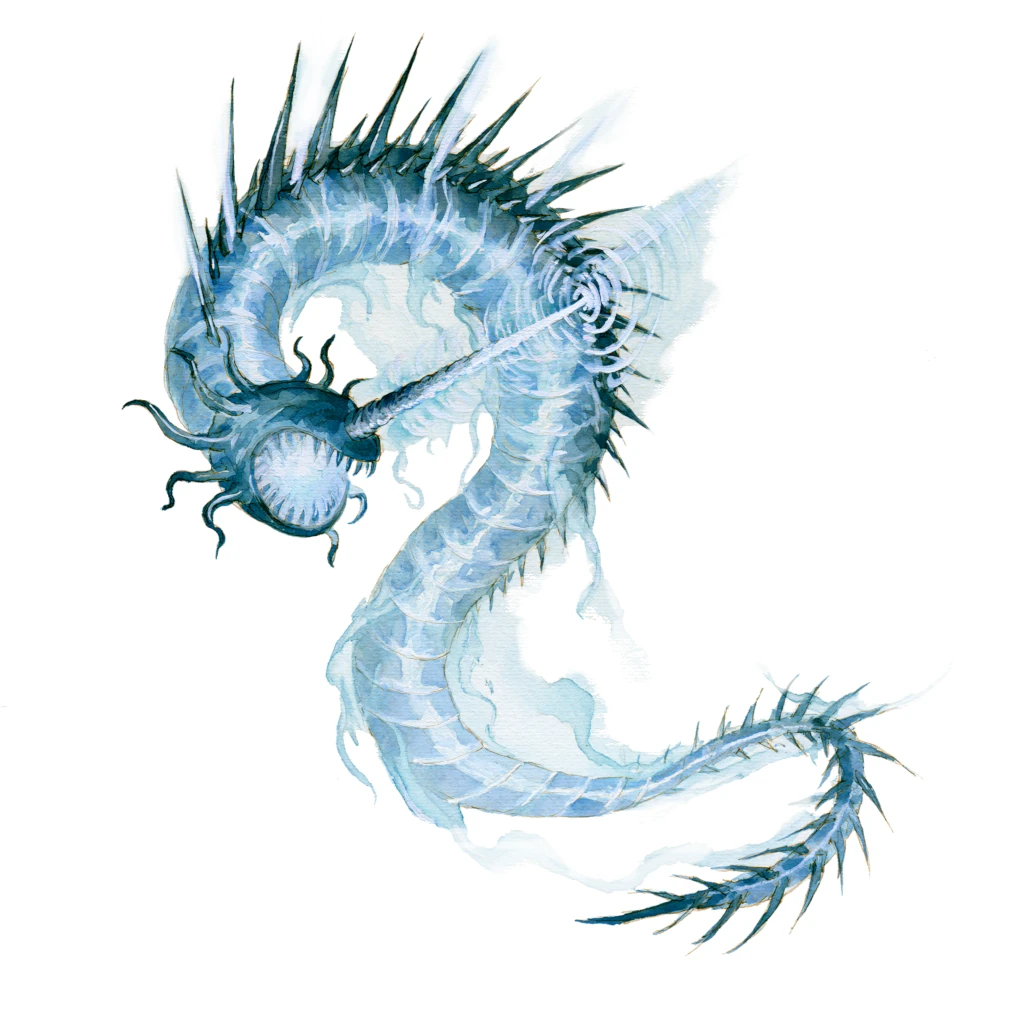
Citkāra [sit-KAR-uh], dubbed ‘crystal screamers’ by planewalkers, are strange and dangerous natives of the Deep Positive. They are enormous parasitic crystalline worms with mouths like lampreys, vicious spines all down their snake-like bodies, and a single huge unicorn horn on their heads. They don’t have eyes and instead use echolocation to sense movement around them. They are also able to use their horn to focus a powerful beam of sonic energy that can blast through obstacles and shatter crystalline soul trees, allowing them to scoop up and feed on preincarnate souls. They are also prone to attacking enemies with this sonic scream attack, as well as their razor-sharp teeth. These creatures seem to be intelligent, although they don’t appear to be able to speak—at least, not to mortals.
Stats: [ D&D 3e ] Bastion of Broken Souls [3e] p41–42. In Sanskrit, citkāra means ‘piercing scream’. Canonwatch: Crystal screamers were not classed as spiritovores in the BoBS, but they literally eat souls, so they really should be.
Jivastra

Soulsipper | N | Rare | Large | Elemental | Incorporeal | Spiritovore | Vitality | CR 12
The jivastra [jee-VASS-tra], called soulsippers by some planewalkers, are ten-foot-long incorporeal drifting creatures of glowing energy. To primes, they look uncannily fish-like, despite them bearing no relation to anything aquatic. Perhaps the shape is perfect for swimming through the Positive Material Plane, where they use their dorsal fins to catch currents of light. Eyeless and silent, jivastra have a fringe of gently lashing tendrils around their mouth, two of which are longer than the rest. When a soulsipper is attacked, it starts to sing a haunting melody that planewalkers call the Song of Acceptance. It sounds like crystal wind chimes in a breeze and chant goes the tune is unique to each creature. These songs are able to sooth the tempers of all kinds of creatures, allowing the jivastra to pacify its predators and try to avoid things getting nasty with planewalkers.
Stats: [ D&D 3e | PF 2e ] Bastion of Broken Souls [3e] p42–44; Homebrew conversion [PF2e]. The name jivastra is derived from Sanskrit jīva (living soul/life-force) + sutra (thread), the thread that stitches soul to form.
Ksetrajña

Soulscaper | Always Good | Rare | Large | Elemental | Spiritovore | Vitality | CR 22
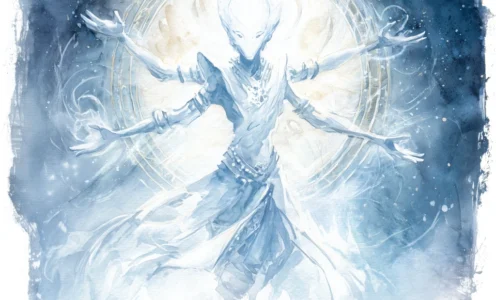
The kṣetrajña [kshet-RAJ-nya], or soulscaper is the most mysterious and benevolent of the spiritovors. They are four-armed humanoid giants composed of brilliant, incorporeal light, that exuding a palpable presence of pure, unadulterated joy. They have vague eyespots on their otherwise featureless faces, no mouths—they communicate telepathically. Their large heads give a clue as to their incredible intelligence. They are accompanied by a sound of crystalline bells tolling in unison, and this sound fills the groves and gardens of the soul fonts of Creation’s Forge. Kṣetrajñas are probably best understood by mortals as if they were druids tending the forests of the plane, although quite how these bloods care for preincarnate souls is hotly debated by graybeards. While extremely rare, they are most likely to be encountered around the Bastion of Unborn Souls, a secret font of the Deep Positive. In combat, they have prodigious magical powers, casting divine spells, being able to command spiritovores and energons like the xag-ya. They are also said to be able to remove curses, diseases and even resurrect a berk with a mere touch. Even more unbelievably, some cutters claim that a soulscaper can even give a favoured cutter the gift of resurrection at a later date, a contingency that triggers upon their death.
Stats: [ D&D 3e ] Bastion of Broken Souls [3e] p42–45 (as soulscaper). In Sanskrit, kṣetrajña means ‘knower of the field’.
Lavaka
Soulmarauder | N | Rare | Huge | Elemental | Incorporeal | Spiritovore | Vitality | CR 20
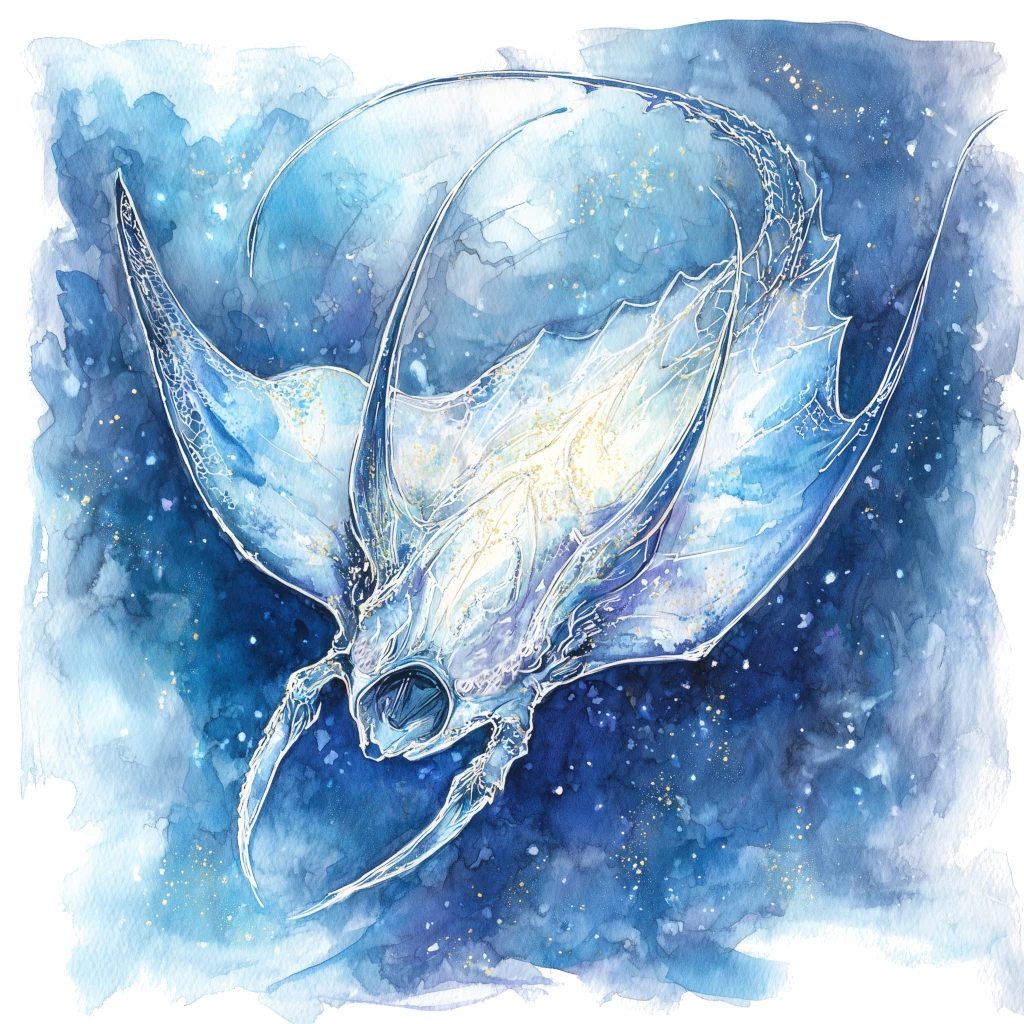
The lāvaka [lar-VAK-uh] or soulmarauder is a dangerous predatory spiritovore of the Positive Energy Plane. Their flattened, manta ray–like body is composed of glowing incorporeal energy. They are wider than they are long, and wing-extensions curve like demonic horns from their eyeless head, on either side of their gaping, toothless maw. Their long, whiplike tail curls and twist as it hunts jivastra and other creatures of the plane—though a lāvaka will eagerly feast on preincarnate souls, shades, or the spirits of living planewalkers, which it considers scrumptious feasts. With a terrifying roar that weakens its foes with fear and deafens nearby cutters, a soulmarauder strikes with an incorporeal touch attack that drains the vitality of its prey. This attack simultaneously heals the creature, while leaving its victims hollow and diminished. Once a lāvaka has tasted a soul in this way, it can perform a dreaded ritual called soul consumption. On a successful strike, its tails curls into the victim’s body, emerging with a colourful pinpoint of light—the soul itself—and then plunges it into the soulmarauder’s mouthlike orifice, where it is consumed utterly over the course of an hour. Bodies left behind appear loose and empty, skin too large for their bones, obviously missing a certain something. Chillingly, no form of raising or resurrection can restore a victim whose soul has been completely digested in this way, save for a wish, miracle, or true resurrection, and even there is a high chance of failure.
Stats: [ D&D 3e ] Bastion of Broken Souls [3e] p42–45 (as soulmarauder). In Sanskrit, lāvaka means ‘reaper’.
Source: Margarita and Jon Winter-Holt. Canonwatch: I’ve adjusted the challenge ratings of the spiritovores to balance them better with a progression that can cover more levels. I’ve also given the creatures their own names based on Sanskrit words (thematically aligned with manasaputra and the cycle of reincarnation), to go alongside the generic names foisted upon them by planewalkers.

I look forward to proper pages and full sized artwork of the other two spiritovores!