
[ Outsiders > Fiends > Parochial > Likhoradka ]
[ Cattle’s Death | Gneteya | Korcheya | Kostolomka | Ogneya | Ospa | Oznoba ]
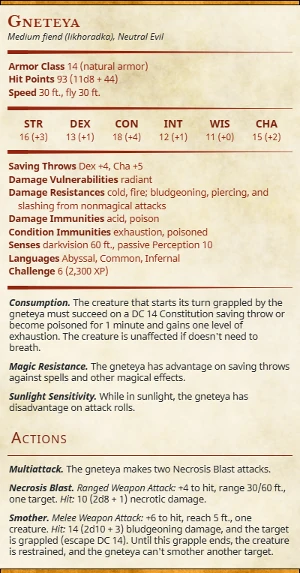
Likhoradka, Gneteya
The White Death; the Wasting Beauty
| TRAITS: | Fiend | Unholy |
| PLANE / LAYER: | Gray Waste |
| ACTIVITY CYCLE: | Any |
| DIET: | Skin colour |
| INTELLIGENCE: | 12 (+1) |
| ALIGNMENT: | Neutral Evil |
| SIZE: | Medium |
| CHALLENGE RATING: | CR 6 |
They name drives from the word gnet—to oppress, to press down, to smother—and they are precisely that: a slow pale suffocation dressed in white. Gneteyas are the likhoradkas of consumption, tuberculosis, that wasting sickness that has haunted mortals longer than recorded history. The ancient Greeks call their curse the dwindling, and their physicians observed something they could not explain: that the dying often seemed briefly, terribly radiant. Flushed cheeks. Bright eyes. A vivid, crackling energy in the mind just before the body gave out entirely. They named this state spes phthisica—the euphoria of consumption—and the gneteyas have been exploiting that misunderstanding ever since.
In some circles, consumption is not just a disease—it is a fashion. Among the Heralds of Dust, the pale, thin, wide-eyed, haemorrhaging sufferer has become an ideal of beauty. Death poets and painters of the macabre pursue the consumptive look deliberately. Cutters in the Lady’s Ward powder themselves to achieve the waxen pallor. Some use arsenic. Some berks even wish to die of it, for the beautiful corpses it promises. Gneteyas find all this attention deeply thrilling.
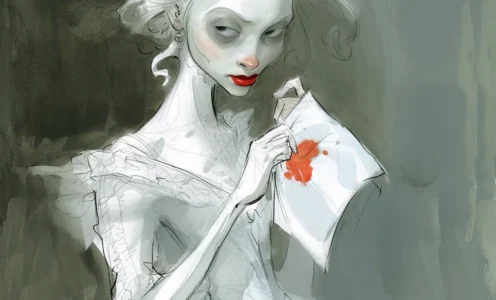
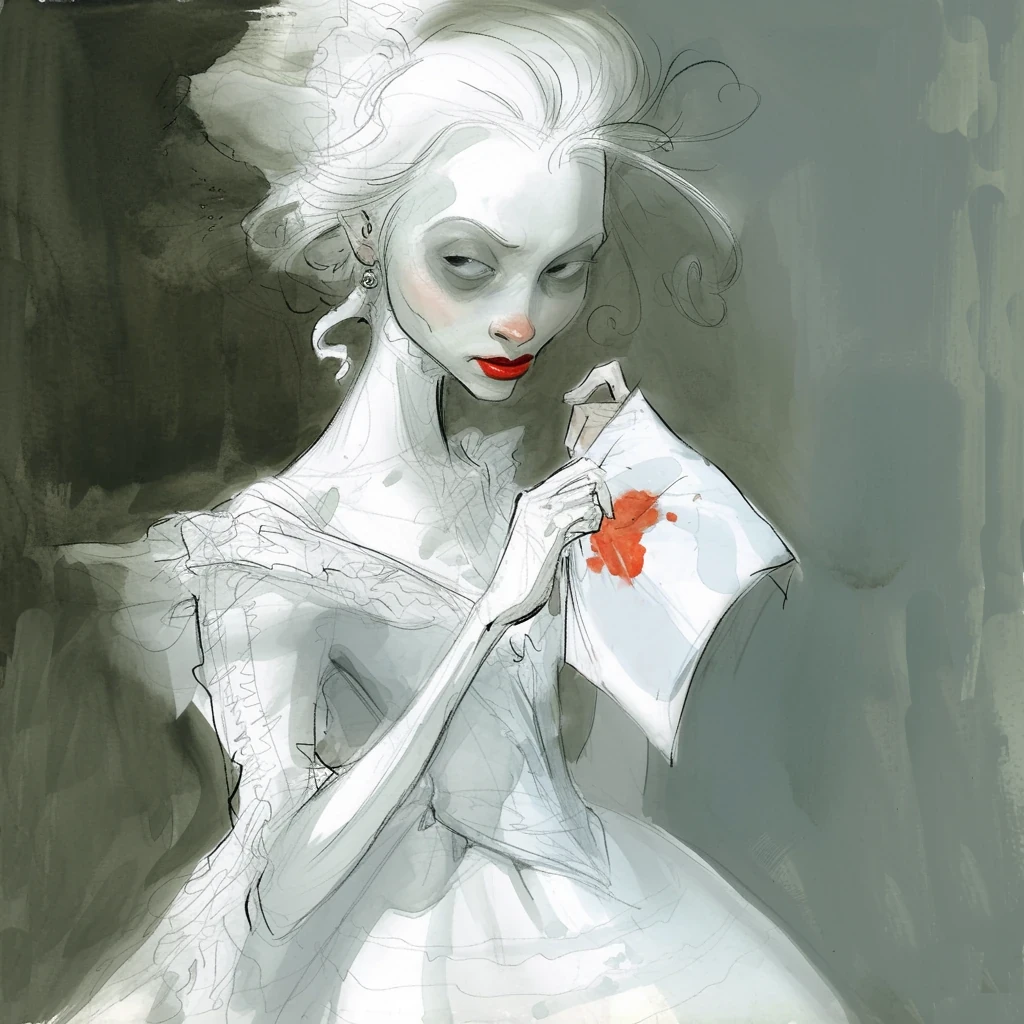
These fiends take the shape of young women of unsettling delicacy—ivory-pale, fine-boned, draped in white gowns that somehow manage to capture the aesthetis of both a ball dress and a burial shroud simultaneously. Their lips are their most striking feature: brilliantly, almost obscenely red. It’s a vibrant colour that has nothing to do with cosmetics and everything to do with the blood they cough into their handkerchiefs with a practised, theatrical grace. Their eyes are large and luminous with the radiance of the dying—and they hold themselves with the hauteur of cutters who’ve been told they’re beautiful so many times they’ve has come to regard it as a basic fact of reality.
They are some of the most arrogant creatures alive.
Gneteyas are also, in defiance of everything their appearance might suggest, fast. Preternaturally fast. The apparent frailty is not feigned exactly, for they genuinely carries the marks of the disease they embody. However what looks like fragility is in fact an uncanny lightness, as if their bones are hollow and their muscles are coiled springs. The consumptive body, you see, learns to endure. The blood-stained handkerchief, always in the hand, is pressed to the lips with ladylike frequency. This is their primary weapon. Berks smothered with it find the strength leaving them in waves—a weakness in the chest, a profound exhaustion.
Gneteyas are not interested in spreading their gift widely, they prefer to invest their attention on individuals. Specifically, in remarkable individuals. In artists, poets, philosophers, musicians. In those whose minds burn the brightest and whose bodies the disease hollows out the fastest. But most disturbing perhaps, the gneteyas believe sincerely that they are doing their chosen victims a favour. That the wasting they bestow is a refinement. The brief terrible radiance of the dying consumptive is a gift they give—one final delicate blooming before the grave. They have watched enough poets cough themselves to greatness to have developed a possessive pride in the results.
Planewalkers, a few final words of advice. They have a particular hatred of light. Be it direct sunlight or magical radiance, in bright light their mysterious pallor becomes something else: grey, stark, and curdled. Gneteyas retreat from the light for they does not like the truth of themselves to be made plain.
How pale I look! I should like, I think, to die of a consumption
—Lord Byron
Sources: Margarita and Jon Winter-Holt. Margarita notes: The likhoradkas are a homebrew fiend race, inspired by the eponymous disease-riddled spirits of Slavic mythology. While based on Slavic folklore and beliefs, the amount of actual information we have on pre-Christian Slavic deities is so minuscule that building any kind of lore out of it is impossible. However, there are a lot of folk beliefs about things these deities are thought to represent, which I have worked into the piece.