
[ Cordant Planes > Pangaea ]
[ Conditions | Locations | Powers | Animal Lords | Factions | Bestiary ]
[ Aerial | Apex Predators | Aquatic | Herbivores | Megafauna | Pack Hunters | Planetouched ]
On the Matter of Being Eaten by Something Extinct
Entry compiled by Aldressia Vant, Planewalker-Naturalist, Fraternity of Order (Tertiary Fieldwork Division). Peer-reviewed by Syter Mox, who survived three Fraternity expeditions to Pangaea and is now deeply tired of questions about it.
So you’ve heard the chant about Pangaea? A whole plane of prehistoric life—dinosaurs, great beasts, flying horrors the size of sailing ships, and some theropods that make a marilith look like something you’d keep as a pet. Maybe some blood in your faction told the place was worth a look. Maybe a portal dropped you there by accident and you’re reading this entry on your knees behind a cycad tree, hoping whatever beast that sound is coming from moves on without noticing you.
Either way, cutter, sounds like you need the dark of it. And fast… So I’ll not beat around the brontosaurus. The chant is this: at its heart, Pangaea is a plane of pure, unmediated predation. There is no fancy philosophy here—not in the bones of it, not in the soil. Whatever forces shaped this place, they did it before the concepts of mercy or fairness had been invented.
This chapter concerns itself with the most pressing menace for any explorers of this plane: the archosaurs and their kin. Specifically, what they are, what they can do to a body, and how you might—might, you understand, for no guarantees are issued or implied by this author or the Fraternity of Order—survive an encounter with one.
What They Have in Common
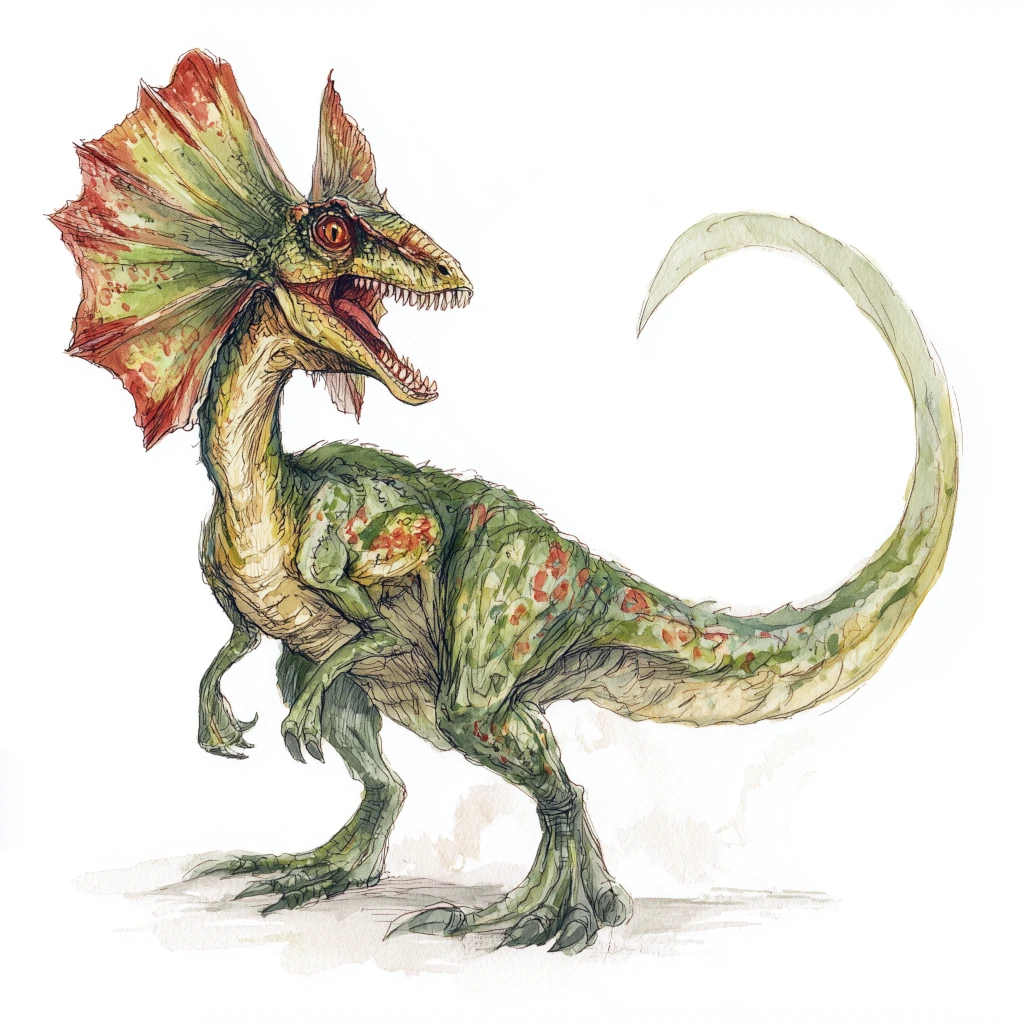
Strip away the variations in size, habitat, and length of teeth, and Pangaea’s archosaurs share a core set of characteristics that every planewalker needs to understand—preferably before they take their first step on the plane’s soil.
They are older than your gods. This is not a figure of speech. The powers worshipped across the planes—the ones with temples and clerics who constantly ask them for favours—came long after these beasties. Pangaea’s apex predators earned their place at the top of the food chain through eons of trial and error, with the trials involving extinction and the errors involving being eaten. The creature that is hunting you right now has been hunting things like you—and things considerably more dangerous than you—for geological epochs. It is better at this than you are, and the sooner you accept that fact, the more likely you are to make it to breakfast tomorrow.
Archosaurs are not mindless. This is the mistake that kills more berks on Pangaea than any other single error of judgment. The blood who says “it’s just an animal” is technically correct, but practically dead. The large theropods—your T-rex, your allosaurus, your spinosaurus—possess an ancient wisdom that’s allowed their kind to out-compete everything else on a plane full of lethal adversaries. They read the terrain. They anticipate and exploit injury. They learn the patterns and weaknesses of creatures that pass through their territory. A velociraptor pack does not need trigonometry to triangulate a target’s position and ambush from three angles simultaneously; it simply does it on instinct, because that is what velociraptor packs have learned to do. They understand flanking, can spot the more vulnerable members of a group, know to avoid fire and magic and metal. Ambush is not considered unsporting. Attacking an injured target is not considered dishonourable. Running down something that is already fleeing or trying to surrender is not considered cruel. Treat every encounter with an archosaur as a potential encounter with a highly efficient and tactical killer.
Their defences can be as dangerous as their offences. The popular conception of an archosaur encounter is: large thing bite—you die. The reality is more complex and possibly even less survivable. Their natural armour can be so thick that mundane weapons skid off it. They have reaching attacks that punish anything that closes near melee range long before you can strike them yourself. They have trampling charges that are near impossible to stop. Their tails are lethal weapons at range, too. The creatures on this plane did not grow this large and this durable because the universe was kind to them—they grew this way because anything smaller and thinner died, and left no descendants. What’s more, the environment amplifies everything. The jungle canopy is so dense that ranged attacks are obstructed. It is not safe to fly low over either undergrowth or open water. The volcanic rifts spew out gases to the point where exhaustion accumulates faster than it might on a temperate Prime. River deltas and fern-prairies provide ideal ambush cover for exactly the creatures best equipped to ambush you. The plane is, in the most literal sense, weighted firmly on the side of its inhabitants.
A Word on Plane-Touched Variants
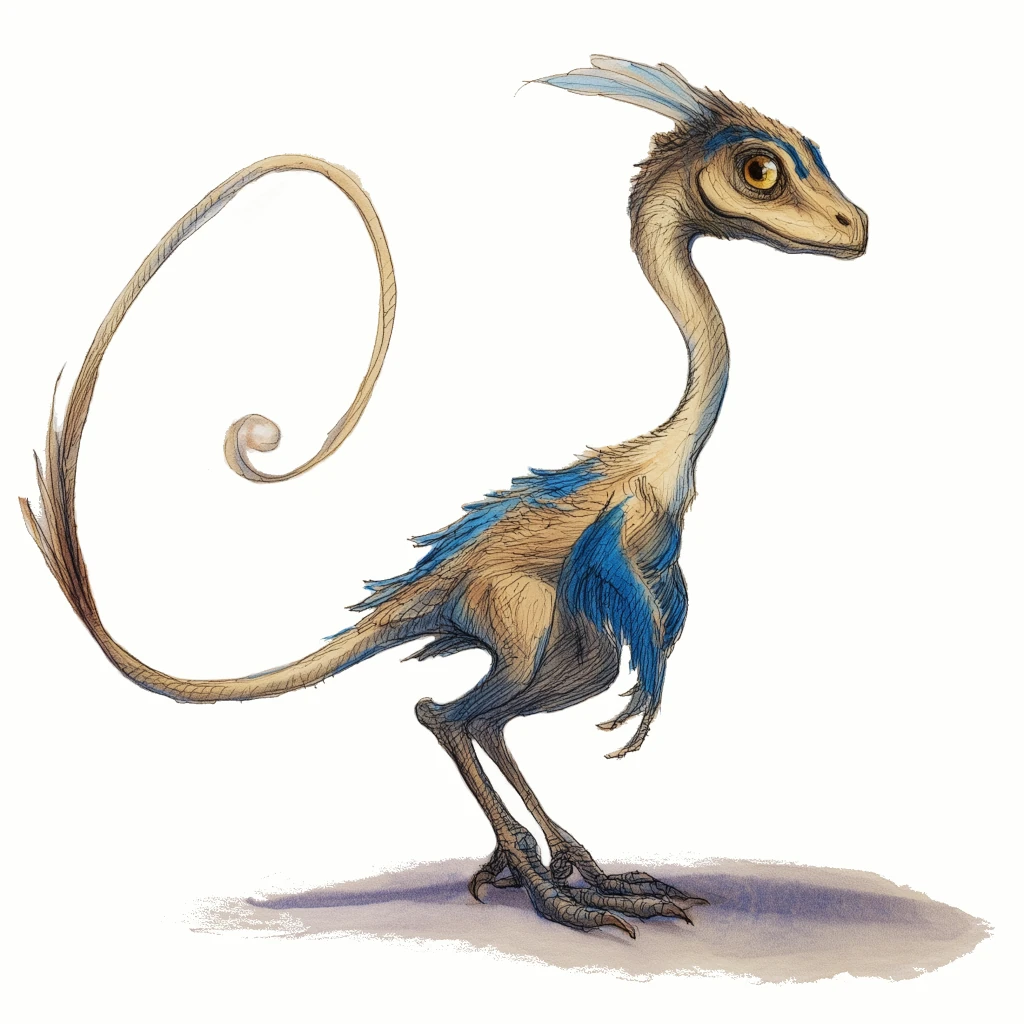
If carnivorous theropods were all Pangaea had to offer, experienced planewalkers would consider it merely extremely dangerous. What elevates it to the category of genuinely unreasonable is the existence of the plane-touched archosaurs—prehistoric creatures that have absorbed energies which bleed through Pangaea’s porous membrane from other Outer Planes. Yes cutter, there are tiefling dinosaurs too.
A tyrannosaurus rex has a lethal bite and a bad attitude. But a creature like Wretchglow has an agenda. Planewalkers are advised to treat any dinosaur that appears even marginally wrong—unusual colouring, anomalous behaviour, abilities that do not appear in the standard field guides, a general sense that the creature is even better at this than nature should allow—as a potential plane-touched variant and adjust their assessment of survival accordingly. These creatures are catalogued elsewhere in the associated sub-pages of this entry; their abilities, philosophies, and recommended avoidance strategies will be detailed at length for the benefit of the reader, and at significant personal cost to the fieldwork team.
The chant, then, is this: Pangaea is probably the most honest plane in the multiverse. There are no philosophies here, no factions arguing about the nature of existence, no dabus sweeping the streets clean of complications. There is only the question every living thing has always faced, stripped down to its bare and prehistoric essentials:
Are you fast enough, prepared enough, and clever enough to still be alive by sunset?
The pages that follow will give you the best possible chance of answering yes. No guarantees.
— Aldressia Vaunt, writing this from the safety of a very tall tree, Pangaea, cycle unknown
A Bestiary of Prehistory
- Aerial Archosaurs
- Being all things ancient that flap and flutter
- Apex Predators
- Being the solo hunters of the land
- Aquatic Beasts
- Being all things that lurk in the primordial waters
- Herbivores
- Being the armoured ornithopods and the enormous sauropods
- Megafauna
- Being the more recently extinct mammals
- Pack Hunters
- Being the coordinated community carnivores
- Planetouched Dinosaurs
- Being things that should never have existed
- Sapient Residents of Pangaea
- Being the sentient archosaurs, and the ancestral humanoids
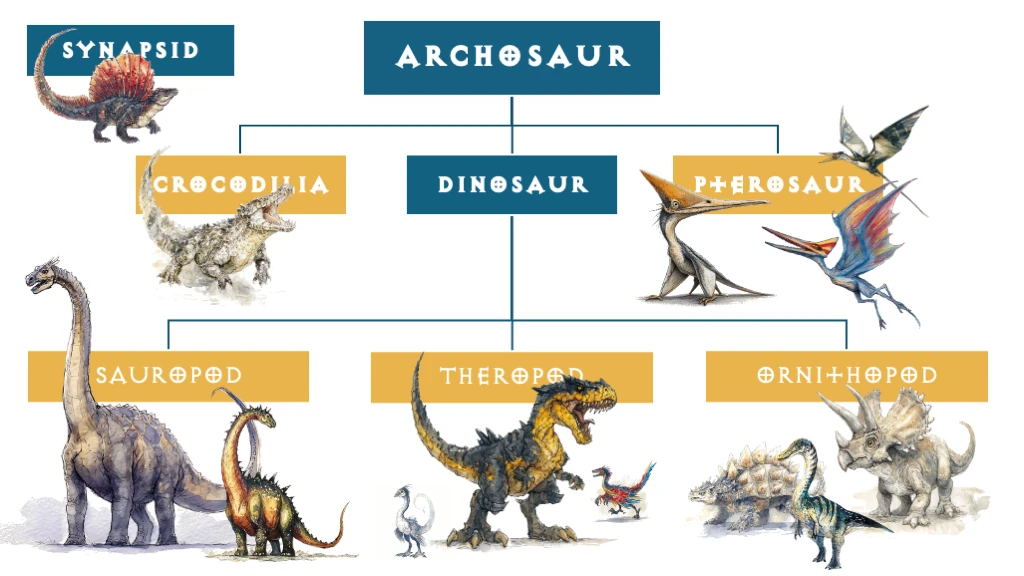
Sources: Jon Winter-Holt and Margarita. Palaentologywatch: I’ve taken the prehistorical liberty of dramatically simplifying the archosaur family tree as the scientific definitions are complex and frequelty-changing! I’ve also divided the archosaurs into groups based on their diet and behaviour, rather than strict biological clades. This, all the dangerous land-based hunters are collected together, and the flying beasts, whether they are technically pterosaurs or flying therapods. Incidentally, modern day birds fall into the therapod clade—birds are truly the last remnant of the dinosaurs. Certainly explains geese…