
[ Sahkil ] [ Impostors | Lurkers | Stalkers | Tormentors ]
[ Ananshea | Chamiaholom | Charg | Dachzerul | Eil | Hataam | Him | Iggeret | Kakasbal | Kasadeya | Lilauss | Nameless | Ozranvial | Shawnari | Velgaas | Vermillion Mother | Xiquiripat | Zipacna ]
Iggeret
Trigger warning — this sahkil has themes of missing children and suicide, so if you have concerns about content like that, I suggest you give this one a miss.
She Who Was Lost (planar sahkil tormentor [she/her] / NE) †
Portfolio: Darkness, empty places, pits
Realm: Ethereal / Wandering
Alignment: Neutral Evil
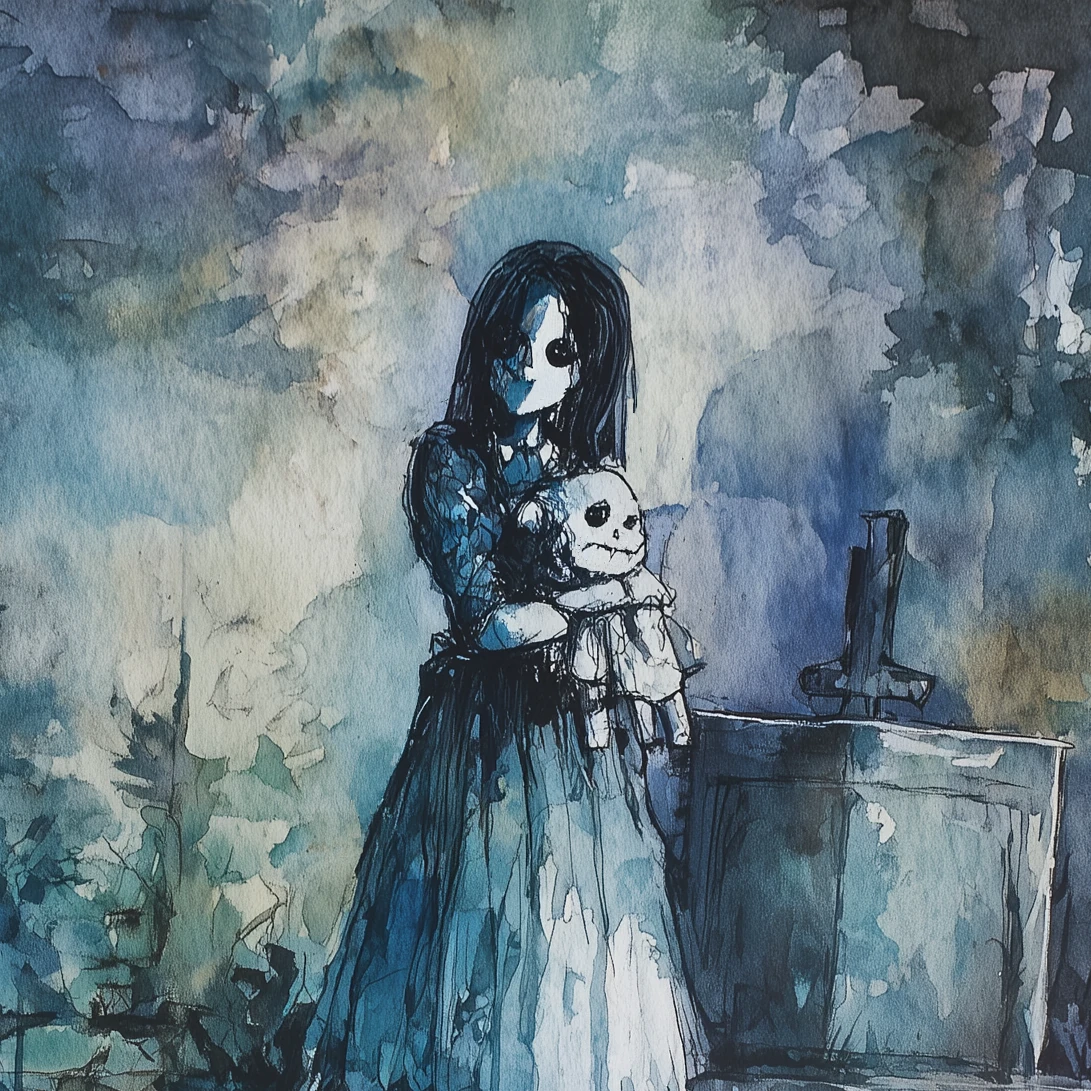
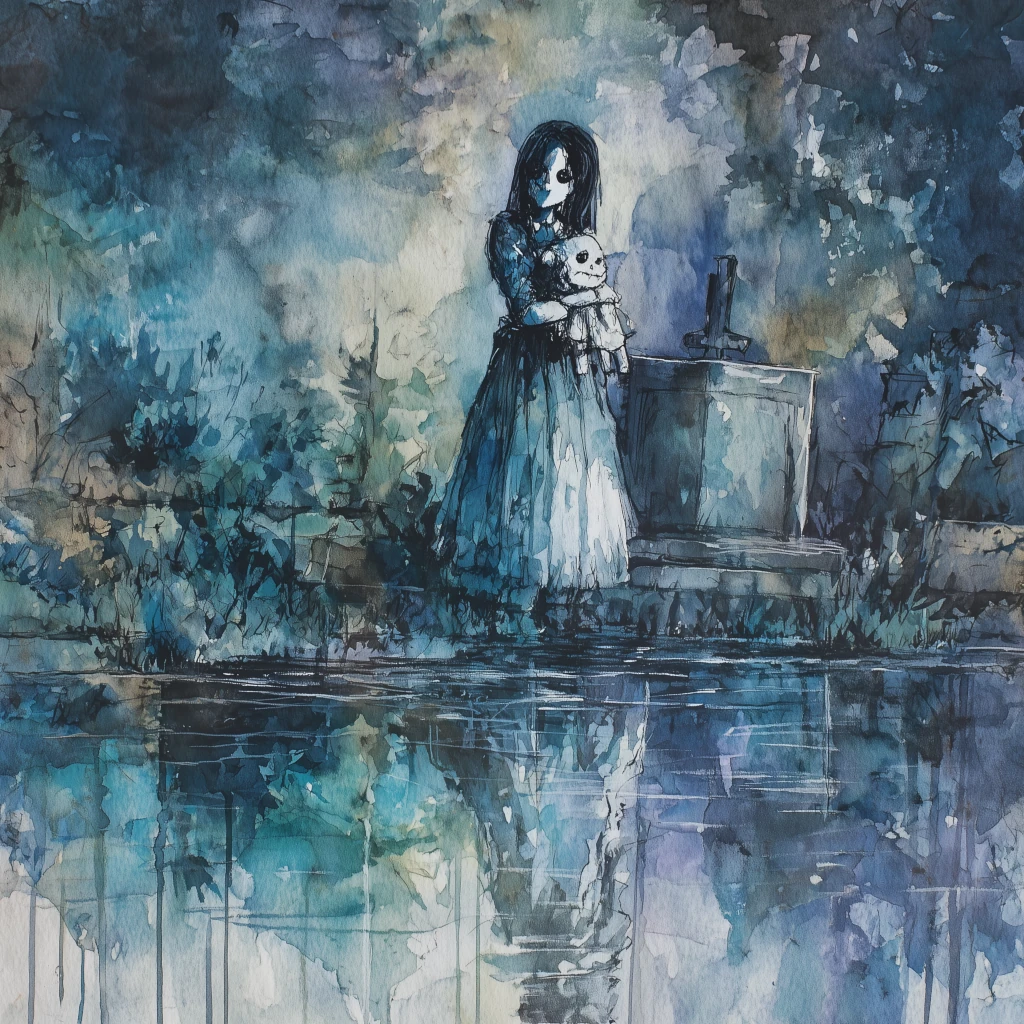
The sahkil tormentor Iggeret, She Who Was Lost, is the embodiment of emotional manipulation and misplaced pity. She is a patron of the fear of loss: the ghost of the moment you realise someone you love is not coming back. She wears a mask of childlike sorrow in the shape of a girl—a white dress that was once pretty but is now dirty and ragged, black hair that was once straight but is now tangled, and tears that never stop falling. Her face is gaunt and expressionless, almost skeletal. At night she haunts graveyards, abandoned buildings, and lonely roads. Any place you can find her is wrapped in a sombre silence that’s heavy enough to feel it pressing down on your shoulders. She does not look like a monster at all, just a little girl who has lost her parents. This of course is part of her terror: she seems fragile, mournful, and in need of comfort. The truth is anything but…
The story she tells about herself, choking back the tears, is filled with lies. Perhaps she actually was a mortal girl who staged her own kidnapping to see if her parents really loved her. Perhaps it’s all a charade. She will ask strangers for their help in finding her lost parents, but it is a trap. Her parents lost their minds in grief, blaming themselves and each other when she went missing, and eventually took their own lives in recrimination, sorrow and guilt. They are long dead and buried, and Iggeret knows this, because she was watching the whole time as the tragedy unfolded. She could have revealed herself and saved them at any time, but she was enjoying being the centre of attention too much to spoil the fun.
The fear Iggeret provokes is not of the dark, or getting lost, but of what love, grief and pity can do to the heart. She preys on the terror of isolation, abandonment, and the fear that no one will come, no one will search, and no one would care if you simply vanished. Her warped creed is that possessions and attachments to others are only weaknesses that keep the soul from surrendering to truth: a cutter is born alone and will die alone.
Her cults mirror a similar twisted tenderness. Her followers call one another siblings, though their bond is more a shared delusion than anything familial. Iggeret is seen as a sort of “big sister” of this macabre chosen family. She is the one who teaches that genuine love can only be proven through deprivation, self-punishment, and descent into despair. By then of course, it is too late.
Iggeret demands that her followers divest themselves of relationships, belongings, and hope until nothing remains but her cold, intimate companionship. She seeks a sort of adoption by sowing despair: she wants the lost to prove their faithfulness by dying into her family. If they forsake all else then she will finally have them for herself. She torments people by exposing the fault lines in their relationships. Devotees often subject their loved ones to cruel trials, partly to punish perceived slights, partly to strip away false affection, and partly just out of boredom or pure malice. Those who break are rejected, for they were never truly faithful; those who remain may be absorbed into the cult’s grim, sisterly embrace. For Iggeret, suffering is just collateral damage. It is the test that reveals whether someone deserves to be kept.
Her holy places are disused wells and abandoned structures (perfect for hiding in), and graves that are treated less as burial sites than as sleeping places. Her sacred animal, the rabbit, reinforces the image of something small, skittish, and preyed upon.
Edicts: Divest yourself of possessions and relationships whenever possible, foment despair and sorrow, rest among the dead
Anathema: Fear the dark, grow too fond of your possessions and relationships
Canonical Source: Book of the Damned [PF1e] p133; Divine Mysteries [PF2e] p320.
Source: Jon Winter-Holt