

[ Sahkil ] [ Impostors | Lurkers | Stalkers | Tormentors ]
[ Ananshea | Chamiaholom | Charg | Dachzerul | Eil | Hataam | Him | Iggeret | Kakasbal | Kasadeya | Lilauss | Nameless | Ozranvial | Shawnari | Velgaas | Vermillion Mother | Xiquiripat | Zipacna ]
Nameless
Trigger warning — this sahkil has themes of imposter syndrome, so if you have concerns about content like that, I suggest you give this one a miss.
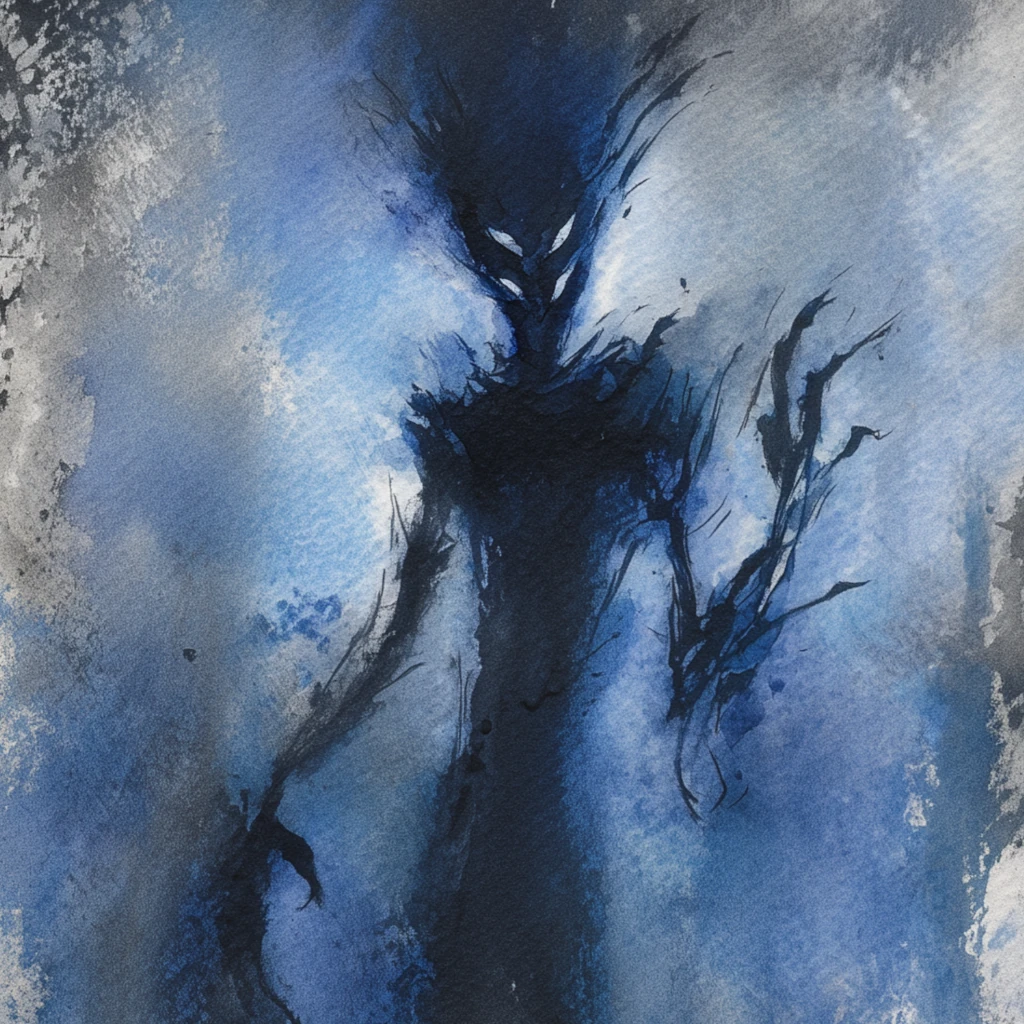
Upon an Empty Throne (planar sahkil tormentor [it/its] / NE) †
Portfolio: Delusions of authority, doubt, torment
Realm: Ethereal / Xibalba / Black Pyramid / the Dynasty Purged
Alignment: Neutral Evil
Nameless Upon an Empty Throne is a sahkil tormentor of false authority, corrosive doubt, and the inevitable suffering that follows when power rots a cutter from the inside. They say that power corrupts, and the fact that this is true just goes to show how good Nameless is at their job. It’s not just that Nameless hates only the tyrannical; it believes that the very desire to rule is itself a delusion to be debased. Nameless is the embodiment of a vacant throne, a paradoxical seat of power that is best filled by absence. Any berk who sits there themselves is merely a pretender, secure only until their sudden but inevitable betrayal, when they are exposed as unworthy frauds.
Nameless is more of a ghost than a corporeal creature—a haunt formed from raw, malformed ambition itself. Nameless manifests as a lingering intrusive thought, or a question that the listener mishears as a challenge to their authority. On the rare occasions is it observed, Nameless is a figure that looks like it has been scrawled onto reality with a stick of charcoal, with scratchy arms and blurred edges. Only its four glowing eyes are steady, but staring into them causes unease and nausea.
Nameless feeds upon self-doubt, and the more powerful the leader it emanates from, the better. It preys on the suspicion anarchists have that no ruler deserves to rule, that no leader is secure, and that no authority is anything more than a fragile performance maintained by fear, or tradition. The emotion it seeks to induce might come from the common folk of a city or nation, the closed circle of advisors around a ruler who doubts their competence, but is most delicious when it is the king themselves doubting their own worthiness for the role. Nameless cares not for the morality of the ruler, it targets power-seekers whether they are benevolent or monstrous. It whispers malicious rumours into the ears of kings, perverting their self-confidence into doubt, and twisting their arrogance into fear. It foments treachery in servants, feeds falsehoods to advisors, and stirs up rebellion in the common folk. Its ultimate goal is for legitimate power to curdle with secrecy, manipulation, and second-guessing—until a ruler can no longer tell whether obedience to them is real and deserved, or just covering up a darker plot.
Its realm in Xibalba, the Dynasty Purged, feels like a royal court after a massacre. A deserted throne room covered in a thin later of dusts, with a shattered and blood-splattered crown on the floor, once-sumptuous standards hanging torn, and an eerie silence where there should be bustle and activity. The throne itself sits empty—it must always remain empty. Nameless does not seek a crown for itself, so much as it wants every throne to remain spiritually uninhabitable.
Bards tell stories about one of Nameless’ conquests. Once upon a time, in an obscure Prime world there was a king. At first, he was loved by some of his people. Not all by any means, but enough. However, the king was vain and shallow, his opinion was easily swayed, and lies fell often from his lips. Nameless worked its poison into the words of the king’s advisors, getting them to tell the king only what he wanted to hear, and the king was too narcissistic to see through their sycophancy. Anything contrary to his opinion was branded as the false prophecy of dark powers, and slowly his grip on the truth loosened. As the king enacted ever more dramatic laws to enforce his will, his people began to see the cracks in the façade. Eventually, all that was left was conspiracy theories, division and fear, and Nameless feasted upon its fine work.
Edicts: Crush the confident and arrogant, incite rebellion against just and unjust rulers alike, sow doubt from the shadows
Anathema: Hold a position of authority for more than a day, seek power for any reason but destroying those in power
Canonical Source: Divine Mysteries [PF2e] p320
Source: Jon Winter-Holt