
[ Persian Pantheon ] [ Baxt | Daevas | Yazad ]
A Who’s Who of Druj
Mythologywatch: What are the differences between Aeshma, Angra Mainyu, Ahriman and Asmodeus?
The mythos of ancient Mesopotamia and Persia are complex, overlapping and change over time—after all, these beliefs were held for thousands of years! This makes it tricky to map names onto particular powers, so a certain amount of liberties have to be taken to reduce thousands of years of mythology to neat stat blocks with alignments and portfolios. Angra Mainyu and Ahriman are two names for the same Zoroastrian figure, while Asmodeus is a later, reworked demon whose roots probably include the Zoroastrian demon Aeshma rather than Angra Mainyu directly.
- Angra Mainyu is the Avestan “Destructive Spirit,” the primordial cosmic adversary in Zoroastrianism, opposite Ahura Mazda or Spenta Mainyu.
- Ahriman is the Middle Persian name/interpretation of Angra Mainyu (same being, later era) and in Zurvanism becomes either twin to Ahura Mazda or his co‑eternal rival.
- Asmodeus appears later in Jewish demonology, and most scholars links him to Aeshma daeva, the Zoroastrian demon of wrath (Aeshma‑Daeva → Ashmedai → Asmodeus). In AD&D 2e Planescape lore the ruler of Baator was left dark. In 3e D&D and later editions this cutter was revealed to be Asmodeus, the Lawful Evil archdevil ruler of the Nine Hells. Asmodeus as a later, more “legalistic” devil‑offshoot of the original Iranian evil.
While the cat is definitely out of the bag regarding Asmodeus being the Dark Lord of Nessus, I propose to try and reclaim some of the mystery around this character. Different canonical sources claim Asmodeus is all sorts of power levels, from a Lord of the Nine to a power or even something else. Why not, I thought, make him a possible emanation of Angra Mainyu, or even his avatar, and then deny Angra Mainyu even exists? Asmodeus then has an extra—and plausibly deniable—backstory linking him to Ahriman and Aeshma, with plenty of tension built in there. Is he or isn’t he? All of this of course fits nicely with Asmodeus’ portfolio of lies and misdirection.
To make my thinking more clear, here’s an out of character summary of the similarities and differences between these characters which you might chose to implement. Or not. Or just use part of it.
Angra Mainyu—Primordial Evil from the Edge of the Multiverse
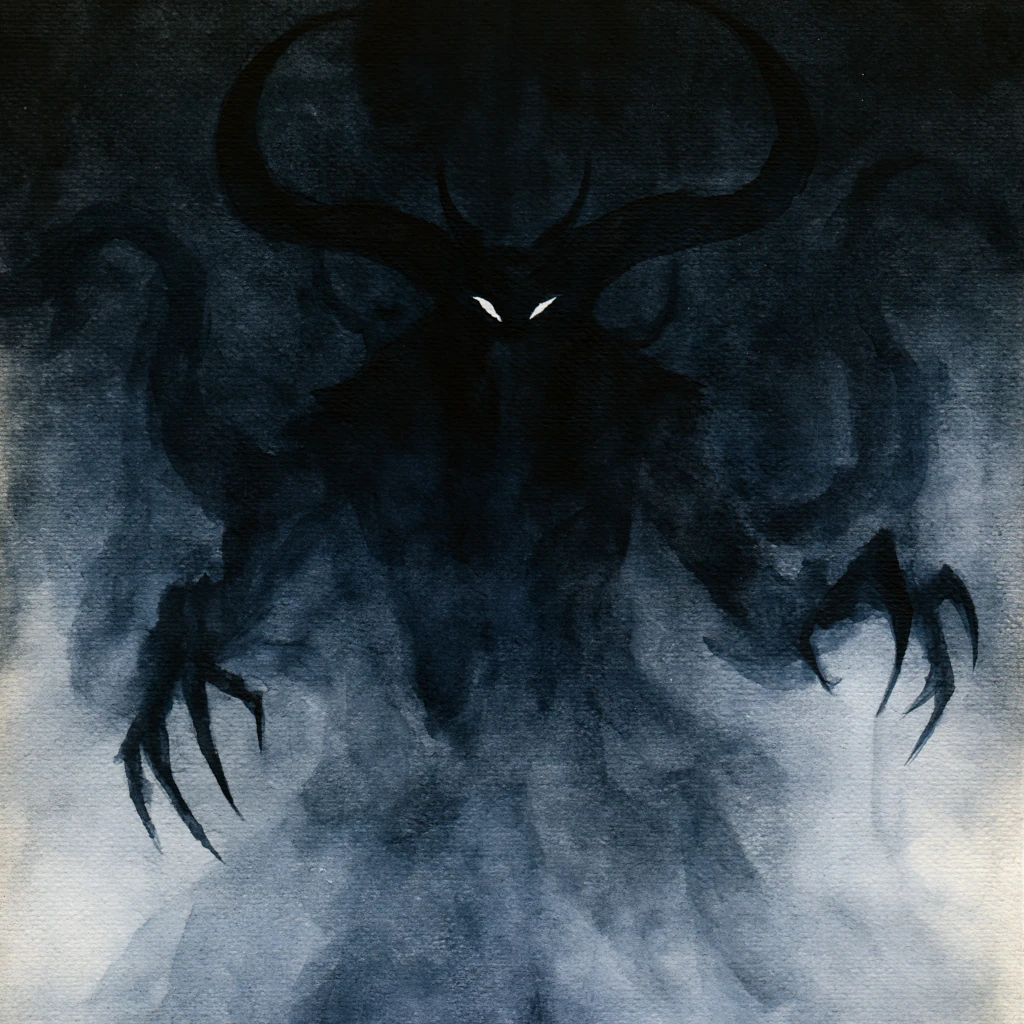
Angra Mainyu represents the “Abyss Beyond the Abyss.” He’s a pure anti‑being or entropy, madness, cosmic rot. He’s rarely worshipped; rather than a power demanding worship he’s more of a looming cosmic threat. The original, formless “Destructive Spirit,” Angra Mainyu is an anti‑creation force from beyond the ordered multiverse.
Portfolio: Metaphysical negation: unmaking, entropy, cosmic hatred of being. Corruption of natural laws; spawning the proto‑fiends and daevas. He might be the source of the first Abyssal rifts, but is not bound to any one Lower Plane.
Realm: Angra Mainyu exists in a pre‑planar void or a rift beyond the Outer Planes, occasionally breaching into the Deep Abyss or the emptiness between the layers of Gehenna or Carceri.
Personality: Utterly alien, more a dark force than a character—his aims are barely intelligible. He is not interested in ruling the multiverse that he was given by Zurvan, only in its uncreation.
Relationships: Angra Mainyu barely acknowledges Asmodeus, Aeshma or Ahirman—they are all, after all, just temporary patterns in the hated tapestry of being. Angra Mainyu is more of a remote, backdrop horror; mentioned in ancient theological texts but never encountered directly, seen only in visions, and capable of corrupting entire planes.
Aeshma—the Volcanic Vent of Rage
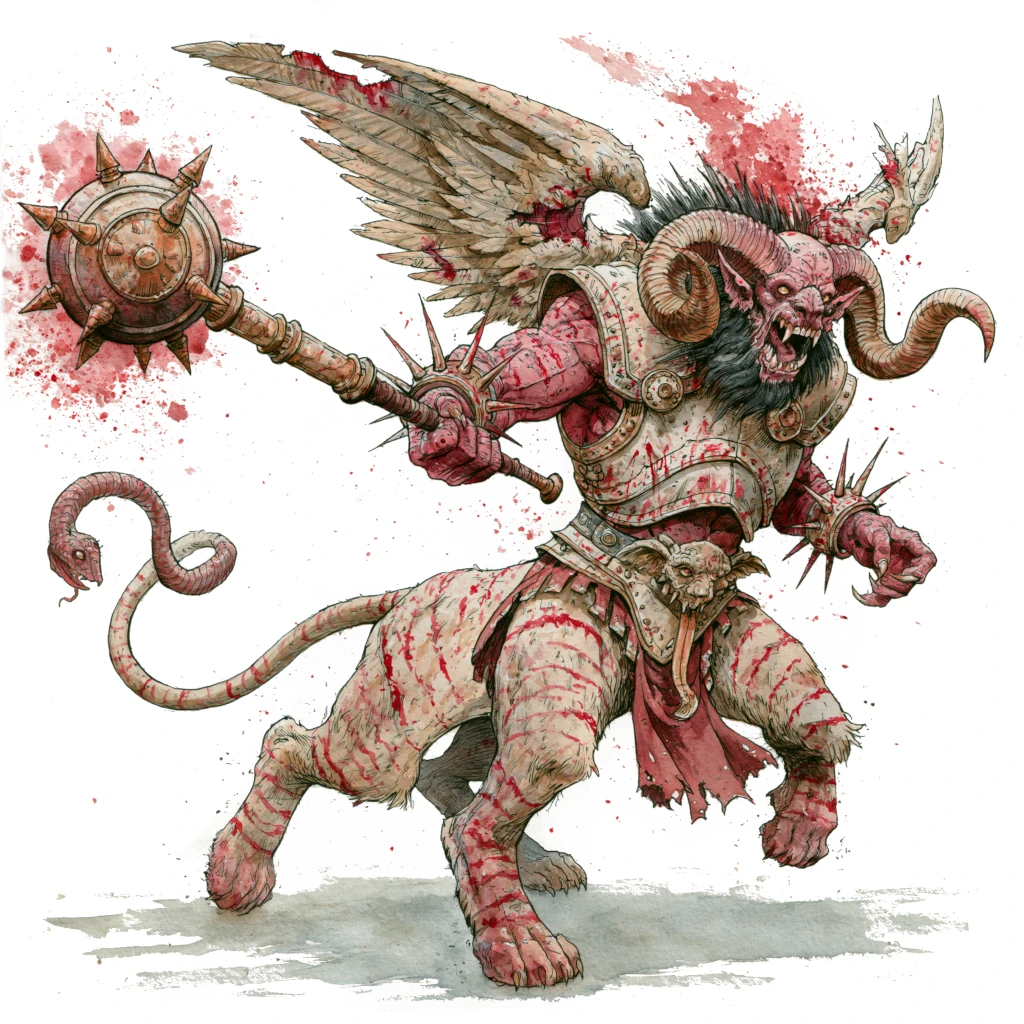
Angra Mainyu took all his uncontrollable anger and hatred and birthed it as Aeshma, the Lord of Rage and Ruin. This scarred power prowls the Abyss provoking havoc and destroying whatever he can. He is too blinded by wrath to be of use in the Blood War, even though many tanar’ri high-ups and their armies have been destroyed trying to negotiate, threaten or even trick him into taking their side. Aeshma takes little interest in the politics of the Abyss, and is fixated upon spreading conflict to Prime worlds, terrorising petitioners, and using what energy bhe has left destroying tanar’ri, obyrith, qlippoth—anything that he can wrap his mace around.
Portfolio: Rage, ruin, and rampage.
Realm: Abyss / Field of Maces ‡
Personality: Unrelentingly aggressive, it is impossible to reason with or placate Aeshma. Once he starts raging, he will not stop until everything around him is dead.
Relationships: Aeshma is the favourite daeva of Angra Mainyu, perhaps because he is the most predictably unpredictable. Angra Mainyu will destroy him in the end of course, but right now he is just too useful. Ahriman is wary of crossing Aeshma’s path, but Gehenna is not of interest to Aeshma. Asmodeus seen Aeshma as both dangerous and a joke, but it’s thought they do meet. Perhaps Asmodeus has found a way to pacify the Bloody Mace somehow, at least for long enough to plot—or to lie to him. Dark whispers claim that Aeshma and Asmodeus may be twins, lovers, or even the same cutter—or perhaps all of the above. Could it be that Asmodeus assumes the mask of Aeshma and takes. ajaunt over to the Abyss when he needs to vent his anger?
Ahriman—Angra Mainyu’s Most Hated Emanation
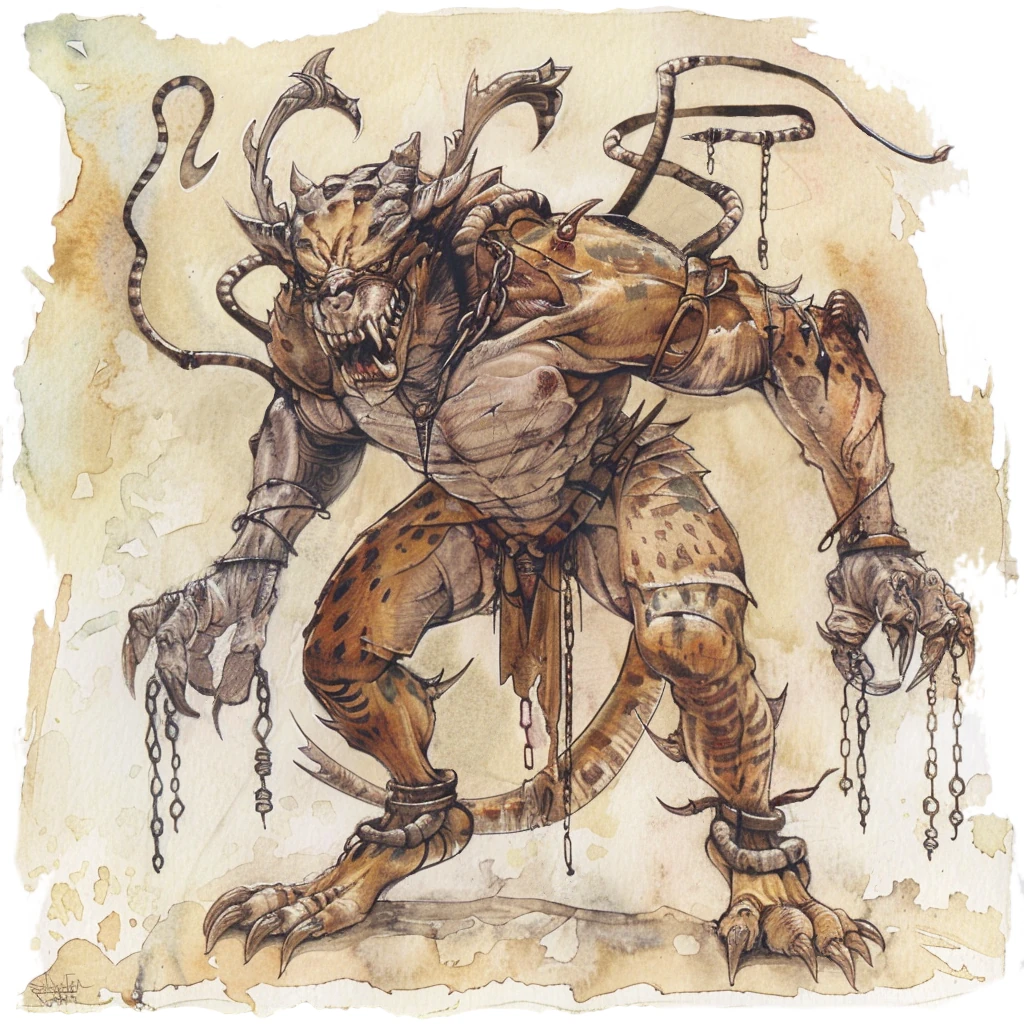
If Angra Mainyu is the source; then Ahriman is the mask he wears to deal with lesser beings. But over aeons, the mask became self‑aware and rebellious. Ahriman wants to rule the multiverse, remake it in his image, and then obliterate it when he has grown bored with it. Angra Mainyu wants everything gone—including Ahriman in the end. Ahriman actually works to contain Angra Mainyu’s infrequent incursions, channelling them into the emergence of new fiendish races instead of raw oblivion. Some celestials reluctantly tolerate Ahriman because they realise that total unmaking that Angra Mainyu would pursue is worse.
Portfolio: Ahriman himself is the Adversary; a cosmic ideological villain of deity‑corruption and nihilistic cults. He’s an enemy of entire pantheons (the Yazad, but also the Mordinsamman, the Seldarine and so on). He is the first and greatest personification Angra Mainyu ever assumed to wage war against gods; a fully self‑aware fiendish over‑power. Ahriman’s plan is one of strategic entropy: grand, millennia‑long plots to corrupt powers and bring down pantheons from within. He is the patron of the div, of archfiends, and other tyrant gods who embrace nihilistic ends. He is the master of corruption of faith, heresy, apostasy, and the entropy of creeds.
Realm: Gehenna / Krangath / Duzakh
Personality: Cold, calculating, ideologically driven—he wants the story of the multiverse to end with darkness.
Relationships: Ahriman despises Asmodeus as a liar, a thief, and a usurper. Asmodeus styles himself as “king of all devils” and, in some cults, as the true Adversary, stealing myths that once belonged to Ahriman. Ahriman hates that Asmodeus is more famous, more successful, and more feared than himself. Ahriman sees Aeshma as a psychopathic barmy, possibly useful in the short term but ultimately disposable.
Asmodeus—the Prince of Tyrants
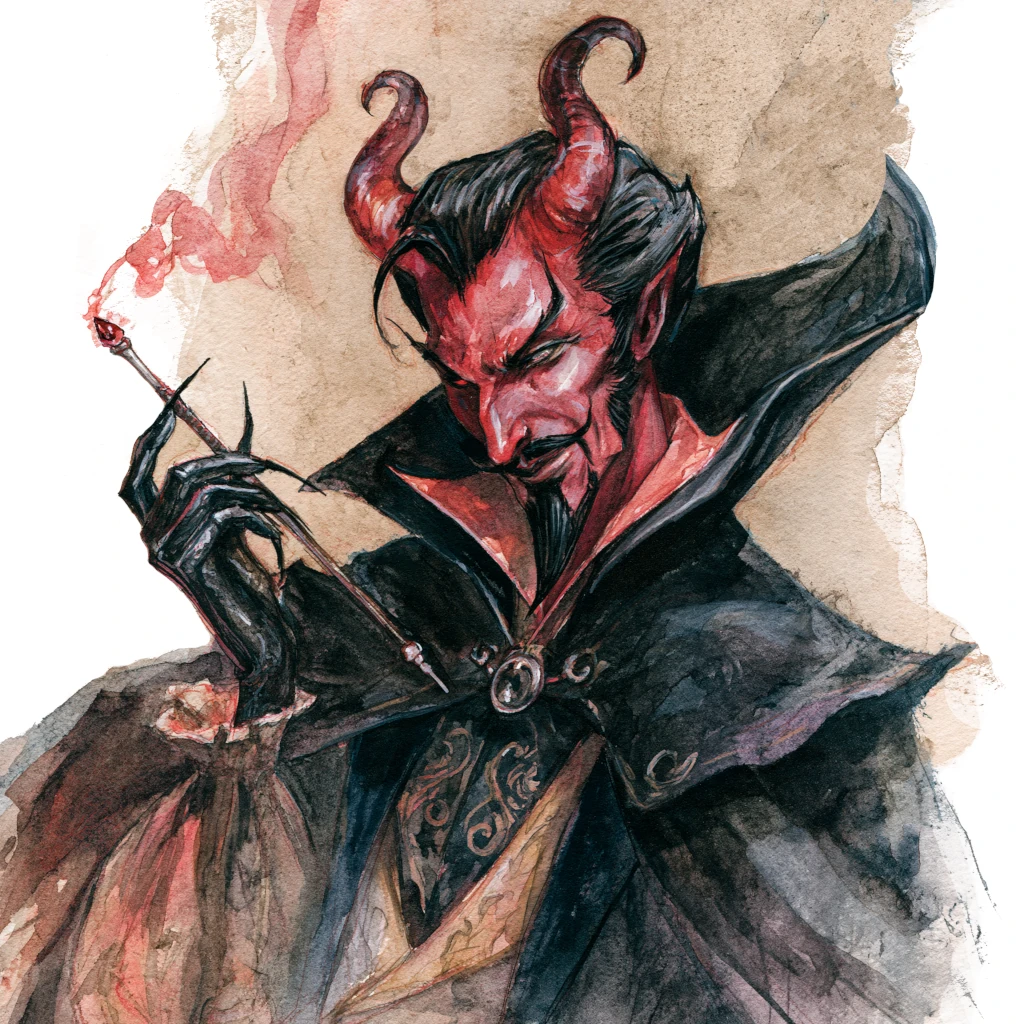
There are many legends about the origin of Asmodeus, and they cannot all be true. One of them is that he is an aspect of Angra Mainyu, emanated from the power of pure evil when Ahriman and Aeshma were created. Asmodeus does not deny this, but then he does not deny anything; this is the way of Druj. Whether this story is compatible with the one where he is the original fallen angel, or whether that was Angra Mainyu, or someone else entirely, that’s dark.
Portfolio: Legalistic evil, pacts, contracts, devilish bargains, infernal bureaucracy. Hierarchy, oppression, and ordered cruelty. Prideful wrath channeled through discipline.
Personality: Urbane, rational, charming on the surface; utterly ruthless underneath. He sees himself as the necessary evil that brings order to chaos.
Relationships: Asmodeus knows Angra Mainyu is one of the few things he can’t negotiate with, lie to, or manipulate easily. All the contracts in the planes are worthless wordgames when it comes to pure unmaking. There have even been rumours that Asmodeus might assist celestials against Angra Mainyu’s worst incursions, not from a sense of altruism, but because if everything ends, he is left with nothing to rule. Asmodeus sees Ahriman as an unreliable extremist—he is too chaotic, too invested in cosmic annihilation instead of profitable, stable oppression. He sees Aeshma as a joke, undoubtedly underestimating him in the process.
Asmodeus is an interloper: Some mortal cults in Sigil confuse him with Ahriman and he encourages this, stealing worship from the Lord of the Div. Mithra, Rashnu, and Sraosha in particular despise Asmodeus, seeing him as a blasphemous pretender whose contracts mimic and pervert the true cosmic covenant.

A Who’s Who of the Pantheon
Realms of the Persian Powers

Source: Jon Winter-Holt. The powers described here are based on Zoroastrianism, at 3500 years old or more, it is one of the most ancient religions, and even more impressively, it’s still around to this day. While the religion originated in what is now called Iran, most of the 100,000+ faithful are Parsis who live in India and Iran. I hope I’ve done these powers justice, and the liberties I’ve taken when details were sparse are in-keeping with the historical details—as always, if you know more about Zoroastrianism or ancient Persian or Iranian mythology please do get in touch!