

[ Fire ] [ Mapping Infinity | Pockets | Locations | Powers | Factions | Bestiary| Flora]
Faces of Flame: Factions of the Fire Elementals
“Of all the elements, glorious Fire is the most ambiguous and fickle. You mortals depend on the flames for so much; cooking your food, warming your bones, lighting your way, purifying sacrifices to your powers. Yet at the same time, you fear its wrath; burning your flesh, destroying your homes, blinding your eyes, damning your souls to eternal torment. You pin so many things, good and ill, upon a simple element. And then you come to the Fierce Inferno and you are surprised when your crude stereotype of a ‘fire elemental’ turns out to be just that.
“I am your incandescent servant, Tadj-al-Saltaneh Tiznaa bint-Saatadeh al-Mamaalek, and I will be your guide to the many Faces of Flame—the many ways that Fire Elementals are more subtle and varied than you think. Forget your crude ideas of ‘good’ and ‘evil’ because that Outer Planar nonsense won’t ignite here. Open your mind, close your mouth, and of course, open your purse, and let me tell you the story of the Flickering Empires.
— Tadj-al-Saltaneh Tiznaa bint-Saatadeh al-Mamaalek

Atreia

A Baptism of Fire
Atreia, the Lambent King is the embodiment of fire’s purifying power, a magnificent triple-headed ibis whose flames burn away corruption rather than simply consuming all. Once a beacon of hope in the Plane of Fire, he taught that flame should cleanse and renew, and offered sanctuary even to unflaming creatures in his compassionate realm. His benevolent philosophy put him at odds with malevolent fire lords like Ymeri, who imprisoned him within the Garnet Brand for eons while the Great Inferno grew harsh and cruel in his absence. Recently freed under mysterious circumstances, Atreia has returned weakened but determined to restore morality to his beloved plane, gathering a faithful group of fire denizens that calls itself the Radiant Host, as he slowly rebuilds his strength. Now the returned king faces the monumental task of challenging Ymeri’s dominion and proving that fire can be a force of purification and protection rather than mere destruction and fear.
Imix
Fire and Brimstone
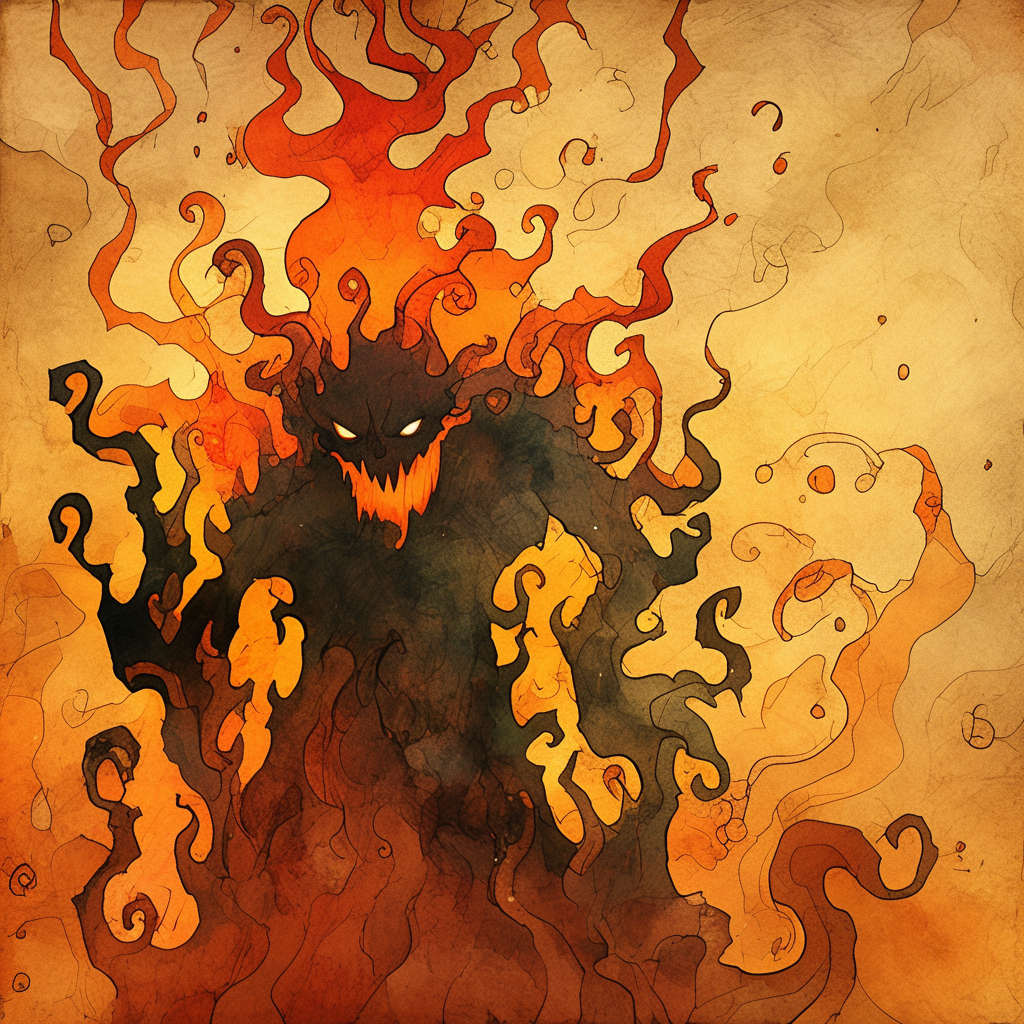
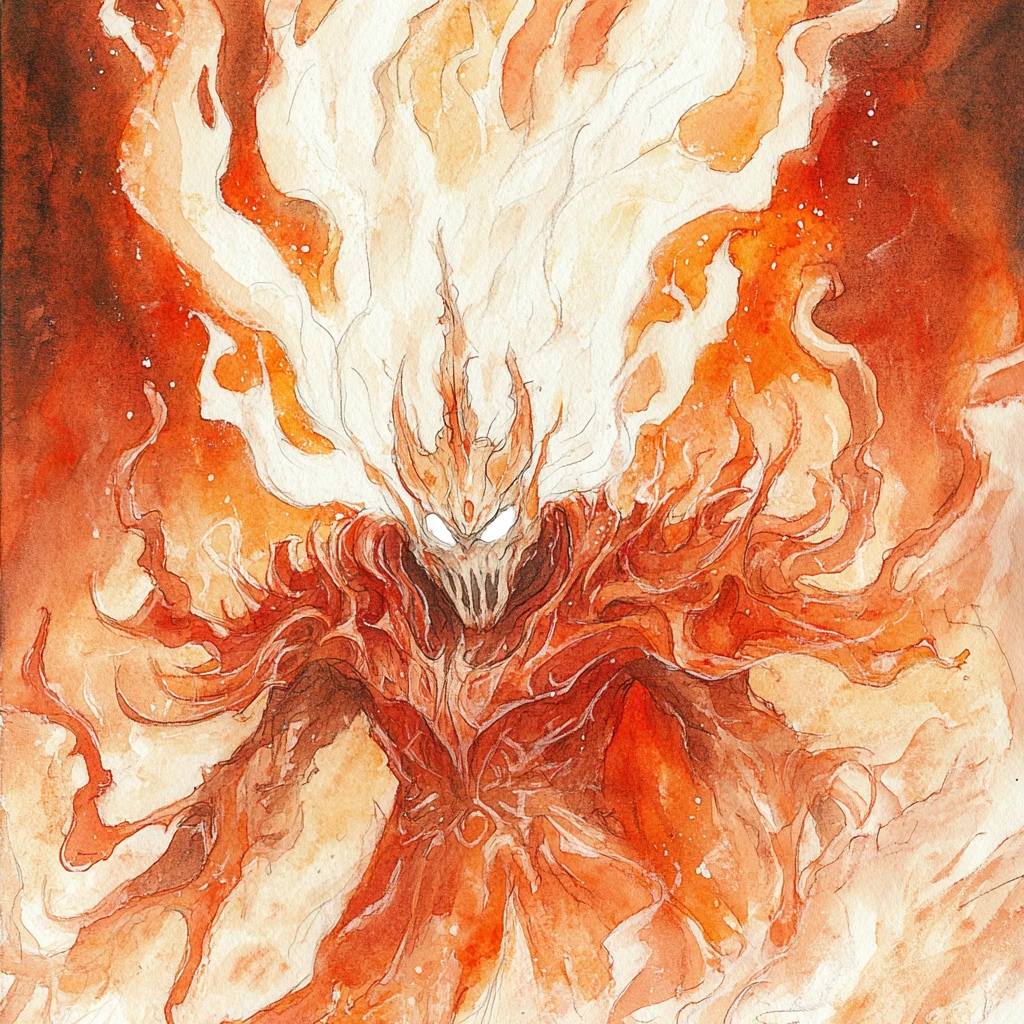
Let’s start with the most obvious aspect of fire—it burns things. As an element, fire is one of the more dangerous; it ignites, it consumes, it destroys. And a large number of fire elementals revel in this aspect of their element, enjoying their freedom to rampage. The archomental who embodies this aspect of the inferno is the violent and unstable Imix, the self-styled Lord of Hellfire. This berk has made more enemies than I’ve had hot dinners. Quick to anger, he’s a threat to planewalker, efreet and salamander alike. His followers call themselves the Cult of the Razing Prayer, and they’re all about razing everything to the ground just because they can. We call these execrable elementals the Hellfire Disciples, and they are nasty pieces of work, the lot of them.
Kossuth
The Leading Light
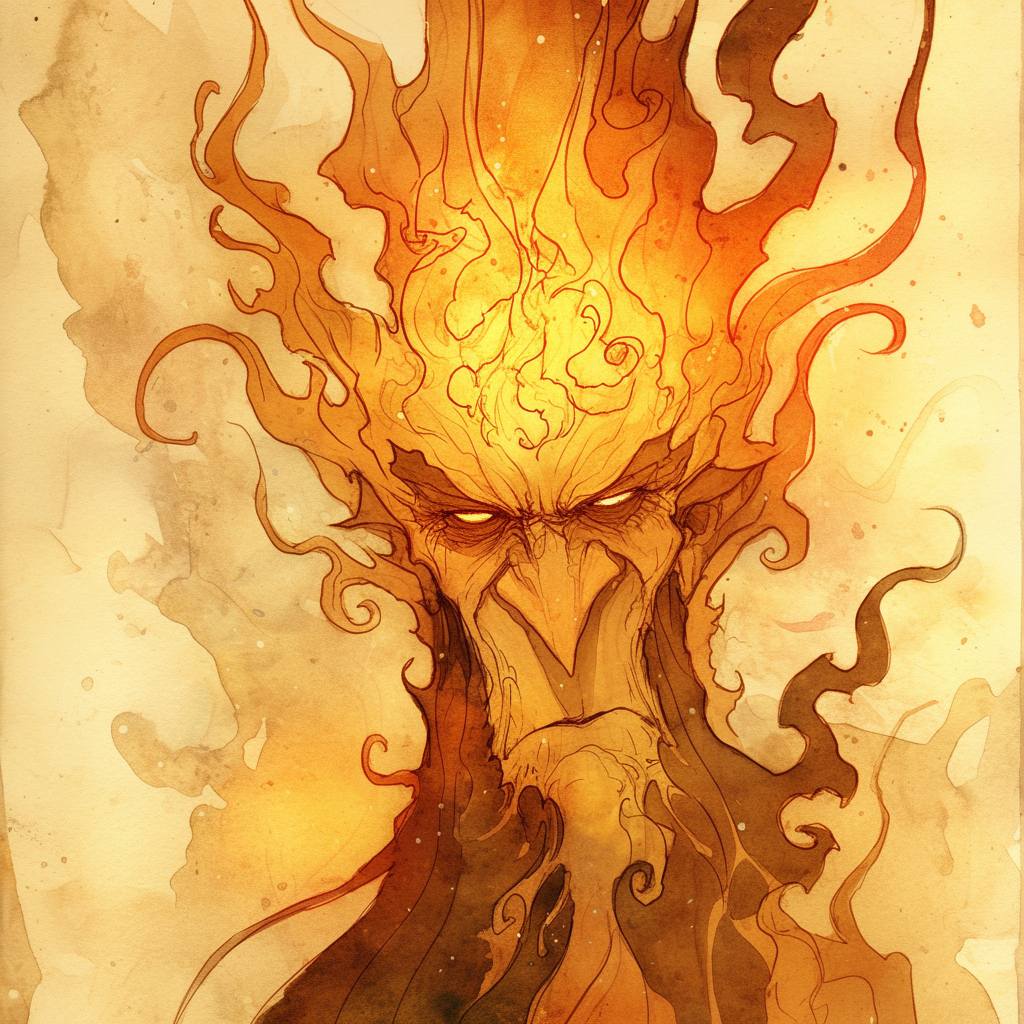
This old chunk of coal has been smouldering longer than Baator, they reckon. These days he’s cold and aloof—which is quite a trick for the highest-up of the fire elementals, let me tell you! Back in the day though they say Kossuth ws a real wildfire. There are myths about him disobeying the powers and giving the first flame to mortals—funnily enough Prometheus got blamed for that by the Greek pantheon too, and Loki by the Norse. Now I’m not one to start rumours, but have you ever seen Kossuth, Prometheus and Loki in the same place at the same time? I thought not. But over the millenia, Old Kossuth grew gradually more distant and aloof, withdrawing into his realm in the Deep Fire. Followers of Kossuth are the most insular of the flame elementals, caring not a jot for morality, just for the warm embrace of the flames.
Get the chant on Kossuth here…
Ymeri

Burning Bridges
Ymeri, the All-Consuming Queen of the Inferno, is the malevolent archomental of fire at its most sadistically destructive—a jealous flame that burns not just for fuel, but for the sheer pleasure of watching civilisations crumble and histories turn to ash. This many-armed reptilian with burning wings rules from her Auroric Palace at the border of Fire and Magma, where magma sublimates into vapour that creates aurora across her domain. Her philosophy centres on consumption and domination through fear, teaching that Fire should rule all planes while everything else burns. She has systematically destroyed all records of her own origins to remake herself through pure erasure. Ymeri commands the largest following among all elemental lords—from fire elementals and efreet to chaotic pyrophor and mortal cults of arsonist priests—all serving her vision of unpredictable, terrifying flames that leap and shift to consume not just matter, but hope itself. She represents fire at its most dangerous, she is the flame that grow beyond any attempt to control it, burning brighter until everything is ashes.
Zaaman Rul

Fighting Fire with Fire
But remember, cutter, Fire ain’t just destructive, it can also be useful. The embodiment of the benevolent aspects of the element—at least as far as mortals are concerned—is an archomental called Zaaman Rul. He’s the being credited with helping humans tame flames for hearths, cooking fires, kilns, forges, and alchemical labs. He’s a thoughtful and diplomatic being, although he can be quick to anger. Hated by most of the other flame archomentals, Rul has necessarily found allies elsewhere, amongst the powers of the mortals, the celestials and planewalkers. His followers are called the Righteous Flames, and they’re most creative of the flame-dwellers, always crafting and cooking up new wonders.
Get the chant on Zaaman Rul here…
See Also:
Canonical Sources: Start with the excellent Planescape Inner Planes [2e] book. Other references from D&D and Pathfinder lore are mentioned on the relevant entries.
Other Sources: Margarita, Jon Winter-Holt