
[ Demi-Elemental Plane of Wood] [ Mapping Infinity | Pockets | Bestiary | Flora ]
[ Borders of Wood ] [ Air | Earth | Negative | Positive ]
Borders of Wood

If You Go Down to the Woods Today…
…you’d better not lose sight of them. Chalk it up to another mystery of the planes, but travel from the Plane of Wood to a neighbouring plane is much easier one way than the other. For example, a planewalker seeking to get to Air from the plane of Wood need ‘only’ climb, all the way up to the top of the Canopy. From there, they’ll find themselves looking out over Core Air, and should they continue onwards, they can turn back and see the expanse of the Canopy behind them still. But be warned—continue on, and as soon as the Canopy disappears from view, then it’s gone. Turning back and simply heading the other way won’t take you back to it. A cutter has to travel leafwards, an ancient and secret direction which is not the same as just turning around. It’s the same story heading to Wood from the Positive, Negative or Earth too. While the Plane of Wood has returned to the Inner Planes, turns out travel to it is never quite as simple as things sound.
CORE WOOD: The Core Wood—simply called the Woods by natives—comprises the vast bulk of the Elemental Plane of Wood. It’s a realm of fractal forests, cultivated groves, rivers of sap, and wild plant-life that stretches across a seemingly infinite plane. This eternal forest embodies the essence of growth and the tension between wild nature and cultivation. Here kizidhar cities can be found woven from living trees, the Planar Trade Consortium harvests and exports lumber in vast quantities, and conflicts over the plane’s future—between preservation and exploitation, between virgin forest and managed harvesting—shape the philosophy of the plane.
DEEP WOOD: Down in the very centre of the plane, lies the Heartwood. This region is a solid and continuous block made from all kinds of woods, twisted and knotted together. Only planewalkers capable of carving a tunnel through it, or elementals phasing through the matter entirely by woodwalking, are able to explore down here—but I can save you the time, because it’s all just wood, all the way down. For an elemental, that sounds like heaven, no doubt. For a planewalker, probably not so much. And added to that, the tunnels heal back over within a week or two as well. It’s unsurprising then, than Deep Wood is rarely visited by mortal cutters, and very little is known about it. Heartwood is believed to be, well, a heartwood, the core of the infinite tree that is the plane. This theoretically means that damaging the Heartwood could affect the entire plane—which would no doubt make the likes of entities like Treerazer very enthusiastic.

From Wood to Air
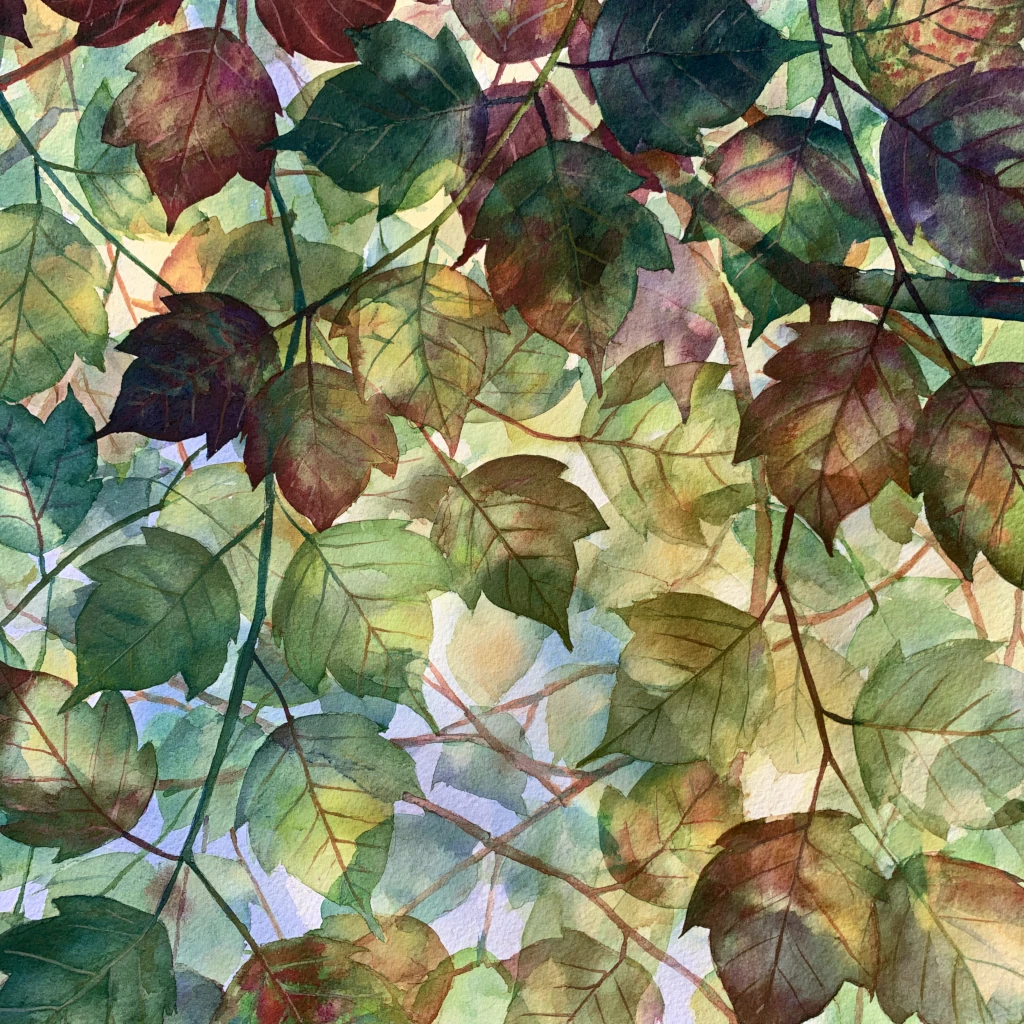
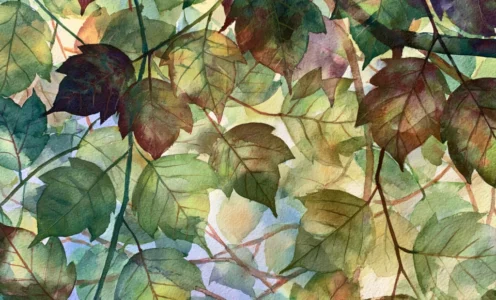
THE CANOPY: The Canopy marks the boundary between the Elemental Plane of Wood and the Elemental Plane of Air—a transition zone where the fractal forests give way to the boundless sky. As you head skywards, first the trunks start to thin into branches, then the branches thin out into twigs, then the twigs into shoots. All the while, leaves sprout around you in increasing density. There are leaves of every conceivable shape, size, and colour, from needle-thin evergreen blades to broad tropical fronds, from crimson autumnal hues to shimmering silver birch.
The soundscape shifts here as well. The ever-present rustling that permeates the Plane of Wood grows louder and more insistent, building to a constant whisper that becomes a roar during storms. Natural vines—some thick as a cutter’s arm, others delicate as spider silk—hang between the branches, creating living rope bridges and natural ladders for those brave enough to navigate them. Some of vines seem almost sentient, responding to touch and movement with subtle shifts that can either aid or hinder a climber’s progress.
The breezes here carry the fresh, crisp quality of the Plane of Air, noticeably cleaner and more invigorating than the stagnant, humid air of Wood’s deeper regions. Storms can blow in from Air with little warning, causing winds strong enough to snap branches and scatter leaf litter in swirling, disorienting cascades. These storms sometimes carry seeds, spores, and even small creatures from the Plane of Air, depositing them deep into the Wood when the breeze shifts.
The wood archomental Shumunue makes her realm here, a beautiful grove of flowers that mimic birds and topiary bushes sculpted into the form of awakened animals. She calls it the Transcendent Grotto.
Continuing skywards, just when it seems the foliage cannot possibly become denser—when every direction is nothing but green and the branches have become almost too fine to support weight—the boundary arrives with a startling suddenness. One moment you’re clambouring through an endless maze of leaves; the next, you break through into open sky. The Canopy simply ends, and everything above is the boundless blue of the Plane of Air. If you can fly, you’re in luck. If you can’t, all you need to do is jump upwards, and then let the strange subjective gravity of the plane of Air take over.
APPROACHING FROM THE PLANE OF AIR: From the Air side, the Plane of Wood appears as a colossal horizon of green stretching in all directions, so vast it defies comprehension. The surface is foliage in constant churning motion, with leaves of all colours, shapes, and sizes creating an ever-shifting mosaic. Despite its immensity though, the Plane of Wood is notoriously difficult to locate from within the infinite expanse of Air. The direction one must travel—leafward—is an ancient navigational concept that has been forgotten by most cutters. Before the plane’s return, the knowledge of how to find it was preserved only by the most ancient of air weirds who remembered the old ways. Even now, with the plane accessible again, few know the proper bearing to steer toward the green horizon.
Those who do find it describe the experience as both awe-inspiring and disorienting. The sheer scale of the living wall makes it difficult to judge distance—what appears to be a few miles away might be hours of flight, or the reverse. Some report that the Canopy seems to “breathe,” expanding and contracting slightly with the plane’s own mysterious rhythms, though this may be an optical effect of the endless leaf-motion.
From Wood to Earth
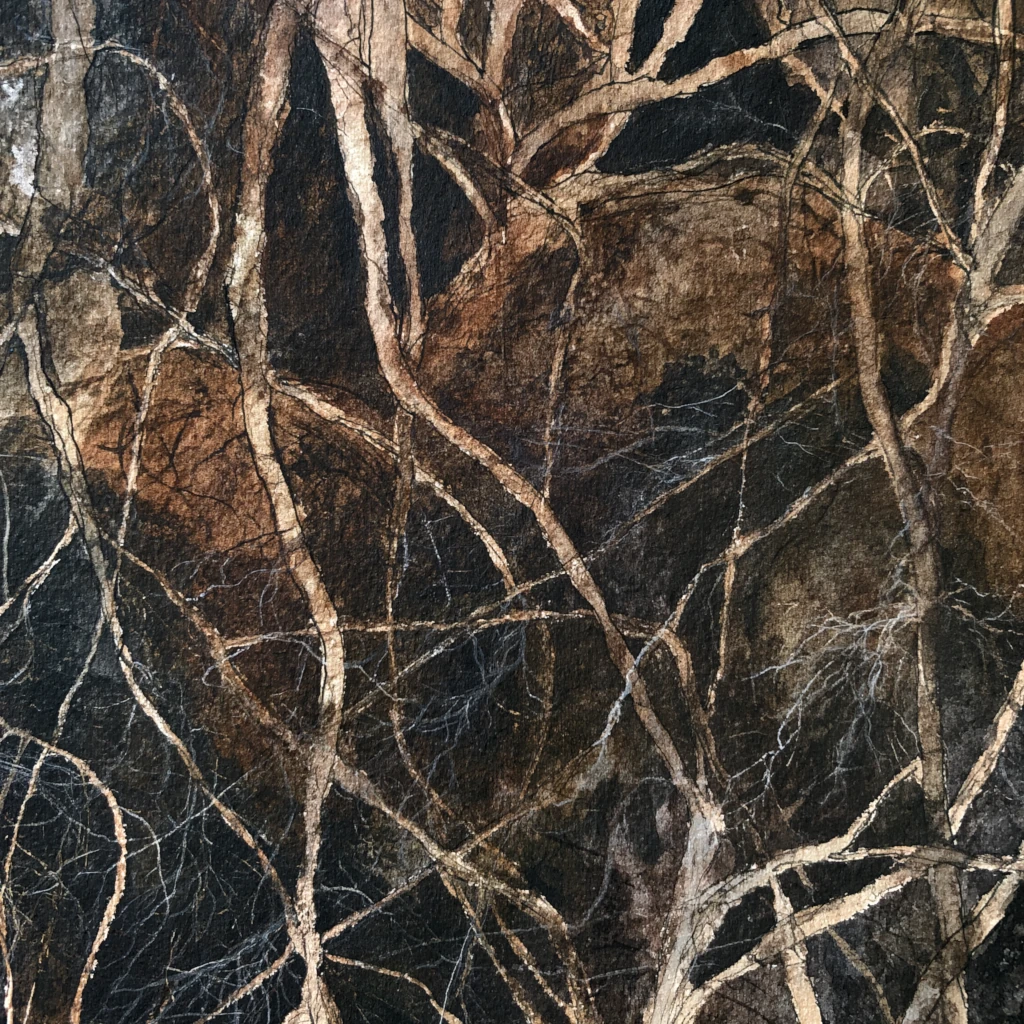
FOREST OF ROOTS: Climb down the great trunks of the plane of Wood, down through the Barklands and their precipitous canyons, and at some point you’ll reach a great barrier of soil. This is where the Plane of Earth has started to impinge upon the Plane of Wood, filling any available space with rich loamy dirt. Here the atmosphere grows heavy, carrying the unmistakable scent of damp soil. The light dims as the trunks recede far above, and the soundscape changes to a deeper, more resonant tone: the slow creak and groan of supple wood pushing through resistant material. Down here the wood has transformed again, sprouting a vast network of rhizomes that have spread and grown throughout the soil. The wood weirds call this place the Forest of Roots. Unlike the sudden threshold of the Canopy above, this border is gradual and layered, and a three-dimensional maze of bewildering complexity. Roots crisscross in every direction, creating natural tunnels, chambers, and caverns that shift and reshape over time. Some roots grow straight downward, plunging into the depths; others spread horizontally, forming vast underground forests of woody pillars; still others coil and spiral, creating natural staircases and helical passages that can lead travellers deeper or back toward the surface. The soil here is unlike any found on the Material Plane—rich beyond imagination, teeming with elemental vitality. This fertility is both blessing and hazard: plants introduced here grow with alarming speed, and seeds carried by planewalkers can sprout within hours, potentially trapping unwary sleepers in sudden thickets. Mycelial networks thread through the soil, connecting roots across vast distances and creating a kind of elemental nervous system that some say can sense and respond to intruders. Light is scarce in the Forest of Roots, filtering down from above in dim greenish shafts or emanating from bioluminescent lichens and mosses that cling to surfaces. Some roots glow with their own faint radiance, pulsing slowly with the movement of sap and nutrients.
From the Earth side, elementals and dao view the Forest of Roots with a mixture of fascination and unease. The roots are alien to the nature of rock—they are living, growing fast things that refuse to remain static, constantly reshaping the tunnels and caverns that earth-dwellers consider permanent. Most earth elementals actively resist the roots’ encroachment, while others have learned to coexist, even incorporating the woody intruders into their own forms, emerging as hybrid soil creatures studded with living wood and sprouting ivy coiled around stony limbs. While the plane of Wood experiences earth as an impinging but ultimately beneficial presence, the Earth side experiences wood as an active, invasive force. Roots crack stone, displace soil, and tunnel through material that would be impassable to most creatures. This asymmetry has led some planar scholars to speculate that the Forest of Roots is not a stable border but a front in an elemental conflict—one that the Plane of Wood may eventually win by one day becoming a true Para-Elemental Plane of Roots in its own right.

From Wood to Negative
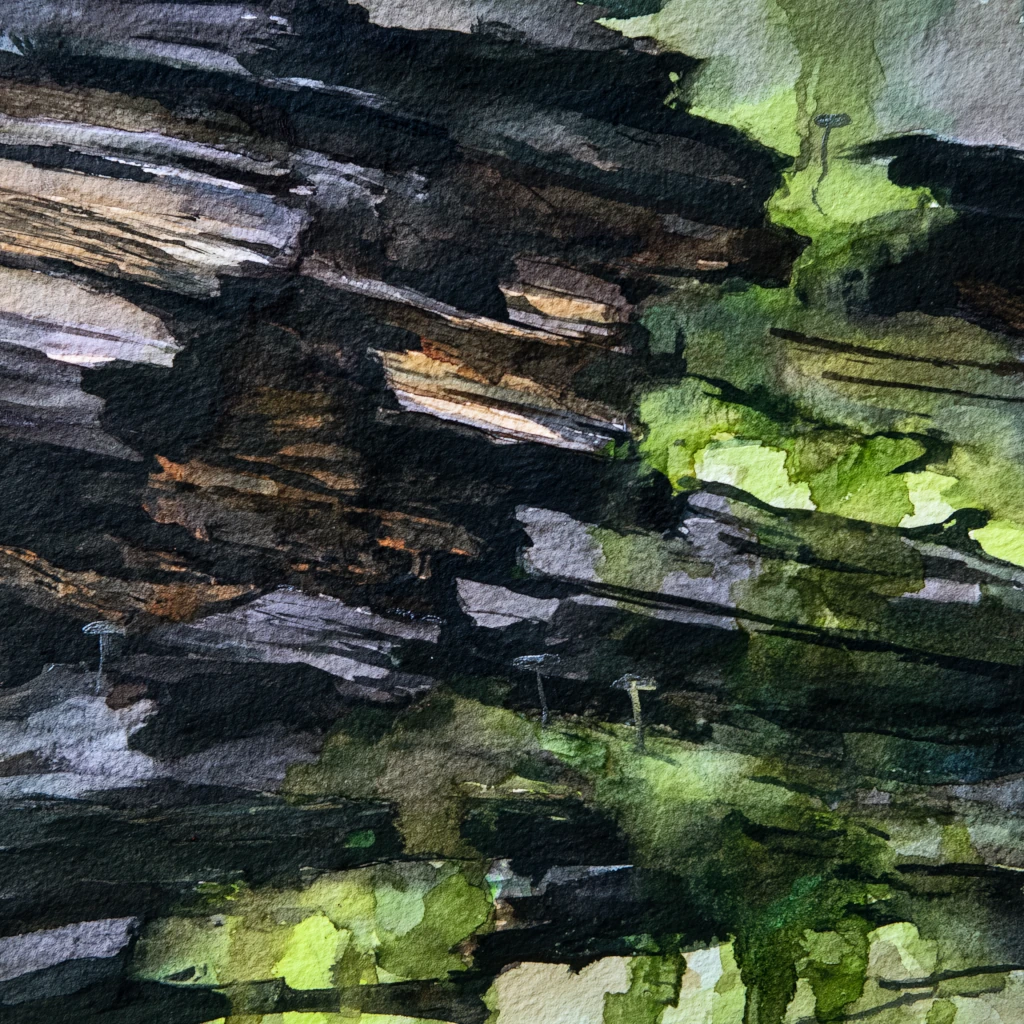
LEAF LITTER: All things must come to an end, as the saying goes, and Wood is no exception. As the void energies of the Negative Material Plane infuse into the plane of Wood, entropy spreads. When wood dies, its life-sustaining sap is poisoned, and instead decay sets in. Leaves from the Canopy fall down and rot, and the very substance of the plane crumbles and flakes, its strength to even hold itself together gone. The sap that once sustained life becomes a black, corrosive fluid that serves to accelerate and spread decay. While this can be deadly for treants and wood weirds, creatures like slime molds and fungus thrive in the mulch. The region of the plane called Leaf Litter by kizidhar, or the Demiplane of Rot by unimpressed planewalkers, is slowly spreading, and it is only the ministrations of wood elementals and archomentals like Verilorn, the Custodian of Oak and Ash that keep the decay at bay.
From above, a constant rain of dead foliage descends—leaves of every colour, but all browned, blackened, or bleached bone-white. They fall in layers, building up until the pile is miles deep. Unlike the rich, nutrient-dense leaf litter of a Material Plane forest floor, these leaf drifts are actively hostile: they shift and settle, disorientating travellers who must burrow through the leaves to progress.
It’s not all wet decaying leaf matter down here though. Great trunks that once towered in Core Wood have also fallen here, and now decay. The bark sloughs off in wet sheets, wood softens into spongy masses that can be dig though through with bare hands, and vast caverns are hollowed out by fungal growth. Some dead trees still stand as skeletons, their interiors completely rotted away. Others have collapsed entirely, forming logjams of decomposing timber that create treacherous, shifting terrain. The smells and sounds here are likely to turn the stomach of any unprepared planewalker. There’s constant drip of black water, creak and groan of decaying wood, the occasional hiss of spore clouds being released, and of course the squelch of boots whenever a cutter moves. The air here varies between smelling sweet and ripe with rot, sour and putrescent from fermentation, or downright pungent from spores.
Unlike the other negative quasi-elemental planes however, in Leaf Litter wherever death takes hold, life of a different sort erupts. Mushrooms of impossible size and unlikely colours sprout from rotting trunks—some bioluminescent in sickly greens and purples, others black as tar or white as bone. Mycelial networks thread through the soil and deadwood, visible as white or golden veins that pulse faintly. Slime molds spread across surfaces in creeping sheets of iridescent colours, consuming wood and leaving behind trails of nutrient-rich slurry. These fungal colonies are aggressive, actively seeking out living wood (and planewalkers!) to infect and dead matter to consume. In the deepest regions of Leaf Litter, where entropy’s influence is strongest, the terrain dissolves into the Blackmire—Murgremir’s realm of fetid sludge and decomposing matter. This is a swamp of organic slurry where pools of black liquid—part moisture, part dissolved wood, part fungal broth—sit alongside mounds of half-decayed timber and hills of rich, steaming compost. The air here is thick with spores and the visible haze of decomposition. Continue further moldward towards the Negative Material Plane and the dark slime thins out, dries up, and eventually turns to spores.

From Wood to Positive

FLOWERBOUGHS: Also known to planar scholars as the Demiplane of Flowers or simply the Bloom—marks the life-ward boundary between the Plane of Wood and the Positive Energy Plane. It’s a region where the vital essence of life-energy infuses the fractal forest and transforms it into an explosion of floral abundance unlike anything found elsewhere in the multiverse. Here, every branch bursts with blossoms, every twig is laden with fruits, and the air shimmers with pollen charged with vital energy that accelerates growth to dizzying, and sometimes dangerous, extremes. Plants in the Flowerboughs are not orderly like the cultivated gardens of Verilorn, they embody life unchecked and growth unbound. The archomental Corbicula makes his realm here, a floating nebula of pollen called the Florid Riot.
The Flowerboughs present a sensory overload of colour, form, and motion that can overwhelm planewalkers. Imagine the most vibrant excesses of Arborea, then triple it, and you’re some way to grasping this place. Every surface here blooms. Trunks that would be bare bark in other regions are instead covered in flowers—orchids the size of shields, giant roses (and thorns!) that spiral for miles up trees, and cascades of wisteria that shimmer like floral waterfalls. The blossoms come in every colour imaginable and many that are not. Some plants have chameleonic petals that shift in hue as you watch, or flowers that glow with an inner radiance. Some flowers are shaped to mimic animals, or even humanoids. And unlike the Prime, flowering season never ends. Even stranger, buds open, flowers mature, fruits ripen, and seeds are scattered all at once on the same plant.
Where the Plane of Wood’s core regions bear fruit in measured abundance, the Flowerboughs overflow with it. Branches sag under the weight of bananas, pears, cherimoya, lychee, and nuts that have no Material Plane analogue—some the size of boulders, others no larger than grapes but pulsing with energy. Fruit ripens here as you wait. Planewalkers have reported watching buds swell into full-grown produce over the space of minutes, then bursting from over-ripeness to seed and sprouting anew in a continuous cycle of growth and regeneration. The air here is perpetually thick with pollen—visible as colourful, glittering clouds that drift through the branches like fog. In calm conditions, the pollen settles into drifts on branches and leaves like velvety snow. During pollen storms, these clouds become dense enough to obscure vision entirely, turning the Flowerboughs into a blinding, choking maelstrom. Growth of plant matter here is dense. The branches intertwine so thickly that movement requires cutting or squeezing through gaps. Flowering or fruiting vines hang in such profusion that they form curtains. Branches are carpeted in layers of fallen petals, leaves, fruits, and seeds that decompose with supernatural speed and are immediately reabsorbed into new growth.
The cacophonous sounds of the Flowerboughs can be overwhelming to planewalkers—the place teems with life, and that life makes noise. A chorus of insects buzz in dense swarms. Bird-like creatures sing in constant competition, and small mammals rustle through the undergrowth. Flowers opening make noise here—a soft pop or crack as buds burst into bloom, audible as a continuous background percussion. Large blossoms open with audible groans as their petals unfurl. Fruits ripening to over-ripeness burst with a wet splat sound, releasing seeds and nutrient-rich pulp. Some fruits explode with enough force to be dangerous, launching seeds like projectiles or showering nearby cutters in sticky, sugary fluids.
The perfumes of the realm are just as overwhelming. The dominant scent is flowers of course, thousands of different species, as they all bloom at once and create a smell so thick you can taste it. Different regions have different perfumes: here the cloying sweetness of jasmine and honeysuckle, there the sharp, clean scent of lilies, elsewhere the exotic spice-fragrance of tropical blooms. The smells blend and layer into a complex bouquet that changes with the wind. Ripe exotic fruits add another layer—sugary, heady scents that trigger salivation. In regions where fruits are exploding from over-ripeness, the smell becomes alcoholic—fermenting sugars and yeasts can be intoxicating. And finally, the pollen clouds carry their own scent—a dry, powdery smell that can trigger sneezing and allergic reactions even in those who don’t normally suffer from them. Some pollens smell sweet and honey-like; others are acrid or musky. The pollen becomes dangerously choking during storms, when the concentration is high enough to coat the throat and lungs.
Canonical Sources: Start with the excellent Pathfinder Rage of Elements [PF2e] book. Other references from D&D and Pathfinder lore are mentioned on the relevant entries. Core and Deep Wood and their border regions are my homebrew.
Source: Margarita and Jon Winter-Holt