

[ Positive ] [ Mapping Infinity | Pockets | Bestiary | Flora ]
A Bestiary of Life
Creation’s Forge—called by some the Positive Energy Plane—is said to be the source of all life. It’s a realm of raw, overwhelming vitality where everything tingles with the power of unborn souls. and the landscape shimmers with the light of a thousand suns. It really is no place for mortals; even the hardiest of visitors will be incinerated by the ambient energy, unless they are protected by powerful magic—and yet it is home to a host of beings whose power matches the plane’s lethality.
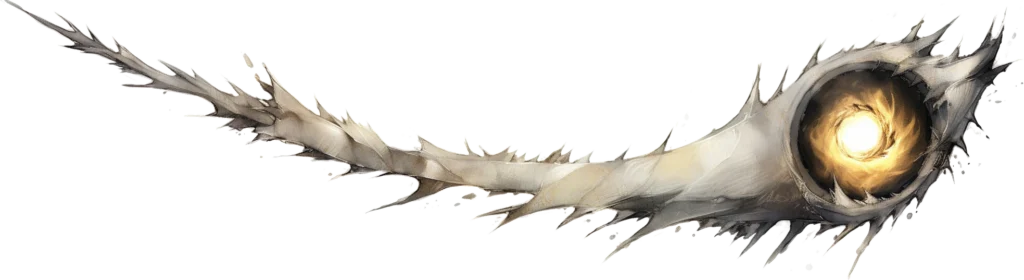
Among its denizens, the phoenix-like jyoti are perhaps one of the best-known, as the xenophobic guardians of the soul-trees. Above them, the manasaputras guide the spiritual development of mortals across the multiverse, their hierarchy headed up by the Seven Kumaras, godlike solar pitris who dwell at the heart of creation and commune with the Logos itself. The turul, gigantic avian prophets, roost atop gemstone trees and intervene in mortal affairs with cryptic prophecies. The xag-ya are weird creatures made from pure energy itself. And perhaps the strangest of the children of the plane are the ravids, serpentine sparkers of life, who drift through the planes animating objects on a whim. But not all are so benevolent. The soulmarauder, a manta ray–like predator of incorporeal energy, rips souls from living bodies and consumes them utterly. Spined shards are strange, mineral-based predators. The drakainia is a fecund horror, who births monsters continuously.
Only the most resilient, the most radiant, or the most predatory can endure here, and so the beings of Creation’s Forge are themselves reflections of the plane: overwhelming, luminous, and often some way beyond mortal comprehension…
Aeon, Pleroma
LN | Rare | Large | Aeon | Elemental | Vitality | Void | CR 20
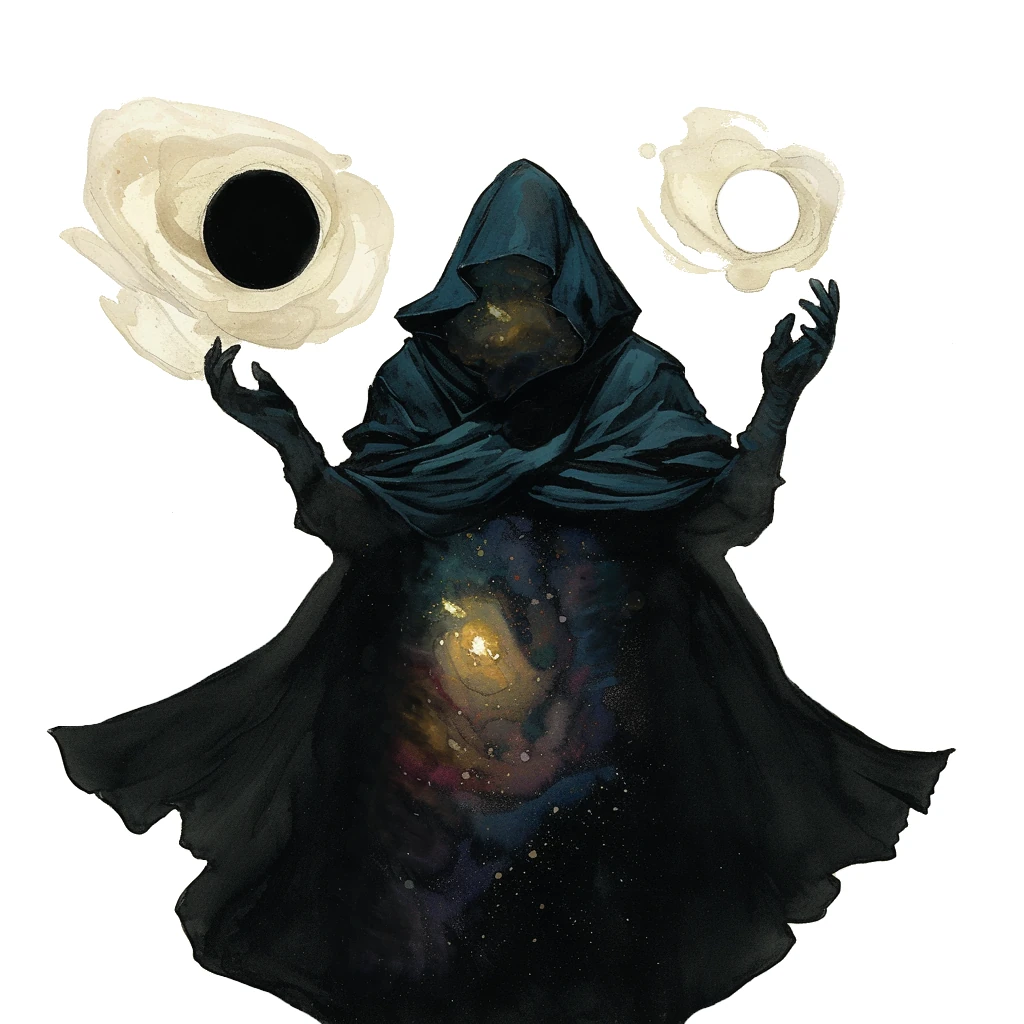
Pleromas are the most powerful aeons, and their ever-shifting forms embody the duality of creation and destruction. While they are not natives of the Positive Material Plane, they can be encountered here occasionally, although their business is always mysterious and important. These towering, vaguely humanoid beings are cloaked in shadowy veils which resemble the night sky, with swirling galaxies of stars and nebulae constantly forming and dissipating within their folds. They are able to manifest two devastating orbs of power: A white Sphere of Creation that generates new matter and a black Sphere of Oblivion that annihilates all it touches. Pleromas view creation and destruction not as opposites but as interconnected parts of a cosmic cycle that must remain in balance to prevent stagnation or apocalypse. They act as agents of the Monad, the sentience of the multiverse, ensuring that this eternal cycle continues harmoniously. Philosophically, pleromas see eternity as cyclical and malleable, requiring constant change to avoid imbalance. They believe that for every act of creation, there must be destruction to maintain equilibrium, and they intervene when this balance is threatened.
Stats: [ PF 1e | 2e ] Bestiary [PF1e] p12–13; Bestiary [PF2e] p10–11
Chamrol
N | Medium to Gargantuan | Elemental | Mineral | Vitality | HD 5–100
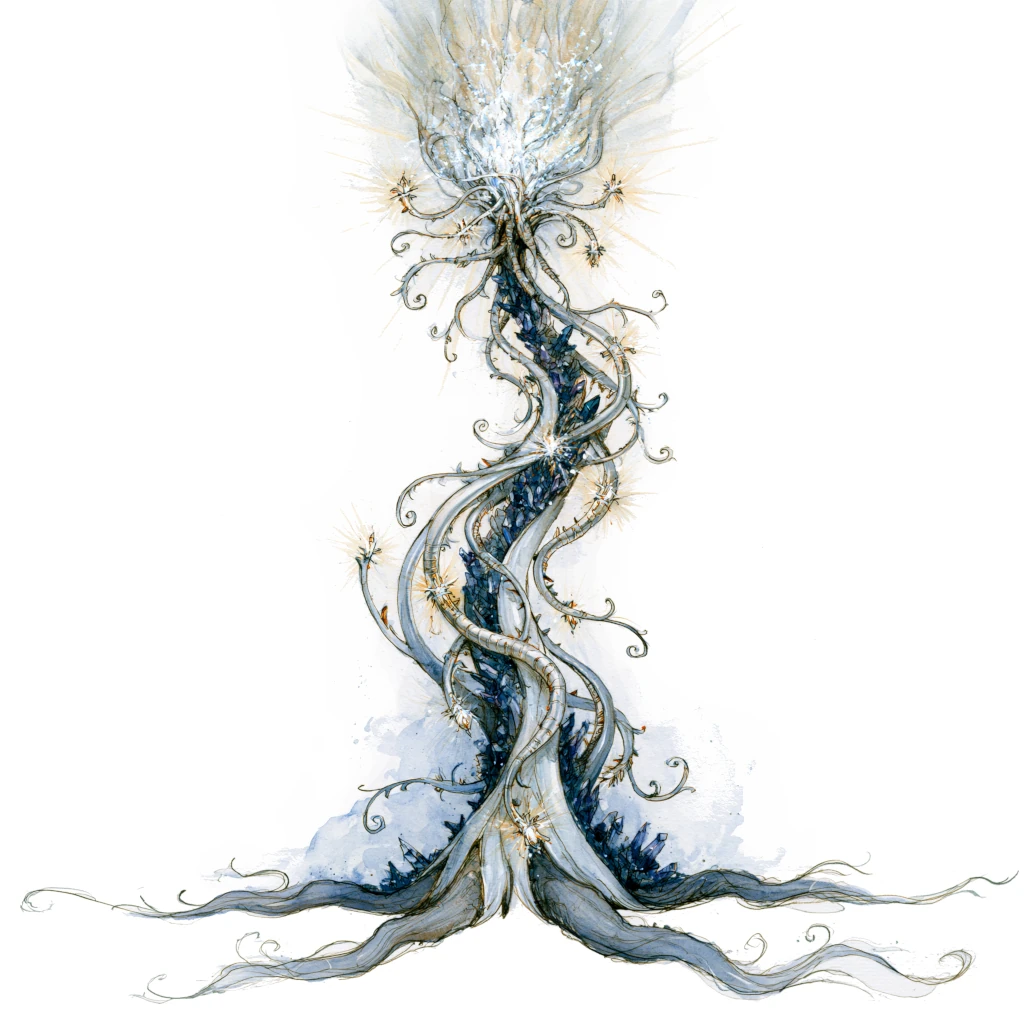
Neither wholly plant nor animal, mineral nor elemental, chamrols are some kind of strange combination of all of these. They have a central stalk covered in scales, with dozens of writhing tentacles protruding from it. Blooming chamrols have a huge glowing flower at their peaks. They are composed of dense materials like lead and gold, studded with crystals, and glow with an inner radiance. They have roots that penetrate through the planar fabric into the Plane of Mineral (some chant goes even as far as the planes of Metal and Earth), drawing the substances which they use to construct their forms, while the energy is absorbed from the light of the Positive. While sapling chamrols are roughly the size of humanoids, the forests that grow at the border of Mineral and the Positive drink the the vitalising energies of the Positive Energy Plane, allowing them to grow to enormous sizes—the average chamrol in the border regions are a couple of hundred feet tall.
Stats: [ D&D 2e ] Dragon Magazine #174 [2e] p98
Citkāra
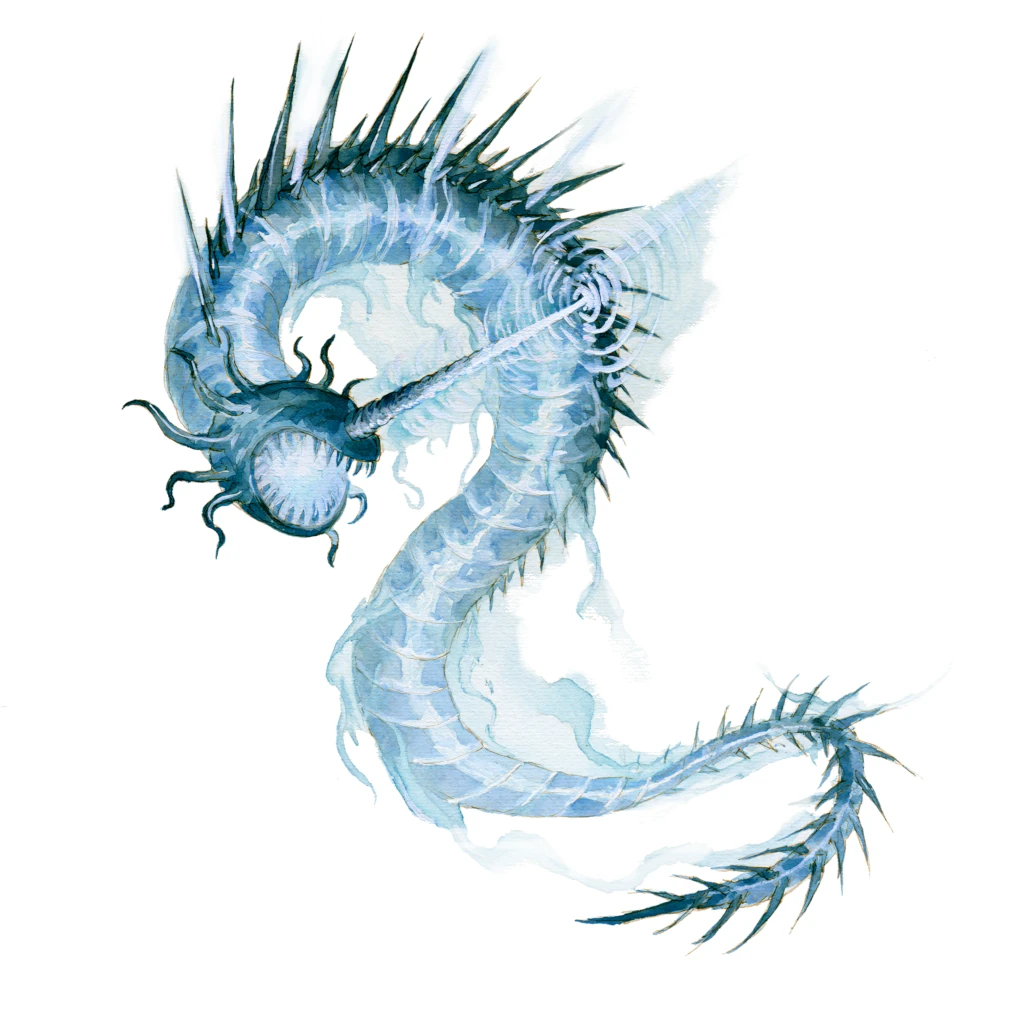
Crystal Screamer | N | Rare | Gargantuan | Beast | Elemental | Spiritovore | Vitality | CR 16
Citkāra, dubbed crystal screamers by planewalkers, are strange and dangerous natives of the Deep Positive. They are enormous parasitic crystalline worms with mouths like lampreys, vicious spines all down their snake-like bodies, and a single huge unicorn horn on their heads. They don’t have eyes and instead use echolocation to sense movement around them. They are also able to use their horn to focus a powerful beam of sonic energy that can blast through obstacles and shatter crystalline soul trees, allowing them to scoop up and feed on preincarnate souls. They are also prone to attacking enemies with this sonic scream attack, as well as their razor-sharp teeth. These creatures seem to be intelligent, although they don’t appear to be able to speak—at least, not to mortals.
Stats: [ D&D 3e ] Bastion of Broken Souls [3e] p41–42 (as crystal screamer)
Drakainia
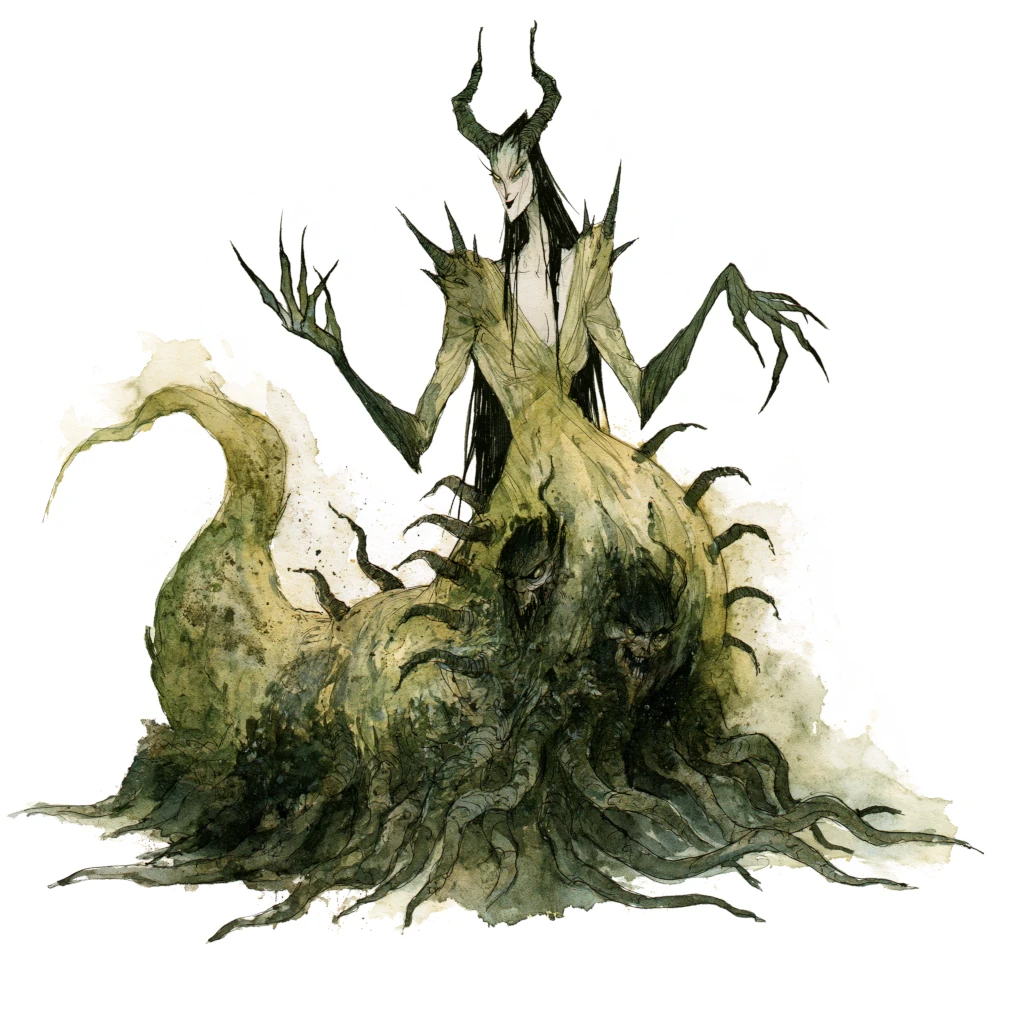
NE | Rare | Huge | Aberration | Elemental | Mythic | Vitality | CR 25, MR 10
A drakainia is a horrifying mothers of monsters, who embodies uncontrolled fecundity and a complete lack of concern or care for the individual lives of her endless spawn. She has the upper body of an attractive, if severe, female human, but the rest of her body is nightmarish. Her arms are long and distended, and the fingers on her hands twice as long as they should be. Her stomach is bloated and pulsates disturbingly, as countless spawn writhe within. Her skin is translucent, and ugly faces and the impression of hands can be seen as they press against her flesh from the inside. Her abdomen throbs with tumours and writhing tentacles, and seethes with uncontrollable life energy. She surrounds herself with her favourite children, but feels no warmth towards them and will gladly send them to their deaths if it benefits her—after all, she can always birth more monsters. Her most horrifying ability however is to implant monstrous embryos in helpless mortals, no matter their gender or ancestry. When these creatures burst out, it rarely ends well for the unwilling victim…
Stats: [ PF 1e ] Bestiary 4 [PF1e] p76–77
Energy Pod
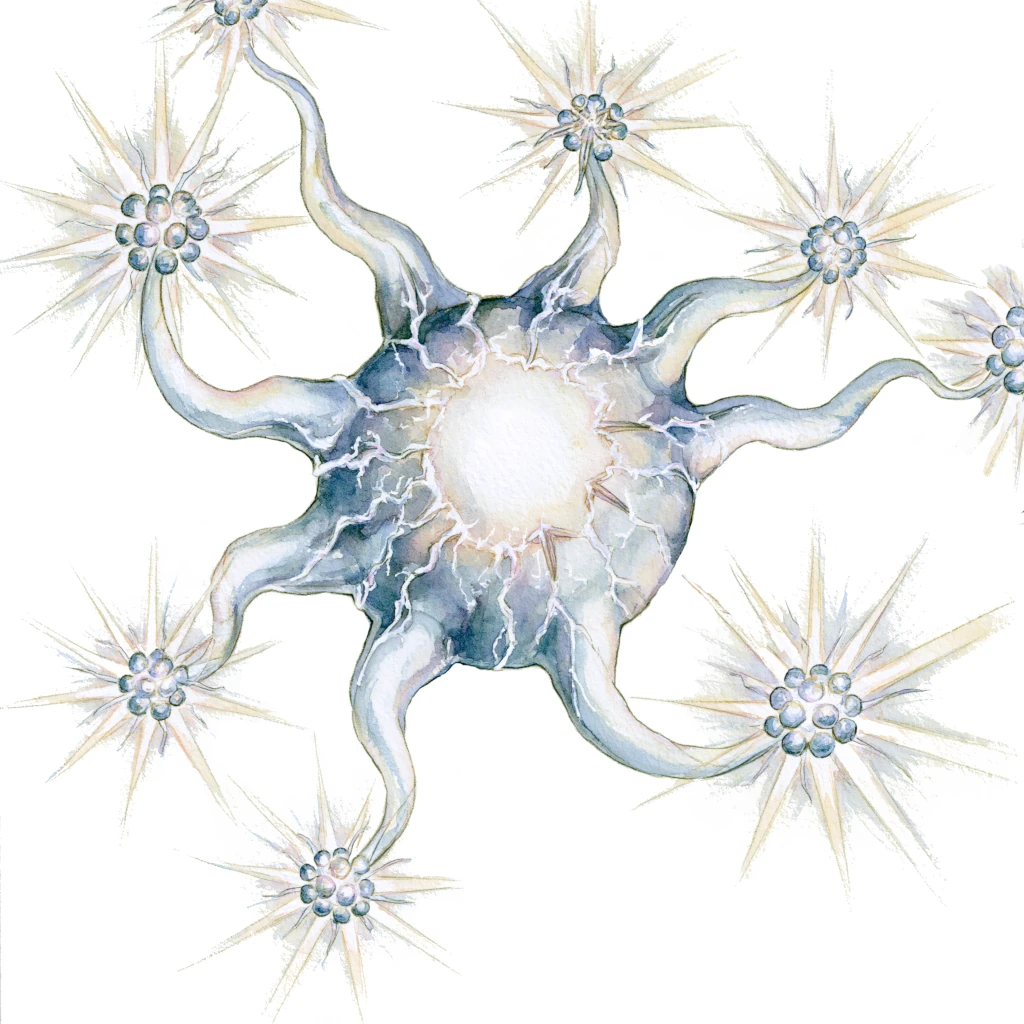
N | Uncommon | Large | Elemental | Vitality | HD 8
The energy pod is a spherical, bizarre life form native to the Ioun Cliffs, the fringe region between the Positive Energy Plane and the Quasi-Plane of Mineral. These beasts are pulsing orbs of raw vitality, whose stubby tentacles end in glowing clusters of nodule-like gemstones that flare with lambent power. Each nodule is the size of a grape and contains a concentration of positive energy, which are released when the pod flails its limbs in combat—bursting open explosively to unleash the burning essence of creation. Feeding on raw evergy, an energy pod absorbs spells cast upon it, converting magical energies into new nodules that sprout instantly upon its random appendages, acting as a living battery of life-force that grows stronger with every spell used against it. Rarely encountered on the Prime Material Plane, energy pods are most often found as bound guardians of magical treasures, summoned by mighty elementalists. On the Positive Energy Plane, they act as sentinel, storing vitality and using it in controlled bursts to defend themselves and their territory from intruders.
Stats: [ D&D 2e ] Dragon Magazine #174 [2e] p99
Eunemvro
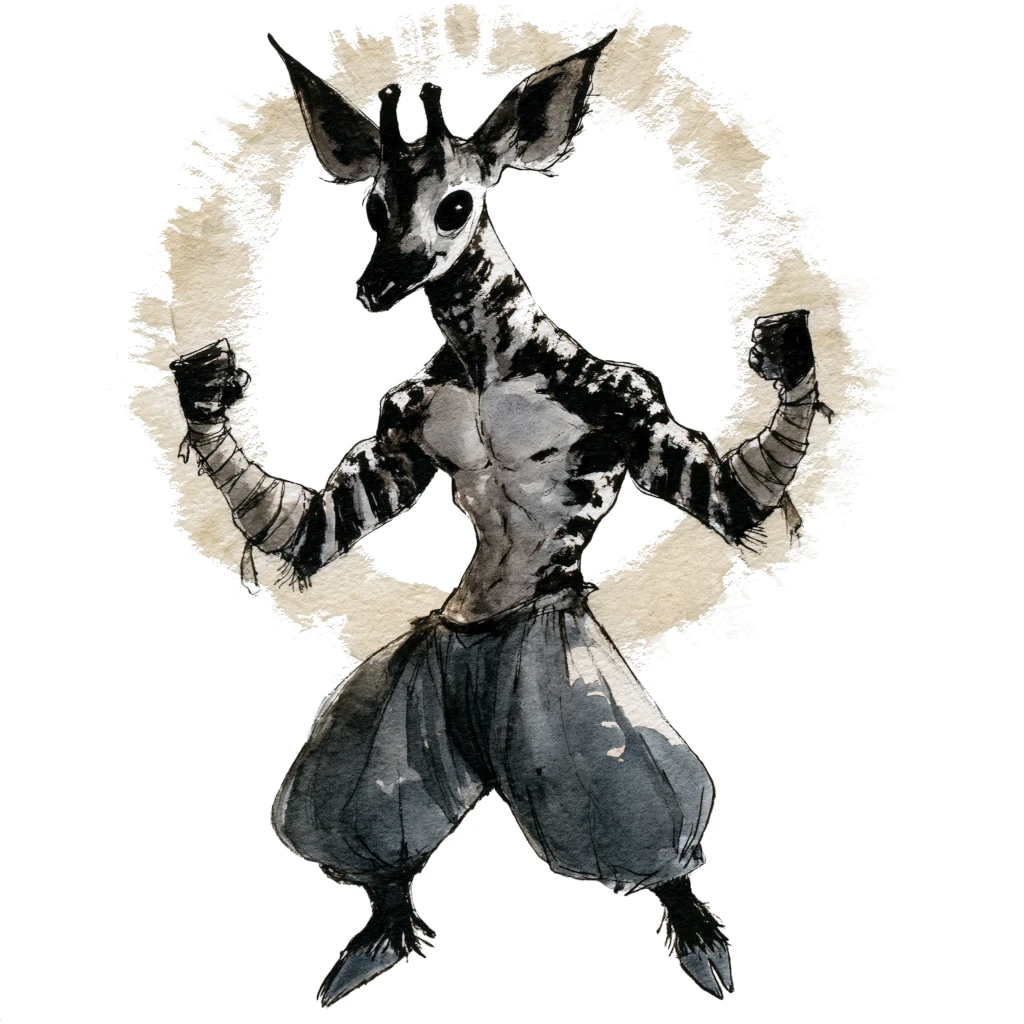
LN | Uncommon | Medium | Humanoid | Vitality | CR 5
Eunemvros are tall, lean humanoids with the striped heads of okapi. Chant goes these mysterious hunters hail from the Positive Energy Plane yet they are found almost exclusively on the Prime Material Plane, where they wage war against the undead. Though a few of their kind are whispered to remain in Creation’s Forge, these cutters are rare as hermits, withdrawn and enigmatic even to jyoti. It’s not known why some eunemvro remained in Creation’s Forge while most of their kin migrated to the Prime, and the left-behind aren’t keen to talk about it. Perhaps they were too cowardly, whisper jyoti sages, or they were outcast from their clans for other dark reasons. In any case, these days it seems the eunemvro’s purpose lies in the mortal realms, where they seek out and expunge negative energy that festers in the form of zombies, ghouls, and wights. They are capable of channelling raw positive energy with every punch or kick, and their touch alone can unravel the unnatural animation of undead. Most eunemvros seem to believe mortals are incapable of comprehending their cosmic crusade. The philosophy behind it is as black and white as their hides. Eunemvros do not believe in concepts like ‘good’ or ‘evil’, instead posing the important question as ‘right’ versus ‘wrong’—with undeath as the ultimate wrong., and their calling is to hunt the dead that should not walk.
Stats: [ PF 2e ] Bestiary 3 [PF2e] p96
Gliminal
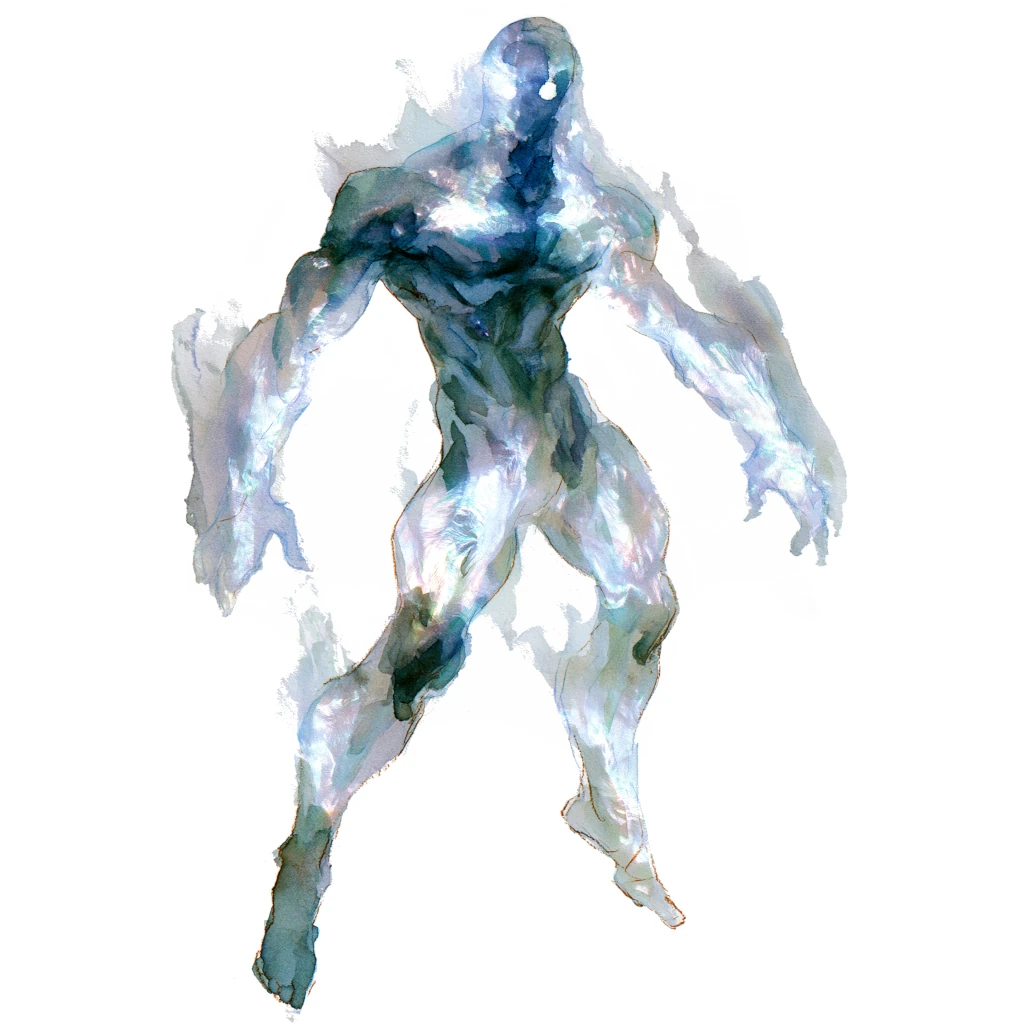
Glimmerskin | N | Rare | Medium | Incorporeal | Spirit | Vitality | CR 9
The gliminal is a being of pure, blinding radiance, an incorporeal humanoid of pulsing white light whose true form is known only to its own kind, for to all others it appears as the unbearable glare of staring directly into the sun. Strange natives of Creation’s Forge, the gliminal exudes a constant aura of positive energy so intense that it overwhelms mortals and outsiders alike, healing them past their limits until their bodies literally burst from excess vitality—a fate the gliminal regards not as death, but as a cure for the unfortunate malady of mortality. That would be dangerous enough, although it would only affect planewalkers tough—or foolish—enough to venture into the Positive Energy Plane.
However, there exists a daring sect among the race who call themselves Glimmerskins, who are fascinated by the concept of death, utterly alien as it is to them. They are best described as thrill-seeking parasites who briefly venture out of the Positive Energy Plane to experience the thrill of mortality. Since they have no physical form, they must seek out and bond with willing mortal hosts, who exchange control of their bodies for breathtaking fighting skills and magical abilities. When bonded with a mortal host, they appear as a radiant suit of full armour, or an enveloping robe that glows with inner light. They do not control their mortal host, but they can communicate with them telepathically and use their powers to engage in and enjoy large-scale battles—the best way to immerse themselves in death and carnage they find so fascinating. While not malevolent, glimmerskins are indifferent to who lives and who dies; they seek only the thrill of combat, and they will abandon their host when the bond no longer serves their purpose or when the limits of their stay on the Prime draw near.
Stats: [ D&D 3e | PF 2e ] Monster Manual II [3e] p115-115; Bestiary 3 [PF2e] p114
Jivastra

Soulsipper | N | Rare | Large | Elemental | Incorporeal | Spiritovore | Vitality | CR 12
The jivastra, called soulsippers by some planewalkers, are ten-foot-long incorporeal drifting creatures of glowing energy. To primes, they look uncannily fish-like, despite them bearing no relation to anything aquatic. Perhaps the shape is perfect for swimming through the Positive Material Plane, where they use their dorsal fins to catch currents of light. Eyeless and silent, jivastra have a fringe of gently lashing tendrils around their mouth, two of which are longer than the rest. When a soulsipper is attacked, it starts to sing a haunting melody that planewalkers call the Song of Acceptance. It sounds like crystal wind chimes in a breeze and chant goes the tune is unique to each creature. These songs are able to sooth the tempers of all kinds of creatures, allowing the jivastra to pacify its predators and try to avoid things getting nasty with planewalkers.
Stats: [ D&D 3e | PF 2e ] Bastion of Broken Souls [3e] p42–44 (as soulsipper); Homebrew conversion [PF2e]
Jyoti
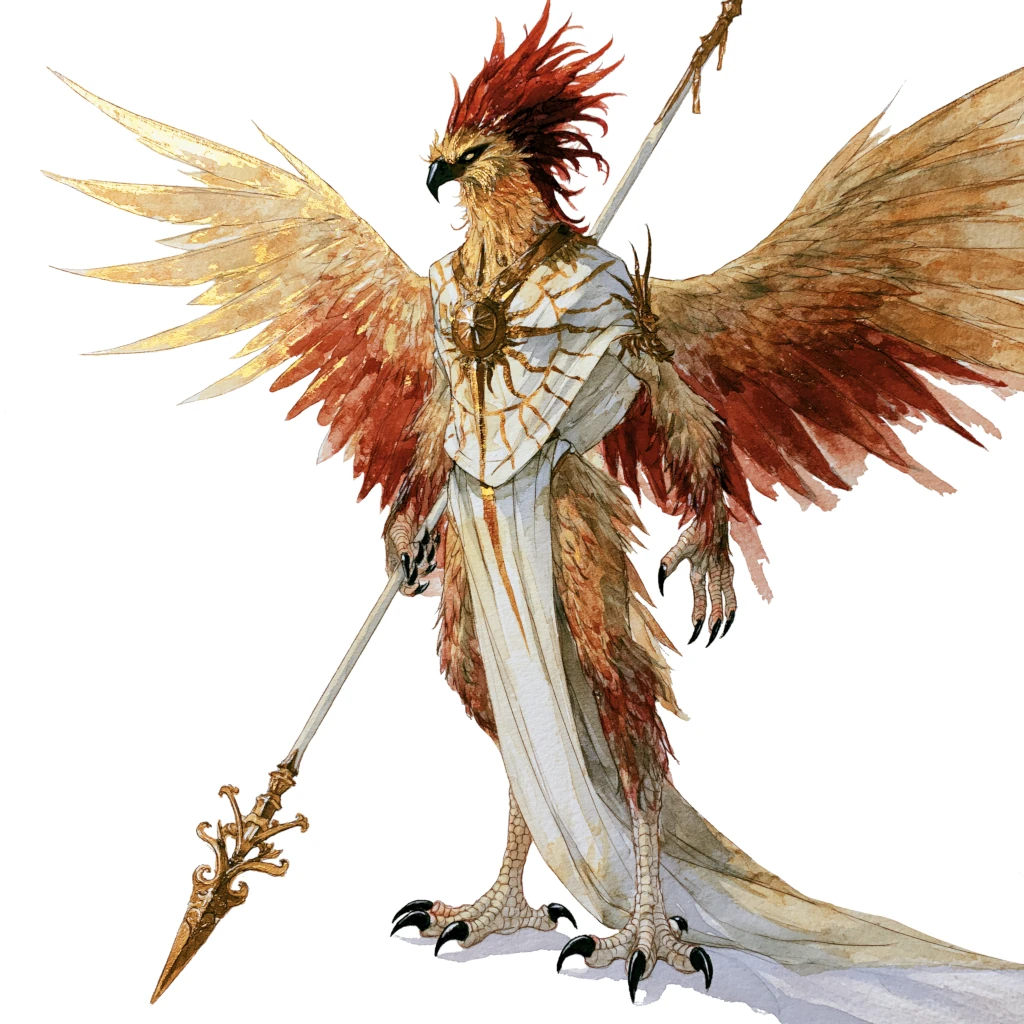
False Phoenix | N | Uncommon | Medium | Elemental | Vitality | CR 9
The jyoti are phoenix-like humanoids of radiant light and flame—although be wary of using the term “false phoenix” within earshot, cutter, because to the jyoti it’s derogatory. They appear as radiant eagle humanoids, with golden and red feathered wings, the heads and limbs of hawks, and a humanoid body shape. Their forms are wreathed in vitality energy, and wield spears tipped with carved crystal blades.
They dwell in glittering cities of solidified flame and luminous architecture, and tend to the gardens of Creation’s Forge where tree-sized crystalline flowers bloom. Chant goes these blooms are the manifestation of mortal souls which have ascended to divinity. Quite why the jyoti exist here is dark, and unlikely to be learned any time soon, for jyoti are notioriously xenophobic and quick to anger. They typically see all outsiders—planewalkers included—as stains on the purity of their realm. They especially distain priests and diving spellcasters, why they seem to see as parasites to be distrusted. This is not usually enough to drive them to outright violence however; that is reserved for undead, creatures of the Shadow Plane, or sceaduinars—which are about as likely to be found in Creation’s Forge as a haddock in the Plane of Fire. However, jyoti have been known to to raise armies and venture outside of the Positive Plane when there is a chance for a glorious battle with sceaduinar.
Stats: [ PF 1e | 2e ] Bestiary 2 [PF1e] p171; Bestiary 2 [PF2e] p153; Monster Core 2 [PF2e] p203
Kṣetrajña
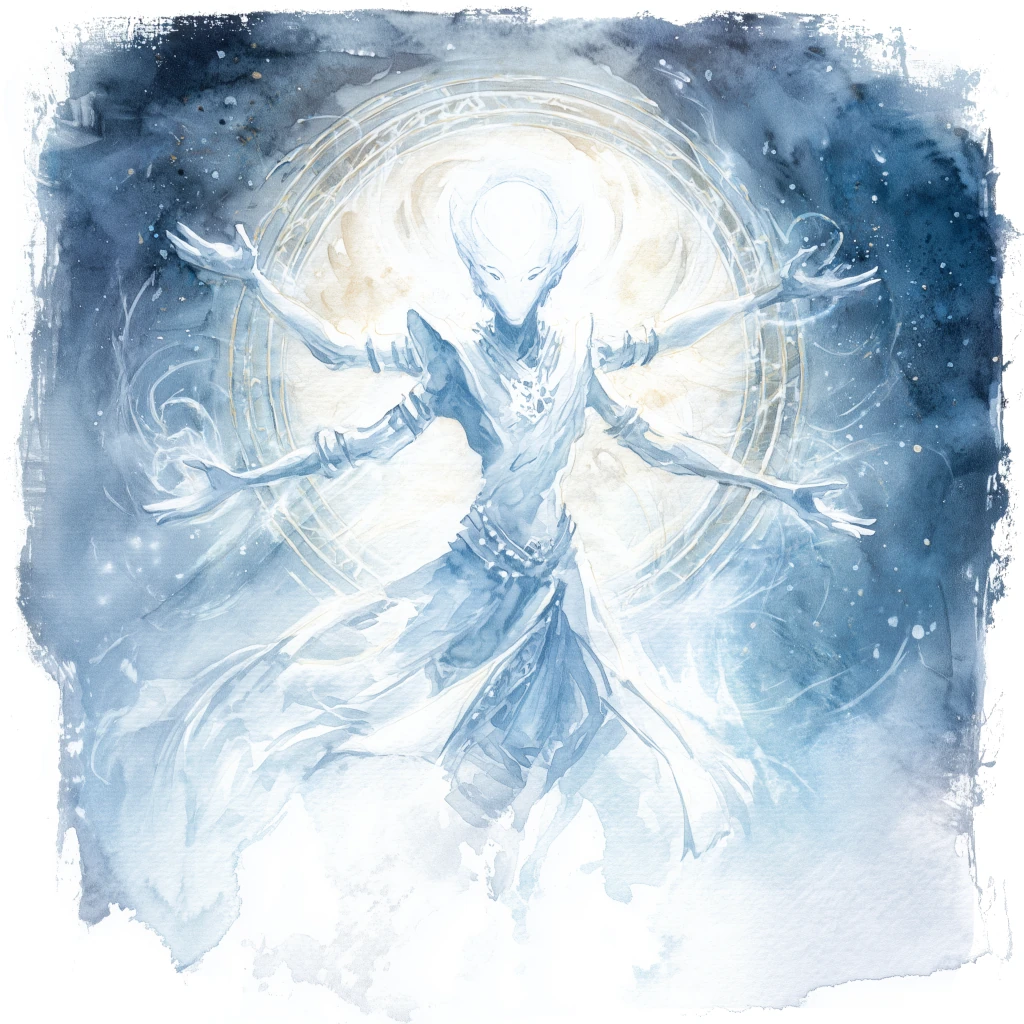
Soulscaper | Always Good | Rare | Large | Elemental | Incorporeal | Spiritovore | Vitality | CR 22
The kṣetrajña [kshet-raj-nya], or soulscaper is the most mysterious and benevolent of the spiritovors. They are four-armed humanoid giants composed of brilliant, incorporeal light, that exuding a palpable presence of pure, unadulterated joy. They have vague eyespots on their otherwise featureless faces, no mouths—they communicate telepathically. Their large heads give a clue as to their incredible intelligence. They are accompanied by a sound of crystalline bells tolling in unison, and this sound fills the groves and gardens of the soul fonts of Creation’s Forge. Kṣetrajñas are probably best understood by mortals as if they were druids tending the forests of the plane, although quite how these bloods care for preincarnate souls is hotly debated by graybeards. While extremely rare, they are most likely to be encountered around the Bastion of Unborn Souls, a secret font of the Deep Positive. In combat, they have prodigious magical powers, casting divine spells, being able to command spiritovores and energons like the xag-ya. They are also said to be able to remove curses, diseases and even resurrect a berk with a mere touch. Even more unbelievably, some cutters claim that a soulscaper can even give a favoured cutter the gift of resurrection at a later date, a contingency that triggers upon their death.
Stats: [ D&D 3e ] Bastion of Broken Souls [3e] p42–45 (as soulscaper)
Lāvaka
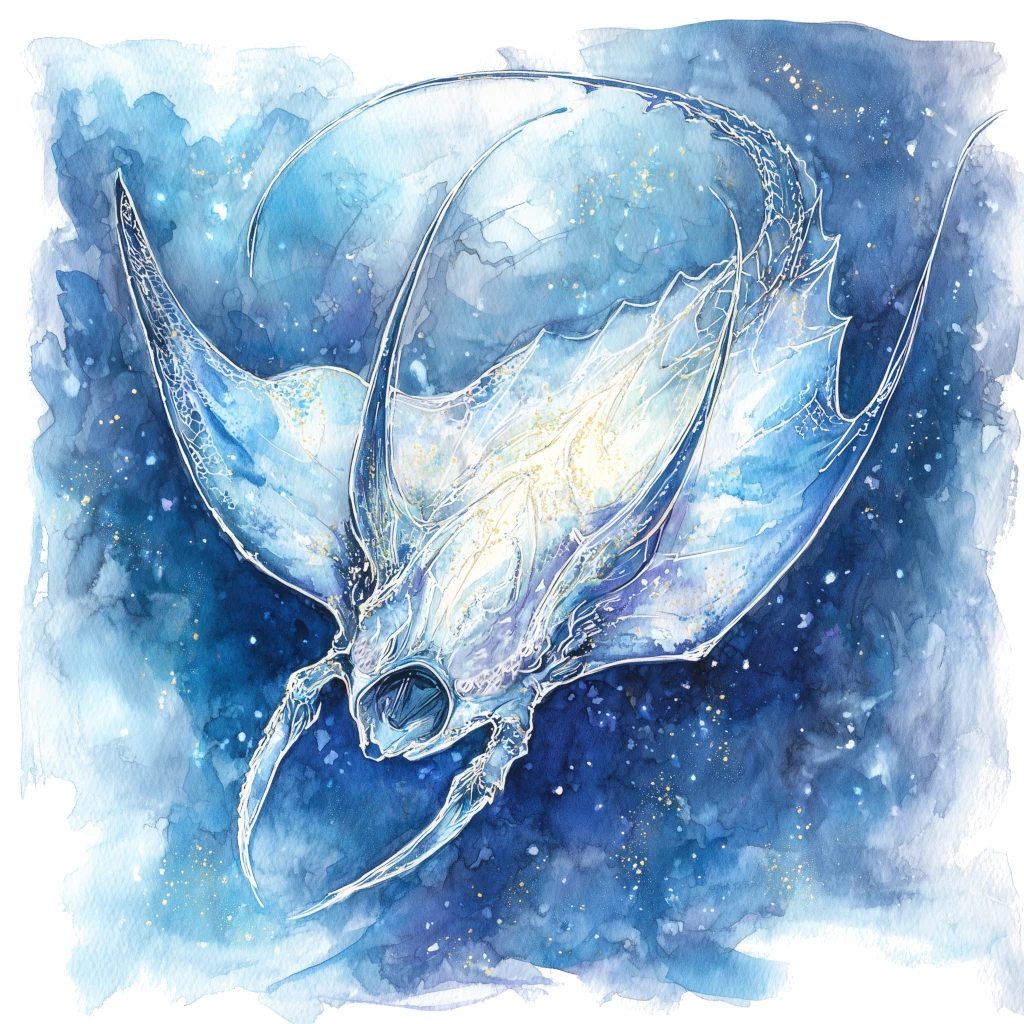
Soulmarauder | N | Rare | Huge | Elemental | Incorporeal | Spiritovore | Vitality | CR 20
The lāvaka [lar-vakka] or soulmarauder is a dangerous predatory spiritovore of the Positive Energy Plane. Their flattened, manta ray–like body is composed of glowing incorporeal energy. They are wider than they are long, and wing-extensions curve like demonic horns from their eyeless head, on either side of their gaping, toothless maw. Their long, whiplike tail curls and twist as it hunts jivastra and other creatures of the plane—though a lāvaka will eagerly feast on preincarnate souls, shades, or the spirits of living planewalkers, which it considers scrumptious feasts. With a terrifying roar that weakens its foes with fear and deafens nearby cutters, a soulmarauder strikes with an incorporeal touch attack that drains the vitality of its prey. This attack simultaneously heals the creature, while leaving its victims hollow and diminished. Once a soulmarauder has tasted a soul in this way, it can perform a dreaded ritual called soul consumption. On a successful strike, its tails curls into the victim’s body, emerging with a colourful pinpoint of light—the soul itself—and then plunges it into the soulmarauder’s mouthlike orifice, where it is consumed utterly over the course of an hour. Bodies left behind appear loose and empty, skin too large for their bones, obviously missing a certain something. Chillingly, no form of raising or resurrection can restore a victim whose soul has been completely digested in this way, save for a wish, miracle, or true resurrection, and even there is a high chance of failure.
Stats: [ D&D 3e ] Bastion of Broken Souls [3e] p42–45 (as soulmarauder)
Lumi
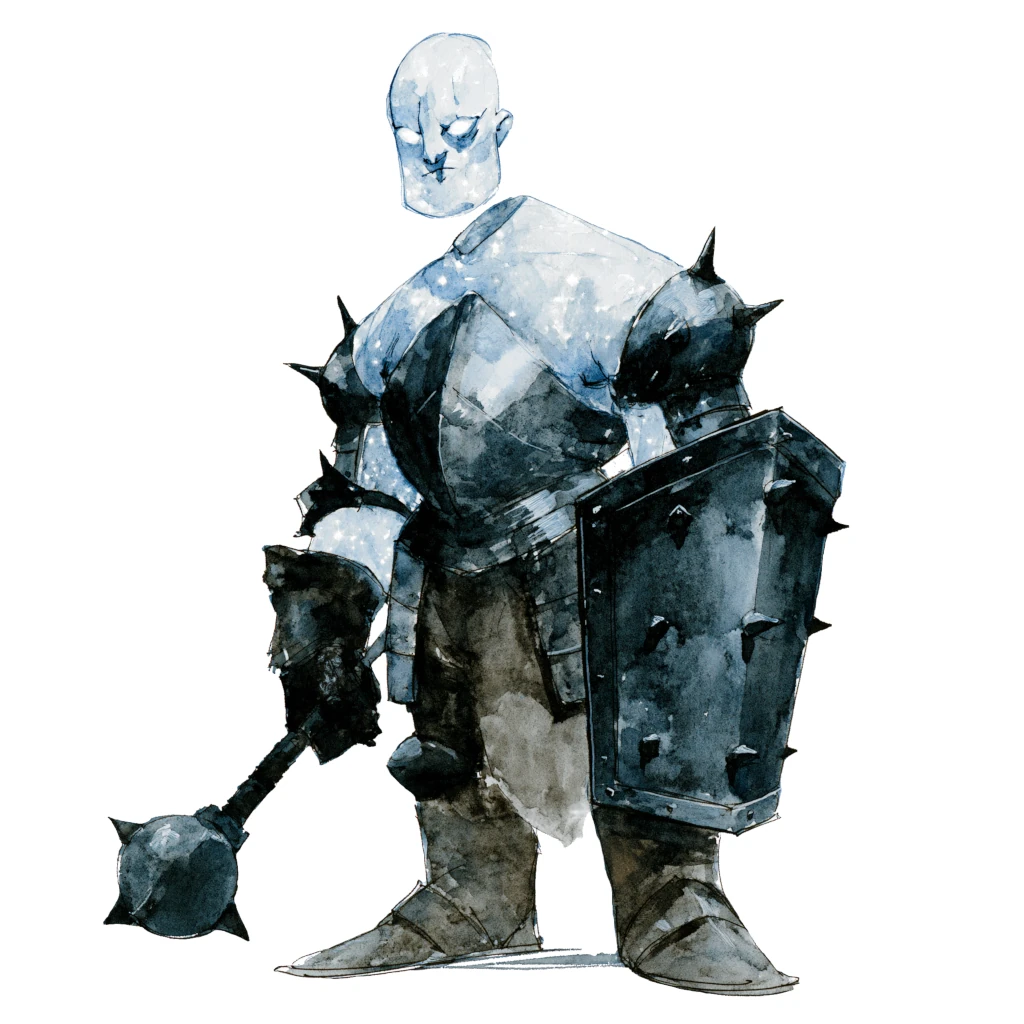
LN | Rare | Medium | Elemental | Humanoid | Vitality | CR 2–8
The lumi are stocky humanoids whose translucent marble-white skin glows with soft positive energy. They have no heads attached to their bodies—but they are not faceless. Instead, their solemn, dignified heads float a few inches above their shoulders, levitated by a force that renders them immune to decapitation, strangulation, and suffocation. Natives of Creation’s Forge, lumi have built towering cities of glass and light. These cities rarely have walls or defences, for the lumi see themselves as being protected by the lethality of the plane they call home. These cutters worship Light as a concept rather than a power, venerating it as the embodiment of purity, truth, and revelation. Lumi are honest to a fault, apparently even incapable of withholding blunt or unflattering truths. They despise deception above all else, and their strict law codes punish the telling of lies and even the use of illusion spells with death. This code of honesty is held by lumi as more important than any other concern, so while they may ally with planewalkers, they’d better behave themselves or they’ll find themselves on the bludgeoning end of a lumi mace. Occasionally, lumi war bands have been known to travel to the Prime to battle those who would wield negative energy or untruth as weapons. Worryingly to many Primes, it seems the lumi are amassing in numbers once again, and the chant goes there might be another Luminous Crusade on the horizon. Whether this one will be aimed at necromancers or liars, the sheer strictness of lumi philosophy should be enough to worry any Prime, for which one of us has never told a harmless little lie…?
Stats: [ D&D 3e | PF 1e ] Monster Manual III [3e] p98-99 (includes lumi, lumi crusader and also mentions them as a playable ancestry)
Manasaputra
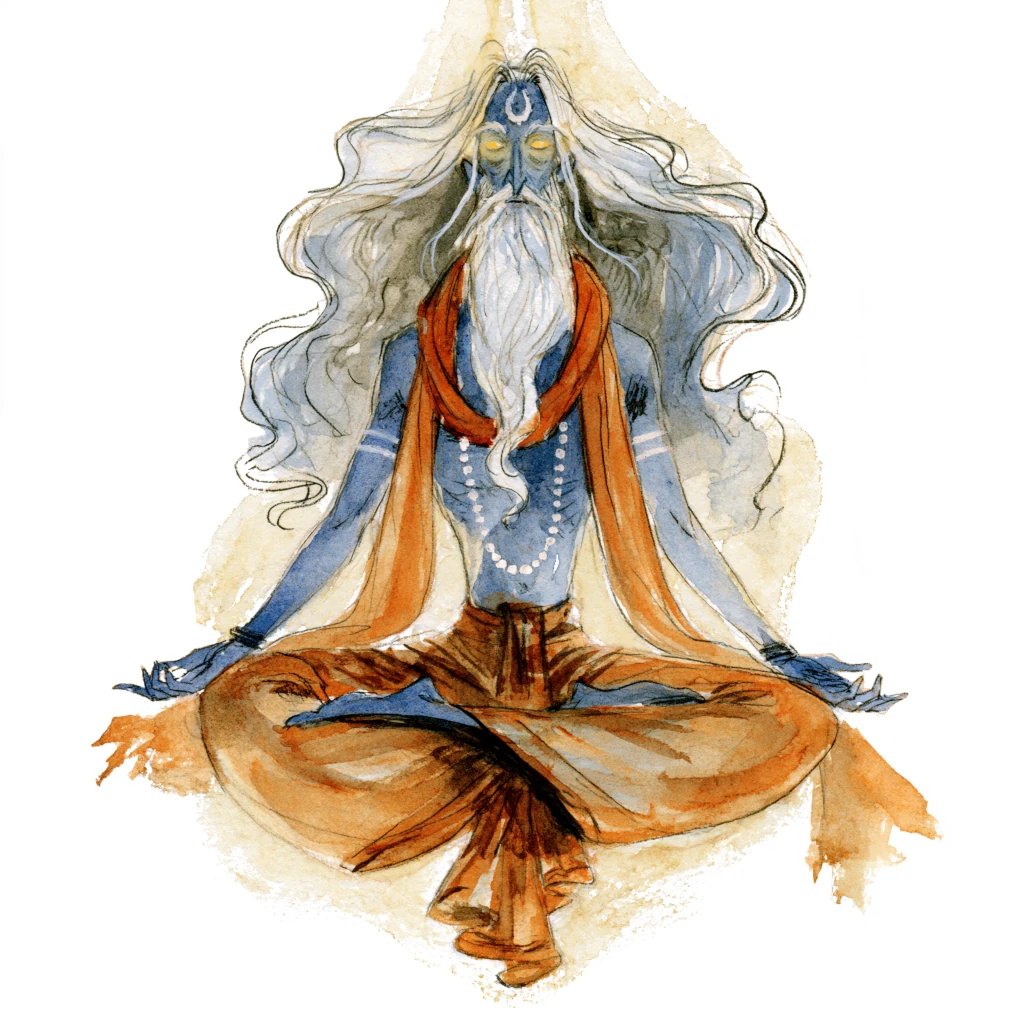
Sons and Daughters of Mind | LG | Rare | Holy | Manasaputra | Outsider | Vitality
The manasaputras are incorporeal beings of raw Cosmic Fire, forged from the fusion of unborn souls and the accumulated wisdom of mortals who have achieved perfection through countless reincarnations. When they choose to manifest physically, manasaputras adopt the most resplendent, idealised humanoid forms—often with third eyes, multiple arms, brilliant glowing eyes or other striking features that mark them as much more than mortal. Benevolent and compassionate, they follow strict practices of contemplation, introspection, and meditation. The patience of the manasaputras is legendary, and their actions often seem like inaction to mortals, for they evaluate even the slightest adjustment to their beliefs over the course of hundreds or even thousands of years.
Manasaputra society is organised in a characteristically complex hierarchy led by the Seven Kumaras. These bloods are enigmatic entities who dwell at the centre of the Cosmic Fire and commune with the Logos—their name for the multiversal consciousness, which may or may not be the same one that aeons call the Monad. The manasaputras mentor one another in master-apprentice relationships, will occasionally deign to guide particularly impressive mortals toward enlightenment, and will intervene in events only when ignorance and chaos threaten the multiverse’s balance. Outside of Creation’s Forge, they are most likely to spend decades drifting through the Astral Plane in search of wisdom. They have been known to form alliances with aeons and inevitables on cosmic agendas, and share kinship with devas. They remain distant from most of the other good-aligned outsiders, unable to share the passions of eladrin or the zeal of archons. Their greatest rivals are the sahkils of the Ethereal Plane, who seek to halt mortal development.
More chant on the manasaputras here…
Stats: [ PF 1e ] Bestiary 5 [PF1e] p162
Manitou
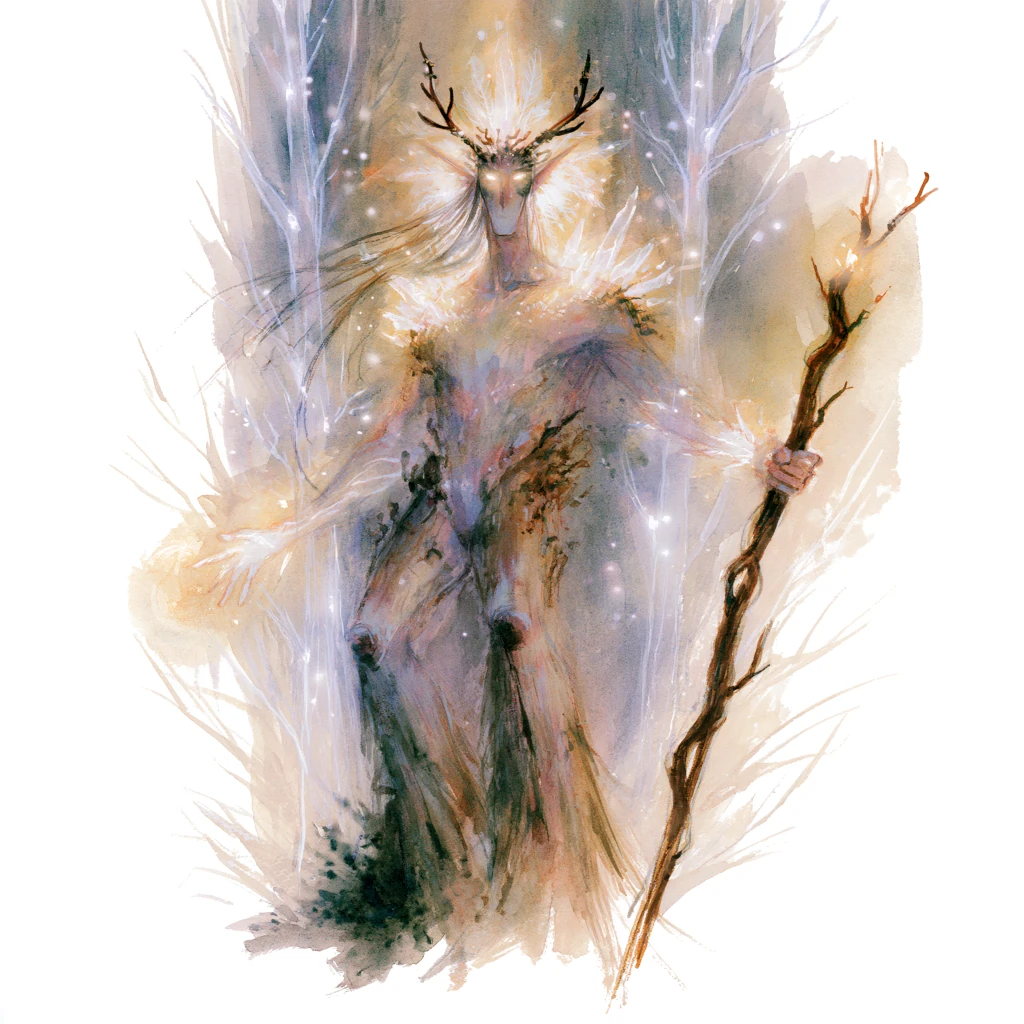
NG | Rare | Huge | Elemental | Vitality | CR 15
A manitou is a colossal, benevolent spirit of nature. They prefer to remain invisible, and are usually only perceived because of the subtle natural sounds that give away their giant-sized forms as they walk through the forests and plains that they oversee. Manitou act as guardian of entire regions of the Prime, where they heal the sick, preserves the balance of nature, and radiate an aura of positive energy that mends wounds and restores vitality to the living, unseen. When they choose to manifest, manitou appear as twenty-foot-tall humanoids with skin like wood bark veined with rose quartz, and long hair that flows like vines. They embody the fundamental energy that permeates all living things, from the smallest of stones to the most vast of forests. Though not natives of the Positive Energy Plane themselves, they have strong links to Creation’s Forge, and they can occasionally be found wandering the crystalline soul-trees of the jyoti gardens, drawn by the resonance of nascent divinity and the raw vitality of the Cosmic Fire. If threatened, a manitou can summon a herd of animal spirits to charge forth in a stampede of raw natural fury. They can imbue a token with a blessing that allows it to scry upon and teleport to the bearer’s location once per day—a gift a manitou may bestow upon cutters who prove themselves stewards of the land.
Stats: [ PF 1e ] Bestiary 4 [PF1e] p192
Ouroboros
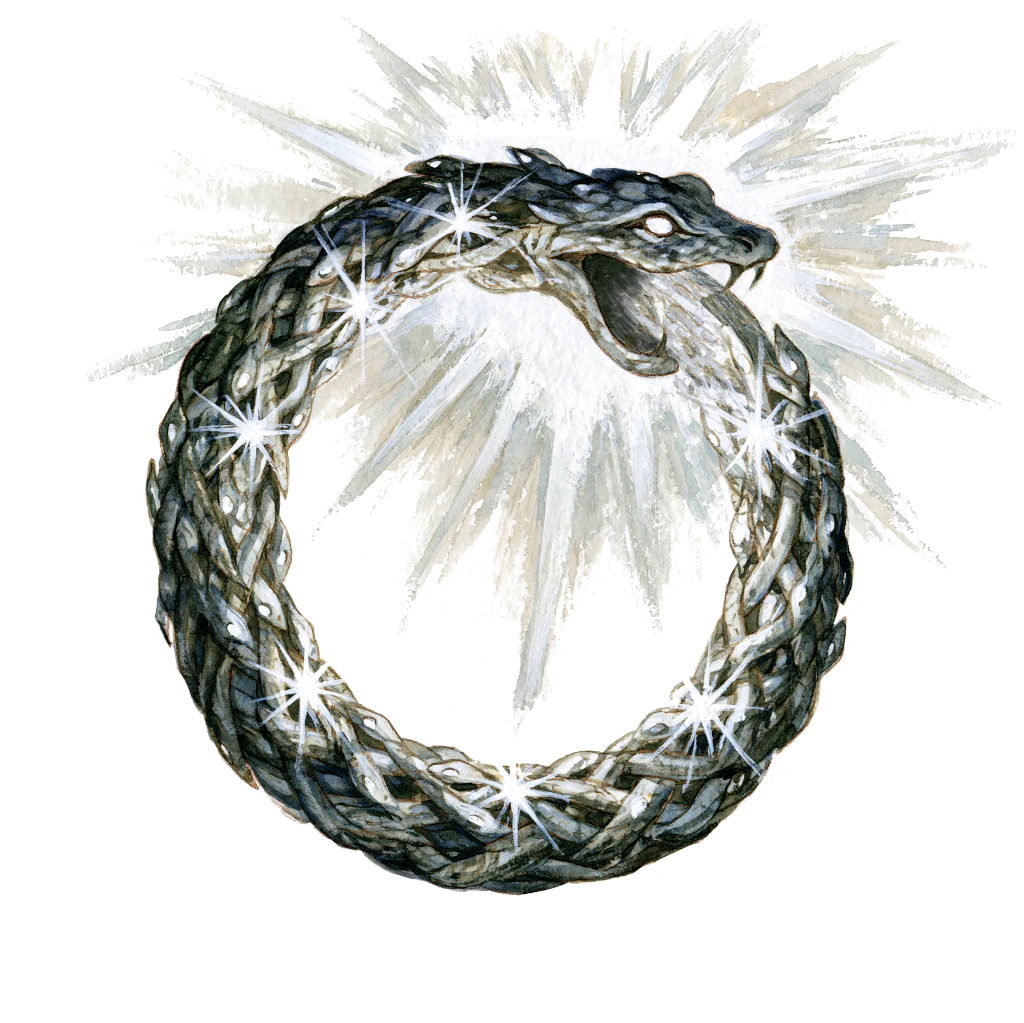
N | Rare | Colossal | Beast | Vitality | CR 21
The ouroboros is a colossal serpentine beast, a living embodiment of the ancient symbol of eternity. Its fifty-foot-diameter coil is formed from a thousand entwined serpents, and each of those serpents is itself composed of smaller snakes, themselves made of tinier serpents still—an infinite recursion of scales and fangs, united into a ring. Dwelling primarily on the Astral Plane, an ouroboros might be found drifting aimlessly through the silvery void, content to consume its own tail in an endless cycle of self-destruction and regeneration. Its body is replenished as quickly as it is devoured, representing a perfect loop of life, death, and rebirth. It is this aspect of the ouroboros that also roams the Positive Material Plane, suffusing its blood with vitalising energies with which it sustains itself. Barely sentient yet driven by a pathological will to survive, an ouroboros attacks any creature it perceives as a threat, and it’s this fact that’s earned it its reputation as an engine of mindless destruction. The blood of an ouroboros, if enriched with sufficient positive energy, grants it near-instantaneous regeneration. Alchemists through the ages have tried to utilise this substance to heal or restore life to mortals, but chant goes that any creature exposed to ouroboros blood in this way risks transformation into a clump of serpents.
Stats: [ PF 1e ] Bestiary 6 [PF1e] p206–207
Shade, Enlightened
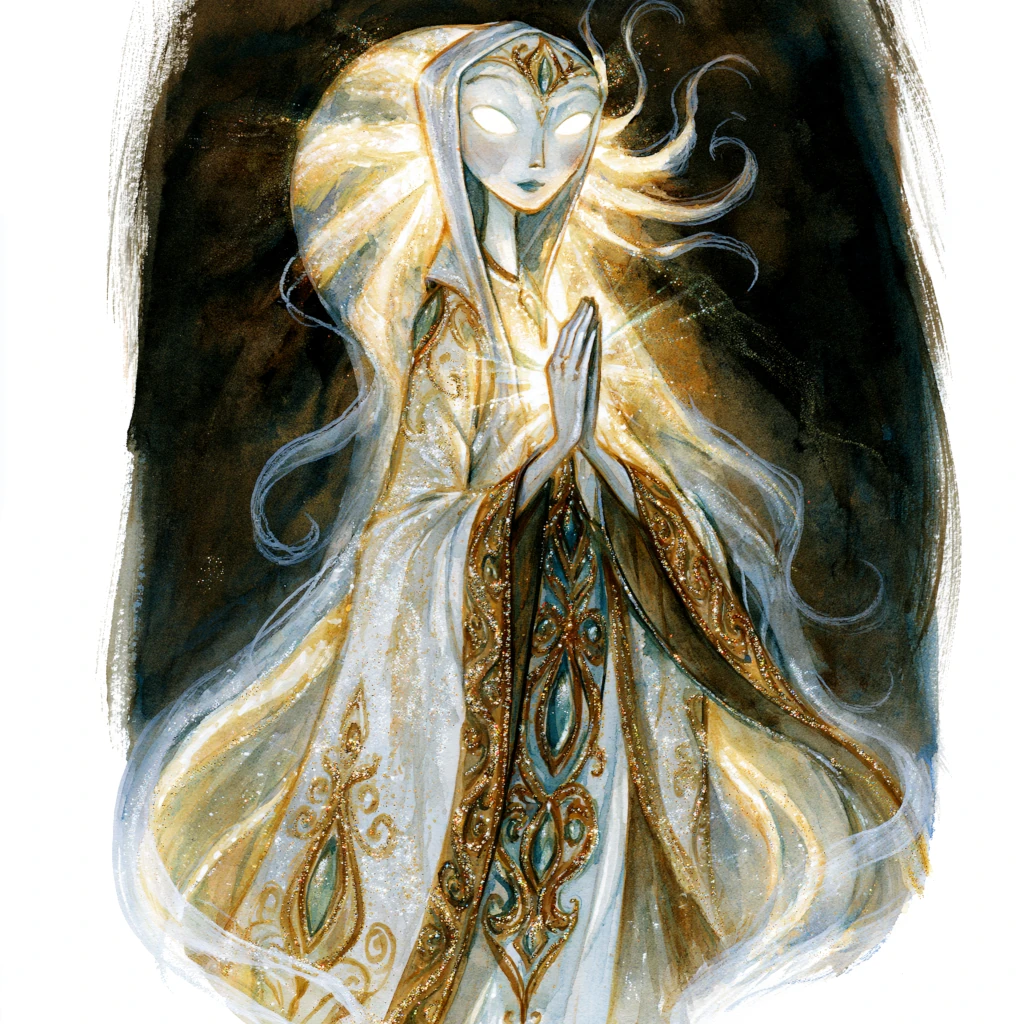
N | Medium | Shade | Vitality | CR 1
The enlightened are the petitioner–shades of Creation’s Forge. They appear as diaphanous and radiant versions of their mortal selves, although their memories have been reduced to hazy fragments more like half-remembered dreams. Unlike other shades, whose shapes are determined by the philosophical forces of their destination planes, the enlightened are transformed by the overwhelming life-force of the Forge. They are suffused with intense vital energy that grants them the ability to rapidly heal, and an aura of brilliance that can blind the unwary. They speak the language of the jyoti, and are most commonly found wandering the crystalline orchards of Creation’s Forge as benign, luminous spirits. This existence seems to be merely a transient stage in their soul’s journey, before they dissolve back into raw quintessence, or are transformed into outsiders such as celestials or monitors. Should an enlightened shade die, their form breaks down immediately, reverting to the elements of the plane. Presumably, the quintessence that is released is absorbed back into Creation’s Forge, reincarnated as new souls.
Stats: [ PF 2e ] Monster Core 2 [PF2e] p282–283
Ravid
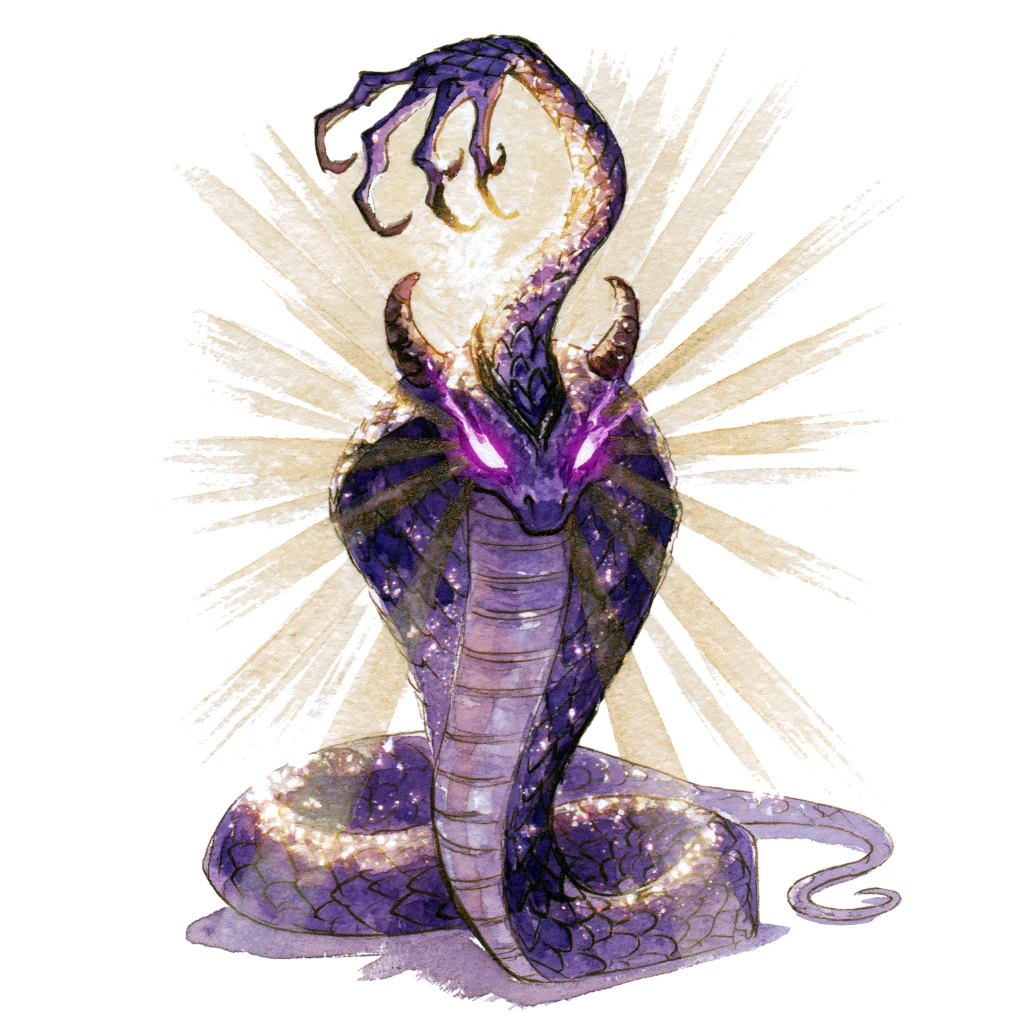
N | Rare | Medium | Elemental | Vitality | CR 5
The ravid is a strange, serpentine creature of pure positive energy, probably one of the weirder creatures of an already weird plane. Their seven-foot-long, opalescent body levitates effortlessly, and a single clawed arm juts from their heads. A ravid glows with an illuminating golden radiance. Native of Creation’s Forge, ravids embody the spark of life itself, and they are able to imbue life energy into anything they touch. They take great joy in animating lifeless objects around themselves, turning stones, tools, and even debris into loyal, mobile defenders that follow them like a strange procession of awakened objects. On the Prime, ravids tend to wander aimlessly, their unconscious gift of animation leaving a chaotic trail of permanently living objects in their wake. Though not powerful in themselves, ravids are never found alone, for they are always surrounded by their menagerie of constructs which defend their parent with mindless devotion. They fight only in self-defense, their claw and tail lashing out with positive energy that burns undead and heals the living. They are so infused with vitality energy that the resulting ability to regenerate damage makes them nearly indestructible by mundane means. Sometimes ravids can even bestow true sentience upon constructs, sharing a fragment of their own soul. However, this ritual that leaves them permanently weakened, so it is a gift given rarely and only to those they deem worthy of true life.
Stats: [ D&D 2e | 3e ] Planescape Monstrous Compendium Vol. III [2e]; Monster Manual [3e] p213-214
Spined Shard
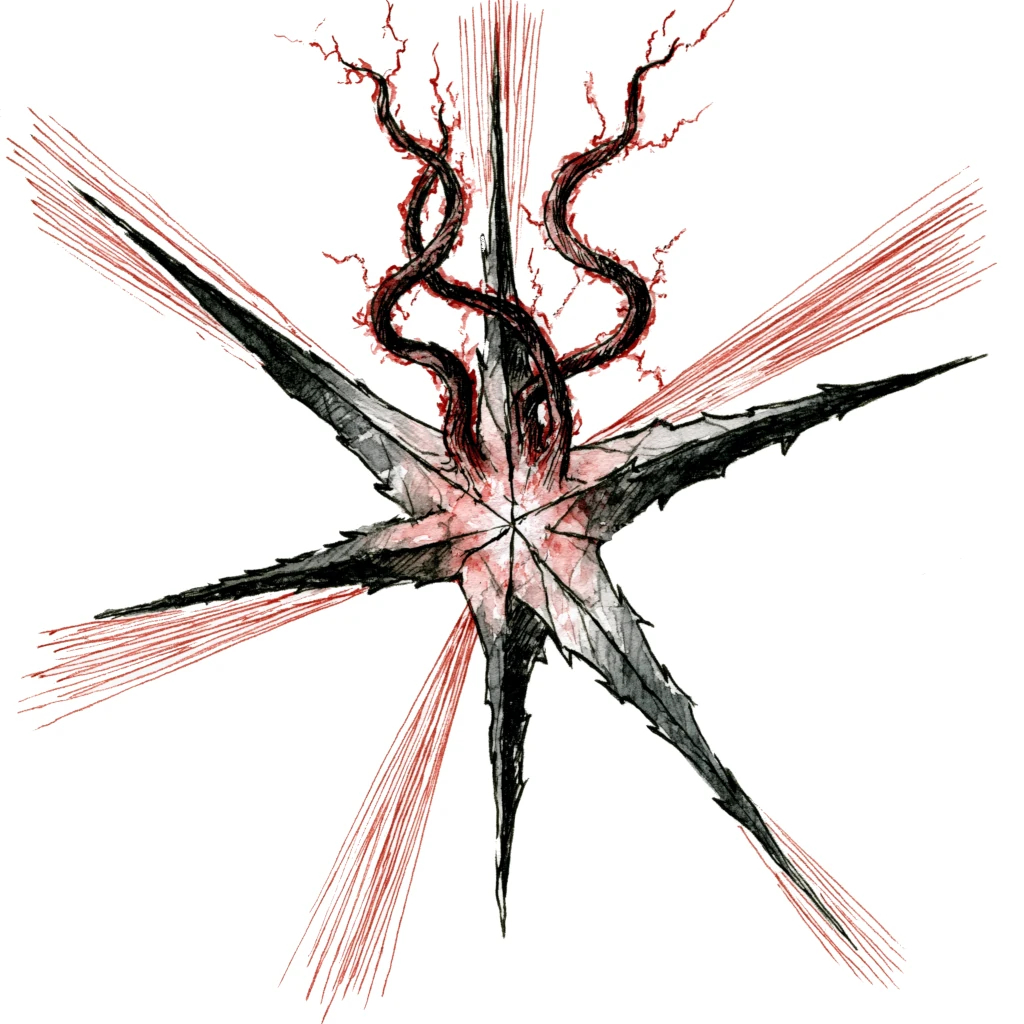
NE | Rare | Large | Elemental | Mineral | Vitality | HD 7
The spined shard is a malign, crystalline predator of the Cliffs of Ioun, the border between the Quasi-Elemental Plane of Mineral and the Positive Energy Plane. Their hard, faceted body bristling with six radial spines and three whiplike tentacles that end in stingers capable of draining positive energy from living creatures. Highly intelligent and vindictive, spined shards generates a field of antimagic that distorts and ruins spells. They can hurl beams of positive energy from its spines, each ray striking a victim, damaging them and charging them with residual energy that then arcs on to any living being who approaches them. Spined shards hunt wantonly, feeding cannibalistically on the stored energies of other shards if they cannot find other prey. They’ll typically attacking any creature that approaches near them, although they are both cruel and cunning, preferring to strike unexpectedly and ambush their prey. When injured, they’ll attempt to grapple their attacker and plane shift deep into the Positive Energy Plane—escaping to its home realm where it can regenerate and plot its revenge, which usually starts with the explosion of their victim after they become overcharged with vitality energy. Chant goes that wizards sometimes summon spined shards as guardians for powerful magical items, but extreme care is required, for without proper protection the shard will likely turn on its summoner instantly.
Stats: [ D&D 2e ] Dragon Magazine #174 [2e] p98
Turul
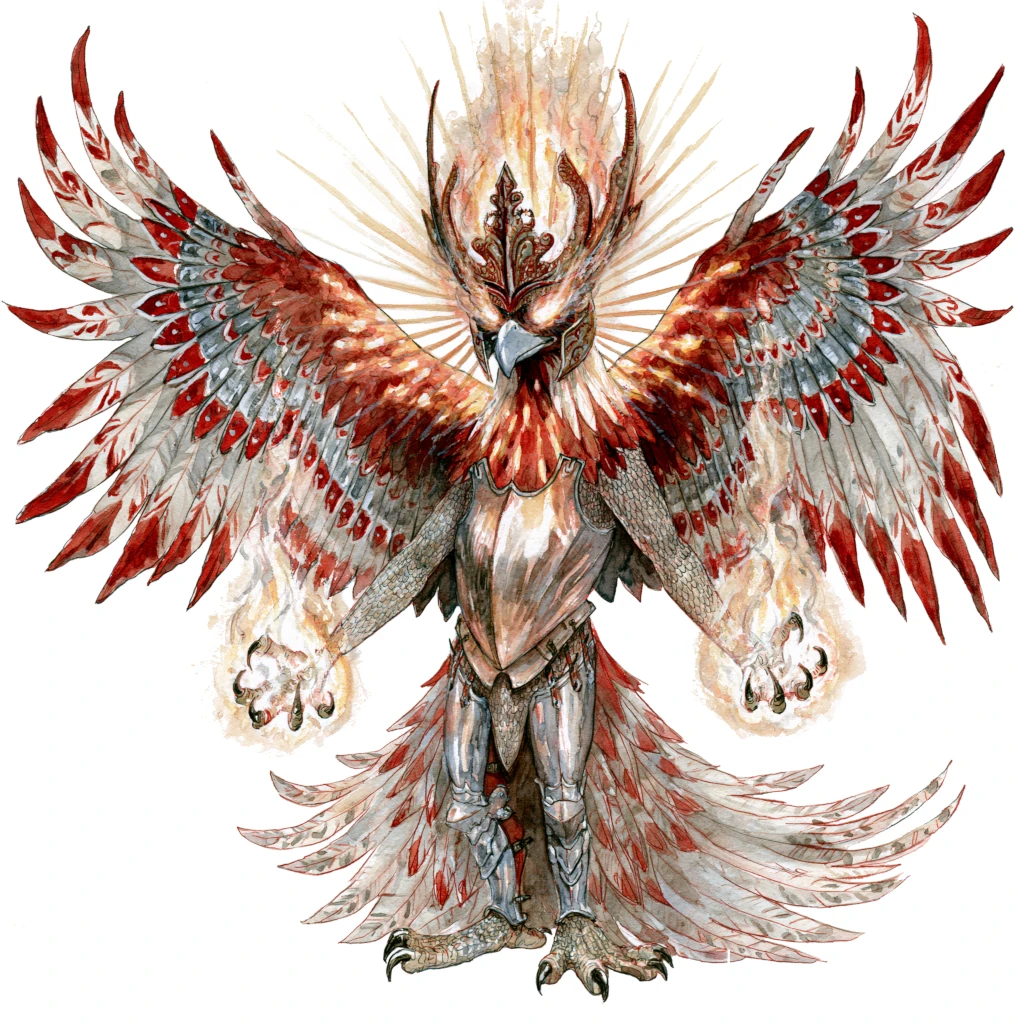
N | Rare | Gargantuan | Elemental | Vitality | CR 19
Turuls are a gigantic, awe-inspiring avian outsiders, native to Creation’s Forge. They appear as thirty-foot-tall humanoid birds, with radiant feather which flicker with light and energy. Their adamantine talons and beak gleam, and their fifty-foot wingspan casts a shadow that can blot out the sun. These divine falcons are a majestic, prophetic creatures that treats the Prime Material Plane as a hunting ground, and a stage for its enigmatic interventions. Stern yet benevolent, turuls shape the destiny and scatter the foes of tribes, and are seen by mortals as heralds symbolising divine favour or eras of prosperity—but only if the leaders acquiesce to their demands. Turuls typically require ‘volunteers’ to undertake difficult quests alluded to by its cryptic prophecies. Unlike the social (if xenophobic) jyoti, turuls are loners, roosting atop tree-shaped gemstone formations on their home plane. They tolerate visitors only so long as the conversation remains worthwhile, and they will dismiss those who bore them, or insult them with scorn or aggression—often violently. Unlike jyoti, turul hold no particular hatred for deities, and will even work with powerful outsiders to protect their adopted communities. They tend to view mortals as something akin to pets, although they meddle in their affairs only when their favourites are threatened. Phoenixes treat turuls like royalty, willingly serving them. Some graybeards speculate that turuls and jyoti are incarnations of the same ancestors, or that turuls are a higher form of jyoti within a cycle of reincarnation thsi is intrinsic to the Positive Energy Plane. While effectively immortal on the Positive, turuls age only when traveling to the Material Plane.
Stats: [ PF 1e ] Bestiary 5 [PF1e] p256–257
Xag-ya

N | Medium | Energon | Incorporeal | Vitality | CR 4
The xag-ya are floating, silver-white globes veined with dozens of writhing filament tentacles of living light. Their surfaces shimmer like quicksilver beneath halos that are bright enough to cast shadows and reveal dust motes. The ozone-rich air around xag-ya crackles with electricity and hums at a barely audible high pitch, colours saturate, and plants begin to writhe and blossom. Bring touched by a xag-ya results in a jolt of vital power—pins-and-needles behind the eyes, a fullness in the lungs, and pressure in the head that quickly turns into a nosebleed or migraine if it continues too long. It’s thought that xag-ya to feed upon the energy flux of the planes—the mere presence of living material infuses them with a sparkling radiance, without harming its source.
Stats: [ D&D 2e | 3e ] Manual of the Planes [1e] p54, [3e] p168-169, [5e] p412; Planescape Monstrous Compendium Vol. III [2e] p118
Source: Jon Winter-Holt