Likhoradka, Oznoba
[ Outsiders > Fiends > Parochial > Likhoradka ]
[ Cattle’s Death | Gneteya | Korcheya | Kostolomka | Ogneya | Ospa | Oznoba ]
The Shivering Ones
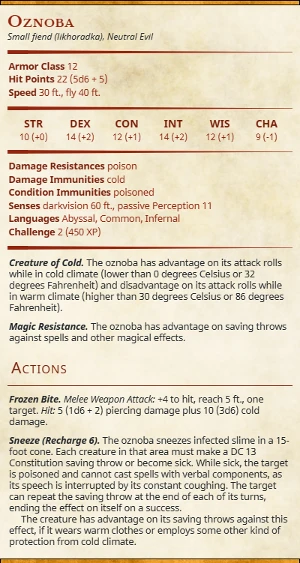
| TRAITS: | Fiend | Unholy |
| PLANE / LAYER: | Gray Waste |
| ACTIVITY CYCLE: | Any |
| DIET: | Phlegm |
| INTELLIGENCE: | 14 (+2) |
| ALIGNMENT: | Neutral Evil |
| SIZE: | Small |
| CHALLENGE RATING: | CR 2 |
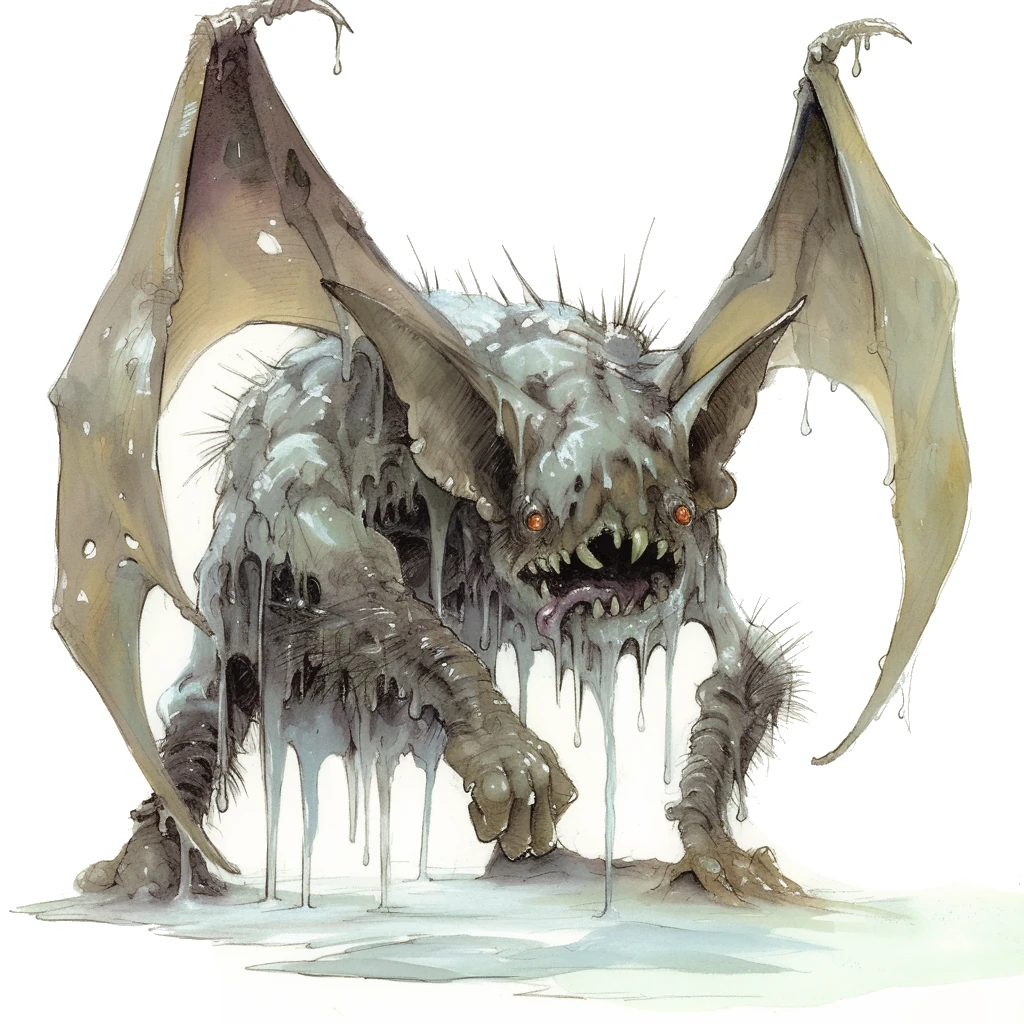
The likhoradkas are the most pestilent of the progeny of Stribog, the Slavic power of the Ill Winds. The oznobas are the least of these fiends, but do not mistake their smallness for mercy. Their name means the shivering, and refers to the bone-deep aching cold that seizes hold of a body when the grippe takes hold, that trembling chill that no hearth-fire can chase away. Osznobas are the embodiment of influenza, that oldest and most democratic of killers. The horrible snotty creatures wear their names with pride, and they ride the cold wind down from the Gray Waste into the mortal world, slipping through window cracks and beneath doors on drafts. They might be weakest of the likhoradka but they do not care because they have numbers on their side, and their plague spreads like wildfire when mortals huddle inside away from the cold.
Oznobas are small, even by the measure of lesser fiends—hunched, bat-winged wretches no taller than a sickly child. Their skin is mottled grey-blue and slicked with a thin layer of frost and mucous that never dries. Their wings are leathery and veined and their eyes are the colour of infected phlegm. They smell of fever-sweats and winter mud.
What they lack in power they compensate for in cunning. They do not announce themselves, they drift on drafts and linger on the cold air beyond the hearth’s reach, hovering just outside the warmth—because heat is their one genuine enemy. A fire well-stoked, a warm blanket pulled tight, a fever-victim kept snug and warm with hot broth—the oznobas especially hate broth. The knowledge that the simplest peasant remedy can blunt their power is a humiliation that makes them seethe with bitter fury. But in the cold places, they are far more dangerous, for the chill amplifies their power.
The greatest pleasure for an oznoba is in watching the cutters in a nice cosy village begin to cough—first one hacking voice, then two, then a choir of disease echoing through the streets. They follow armies in winter campaigns, and slip among the refugees of disaster. They are drawn to crowded, cold, exhausted places: the refugee’s tent, the soldier’s barracks, the pilgrim’s roadside shelter. Their main weapon is their foul, germ-riddled breath. It’s released in a sneeze of frost and slime, and can rapidly ignite in victims a coughing fit so violent and uncontrollable that victim cannot speak. Oznobas consume phlegm, one of the essential (if disgusting) humours of mortal bodies—so the more explosive the sneezes thy cause, the fatter they grow.
You’ll know the work of the oznoba when you feel a cold that does not belong to the season. A dampness in the lungs that was not there a moment before. A shiver that begins at the base of the spine and does not stop. You might die coughing in a wet bedroll, too weak to lift a sword, too hoarse to speak a word of power, while the fiend crouches on the windowsill just out of reach of the fire and watches with glee.
The cold is its ally. Feed the fire. Keep warm. Drink the broth.
Stats: [ D&D 5e | PF 1e ]
Sources: Margarita and Jon Winter-Holt. PF1e conversion by Justicegundam82. Margarita notes: The likhoradkas are a homebrew fiend race, inspired by the eponymous disease-riddled spirits of Slavic mythology. While based on Slavic folklore and beliefs, the amount of actual information we have on pre-Christian Slavic deities is so minuscule that building any kind of lore out of it is impossible. However, there are a lot of folk beliefs about things these deities are thought to represent, which I have worked into the piece.
Now with PF1e stats!
https://www.tumblr.com/justicegundam82/818628558638497792/likhoradka-oznoba
I hope you like it. ^^