The Shell Confederation
Location: Elemental Plane of Water / Core Water
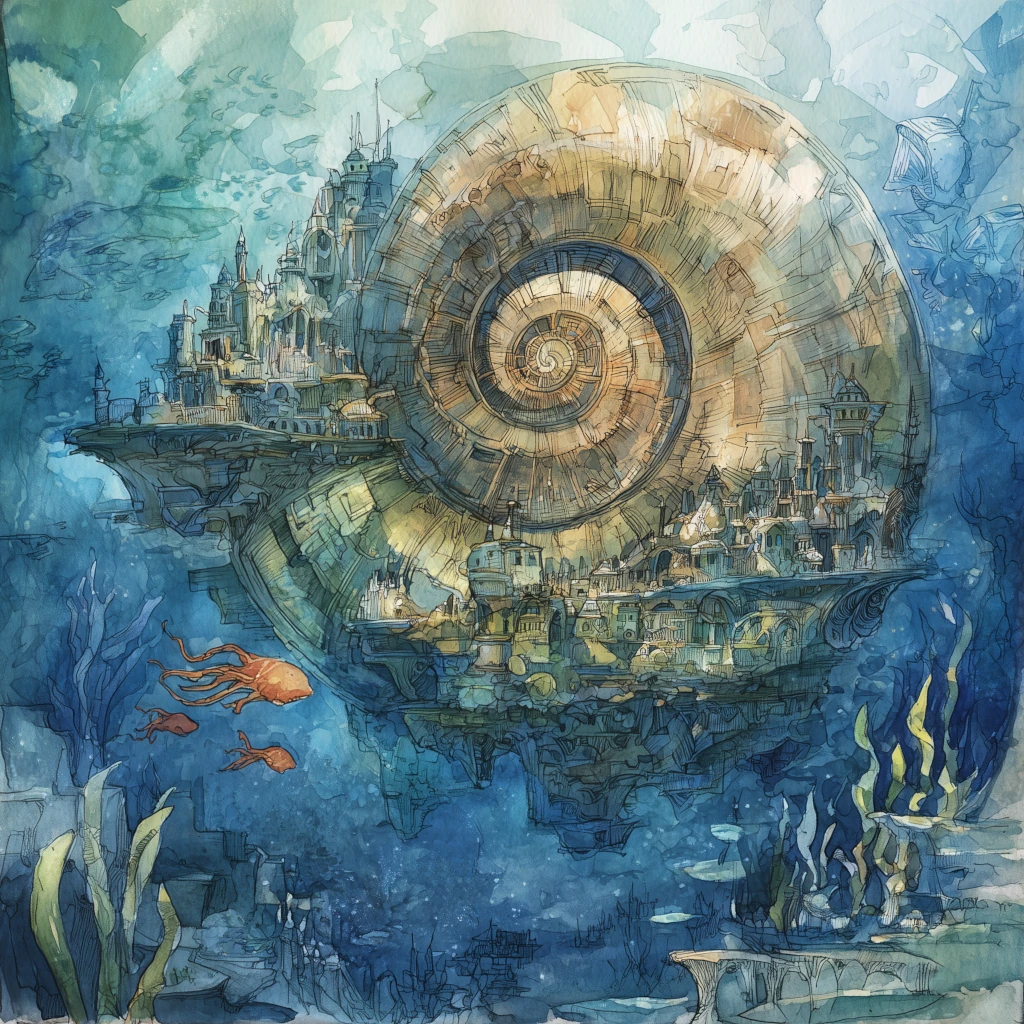
A colossal curled shell of an ancient ammonite-like creature slowly drifts through the the Elemental Plane of Water. It isn’t the only known remnant of the gargantuan megacreatures that still live in the Bottomless Deep, but this shell is unique—it hosts the largest community of cephalopods on the Inner Planes, if not in the whole Multiverse.
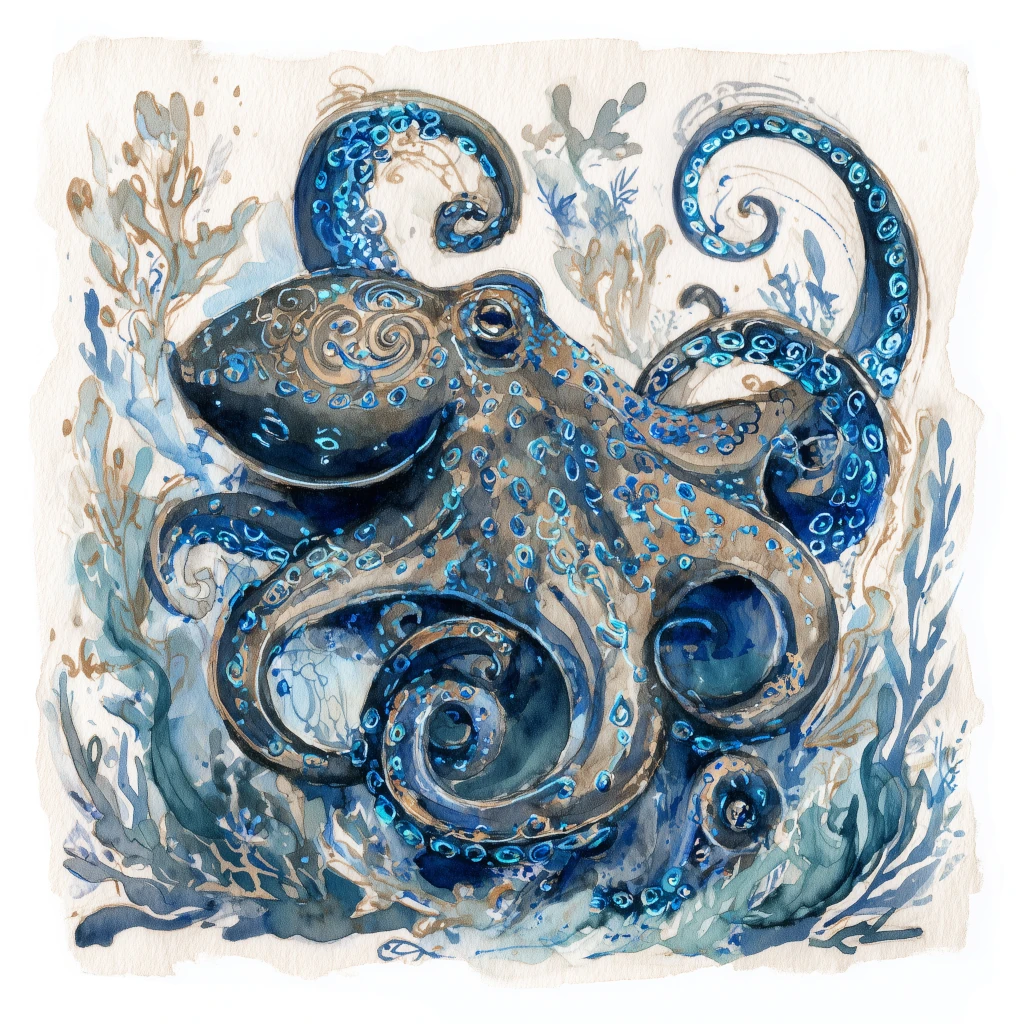
Most squids and octopi are solitary. For all their intelligence, they are lone hunters that can barely stand each other even through the mating season. However, the three main species that inhabit the Shellter (thus the giant shell was dubbed by pun-loving glassfolk) are all exceptions from this rule. This is how they managed to become truly sapient, after all. Guess that cooperation is the key to everything, huh? The three races are tako, blue-ringed octopi (from here on referred to as blue-rings) and deep-dwelling octopi (aka deepdwellers). All of them are large civilised octopi, but the difference between them is as apparent as the difference between humans, elves and dwarves—if not more so. Tako are instantly recognisable by having a single large eye above their tentacles. They display prominent sexual dimorphism, with females being bigger and more brightly coloured than males. Tako have powerful tentacles and are dextrous enough to wield tools. Blue-rings are more slender, but also larger and have longer tentacles than the tako. They are also brightly coloured, forewarning their venomous bite. Finally, the deepdwellers are the smallest of three species. They cannot change their colour, but instead tend to have pale skin which gently glows with phosphorescence.
These three species have been living together for many years, but they aren’t exactly a unified nation. Each species governs their people according to their own laws and customs, even as they act together to supply and protect their home—hence the name Shell Confederation. And even then, the structure of their cephalocratic government is loose, as even in a community, octopi tend to exhibit loner behaviour. Another issue that three species face is a lack of mutual understanding. The three cultures each have their own languages based on colour changes and tentacle gestures, but their individual chameleonic capabilities are very different. The citizens of the Shell Confederation have developed a simple shared sign language, but it isn’t enough for more sophisticated conversations. This doesn’t mean, of course, that the octopi-kind just ignores one another. The three species have shared their individual accomplishments and managed to expand and defend their keep enough to make it a blossoming community.
A typical “home” in the Shellter is a hole drilled into the shell exterior with two exits—inside the shell and outside. These exits are really small, barely enough for a human foot to pass through, but incredibly flexible octopi fit through it just fine. Most octopi spend their days the outside portion of the shell, which is separated into three concentric rings. The outermost one is guarded by tako. Their warriors always patrol the surrounding waters, while wielding makeshift harpoons and tridents. Often, adventuring parties of tako scout forth into the Bottomless Deep in search of usable materials and potential threats. These parties commonly include tamed giant squids that provide transport for normally benthic octofolk. Tako scouts bring their loot inside the Shellter, where their crafters use it to make tools and weapons—something that other two races don’t usually do.
A thin middle ring belongs to the blue-rings. Among all species these ones seem to be the most intelligent—enough to use magic, at least. Certain octopi, easily recognisable by the red rings on their skin, are able to use spells like that of elemental clerics. Blue-rings’ temples are hidden away in the internal part of the shell. Some are open to outsiders — these are large rooms with a central altar, covered in intricate paintings and adorned with scavenged jewellery and holy symbols. Some of these temples also act as living rooms for quatoids, who act as emissaries from Lysianassa and are treated with reverence. It is known that octofolk worship Istishia, Ben-Hadar and Lysianassa, but their temples are only a small part of the entire ring. Most temples are closed off to outsiders and likely venerate some sort of unique octopi powers. Worship is not the only thing blue-rings do in the Shell Confederation. They are the diplomats, who take it upon themselves to talk with all outsiders and explain to them how this society functions, as well as settling disputes between species inside the Confederation. It seems that the placement of their entire ring is reflective of their role as social glue. It was blue-rings, who have forged the first alliance of the Confederation—a peace deal with a reclusive locatah tribe of Spiked Fin. Surprisingly, they turned out to be more cooperative than outside observers were inclined to believe. Spiked Fin locatahs live on drifting islands around the Shellter and provide defences and scouting in exchange for foodstuffs grown by the octopi-kind.
Deepdwellers are farmers of the community. The interior central ring of the shell is covered in algae, shells and calciferous tubes that house tubeworms. With the help of blue-rings, deepdwellers have built strange farms of kelp and molluscs sustained by pockets of Ooze. Additionally, they were the ones to invent animal husbandry (they keep squids much like humans keep chickens), although nowadays it’s tako who do the most of that sort of work. Deep-dwelling octopi trade their plentiful produce for tools and loot from tako and services from blue-rings. They are however reclusive, since deepdwellers are less strong and lack camouflaging abilities of their brethren. Thus, it is quite hard to even talk to them, since other octofolk discourage outsiders from entering the inner ring—by force, if necessary.
This above was a description of the surface of the Shellter. What is hidden in the inner chambers of the shell is a jealously guarded secret. However, some rumours persist, and one of them even seems like truth. Octofolk seldom mention some being they only refer to as The Giant, that evidently lives in the very center of the shell. The chant goes that this creature is actually a giant golden ammonite that acts as a hidden ruler of the place. Apparently, its lair is a zone of incredible pressure, which is inaccessible even for deepdwellers. It isn’t clear how much The Giant is involved in ruling the burg, but octopi seem to manage the Shell Confederation on their own just fine. Seems like The Giant is either an advisor, an object of worship or perhaps the original occupant of the shell.
The Shell Confederation seems idyllic, but it is frequently targeted by various assailants. A giant kraken with a band of enslaved sea spawn attacked the burg a couple decades ago with the intent of conquering the octopi-kind. Fortunately, forces of the Elemental Good have intervened and drove invaders away, although the kraken remained alive, which is quite worrying for everyone. More importantly though, the Shell Confederation constantly suffers attacks from cecaelians, who also seem keen on taking over the place, justifying this by claiming to be the most advanced cephalopods of all. The attacks have been performed by small bands of especially prideful cecaelians and have been easily dispatched so far, but there is a possibility that the intruders may some day muster a big enough army. Unfortunately, it seems that a lot of battlers may be out to get the octofolk, and the three species must forge further alliances—no matter how difficult it may be for them.
Sources: Margarita and Jon Winter-Holt. Canonwatch: This location is homebrew. Tako of Kara-Tûr are described in AD&D’s Monstrous Manual, while Blue-Ring Octopus and Deep-Dwelling Octopus come from the Dragon Magazine #227 and #190 respectively.