The Philosophy of Ancient Persia
The ancient concepts of asha and druj map onto the Outer Planes like a knife that cuts across the moral and ethical spectra of Great Ring. These two opposing ideas represent the eternal struggle between truthful reality and the distortion of falsehood. Effectively, a cutter can be of most any alignment and simultaneously follow a path of asha or druj—but never both.
Asha
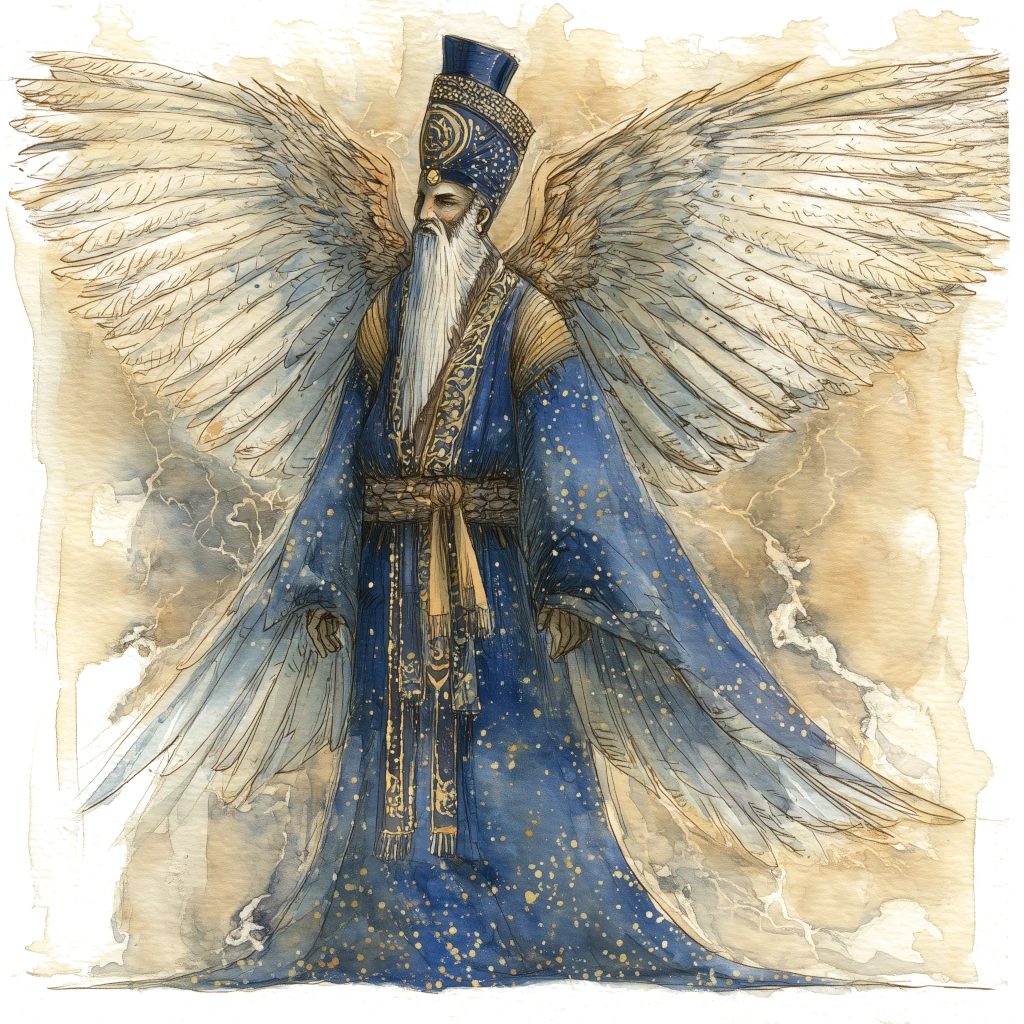
Asha represents truth, rightness and the cosmic order—how things really are and how they should work. From ethical behaviour to the physical patterns of the multiverse, from the way plants grow to the patterns in which the stars move. Living in harmony with asha means committing to truthful speech, just behaviour, and supporting the proper functioning of the planes. While many of the ideals of asha might sound like they belong stuck up somewhere on Mount Celestia, its possible to be a baatezu or even an eladrin and have a sense of asha too—keeping one’s word, living within the status quo and believing that everything has a place in the multiverse. A grim lawful evil warlord who keeps their promises and upholds order is following the principles of asha even though they are cruel—asha is not exclusively the domain of the archons.
Asha manifests as a form of cosmic law that sits behind the Laws. Think of it perhaps as the spirit rather than the letter of the law. Modrons and inevitables reflect asha when they enforce truly just, reality‑consistent order, not merely arbitrary rules. A Guvner who considers themself law-abiding but who is attempting to find loopholes to subvert planar norms, might technically be working within laws, but they are actually acting counter to asha. When a law props up corruption, it slides towards druj, regardless of whether it is technically lawful or not.
Druj
On the other claw, druj [droodj] is the Great Lie. It represents deception, distortion, and moral corruption. It’s a force that cares nothing for objective truths and twists words and facts to fit its own cynical ends. Ultimately, berks who commit druj seek to contaminate reality and warp it away from its rightful pattern. While it has a lot in common with chaos and evil, it’s more accurately thought of as falsehood and the desire to break reality down in order to shape it into one’s own will—or annihilate it completely. A chaotic good fey trickster whose lies might distort reality is flirting with druj, just as a succubus who’s never been honest in her life.
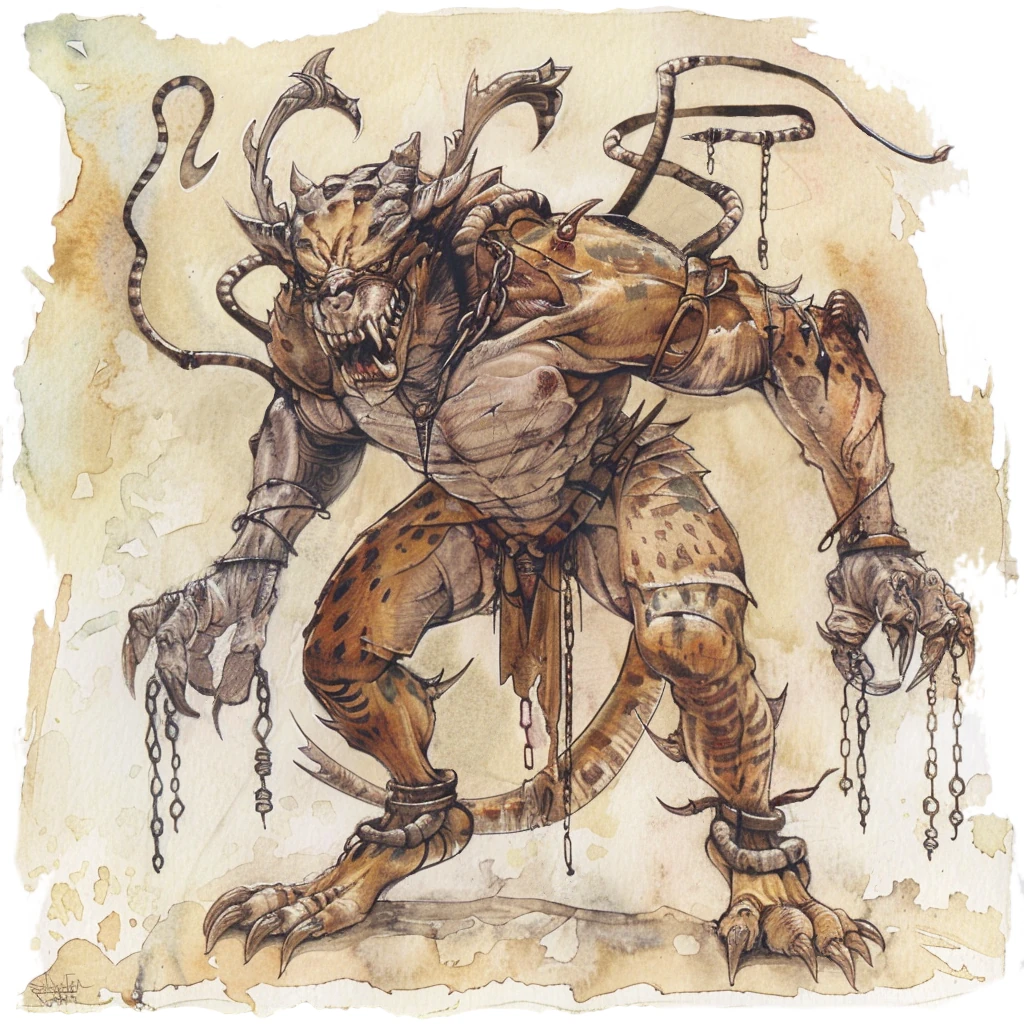
Druj is a perfect explanation for why belief can twist reality in ugly ways. Repeated, wilful deception—propaganda, false creeds, hypocritical churches—all of these things accrete druj, tainted the land, warping the plane, at the extreme even causing planar conjunctions where a part of a plane is ripped free and tips over into another plane. Druj can spread like wildfire; every deceitful act or corrupt ritual adds weight to the cosmic imbalance, strengthening forces that want the multiverse to devolve into pain or unreality. In places thick with druj, illusions are easier to create, a berk’s memories might become unreliable, oaths and promises falter and lose force, even alignment auras may register as something they’re not. Large swaths of Gehenna and the Gray Waste, the prison of Carceri, and many Abyssal layers are thick with druj. They’re not just evil, but self‑deceiving, delusional evil that can’t even see itself honestly. Yugoloth contracts, devilish technicalities, and tanar’ri lords who rewrite the past are all expressions of druj in different noxious flavours. Fiends like the lou-mara, corruptors like the div, or Far Realm aberrations that feed on memory, perception, or belief are natural children of druj. Mortal cults that preach comforting lies or reality‑denying doctrines, false news designed to divert attention—all draw druj into existence. The most effective wielders of druj are able to craft lies so seductive that they propagate as memetic plagues around the streets of Sigil.
A follower of the Persian pantheons typically doesn’t think “Is that cutter good or evil?” but “Are they of asha or of druj?” They might be more concerned about truthfulness versus falsity, than good versus evil or law versus chaos.
Frashokereti
Frashokereti [frash-OH-keh-retty] is the Persians’ vision of the end—but unlike some other pantheons they’re a little more optimistic. It’s not the annihilation of the multiverse as the yugoloths would have it, nor an escape from it like the Dustmen seek, or even an endless cycle like the Vedics or Norse would suggest—but its complete purification and renewal. See, to the Persians, time is a finite drama. The cosmos began good, was quickly invaded by evil, and then progressed through a long struggle in which asha slowly reasserted itself. At the end of time, all corruption will be burned away, cutters in the dead-book will be resurrected—the good ones, at least—and reality will restored to a perfected state where druj has no foothold. So goes the religious screed at least.
The Persian pantheon and their followers insist that the multiverse is not truly eternal: It’s a limited‑run story that’s barrelling toward their definitive purification event. These cutters preach that even the Great Ring is a provisional structure that will one day be melted down and remade in a single, all‑encompassing act of renewal. The chant goes that that certain planar phenomena—souls being mysteriously reclaimed from Lower Planes, recent examples of fiends experiencing flashes of genuine remorse, or the way that raising the dead seems to becoming strangely easier—are early leaks of frashokereti into the present.
Source: Jon Winter-Holt. Canonwatch: This is based on real-world philosophy and mythology, although the interpretation into Planescape is homebrew. If you know more about Zoroastrianism or Zurvanism than I do (which wouldn’t be too hard) and you have Thoughts on what I’ve interpreted here then please do let me know!