
Nakdar Nakoul
Abyss — Layer the Four Hundred and Twenty Seventh
Also known as Djahannam
The Nature of Evil: Beauty is a lie and hope is a trap, for the truest cruelty is not by the sword but in the mirage. Hide your confidence tricks in plain sight, and the foolish will reward you with their blindness. Secrets though, they are another thing entirely. Plant those into eager ears, whispered as if they were not meant to be heard. Eager fools will take all the risks and you can sit back and just take the rewards when curiosity takes its inevitable deadly toll.
Ruler: Eblitis (Intermediate power and proto-demon lord of genies, deception, shapeshifting, despair and arcane magic [He/Him] / CE). Chant goes that this windswept desert land is part and parcel of Eblitis himself; that his own eyes gaze down from the burning sun, and his multiple maws strip flesh from bones amidst the raging sandstorms.
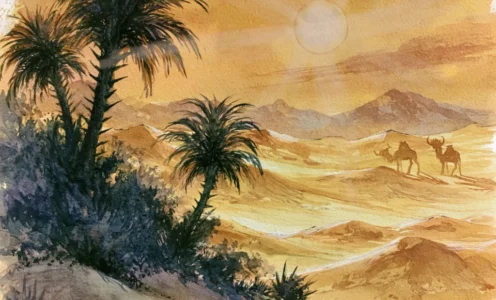
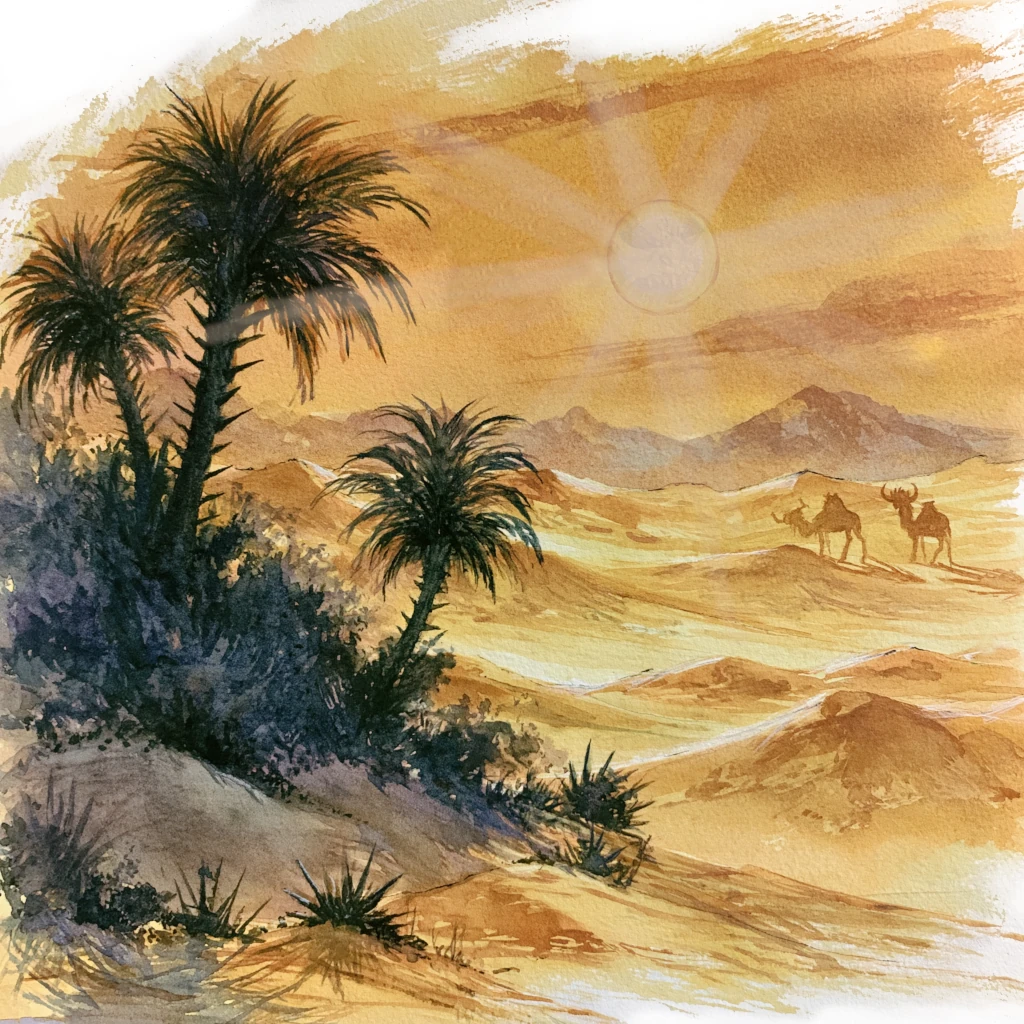
The Chant: The 427th Layer of the Abyss is a fabulous plane of endless sand, studded with tranquil oases and mountainous sand dunes. The sky is a warm glowing amber, and the sand is perpetually lit as though by the fierce noonday sun. The wind roars and whispers with voices speaking in alien tongues. Travellers here must prepare for harsh desert conditions and sandstorms, as well as the mind-sapping malignancy of the layer itself.
The layer’s scattered with oases surrounded by palm trees that seem particularly vivid and wholesome. The waters of these pools are perpetually cool, and are said to have spell-enhancing and soporific properties. The central desert has corrupted Abyssal versions of many common desert animals including hawks, vultures, cobras, scorpions, fennec foxes, jackals, and camels. Cutter, the camels are especially vicious. But the most commonly encountered inhabitants by far are demonic elementals of fire, shadow and dust, who are the true masters of this desert. Tanar’ri are rare here, apparently feeling an overwhelming sense of hostility and malice from the vast skies above. Common demons here include nashrou packs, jariliths and whisper demons, though solitary death drinkers thrive in the deeper wastes. Genies are surprisingly rare out in the desert too, and the even most ardent devotees of Eblitis sense instinctively that this realm does not welcome them. The khayal, in marked contrast, consider Nakdar Nakoul a sacred wonder, and often make pilgrimage to its five empty cities seeking to unveil lost secrets of the eldritch void from which their own ancestors arose. These abyssally corrupted camel riding travellers create no permanent dwellings and never occupy the forbidden cities, choosing to camp outside in tent villages. As a traveller moves further and further away from Madiyat Almeyadin, the burg at the heart of the plane, the desert takes on an otherworldly tainted aspect and temporal anomalies begin to occur. [The flora and fauna of these reaches often have the Pseudonatural template.]
Madiyat Almeyadin
The City of Spheres (burg)
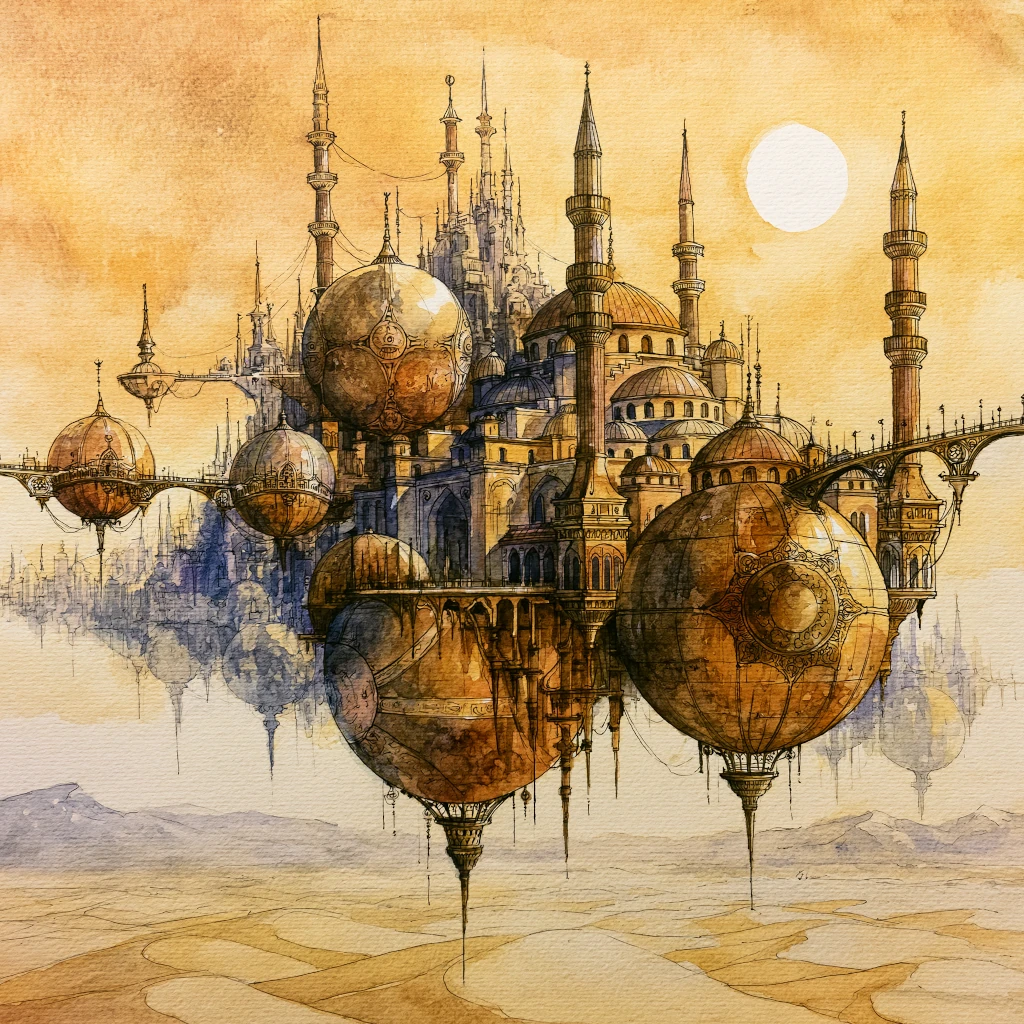
Nakdar Nakoul’s capital city Madiyat Almeyadin is magically protected from the sandstorms and scouring winds of the layer. It is an eerie awe-inspiring series of colossal floating spheres composed of obsidian, bronze, brass and copper; hovering beside an inlet of the Soulless Sea. The air here smells of exotic spices and has a coppery ozone tang. The city’s orbs are riddled with twisting boulevards and caverns. Some are garrisons and combat arenas for Dasim’s troops, others are ambassadorial enclave communities of loyal khayal, dao, efreet and jann. These genies are ritualistic fanatics who instinctively avoid facing the direction of Eblitis’s avatar at all times; constantly compensating for the gradual motion of the spheres. Tanar’ri are reasonably common here provided they do not cause trouble. There is also a sizable population of fiendish eblis here. Most of the populace hide themselves beneath dusty cowled robes, which is for the best, as beings eldritch and foul commute here regularly to plumb its libraries and markets. Many of the city folk commute between orbs using magic carpets.
Madiyat Almeyadin has extremely valuable arcane lore houses coveted by scholars across the Multiverse. Primes are exceptionally unwelcome here, but many planars travel to Madiyat’s bashaar, including yugoloths, shadow fiends, night hags, mercane, gith, tso, fiendish beholders and traders from Leng. Extremely well-connected and wealthy visitors might be able to purchase travel to the City of Brass, the Great Dismal Delve or the City of Onyx.
Eblitis’s avatar resides in a floating spherical palace of gold, studded with garnets and opals. He occasionally deigns to speak in person with a notable supplicant provided they treat him with appropriate respect and protocol. He more commonly delegates official representative duties to Sut, Zalambar or Awar. His attendants are usually a mixture of shadow and fire elementals, and dust quasi-elementals.
The Oasis of Tir
The largest oasis in Nakdar Nakoul is about a square kilometre in size. Its waters teem and swirl with aquatic elementals, and there is reputed to be a portal to the Elemental Plane of Water deep beneath its surface. Tir is seldom here in person, and considers actual rulership over this realm rather beneath him, so legends persist of desperate planewalkers who managed to bribe their way off-plane through the gate beneath. The oasis is surrounded by a vast wetlands inhabited by fiendish eblis tribes, and abyssally corrupted crocodiles and hippopotami.
The Five Jewels of Eblitis
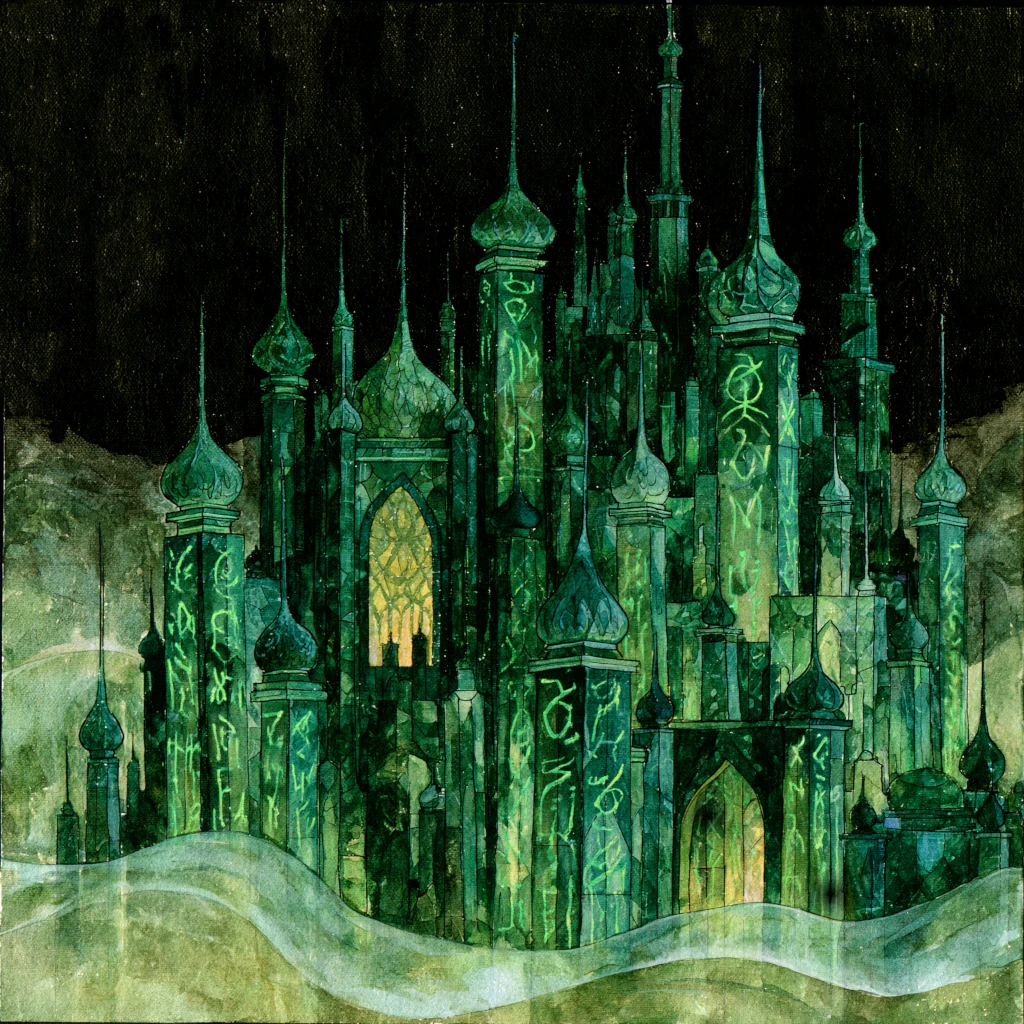
Eblitis has raised five fabulous cities far out on the borders of his layer where the air, land, space and time begin to break away into howling darkness. The cities appear shaped from seamless marble; uniformly coloured white, black, red, green and amber. Each is a vast cyclopean metropolis built to the proportions of titans. Their eerie towers, vast rooms and endless plazas have an eldritch perfection and are staggering in their size and beauty. Iggwylv’s writings claim that the Jewels represent Eblitis’s memory of a lost Creation. She suggests that they are representations of the cities of the Gods he dreamed of founding, in a course of history that will never be. The Five Jewels are utterly deserted, save for the whispering wind and the dreams and the eerie mutterings it carries. Treasure seekers and delvers of lost lore who visit these ghost metropoli seldom return, and those who do tend to never speak of the marvels they have beheld. Malhevic of Lunia wrote that the Five Jewels are too inherently blasphemous for even the Abyss to comfortably contain, so they are cocooned within an inertial buffer to stop their influences contaminating surrounding layers. Accordingly they are slightly out of phase with the rest of the layer and can only be accessed in ideal conditions by skilled planewalkers.
Darkohm Kaziba — the City of False Numbers (burg). Occasionally sought by insane geometers, the jade city was built using mathematical rules that no longer seem to apply within the current Multiverse. Eblitis refuses to abandon this irrational system of rules, and uses this place to erect empty and colossal monoliths that are toxic to the very nature of the modern cosmos.
Dimshet Varoukh — the Empty Creation (burg). The white city is the best known and most commonly sought of the Five Jewels. The Muta-Araqil assert that this city is an unfinished template that the Speaker in the Void had once hoped to be the keystone of the Multiverse’s civilization. Even the genies were never intended to rule here, which both horrifies and intrigues his most devout followers.
Kul She’Rahul — the Unbeheld Ruby (burg). The Unbeheld Ruby is the poorest known of the five. Gai Aphon; an alienist who once, purportedly communed with the Draeden Ulgurshek, famously asserted that Kul She’Rahul is a timeless microcosm of a multiverse that will never be.
Vila’ouel — the Black City (burg). The black city is recounted in a few mystical Khayal texts known to the Dustmen and the Doomguard. If the rumours are true, it is the closest place in the Multiverse to the first primal void. The buildings here are formed of solidified entropy that flickers with the suggestion of shapes and forms.
Vahasa-Dakhib — the City that Watches (burg). The amber city is said to be a place of dreams and self-reflection. No one comes back from here quite the same, so the veracity of its revelations remains unproven.
Sources: Homebrew by Dalmosh (article rescued from defunct Planewalker.com archive); edited by Jon Winter-Holt; Rip van Wormer first named (and numbered) this abyssal layer Nakdar Nakoul. The eblis are an AD&D monster that do indeed worship Eblitis.